International Strongman
Nordic Training Gear: Equipment, Athletes and Its Connection to Strongman
November 29, 2026
Nordic Training Gear (NTGear) is a Swedish brand of strength-training equipment and accessories, with a range covering powerlifting, strongman, strongwoman and general fitness. Its story began in 2020, and its central message is straightforward: functional products designed for demanding use, at prices intended to remain accessible to athletes. Rather than presenting itself solely as an online accessory shop, NTGear seeks to engage with strength-sport communities through athlete collaborations, editorial content and a visible presence around national competitions.
From a pricing problem to a brand identity
According to its official About Us page, the company was founded in Sweden in 2020 after its founders became frustrated with the high prices of training accessories available on the local market. Nordic Training Gear positioned itself around the idea of offering affordable equipment without deliberately compromising quality. The company says its products are intended for beginners, recreational athletes and competitors pursuing high-level performance.
A distinctive part of the brand’s message is its stated relationship with manufacturing facilities. NTGear says it maintains close relationships with the factories that make its accessories and is involved in the production process. It also says it works with selected athletes to receive ongoing product feedback. These are the company’s descriptions of its own operating model; they should not be mistaken for independent certification of every product.
Why the connection with Strongman matters
Strongman places demands on athletes that differ from those of a conventional gym programme. A contest may involve carrying heavy objects in each hand, repeated lifts from the floor, overhead pressing, loading sandbags or handling Atlas stones. The ability to produce force is only one part of the equation. Grip, repeated-effort capacity, trunk stability, handling technique and pace all influence the result.
For that reason, Strongman accessories serve specific practical purposes. Some improve contact with an implement, others provide support around a joint or make it possible to practise particular events. They do not replace physical preparation or automatically make an athlete a better competitor. Their value depends on choosing the right item, matching it to the event rules and integrating it appropriately into training.
NTGear maintains a dedicated Strongman equipment category and lists products such as sandbags, stone-related accessories, tacky, grip products and support items useful in strength training. This range indicates an effort to address needs arising in event-specific preparation, not just bodybuilding or general fitness.
Competition presence: more than a marketing label
A concrete sign of the brand’s connection to Strongman is its editorial coverage of Sweden’s Strongest Man. In an article dated 26 August 2024, NTGear previewed the final scheduled for 19 October 2024 at Slagthuset in Malmö, describing a field of ten finalists and seven events. The article named Marcus Yngvesson, Fredrik Svensson and Joachim Kvick among the competitors, all associated with Team NTGear. The article documents both the company’s editorial interest in the event and the presence of its team members in the final.
A notable commercial detail in the same preview is an event named the “NTGear Sandbag Loading Medley”. The description says athletes had to load four bags, two weighing 140 kg and two weighing 160 kg, onto platforms of different heights. The event name suggests a branding association between the company and the contest. However, this reference alone does not establish that NTGear supplied every implement used at the competition or organised the event.
The company also publishes coverage of Sweden’s Strongest Man 2023, including a preview and a report on the final. It has also reported on Finland’s Strongest Man and Woman 2024, held in Lappeenranta on 3–4 August 2024. NTGear’s article records the winners as Jiri Grönman in the under-105 kg category, Severi Allonen in the Open class and Salla Romo in the women’s competition. Its event report lists disciplines such as seated truck pull, Viking press, axle deadlift, Farmer’s Walk, a Windlass and Fingal’s Finger medley, Log Press, Conan’s Wheel and Atlas Stones.
The same article states that Suomen Vahvin Mies Oy, the organiser of the Finnish contest, was acquired in 2024 by Jarkko “Liekki” Mehtälä, a member of Team NTGear. The distinction matters: the source attributes the acquisition to Mehtälä, not to NTGear AB. It shows that a member of the team has a direct entrepreneurial role in the Finnish competition ecosystem, but it does not mean that NTGear owns the organiser or the competition.
Team NTGear: athletes as development and communication partners
The Team NTGear page introduces the 2025 roster and invites visitors to learn about the athletes’ stories, sporting journeys and favourite accessories from the company. Names featured include Marcus “Buktryck” Yngvesson, Jarkko “Liekki” Mehtälä, Nadia “Storm” Stowers, Jatta Sipola, Marcus “Mac” Rosmalm, Fredrik Svensson and athletes from other disciplines.
Marcus Yngvesson is presented by the brand as the 2021 Sweden’s Strongest Man winner. Jarkko Mehtälä is identified as Finland’s Strongest Man 2023. Nadia Stowers is presented with three World’s Strongest Woman titles, while Jatta Sipola is identified as a Strongwoman competitor. In powerlifting, Marcus “Mac” Rosmalm is described as a winner of a world championship in the 82.5 kg class in Poland in 2019. These are achievements as represented on the company’s team page.
The value of an athlete team for a specialist brand goes beyond logo visibility or promotional photography. Athletes can provide feedback on fit, comfort, durability and usefulness under real training conditions. They can explain the difference between an accessory used occasionally and one exposed to high training volume. In turn, the collaboration gives a brand authentic stories and practical contexts in which to demonstrate products.
Readers should distinguish among three kinds of relationship: an athlete listed on Team NTGear, an athlete who uses or endorses a product, and an athlete competing at an event where the brand is present. These categories may overlap, but they are not automatically identical. An ambassador roster is not, by itself, an independent ranking of product quality.
NTGear products and their practical uses
Sandbags: loading, carrying and event-specific conditioning
The sandbag is one of the products most directly connected to Strongman. Unlike a rigid barbell, a sandbag has an unstable load that shifts during lifting and carrying. The athlete must wrap their arms around it, bring it close to the body, manage its centre of mass and maintain trunk tension while moving or loading it onto a platform.
NTGear lists options from 45 kg to 160 kg. The product page on the North American store describes 1050D nylon construction, reinforced stitching, a YKK zipper and two Velcro straps for closure. The product is delivered empty and filled by the customer with sand. The company says inner and outer bags help limit leakage and lists a six-month warranty. These specifications are those stated on the product page and should be checked for the particular regional version before purchase.
Practical uses include Sandbag to Shoulder, Sandbag Carry, Sandbag Loading, Sandbag Over Bar and progressive medleys. For beginners, a lighter bag allows them to learn the grip and loading position. For advanced athletes, a heavy bag can test hip extension strength, trunk endurance, repeated-effort capacity and transition efficiency.
An unevenly filled or improperly closed bag may behave differently from what the athlete expects. Total weight is not the only factor: volume, shape, sand distribution and seam quality affect handling. Athletes should inspect zippers, Velcro and stitching regularly, use a suitable training surface and select loads appropriate to their technique and available space.
Stone Sleeves and Tacky: accessories for Atlas Stones
Atlas stone lifting involves bringing a heavy sphere from the floor to the lap, then lifting it onto a platform or over a barrier. The round shape, lack of handles and surface of the stone make grip and forearm positioning particularly important.
Stone Sleeves are worn over the forearms to create a contact surface and protect the skin while handling stones. They may reduce direct friction and make contact more comfortable, but they do not replace loading technique or eliminate the risk of abrasions and injury. Size, material and slip characteristics need to suit the athlete and event rules.
Tacky is an adhesive used in Strongman to improve grip between the arms and the stone surface. NTGear sells Tacky products and a Tacky Remover. The adhesive can help maintain contact during the lift, but application should be controlled: too little may not provide the desired effect, while too much may make cleaning difficult or affect equipment and surfaces.
Tacky is not allowed in every event or competition. Rules may specify which products are accepted, where they may be applied and whether athletes can use adhesive on skin, clothing or implements. The product should therefore be used in training according to its instructions and checked against the event rulebook before competition.
Lifting straps and Figure 8 straps: when grip assistance is useful
Lifting straps connect an athlete’s hand to a bar or implement. Figure 8 straps form two loops: one around the wrist and another around the bar, mechanically assisting the grip. They are useful in certain pulling exercises when the strength of the back and posterior chain exceeds the athlete’s grip endurance.
In Strongman preparation, straps can be useful for some deadlift variations, rack pulls and accessory pulling exercises. They are not appropriate for every event. If a contest requires an unsupported grip, specific training must also include work without straps. Athletes should check competition rules, because straps may be permitted in one event and prohibited in another.
Lifting belts: support for bracing
NTGear offers Lever Belts and neoprene options. A lifting belt provides an external surface against which an athlete can increase intra-abdominal pressure through proper bracing. In squats, deadlifts and heavy lifts, a belt can contribute to trunk stability, but it does not lock the back in place or compensate for poor technique.
A rigid 13 mm belt is aimed at heavy lifting and provides a firm surface against which the abdomen can brace. More flexible neoprene options may be preferred for comfort or movements where the athlete wants greater freedom. Choice depends on the exercise, body shape, preference and event rules. The belt should be tight enough to provide feedback without restricting breathing or the starting position.
Knee sleeves and knee wraps
Neoprene knee sleeves provide compression and local warmth and may change the athlete’s perception of stability around the joint. Some lifters use them for comfort and proprioceptive feedback during squats, front squats and other demanding movements. They do not repair injuries or guarantee injury prevention. Sleeves should be selected based on knee circumference, thickness, stiffness and competition rules.
Knee wraps differ from sleeves: they are wound around the knee and can store elastic energy, influencing squat mechanics and performance. In Strongman, whether they are allowed depends on the event and organiser. Athletes should not assume equipment accepted in the gym will automatically be permitted on the competition floor.
Elbow sleeves and wrist wraps
Elbow sleeves provide compression and warmth around the elbow. Some athletes use them during pressing, bench press or high-volume work for comfort and a sense of support. Wrist wraps encircle the wrist and limit its extension to some degree. They may be useful in Log Press, Axle Press, strict press or bench press, but should be applied without causing numbness, pain or excessive restriction.
Neither product should be treated as a treatment for persistent pain. When a joint problem continues, medical or physiotherapy assessment is more important than changing accessories.
Chalk, Liquid Chalk and Grip Spray
Chalk reduces moisture on the hands and improves friction between the skin and a bar or implement. NTGear lists solid chalk, powder and liquid options, as well as Grip Spray products. These can be useful in deadlifts, Farmer’s Walk, frame carries and grip exercises.
Chalk does not increase finger strength or replace grip training; it improves contact conditions. Some venues or surfaces restrict loose powder, so liquid chalk may be a cleaner alternative. Athletes should check product compatibility with the event rules and avoid applying it to surfaces where it could create a slipping hazard.
Grip Shirt and grip accessories
Grip Shirt is an apparel product listed in the NTGear range. In Strongman, shirts with grippy fabric may be useful in certain sandbag, stone or implement exercises where the load needs to stay close to the torso. Its usefulness depends on fabric construction and event rules. It should not be confused with a device that directly develops grip strength.
Nordic Grips and the other grip accessories are aimed at athletes who want to improve their ability to hold a bar or object. For transferable results, training should include both event-specific implement work and general exercises for the finger flexors, wrist and forearm.
Neoprene shorts, calf and shin sleeves, and compression cuffs
Neoprene Shorts are compression and warmth garments for the thigh and hip area. Athletes may use them during warm-ups or selected exercises for comfort, but they do not replace competition apparel and do not automatically increase performance.
Calf & Shin Sleeves cover the calf and shin. Depending on material and fit, they may provide compression and superficial protection against friction. Compression Cuffs are accessories for local compression. For all such products, the practical effect depends on sizing and individual tolerance; compression should not cause tingling or changes in circulation.
Smelling salts and supplements
The store also lists smelling salts, energy drinks and supplements from various brands. These products should be considered separately from mechanical equipment. Ammonia-based smelling salts may create a sudden sensation of alertness, but they do not increase muscular capacity and do not replace a warm-up or preparation. They can irritate the airways and are not suitable for everyone.
The presence of supplements in the store is not a medical recommendation or a guarantee of effectiveness. Athletes should check ingredients, dosages, quality and possible contamination risks, particularly when competing under anti-doping rules.
How to choose the right equipment
Selection should start with the event an athlete intends to prepare for, not with a product’s popularity. For deadlift, an athlete may need a belt, straps and chalk, but if the competition event is performed without straps, specific preparation must reflect that condition. For Atlas Stones, tacky and sleeves may be useful, but the rulebook must be checked. For Log Press, wrist wraps or elbow sleeves may improve comfort, while technique, mobility and force production remain decisive.
Before purchasing, it is useful to review the size chart, materials, thickness, closure system, warranty policy and care instructions. For sandbags, confirm whether the product is delivered empty, what filling material is recommended and whether the stated weight refers to the filled bag. For consumables, review ingredients and use instructions.
The online store and the buying experience
NTGear operates localized online stores for several markets, while ntgear.eu is the version intended for European customers. The site separates products by category and includes sections such as Best Seller, Sale, News, Strongman Equipment, About Us and Team NTGear. This structure makes it possible to move between general strength accessories and specialist items.
The European site displays a free-shipping threshold above €54. The threshold and shipping conditions may change and should be checked at checkout for the destination country. Prices can vary between markets due to currency, taxes and promotions. For customers outside the European Union, the North American store separately notes that import taxes and duties are not included.
Before placing an order, the practical recommendation is to review the product description, stock status, final shipping cost, return policy and warranty terms on the relevant regional site. Information shown on one regional store should not automatically be assumed to apply to another.
A realistic view of NTGear’s market position
NTGear operates in a segment where price, utility and access to specialist products matter. Its offer combines relatively simple accessories, such as chalk and straps, with Strongman-specific products, including sandbags, tacky and stone sleeves. This combination allows the brand to serve both general gym users and athletes preparing for implement-based events.
The brand has several visible strengths: a clear offer for strength sports, a publicly presented athlete team, editorial coverage of competitions and products, and a European commercial presence. At the same time, there is not enough independent public data to conclude that its entire range is technically superior to products from established competitors. A rigorous evaluation would require material comparisons, durability testing, warranty checks and documented long-term user experience.
It is also important to separate commercial roles. The fact that NTGear covers a competition, has athletes in a final or has an event named after the brand does not automatically prove that it organised the event, served as its main sponsor or supplied every implement. The company’s articles do, however, confirm editorial involvement and a visible association with the Nordic Strongman scene.
Conclusion
Nordic Training Gear is a Swedish brand founded in 2020 that has built its offer around strength-training accessories and expanded into products relevant to Strongman and Strongwoman. Its identity is based on affordability, product range and its stated collaboration with athletes who provide feedback.
Its connection with Strongman is visible in the dedicated equipment category, coverage of Sweden’s Strongest Man and Finland’s Strongest Man and Woman, and the presence of Team NTGear athletes at national competitions. The story of Jarkko Mehtälä and his acquisition of the Finnish event organiser show a connection with sporting structures, but this should be accurately described as the athlete’s own initiative, not as ownership by NTGear.
For athletes, an accessory’s value is not measured only by the brand name or marketing promise. What matters is how well it serves an event, how it performs after repeated use, whether it is allowed in competition and whether it suits the user’s anatomy and technique. Viewed from this perspective, NTGear offers a range worth considering for athletes seeking accessible Powerlifting and Strongman equipment, provided the specifications of each product are checked carefully.
Sources and further reading
Official website: https://ntgear.eu/
About the company: https://ntgear.eu/pages/about-us
Team NTGear: https://ntgear.eu/pages/team-ntgear
Strongman equipment: https://ntgear.eu/collections/strongman-equipment
Strongman articles: https://ntgear.eu/blogs/articles-about-strongman
Sweden’s Strongest Man 2024: https://ntgear.eu/blogs/articles-about-strongman/ahead-of-swedens-strongest-man-2024
Finland’s Strongest Man and Woman 2024: https://ntgear.eu/blogs/articles-about-strongman/finlands-strongest-man
NTGear sandbag: https://nordictraininggear.com/products/sandbag
More From The Journal
Biomechanics
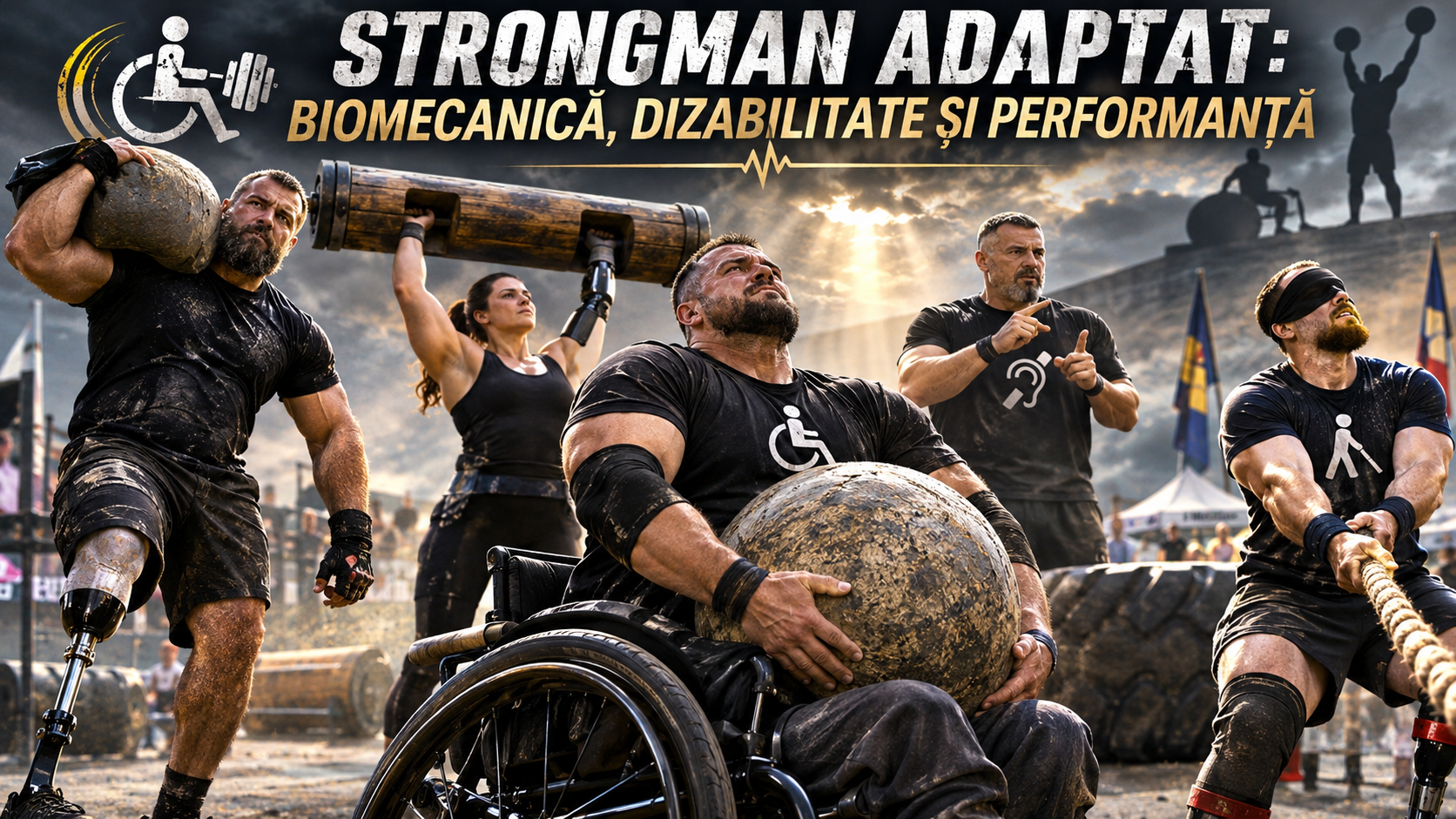
ADAPTED STRONGMAN: BIOMECHANICS, DISABILITY AND PERFORMANCE | Episode 1: Strength and Disability: Principles of Participation in Resistance Sports
An introduction to adapted Strongman: strength, accessibility, biomechanics, safety and sport classification.
Biomechanics
ADAPTED STRONGMAN: BIOMECHANICS, DISABILITY AND PERFORMANCE | Episode 2: Force Production in Athletes with Spinal Cord Injuries
A biomechanical account of strength following spinal cord injury: stability, motor control, adapted events and safety.