Training Science
OPERATIONAL STRENGTH: STRONGMAN IN MILITARY AND EMERGENCY RESPONSE TRAINING | Episode 7: Handling Materials and Heavy Objects in Confined Spaces
November 2, 2026
Restricted space changes available ways to apply force
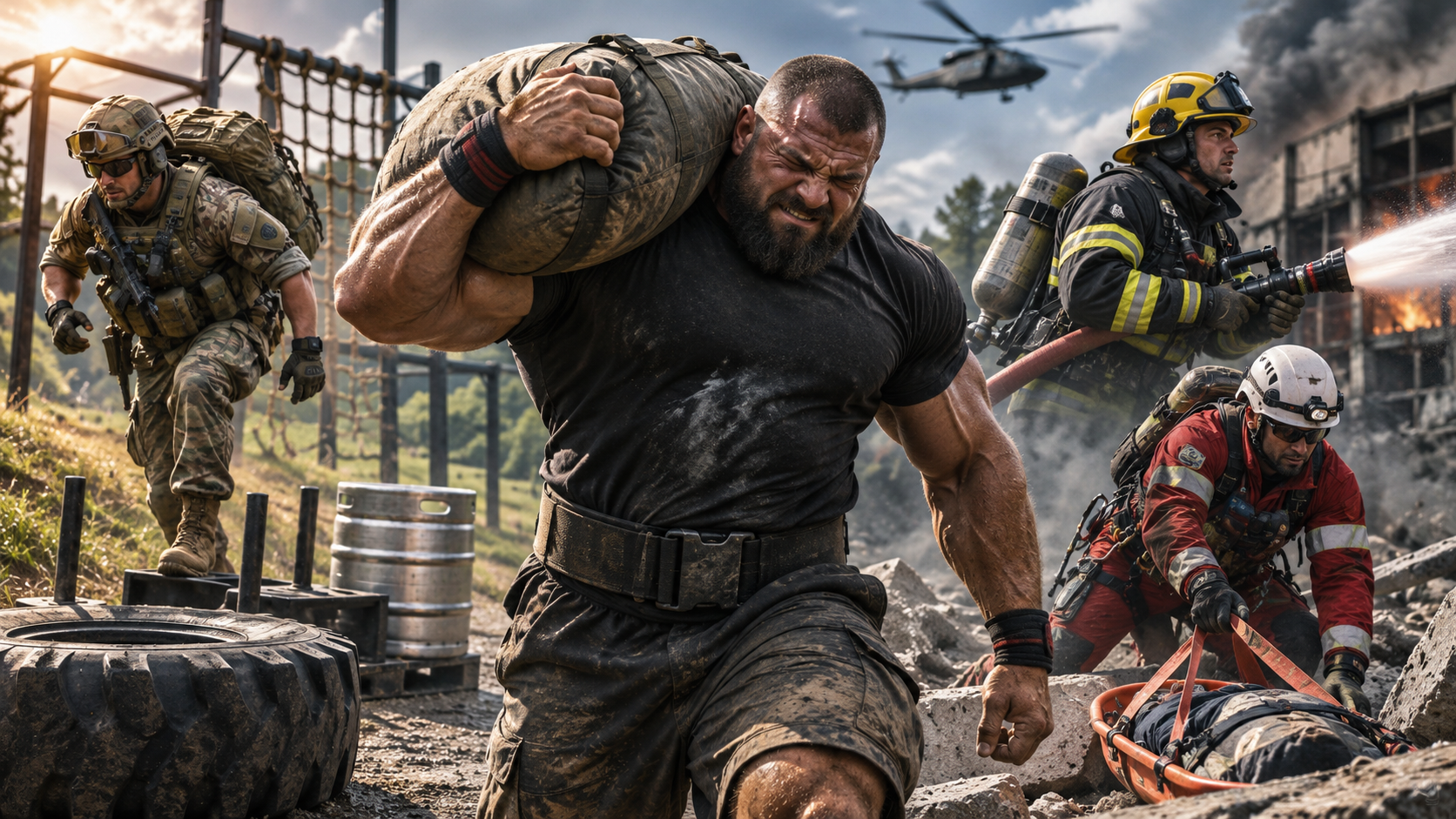
In a narrow corridor, damaged vehicle, or utility room, the body may not be able to adopt the posture used for a barbell lift. Contact with walls, limited foot placement, and the object's path constrain action. Someone with a large deadlift may be unable to express the same force at a restricted angle. Strength is not irrelevant; its expression depends on environmental geometry. HSE occupational ergonomics guidance highlights risks associated with constrained posture and bulky loads [1].
Distance between the load and the trunk influences external moment
An object held away from the body may impose a different mechanical moment from the same mass held close. When space forces awkward gripping, muscles must control both weight and leverage. OSHA identifies horizontal distance, height, twisting, grip, and frequency as important variables in manual-handling assessments [2]. However, equations for conventional occupational lifts are not sufficient instructions for complex rescue handling.
Grip on bulky objects may become the main limitation
Large objects may be difficult to carry despite moderate mass because they lack handles or occupy considerable space. Required grip depends on contact surfaces, shape, and the opportunity to reposition fingers. Strongman uses sandbags and other implements to develop object control, but professional equipment may have different contact requirements. In restricted spaces, grip position cannot always be changed during movement.
Rotation of a long object in a narrow passage
A long object may be difficult to turn through a passage even when its mass is modest. Dimensions, turning radius, and available clearance matter. Attempting to compensate for an unsuitable path with more force can produce unwanted contact or loss of control. Real operations require procedures for route and equipment selection rather than demonstrations of muscular persistence.
Trunk and lower limbs work in different configurations
Low-position lifting, sideways travel, and overhead handling impose distinct demands. Confined spaces restrict posture adjustments, making even familiar gym masses harder to control. No single posture is guaranteed safe for every object. Conditioning can include varied submaximal movements with stable loads without recreating hazards from damaged structures.
Communication and coordination with a teammate
Moving long objects may involve several people, and load sharing changes with hand position and stepping synchronization. Where visibility is limited, commands and signals matter. The strength of the most powerful member cannot substitute for coordination. Controlled exercises may develop team carrying, but qualification for specialized equipment and hazardous interventions belongs to professional instruction.
Visibility and route-control demands
Bulky objects can obscure an operator's view and make obstacles difficult to anticipate. In a narrow room, contact with the surroundings may occur before the handler can see the problem. Performance should therefore not be measured by carrying time alone. Following procedures, communication, and maintaining control are equally important. Occupational tests need explicit rules to avoid rewarding reckless speed.
Friction, surface, and movement resistance
The surface over which an object moves changes frictional resistance and can alter gait control. An indoor sled does not necessarily offer resistance equivalent to loads in industrial surroundings. If mass, terrain, and grip differ, direct comparisons of completion times are invalid. Testing needs standardized conditions, while actual professional scenarios require risk assessment and approved procedures.
Thermal conditions and protective equipment
Restricted spaces may limit airflow and require specific protective clothing or equipment. These conditions can increase exertion and constrain mobility. Unsafe environments should not be used as gyms for the sake of realism. Physical resources can be developed under controlled conditions, while familiarization with duty equipment follows approved procedures.
When mechanical aids are preferable to human effort
Some tasks can be reorganized using purpose-designed handling aids. These may reduce physical demand and risk, but equipment selection and operation require qualification. Not every object should be moved manually merely because a strong team member is available. Ergonomics adapts work to human capacities, while sporting strength remains a complementary resource.
Introduction and the limits of transfer
Strongman develops force-production resources, but occupational preparation requires applying those resources under equipment, spatial, and risk conditions different from competition. Visual resemblance between a sport event and an occupational action is not proof of transfer. A plausible biomechanical mechanism, existing experimental evidence, and hypotheses requiring validation must be distinguished. Beyond external mass and completion time, important outcomes include movement control, recovery, and the person's availability for subsequent duties.
Why absolute strength does not describe the complete task
A high squat, deadlift, or loaded-carry score demonstrates capacity under the conditions of that exercise. It does not automatically describe handling an irregular object while wearing occupational equipment in restricted surroundings. In applied work, object position relative to the body, grip, traction, velocity, and available posture adjustments can become limiting. Coaches should identify the missing resource rather than automatically prescribe more weight. The limiting factor may be muscular, technical, aerobic, or organizational.
Progression without recreating operational danger
Stable, inspectable training objects can build strength and control without recreating the dangers of actual interventions. Progression can adjust mass, distance, or duration while monitoring technique and recovery. Copying elite competition loads is unnecessary for occupational personnel. Real equipment practice follows institutional procedures and qualified supervision. Within that framework, Strongman is a conditioning tool rather than a technical qualification.
Evaluating outcomes against occupationally relevant criteria
A useful fitness assessment defines its load, course, conditions, stopping criteria, and execution rules. If these change between tests, timing differences may reflect protocol variation rather than improvement. General tests and occupational tasks answer different questions: the former measure resources while the latter examine their application. Research programs should report benefits together with limitations and costs, including time unavailable for duty or persistent symptoms.
Operational success is not an isolated record
Occupational preparation does not aim to turn every participant into a Strongman competitor. It aims to support safe and sustainable performance of necessary duties. A single exceptional lift demonstrates an impressive peak, but a mission may require repeated tasks, communication, and decisions after exertion. Strength remains valuable when integrated with endurance, control, and specific competence. Genuine transfer must be demonstrated through relevant outcomes rather than assumed.
Scientific bibliography and professional guidance
[1] UK Health and Safety Executive (HSE). Construction physical ill health risks: Manual handling. https://www.hse.gov.uk/construction/healthrisks/physical-ill-health-risks/manual-handling.htm
[2] Occupational Safety and Health Administration (OSHA). Ergonomics Technical Manual, Section VII, Chapter 1. https://www.osha.gov/otm/section-7-ergonomics/chapter-1
[3] Hindle BR, Lorimer A, Winwood P, Keogh JWL. The Biomechanics and Applications of Strongman Exercises: a Systematic Review. Sports Medicine - Open. 2019;5:49. DOI: 10.1186/s40798-019-0222-z.
[4] NIOSH. Revised NIOSH Lifting Equation. Applications Manual. https://www.cdc.gov/niosh/docs/94-110/
[5] U.S. Army Corps of Engineers. The Urban Search and Rescue Program. https://www.usace.army.mil/Media/Fact-Sheets/Fact-Sheets-View/Article/3439326/the-urban-search-and-rescue-program/
[6] Occupational Safety and Health Administration. Structural Collapse Guide. https://www.osha.gov/emergency-preparedness/guides/structural-collapse
[7] Federal Emergency Management Agency. Structural Collapse Technician, Module 4: Lifting and Rigging. https://www.fema.gov/pdf/emergency/usr/module4.pdf
More From The Journal
International Strongman
Nordic Training Gear: Equipment, Athletes and Its Connection to Strongman
An overview of Swedish brand NTGear, its origins, athlete team, presence around Strongman competitions and the practical uses of its strength-sport equipment.
Biomechanics
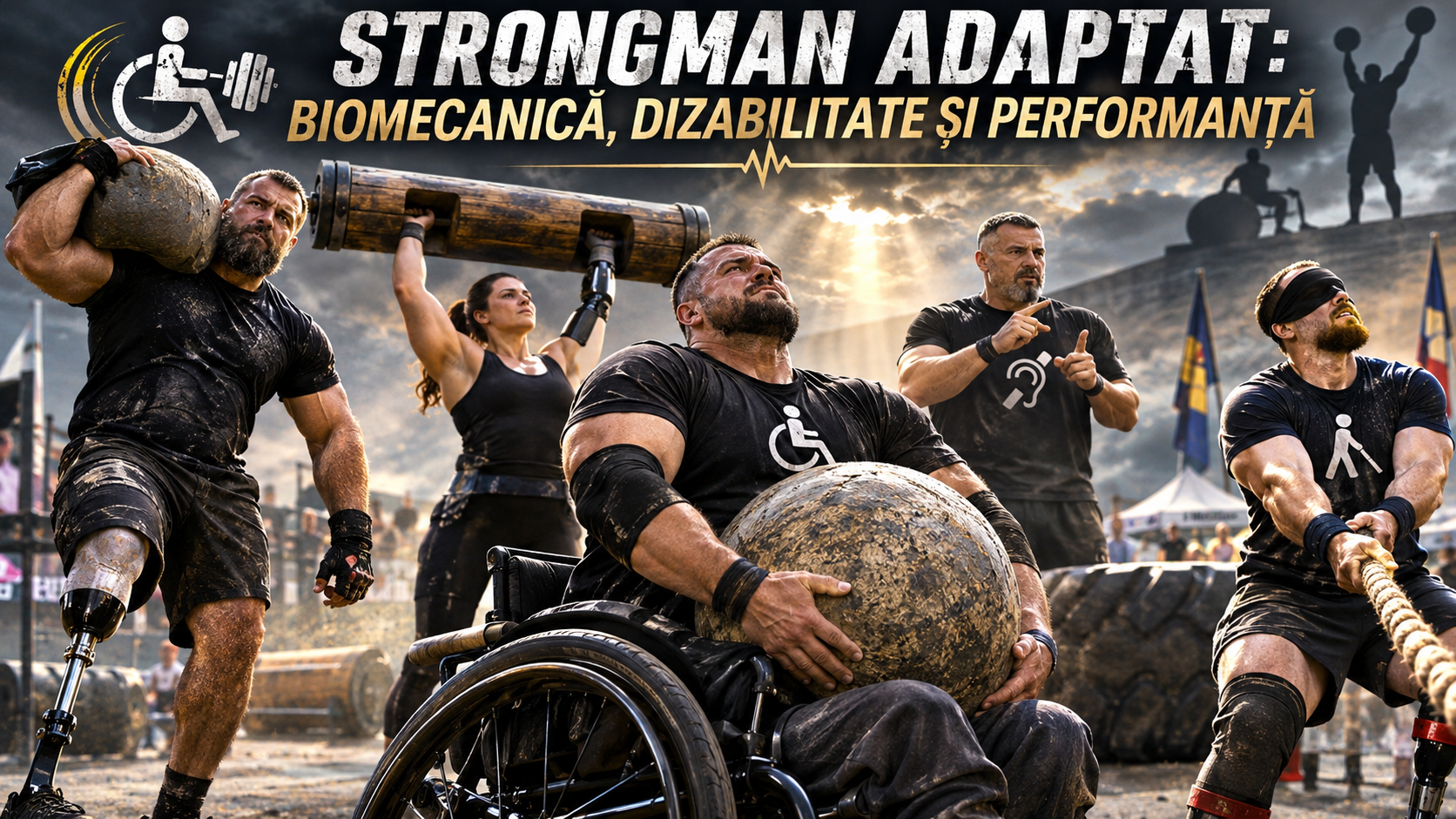
ADAPTED STRONGMAN: BIOMECHANICS, DISABILITY AND PERFORMANCE | Episode 1: Strength and Disability: Principles of Participation in Resistance Sports
An introduction to adapted Strongman: strength, accessibility, biomechanics, safety and sport classification.