
Training Science
OPERATIONAL STRENGTH: STRONGMAN IN MILITARY AND EMERGENCY RESPONSE TRAINING | Episode 3: Heavy Military Load Carriage: Changes in Gait, Posture, and Energy Expenditure
November 2, 2026
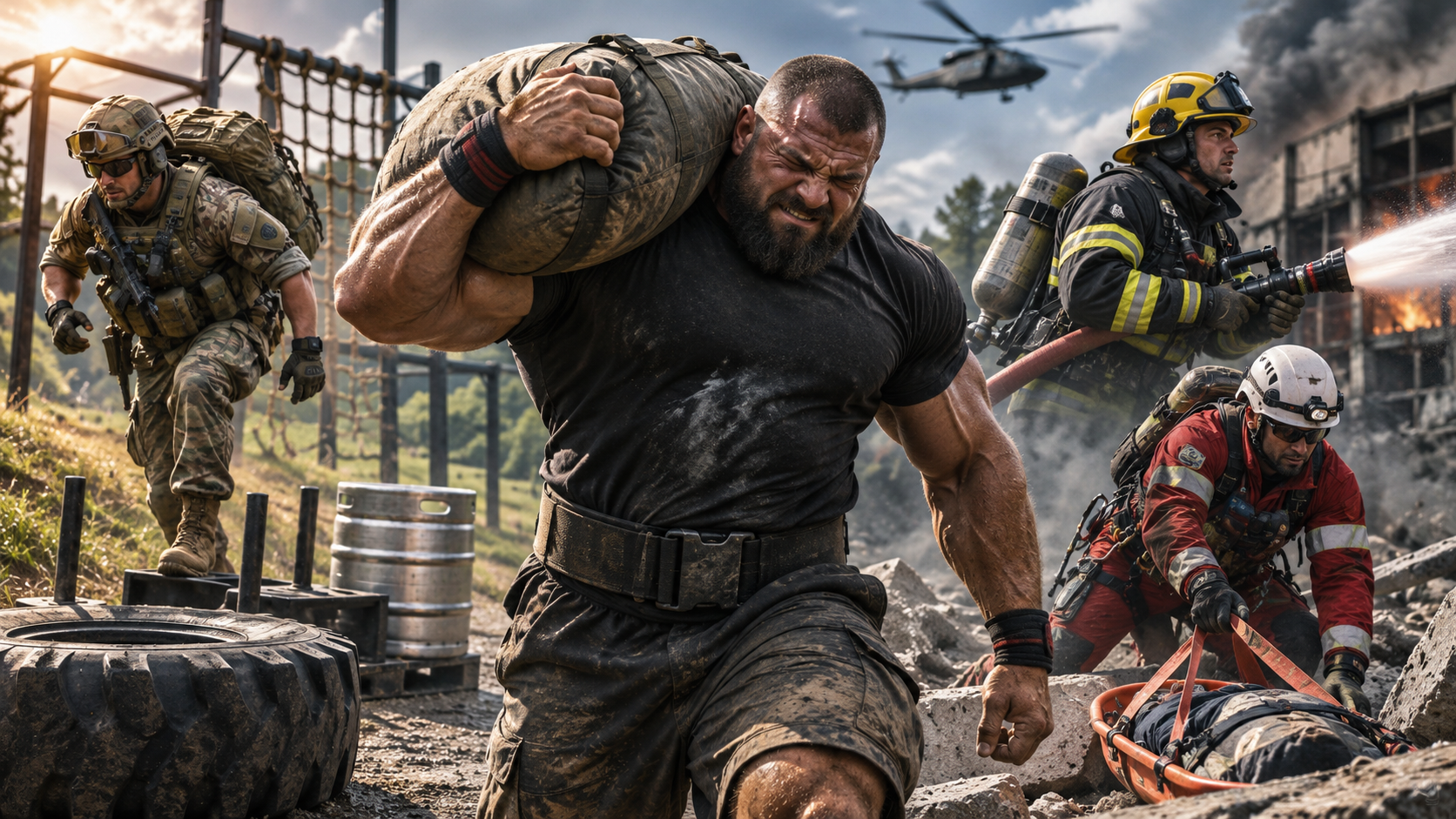
Methodological framework: how to interpret evidence on military load carriage
This episode distinguishes the different kinds of evidence used to understand heavy military movement. Biomechanical investigations measure the positions of body segments, external forces, and walking patterns under particular experimental conditions; they do not automatically prove that a particular training program works. Physiological studies can estimate oxygen consumption and cardiovascular demand without predicting precisely how each soldier will recover. Systematic reviews combine available investigations but cannot eliminate differences in populations, equipment, surfaces, or testing procedures. A reported average change in joint loading or metabolic expenditure should therefore be read as a result observed under specified conditions, not as an absolute law applying to every person and every mission.
The relationship with Strongman is approached through a further distinction between mechanical resemblance and demonstrated transfer. Carrying heavy implements in the hands, moving beneath a yoke, and marching with a backpack may all challenge strength, stability, and loaded locomotion, yet they are not interchangeable tasks. Improvement in one sporting event does not demonstrate that a soldier will expend less energy over a long distance or experience fewer injuries. Those outcomes require direct occupational measurement, ideally within appropriately controlled comparisons that document initial fitness, total training exposure, previous experience, and relevant equipment. Where direct evidence is lacking, a plausible mechanism should be identified explicitly as a hypothesis rather than presented as an established performance effect.
The mechanical principles discussed here are intended to support understanding and general planning; they do not replace medical assessment, institutional standards, or approved equipment-use procedures. Masses, distances, and percentage changes reported in particular investigations should not be copied mechanically as thresholds for other units. A defensible recommendation must reflect essential job tasks, a person's training history, the expected terrain, and the practical constraints of the organization. In that sense, scientific caution is not an obstacle to useful training. It is the means of distinguishing an attractive analogy from a reliable intervention, protecting personnel while translating the capacities developed through strength sport into occupationally meaningful performance.
Loaded marching is an occupational activity, not ordinary walking with extra weight
Heavy military load carriage illustrates the intersection of biomechanics, exercise physiology, and occupational requirements particularly clearly. A soldier does not always carry one compact mass in a backpack: equipment may include a helmet, body armor, material distributed around the trunk, items carried in the hands, and objects secured to a belt. Each component changes total mass, center-of-mass location, and the body's interaction with the terrain. Movement may continue for minutes or hours, across gradients, uneven ground, and speeds dictated by the mission. Consequently, loaded marching ability cannot be inferred from unloaded running performance or a Strongman record. Several physiological systems contribute, with relative importance changing across tasks [1–3].
Throughout military history, the load carried by soldiers has increased as individual protection, technology, and logistical requirements have expanded. The classic review by Knapik, Reynolds, and Harman describes this evolution and its effects on energy expenditure, posture, and health [2]. Yet the phrase “heavy load” has no universal meaning: the same mass may be moderate for a large, experienced person and excessive for another, while a well-adjusted pack may feel different from an equal load carried in the hands. Relative load as a proportion of body mass is not a complete description either, because two people carrying an equal percentage of their body weight may have very different aerobic capacities and movement economies.
This episode examines what changes when additional mass is introduced into locomotion and how the information can improve physical preparation. We will distinguish experimental measurements from illustrative training examples and avoid treating metabolic equations as exact predictions for every terrain. In particular, we will compare the demands of the yoke walk, farmer's carry, and sandbag carry with military marching without claiming the events are equivalent. Maximal strength may provide muscular reserve, but marching is a prolonged problem involving transport, balance, energy cost, and the capacity to perform the next occupational task after arrival.
External load and body mass: identical kilograms, different demands
Body mass and external equipment both contribute to the material that must be supported and moved. Their ratio, however, does not by itself determine the energy cost of locomotion. A backpack placed close to the body's center of mass may affect mechanics differently from a mass suspended from one hand. Two thirty-kilogram loads can impose distinct demands if one is supported by straps and a hip belt while the other oscillates laterally. Classic military load-carriage research emphasizes placing mass relatively close to the body's center of mass to reduce metabolic cost, but the outcome depends on system geometry and movement intensity [2]. There is therefore no universal metabolic equivalent of one “kilogram carried.”
A larger operator may possess greater absolute strength and manage some lifting tasks better while also having to transport more personal body mass at every step. A lighter operator may have a different total mechanical cost even though the equipment represents a larger proportion of their body weight. Adiposity, muscle mass, limb dimensions, aerobic conditioning, and experience with equipment all alter the relationship. Direct performance measurement is consequently more informative for occupational decisions than body weight alone. Assuming the heaviest or strongest athlete will automatically march best is unjustified. Such an individual may have an advantage during certain handling stages and face disadvantages elsewhere.
In practice, carried load is not always fixed. Drinking water, redistributing equipment among teammates, or collecting additional material can change both total mass and its position during a mission. An experiment using a stable pack identical across participants controls some variables without fully reproducing this dynamic. Modeling energy requirements should account for carried mass, walking speed, grade, and surface. Where reliable data are unavailable, it is more responsible to describe the scenario than to present a falsely precise calorie estimate. Actual human physiology is more complex than a calculation based on kilograms alone.
The spatial and temporal structure of gait: stride length, cadence, and ground contact
Walking can be described through spatial and temporal measures: speed, stride length, cadence, single- and double-support duration, and width of the support base. It is tempting to assume that adding a heavy load invariably changes each measure in one particular direction. The evidence is more nuanced. Walsh and Low's 2021 systematic review, including twenty studies, found relatively limited and inconsistent effects on several spatiotemporal indicators but more consistently reported changes in trunk, hip, and knee kinematics [1]. It would therefore be inaccurate to claim that every soldier automatically shortens their stride by a fixed percentage under a heavy pack. Responses depend on speed, load, terrain, and individual strategy.
The same course completion time can conceal different motor solutions. One operator may increase cadence and shorten steps, while another preserves a slower cadence and lengthens them. Neither change is automatically more efficient in every setting. On flat, familiar terrain, a particular strategy may support speed; on gravel or downhill, controlling the center of mass may take precedence. Load also affects the time available for absorbing impact and producing propulsive force. Directly copying the gait used during an exceptionally heavy yoke walk may therefore result in a cadence poorly suited to the duration and surface of a military march.
Assessment must also consider behavior as fatigue accumulates. An operator may display stable parameters early in a march yet alter posture and cadence as physiological reserves decline. Such changes do not automatically prove increased injury risk or faulty technique; some are adaptive. The relevant question is whether movement control, efficiency, and safety are maintained. In a well-designed study, gait measurements are interpreted alongside terrain, imposed speed, fatigue status, and symptoms rather than in isolation. Strongman conditioning may support stability under load but does not supply a universal optimal marching cadence.
The trunk and center of mass: why loaded walking challenges posture
When an external load is positioned mainly behind the body, the trunk may change orientation to maintain the overall center-of-mass projection within a stable region. Forward trunk inclination, pelvic adjustments, and changes in hip position are not necessarily technical faults; they may be responses to load distribution. In the review by Walsh and Low, increases in trunk, hip, and knee flexion were reported relatively consistently with loading, alongside altered hip and knee extension moments [1]. This indicates that carrying equipment reorganizes walking mechanics rather than merely increasing calorie expenditure. The body adopts a configuration intended to preserve balance while continuing movement.
Trunk orientation changes the external moments that back and hip musculature must counteract. Where equipment is unstable, repeated corrections may increase muscle activation without large visible changes in stride. The yoke walk also challenges trunk control under load, but the position of mass and the frame's dynamics differ substantially from those of a backpack. Concluding that a yoke record guarantees lumbar endurance during a long march would conflate different problems. Developing trunk-extensor strength is plausibly useful, but the adaptation must be assessed during actual equipment carriage over the relevant duration and surface.
A sound interpretation avoids two extremes. Not every forward trunk lean indicates imminent injury, yet not every posture adopted under load is necessarily consequence-free. Risk emerges from interactions among load, exposure, individual capacity, fatigue, and walking conditions. Movement observation can reveal obvious loss of control but cannot provide a medical diagnosis on its own. For training, trunk control should be developed through progressive loading and equipment familiarization rather than requiring every operator to copy a single supposedly correct spinal angle.
Hips, knees, and ankles share demands differently from unloaded walking
External equipment changes the moments imposed on lower-limb joints. Walsh and Low reported increased hip and knee extension moments and greater trunk and lower-limb muscle activation, together with kinematic alterations, in their systematic review [1]. This does not mean that a particular joint will fail or that every operator adopts an identical technique. It means the neuromuscular system must support and accelerate additional mass while adjusting to speed and equipment distribution. An operator may have high hip-extension strength yet insufficient endurance to repeat the action thousands of times.
The connection with Strongman lies in developing force production and control at the hips, knees, and ankles. Squats, deadlifts, and loaded carries can increase muscular resources, but do not fully reproduce walking economy. During marching, contractions repeat frequently, and every step interacts with terrain and equipment movement. Maximal-intensity events are relatively brief and involve distinct recovery strategies. A comprehensive program should develop both the ceiling of available force and the tolerance to repeat submaximal movement, using specific exposure and gradual progression.
Ground reaction forces and cumulative loading cannot be inferred from one step
At each ground contact, the body must control and redirect total system mass. External loading may change the magnitude and direction of ground reaction forces and the demands of impact absorption, but the relationship is neither linear nor identical across surfaces. Steps on asphalt, sand, and downhill terrain produce different force and movement patterns. What represents a twenty-meter course for a Strongman athlete can become thousands of successive contacts during a march. Cumulative loading therefore becomes central. Musculoskeletal risk cannot be inferred solely from the heaviest weight lifted in the gym because repeated-work tolerance and exposure duration are distinct properties [2,4].
These considerations matter for footwear, route preparation, and training dosage. A pack may be carried steadily on a laboratory platform but create different demands over stones, stairs, and irregular ground. Video assessment may identify movement changes but cannot diagnose injury independently. Pain, exposure history, and capacity to continue the mission must be considered together. Preparation should progressively increase load-carriage volume and avoid unjustified jumps in total demand rather than turning every kilometer into a maximal test.
Pack positioning: close to the body does not mean cost-free
How equipment mass is distributed affects both posture and movement energy. In their historical and physiological review, Knapik and colleagues explained that placing load mass relatively close to the body's center of mass tends to reduce energy expenditure and limit postural deviation [2]. This is a general observation, not an absolute rule for every equipment configuration. A bulky pack, poorly fitted protective vest, or item positioned to obstruct arm swing may affect walking in ways that cannot be estimated from average mass location alone. For soldiers, equipment design and load distribution are operational variables rather than aesthetic details.
Furthermore, the center of mass can shift during walking if objects move inside the pack or attachment points become loose. These movements can increase muscular corrections and reduce economy. In Strongman, an anterior sandbag carry or a yoke with suspended mass can challenge control of oscillating loads, but neither event reproduces the distribution of a tactical vest and military pack. When the target is marching performance, choosing an equivalent nominal weight is not sufficient: operators need familiarity with real equipment and confirmation that it permits breathing, stepping, and access to necessary materials.
Anterior versus posterior loading changes balance and step behavior
An object carried in front of the trunk does not produce the same effects as a posterior backpack. Anterior loading may limit arm swing, obscure downward vision, and change how trunk musculature counters external moments. A 2021 systematic review and meta-analysis of anterior carriage suggested shorter strides, particularly in some adult groups, while emphasizing the small evidence base and relatively small or inconsistent effects on other parameters [12]. The same numerical gait change cannot be attributed to every form of front loading. Shape, duration, and task conditions remain essential to interpretation.
From a Strongman perspective, carrying a bulky sandbag in front of the body exposes an athlete to anterior load-control demands, but does not replicate ballistic protection equipment. A large bag can force arm positions absent with a vest, while the vest may affect ventilation and trunk motion in different ways. When an operator temporarily carries an object anteriorly, stability and economy may differ from their normal marching configuration. Balanced programs may use several load positions, but primary assessment must remain specific to the equipment actually worn at work.
Asymmetry: loading one hand changes the bilateral task
When mass is carried mainly in one hand or on one shoulder, the body must counter tendencies toward lateral inclination and rotation. This demand cannot be inferred from a perfectly symmetrical bilateral carry test. Unilateral farmer's carries can develop tolerance for asymmetric loading, but distance and mass require gradual progression, particularly when the object oscillates. In military environments, asymmetry may arise temporarily when an operator moves a container, device, or item collected along a route. Demand may be less predictable than in the gym because object shape, ground surface, and communication requirements can change the strategy.
This does not imply that every asymmetry must be eliminated or that perfect symmetry is achievable in all interventions. The body can make functional adjustments, and some occupational operations necessarily involve unilateral loading. The priorities are controlling demand within individual capacity and selecting suitable carrying methods. During testing, rules on switching hands or repositioning the load must be documented, or completion times are not fully comparable. Moderate variety in training may promote adaptability, but spectacular eccentric-load challenges are not automatically more valuable than simple, repeatable handling of actual equipment.
Metabolic cost depends on more than the number of kilograms
Loaded locomotion expends energy to support and accelerate mass, stabilize the body, and adapt to terrain. At a constant speed, increasing external mass generally raises metabolic demand, but the exact relationship depends on equipment distribution, individual characteristics, and the surface. Cost may be expressed as oxygen consumption, metabolic rate, or total expenditure across a route, and these measures are not interchangeable. Someone finishing a distance faster may have a higher energy rate per minute but a shorter exposure time. Mission economy therefore cannot be evaluated correctly from heart rate or an app-generated calorie estimate alone [2,5].
Research on heavy carriage suggests that classic equations may underestimate metabolic demand for some modern military configurations. Equipment distributed over the torso and limbs may differ substantially from the backpacks used to develop older models. Walking speed, grade, substrate, and adaptation also change mechanical efficiency. Energy estimates can help planning, but they must be presented as condition-dependent approximations. A prediction with many decimal places does not become more accurate simply because software produced it.
Aerobic fitness supports marching, but neuromuscular strength remains relevant
During prolonged walking, oxidative metabolism supplies a substantial part of the required energy, while oxygen delivery and substrate utilization influence effort tolerance. Nevertheless, every step requires muscular force production and absorption, so strength remains important, particularly under very heavy loads or demanding terrain. Vaara and colleagues emphasize combined aerobic and strength contributions, with absolute strength and absolute maximal oxygen uptake becoming especially relevant for heavier tasks [9]. Marching is therefore neither “just cardio” nor a task that exceptional maximal strength can replace aerobic conditioning for.
In practice, a soldier may have ample reserve to lift a pack off the ground but struggle after many minutes of travel because of sustained metabolic demand. Conversely, a person with excellent aerobic endurance may be limited while climbing an obstacle or manipulating a very heavy item. Complete preparation combines adaptations, but training dosage must reflect occupational workload and recovery. Intervention research on loaded movement repeatedly supports combinations of strength, aerobic work, and specific carriage practice, not the exclusive use of one training method [3,9].
Speed, gradient, and surface can matter more than small differences in load
Two marches with the same distance and mass need not be equivalent. Imposed speed changes metabolic rate, uphill movement requires additional work against gravity, and uneven ground demands corrective action that may reduce efficiency. Downhill travel introduces different requirements, including eccentric control and stability. Military energy models include variables such as speed and grade precisely to improve on mass-only estimates. Studies conducted over complex terrain have compared direct metabolic measurement with predictive equations, and disagreement among methods has demonstrated the importance of route configuration and surface [7,8].
This matters for programming. Raising marching intensity does not always require adding kilograms; route, speed, and duration can substantially change demand. A progression that simultaneously changes every variable is difficult to interpret and may encourage overload. General conditioning should account for personal capacity and preceding duty exposure. For formal occupational assessment, the route should be standardized so timing differences reflect performance rather than uncontrolled ground variation. During operations, a route may be imposed; during training, it should be chosen deliberately.
Predictive equations: useful for planning, insufficient as individual truth
Classical metabolic-cost equations, including models associated with Pandolf, attempt to express relationships among body mass, external load, speed, and gradient. They are modeling tools, not sensors that directly measure each soldier's expenditure. Their accuracy depends on the population and conditions in which they were developed and tested. Drain and colleagues reported in 2017 that the Pandolf equation underestimated metabolic cost under several contemporary military load-carriage speed and load combinations. Other versions and corrections may perform better in particular conditions [6–8]. Quoting an equation without its validation range can create misleadingly precise estimates.
For example, two people walking at the same speed with nominally identical equipment may differ in technique, body composition, adaptation, material distribution, and efficiency. An equation may estimate energy requirements for mission planning but cannot reliably state exactly how each person will feel, how much heat they will accumulate, or how well they will perform on arrival. Research models need comparison against oxygen-consumption measurements and careful error analysis. In practical planning, estimated energy limits should not be treated as exact boundaries without safety margins. Modeling is a starting point that must be complemented with field observations.
Direct measurements reveal the variability hidden by estimates
In a study published in 2022, Vine and colleagues tested thirty-nine serving infantry soldiers across several walking speeds and external loads reaching seventy kilograms. Metabolic cost was measured and compared with multiple equations, whose accuracy varied by speed and mass. Many models underestimated expenditure, while one showed acceptable estimates only for selected combinations rather than across the entire tested range [5]. This has direct operational relevance: movement planning should not rely on an equation presumed perfect in every situation.
Other investigations have used portable oxygen-exchange instruments to compare estimated and measured costs over complex terrain. Models did not perform identically, and part of the disagreement reflects terrain variation and the delayed physiological response to sudden speed changes [7,8]. These limitations also matter for modern devices combining GPS and predictive algorithms. Route data can describe movement but do not automatically replace direct metabolic measurement. For everyday application, energy numbers are best regarded as approximate planning ranges rather than exact personal truths.
Boots and distal mass: where load is carried matters
Equipment worn at the feet may change movement cost differently from mass carried on the back, because distal segments must accelerate and decelerate with each step. Knapik and colleagues described relatively large metabolic effects of loads added to the foot or thigh compared with other carrying locations [2]. Numerical estimates from older protocols should not, however, be applied mechanically to every modern boot. Construction, stiffness, outsole, fit, and terrain alter the effect. Heavier footwear may offer protective properties, and minimizing mass is not the sole selection criterion.
For assessment, footwear should be documented and ideally standardized between test occasions. Changing boots may alter perceived effort and stride mechanics without any change in underlying muscular capacity. Strongman footwear is selected for traction and stability on a platform or short course, not necessarily for prolonged travel across mixed terrain. This illustrates a limit of transfer: an optimal solution for a maximal effort lasting seconds may be unsuitable for hours of movement.
Heat and humidity: thermal stress adds to mechanical demand
Heavy loaded walking generates substantial metabolic heat, while hot environments may reduce opportunities for heat loss. Vests, impermeable fabrics, and large areas of body coverage can impede cooling under particular conditions. Heart rate and perceived effort may rise even with unchanged speed and external mass. This interaction between mechanical and thermal demand explains why performance recorded on a cool morning does not perfectly predict work during a very hot afternoon. Differences in heart rate do not automatically prove dehydration or overheating; temperature, symptoms, and individual circumstances must be considered.
Preparation should combine conditioning with organizational management of environmental exposure: route planning, pace adjustment, fluid access, and appropriate rest. Heat acclimatization is a specific physiological issue, but does not justify uncontrolled exposure of recruits to dangerous conditions. A Strongman program is no substitute for occupational heat-illness prevention. Operational success is the ability to work safely, not a demonstration of extreme tolerance during an improvised selection session.
Altitude and oxygen partial pressure
At altitude, lower inspired oxygen partial pressure can limit oxygen availability for aerobic metabolism, particularly during sustained or intense effort. A pack march at altitude may therefore impose a greater relative cost on a non-acclimatized operator even when nominal mass, speed, and distance are unchanged. Responses depend on elevation, exposure duration, health, and prior experience. No universal percentage loss of performance applies to every person. Comparing completion times without environmental information may wrongly attribute oxygen-related differences to muscular capacity.
Preparing for mountain terrain requires aerobic conditioning, walking skill, and appropriate progressive exposure under institutional health and safety procedures. Strongman-developed strength may remain useful for obstacles and material handling, but does not abolish hypoxia. Sound occupational assessment distinguishes available muscular force from physiological tolerance of the environment. During missions, pace and group organization must consider relevant limitations across the team rather than relying exclusively on the strongest member.
Post-march fatigue may become the limitation of the next mission task
Finishing a march does not mean all abilities are preserved for the next activity. A 2026 meta-analysis of military foot marches synthesized twenty-three studies involving three hundred fifty participants and reported decreases in certain measures of lower-body strength, trunk strength, power, and postural stability [10]. The authors also noted methodological limitations, including possible confounding. These findings do not establish that every individual experiences the same decline, but they demonstrate that performance immediately after carriage may differ from rested performance.
Assessment should therefore ask what an operator can still do on arrival. If the mission requires moving materials or evacuating someone after marching, fitness must be considered beyond travel time. Testing under fatigue, however, must be carefully controlled rather than turned into an unnecessarily hazardous challenge. Training can develop endurance and strength resources, but recovery must be integrated. A rested deadlift personal record does not automatically describe force available after several hours under equipment.
Modular equipment creates a load system that changes over time
During real movement, packs, armor, belts, and attached objects form a modular system rather than one rigid mass. Changing distribution may alter posture, access to materials, arm movement, and contact between equipment and the body. Even an object of relatively small mass, positioned far from the body's center of mass, may produce disproportionate local demand. A single weighted-walking test cannot fully represent these effects. Research therefore needs detailed reporting of equipment, and comparisons across studies must recognize differences in configuration [2,4].
From a training perspective, load changes across mission phases should be evaluated through controlled scenarios rather than assumptions. An operator may transport a well-fitted backpack efficiently yet struggle when required to carry an additional object in one hand. Different carrying exercises may foster adaptability, but training tasks should remain representative of the occupation. A spectacular Strongman event offers little value unless its connection to actual duties can be justified.
Musculoskeletal injury and cumulative exposure
Load carriage can contribute to musculoskeletal problems, but risk is not determined by pack mass alone. Exposure duration and frequency, training history, sleep, footwear, terrain, and recovery all matter. An international review of military load carriage and reconditioning describes muscle and joint problems as well as disorders related to repeated loading, such as stress fractures and certain neurological symptoms [4]. This literature does not support the claim that every heavy march causes injury or that a particular number of kilograms automatically triggers damage. It supports examining total workload and gradually increasing exposure.
Two people carrying the same mass may respond differently according to experience and current fitness. An operator returning after a break may need a different progression from someone accustomed to regular marching. Transient discomfort should be distinguished from symptoms requiring medical evaluation without labeling all soreness as disease. For a unit, preparation aims not only at completing a distance but also at maintaining availability for subsequent duties. Training success must therefore be judged partly by preserved function rather than speed gains alone.
Bone adapts over time, not instantly
Bone tissue responds to mechanical loading through remodeling and adaptation processes that require time. Loaded walking can provide repeated stimuli, but an abrupt rise in volume does not necessarily produce faster adaptation. The ability of muscles to support a load may improve at a different pace from the tolerance of other tissues. This helps explain why someone may feel strong enough to carry more kilograms even though their musculoskeletal system lacks experience with thousands of loaded steps. Progression should therefore consider exposure duration and frequency rather than the subjective ease of lifting the pack.
During duty, persistent localized pain that worsens with exertion or impairs function requires competent medical interpretation. A general training article cannot establish a diagnosis. It can, however, explain why rapidly repeating an excessive stimulus does not guarantee benefit. Strongman-derived maximal force is a resource, not automatic protection against all problems associated with prolonged marches. Intelligent planning develops multiple capacities while respecting tissue adaptation times.
Reconditioning after a break is not identical to initial training
Returning to marching after inactivity, illness, or injury may require rebuilding load tolerance progressively. Former performance does not tell us exactly what capacity remains, and recovery can differ among strength, aerobic endurance, and repeated-step tolerance. Orr and colleagues describe reconditioning approaches combining specific carriage with resistance and aerobic training, adapting intensity and frequency to context [4]. They also discuss manipulating speed and gradient rather than pack weight alone. This is useful because progression need not depend on one variable.
A standard program for healthy participants should not automatically be applied to someone with a medical limitation. Decisions about reconditioning after injury belong to qualified professionals. During general preparation, gradually returning to previous frequency and duration is often more informative than immediately attempting a maximal test. Strongman experience may help preserve strength, but does not demonstrate that prolonged packed walking can be resumed without adaptation. Good professional education distinguishes peak historical performance from present readiness.
Scheduling loaded marches: more is not automatically better
Performing heavy marches very frequently can increase total workload without allowing adequate adaptation time, especially when other demanding duties are present. An international reconditioning review discussed relatively spaced specific load-carriage sessions combined with strength and aerobic training as a useful model in certain settings [4]. This is not a mandatory frequency for every organization; it illustrates the need to account for total dose. Personnel already moving heavy equipment during duty receive part of the exposure even when it is not labeled “training.”
If a unit adds heavy marches on top of numerous occupational movements, cumulative fatigue may alter performance and increase problems. Better planning can distribute priorities among strength, aerobic conditioning, specific carriage, and recovery while preserving coherence across the week. Approximate documentation of duration, load, difficulty, and unexpected events can support adjustments without sophisticated technology. Program success is not a maximum tally of loaded kilometers but improved occupational ability alongside preserved availability.
Combining strength, aerobic work, and specific carriage is supported by evidence
Knapik and colleagues' systematic review of physical training interventions for load carriage identified favorable outcomes for programs combining whole-body strength, aerobic conditioning, and specific marching practice [3]. The conclusion requires proper interpretation: the studies do not establish that every exercise is indispensable or that the same dose suits everyone. They suggest that developing force-producing ability, sustained-work capacity, and task familiarity together can be more effective than unilateral preparation. Vaara and colleagues' review of essential military tasks supports the same general direction [9].
When selecting methods, Strongman can provide loaded carries, drags, and awkward-object handling that complement standard exercises. Programs should still be evaluated by actual marching performance rather than improvement on a yoke. An athlete may become faster on a short carry event without significantly improving long-distance endurance. From an occupational perspective, the successful intervention improves required tasks, preserves technique, and remains sustainable without disproportionate recovery cost. The method's label is secondary to its measured outcome.
Farmer's walk versus marching: similar locomotion, different load distribution
Farmer's walking and military marching both involve lower-limb locomotion under load, but load enters the body through different contact points. During a farmer's walk, mass is held in the hands, challenging grip, shoulder stabilization, and oscillation control. During marching, packs and armor distribute part of the load through the torso, straps, and belt. Furthermore, ordinary Strongman event distances are much shorter than prolonged operational movements. Strong farmer's-walk performance may demonstrate capacity to support and move large masses, but cannot replace measuring backpack walking economy. Transfer requires evidence rather than inference from the superficial presence of steps in both activities [9,13].
Two training objectives follow. One develops neuromuscular reserve through controlled, progressive carries; the other builds tolerance for prolonged work in actual equipment. Improving the former without practicing the latter may leave an important gap. Conversely, frequent packed walking without strength development can limit handling heavy equipment at obstacles or during initial lifting. Programs integrating both resources with aerobic conditioning have a stronger rationale than replacing either entirely with the other.
Yoke walk: exceptional absolute strength under different balance mechanics
The yoke walk requires moving a large mass through a frame supported by the upper body. Athletes learn to manage frame oscillation, regulate stepping, and maintain functional trunk rigidity. These skills may contribute to stabilizing external loads, but mass distribution differs greatly from military equipment. A backpack may involve lighter loads carried much longer, while body armor can restrict movement through local pressure and friction. Replacing marching entirely with yoke practice would neglect exposure duration, locomotor economy, and specific adaptation to equipment-body contact [13].
Strongman events are also designed to differentiate extreme athletic capacities, not to provide standard entry-level training doses. Overloading a heavy frame may undermine movement control and add unjustified risk for personnel expected to perform duties later. Yoke-derived training may have value at submaximal loads and suitable distances, but the final assessment must concern the military task rather than a sporting record. Strength reserve becomes valuable when it can be expressed repeatedly under actual working conditions.
Sandbag and awkward-object carries: general training, not backpack replicas
A front-loaded training sandbag can require operators to handle a shifted center of mass, stabilize the arms, and adjust stepping. This may be relevant to handling unconventional materials but does not reproduce a march in which equipment mass is distributed through packs and armor. The bag may restrict the chest through contact, require particular arm positions, and obscure downward vision, effects absent or different with other equipment. General strength transfer is plausible, but specific gait adaptations require testing with occupational configurations. Not every exercise that looks “realistic” is more specific than a carefully selected basic activity.
In military preparation, sandbags may be used for short lifts and carries, while the actual backpack is used for sustained movement. Separating objectives facilitates progression and monitoring. If a session contains exceptionally heavy sandbag carries followed by a long march, cumulative stress may become disproportionate to the intended benefit. Programming must account for occupational workload and recovery opportunities. Method value lies in the capacity it develops, not the complexity of its appearance.
Grade mechanics: uphill and downhill walking are not the same test
Uphill walking requires progressively lifting the body's center of mass against gravity, so lower limbs perform additional mechanical work. During downhill travel, movement control and braking can increase the importance of eccentric actions and stability, while metabolic rate differs from the uphill situation. External load amplifies demands and terrain can reduce the ability to maintain uniform stepping. A level-ground test therefore cannot fully describe readiness for mountainous terrain. Models including gradient are more informative than mass-only estimates, but accuracy remains limited by validation conditions [5–8].
For conditioning, grade can be progressed separately from equipment mass. It must still be adjusted to experience and musculoskeletal status. Technical descents can create stresses that are difficult to infer from activity duration alone. Strongman develops strength resources useful for negotiating obstacles but does not automatically teach alpine walking technique. Specific preparation requires appropriate terrain exposure and risk-control procedures.
Group pace and load management: physiology becomes organization
Military marching is often a group activity, and pace cannot always be chosen as freely as during an individual treadmill test. Differences in aerobic fitness, load, stature, experience, and heat response mean the same speed represents different relative intensities for different people. An exceptionally strong operator may possess high force capacity yet be limited by aerobic fitness; another may transport a pack efficiently but struggle to handle a heavy object at an obstacle. Leaders and instructors should recognize this variability when distributing tasks and planning movements.
Organization cannot erase physiological limitations, but it can reduce wasted capacity. Pace adjustment, rest planning, redistribution of materials, and route selection may affect collective performance. None of these decisions should be reduced to a single metabolic formula. During assessment, individual marching success should be distinguished from contribution to a group objective. Strongman focuses on visible individual achievement and ranking; operational marching may reward the preservation of the entire team's resources.
How to measure loaded gait: laboratory, field course, and observation
Laboratory gait analysis may use cameras, force platforms, inertial sensors, and oxygen-consumption measurements. These tools describe movement, joint demands, activation, or metabolic cost but do not automatically represent a real mission. In the field, a standardized test can monitor speed, time, equipment mass, heart rate, and perceived exertion. Each approach has strengths and limitations: laboratories control variables while field testing captures more operational complexity. Results become more informative when interpreted together rather than compressed into one score of supposedly correct walking.
A march test should document mass, equipment, surface, distance, grade, temperature, and execution rules. If packs differ, results cannot be explained solely by fitness. If one person knows the route and another does not, experience may influence pace and strategy. Familiarization and standardization are essential to longitudinal comparison. A simple, repeatable, consistently monitored field course can be more useful than sophisticated testing delivered only occasionally.
The aim is not to identify one ideal posture but to detect relevant changes in function and tolerance. Adjusting stride may be adaptive, and faster completion does not guarantee freedom from risk. Interpretation should include pain, exposure history, and ability to perform subsequent tasks. Strongman provides methods for developing muscular resources; equipment-specific gait testing checks whether those resources appear in the intended activity.
Distance, pace, and pauses: totals do not fully describe demand
A ten-kilometer march is not the same task when completed continuously as when frequent pauses are included. Average speed may conceal accelerations, climbs, and waiting periods, each with different physiological costs. Over complex terrain, rapid speed changes can create disagreement between movement timing and measured respiratory responses, which is why researchers have evaluated smoothing GPS-derived data for energy estimation [8]. One average-speed value can oversimplify the task.
Programming should consider whether occupational activity is continuous or intermittent. A unit undertaking long, steady movements may require a different training emphasis from one combining walking with stops, lifts, and accelerations. Neither is perfectly represented by a short Strongman event. Heavy carries can develop the ability to restart movement, but cannot replace the aerobic endurance needed for prolonged locomotion.
Rest periods also need standardization during comparisons. Someone who improves total time by resting less has achieved a different adaptation from someone who walks faster during every segment. Both outcomes may be useful, but their physiological explanations differ. Examining individual intervals helps determine what capacity should be developed next.
Equipment fit is a performance variable
Much of the load is transferred through contact regions between equipment and body. Shoulder-strap position, belt adjustment, and equipment stability can alter pressure distribution and trunk control. An ill-fitting pack may cause discomfort or unnecessary movement even when mass and distance are moderate. Modern design alone is insufficient; equipment must be adjusted to the individual and used according to instructions. During testing, changing fit can alter results without any improvement in muscular capacity.
For operational units, equipment checks before movement have physiological and ergonomic value as well as logistical importance. Unstable objects may require repeated muscular corrections, while unsuitable local contact can reduce tolerance. Instruction can include recognizing signs of poor fit and following the institution's approved configuration. These changes may offer benefits without increasing training loads.
In Strongman, implements have relatively standardized handles and contact surfaces; during marching, the interface consists of a complex body-equipment system. This contrast explains why fitness transfer cannot be assessed independently from equipment fit and distribution. A powerful operator with badly adjusted equipment may work inefficiently, while correct configuration can help express existing capability.
Heart rate, perceived exertion, and the limitations of one metric
Heart rate can inform cardiovascular demand during marching, but is also influenced by temperature, stress, sleep, hydration, and other variables. Two sessions at the same speed and load can produce different heart rates without major fitness changes. Perceived exertion adds a useful subjective perspective but does not directly measure mechanical work or energy cost. Several simple indicators considered together may be more useful than a single readiness score.
In the field, the combination of travel time, actual mass carried, perceived difficulty, and ability to continue working can guide decisions. In research, oxygen consumption and movement measurements can clarify mechanisms. A lower heart rate at the same speed does not always prove superior technique, just as a higher one does not necessarily indicate illness. Context and symptoms matter.
Monitoring must be simple enough for consistent use while nuanced enough to avoid false interpretations. Slower movement and greater perceived effort after a heavy-duty day may reflect temporary fatigue. If the pattern persists or concerning symptoms develop, medical evaluation may be appropriate. Fitness data should not be used for individual diagnosis without clinical competence.
Three operator profiles demonstrate why programming must be individualized
Imagine three soldiers undertaking a loaded route. The first is exceptionally strong and can perform short carries with large masses but has modest aerobic endurance. The second has excellent aerobic fitness but limited capacity for lifting heavy materials. The third has balanced resources and considerable experience walking on varied ground. During a long march, the third may excel without dominating any single strength test; during a critical lift, the first may have an advantage. These profiles are hypothetical but show that outcomes depend on the actual task rather than a universal ranking of fitness.
For the first operator, priorities may include walking economy and endurance; for the second, strength and material handling; for the third, maintenance and integration of existing capacities. Giving everyone precisely the same yoke or marching dose may create unequal progress and disproportionate stress. Baseline assessment and retesting permit programs to reflect limitations and likely missions.
There is no necessary incompatibility between Strongman and military preparation. Confusion arises when a tool becomes an end in itself. Strength, aerobic conditioning, and occupational practice are complementary resources. Effective programs organize them to improve relevant performance while preserving health and availability for duty. Individualization is therefore a data-informed technical decision, not a privilege reserved for elite athletes.
Cognitive fatigue and attention during loaded marching
Operational marching involves more than automatic stepping. Personnel may need to follow a route, receive instructions, communicate, and detect environmental changes while carrying equipment. Combining physical movement with attentional demands can alter perceived effort and resource allocation. Greater strength does not automatically produce better decisions. Fitness may reduce some physical limitations, but cognitive competence requires separate training and assessment.
Additional cognitive demands can be introduced progressively after physical safety is established. An operator may follow a standardized route while responding to simple commands without immediately adding artificial visual restriction, extreme loads, or other hazardous constraints. The goal is to observe movement stability and behavior rather than create confusion. Slower movement while processing information may reflect prudent attention allocation rather than insufficient strength.
Assessment should distinguish travel time, navigation errors, and compliance with instructions. One combined score may conceal tradeoffs between speed and accuracy. In operations, slowing down to preserve safety can be appropriate, and success is not necessarily the lowest possible time. Strongman trains management of effort under load but does not replace perceptual and procedural preparation.
Reduced visibility and unfamiliar terrain alter walking strategy
When visibility is limited, information needed to select steps and anticipate obstacles becomes less available. A heavy pack increases total moving mass, and unexpected changes in foot placement may challenge stability resources. It is not justified to claim that everyone becomes unbalanced or that equipment causes one fixed decline in control. Responses depend on experience, terrain, speed, and individual abilities. A familiar, daylight course does not completely represent a difficult navigation task.
Strongman events are usually performed on well-defined courses with relatively predictable traction. This helps athletes express peak capacity but limits transfer to unpredictable terrain. Familiarization with varied surfaces can be useful in professional preparation, provided loads and speeds remain compatible with safety. Simulating extreme conditions is not necessary to practice adjusting steps.
Visibility and route familiarity must be documented during testing. Otherwise, time differences may reflect environmental experience more than fitness. Good performance includes control and adaptability rather than speed alone. Assessment should capture these abilities without unnecessarily endangering participants.
Marching breaks are physiological variables, not merely logistical ones
A break can temporarily reduce cardiovascular and muscular demand, but its effect depends on duration and what the operator does during the interval. Remaining upright in full equipment maintains part of the static load; safely removing equipment may reduce it. Temperature, hydration, and other tasks influence recovery. Two marches of identical distance may therefore produce different demands when one includes meaningful breaks and the other only brief stops without unloading.
Research should report rest periods to make protocols reproducible. Training programs should connect breaks to the objective: continuous endurance, repeated-effort capacity, or management of operational intervals. No magical rest duration makes every load safe. Effective preparation develops resources and teaches their economical use.
A Strongman athlete can organize recovery between events to preserve peak performance, but contest recovery does not reproduce breaks during a mission. Military stops may be imposed, and operators may need to remain attentive or equipped. These differences reinforce why success in a brief sporting event cannot by itself describe prolonged occupational capacity.
Operational logistics shape demand even for highly trained people
Equipment mass is not merely a backpack characteristic; it reflects logistical and operational decisions. Materials considered essential, their distribution across a group, and resupply opportunities can substantially change physical demand. No increase in strength abolishes the physical consequences of excessive mass for a given distance and terrain. A unit optimizing equipment configuration may improve performance without immediately changing people's muscular capacities. This does not diminish training; it shows that preparation operates within a larger system.
Exercise programming should not attempt to compensate for every organizational problem through extreme training. Better distribution of materials may be possible. Careful route planning that matches mission requirements and group capacity can preserve availability for later duties. Operational outcomes emerge from the interaction among people, equipment, and planning.
Research must distinguish interventions that change physical fitness from those that change the task. Reducing carried mass may shorten marching time without improving aerobic capacity; increasing fitness may improve the time at the same mass. Both can be useful, but mechanisms differ. Without detailed equipment reporting, attributing improvement to Strongman conditioning may be mistaken.
Modeling a real mission requires scenarios and ranges, not one absolute number
Predicting the energy cost of a march should account for at least body mass, equipment load, distance, speed, gradient, and surface characteristics. Even then, models have limitations, so the result should be treated as a plausible range. Validation studies of contemporary military carriage have demonstrated errors in several equations under particular conditions [5–8]. Presenting estimates as exact calorie requirements for individuals would create false confidence. Comparing scenarios while acknowledging uncertainty is more responsible.
For example, two route options may differ in distance, gradient, and substrate. The shorter route is not always the least metabolically expensive, and the fastest is not necessarily the one preserving most reserve for the next task. Sophisticated instruments are not required for every decision; accurate descriptive information can improve planning.
Training can use such scenarios to identify priorities. Where occupations involve frequent climbs, lower-limb strength and specific exposure may matter; where long steady distances dominate, aerobic capacity and gait economy become central. Strongman can support muscular resources in either setting, but the method should be integrated according to professional need rather than applied mechanically.
Accumulated weekly exposure matters more than one session
A soldier may complete a well-dosed strength session yet have an extremely demanding week of marching, field instruction, material handling, and poor sleep. Evaluating only gym programming ignores a major part of total load. This may explain why an intervention effective in a study does not produce identical gains in a unit during a demanding period. Adaptation depends on total stimulus and recovery rather than the exercise's name.
Vaara's review of military tasks discusses tension between strength development and high occupational physical activity volumes [9]. Not all movement can be reduced, since it may be essential to the mission. Instructors can still adjust additional sessions to avoid redundant stress. Maintaining strength with less volume may sometimes be preferable to aggressive progression.
Simple monitoring may document days with heavy movement, approximate duration, carried mass, perceived difficulty, and recovery status. Pseudoscientific scores claiming to measure exact “nervous-system capacity” are unnecessary. Observations become valuable when they help adjust training and prevent obvious dosing errors. Effective programs fit occupational life rather than ignoring it.
Concurrent training: strength and endurance can complement each other
Military preparation often requires strength and aerobic development at the same time. Some research describes interference with particular muscular adaptations under high training volumes, but this does not mean every running session cancels strength gains. Response depends on baseline fitness, frequency, intensity, recovery, and task organization. Military training reviews support appropriately dosed combinations of endurance and resistance work tailored to goals [9].
For an operator carrying equipment, an exclusive aerobic emphasis may leave limitations in heavy-object handling, while exclusive strength work may neglect duration. Mixed programming can alternate dedicated sessions or arrange priorities according to unit schedules. No universal session order fits everyone, and recommendations need individual adaptation.
Strongman may provide part of the strength and short-carry component, while aerobic conditioning and specific marching develop other resources. The final criterion is occupational performance rather than simultaneously maximizing every sporting record. When time is limited, exercise choice should prioritize deficits that most constrain mission execution.
Maximum load and maximum distance should not be progressed simultaneously
External mass and movement duration are two major load-carriage variables, and both add demand when increased. Simultaneously progressing mass, speed, distance, and grade makes poor outcomes difficult to interpret and may increase exposure without justification. A more controlled approach prioritizes the variable tied to the training goal and monitors response. This is not a rigid rule that only one parameter may ever change, but a principle of dosing control.
If an operator has ample strength yet struggles over distance, aerobic development and movement skill may offer more value than immediately adding kilograms. If endurance is good but initial lifting or obstacle handling is deficient, force production may deserve emphasis. Assigning one identical program across different profiles can reinforce rather than solve limitations.
Increasing carried mass is often a meaningful Strongman outcome. In military preparation, improvement may instead mean moving the same pack more efficiently with better recovery. Metrics must follow actual requirements rather than nominal weight alone. This prevents a training tool from becoming an endless kilogram competition.
Wearable devices can describe movement but do not replace interpretation
Inertial sensors, heart-rate monitors, and GPS traces can provide useful information, but each measures only part of the phenomenon. An accelerometer may detect changes in stepping, while its algorithm may not know the exact equipment distribution. GPS can approximate speed and grade, but positional errors and rapid terrain changes affect estimates. Heart rate reflects cardiovascular strain without independently supplying exact metabolic cost. Validation studies demonstrate the need for caution [5–8].
Research projects should compare wearable outputs against reference methods and describe data processing. A model calibrated for unloaded walking may generate systematic errors during heavy carriage. Not every real-time number is validated for military populations. Technology can support the coach, but cannot replace task definition and observation.
In practice, a record of carried mass, duration, route, and the person's condition can be surprisingly valuable. Sophisticated data matter when they improve decisions rather than merely produce decorative numbers. Occupational assessment should remain understandable, reproducible, and anchored in actual outcomes.
Occupational standards are not synonymous with sporting norms
Strongman competitions create rules to differentiate athletes, while military tests assess readiness for occupational tasks. These purposes differ. Lifting an enormous gym load does not automatically demonstrate the ability to maintain a prescribed unit marching pace. Conversely, a soldier who efficiently completes the required route is not professionally inferior because they lack exceptional sporting records. Standards should derive from task analysis and be validated for their intended use.
Assessment may combine minimum criteria for essential tasks with individually scaled progress measures, but these should not be merged into arbitrary scores. Some tests address general health and conditioning; others support selection for critical duties. Fitness norms and minimum job requirements have different purposes and should be explained transparently.
Professionalism also requires recognizing test limitations. A level-ground march does not automatically certify mountainous performance, and a yoke event does not certify prolonged equipment carriage. Data must be interpreted within the conditions in which they were obtained. Preparation is valuable when it allows tasks to be completed safely while preserving capability for subsequent duties.
Breathing under equipment and coordination with walking
Loaded movement raises oxygen demand and carbon dioxide production, requiring ventilation to adapt to work rate. Some equipment configurations may restrict comfort during chest movement through pressure and contact, without implying every vest causes clinical respiratory impairment. Effects depend on design, fit, intensity, and individual characteristics. A heavy pack may alter trunk posture and the sensation of breathing during walking. Assessment should distinguish discomfort from objectively measured physiological changes.
Strongman athletes sometimes use specialized bracing and breathing strategies during brief maximal efforts. These should not be transferred mechanically to prolonged marching, where continuous ventilation supports sustained oxidative metabolism. A technique appropriate for a maximal lift is not a universal recommendation for walking kilometers under equipment.
During professional preparation, equipment familiarization and aerobic conditioning can help operators recognize demand. Extreme breathing maneuvers or maximal efforts need not be prescribed to create realism. Unusual, severe, or persistent respiratory symptoms call for appropriate medical evaluation, not interpretation as proof of sufficiently hard training.
Plantar contact and pressure distribution
External load affects forces transmitted through the foot to the ground, while footwear mediates that contact. Plantar pressure can vary with speed, stepping strategy, terrain, and pack stability. This does not mean every local pressure increase represents imminent injury; tissues adapt and respond differently to stress. Repeated contact under heavy load is nevertheless part of cumulative exposure and may affect comfort and marching tolerance.
Pressure measurement can help research load distribution, but must be interpreted alongside gait and symptoms rather than used as an independent diagnosis. Sensors placed inside boots may themselves change the interface being measured, while results depend on calibration. Biomechanical measurements are tools for understanding rather than instant judgments about an operator's health.
For practical preparation, suitable footwear, equipment checks, and progressive marching volume matter. Someone capable of exceptionally heavy short farmer's carries may still struggle with repeated exposure in boots on difficult ground. Absolute strength does not replace local adaptation and walking experience.
Transitioning from walking to lifting: two demands in one mission
A military task may begin with backpack movement and end with lifting heavy material. The transition matters because lifting does not begin in a fully rested state. Prior work may alter stability, available force, and perceived exertion. Research on military marches suggests some neuromuscular performance measures decrease after prolonged exposure [10]. Those averages cannot calculate an individual's precise 1RM loss or intervention time.
Programming can develop strength and endurance separately before integrating them through a safe protocol reflecting the occupation. Lifting after marching measures a different state from lifting when rested. Both outcomes are useful if correctly labeled. Comparing them without standardizing prior exposure can create false conclusions.
Strongman includes sequences of lifting and carrying, but event duration, pace, and mass distribution differ from occupational work. Exercises should prepare useful capacity rather than turning every workout into an extreme test. The ultimate value is maintaining function after movement.
Translation from laboratory to field requires reproducibility
Study results can appear highly precise because sophisticated instruments are involved, yet validity depends on task definition. If equipment, speed, and ground differ from a unit's conditions, energy predictions may become less accurate. Research on military carriage equations has demonstrated variable errors across configurations [5–8]. Models should therefore be accompanied by descriptions of the range in which they were validated.
Operational standardization does not always require a laboratory. Calibrated mass, a measured course, and a repeatable protocol can detect performance changes. If temperature or terrain changes, however, interpretation needs caution. Time differences may reflect environment rather than athletic adaptation alone.
Good applied research reports relevant variables and instrument limitations. Strongman training may improve force production, but transfer to marching must be tested through marching outcomes. Sophisticated equipment cannot replace a well-formulated scientific question.
Progression rules for marching should follow the mission, not the record
Where an occupation requires completing a defined distance with specified equipment, training should prepare that requirement. Every participant need not carry the largest possible mass or repeatedly exceed the standard distance. Sometimes improving efficiency at the required task and preserving capability for subsequent work matters more than setting a dramatic record.
Sound progression begins from existing capacities, gradually develops duration tolerance, and introduces relevant terrain conditions. Barbell and Strongman training may help with lifting and stabilizing equipment, but walking exposure remains essential for locomotor adaptation. Protective equipment and environmental demands should be introduced according to professional procedures.
Ultimately, testing should describe what the institution needs to know. If an operator finishes the course but experiences substantial loss of availability for the next task, programming may need adjustment. If the person finishes efficiently and remains functional, training serves the occupational objective. Success means repeatable work capacity rather than maximum physical suffering.
Body composition and the limits of mass-based judgments
Body mass matters during loaded walking but does not explain performance on its own. Two people of identical weight may differ in muscle and adipose tissue, aerobic ability, and marching experience. A larger body may generate high absolute force but must also transport its own mass. A lighter body may have a different total movement cost while an identical pack represents a larger proportion of body weight. No universal verdict makes one body type superior at every task.
Absolute strength can matter when lifting packs and manipulating materials, while sustained movement also depends on locomotor economy. Assessment should therefore measure actual task performance rather than rely only on anthropometry. Body-composition indicators provide context but do not certify competence.
Training may aim to develop useful muscle and aerobic capacity without making body weight an isolated goal. If body mass changes, comparisons of marching performance should consider both total moving mass and fitness adaptations. Sound assessment respects individual differences and avoids stereotypes.
March research should include what happens after arrival
Many assessments focus on finishing the route, but a mission may begin in earnest after arrival. Soldiers may need to lift materials, navigate, coordinate with teammates, or assist with casualty evacuation immediately after marching. Walking efficiency matters partly because it determines remaining resources. A 2026 meta-analysis of military foot marches indicates possible reductions in certain neuromuscular and postural abilities following prolonged carriage [10].
Applied research could assess both marching and a subsequent standardized task without inducing excessive fatigue. This would help determine whether an intervention improves only travel speed or also availability for further work. The distinction could inform both training and mission planning.
Fatigued testing still requires caution. Loads, duration, and conditions must be controlled, and participants should not face unnecessary risk. Poor results under an extreme protocol do not automatically establish occupational inadequacy. Assessment must represent real requirements and respect personal safety.
Mixed-task scenarios can demonstrate transfer limitations
Missions do not always separate marching, lifting, carrying, and pulling into isolated events as training plans often do. An operator may walk under a pack, lift material, resume movement, and complete another task. This sequence combines aerobic endurance, muscular force, and recovery. Strongman events may prepare some transitions but rarely reproduce the full duration of professional marching.
Mixed-task assessment may be useful when activities are representative and protocols remain interpretable. Recording separate task segments helps identify the limiting component. When total time rises, investigators should determine where the difference occurs rather than immediately blaming inadequate strength.
Mature preparation develops relevant resources separately and then tests their integration. This avoids confusing exhausting training with effective training. Competitive Strongman often makes difficulty part of the spectacle; occupational work requires managing difficulty to accomplish the required objective.
The difference between useful adaptation and merely tolerating exertion
An operator may finish a demanding task through exceptional voluntary effort without demonstrating an efficient long-term strategy. Completing a march does not automatically mean the training load was optimal or recovery will be adequate. Discomfort tolerance matters in some occupational contexts but should not be confused with durable physiological adaptation. Outcomes should be interpreted alongside subsequent performance and the person's condition.
Repeating a test with similar time but lower perceived difficulty may suggest improved efficiency or familiarity, though the mechanism remains uncertain. Oxygen-consumption measurements, timing, and contextual records can help interpretation.
Strongman develops high-force capacity and tolerance for intense effort, whereas military marching requires adaptation to prolonged repetitive work. Effective programming does more than prove someone can endure one exceptionally hard day. It improves physical resources so necessary duties can be performed more safely and economically.
Generalizing findings across units and occupations remains limited
Findings among recruits cannot automatically be generalized to highly experienced soldiers, just as studies of one backpack design do not describe every equipment system. Groups differ in age, aerobic capacity, body composition, terrain experience, and professional tasks. Load-carriage research reports important heterogeneity across protocols, and some reviews were restricted to qualitative synthesis [1]. This is a reason to avoid universal claims.
Institutions may benefit from task-adapted assessment protocols with transparent reporting of loads, routes, and conditions. Cross-study comparisons would improve if essential variables were consistently documented. Individualized programming can also prevent disproportionate loading relative to current ability.
Scientific data provide general direction but do not replace job analysis and field observation. Coaches should not copy published protocols without checking whether objectives, participants, and equipment match their circumstances. Translating knowledge requires responsible adaptation rather than mechanical imitation.
Conclusion: marching is an interaction among body, equipment, and terrain
Heavy load carriage is not simply ordinary walking with additional kilograms. External mass changes center-of-mass position, joint demands, muscular activity, and metabolic cost, while speed, gradient, surface, and exposure duration shape the effects. Biomechanical evidence indicates changes involving the trunk, hips, and knees without identifying one universally optimal strategy [1]. Energy-expenditure models can assist planning but must remain within their validation limits [5–8].
Strongman may provide useful reserves of strength, stability, and object-carrying capacity, but yoke or farmer's-walk performance is not a substitute for marching preparation. Aerobic endurance, equipment familiarity, stepping economy, and recovery remain important. The occupational outcome is not only arrival time but the capacity to continue working afterward.
Episode 4 examines firefighter strength, focusing on pulling, carrying, lifting, and equipment handling. The same distinction between sporting achievement, occupational capacity, and safety requirements will guide the discussion, clarifying where Strongman exercises may contribute and where procedures and specific conditioning remain indispensable.
Scientific references and professional guidelines
[1] Walsh GS, Low DC. Military load carriage effects on the gait of military personnel: A systematic review. Applied Ergonomics. 2021;93:103376. DOI: 10.1016/j.apergo.2021.103376.
[2] Knapik JJ, Reynolds KL, Harman E. Soldier load carriage: historical, physiological, biomechanical, and medical aspects. Military Medicine. 2004;169(1):45–56. DOI: 10.7205/milmed.169.1.45.
[3] Knapik JJ, Harman EA, Steelman RA, Graham BS. A systematic review of the effects of physical training on load carriage performance. Journal of Strength and Conditioning Research. 2012;26(2):585–597. DOI: 10.1519/JSC.0b013e3182429853.
[4] Orr R, Pope R, Lopes TJA, Leyk D, Blacker S, Bustillo-Aguirre BS, Knapik JJ. Soldier Load Carriage, Injuries, Rehabilitation and Physical Conditioning: An International Approach. International Journal of Environmental Research and Public Health. 2021;18(8):4010. DOI: 10.3390/ijerph18084010.
[5] Vine CA et al. Accuracy of Metabolic Cost Predictive Equations During Military Load Carriage. Journal of Strength and Conditioning Research. 2022;36(5):1297–1303. PMID: 32398631.
[6] Drain JR, Aisbett B, Lewis M, Billing DC. The Pandolf equation under-predicts the metabolic rate of contemporary military load carriage. Journal of Science and Medicine in Sport. 2017;20(Suppl 4):S104–S108. DOI: 10.1016/j.jsams.2017.08.009.
[7] Looney DP et al. Metabolic Costs of Military Load Carriage over Complex Terrain. Military Medicine. 2018;183(9–10):e357–e362. DOI: 10.1093/milmed/usx099.
[8] Potter AW et al. Complex Terrain Load Carriage Energy Expenditure Estimation Using Global Positioning System Devices. Medicine & Science in Sports & Exercise. 2018;50(10):2145–2149. DOI: 10.1249/MSS.0000000000001669.
[9] Vaara JP et al. Physical training considerations for optimizing performance in essential military tasks. European Journal of Sport Science. 2022;22(1):43–57. DOI: 10.1080/17461391.2021.1930193.
[10] A Systematic Review and Meta-Analysis on the Impact of Military Foot Marches on Performance, Part 1: Physical Performance. Journal of Strength and Conditioning Research. 2026. PMID: 42017984.
[11] Legg SJ, Ramsey T, Knowles DJ. The metabolic cost of backpack and shoulder load carriage. Ergonomics. 1992;35(9):1063–1068. DOI: 10.1080/00140139208967382.
[12] Effects of anterior load carriage on gait parameters: A systematic review with meta-analysis. Applied Ergonomics. 2021. DOI: 10.1016/j.apergo.2021.103587.
[13] Hindle BR, Lorimer A, Winwood P, Keogh JWL. The Biomechanics and Applications of Strongman Exercises: a Systematic Review. Sports Medicine - Open. 2019;5:49. DOI: 10.1186/s40798-019-0222-z.
More From The Journal
International Strongman
Nordic Training Gear: Equipment, Athletes and Its Connection to Strongman
An overview of Swedish brand NTGear, its origins, athlete team, presence around Strongman competitions and the practical uses of its strength-sport equipment.
Biomechanics
ADAPTED STRONGMAN: BIOMECHANICS, DISABILITY AND PERFORMANCE | Episode 1: Strength and Disability: Principles of Participation in Resistance Sports
An introduction to adapted Strongman: strength, accessibility, biomechanics, safety and sport classification.