Training Science
OPERATIONAL STRENGTH: STRONGMAN IN MILITARY AND EMERGENCY RESPONSE TRAINING | Episode 1: Maximal Strength and Operational Capacity: How Relevant Is Strongman Performance to Military Tasks?
November 2, 2026
When competition strength meets an actual mission
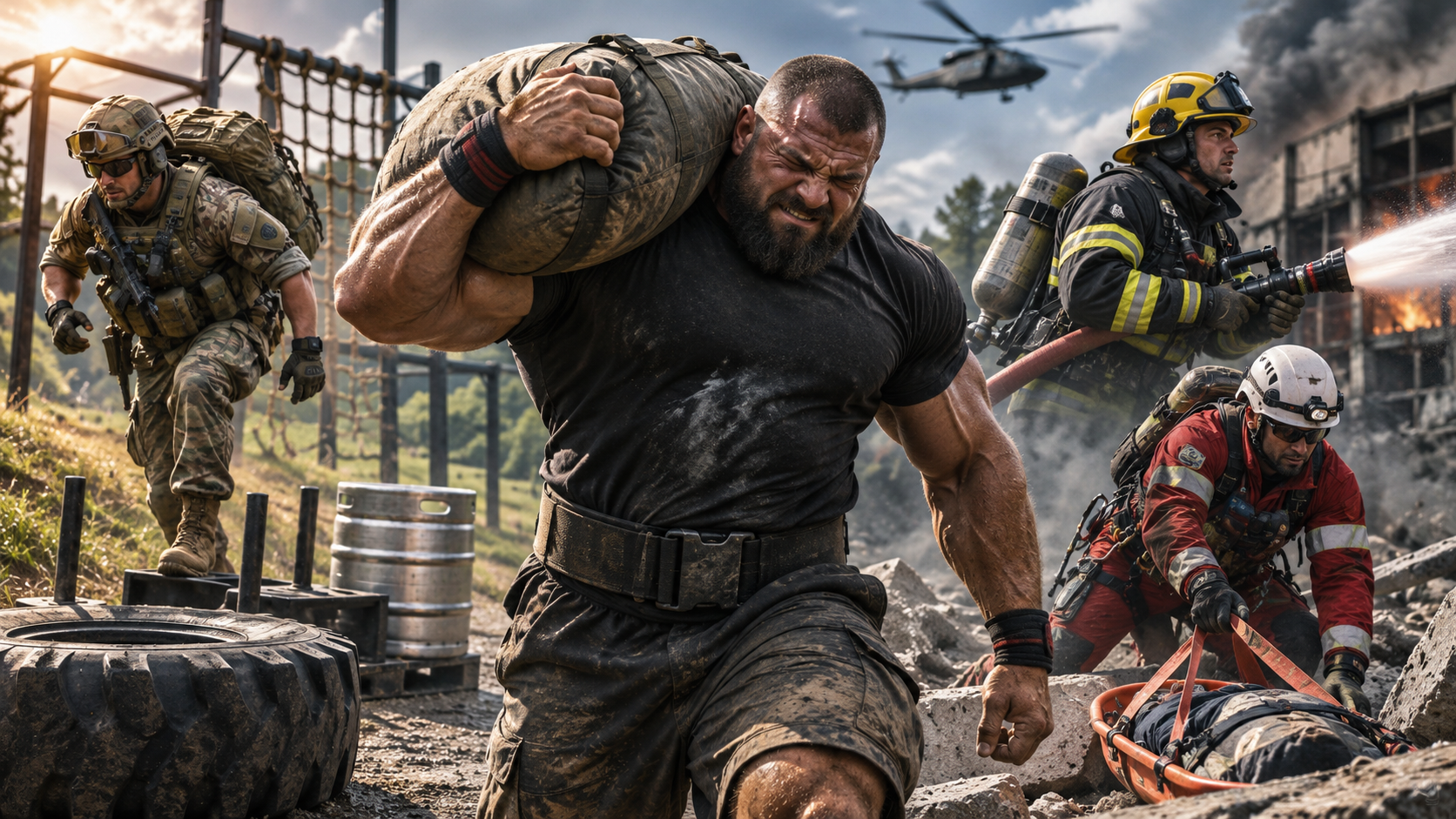
A Strongman athlete can move an exceptionally heavy yoke over a short course, load an Atlas stone onto a platform, or pull a vehicle that seems almost impossible to move. A soldier may have to carry equipment across unstable ground, assist an injured colleague, lift supplies out of a vehicle, or negotiate obstacles while exhausted. These actions share visible mechanical characteristics: force must be applied against mass, the body must remain stable, and movement requires coordination between segments, breathing control, and energy management. Yet visual resemblance does not establish complete performance transfer. In competition, the implement is known, the route is defined, and the athlete can prepare for a limited number of attempts. In operational service, mass may be unpredictable, space confined, surfaces slippery, communication compulsory, and the consequences of an error far more serious. The central question of this episode is therefore not whether Strongman “looks like” military work, but to what extent its adaptations become a demonstrable ability to accomplish real tasks [1–3].
We use operational strength as an editorial term, not as a medical diagnosis or a property measured by a single instrument: the capacity to generate, transmit, and regulate sufficient force for the physical demands of an occupation, within the available time, using appropriate technique and at an acceptable physiological cost. This definition contains components that should not be conflated. A person may lift an enormous load once yet struggle to walk with a pack for two hours. Another may run extremely well but fail to extract a heavy object quickly. A third may manage both tasks in ideal conditions and lose efficiency while wearing gloves, a helmet, or protective gear. In the assessment of emergency and intervention professions, maximal strength is a resource, not the final outcome. The outcome is the correct and sufficiently rapid completion of a concrete task, sometimes with partners and across repeated efforts. Research on essential military tasks identifies load carriage, manual material handling, and casualty evacuation as major families of physical demands [1].
This distinction also changes how we discuss exceptionally strong athletes. An outstanding deadlift does not automatically reveal walking speed, loaded balance, aerobic capacity, heat tolerance, terrain adaptation, or decision-making quality under pressure. Conversely, dismissing absolute strength would be equally mistaken: the movement of an external mass depends on the actual forces a person can exert, not merely the ratio of lifted weight to body mass. Where the object weighs the same for everyone, high absolute strength may confer a substantial advantage. What remains to be established is how much of that advantage persists once an intervention requires prolonged movement, direction changes, precision, or cooperation. This is the organizing logic of the series: we begin with force production, then examine casualty evacuation, heavy equipment, firefighting, obstacles, protective equipment, and fatigue, before turning to assessment and programming.
Maximal strength is not synonymous with complete readiness
In mechanics, force is expressed in newtons; in the gym, performance is often expressed as kilograms lifted. These languages are related but not identical. Lifting an object requires enough force to counter its weight and alter its motion. The human body, however, is not a rigid engine generating identical force in every setting. Joint angles, contraction velocity, muscle length, technique, friction, center-of-mass position, and the time available to exert force all affect performance. A one-repetition maximum, or 1RM, in a standardized exercise usefully measures a specific force-producing ability, not a universal property called human “power.” The same person may show an impressive deadlift 1RM yet struggle to lift a bulky object without handles or repeat a rapid effort several times. Military physical-readiness guidance accordingly distinguishes strength, hypertrophy, muscular endurance, power, and aerobic capacity [2,6].
Absolute strength describes force production without normalizing to body mass; relative strength expresses it in relation to the person's mass, often through a simplified ratio. Neither measure is inherently superior under all circumstances. When an operator must lift a standardized equipment box, absolute strength can provide a direct advantage. When that operator must climb over an obstacle by moving their own body, body mass becomes part of the load. A larger person may have more muscle capable of moving external objects, yet also more mass to accelerate, brake, and transport. The situation is more nuanced still when muscle and adipose tissue are distinguished: additional muscle may support task performance, whereas mass that does not contribute proportionally to force production can increase locomotion costs. Research linking body composition and military performance supports a more differentiated understanding, rather than the simplistic verdict that bigger is always better or always worse [10].
Mechanical power is work performed per unit of time or, under appropriate conditions, force multiplied by velocity. Breaking a very heavy object free from rest may primarily require high force, whereas rapidly lifting equipment or stepping onto a tall obstacle may depend heavily on the rate at which force is developed. Casualty evacuation can begin with the initial extraction, where peak force is critical, and then turn into a longer movement in which endurance, grip, and movement economy dominate. This is why assessment solely through the squat, press, or deadlift cannot fully describe intervention readiness. Strength testing should not disappear; it should sit within a test battery that represents occupational requirements. Vaara and colleagues emphasize the combined roles of strength, power, muscular endurance, and aerobic fitness, with different relative importance across tasks [1].
Where strength comes from: nerves, muscles, and architecture
An operator's strength cannot be reduced to arm circumference. The central nervous system selects, recruits, and coordinates motor units, while muscle converts electrical signals into tension through the interaction of contractile proteins. The amount and distribution of muscle mass, fascicle architecture, tendon characteristics, functional stiffness of elastic structures, and familiarity with a movement all influence the observed result. In a maximal lift, an athlete uses not just a powerful “engine” but a learned strategy to align body segments, generate intra-abdominal pressure, and transmit force into the implement. That strategy is adapted to the competition rules. During a professional task, the same physiological resources must be reorganized for a different object shape, starting position, and set of support points. Transfer is more likely when training develops a general ability important to the new movement and when task practice teaches the operator to express it. Similar movements may help, but similarity does not eliminate the need for task-specific learning [2–4].
Muscular hypertrophy may increase force potential without guaranteeing any particular mission outcome. A well-designed program addresses the development of contractile tissue as well as neuromuscular recruitment, trunk control, and repeated-work tolerance. Adaptation does not unfold on a universal schedule. Some early gains reflect improved technique and coordination; structural changes occur progressively, while load-carriage endurance may require a different type and duration of exposure. If we test a soldier only on a movement closely resembling a trained exercise, we risk confusing practice effects with a general improvement in readiness. A more informative approach combines standardized strength tests with occupational tasks that are not identical to the training exercises. This is also why comparisons between Strongman and traditional strength training demand caution: improvement in a programmed lift is not automatic evidence of superiority at unrelated tasks [4].
From a musculoskeletal health perspective, the ability to generate force must be accompanied by the ability to control it. An abrupt lowering of a load, loss of grip, unexpected trunk rotation, or unstable surface can turn useful forces into stresses that exceed local tissue tolerance. There is no single posture that abolishes every risk; rather, task load, moment arm, repeated exposure, experience, and fatigue interact. The mechanics of holding an object close to the body differ from holding it at arm's length even when its mass is unchanged. McGill and colleagues' investigation of Strongman events illustrated that the events impose different demands on the trunk and that choosing a training exercise requires an understanding of its specific loading and control requirements [5]. An intervention training program should therefore avoid merely copying the most spectacular events and instead select stimuli that raise useful capacity at a manageable level of risk.
Force, impulse, torque, and movement economy
Two people can complete the same task through different biomechanical strategies. One moves a sandbag using a powerful coordinated extension of the hips and knees; another lifts it in stages, uses an intermediate support, and adjusts grip. Both approaches may work, but metabolic cost, stability, and the likelihood of repeating the action can differ. A torque depends on the magnitude of an applied force and its perpendicular distance from the axis of rotation. In many configurations, a heavy object held close to the trunk produces different external moments than the same object held at arm's length. This helps explain why a handleless sandbag, a pressurized hose, or a colleague carried in the arms does not behave like a balanced barbell. Even with an identical mass in kilograms, the distribution of that mass and the object's freedom to move alter control demands [3,5].
Mechanical impulse is force accumulated across time. At the start of a drag, the operator has to overcome initial resistance; once the object moves, resistance may change with friction, inertia, and terrain. During a push, the alignment of the force vector with the direction of travel determines how much effort actually contributes to forward motion. Strongman exercises can expose people to these real mechanical problems under controlled conditions: sled drags, asymmetric carries, awkward objects, and lifting-to-carry transitions. They do not perfectly reproduce an intervention. Road incline, wet equipment, restricted maneuvering space, or the need to protect an injured person all modify the operation. Transfer must be tested in representative tasks rather than inferred from the superficial fact that both gym and mission contain a pulling action.
Movement economy is central to occupational endurance: two people performing the same external mechanical work may expend different amounts of metabolic energy because of their technique, fitness, and chosen strategy. In a short competition, the advantage may appear as seconds saved. During a longer mission, it may determine how many tasks can be completed before performance deteriorates. Experienced athletes learn to organize steps, transitions, and grip, and that control may be valuable. However, efficiency on a straight farmer's walk course does not automatically transfer to narrow stairs or uneven ground. The biomechanical literature on Strongman identifies relationships between stride characteristics, ground-contact times, and performance in certain events while also highlighting the lack of adequate data for many exercises and occupational situations [3].
Define the occupational task before choosing the exercise
A training program often starts by asking “what are the best exercises?”, although the methodologically sound question is “what must this person be able to do?”. For soldiers, the answer comes from task analysis: lifting equipment from the ground or a vehicle, loading it to a given height, walking under a pack, dragging or pushing mass, manipulating obstacles, evacuating another person, descending stairs, or maintaining a loaded position. Each activity has its own variables: mass, bulk, distribution, duration, surface, working space, required speed, worn equipment, and opportunities for teamwork. Without these variables, a demanding-looking test may be largely irrelevant. Even two specialties within the same institution do not necessarily have identical requirements. An urban response team, a unit undertaking long-distance load carriage, and a mountain-rescue service may exploit the same absolute strength in very different ways [1,2].
A rigorous analysis distinguishes frequent tasks from rare but critical ones. Routine materials handling may occupy many hours while appearing unremarkable; extracting a colleague from immediate danger may take seconds and determine the outcome of an operation. Training should therefore privilege neither total work volume alone nor maximal actions exclusively. The consequences of failure matter alongside task frequency. Time to completion and movement quality can be useful endpoints, but performance must not be defined in a way that rewards unsafe behavior. An individual finishing a drill faster while losing control of a rescue manikin does not demonstrate superior readiness. In rescue professions, victim protection and team coordination belong to the occupational outcome; they are not administrative extras. Representative tests therefore need standardized scenarios and observable success criteria.
Another step is quantifying the total work performed across an actual duty day. Two sessions with the same top weight may impose different recovery demands if one also includes repeated lifts, long walks, heat exposure, or restricted sleep. For military personnel, duty-related load adds to gym training load. Prescribing Strongman events without accounting for marches, guard duty, field instruction, or tactical drills treats personnel as if they possessed the same recovery opportunity as professional athletes in training camp. Responsible programming fits the strength-training dose to the real working week. Holistic Health and Fitness guidance emphasizes individualizing load, selecting exercises according to occupational needs, and integrating recovery [6].
Loaded marching: where strength meets aerobic fitness
Carrying equipment over appreciable distances is one of the best-documented demands in military work. A backpack does more than add kilograms: it can alter trunk position, stride characteristics, center-of-mass movement, and plantar loading. Its effect depends on pack mass, placement, stability, speed, gradient, ground surface, and individual characteristics. Two people with identical maximal strength can show different marching tolerance because of aerobic fitness, movement technique, and experience with their equipment. As loads increase, neuromuscular capacity becomes more important; this does not remove the roles of oxygen consumption, heat regulation, and exposure duration. Vaara and colleagues' review identifies both strength and aerobic fitness as determinants of load-carriage performance, particularly when external loads are high [1].
This is where a major limitation of Strongman transfer becomes apparent. Yoke walks and farmer's carries expose athletes to substantial loads and stabilization demands, but they are usually performed over relatively short distances on controlled surfaces. Military marching may involve hundreds or thousands of steps with a lighter load but far greater cumulative stress and sustained metabolic cost. It is unjustified to assume that someone who moves a massive yoke across a platform will automatically record an excellent long-distance marching time. Conversely, high strength may reduce the relative intensity of individual muscular actions and provide useful reserve capacity when the operator must lift equipment, climb a slope, or negotiate an obstacle. An effective strategy does not place strength and endurance in opposition; it develops them as complementary resources. Interventions combining load carriage, aerobic conditioning, and whole-body strength appear more defensible than exclusive approaches [1].
A difficult march also has immediate consequences for subsequent work capacity. A 2026 meta-analysis pooling 23 studies and 350 participants found decrements in some measures of lower-body and trunk strength, power, and postural stability following foot marches, although study heterogeneity and confounding limit strong causal interpretation [9]. The practical implication is that strength measured at rest does not necessarily describe the strength available after hours of loaded movement. For operational units, this supports assessing task function after relevant fatigue under controlled conditions, not solely in a climate-controlled gym at the start of the day. It also supports planning breaks, managing loads, and avoiding unnecessary maximal physical challenges directly after a demanding march. Successful preparation means not only arriving at the destination but remaining capable of effective work once there.
Manual materials handling: useful strength does not always resemble a barbell
Lifting an object off the ground, moving it to waist height, and placing it on a platform involves at least three different problems. The initial phase requires overcoming weight and sometimes adhesion or friction against the supporting surface. During transport, the operator must balance, manage load oscillation, and maintain grip. During placement, eccentric control and communication with a partner become essential. A deadlift or squat may develop force resources relevant to the initial phases but does not automatically teach the handling of a fragile, bulky, or slippery object. Atlas stone and sandbag loading expose athletes to awkward shapes, yet real equipment may have edges, differently positioned handles, moving contents, or orientation restrictions. Calling an exercise “functional” does not make it occupationally specific; one must identify precisely which workplace function it reproduces and which aspects it leaves untested [1,3].
In occupational research, materials handling may involve one maximal effort, a sequence of repeated lifts, or intermittent activity extending over hours. The performance determinants are not identical. During a single heavy lift, strength and power may have particularly strong associations with success; during repeated lifting, local muscular endurance, aerobic fitness, and economical technique also become important. Vaara and colleagues explicitly describe this distinction when reviewing military tasks [1]. A practical training principle follows: where personnel need to lift heavy equipment twice, preparation should not resemble a fifty-repetition competition; where they need to unload many moderately heavy objects, a single 1RM assessment is equally insufficient. Specificity begins with the number of repetitions, available recovery intervals, and completion criteria rather than the prestige of a particular lift.
An underestimated factor is the interface between person and object: grip, shape, gloves, finger clearance, and whether contents shift. Powerful spinal extensors cannot completely compensate for a grip that cannot be maintained. Alternating bilateral with unilateral carries, introducing handles of different sizes, and carefully using sandbags may foster adaptability. Such variety still requires progression because unstable objects can impose unexpected demands. At work, a carrying device, lever, wheeled platform, or two-person lift may be wiser than demonstrating an individual's maximum. Good physical preparation does not replace ergonomics; it makes ergonomic solutions more effective. The occupational outcome is safe movement of material using the human and technical resources available.
Casualty evacuation: strength within an ethical and operational context
Moving an injured person powerfully illustrates the difference between athletic capacity and operational competence. A training sandbag and a manikin may weigh the same, but an actual person requires attention to airway protection, avoidance of movements that could worsen injury, route selection, and team coordination. Body position, mass distribution, and the absence of ideal handles may make the task difficult in ways that a rigid object cannot replicate. Operators may have to initiate motion from a low position, reverse direction in a confined area, and negotiate obstacles. A large reserve of strength matters, yet success also depends on technique, judgment about asking for assistance, and appropriate evacuation equipment. Tactical and medical drills must follow relevant institutional procedures; an article about physical training cannot substitute for casualty-care instruction [1].
Studies reviewed by Vaara and colleagues associate casualty evacuation performance with maximal strength, including grip strength, muscular endurance, absolute maximal oxygen uptake, and anaerobic capacity [1]. The word “associate” matters: not every investigation is a randomized intervention, and correlations between tests do not by themselves establish simple causation. Furthermore, standardized tasks often use manikins and prescribed distances, whereas real environments are variable. An athlete capable of dragging a heavy sled may possess a useful mechanical foundation for moving mass, but applying an inappropriate technique to an injured person could endanger them. Comparisons between a Strongman drag and casualty evacuation should therefore be confined to shared general demands for pulling, stabilization, locomotion, and effort tolerance. Patient protection and medical-support skills remain distinct competencies.
When designing assessment, a standardized manikin can reduce variability and permit safer repetition, but results must be interpreted within the protocol's limitations. A short test on level ground provides insufficient information about evacuation on stairs, through smoke, in water, over steep terrain, or under restricted visibility. For some occupations, trunk stability, control of the manikin, procedural adherence, and movement speed are as relevant as total time. Two-person extraction may be operationally preferable to an individual drag even when the stronger person could finish the test alone. The central idea is that strength should expand intervention options, not turn an intervention into an individual strength demonstration. Genuine functional capacity includes selecting the safest workable solution under prevailing conditions.
Farmer's walk and yoke: loaded gait, but not the same gait
The farmer's walk involves moving while holding loads in the hands, usually bilaterally, whereas the yoke walk places a load on a frame supported by the upper trunk. Both require coordinating locomotion with external mass, yet load position changes the distribution of forces dramatically. In the farmer's walk, grip and the ability to limit implement oscillation contribute substantially; under a yoke, trunk stability and control of the entire structure become central. The presence of walking steps does not make either event biomechanically identical to marching with a backpack. A pack distributes part of its load through shoulder straps, waist support, and back contact; farmer's handles emphasize the upper-limb interface; the yoke may create a distinctive pendulum-like challenge. A systematic review of Strongman biomechanics identifies similarities between these events and loaded carriage but cautions that quantitative data remain incomplete [3].
Important gait variables include stride length, step frequency, ground-contact duration, lateral displacement of the center of mass, and the ability to accelerate or brake. In some studies of farmer's walking and heavy dragging, better performers exhibited combinations of faster stepping, longer strides, and shorter ground contact [3]. These associations describe technique within a particular setting; they should not be converted into universal prescriptions. On uneven terrain, shorter and more deliberate steps may be prudent; in confined spaces, stability may matter more than maximal speed. Learning one supposedly ideal cadence in the gym cannot prepare every context. The main practical value is developing loading tolerance and the ability to adjust locomotor strategy.
For personnel who move heavy materials, intelligently varied training may include bilateral carries, unilateral carries, loads held close to the body, and lifts beginning at different heights, all scaled to the individual. The proportions matter, however. Extreme competition loads are chosen to differentiate already trained athletes; they are not automatically appropriate doses for beginners or personnel expected to work the following morning. The occupational standard is not an impressive number of kilograms but repeatable performance and ongoing physical availability. Before increasing load, a coach may improve gait quality, grip reliability, stopping control, and route safety. Building a sufficient reserve of strength and then integrating it into locomotion is more defensible than trying to reproduce elite Strongman events.
Stones, bags, logs, and tires: similarity of shape is not proof of transfer
Loading Atlas stones or large sandbags obliges the athlete to apply force to objects with challenging shapes, sometimes without stable handles. That exposure can be relevant to the handling of materials that were not designed ergonomically. But the differences are equally important. A spherical stone has predictable geometry even when awkward; a deformable container may shift its center of mass; delicate equipment may need slow rather than explosive movement. Certain Strongman events reward rapid placement onto platforms, whereas workplace procedures may require protecting the contents, avoiding impact, and coordinating two people. Useful transfer lies in handling bulky objects, not indiscriminately copying competition technique [3].
The tire flip contains rapid transitions: initiating the tire's motion, reorganizing body position, and completing the turnover. It can combine lower-limb extension, pushing, and changing grips. A massive tire, however, is not a universal model of moving an obstacle during an intervention. Real hazards may include sharp edges, unstable structures, unknown mass distribution, or bystanders. Injury may also occur when an operator attempts alone a maneuver that calls for mechanical assistance. From a training perspective, there is no obligation to select the heaviest possible tire. Lighter, well-controlled implements may provide ample opportunities to practice force direction and positional change without the risks associated with maximal loading.
Log presses and other overhead lifts develop pushing, stabilization, and coordination abilities. Where personnel frequently place equipment overhead, these resources may be relevant; in occupations where the principal job takes place at ground level, other qualities may deserve priority. A standardized log has relatively predictable dimensions, grips, and movement paths, whereas real equipment may be eccentric, rigid, too wide to position overhead comfortably, or hazardous to lift alone. Task analysis must take precedence over sporting spectacle. Biomechanical research offers useful clues about similarities to traditional lifts, but it does not establish that a log-press record directly produces superior performance in every type of occupational handling task [3].
Pulling and pushing: object resistance is not necessarily object weight
When an athlete drags a sled, the principal resistance is not necessarily its nominal mass but the interactions among sled, surface, friction, slope, and force direction. Two identically loaded sleds may move very differently on synthetic turf, asphalt, grass, or gravel. With a vehicle, wheel rolling and terrain conditions change the problem again. Comparing the “kilograms pulled” in two different gyms can therefore be meaningless without specifying the setup. During interventions, operators encounter even more variable resistance: hoses, cables, stretchers, wheeled containers, and mechanically jammed components. Pushing and pulling exercises may be useful because they train body positioning and predominantly horizontal force production, not because they perfectly simulate every real object [3].
Trunk orientation, lower-limb angles, and footwear traction influence how much produced force actually moves the load. An exceptionally strong person may lose time by pushing in an inefficient direction or slipping; another person with less maximal strength but better technique and favorable ground conditions may succeed more quickly. Training should distinguish the force needed to break an object free from rest from the ability to maintain its movement. Short, intense pulls may develop qualities different from a long drag of a moderate load. If the mission requires intermittent efforts, programming can include repeated bouts with specified recovery. If the requirement is a single, exceptionally intense effort, testing the ability to initiate movement may be more relevant.
Real professional life does not require every problem to be solved with muscular force. A stuck object may need to be freed, the direction of pull altered, or leverage applied rather than greater effort exerted. Moreover, pulling equipment during an intervention may affect people and structures nearby. Understanding basic mechanics makes an operator more effective and more prudent. Strongman can provide an excellent foundation for generating horizontal forces, but treating that foundation as full occupational competence exceeds the available evidence. Task-specific practice must convert the general ability into selecting an appropriate mechanical solution to the actual problem.
Firefighters provide a natural laboratory for functional capacity research
Firefighting tasks include stair climbing in equipment, hose transport, ladder manipulation, forcible entry, and victim evacuation. These tasks require strength, power, endurance, coordination, and tolerance of exertion, often simultaneously. Firefighter research is relevant to the Strongman discussion because many occupational tasks can be assessed using standardized protocols and partly resemble carrying, pushing, and pulling events. A 2026 systematic review and meta-analysis drawing on 32 studies found associations between muscle and anaerobic performance measures and completion times for simulated firefighting tasks, while the importance of particular qualities varied across task types [7]. The findings support a multidimensional view rather than the idea that a single strength measure describes every intervention.
A 2026 study of 47 firefighter trainees examined relationships between the isometric mid-thigh pull, body mass, other fitness tests, and standardized occupational tasks. Isometric force was associated with performance on a manikin drag and ladder extension, and statistical models explained only part of the observed variation. Stair climbing under load did not show the same relationships with the investigated variables [8]. This contrast is revealing: a force test may help predict certain tasks yet have limited predictive value for others. It does not mean strength becomes irrelevant on stairs; instead, that particular task depends on a more complicated combination of metabolic conditioning, technique, and equipment tolerance.
Applying firefighter findings to military work still requires caution. Firefighters and soldiers share certain physical demands but use distinct equipment, procedures, and working environments. A hose-carry test is not a military march, and fireground rescue is not tactical evacuation. The logic of research, however, is shared: define tasks, measure general capacities, observe task-specific performance, and design training around the deficits identified. A coach adding farmer's carries or sled drags to firefighter conditioning should formulate a testable hypothesis: which occupational task should improve, and how will that change be measured? Without that step, resemblance between exercise and occupation remains an attractive intuition rather than evidence.
Energy systems: why one successful lift does not predict a full duty day
Maximal force is often expressed in brief attempts in which immediately available energy and neuromuscular coordination are central. Operational work may instead require repeated sequences, prolonged movement, and duty periods during which restoring energy reserves becomes critical. The phosphagen system supplies energy rapidly for brief high-intensity work; glycolysis contributes substantially as intense work continues; oxidative metabolism supports sustained effort and recovery between bouts. These systems do not switch on in strict succession but contribute simultaneously in varying proportions. A Strongman event lasting tens of seconds can heavily challenge force production and anaerobic resources without providing sufficient preparation for hours of marching or manual work. Conversely, good aerobic fitness may improve recovery between efforts without guaranteeing the ability to lift a very heavy object [1,2].
Assessment should distinguish capacity, power, and resistance to fatigue. One soldier may excel at a single high-force pull but lose acceleration by the third repetition. Another may maintain pace across several rounds yet lack the force required to initiate the task. These profiles demand different interventions. Training composed only of near-maximal sets yields little information about repeatability; training composed only of long circuits may neglect the ceiling of available force. Periodization should combine sessions or phases with distinct objectives while respecting the overall occupational workload. Research into acute Strongman responses identifies elevations in blood lactate and heart rate, but those findings are not evidence that every long-term Strongman protocol is superior to every alternative [11].
Metabolism also has practical determinants: meal timing, hydration, temperature, movement duration, sleep, and duty schedules affect available energy. Building occupational preparedness around a single gym record may conceal these constraints. The purpose of programming is to establish enough force for the heaviest essential task, preserve work capacity for repetitions, and avoid undermining recovery. No universal ratio of maximal to aerobic training is appropriate across units, because mission profile, individual history, and training phase determine needs. Transfer is not a magical characteristic of an event; it emerges from combining adaptations with relevant exposure and intelligent workload management.
Strength reserve and the relative cost of a task
The concept of strength reserve helps describe two people asked to lift the same external load. If one can generate far more force than the task requires, the required effort may represent a smaller proportion of maximum capability; the movement may feel easier and leave resources available for later operations. This is a plausible biomechanical argument for developing absolute strength in emergency professions. It does not mean that a percentage of 1RM determines metabolic expenditure or fatigue time on its own. Moving a manikin uses a different technique from a deadlift, and two people with identical 1RMs may differ in efficiency, endurance, and task tolerance. Reserve capacity should be regarded as a potential advantage, not a precise prediction [1,2].
A common interpretive error is to assume that greater strength always provides the same marginal benefit. Relationships between physical abilities and occupational outcomes may contain thresholds and diminishing returns. For one task, the difference between insufficient and adequate strength may be decisive; the difference between very high and exceptional strength may provide little additional advantage if the actual limitation is running speed or movement duration. This does not make high strength inherently disadvantageous; it calls for rational allocation of training time. A soldier who already possesses enough force for the critical task may gain more by improving stability, endurance, or skill than by pursuing another personal record.
This principle supports a more accurate interpretation of occupational testing. Passing a lifting threshold demonstrates that the criterion was met under the conditions of that test; it does not necessarily reveal the safety margin across different terrain or repeated efforts under fatigue. Some professions may benefit from assessing a reserve using a somewhat harder task or repeated submaximal trials, but this should be undertaken with safe loads and procedures rather than converting every assessment into a maximal contest. The real issue is how much useful capacity remains when events do not follow the plan.
Protective equipment changes the body the operator has to work with
Helmets, vests, packs, protective components, boots, breathing apparatus, and gloves alter the way a person moves. Some add mass and inertia, others restrict range of motion, reduce tactile feedback, or change heat exchange. A test completed in a T-shirt does not faithfully reproduce a similar effort in full equipment. For heavy-object tasks, gloves may alter grip, belts and body armor may affect sandbag placement, and protective fabrics may prevent an object from being held close to the trunk. The ability to generate muscular force may remain high while the efficiency of transmitting it to the object declines. Specific training must observe not only what someone can lift, but what they can lift while wearing prescribed equipment and following professional procedures.
Equipment also creates thermal demands. Muscle work generates heat, and protective garments may impede heat loss through sweat evaporation and convection, depending on their construction and conditions. In a hot environment, heart rate, discomfort, and fatigue may increase while work capacity declines despite adequate muscular strength. A deadlift performed in a temperate gym does not reveal these effects. Specific preparation can therefore include gradual familiarization with equipment and working conditions under supervision, without turning extreme heat exposure into a compulsory training challenge. Managing heat, rest, and hydration remains an occupational safety obligation.
Finally, equipment changes the relationship between useful strength and total moving mass. If two people carry the same pack, the heavier person also moves more body mass; if that person has substantially more muscle, they may nevertheless handle some loads better. An analysis based solely on total body kilograms cannot resolve this comparison. Body composition, walking economy, aerobic fitness, and task profile all need consideration. Applying the literature on load carriage and body composition calls for individual assessment rather than stereotypes about physical build [1,10].
Fatigue transforms the same task into a different problem
A test completed after sufficient sleep and two days of recovery may describe an athlete's peak ability very well while revealing only part of the performance available after overnight duty, a march, and several lifting tasks. Fatigue is not one uniform phenomenon. Neuromuscular activation, energy availability, psychological tolerance, stability, and reaction speed can change in different ways. The effects are also task-specific: someone may temporarily lose jumping power without showing a proportional decline in their ability to support a static object. The 2026 meta-analysis of military foot marches illustrates that some muscular and postural capacities decrease after prolonged loaded movement while other measured capacities change comparatively little [9].
This variation explains why “testing under fatigue” requires careful design. If the aim is to measure maximal strength, prior fatigue distorts that measurement. If the aim is to simulate a task that occurs after marching, prior exertion may be justified, but it needs standardization: duration, carried load, temperature, intensity, and recovery interval. Poor performance after an extremely demanding protocol does not necessarily identify an inadequately trained person; it identifies performance under the imposed conditions. Comparing soldiers who have undertaken different prior workloads does not produce a fair assessment. Especially in military settings, training data must be interpreted against actual duty demands, and testing should not add gratuitous risk.
Fatigue also has an organizational dimension: physical tasks are frequently performed in teams that require decisions, communication, and resource allocation. A strong operator who cannot adjust to the group's pace or insists on carrying an unsuitable load alone may reduce collective efficiency. A unit's objective is not the best individual record under artificial conditions but sustainable team performance over the operational period. Test results should therefore be supplemented by assessments of cooperation and procedural execution. High strength may be a valuable team resource, while planning must prevent it from becoming a reason to repeatedly overburden the same people.
Cognitive performance and movement control under demand
In operational conditions, a strength task may coincide with spatial orientation, understanding instructions, checking the environment, and communicating danger. This differs from a Strongman event in which attention can be concentrated on the implement and course. Cognitive processing draws on attentional resources, and fatigue, stress, and task complexity can change how information is prioritized. It would be inaccurate to claim that a heavy deadlift automatically develops tactical judgment or that all forms of fatigue produce the same cognitive decline. Strength is better viewed as one component of physical performance that must be integrated with perceptual, decision-making, and team capabilities.
A well-designed occupational drill may progressively combine load manipulation with a simple orientation or communication requirement without compromising safety. Technique is initially learned separately under controlled conditions; complexity can be added after stable execution has been demonstrated. The goal is not to create arbitrary chaos but to understand whether movement control can be maintained when attention is divided. For example, carrying a moderate object while responding to a standardized route-change instruction is easier to reproduce safely than a sequence of unpredictable maximal maneuvers. Institutional procedures and risk control always take priority over theatrical attempts at realism.
Psychological assessment must also remain within its proper limits. Motivation, discomfort tolerance, and self-efficacy may affect behavior, but they are not interchangeable with muscular capacity, and sporting results do not prove psychological resilience in every context. Strength athletes may have experience regulating competition-related emotions, yet assuming responsibility for other people's lives presents a distinct challenge. Using Strongman as a training tool does not mean treating the strongest person as the most appropriate leader or the most competent professional. Measuring each dimension demands appropriate tools and qualified interpretation.
Body mass, dimensions, and fairness in occupational standards
Bodies differ in height, segment proportions, muscle mass, adiposity, experience, and training history. In strength sport, large body dimensions can confer important advantages in certain events, but operational occupations demand different combinations of qualities. An operator with longer arms may possess favorable mechanics for some pulling tasks and less favorable ones for certain presses; a massive operator may control external loads well while paying a greater metabolic cost when moving their own body quickly. These relationships should not be turned into simplistic judgments based on appearance. Body composition is more informative than interpreting body mass index in isolation, and functional assessment should remain anchored in required tasks [10].
An occupational standard should begin with the essential task rather than the physical profile of the strongest applicant. If equipment has a particular mass and must be handled safely, a requirement can be justified through job analysis and the consequences of failure. Yet the method of testing must be valid, reproducible, and applicable to people of differing characteristics without arbitrary changes to the criterion. Not every activity requires maximal testing, and setting a threshold on personal impression can create selection errors. Appropriate standard development involves collaboration among strength professionals, occupational medicine practitioners, ergonomists, and operational leaders.
Differences in sex, age, or mass category should be analyzed through the actual demands of work and the evidence rather than assumptions about character. Some general fitness tests use adjusted norms for health or conditioning purposes, whereas a critical occupational activity may need a shared minimum task-completion criterion. These two purposes of assessment are not identical. A well-designed battery can assess both individual progress and the competency required for a task, using appropriate accessibility and safety measures. Strongman is a possible repertoire of training methods, not a moral measure of individual worth or a sufficient basis for administrative decisions.
What comparative studies actually show about Strongman
An exercise's popularity and the effort it demands do not establish superior effectiveness. In 2015, Winwood and colleagues published an experimental comparison of seven weeks of Strongman training versus traditional resistance training in thirty rugby players with strength-training experience. The programs were matched for biomechanical similarity and loading, and most performance measures improved in both groups. The researchers did not find significant between-group differences in general functional performance measures after seven weeks; small advantages favored different approaches for particular outcomes. The relevant conclusion is not that Strongman does not work, but that, under the study conditions, it was broadly comparable with traditional methods for multiple outcomes [4].
The design has important limitations: a small sample, brief intervention, and participants drawn from a particular sport rather than the military. Direct transfer to casualty evacuation, loaded marching, or rescue operations was not demonstrated by the experiment. A coach would be mistaken to claim unconventional implements must be superior simply because they resemble real tasks. Rejecting such exercises because no statistical superiority was established would be equally mistaken. They may offer loading variety, exposure to different grips and shapes, motivation, and instructional opportunities, but their selection should reflect the expected benefit, time, equipment, and safety. For a unit, the possibility of standardizing an exercise may be more valuable than its novelty.
A 2019 systematic review of Strongman biomechanics identified only eleven articles meeting its criteria. Its authors described the mechanics of several events and plausible analogies to daily or tactical activities, while highlighting gaps involving the yoke, asymmetric carries, vehicle pulling, Atlas stones, and log pressing [3]. This relatively limited evidence base deserves serious attention. A biomechanical description may show that two tasks share similar patterns of force; by itself, it cannot demonstrate that training one improves performance in the other. Such claims require longitudinal studies with independent occupational outcomes, appropriate comparators, and injury surveillance. Mechanical plausibility is a starting point for research rather than its conclusion.
Association, causation, and the limits of extrapolation
When researchers observe that stronger soldiers perform better on certain occupational tests, several mechanisms could explain the association. Strength may contribute directly, but those individuals may also have more training experience, different body composition, or better overall conditioning. A correlation coefficient does not automatically separate these influences. Nor does a statistical model explaining part of the variation in test time guarantee accurate predictions for every individual. An intervention study can provide stronger grounds for causal inference, particularly when allocation, measurement, and training-load control are sound. In practice, such studies can be difficult within military units that have different schedules and responsibilities.
Evaluating the literature also requires attention to outcomes that were not measured. If a study reports strength improvements but never measures casualty evacuation, it is wrong to describe the intervention as proven effective for evacuation. If a program improves an occupational test but does not monitor injuries or availability for duty, its organizational usefulness remains incompletely established. If research includes rugby players for seven weeks, the same percentage changes cannot be presumed for recruits or personnel with twenty years of service. Responsible translation of evidence specifies who was studied, what was measured, how long the intervention lasted, and where the author's own inference begins [4].
Another danger is turning a statistical observation into a universal prescription. Many unsupported steps lie between “maximal strength correlates with some military tasks” and “every soldier must perform maximal Strongman lifts.” Initial fitness, mission profile, risk, available equipment, and training alternatives must be considered. An intervention that adds Strongman to an already overloaded schedule may increase fatigue without yielding the expected benefit. The same intervention, replacing poorly targeted sessions, may work better. Evaluation should therefore examine dosage, program structure, and measured outcomes rather than the fashionable label of a method.
Strength as part of a preparation system, not a training ideology
A comprehensive program need not choose among barbells, Strongman, and aerobic conditioning as though they were rival camps. Barbells allow precise loading and comparison, unconventional implements introduce varied forms of resistance, and aerobic work develops a base for sustaining effort over time. Practicing occupational tasks connects general capacities to actual procedures. These tools serve different functions and can coexist. Reviews of military preparation emphasize combining strength and aerobic ability while adapting training volume and intensity to personnel's total workload [1,2].
Basic barbell exercises offer predictability: load progression, repetitions, rest periods, and movement ranges are relatively easy to monitor. Strongman can express developed strength through carrying, handling, and changing grips. There is also a continuum: a farmer's carry with dumbbells and a walk carrying water containers can resemble Strongman events without requiring competition equipment. Coaches should not confuse expensive implements with high-quality stimuli. If an exercise can be reproduced safely, standardized, and progressively overloaded, it may be valuable regardless of its label. Some job tasks may be better prepared through simple, repeatable exercises than through dramatic imitations of competition.
Integration also requires a clear objective for each session. A day intended for maximal strength should not automatically turn into an exhaustion-based endurance contest, and a loaded-carry session should not become a 1RM competition. Technique with awkward objects can improve under submaximal loads, especially when safety and control are priorities. Separating goals makes progress easier to interpret and reduces confusion between adaptation and accumulated fatigue. When operational schedules change, training priorities should be reconsidered rather than maintained automatically.
How to construct a functional strength assessment
A useful assessment begins by stating its purpose. If the objective is selection for a critical task, the test should estimate competence under defined conditions. If the objective is monitoring training progress, it must detect genuine change rather than variations in motivation or familiarity. General strength measures, such as a three-repetition-maximum deadlift or a standardized isometric pull, can provide information about neuromuscular capacity. Occupational tests, such as moving a load, walking under equipment, or handling material at a specified height, show how that capacity is used. A balanced battery contains both. A total score created by arbitrarily combining results may conceal a major weakness: outstanding lifting performance does not necessarily compensate for an inability to travel the required route safely [1,6].
Content validity means that a test genuinely represents the intended task. A drag on synthetic turf is not equivalent to carrying equipment upstairs, and a lift from a fixed starting position does not encompass all material-handling situations. Reliability requires a person whose ability is unchanged to produce comparable results when tested again under similar conditions. Warm-up, equipment, footwear, starting commands, surface, rest periods, and finishing criteria must therefore be standardized. Changing just one of these features may transform apparent progress into a protocol effect. Familiarization before formal assessment is reasonable so that first exposure to an unfamiliar implement is not mistaken for inadequate strength. Tests should be reproducible across assessors as well as occasions.
Sensitivity to change is a third requirement. If everyone finishes effortlessly, ceiling effects may prevent the test from distinguishing improvement. If almost nobody can finish, it may offer little value for designing a progressive program. One possible solution combines a minimum safety criterion with a continuous outcome such as time or correctly completed actions. Any threshold must still come from job analysis and empirical validation. A complex test can look operationally convincing without having been validated, while a simple test may predict one portion of real work. Instrument selection requires evidence, not merely the impression that the activity looks tactical.
What 1RM, 3RM, and isometric measurements can and cannot tell us
Repetition-maximum tests provide a relatively accessible indicator of the ability to move a load in a clearly specified exercise. The result nevertheless depends on technique, experience, mobility, and execution standards. Estimating 1RM from submaximal repetitions can reduce the need for frequent maximal attempts, but prediction equations have error and do not perform equally across exercises or populations. For personnel unfamiliar with regular barbell training, correct movement instruction is a prerequisite. Assessment should not become an abrupt introduction to complex lifting. Military H2F doctrine recognizes the usefulness of strength testing while recommending caution with repeated true maximum attempts [6].
The isometric mid-thigh pull is interesting for intervention occupations because it estimates force without requiring an external load to move. With appropriate equipment and standardized positioning, it can provide peak-force values and sometimes indicators of force development over time. However, differences in instrumentation, body position, and data processing complicate comparisons. More importantly, isometric force at a fixed joint configuration does not equal the ability to control an object through a movement path. Recent firefighter-trainee data show that such a test can correlate with certain occupational tasks without predicting all of them equally well [8]. Its predictive usefulness is context-dependent rather than universal.
Grip testing can add information, but no single value explains every form of handling. Squeezing a dynamometer for a few seconds does not reproduce supporting thick handles, gripping fabric, or carrying oscillating loads. Grip strength matters for many tasks, yet it should be interpreted alongside posture and muscular endurance. Similarly, a jumping test provides information about rapid impulse production, not loaded stability. A small number of well-chosen tests, each linked to a clear interpretation, is preferable to a large battery of measures whose occupational significance remains uncertain.
From laboratory to field: the protocol must survive reality
An assessment designed in a well-equipped laboratory may be impractical in a unit with limited time. Sophisticated machines are not mandatory for every purpose; a measured course, calibrated load, reliable stopwatch, and explicitly defined execution criteria can supply useful information. Nevertheless, simplification does not justify poor standardization. If load mass differs among participants, routes change across test occasions, or evaluators accept different movement rules, comparisons lose meaning. Data quality often depends more on protocol discipline than on equipment price. For monitoring progress, the conditions of testing and preceding workload should be documented whenever possible.
A professional development project might select three or four complementary outcomes: one general strength measure, a carry test, a repeated-work test, and a task representative of the specialty. This is an illustrative assessment architecture rather than a validated institutional standard. Each unit needs job analysis to determine sensible masses and distances. A paramedic working with a stretcher, a firefighter wearing breathing apparatus, and a soldier carrying a pack share some demands, but they do not have the same optimal test battery. Appropriate assessments let coaches avoid identical prescriptions for people with different limitations.
Collected data should guide decisions rather than merely produce rankings. If an operator is strong but loses significant time during movement, emphasis may shift toward endurance and skill. If locomotion is efficient but the individual cannot initiate movement of a required load, developing strength may take priority. If resting performance is good but drops after repeated work, effort dosing and recovery may be implicated. No single score identifies the cause; interpretation requires history, movement observation, and medical context. The outcome of good functional assessment is an individualized and testable plan, not a vague label of “fit” or “weak”.
Training progression: from neuromuscular foundation to occupational competence
Adapting Strongman to professional preparation should follow a sequence of development rather than a spectacular list of events. First come basic technique, tissue tolerance, trunk control, and the ability to perform fundamental movement patterns safely. Next, general strength and endurance are developed through reproducible exercises in which loading can be measured and progressively increased. Only after these foundations are established do unconventional objects, carries in different configurations, and more complex transitions become prominent. The final integration comes through occupationally representative tasks performed under defined conditions, requiring the operator to apply strength within the appropriate procedure and team structure. This sequence does not require every participant to become a competitive Strongman athlete. It uses elements of the sport as tools for meeting actual professional requirements.
Progressive overload remains important, but choosing which variable to progress is crucial. Increasing weight is not the only possibility. One can progress through better execution, carefully extending distance, repeating a task with specified rest, or moving the same load more efficiently. With awkward objects, changing grip or shape may increase demand even when nominal mass remains constant. Simultaneously changing every variable, however, makes it harder to identify progress and manage risk. For people new to these exercises, the most useful improvement may be the ability to reproduce the movement with stability. Experienced personnel can use more specific progressions that account for planned missions and recovery [2,6].
A key operational principle is the reversibility of training priorities. During periods of high field workload, maintaining strength at reduced training volume may be more appropriate than an aggressive development block. During less demanding periods, there may be room to expand neuromuscular reserve. Near a critical assessment, attention may shift toward task familiarity and fatigue management. There is no universally appropriate week for every unit. Effective structure maintains exposure to important physical qualities while adapting the dose to actual recovery. Programming is therefore an ongoing negotiation between the stimulus required for adaptation and the availability required by duty.
An illustrative weekly structure, not a universal prescription
Consider, solely as a teaching example, a group of healthy, resistance-trained operators who have two or three weekly opportunities for structured physical training. One session could emphasize general strength using squat, hinge, press, and pulling variations with careful technique and a volume compatible with occupational work. A second could focus on loaded movement and conditioning: moderate carries, walking, or other aerobic activity, while documenting duration and recovery. If duty allows, a third could include controlled handling of awkward objects and rehearsal of a job-specific task. This is not a prescription of kilograms, repetitions, or intensities, nor a validated institutional program. It simply illustrates how separate aims can coexist without each session becoming an exhaustive test of every capacity.
Pure strength tasks may benefit from adequate rest to preserve movement quality; repeated-work tasks may use different work densities provided technique remains stable. New task variations should be preceded by familiarization and equipment checks. Increasing load is not a useful sign of progress if an operator compensates with disorganized movement or if occupational recovery deteriorates. Monitoring may include perceived exertion, duration, distance, correctly completed repetitions, musculoskeletal symptoms, and duty exposure in preceding days. These observations should not be compressed into a magical readiness score. They should inform adjustments. An effective program is one that can be performed consistently, not merely one that appears formidable on paper.
Groups with varied training backgrounds need different pathways toward the same goal. Carrying one fixed mass may be trivial for one person and disproportionately difficult for another. Training can use individually scaled loads and progressions while occupational assessment retains criteria justified by job analysis. This separation allows equitable preparation without misrepresenting required standards. Moreover, access to simple equipment and competent supervision may matter more than access to spectacular implements. Progressions should remain safe, repeatable, and sufficiently connected to the intended outcome to justify their place in the program.
Musculoskeletal risk, recovery, and availability for duty
Neither Strongman nor conventional strength training is risk-free. The potential severity of an incident increases when loads, movement speeds, or environmental conditions exceed a participant's control. Heavy, awkward objects can place substantial demands on hands, shoulders, trunk, and lower limbs. It would nevertheless be unscientific to blame an injury automatically on one exercise without considering total volume, fatigue, technique, medical history, and context. Someone who has completed a lengthy march and slept poorly begins training in a different state from a well-rested colleague, even if both use the same load. Risk management begins with individual assessment and appropriate loading rather than slogans about exercises being inherently safe or dangerous.
For operational units, the cost of injury extends beyond individual discomfort: it may temporarily reduce a team's response capacity. Availability for duty should therefore be treated as a relevant outcome of training success. A program that raises a personal record while frequently removing personnel from service may offer little net organizational benefit. Monitoring persistent pain, functional limitations, and recovery matters, but interpretation belongs to qualified professionals. Ordinary post-exercise muscle soreness should be distinguished from symptoms requiring medical evaluation. Not every painful sensation indicates injury, but pain that changes gait or undermines loaded-movement control should not be normalized by a performance culture.
Practical safeguards include checking surfaces and equipment, teaching safe ways to stop a lift, selecting appropriate loads, establishing rules for partnered tasks, and avoiding dangerous heat conditions. Sleep quality and nutrition support recovery, but cannot compensate indefinitely for excessive training. A Strongman session should never turn into physical punishment or an improvised selection ritual. Courage and strength do not abolish mechanics in the field. Professionalism in training means developing abilities without unnecessarily compromising the people required for the next intervention.
Three hypothetical situations showing where transfer begins and ends
Consider first operator A, who possesses an excellent deadlift and moves a heavy farmer's carry quickly, but has modest aerobic conditioning. In a scenario requiring a heavy object to be lifted and shifted a few meters, this profile could be advantageous. At the end of a long march, however, the advantage may be reduced by general fatigue. Operator B has excellent aerobic capacity, tolerates loaded marching well, and recovers quickly between efforts, but lacks the force required to initiate movement of a critical object. Superior endurance does not eliminate that immediate strength deficit. Operator C has good, rather than exceptional, levels of both qualities and extensive familiarity with the occupational procedure; this person may complete the task efficiently without topping any individual fitness ranking. These three profiles are hypothetical teaching examples, not experimental findings. They show why the limiting variable depends on the task.
Now change the scenario: an object has to be carried along narrow stairs while operators wear full equipment. Grip, movement range, coordination with a partner, and respiratory fatigue become more consequential. A record from a competition platform no longer supplies all of the information required. Change the scenario once again: the team can use a specialist stretcher, a wheeled aid, or a pulley system. The optimal professional solution may reduce the need for individual brute force while leaving physical preparation very important. That is the fundamental distinction between sport and intervention. Competition often deliberately creates a difficult strength problem to separate athletes; intervention aims to solve a practical problem as effectively and safely as possible.
An intelligent training program would not automatically assign operators A, B, and C identical work. The first may need more aerobic conditioning and appropriately controlled task work after moderate fatigue. The second may need additional strength development and progressive handling practice. The third may benefit most from maintaining existing physical qualities while refining procedures. Progress should be checked after a suitable interval using consistent testing criteria. This is what genuine individualization means: it prioritizes the capacities required by the occupation rather than the coach's favored sport. Where personnel have health problems or limiting symptoms, appropriate medical assessment and individual adaptation must precede progression toward exceptionally demanding loads.
What research could genuinely establish occupational value for Strongman
A question remains insufficiently answered: does the systematic inclusion of Strongman-style exercises improve occupational outcomes more than well-designed conventional training when both approaches use a comparable training dose and operate under comparable duty conditions? A rigorous investigation could allocate personnel with similar initial profiles to programs of sufficient duration, monitor total workloads, ensure qualified instruction, and use outcome assessors unaware of group assignment. Outcomes should include not just 1RM and farmer's-walk performance but independent assessments of simulated evacuation, materials transport, loaded marching, and repeated work after exertion. Pain, injuries, training adherence, and availability for duty should also be studied. Without these outcomes, claims of occupational transfer remain partly indirect.
Researchers should compare implementation choices rather than broad labels alone. A poorly designed Strongman program with excessive fatigue might underperform a moderate conventional program; a carefully designed mixed program might work better for particular occupational tasks. The introduction of gripping challenges, carries, awkward-object handling, and endurance exposures all matters. Multisite studies involving participants of differing sexes, ages, experience levels, and occupational specialties would help determine how widely results generalize. Until such evidence exists, the most defensible recommendation is to use Strongman as a potentially valuable set of tools with measurable objectives, while avoiding claims of universal superiority [3,4].
Longitudinal monitoring would also help separate training adaptations from transient test familiarity. Ideally, task performance would be measured before familiarization, after familiarization, and after the intervention, with clearly stated interpretation of each stage. Researchers should describe ground surfaces, implement dimensions, protective equipment, temperature, and preceding workload rather than reporting only the nominal mass. Those details determine whether another unit could reproduce a reported result. A future literature base built on occupational outcomes rather than imagery and exercise names could finally quantify how much Strength Sport contributes to physical readiness beyond the gains that well-planned conventional strength and endurance work already provide.
Conclusion: strength is essential at some moments, but never sufficient alone
Strongman performance has genuine, but conditional, relevance for military preparation and emergency-response occupations. The sport develops capacities to generate and control forces during lifting, carrying, pulling, and pushing, and these actions share important characteristics with demanding occupational tasks. Nevertheless, aerobic fitness, muscular endurance, specialized technique, equipment, terrain, fatigue, communication, and professional judgment all shape real outcomes. Research supports the importance of strength for load carriage, materials handling, and casualty evacuation, but does not establish that success in a Strongman contest equals complete operational readiness [1–4].
The practical question is therefore not simply “how much can a soldier lift?” but “how much force is required for this task, under what conditions must it be expressed, and which complementary abilities make safe completion possible?”. Mature programming translates the answers into progressive exercise, valid testing, and professional task practice. Competition strength can become a valuable occupational resource when intelligently translated; on its own, it remains an impressive sporting achievement but an incomplete description of the person as an operator. The objective is reliable completion of essential work, not the accumulation of spectacular gym numbers.
The distinction protects both training quality and professional judgment. It acknowledges the impressive adaptations developed by elite strength athletes without turning those adaptations into a substitute for technical instruction, team coordination, or risk control. It also respects the work of soldiers, firefighters, and rescue professionals, whose physical demands should be studied rather than assumed from the appearance of their equipment. In the next episode, we will examine the biomechanics of casualty evacuation in detail, distinguishing the safe handling of a person from the mechanics of competitive pulling events and exploring what strength training can realistically contribute.
References and consulted documents
[1] Vaara JP et al. Physical training considerations for optimizing performance in essential military tasks. European Journal of Sport Science. 2022;22(1):43–57. DOI: 10.1080/17461391.2021.1930193.
[2] Mikkonen RS, Drain JR, Vaara J, Nindl B, Kyröläinen H. Importance of strength training for sustaining performance and health in military personnel. BMJ Military Health. 2025;171(5):413–417. DOI: 10.1136/military-2024-002744.
[3] Hindle BR, Lorimer A, Winwood P, Keogh JWL. The Biomechanics and Applications of Strongman Exercises: a Systematic Review. Sports Medicine - Open. 2019;5:49. DOI: 10.1186/s40798-019-0222-z.
[4] Winwood PW et al. Strongman vs. traditional resistance training effects on muscular function and performance. Journal of Strength and Conditioning Research. 2015;29(2):429–439. DOI: 10.1519/JSC.0000000000000629.
[5] McGill SM, McDermott A, Fenwick CMJ. Comparison of different strongman events: trunk muscle activation and lumbar spine motion, load, and stiffness. Journal of Strength and Conditioning Research. 2009;23(4):1148–1161. DOI: 10.1519/JSC.0b013e318198f8f7.
[6] US Department of the Army. FM 7-22, Holistic Health and Fitness. 2020; doctrine and implementation resources updated by US Army H2F in 2026. Official source: army.mil.
[7] Martin JR, Abel MG, Newman K, Fyock-Martin M, Clark NC. Muscle and Anaerobic Performance Relationships With Firefighter Occupational Tasks: A Systematic Review and Meta-Analysis. Journal of Strength and Conditioning Research. 2026;40(4):476–510. DOI: 10.1519/JSC.0000000000005332.
[8] Lockie RG et al. Relationships Between Isometric Midthigh Pull, Body Mass, Countermovement Jump, Upper-Body Muscular Endurance, and Intermittent Running With Job Task Performance in Firefighter Trainees. Journal of Strength and Conditioning Research. 2026;40(7):815–821. PubMed: 42335114.
[9] A Systematic Review and Meta-Analysis on the Impact of Military Foot Marches on Performance—Part 1: Physical Performance. 2026. PubMed: 42017984.
[10] Body Composition and Physical Performance in Military Personnel: A Systematic Review of Anthropometric Predictors and Operational Implications. 2026. PubMed: 42580324.
[11] Harris NK et al. Acute Physiological Responses to Strongman Training Compared to Traditional Strength Training. Journal of Strength and Conditioning Research. 2016;30(5):1397–1408. DOI: 10.1519/JSC.0000000000001217.
More From The Journal
International Strongman
Nordic Training Gear: Equipment, Athletes and Its Connection to Strongman
An overview of Swedish brand NTGear, its origins, athlete team, presence around Strongman competitions and the practical uses of its strength-sport equipment.
Biomechanics
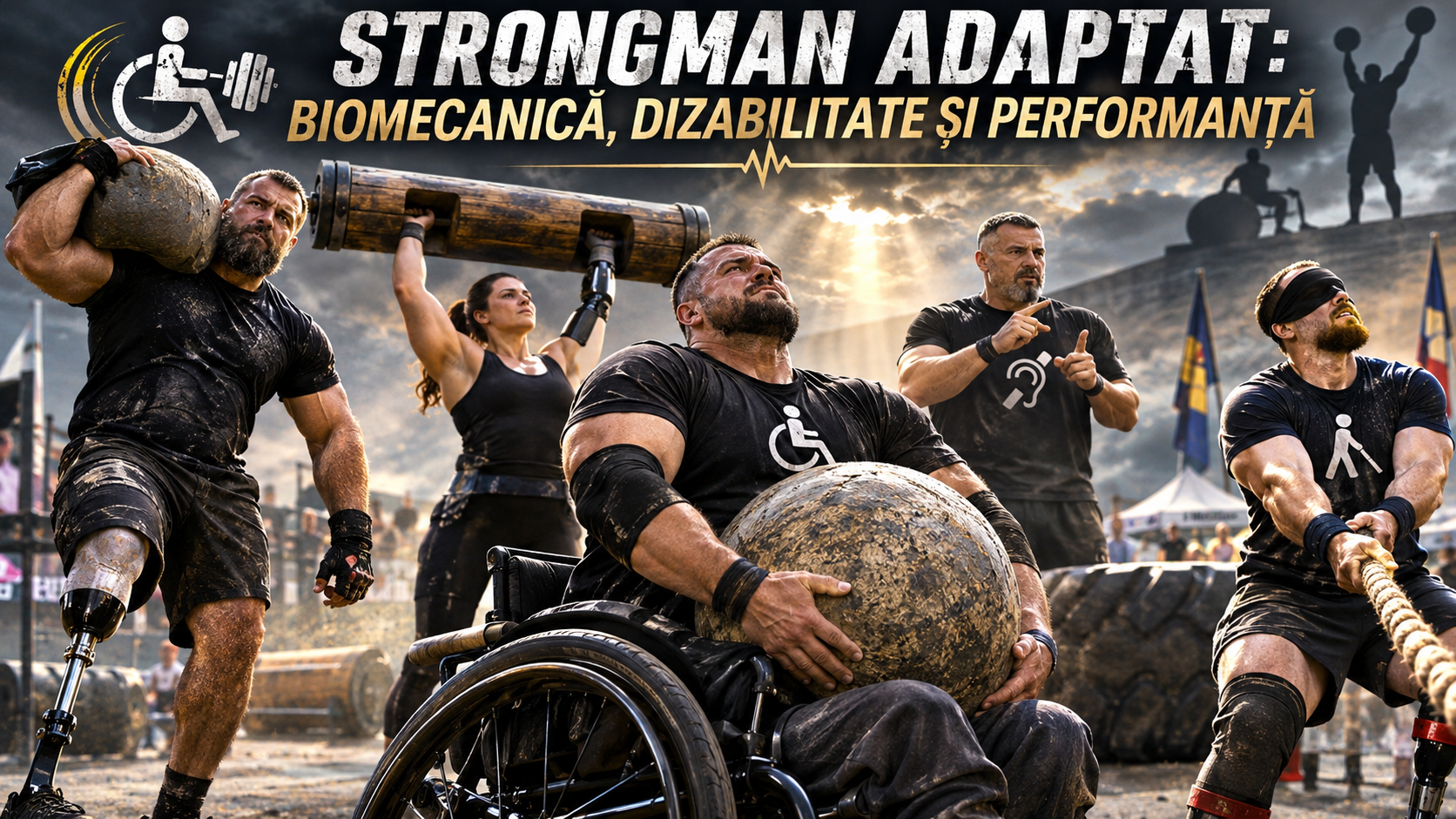
ADAPTED STRONGMAN: BIOMECHANICS, DISABILITY AND PERFORMANCE | Episode 1: Strength and Disability: Principles of Participation in Resistance Sports
An introduction to adapted Strongman: strength, accessibility, biomechanics, safety and sport classification.