
Pharmacology
Series: Insulin, Metabolism and Hormonal Modulators - Episode 10: The Interaction Between Androgens, Insulin, GH and IGF-1
September 8, 2026
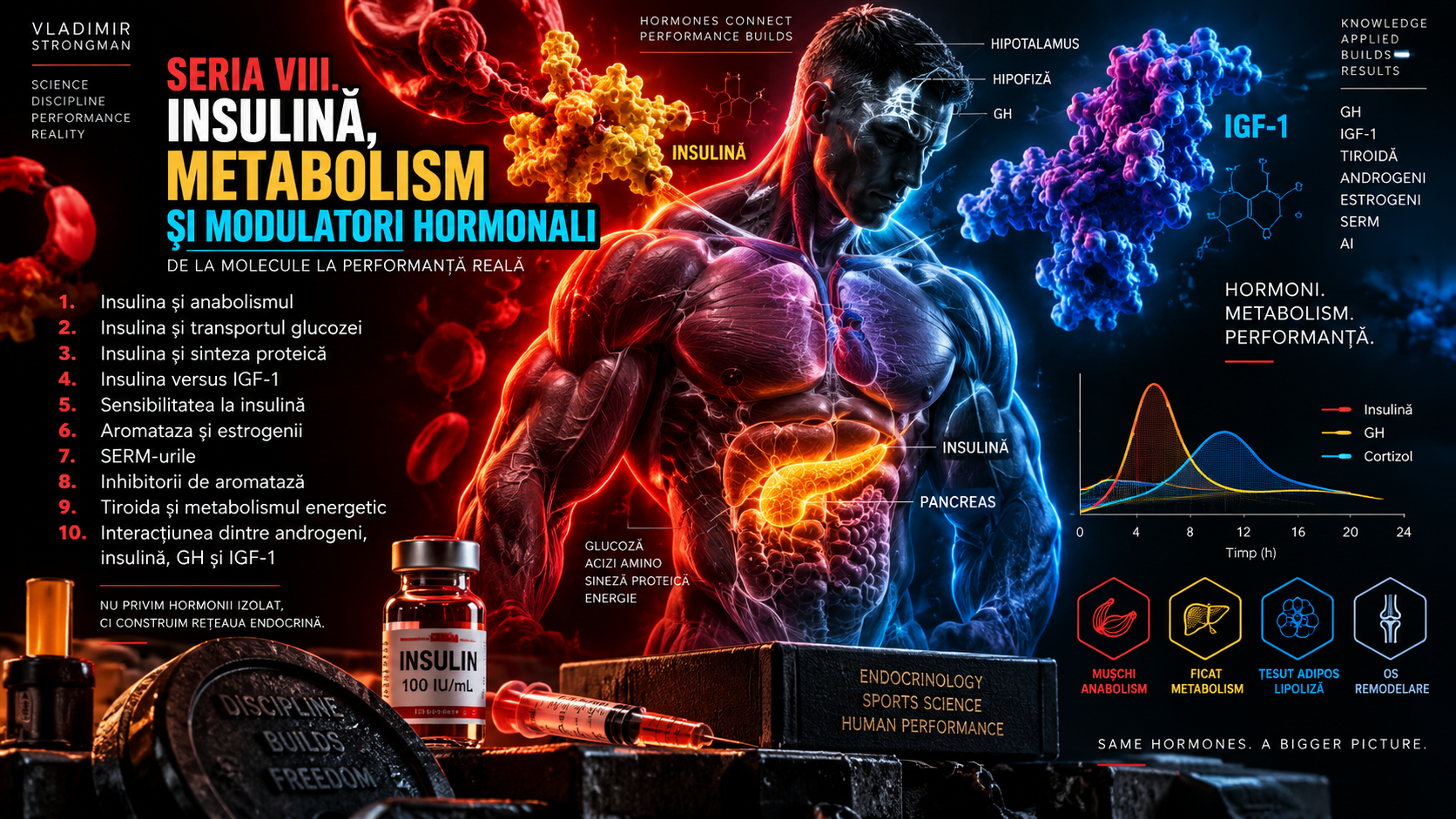
Episode 10 closes the series “Insulin, Metabolism and Hormonal Modulators” by changing perspective. The previous episodes examined insulin, glucose transport, protein synthesis, IGF-1, insulin sensitivity, estrogens, SERMs, aromatase inhibitors and the thyroid largely one at a time. In the body, however, these systems do not operate in separate chapters. They overlap, condition one another and change their effects according to nutrition, sleep, exercise, body composition and endocrine context.
Androgens, insulin, growth hormone GH and IGF-1 are four major signals involved in muscle mass, nutrient use and adaptation to training. Calling them simply “anabolic hormones” hides essential differences. One changes gene expression through the androgen receptor, another manages glucose and nutrient flux, GH mobilizes fuel and stimulates IGF-1 production, while IGF-1 carries growth and cell-survival signals.
For a strength athlete, the useful question is not “which hormone is the most anabolic?” but “what happens when these signals occur together in a real organism?” The answer involves muscle, liver, adipose tissue, pancreas, the cardiovascular system, bone and the nervous system. This network explains why more anabolic signaling does not automatically mean healthier metabolism, better recovery or greater performance.
1. Why they must be viewed as a network rather than four separate hormones
In physiology, the same cell receives dozens of signals simultaneously. A muscle fiber may be exposed at the same time to insulin, androgens, IGF-1, catecholamines, thyroid hormones, cortisol and mechanical signals generated by contraction. The final response is the integration of all of them, not the isolated effect of one molecule.
This is why amplifying one pathway can change the entire system. GH can increase lipolysis while reducing insulin sensitivity. IGF-1 can have insulin-like actions but circulates mostly bound to IGFBPs. Androgens can increase lean mass, and that change in body composition can secondarily alter insulin sensitivity. Biology is a network of consequences.
2. Four signals, four basic jobs
Androgens alter gene transcription and influence muscle mass, bone, erythropoiesis and sexual function. Insulin is the principal hormone of the postprandial state and coordinates glucose uptake, glycogen synthesis, lipogenesis and suppression of lipolysis. GH has a more complex profile, supporting growth, IGF-1 production and fatty-acid mobilization.
IGF-1 links growth signaling with energy availability and GH action. It affects proliferation, differentiation, cell survival and metabolism. Although the IGF-1 receptor and the insulin receptor are structural relatives, the hormones are not interchangeable. Each signal carries different biological information about the state of the organism.
3. The androgen receptor: the signal that changes the cellular program
Testosterone and other androgens bind the androgen receptor, a nuclear receptor that functions as a transcription factor. The hormone-receptor complex enters the nucleus, interacts with androgen-response elements and modifies expression of genes involved in muscle differentiation, metabolism and tissue remodeling.
This mechanism differs from the rapid signaling of insulin or IGF-1. The androgen receptor does not directly “open” GLUT4 or instantly switch on protein synthesis. Instead, it changes the cellular environment in which other pathways operate, influencing the muscle’s capacity to respond to training, amino acids and growth signals.
4. The insulin receptor and the PI3K-Akt pathway
The insulin receptor is a receptor tyrosine kinase. After insulin binds, IRS proteins, PI3K and Akt are activated. In muscle, this cascade promotes GLUT4 translocation to the membrane, glycogen synthesis and part of the signaling that supports protein metabolism. In the liver, insulin reduces glucose production and favors energy storage.
The same Akt pathway intersects with mTOR signaling, FoxO regulation and protein-degradation processes. Insulin therefore has an important role in muscle protein balance, especially by limiting proteolysis when amino acids are available. But insulin cannot build muscle tissue from nothing: substrate and mechanical stimulation remain indispensable.
5. The GH receptor: JAK2, STAT5 and the hepatic signal
GH binds the GHR receptor, which activates mainly JAK2 and STAT transcription factors, especially STAT5. In the liver, this pathway stimulates transcription of IGF-1 and several binding proteins. GH signaling is not limited to the liver: its receptors are present in many tissues, and direct metabolic effects include fat mobilization and alteration of insulin responsiveness.
This duality is essential. GH can support an environment favorable to growth and protein accretion while simultaneously creating an anti-insulin state in glucose metabolism. The body uses this property to conserve glucose during fasting and to mobilize fatty acids as an energy source.
6. The IGF-1 receptor: a close relative of the insulin receptor
The IGF-1 receptor, IGF1R, is also a receptor tyrosine kinase and structurally resembles the insulin receptor. It activates pathways such as PI3K-Akt-mTOR and Ras-MAPK. The first is important for survival, metabolism and protein synthesis, while the second is closely linked to proliferation and cellular differentiation.
The similarity of the receptors explains some biological overlap between insulin and IGF-1. Yet affinity, receptor distribution, hormone concentrations and binding proteins keep the physiological signals distinct. IGF-1 is not “anabolic insulin,” and insulin is not merely a metabolic version of IGF-1.
7. Hybrid insulin/IGF-1 receptors
Cells can express hybrid receptors assembled from halves of the insulin receptor and IGF1R. Their existence shows that separation between the two systems is not absolute. These hybrids often have greater affinity for IGF-1, and their precise role varies by tissue and biological context.
For understanding hypertrophy, the important point is that the same cell can integrate energy-availability signals and growth signals through partially shared molecular infrastructure. This does not mean maximal stimulation of every receptor is optimal. Biological systems have limits, feedback loops and costs.
8. The liver is a central node of the network
The liver constantly decides whether glucose is stored or released, transforms energy substrates and produces a large proportion of circulating IGF-1. Insulin and GH arrive with partly opposing messages: insulin signals energy availability, while GH can promote fuel mobilization and IGF-1 production.
In a well-fed organism, these signals can cooperate in growth. During fasting or malnutrition, the situation changes: GH may be elevated while hepatic IGF-1 production falls because of hepatic GH resistance and insufficient insulin signaling. Growth is not simply a question of GH, but of energetic context.
9. Insulin is permissive for hepatic IGF-1 production
Physiological data show that insulin helps maintain GH-receptor expression and proper function of the hepatic GH-IGF-1 axis. In severe insulin deficiency, as in poorly controlled type 1 diabetes, GH can be elevated while IGF-1 is often low. The axis becomes partially uncoupled.
This example demonstrates why “more GH” does not guarantee “more IGF-1.” The liver also needs information that energy is available. Insulin participates in that metabolic permission. The growth axis therefore reads not only the pituitary signal but also nutritional state.
10. Fasting: when GH and insulin move in opposite directions
During fasting, insulin falls and GH secretion may increase at certain times. The direct metabolic effect of GH becomes more visible: lipolysis rises and glucose is conserved for tissues that depend on it. Fatty acids become a more important energy source.
In this context, IGF-1 production does not rise in proportion to GH because the body does not interpret fasting as an appropriate time for maximal tissue growth. This separation between direct GH effects and IGF-1-mediated effects is one of endocrinology’s clearest examples of energy conservation.
11. The postprandial state: insulin changes the priorities
After a meal, rising insulin suppresses lipolysis and favors glucose uptake and glycogen synthesis. Amino acids enter the circulation, and mTOR signaling responds to their availability. In such an environment, the GH-IGF-1 axis can more effectively support processes of growth and repair.
This explains why anabolism is not created by one hormone. The body simultaneously needs energy, amino acids, mechanical signaling and a permissive endocrine environment. Insulin essentially says that nutrients are available; GH and IGF-1 contribute to the growth program; androgens alter the tissues’ capacity to respond.
12. Androgens and muscle: more than protein synthesis
Androgens favor increases in muscle mass by altering gene expression, stimulating myogenic differentiation and influencing satellite cells. They can also change the balance between pro-anabolic factors and growth inhibitors, including the myostatin system. The final effect develops over time rather than in one hormonal peak.
Larger muscle then becomes a larger metabolic organ. More muscle generally means more capacity to store glycogen and dispose of circulating glucose. Some metabolic effects of androgens are therefore indirect and depend on changes in body composition.
13. Insulin: mainly anti-catabolic when amino acids are sufficient
In human skeletal muscle, amino acids and resistance exercise are central stimuli for muscle protein synthesis. Insulin, within physiological ranges, has an important influence on protein breakdown and nutrient transport. When amino acids are available, reduced proteolysis helps create a more favorable net protein balance.
This corrects the myth that insulin is a direct switch turning any nutrient into muscle. Without mechanical tension, amino acids and recovery, a large insulin signal does not automatically create useful hypertrophy. Excess energy can also be directed toward adipose tissue.
14. IGF-1 and mTORC1
IGF-1 activates PI3K-Akt and can contribute to mTORC1 activation, one of the major platforms integrating growth signals. But mTORC1 also reads amino acids, cellular energy and mechanical tension. A single hormone does not control the entire signaling node.
In resistance training, mTORC1 responds strongly to mechanical loading and essential amino-acid availability. IGF-1 can amplify the growth environment, but the idea that hypertrophy is simply the consequence of a high serum IGF-1 value is too simple. Local signaling and loading matter enormously.
15. GH and protein metabolism
GH can increase nitrogen retention and protein synthesis in certain contexts and acts both directly and through IGF-1. At the same time, increases in lean mass associated with GH can include extracellular water and connective tissue, not only new contractile protein.
This distinction matters in sport. Kilograms of lean mass measured by a body-composition method are not synonymous with kilograms of new contractile muscle fibers. GH effects on collagen, water, organs and metabolism must be separated from effects on muscle strength itself.
16. Amino acids and leucine: raw material cannot be replaced by hormones
Leucine and the other essential amino acids provide both the substrate for new proteins and signals that activate mTORC1. Neither androgens, insulin, GH nor IGF-1 can synthesize muscle proteins in the absence of the amino acids required. Endocrinology manages the process, but it cannot invent the raw material.
This is useful in sports culture, where hormones are sometimes treated as substitutes for nutrition. In reality, the anabolic response resembles a construction project: training provides the mechanical plan, amino acids provide the bricks, energy allows the work, and hormones alter the pace and efficiency of the site.
17. Mechanical tension is the signal hormones cannot copy
Muscle fibers detect deformation and tension through mechanotransduction. These signals can activate mTOR and other pathways independently of major increases in systemic hormones. This is why training-induced hypertrophy is not simply a reflection of serum testosterone, GH or IGF-1.
A favorable hormonal environment can amplify adaptation but cannot substitute for loading specificity. In Strongman, the yoke, farmers walk, log press and deadlift produce different mechanical signals. Muscular and neural adaptation retain the fingerprint of the event even when the endocrine environment is the same.
18. Satellite cells and muscle remodeling
Satellite cells contribute to repair and remodeling of muscle fibers, and their activation can be influenced by androgens, IGF-1 and local growth factors. During substantial hypertrophy, addition of new nuclei to the muscle fiber may support long-term protein-synthetic capacity.
This process is not a magical mechanism separate from training. Damage, tension, controlled inflammation and local signaling create the context in which satellite cells participate in adaptation. Hormones can change the probability and magnitude of the response, but they do not remove the need for a mechanical stimulus.
19. Myostatin and the internal brakes on growth
Muscle growth is controlled not only by stimulatory signals but also by molecular brakes. Myostatin limits hypertrophy, and androgens can alter expression of components of this network. IGF-1 and Akt can also counterbalance catabolic or growth-inhibitory pathways.
Physiology uses these brakes to prevent uncontrolled growth and to maintain proportion among muscle, tendon, bone and metabolic capacity. When muscle mass or strength rises very rapidly, supporting tissues can lag behind. Performance depends on synchronization of adaptations, not only their maximum speed.
20. Glycogen: where insulin meets performance
Insulin promotes glucose uptake and glycogen synthesis in muscle. For repeated events, medleys, multiple sets and high-volume training, glycogen stores can become decisive. Androgens, GH and IGF-1 do not replace this energetic requirement.
A very strong athlete can still perform poorly at repetitions when carbohydrate availability and glycogen restoration are insufficient. This reveals the difference between the structural ability to produce force and the metabolic ability to repeat effort. Insulin is one of the bridges between the two.
21. GLUT4 and muscle contraction
Insulin moves GLUT4 toward the muscle-cell membrane through PI3K-Akt, but contraction can activate GLUT4 translocation through pathways partly independent of insulin, including AMPK and calcium-related signals. This is one reason exercise can improve glucose uptake even when insulin sensitivity is not ideal.
For a very large athlete, this pathway is a major metabolic resource. Active muscle becomes an efficient glucose consumer. Yet this advantage does not erase the negative effects of visceral fat, insufficient sleep or chronic energy surplus on insulin sensitivity.
22. Androgens and insulin sensitivity: the relationship depends on context
In men with hypogonadism and obesity, normalizing testosterone can improve body composition and sometimes insulin sensitivity by increasing lean mass, reducing fat mass and altering inflammation. These data do not mean that every increase in androgen exposure above physiology produces proportionally greater metabolic benefit.
The response is contextual rather than linear. Androgen deficiency can be metabolically unfavorable, but pharmacological excess can introduce other costs through lipids, blood pressure, hematocrit, sleep and vascular function. An endocrine environment cannot be evaluated only by the muscle mass it produces.
23. Body composition mediates part of androgen metabolism
Muscle and adipose tissue often have opposing metabolic effects. More muscle means more space for glycogen storage and glucose disposal, while more visceral fat means greater fatty-acid flux, adipokines and inflammation. Androgens can modify both compartments.
The net metabolic effect of an androgen therefore cannot be deduced from the androgen receptor alone. It includes changes in muscle mass, fat mass, activity, appetite, fluid retention and other hormones. The organism integrates the final result, not the pharmacological intention.
24. Androgen excess and insulin resistance
In some clinical contexts of androgen excess, such as polycystic ovary syndrome, hyperandrogenism and insulin resistance can reinforce one another. In men, data on supraphysiological androgen exposure are more heterogeneous, and outcomes are influenced by body composition and by other drugs or hormones present.
The cautious conclusion is that no simple line exists from “more androgen” to “better insulin sensitivity.” Normal physiology has a functional range, and moving far outside that range can produce effects that no longer resemble correction of a deficiency.
25. GH is metabolically a partial antagonist of insulin
One classic effect of GH excess is reduced insulin sensitivity. Acromegaly provides a clear clinical example: patients can develop hyperinsulinemia, impaired glucose tolerance or diabetes. GH stimulates lipolysis and increases fatty-acid flux, which can interfere with glucose utilization.
This property is not an error in the hormone. During fasting, conserving glucose is useful. The problem appears when GH signaling is too strong or persistent in an environment already characterized by energy surplus and high insulin. A useful adaptation can then become metabolic dysfunction.
26. GH-induced lipolysis and free fatty acids
GH stimulates release of fatty acids from adipose tissue. Higher free-fatty-acid availability provides fuel but can reduce glucose oxidation and contribute to insulin resistance in muscle and liver. This effect explains part of the antagonism between GH and insulin.
In an athlete with very high body mass, lipid flux is also shaped by visceral fat, diet and activity level. GH does not act on a blank canvas. The same hormonal signal can have different metabolic consequences in a relatively lean athlete and in one with substantial visceral adiposity.
27. IGF-1 has insulin-like effects, but it is not insulin
IGF-1 can increase glucose uptake and reduce hepatic glucose production in certain conditions. In experiments and in treatment of rare deficiencies, its actions can lower blood glucose. This is one reason IGF-1 can counterbalance part of GH’s anti-insulin effect.
Yet IGF-1 action is modulated by IGFBPs, tissue receptors and physiological concentrations. The hormone does not circulate freely in the same way insulin rises after a meal. Treating the two systems as versions of the same molecule ignores their different endocrine architecture.
28. Why GH and IGF-1 can have opposing metabolic effects
GH and IGF-1 belong to the same axis but do not have identical effects. GH tends to stimulate lipolysis and reduce insulin sensitivity, whereas IGF-1 can facilitate glucose utilization. The axis functions through this combination of signals rather than through a single uniform message.
This apparent contradiction allows metabolism to adapt to energy status. GH can mobilize fuel, while IGF-1 can support growth when nutrition and insulin permit it. Separation of functions creates metabolic flexibility rather than inconsistency.
29. IGFBPs control how much IGF-1 is truly available
Most circulating IGF-1 is bound to transport proteins, especially IGFBP-3 and the ternary complex with ALS. These proteins prolong its circulation and regulate access to tissues. A total IGF-1 value alone does not reveal how much biological signal reaches every receptor.
IGFBPs are not passive transport boxes. Some can restrict IGF-1 action, others can facilitate distribution, and proteases can alter availability locally. The GH-IGF-1 axis therefore has several layers of regulation beyond the simple idea that higher GH automatically means higher IGF-1.
30. Insulin and IGFBP-1: a direct link between food and IGF signaling
Insulin suppresses hepatic IGFBP-1 production. After a meal, lower IGFBP-1 can increase the fraction of IGF available to receptors. During fasting, when insulin is low, IGFBP-1 rises. Energy availability can therefore rapidly change IGF bioactivity.
This is one of the most concrete intersections between insulin and IGF-1: insulin not only transports metabolic information about glucose but also changes the environment in which growth factors circulate. The body thus links nutritional information to biological decisions about growth.
31. SHBG: another bridge between insulin and androgens
Insulin and metabolic state influence hepatic production of SHBG, the protein that binds testosterone and other sex hormones. Hyperinsulinemia, obesity and fatty liver are often associated with lower SHBG. Glucose metabolism can therefore alter the way androgens circulate as well.
Low SHBG does not automatically mean more “effective” androgens. It can be a marker of metabolic and hepatic context. Total testosterone, free testosterone and SHBG need to be interpreted together, especially in people with high body mass, insulin resistance or hormonal exposures that alter liver production.
32. Adipose tissue is not merely an energy warehouse
The adipocyte responds to insulin, GH, androgens and estrogens and secretes adipokines that influence appetite, inflammation and insulin sensitivity. Insulin suppresses lipolysis, GH stimulates it, and androgens can alter fat distribution and body composition. These signals constantly meet in adipose tissue.
When adipocytes enlarge and visceral fat increases, fatty-acid flux and inflammatory mediators can impair liver and muscle metabolism. At that point, more insulin must be secreted to obtain the same effect. The endocrine network begins operating on a less favorable background.
33. Visceral fat can dominate the metabolic picture
In Strongman, high body mass can include impressive amounts of muscle but also visceral fat. The latter has disproportionate metabolic importance. It is associated with insulin resistance, inflammation, fatty liver and cardiovascular risk regardless of how much muscle is present.
This is where purely anabolic thinking reaches its limit. An athlete can have strong growth signals and simultaneously an unfavorable metabolic environment. Large muscle mass does not automatically erase the effects of visceral fat on insulin, liver and vascular function.
34. Fatty liver can alter several endocrine axes at once
Hepatic steatosis is linked to hepatic insulin resistance, abnormal glucose production, triglyceride metabolism and changes in liver-derived proteins. Because the liver produces SHBG, IGF-1 and many transport proteins, hepatic dysfunction can alter multiple endocrine laboratory values at the same time.
An unusual hormonal profile should therefore not be interpreted in isolation. IGF-1, SHBG, glucose, triglycerides and transaminases can be pieces of the same metabolic picture. Correcting one hormonal number while ignoring the liver risks treating an effect rather than the cause.
35. The pancreas and the beta cell: who pays for insulin resistance
When muscle and liver respond less effectively to insulin, the pancreas can compensate by secreting more. Blood glucose may remain normal for a long time, but at the cost of hyperinsulinemia. If demand exceeds beta-cell capacity, glucose tolerance deteriorates.
GH excess can increase this pressure through its anti-insulin effect. Visceral fat and poor sleep can amplify it. Large muscle mass and physical activity can help, but they do not guarantee complete protection. The pancreas is one of the organs that carries the metabolic cost of the entire network.
36. Hyperinsulinemia is not an anabolic strategy
Insulin is necessary for normal metabolism and has anabolic and anti-catabolic roles, but chronic hyperinsulinemia usually means that the body must secrete more to overcome peripheral resistance. Confusing this compensation with a growth advantage is a major interpretive error.
In an insulin-resistant organism, some pathways may remain relatively active, including hepatic lipogenesis, while glucose control deteriorates. The result is not “more useful anabolism” but increasingly unfavorable metabolic partitioning.
37. Hypoglycemia: the extreme risk of manipulating insulin
Exogenous insulin can rapidly lower blood glucose if its effect exceeds glucose availability. Severe hypoglycemia can cause confusion, seizures, loss of consciousness, arrhythmias and death. There is nothing “anabolic” about depriving the brain of its immediately essential fuel.
For that reason, discussion of insulin in sport should remain focused on mechanism and risk rather than protocols. Postprandial physiology and diabetes treatment cannot safely be copied as performance tools. The margin between metabolic effect and medical emergency can become dangerously narrow.
38. Extracellular water can imitate anabolic growth
Insulin, GH, androgens and carbohydrate intake can alter sodium balance, glycogen and water. Glycogen stores water, and GH can increase salt and water retention. Some rapid increases in lean mass are therefore fluid volume rather than newly synthesized contractile tissue.
For evaluating progress, scale weight is insufficient. Circumferences, performance, body composition and change over time provide more context. A gain of several kilograms over a few days cannot represent several kilograms of newly synthesized muscle protein.
39. Sodium, plasma volume and blood pressure
Sodium and water retention increase extracellular volume and can contribute to higher blood pressure. Insulin has renal effects on sodium, GH can cause edema, and androgens can influence blood pressure through several direct and indirect mechanisms.
In an athlete weighing 120 to 160 kilograms, a few additional percent of volume and pressure can matter. The heart and kidneys do not interpret retention as a useful “pump.” They must physically handle a larger circulating volume and greater vascular load.
40. The cardiovascular system is where costs accumulate
Androgens can alter blood pressure, lipids and hematocrit. GH and IGF-1 can influence cardiac growth and tissue structure. Insulin resistance is linked to endothelial dysfunction and cardiometabolic risk. Each signal contributes something different, and the combination can matter more than any one component.
Maximal strength requires enormous transient blood-pressure peaks. A healthy cardiovascular system can tolerate those peaks better than one already exposed to chronic hypertension, sleep apnea, high hematocrit and metabolic dysfunction. Momentary performance and the health of the cardiovascular infrastructure are not the same thing.
41. Blood pressure cannot be inferred from hormone values
No testosterone, insulin, GH or IGF-1 value can replace direct measurement of blood pressure. If the question is cardiovascular risk, the relevant marker should be measured. Hormones can suggest mechanisms; clinically, we still need to know what is actually happening in the circulation.
The same rule applies to glucose, lipids and hematocrit. Endocrinology provides context but should not be used to guess values that can be measured directly. The larger the athlete and the more extreme the loading, the more important this discipline becomes.
42. Lipids: androgens and insulin resistance can push in the same direction
Some androgens, especially at pharmacological exposure, can lower HDL and alter LDL. Insulin resistance and fatty liver can raise triglycerides and atherogenic particles. When these effects coexist, the lipid profile can become far more unfavorable than muscle gain alone would suggest.
IGF-1 and GH have more complex relationships with lipid metabolism, and the effect depends on deficiency, excess and clinical context. In practice, total cholesterol, LDL, HDL, triglycerides and, when appropriate, more advanced markers should be interpreted directly rather than inferred from hormone exposure.
43. Erythropoiesis and hematocrit: androgens add their own variable
Testosterone stimulates erythropoiesis through mechanisms involving erythropoietin and iron regulation. Increased red-cell mass can support oxygen transport, but excessive hematocrit increases blood viscosity and can alter cardiovascular load.
GH and IGF-1 are not the main regulators of hematocrit in this context, but they can alter plasma volume and body composition. Blood counts therefore need to be interpreted alongside hydration, blood pressure and symptoms, not simply as another sign of “anabolism.”
44. The heart also responds to growth signals
Receptors for androgens, insulin, GH and IGF-1 are also present in the cardiovascular system. In physiology, these hormones support development, metabolism and cardiac function. In excess, growth signals together with mechanical pressure can contribute to unfavorable structural remodeling.
A thicker left ventricle cannot automatically be labeled a “stronger heart.” Physiological and pathological hypertrophy differ in geometry, function, fibrosis and hemodynamic context. In a strength athlete, blood pressure, body mass and sleep belong beside the hormonal environment.
45. Bone integrates androgens, IGF-1, insulin and mechanical loading
Bone is metabolically active tissue. Androgens and estrogens influence remodeling, IGF-1 participates in bone formation, and insulin and energy status affect the anabolic environment. Mechanical loading provides the local signal that directs skeletal adaptation.
This cooperation explains why one hormone cannot fully compensate for deficiencies elsewhere. Strong bone requires mechanical stimulation, minerals, vitamin D, adequate energy and appropriate endocrine signaling. In Strongman, the skeleton is the foundation through which extreme forces are transmitted.
46. Tendon and connective tissue do not grow at the same rate as muscle
GH and IGF-1 can influence collagen synthesis and connective-tissue remodeling, while androgens can accelerate gains in muscle mass and strength. The problem is that tendon has different vascularity, turnover and adaptation kinetics from muscle.
When force-production capacity rises faster than the structures that transmit it, a mechanical mismatch appears. Strongman amplifies this problem through unusual grips, angles and loads. An environment that is anabolic for muscle does not automatically make tendon indestructible.
47. Sleep organizes GH pulses and insulin sensitivity
A substantial part of GH secretion occurs in pulses linked to deep sleep. Sleep deprivation can alter the GH axis, insulin sensitivity, appetite and sympathetic activity. Sleep therefore influences two of the central systems in this episode at the same time.
In very large athletes, obstructive sleep apnea can fragment sleep and worsen hypertension and insulin resistance. Impressive strength does not neutralize repeated nocturnal hypoxia. Endocrine recovery sometimes begins with breathing rather than with another hormone.
48. GH pulsatility matters
GH is not secreted continuously but in pulses, and their amplitude and frequency depend on sleep, age, sex, body composition, exercise and nutrition. The same average concentration can hide very different secretion patterns.
This is why a single GH measurement is difficult to interpret in many situations. IGF-1 is often a more stable indicator of axis activity, but it too depends on age, liver function, nutrition and insulin status. Once again, context beats an isolated number.
49. Acute exercise changes the whole network
A hard session can raise catecholamines and GH, temporarily lower insulin during exercise, then increase muscle insulin sensitivity afterward. Glucose, lactate and fatty-acid flux change from minute to minute. Hormones respond to energetic demand rather than to a static diagram.
Laboratory tests drawn immediately after maximal effort can therefore differ substantially from resting values. Medical interpretation should consider collection timing, the last meal, sleep and training. A biomarker without temporal context can tell the wrong story.
50. Hypertrophy and strength are not the same outcome
Androgens, insulin, GH and IGF-1 can influence muscle mass and metabolism, but strength also depends on motor-unit recruitment, coordination, technique, leverage and tissue stiffness. A larger muscle provides potential, not a guaranteed number on the bar.
In Strongman, specificity is even clearer. Extra mass may help in the deadlift or yoke while penalizing mobility, speed and work capacity. An anabolic environment that increases body weight can improve one event and worsen another.
51. Strongman: very high body mass changes every equation
In the Open class, the body often operates at a mass for which comparisons with the general population become imperfect. Energy requirements are enormous and muscle can store large amounts of glycogen, but blood volume, mechanical stress, sleep apnea and the risk of insulin resistance can also rise.
Here the interaction among androgens, insulin, GH and IGF-1 becomes practical. The same environment that supports recovery and body mass can place pressure on glycemia, blood pressure, the heart and sleep. Looking only at gym performance means seeing one face of the system.
52. Energy surplus amplifies growth signals, but only to a point
For hypertrophy, sufficient energy intake facilitates protein synthesis and recovery. But progressively larger surpluses do not produce linear muscle growth. Beyond a point, a growing proportion of energy is stored as fat and insulin sensitivity can deteriorate.
At that stage, more insulin is required for the same glucose handling, while visceral fat adds inflammation and lipid flux. A surplus that was useful for performance can become a surplus that undermines the metabolic network it is meant to support.
53. Energy deficit changes the GH-IGF-1 axis
During severe caloric restriction, insulin falls, IGF-1 can fall, and GH may remain normal or rise because of a form of hepatic GH resistance. The body prioritizes fuel mobilization and preservation of essential functions rather than maximal growth.
This is why a high GH value during fasting should not be interpreted as “greater anabolism.” The meaning of a hormone depends on the environment in which it appears. Without sufficient energy and insulin, the same axis serves a different metabolic purpose.
54. Cortisol and stress can alter the balance between growth and recovery
Cortisol mobilizes energy during stress and can oppose some insulin actions. Excessive training volume, poor sleep, illness and energy deficit can maintain a catabolic environment even when androgens or IGF-1 appear favorable on a laboratory report.
Recovery is not a contest between testosterone and cortisol, but energy balance and stress influence the response to every signal discussed here. An overloaded organism may receive growth signals yet lack the resources to translate them efficiently into adaptation.
55. Which tests can describe the network?
Depending on the clinical question, useful measurements can include total and free testosterone, SHBG, IGF-1, fasting glucose, fasting insulin, HbA1c, lipid profile, liver function, complete blood count and blood pressure. Basal GH is more difficult to interpret because secretion is pulsatile.
No panel should become a universal ritual. Tests are valuable when they answer a question and are interpreted alongside symptoms, history, medication, training and body composition. More numbers do not automatically produce more understanding.
56. Fasting insulin and HOMA-IR: useful, but imperfect
Fasting insulin can indicate how much secretory effort is required to maintain resting glucose. HOMA-IR combines fasting glucose and insulin into an estimate of insulin resistance, but it does not directly measure muscle glucose disposal as a hyperinsulinemic-euglycemic clamp does.
Interpretation requires care in very muscular athletes. Large muscle mass can favor glucose disposal while visceral fat and poor sleep push in the opposite direction. An index is a statistical summary, not a complete map of metabolism.
57. IGF-1 must be interpreted by age and context
IGF-1 varies strongly with age and is influenced by nutrition, liver function, insulin, GH and general health. An isolated value does not reveal whether the source is greater GH secretion, different hepatic sensitivity or a change in binding proteins.
In medicine, IGF-1 is interpreted when evaluating suspected GH excess or deficiency, not as a performance score. There is no universal IGF-1 level that maximizes strength. Receptors and tissues do not read a laboratory ranking.
58. WADA 2026: all four areas matter in anti-doping
The 2026 WADA Prohibited List bans anabolic-androgenic steroids at all times under S1. GH, its analogues and releasing factors are included in S2, and IGF-1 and its analogues are prohibited as growth factors. Insulins and insulin mimetics appear under S4.4 metabolic modulators.
For a tested athlete, legitimate medical use does not automatically mean permission in sport. Therapeutic Use Exemption rules and the exact status of a treatment must be checked through the relevant anti-doping organization. This article explains physiology and does not provide use protocols.
59. Five myths about “anabolic synergy”
The first myth is that more of every signal automatically produces more muscle. The second is that high insulin means better anabolism. The third is that GH and IGF-1 have the same effects. The fourth is that large muscle mass completely protects against insulin resistance. The fifth is that an anabolic combination cannot carry metabolic costs.
Each of these ideas turns a network into a slogan. Hormonal effects depend on concentration, timing, tissue, nutrition and baseline physiology. A benefit in one compartment can create a cost in another. The more useful question is not “how anabolic is it?” but “what does it change throughout the organism?”
60. Conclusion: anabolism is a network, not a button
Androgens, insulin, GH and IGF-1 cooperate in growth and metabolism, but through different mechanisms. Androgens change the cellular program, insulin signals nutrient availability, GH mobilizes fuel and stimulates the growth axis, while IGF-1 connects growth with cell survival and metabolism.
In muscle, their effects can converge toward a favorable protein balance. In liver and adipose tissue, the same signals can pull in different directions. GH can oppose insulin, insulin can permit hepatic IGF-1 production, and androgens can improve body composition while creating other costs when supraphysiological. Real physiology begins precisely at these intersections.
For Strongman, the final message of the series is simple: performance is produced by infrastructure. Muscle needs nerve, bone, tendon, liver, pancreas, heart and sleep. A system that lifts more today while losing insulin sensitivity, blood-pressure control or cardiovascular health is not truly optimized. It is postponing a bill.
Main sources
Bang P. Pediatric Implications of Normal Insulin-GH-IGF Axis Physiology. Endotext. Updated 2024. A detailed overview of insulin, GH and IGF-1 interactions and the way nutrition regulates the axis.
Jørgensen JOL et al. Normal Physiology of Growth Hormone in Normal Adults. Endotext. Recent update. Sections on GH metabolic effects, lipolysis, glucose and nutritional state.
Vijayakumar A, Yakar S, Leroith D. The Intricate Role of Growth Hormone in Metabolism. Frontiers in Endocrinology. 2011;2:32. Review of GH effects on carbohydrate and lipid metabolism.
The Fascinating Interplay between Growth Hormone, Insulin-Like Growth Factor-1, and Insulin. Endocrinology and Metabolism. 2024. Clinical and physiological review of GH-IGF-1-insulin interactions across metabolic states.
Kelly DM, Jones TH et al. Mechanisms underlying the metabolic actions of testosterone in humans: A narrative review. 2020. Review of testosterone, body composition, insulin sensitivity and metabolic signaling.
Endotext. Acromegaly. Sections on IGF-1 regulation, IGFBPs, hybrid insulin/IGF-1 receptors and the metabolic effects of GH excess.
Laron Z, Werner H. Opposing Metabolic Effects of Growth Hormone and IGF-I: Review and Clinical Implications. Endocrine Reviews. 2025;46(6):877-890. Modern analysis of the differing metabolic actions of GH and IGF-1.
World Anti-Doping Agency. 2026 Prohibited List. Sections S1 Anabolic Agents, S2 Peptide Hormones and Growth Factors, and S4 Hormone and Metabolic Modulators.
Editorial note: this material is educational and does not constitute medical advice, diagnosis or an administration protocol for androgens, insulin, GH, IGF-1 or other substances that modify these axes. Inappropriate pharmacological manipulation can cause severe hypoglycemic, metabolic, cardiovascular and endocrine complications.
More From The Journal

Training
The Science of Strongman Training - Episode X: Competition Programming
How to build a complete Strongman competition preparation block: calendar, events, volume, intensity, specificity, simulations, autoregulation, tapering and fatigue management.

Training
The Science of Strongman Training - Episode IX: Peaking
Peaking in Strongman: how to turn months of training into maximal competition performance by reducing fatigue, preserving adaptations and managing specificity.