
Physiology
Strongman Physiology - Episode 1: The Cardiovascular System in the Strength Athlete
September 4, 2026
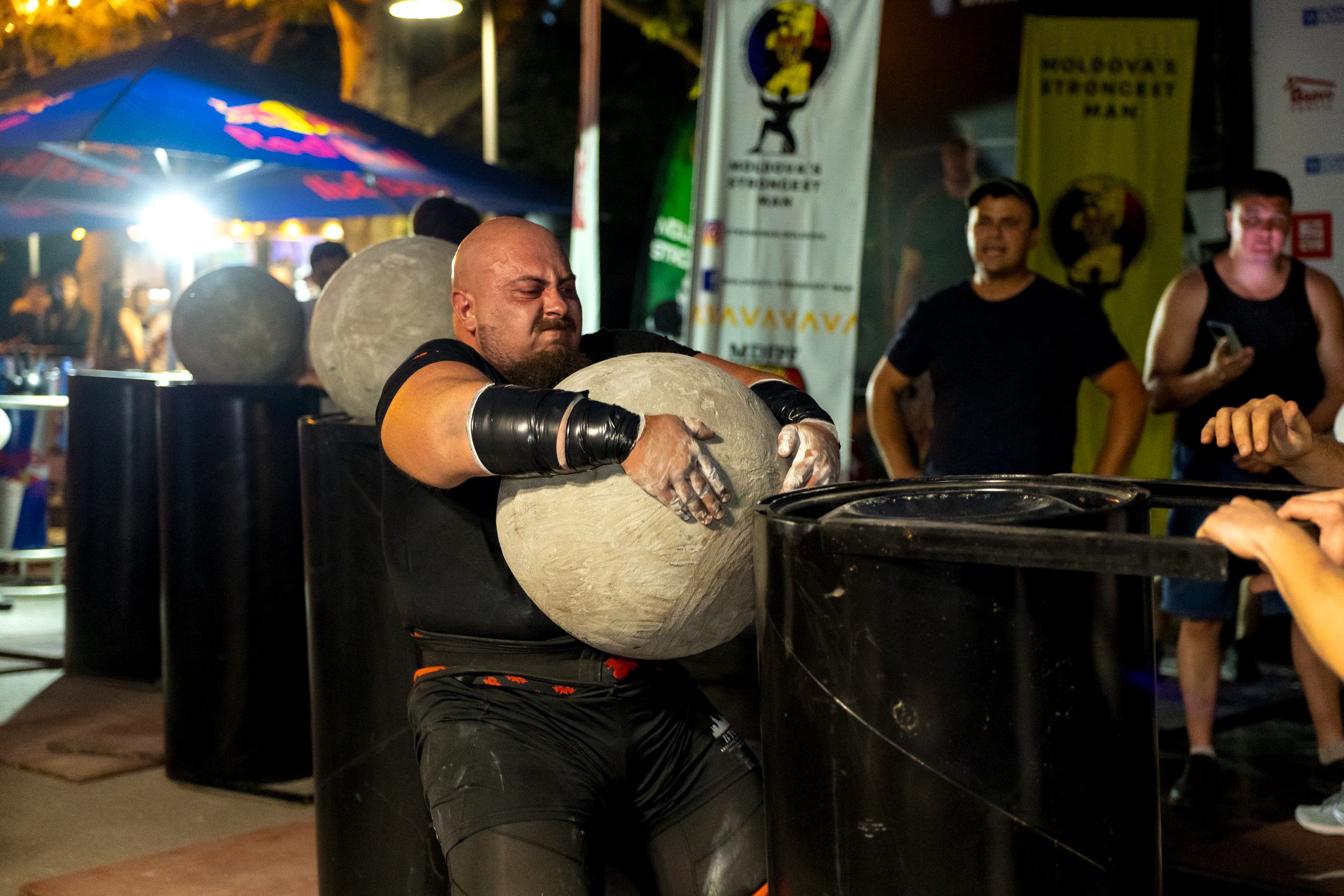
The cardiovascular system in the strength athlete: what happens to the heart, blood and blood vessels when the body has to produce very high force? In Strongman, the question is especially interesting because the sport combines heavy lifting, isometric contractions, moving large loads, short bouts of near-maximal effort and events in which force has to be repeated close to the limit.
At rest, an athlete may look completely calm. During a heavy set, however, the cardiovascular system enters a very different physiological state: heart rate rises, cardiac output changes, contracting muscles compress blood vessels, and arterial pressure can increase dramatically, especially during very intense effort and the Valsalva maneuver. Immediately after the final repetition, vasodilation and recovery can produce a rapid fall in pressure. Modern literature considers resistance training an important part of cardiovascular health, while also showing that the acute response to very heavy resistance exercise is radically different from steady aerobic exercise.
1. Why discuss the heart in a sport built around strength?
It is easy to think of Strongman as a sport of muscles and the nervous system. But muscle does not work in isolation. For an athlete to produce force, the heart must deliver blood, the vessels must distribute flow, and the body must regulate pressure and organ perfusion. Even a lift lasting only a few seconds requires sophisticated cardiovascular coordination.
Strongman also does not fit perfectly into the same physiological box as powerlifting or endurance sport. Some events are extremely short and explosive. Others, including Farmer’s Walk, Yoke Walk, loading and repeated carries, combine strength with substantial cardiorespiratory demand. This makes the cardiovascular profile of a Strongman more nuanced than the simple image of a very strong athlete.
2. The heart as a pump: four variables to understand
To understand what happens during an event, start with a few basic concepts. Cardiac output is the amount of blood pumped by the heart per minute and can be simplified as heart rate multiplied by stroke volume. Stroke volume is the amount of blood ejected with each beat. Heart rate tells us how often the heart beats. Another important variable is systemic vascular resistance, the opposition that the circulation presents to blood flow.
A useful conceptual equation is: cardiac output = heart rate × stroke volume. Mean arterial pressure can be approximated conceptually as: mean arterial pressure ≈ cardiac output × systemic vascular resistance. It is not a complete clinical equation for every situation, but it is an excellent way to understand why arterial pressure can rise when muscles contract forcefully and compress the vessels within active muscle.
3. What happens when a Strongman starts a heavy lift
Before the repetition even starts, central command anticipates the effort. Sympathetic activation rises, heart rate increases, and the body redistributes blood toward tissues that are about to work. Once muscular contraction begins, the system becomes much more dynamic.
Contracting muscle compresses its intramuscular vessels. The stronger the contraction and the larger the active muscle mass, the more pronounced this mechanical effect may be. At the same time, metabolites produced in active tissue stimulate muscle afferents, and the exercise pressor reflex contributes to the cardiovascular response. When an athlete briefly holds the breath and raises intra-abdominal and intrathoracic pressure, another layer of hemodynamic complexity appears.
4. Blood pressure: the number on the cuff is not the whole story
Resting blood pressure is important, but in strength sports we must distinguish it clearly from the acute response during a hard set. During resistance exercise, systolic and diastolic pressure can rise dramatically for short periods. The exact response depends on load, repetitions, muscle mass involved, contraction type, body position and breathing.
Classic studies using direct measurements showed that arterial pressure during heavy lifting can reach very high transient values. In one double-leg press protocol performed at 80–100% of maximum, the group mean reached approximately 320/250 mmHg, while one participant exceeded 480/350 mmHg. These figures should not be interpreted as the usual blood pressure of a powerlifter or Strongman. They are transient values recorded during extreme experimental conditions and illustrate how different the hemodynamic response to maximal contraction is from a standardized resting blood-pressure measurement.
Important: an extreme pressure spike during a heavy lift is not equivalent to chronic hypertension. For health, both the acute exercise response and everyday resting blood-pressure profile matter.
5. The Valsalva maneuver: why lifters create pressure in the trunk
In heavy events, many athletes use a form of the Valsalva maneuver: they inhale, close the glottis and increase intra-abdominal and intrathoracic pressure to stabilize the torso. Biomechanically, this strategy can support trunk stiffness and force transfer.
Cardiovascularly, however, Valsalva rapidly changes pressure inside the chest and venous return. The response is not linear: arterial pressure can rise strongly in certain phases and then fall rapidly when the maneuver is released. A systematic review of intra-abdominal and intrathoracic pressure during resistance exercise reported the highest intra-abdominal pressure during squats, above 200 mmHg, followed by deadlifts, leg press and other heavy lifts.
This is one reason breathing is more than a strength technique. It is part of the hemodynamics of the lift. An athlete should understand that a bracing strategy that helps performance also creates a substantial cardiovascular response.
6. Why Strongman stresses circulation differently from running
During running or cycling, rhythmic, continuous contractions and metabolic vasodilation support increased cardiac output and blood flow to active muscle. During a heavy lift, the situation is different: contraction is extremely intense, sometimes nearly isometric, and mechanical compression can temporarily reduce local flow.
This creates an apparent paradox: muscle needs blood, but during a very strong contraction it can compress its own vessels. The body responds by increasing arterial pressure and activating neural and metabolic mechanisms that help maintain perfusion.
7. How the heart adapts to strength training
Chronic training does more than build bigger and stronger muscles. The heart and vessels adapt as well. Classic sports physiology associated endurance sports with larger ventricular volumes and resistance training with thicker ventricular walls. The modern picture, however, is more complex than this rigid split.
Modern studies indicate that cardiac remodeling depends on the exact training stimulus, training volume, conditioning level, body size and individual characteristics. A recent longitudinal study in healthy untrained men observed after 20 weeks of resistance training moderate increases in left-ventricular mass and end-diastolic volumes, together with reductions in arterial blood pressure and no impairment of systolic or diastolic function in the protocol studied.
In well-trained resistance athletes, cross-sectional studies frequently find thicker ventricular walls and greater ventricular mass. Proper interpretation requires body-size adjustment and sporting context. A 130–150 kg Strongman cannot be interpreted cardiovascularly in exactly the same way as a 75 kg adult.
8. Strongman and the “big heart”: what do we actually know?
There is a classic study directly relevant to Strongman in which Strongmen, marathoners and sedentary controls were compared. The eight Strongmen had larger absolute cardiac dimensions, but after indexing to body surface area the differences were smaller. The study also reported poorer diastolic relaxation in Strongmen compared with controls and marathoners, as well as lower VO2max.
The study is important, but it should not be treated as a verdict on the whole sport. The sample was small, the sport has changed substantially, and an observed group difference should not be turned automatically into universal causation. Still, it shows why Strongman deserves separate attention in sports cardiology: very high body mass, intense pressure loading and an isometric component create a different physiological profile from endurance sport.
9. Pressure versus volume: the two languages of the heart
Sports physiology often distinguishes pressure load from volume load. Maximal strength work, isometric contractions and large rises in vascular resistance create a pressure stimulus. Dynamic, repetitive exercise with high metabolic demand can create greater volume loading.
Strongman combines both worlds. A heavy deadlift, maximal log lift or heavy yoke can generate major pressure responses. A long carry medley or repeated loading event adds substantial metabolic and circulatory demand. This combination is why the sport is difficult to reduce to the simple model of “strength athlete heart”.
10. Blood vessels: the part almost nobody sees
The endothelium is the layer of cells lining the inside of blood vessels. It is not passive wallpaper. It participates in vascular tone, coagulation, inflammation and flow responses. One central mechanism is nitric-oxide bioavailability, which promotes vasodilation.
Regular training can improve endothelial function. Meta-analyses of resistance training have found improved flow-mediated dilation, including in healthy people and in some populations with cardiovascular or metabolic disease. At the same time, the acute response to a very hard session should not be confused with the long-term adaptation. A workout can create a temporary perturbation, while the organism later responds through remodeling and adaptation.
11. Stiff arteries? The story is more complicated
For years, some studies suggested that resistance training might increase stiffness of the large arteries. The modern picture is more nuanced. Longitudinal meta-analyses do not show a uniform worsening effect, and a 2025 review emphasized that recent evidence partly contradicts older conclusions linking resistance training consistently with greater large-artery stiffness.
The acute response, by contrast, is clear: heavy resistance exercise can produce marked rises in arterial pressure and central pulse pressure, and arterial stiffness can increase transiently immediately afterward. This does not automatically mean the athlete is developing vascular disease. It means that a heavy session creates real mechanical stress on the vascular system.
12. Heart rate alone does not tell you how hard the heart is working
One common paradox in the weight room is that a lift can be extremely demanding cardiovascularly even when heart rate does not look spectacular to an outside observer. “How fast the heart beats” and “how high the pressure load is” are not the same thing.
A set of heavy squats or a near-maximal deadlift can produce very large pressure swings with rapid changes in venous return and vascular resistance. Monitoring pulse alone can miss this component.
13. The autonomic nervous system: accelerator and brake
The autonomic nervous system finely regulates cardiovascular function through interaction between sympathetic and parasympathetic control. During exercise, sympathetic activation rises to support heart rate, contractility and redistribution of blood flow. After exercise ends, parasympathetic reactivation helps drive the return toward resting conditions.
Resistance training produces interesting changes here. Meta-analyses suggest that an acute bout of resistance exercise temporarily reduces parasympathetic modulation and increases sympathetic activity. Chronic effects on heart-rate variability in healthy people are less uniform than those seen in endurance sport.
14. HRV: useful tool, not an oracle
Heart-rate variability, or HRV, has become popular through wearables and training monitoring. It measures variation between cardiac intervals and can provide information about autonomic regulation. But a single HRV score does not tell you whether you are ready to hit a PR.
HRV is affected by sleep, stress, hydration, alcohol, illness, posture, breathing, time of day and training load. A strength-and-conditioning review highlighted exactly this need for contextual interpretation. For Strongman, individual trends collected under standardized conditions are more useful than comparison with a universal “ideal” number.
15. Cardiovascular recovery after an event
The story does not end when the set ends. Vasodilation in active muscle may persist, arterial pressure can shift quickly, and autonomic recovery begins. That is why some athletes feel dizzy or “see black” when standing too quickly after a very heavy set.
Heart-rate recovery after exercise is used in some settings as an indicator of autonomic regulation and fitness. But it should not be turned into a Strongman performance rule. Event intensity, duration, ambient temperature, body position and exercise mode all strongly influence recovery.
16. Strongman events through the cardiovascular lens
Deadlift is dominated by strength and pressure loading, but rapid repeated reps also raise metabolic demand. Log Lift and Axle Press add overhead work and stabilization. Farmer’s Walk and Yoke Walk combine strength, isometric loading, locomotion and conditioning. Loading events demand repeated force production and often lifting a very large mass with short recovery periods.
In a medley, the problem is not only how strong the athlete is but how quickly cardiovascular control and local blood flow can recover between tasks. That is why cardiovascular conditioning is not an accessory in Strongman. It can determine how much of the athlete’s raw strength can actually be expressed when events are stacked together.
17. Why body mass changes the equation
A 140 kg athlete has different circulatory demands from a 90 kg athlete, even if both lift the same external weight. Body size influences blood volume, cardiac output, metabolic demand and interpretation of cardiac dimensions. That is why athlete-heart studies often index measurements to body surface area or lean mass.
In sports with extreme body mass, this normalization becomes critical. A larger left ventricle in a very muscular giant cannot automatically be labeled disease simply because it exceeds values seen in the general population. Interpretation needs clinical, structural and electrical context.
18. When physiological adaptation must be separated from disease
One of the hardest tasks in sports cardiology is distinguishing the athlete’s heart from cardiac disease. Some normal adaptations can resemble pathological features, such as left-ventricular hypertrophy. That is why it is not enough to see a thicker ventricular wall and immediately draw a conclusion.
Personal and family history, blood pressure, physical examination, ECG and, when indicated, echocardiography, exercise testing and advanced imaging should be integrated into medical interpretation. European guidance emphasizes that cardiovascular screening in athletes should target conditions associated with sudden death while also identifying cardiovascular risk factors.
19. Hypertension: what does it mean for a Strongman?
Resting hypertension is a different problem from transient pressure elevation during a heavy lift. An athlete may have normal resting blood pressure and still generate extreme pressure peaks during maximal effort. Conversely, an athlete may tolerate a session well while carrying chronically elevated blood pressure.
The AHA considers resistance training an important component of cardiovascular risk management and notes that, in the general population, resistance training can reduce resting blood pressure. Current hypertension guidelines also include dynamic resistance training among lifestyle interventions. For a competitive athlete, however, persistent hypertension or concerning symptoms should be medically assessed rather than self-managed by simply changing training.
20. An important trap: confusing cardiovascular health with cardiovascular performance
A Strongman can be extraordinarily strong and still have modest aerobic capacity. Muscular strength and cardiorespiratory fitness are not synonyms. The 2011 Strongman study found lower VO2max than controls and marathoners in the sample studied.
This explains why an athlete can have an extraordinary deadlift and still struggle in a long medley. The cardiovascular system is not only a health issue. It is also a direct limiter of the ability to repeat force, recover between events and maintain technique under fatigue.
21. Why strength plus conditioning makes physiological sense
Modern evidence supports the idea that resistance training has real cardiovascular benefits, while combined aerobic and resistance training may provide additional advantages for some risk factors. The AHA notes that both resistance and aerobic training can improve blood pressure and metabolic risk, while combination training may be more effective for some outcomes.
For Strongman, the practical message is not “become a runner.” It is to develop enough cardiorespiratory capacity that it does not become the weak link limiting force expression. Well-dosed conditioning can support recovery between sets, medleys and repeated high-force efforts.
22. What does a well-adapted cardiovascular system look like in Strongman?
There is no single perfect profile. For a Strongman athlete, a well-adapted cardiovascular system means being able to rapidly increase cardiac output when needed, tolerate the pressure demands of intense effort, preserve adequate perfusion, recover efficiently after an event and repeat that process over the course of a competition.
In practice, this means an organism capable not only of producing force, but also of managing the physiological cost of that force. As competition level rises, this distinction becomes increasingly important.
23. What is worth monitoring in real life
A healthy athlete does not need to turn every session into a laboratory. Still, several pieces of information are useful: properly measured resting blood pressure, resting heart rate, recovery trends, symptoms during exercise and, when medically indicated, ECG, echocardiography or exercise testing.
Symptoms such as chest pain during exercise, fainting or near-fainting, unusual palpitations, disproportionate shortness of breath or a family history of sudden death at a young age should not be reinterpreted as “proof that you emptied the tank.” They are reasons for medical evaluation.
24. What does current literature say, and where are the open questions?
The broad picture is clear: resistance training is beneficial for cardiovascular health in the general population and produces measurable cardiovascular adaptations. The acute response to heavy resistance exercise is, however, very different from aerobic exercise and can include extraordinarily high transient pressure peaks. In elite strength athletes, the evidence base is thinner than in endurance sports, and direct Strongman research remains limited.
That means we should not choose between two extremes: “heavy lifting destroys the heart” and “if you are a Strongman, your heart is automatically healthy.” The truth is more interesting: the body adapts, but adaptation has limits, and elite sport can combine health benefits with very large acute physiological exposures.
25. Conclusion: strength needs a pump capable of supporting it
Strongman is not only a test of muscle. It is a test of the entire system. The heart provides cardiac output. Blood vessels regulate flow. The nervous system coordinates the response. Muscle demands oxygen and substrate. Pressure must rise to help preserve perfusion while contraction may compress local vessels. After the event, the body has to restore equilibrium.
For the athlete, the lesson is simple: do not treat the cardiovascular system as something that “takes care of itself.” In strength training, conditioning, recovery, health monitoring and medical evaluation when indicated are all part of building a complete athlete. Maximal strength can impress in one repetition. A well-adapted cardiovascular system is what helps make that repetition possible again, later in the day, next week and next season.
References and recommended reading
1. Paluch AE, Boyer WR, Franklin BA, et al. Resistance Exercise Training in Individuals With and Without Cardiovascular Disease: 2023 Update. Circulation. 2024;149:e217–e231. doi:10.1161/CIR.0000000000001189.
2. Currier BS, D’Souza A, Fiatarone Singh M, et al. American College of Sports Medicine Position Stand. Resistance Training Prescription for Muscle Function, Hypertrophy, and Physical Performance in Healthy Adults: An Overview of Reviews. Med Sci Sports Exerc. 2026;58(4):851–872. doi:10.1249/MSS.0000000000003897.
3. Wakeham DJ, Pierce GL, Heffernan KS. Effect of Acute Resistance Exercise and Resistance Exercise Training on Central Pulsatile Hemodynamics and Large Artery Stiffness: Part I. Pulse (Basel). 2025;13(1):31–44. doi:10.1159/000543313.
4. Wakeham DJ, Pierce GL, Heffernan KS. Effect of Acute Resistance Exercise and Resistance Exercise Training on Central Pulsatile Hemodynamics and Large Artery Stiffness: Part II. Pulse (Basel). 2025;13(1):45–61. doi:10.1159/000543314.
5. McCartney N. Acute responses to resistance training and safety. Med Sci Sports Exerc. 1999;31(1):31–37. doi:10.1097/00005768-199901000-00007.
6. MacDougall JD, Tuxen D, Sale DG, Moroz JR, Sutton JR. Arterial blood pressure response to heavy resistance exercise. J Appl Physiol. 1985;58(3):785–790.
7. Hackett DA, Chow CM. Systematic review of intra-abdominal and intrathoracic pressures initiated by the Valsalva manoeuvre during high-intensity resistance exercises. Sports Med. 2019;49:1209–1220.
8. Silva JKTN, Menêses AL, Parmenter BJ, Ritti-Dias RM, Farah BQ. Effects of resistance training on endothelial function: A systematic review and meta-analysis. Atherosclerosis. 2021;333:91–99. doi:10.1016/j.atherosclerosis.2021.07.009.
9. Venckunas T, Vasiliauskas D, Marcinkeviciene JE, et al. Strongmen sport is associated with larger absolute heart size and impaired cardiac relaxation. J Strength Cond Res. 2011;25(10):2919–2925. doi:10.1519/JSC.0b013e31820f50ef.
10. Opondo MA, Mujtaba MT, Shapiro BP. The Cardiovascular Physiology of Sports and Exercise. Clin Sports Med. 2015;34(3):391–404. doi:10.1016/j.csm.2015.03.004.
11. World Health Organization. WHO Guidelines on Physical Activity and Sedentary Behaviour. Geneva: WHO; 2020.
12. European Society of Cardiology. 2020 ESC Guidelines on sports cardiology and exercise in patients with cardiovascular disease. Eur Heart J. 2021;42(1):17–96.
13. Miyachi M. Effects of resistance training on arterial stiffness: a meta-analysis. Br J Sports Med. 2013;47(6):393–396. doi:10.1136/bjsports-2012-090488.
14. Does resistance training modulate cardiac autonomic control? A systematic review and meta-analysis. Clin Auton Res. 2019.
15. Marasingha-Arachchige SU, Rubio-Arias JA, Alcaraz PE, Chung LH. Factors that affect heart rate variability following acute resistance exercise: A systematic review and meta-analysis. J Sport Health Sci. 2022;11(3):376–392.
Editorial note: this article is educational and does not replace medical assessment. Data on cardiovascular responses to maximal effort come from experimental protocols and should not be extrapolated as personal values that must occur in every training session.
More From The Journal

Training
The Science of Strongman Training - Episode X: Competition Programming
How to build a complete Strongman competition preparation block: calendar, events, volume, intensity, specificity, simulations, autoregulation, tapering and fatigue management.

Training
The Science of Strongman Training - Episode IX: Peaking
Peaking in Strongman: how to turn months of training into maximal competition performance by reducing fatigue, preserving adaptations and managing specificity.