
Equipment
Series: STRONGMAN EQUIPMENT: ENGINEERING, PROTECTION AND PERFORMANCE - Episode 1: Lifting Belts: Construction, Stiffness and Function
October 15, 2026
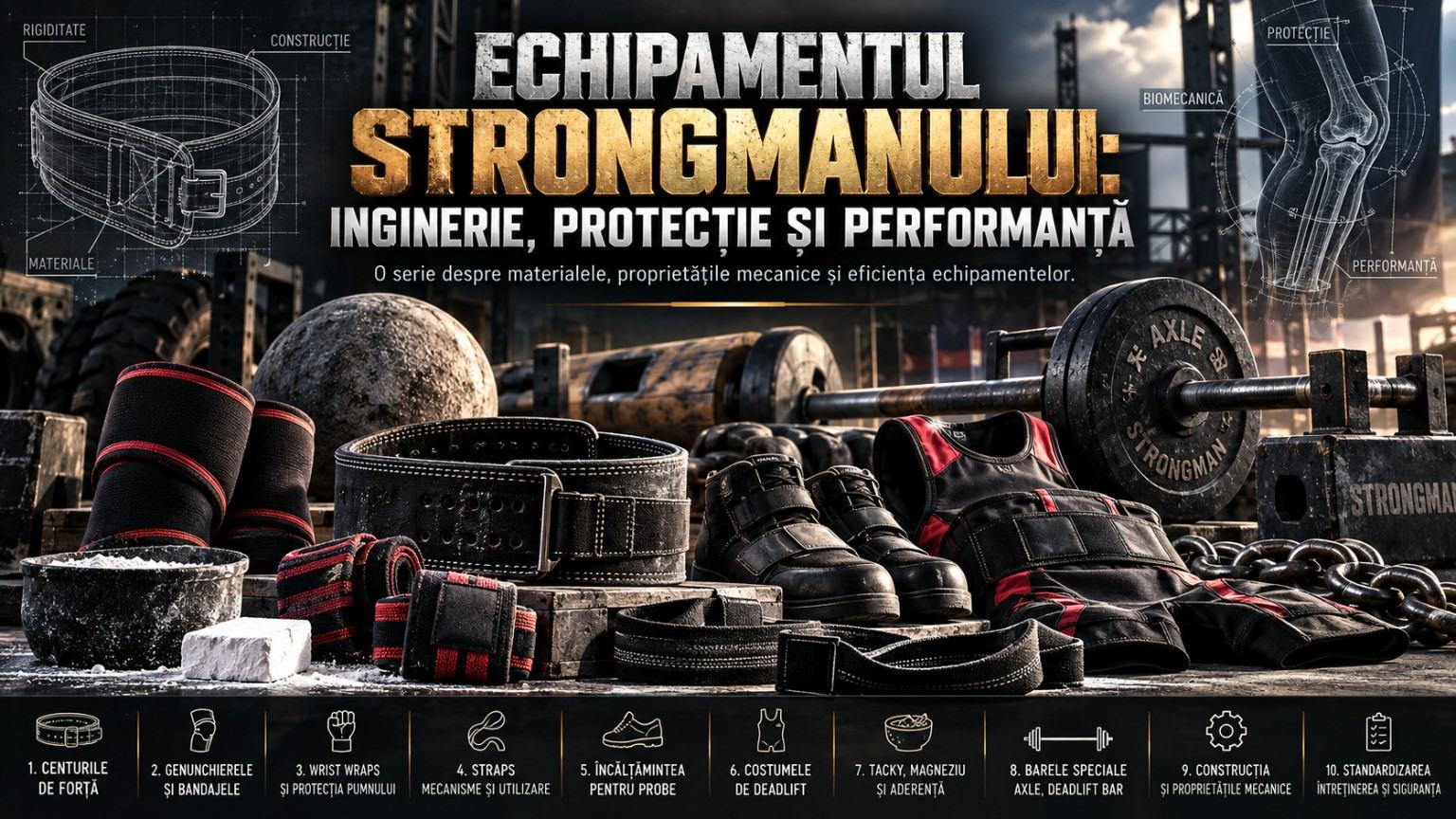
Before an athlete approaches a loaded bar, a Log or a Yoke, they often check their belt. The gesture is so familiar that it rarely invites questions: tighten the buckle, inhale, brace and begin. Yet the lifting belt remains one of the most debated and least understood items in strength training. Some see it as essential protection, others as a shortcut that supposedly weakens the abdominals, and many as performance equipment chosen by thickness and price. None of those positions adequately explains its function. The belt does not lift the load for the athlete, and it does not make the spine invulnerable. It changes the mechanical environment in which respiratory and abdominal muscles generate pressure, develop tension and control motion.
This article opens the series STRONGMAN EQUIPMENT: ENGINEERING, PROTECTION AND PERFORMANCE. Equipment will be examined through three simultaneous lenses: material properties, biomechanical functions, and practical consequences in training and competition. Episode One concentrates on lifting belts, particularly construction, stiffness, pressure distribution and the limits of the scientific evidence. We compare uniform-width powerlifting belts with contoured and textile designs, examine stitching, laminations, buckles and closures, and explain why belts with identical nominal thickness may behave differently. Marketing claims are not experimental findings, and perceived comfort must not be confused with demonstrated injury prevention.
A belt is best understood as one component in a system: rib cage, diaphragm, abdominal musculature, pelvis, spine, leather or fabric, fastening mechanism and external load. As an athlete increases intra-abdominal pressure, the abdominal wall pushes outward; the belt resists some of that expansion. Changes in circumferential tension and tactile feedback can affect bracing behaviour and the organisation of effort. But the effect depends on technique, breathing, body geometry, belt position, construction and event demands. To understand why, we must begin with physics and anatomy rather than a manufacturer's recommendation.
The issue becomes especially interesting in strongman. A maximal Deadlift demands one form of trunk organisation; a Yoke weighing hundreds of kilograms demands stabilisation while walking amid repeated impacts and oscillations; an Atlas Stone combines trunk flexion, contact with a large sphere and extension from an unusual posture. In Farmer’s Walk, breathing must be managed without losing cadence. During the Log Clean & Press, the implement may contact the belt while being rolled or racked. A belt that is outstanding for a squat may be uncomfortable or even interfere with another event. Appropriate selection is always a compromise among mechanical constraints, freedom of movement and competition rules.
This article aims to address common questions without absolute promises: why intra-abdominal pressure can rise when wearing a belt, what stiffness actually means, how contact pressure is distributed, how 10 and 13 mm differ, why a lever belt might feel firmer than a prong belt, whether moving events benefit, and how wear should be identified. We distinguish experiments from theoretical models, acknowledge uncertainty and propose a practical individual testing protocol. Any numerical examples are hypothetical, and the mathematics will remain accessible.
1. Anatomy of a Support That Is Not Armour
The vertebral column is not a single rigid rod to which a hard strap may be attached. Vertebrae, discs, ligaments, joints and muscles allow movement and transfer forces together. Stability during lifting emerges from dynamic coordination, not complete immobilisation. The abdominal muscles, spinal extensors, deeper trunk muscles, diaphragm and pelvic floor participate in a system in which breathing and the management of tension are closely linked. A belt interacts with this system, but cannot eliminate mechanical loading or magically carry the bar's weight.
The popular phrase ‘supports the back’ is useful in conversation but imprecise in technical analysis. A conventional belt surrounds the trunk; it does not immobilise individual vertebrae or prevent every degree of flexion, extension or rotation. As an athlete presses the abdomen against the material, the belt resists circumferential deformation. This interaction can alter intra-abdominal pressure and the sense of stability. However, a belt worn too high, too low or too tight may interfere with rib-cage and pelvic positioning, create painful pressure points or restrict breathing. Its merit should be judged by what happens to technique rather than by how tightly it can be fastened.
Trunk control also involves anticipating an external load. Before the bar leaves the floor, the nervous system recruits muscles to prepare force transmission between the limbs and the implement. In a maximal attempt, breathing and bracing become part of the setup; in a moving event, they must be repeated and adjusted under fatigue. This helps explain why an athlete's experience may vary even within one session: the belt can feel supportive during the first repetition and respiratorily restrictive after thirty seconds of loaded movement. The demands have changed, so the perceived effects can change as well.
Scientific studies frequently examine belts during standardised squats or ground-based lifts, often with relatively small participant groups. Such experiments provide important clues about intra-abdominal pressure, bar speed and muscle activation. They should not automatically be generalised to Atlas Stones, Yoke carries or competitions containing six events in a day. Moreover, an increase in a biomechanical variable does not in itself demonstrate long-term injury reduction. The rigorous question is not whether belts ‘work’ universally, but which outcome changes, under which conditions, for whom and with what confidence.
2. Intra-Abdominal Pressure: Mechanism, Measurement and Interpretation
Intra-abdominal pressure, commonly abbreviated IAP, is the pressure within the abdominal cavity. As the diaphragm contracts and the abdominal wall tightens, internal pressure and volume relationships change. This is not a perfectly sealed anatomical balloon: tissues deform, thoracic movements alter conditions and force distribution is three-dimensional. The image of a pressurised cylinder is only a teaching analogy. Real trunk support emerges from muscles, internal pressure and spinal geometry acting together. A belt offers an external boundary against which the abdominal wall can generate force; under certain conditions, measured IAP rises compared with an unbelted lift.
Harman and colleagues' 1989 study [1] examined nine participants deadlifting at approximately 90% of their maximum with and without a belt. The investigators reported greater IAP and an earlier pressure rise in the belted condition. The mechanical lesson is important: a belt does not merely change how secure someone feels, but may alter a measurable physiological variable. However, a small sample, a particular lifting protocol and the absence of injury follow-up rule out universal conclusions about safety. An experiment showing increased pressure is evidence for that effect; claiming that every wearer will avoid disc injury goes beyond the evidence.
McGill, Norman and Sharratt [2] studied lifting with and without a belt under different breathing conditions. IAP rose with the belt, but the results did not support a simple account in which back extensor muscles invariably became less active. This matters because greater pressure is not synonymous with the disappearance of muscular effort. Several structures may remain heavily recruited while the athlete produces useful stability. Biomechanical experiments track intermediate variables rather than future injuries directly. A belt may therefore have a practical role without replacing technique, sensible progression or managing training workload.
Lander, Simonton and Giacobbe [3] compared squats with different belt conditions. At high intensities, peak and mean IAP were greater with belts. Lander and colleagues' 1992 repeated-squat study [4] likewise reported higher pressure and generally faster repetitions in the belted condition. These observations are consistent with a mechanical and behavioural benefit, but they do not yield a universal formula assigning a fixed strength increase to each millimetre of leather. Changes in IAP may occur alongside changes in speed, bar path and the athlete's confidence, making simple cause-and-effect narratives insufficient.
Kingma and colleagues [5] provide another result requiring careful interpretation. Using a biomechanical model informed by muscle activity, the researchers estimated roughly 10% lower spinal compression with a stiff lifting belt, but only in the protocol condition where participants inhaled before lifting. That does not mean every belt reduces compression by ten percent at any load or posture. The number was estimated with a model under specific experimental conditions; it must be distinguished from direct pressure measurement and, even more importantly, from long-term injury risk. The study underscores why breathing, abdominal muscle force and trunk mechanics cannot be reduced to a slogan equating greater pressure with an automatically safer back.
Older studies often report pressure in millimetres of mercury (mmHg), while others use pascals or kilopascals. The conversion is 1 mmHg ≈ 133.3 Pa, or 1 kPa ≈ 7.5 mmHg. Values from different studies are not necessarily comparable when measurement devices and protocols differ. The sensor records pressure by a particular method, and the result depends on breathing depth, the phase of the lift and the test condition. Comparing a laboratory peak pressure to a lifter's subjective report of ‘nine out of ten pressure’ is therefore inappropriate. One is a physical quantity; the other is a potentially useful subjective self-report measuring something different.
Should an athlete push only the front of the abdomen or brace all around? In a three-dimensional understanding of trunk control, bracing should not be reduced to deliberately pushing the belly forward. Controlled circumferential expansion and tension can involve the sides and posterior region as well as the front. The belt provides useful cutaneous feedback, allowing the athlete to sense where contact is being made. Pressure distribution nevertheless varies with individual anatomy. A wide belt may meet the lower ribs on a short torso, while another body shape may leave sufficient space for hip flexion. Technique and placement should fit the athlete and the event.
3. Breathing and Bracing Are Not Minor Details
Bracing means voluntarily organising trunk tension to resist perturbation caused by the load. In gyms, it is often confused with holding one's breath, but the two are not equivalent. An athlete can contract abdominal musculature during controlled expiration and can hold their breath without organising tension optimally. The Valsalva manoeuvre, forceful expiration against a closed or partly closed glottis, can substantially increase intrathoracic and intra-abdominal pressures. It occurs naturally in maximal efforts, but it also has cardiovascular effects relevant to people with high blood pressure, cardiovascular disease or unusual exertional symptoms. It should not be prescribed indiscriminately.
A heavy Deadlift setup may involve positioning the feet, engaging the bar, taking a task-appropriate breath and creating circumferential tension before the pull begins. The belt may act as a tactile reference during the process. If the athlete inhales so much that rib position is lost or the lumbar spine is excessively extended, more air does not automatically mean better stability. The objective is useful tension in the posture required to generate force. The same lifter may organise breathing differently during a squat, a pull from blocks and a Log event, because thoracic mobility and implement paths are not identical.
In moving events, bracing must coexist with ventilation. Attempting to maintain one continuous breath hold over a twenty- or thirty-metre Yoke course may create an intense sensation of air hunger, disrupt cadence and produce needless distress. Athletes may coordinate shorter breathing cycles with steps, but no universal number of steps per breath has been validated across strongman events and loads. Some use a brief breath hold during pickup followed by shorter breaths while walking. Preserving postural control is more important than copying a video. Athletes with blood-pressure disorders, dizziness or chest symptoms should obtain medical assessment before employing breathing strategies that markedly raise pressure.
Unbelted bracing remains a worthwhile skill. If an athlete can perform a submaximal set only after tightening a belt to its limit, it is sensible to investigate whether technique or load progression needs attention. Carefully programmed unbelted training provides opportunities to practise trunk control at appropriate loads. Nevertheless, there is no simple evidence that regular belt use inevitably atrophies abdominal musculature. Electromyography studies show no single pattern of muscle inhibition, and long-term adaptations are not sufficiently characterised to justify sweeping claims. Deliberate use is a better principle than either absolute prohibition or constant dependence.
Two people may experience the same belt quite differently because of subcutaneous tissue thickness, torso contour, rib position, hip-flexion range and bracing experience. Painful contact is sometimes interpreted as evidence that a belt is properly tight or exceptionally ‘serious’. In fact, adequate pressure for secure contact must not be confused with needless tissue compression. Recurring bruising, numbness, worsening pain or an inability to breathe comfortably between repetitions should prompt reassessment, not praise for the product. The primary criterion remains the ability to execute the task with control and repeatability.
4. From Raw Material to Biomechanical Object
A conventional powerlifting belt is often constructed from leather, laminated leather or combinations of low-stretch materials, sometimes covered in fabric. Leather is an anisotropic biological material: its characteristics vary with fibre orientation, anatomical source, tanning, moisture and finishing. Calling an item ‘13 mm leather’ without describing the layers is insufficient to predict bending resistance or durability. Two products may share nominal thickness while one contains strongly bonded layers and another has a mechanically different core. Engineering analysis should start with actual construction, not the label.
Synthetic belts involve other compromises. Woven fabrics may offer flexibility, lower mass, quick adjustment and comfort across varied movements; their stiffness depends on fibre selection, weave, lamination and possible reinforcements. Neoprene and foam may alter contact comfort and pressure distribution but are not automatically equivalent to thick leather in circumferential resistance. Nylon names a family of polymers, not one guaranteed level of strength. Responsible comparison requires observable construction details and, where available, mechanical tests from manufacturers or independent laboratories. The phrase ‘industrial grade’ on packaging is not a measurement.
Leather commonly changes during a break-in period. A new belt may initially feel very stiff and create uneven contact; with repeated bending, the fibres can adapt to the athlete's body contour. Break-in cannot guarantee that a poor fit will become good. When the lower edge consistently strikes the iliac crest or the upper edge compresses the ribs in the setup, geometry rather than stiffness may be the underlying issue. Excessive softening, delamination and cracks near holes should not be treated as ordinary adaptation. Repeated loading, sweat and damp storage can contribute to damage and should be monitored.
Ultimately, belt selection is a contact-design problem between two deformable bodies: the torso and the belt. The body changes shape through breathing, pelvic position and movement. The belt has variable stiffness, a discrete or continuously adjustable fastening system, and edges that load tissues differently. Premium construction cannot abolish these trade-offs. The practical objective is consistent performance in the actual task. A belt that permits predictable preparation, supports circumferential contact, avoids severe pressure points and leaves critical movement phases unobstructed may be a good choice even when it is neither the thickest nor the most expensive.
5. Stiffness Is Not the Same as Thickness
Athletes often use ‘stiffness’ to mean that a belt is difficult to bend. Engineering analysis must first ask which deformation is being considered. A belt may strongly resist extension along its length while bending relatively easily around an edge. It may have high tensile strength but deform readily under twisting. At least three properties matter in practice: circumferential extension under abdominal pressure, bending across the width and flexibility during complex trunk movements. None can be inferred reliably from a single number on a label.
A simple expression for approximately linear elastic extension is F = k × ΔL, where F is force, k effective stiffness and ΔL elongation. Real leather and textile belts may show hysteresis, creep and loading-rate effects, so k is not necessarily constant. The practical interpretation is that two belts subjected to the same circumferential force may lengthen by different amounts. This could change the firmness of contact during a deep breath. Athletes may notice it, but a stiffer belt does not automatically produce a larger performance benefit.
The bending resistance of an ideal homogeneous beam relates to Young's modulus E and the second moment of area I: flexural rigidity equals E × I. For a rectangular section, the relevant second moment may depend on the cube of thickness, depending on the bending axis. That explains why thickness can strongly influence stiffness in a uniform material. A real belt, however, is not a perfect homogeneous beam: it contains laminations, stitches, holes and curvature around the body. It is an error to infer that a 13 mm belt is exactly twice as effective as a 10 mm belt. Structural stiffness and athletic effectiveness are different constructs.
Consider a deliberately hypothetical example. If two strips were made from the same perfectly homogeneous material, with identical width and geometry, and bent around the axis for which thickness enters cubically, their stiffness ratio would be (13/10)^3 ≈ 2.20. In that simplified model, the thicker strip could resist bending about 2.2 times as strongly. The calculation says nothing directly about one-repetition maximum, IAP, comfort or injury. In a laminated belt, material characteristics and bonding between layers can greatly change the ratio. Mathematics is useful only when we preserve the distinction between structural geometry and effects in a human body.
Greater stiffness may offer benefits and costs. It may provide a less deformable contact surface and clearer opposition to abdominal expansion. At the same time, edges resisting bending can press harder into ribs or pelvis during deep hip flexion. A long-torso athlete may tolerate a uniform ten-centimetre belt more readily than someone with very little space between the iliac crest and the lower ribs. There is no universal thickness threshold separating beginners' belts from advanced athletes' equipment. Event demands, anatomy, experience and preferences tested under actual load matter more than marketing categories.
Materials also respond over time. Viscoelastic products react to the duration of loading; a belt can be stiff during the initial brace and deform slightly more under sustained tension, a phenomenon known as creep. After unloading, shape recovery may be delayed. Repeated wetting and drying can affect some materials, while temperature changes can influence certain polymers. These effects may be negligible during a short set but relevant to a product used heavily for years. Without tests on the exact model, we should not invent laboratory values.
Hysteresis describes a related effect: the deformation path while a material is being loaded may differ from its recovery path, with some mechanical energy dissipated. This is normal in leather and many polymers. Hysteresis is not intrinsically good or bad; it may contribute to damping or reduce elastic recoil depending on the application. Yet a lifting belt should not be marketed as a major energy-storage spring without product-specific evidence. Its principal role is interaction with the trunk, not propelling the weight upward.
Lamination provides another reason to distrust simplistic terms such as ‘single ply’ and ‘double ply’. Two strongly bonded layers may act together in bending; the same layers will behave differently if they slide relative to each other. Stitching can help resist edge separation, but perforations can create local stress concentrations. Fibre orientation and the original part of an animal hide can affect the response. Accordingly, equal nominal thickness does not establish mechanical equivalence between products, and impressive cross-section photographs cannot substitute for tests.
An engineering appraisal would ideally obtain measured extension at known loads, stitching strength, closure performance and response to repeated cycles. Manufacturers seldom publish directly comparable datasets. This does not prove poor quality; it means uncertainty remains substantial. Hands-on testing, inspection, reliable product history and warranty conditions offer clues, but are not standardised measurements. A rational purchasing hierarchy starts with body and event fit, closure integrity, construction and adjustment before aesthetic preference.
6. Width, Profile and Contact Geometry
Width and thickness are different variables. Powerlifting often uses a uniform-width belt around ten centimetres, or four inches. General training belts may be wider at the back and narrower in front. Uniform width provides roughly constant nominal contact area around the trunk, but not uniform pressure because body contour and local tension vary. A contoured profile may make hip flexion or contact with a large implement easier, yet change perceived support on the front and sides. Neither geometry is inherently superior for every athlete.
A basic average-pressure relation is P = F/A, where P is pressure, F the distributed normal force and A the contact area. Actual local pressure differs from this average: edges, fabric folds, the buckle and anatomical contours may concentrate force. Reducing the contact area may increase local pressure despite unchanged overall strap tension. Conversely, a nominally wider belt is not necessarily more comfortable if it mainly bears against ribs and pelvis instead of the intended soft-tissue area. Testing in motion tells us more than measuring a belt on a table.
A second simplified model relates strap tension around a curved surface to contact pressure. An ideal cylinder with a uniform strap produces relationships governed by curvature and tension. A human torso is neither cylindrical nor mechanically uniform. Such a model may explain a trend, but cannot calculate the load on a particular intervertebral disc with clinical accuracy. Promotional graphics sometimes misuse engineering simulations as if they were direct medical measurements. Ask what was measured, what was modelled and what was assumed.
An athlete bending around an Atlas Stone changes the space between the lower rib cage and iliac crest. Soft tissues are compressed differently, and a rigid wide belt can dig into ribs or stop the stone approaching the abdomen. Under a Yoke, the torso tends to remain relatively upright through much of the course, allowing the same belt to be tolerated more easily. Experienced strongmen may therefore keep two belts for different functions. This is not necessarily waste or evidence that one is ineffective: the tasks impose different geometrical constraints.
Anatomically contoured belts may feature rounded edges, wider lumbar panels or narrower sides. Rounded edges can lessen a cutting sensation, but performance depends on the underlying material and individual fit. A wider back section does not guarantee better spinal protection. When a manufacturer claims that a shape ‘protects lumbar vertebrae’, ask whether relevant biomechanics were measured and the actual design tested. Without those results, geometry and comfort can be described, while exact injury-risk reductions cannot responsibly be asserted.
Edge thickness also affects tissue interaction. Even a smooth-looking edge can create painful contact if substantial force is applied over a narrow strip. Conversely, very thick padding can produce a bulky obstacle when approaching a bar, sandbag or stone. Where competition rules allow, trying different profiles at comparable submaximal loads is superior to selecting by advertising alone. Contact can be evaluated at setup, deepest position and lockout, and the possible support weighed against any restriction.
Vertical position is often underestimated. Moving a belt a few centimetres may separate comfortable contact from interference with hip flexion. ‘Higher’ or ‘lower’ is not a universal answer. An appropriate squat position can differ from one used for Deadlift or Log. Slight changes in front-to-back angle may help as long as the belt does not migrate under load. Recording these settings can improve consistency before competition; reproducible preparation beats improvisation in the final seconds before a heavy attempt.
7. Prongs, Levers and Adjustment Systems: Closing the Mechanical Loop
The closure is not merely a final detail. It transfers tension between belt ends, governs adjustment and may become a critical failure point. In single- and double-prong systems, load passes through the buckle, prong and hole, with tension settings selected from discrete perforations. A lever mechanism converts handle rotation into quick closure at a predetermined circumference. Textile belts may use hook-and-loop fasteners, metal loops or combinations. Each design changes the experience, but direct clinical comparisons are insufficient to claim that one prevents spinal injuries more effectively.
A single-prong belt offers mechanical simplicity, relatively few parts and easily understood adjustments. Changing holes before an event may suit athletes whose abdominal circumference varies during a season or after a meal. Potential disadvantages include effort during fastening and local wear around frequently used holes. Cracking that spreads radially from a hole calls for inspection. Even when the rest of the leather looks sound, perforations concentrate stress and can become important structural weaknesses.
Two prongs do not simply double the strength of a belt. Load may not be distributed equally between them, and hole tolerances, belt stiffness and buckle alignment affect the arrangement. An advantage may be a subjective sense of security, not a proven lifting-performance gain. Fastening and releasing two prongs takes time, particularly when the athlete is fatigued after an event. Selection based solely on an imposing-looking buckle misses a central question: can the athlete fasten it reliably and predictably under competition conditions?
A lever belt can offer quick, highly repeatable closure. This is valuable for heavy sets performed at a consistent circumference. Some traditional models require screws to be moved when changing the setting, making frequent adjustments less convenient. Other quick-adjust designs alter this trade-off, although compatibility and mechanical performance remain product specific. Screw loosening, pivot wear and lever deformation after impacts are possible failure modes. A satisfying click is not certification of structural integrity.
Hook-and-loop systems provide near-continuous adjustment and usually lower mass, making them useful for warm-ups, accessories and some moving events. Their performance depends on the effective engaged area, hook and loop quality, and contamination from dust, chalk or fibres. Dirty closures may progressively lose grip. Not every textile belt is intended for maximal lifting, just as not every rigid belt is suitable for moving quickly. The meaningful choice matches the mechanism to task demands and the need for adjustment.
Closure inspection before and after a session is straightforward. Check that the lever seats completely, screws remain secure according to the manufacturer's instructions, prongs are not bent and hook-and-loop fabric does not begin peeling during bracing. Do not attempt unsafe improvised destructive tests under a heavy load. Sudden loss of tension during a difficult attempt could disturb technique. Replacing a compromised part is more sensible than ignoring visible damage simply because the belt otherwise looks impressive.
8. Sizing: Your Belt Measurement Is Not Your Trouser Size
Incorrect sizing is a common reason a good product performs poorly. Labels such as S, M and L vary across manufacturers, and the circumference at the actual belt position differs from trouser sizing. The athlete should measure the region where the belt will be worn, in a relaxed stance and, where the manufacturer recommends it, with light bracing. That measurement only makes sense in relation to the specific sizing chart and adjustment range. Selecting a belt deliberately too small does not guarantee superior stability.
Ideally, a prong belt leaves several usable holes above and below the normal setting. This allows adjustment for reasonable changes in circumference, clothing thickness and event preference. Constantly fastening the final hole may indicate poor sizing even when the belt technically closes. A traditional lever belt may require tools to change the setting, so preparation before competition matters. Recording or photographing the established setting avoids last-minute improvisation during the final warm-up.
A strongman's body can change across a season through weight gain, changes in adipose tissue, hydration, food volume or posture under fatigue. A belt bought at one circumference may not remain appropriate indefinitely. This does not mean replacing equipment for every kilogram of body mass, but reviewing fit when adjustment becomes marginal or contact shifts. A very large athlete may prefer a narrower profile for hip flexion, while a leaner athlete may prefer something different. Body mass alone does not determine belt choice.
Standing upright in a shop does not establish fit. It is useful to rehearse, without unsafe loading, a Deadlift setup, the bottom of a squat and a Log rack position. If edges ride dramatically, breathing becomes restricted or sharp pain develops, repositioning or trying another profile is appropriate. Strong pressure is not automatically good support. Comfort cannot prove effectiveness, yet serious discomfort can disrupt movement enough to justify rejecting the model.
9. Static Events and Maximal Attempts: When Firmness May Help
A heavy Deadlift is perhaps the clearest setting in which an athlete notices belt contact during preparation. Before the bar breaks from the floor, force must pass from the lower limbs through a braced trunk to the upper limbs and implement. A sufficiently firm belt can offer a tactile boundary against which the athlete creates tension. Yet a wide belt worn too low may collide with the thighs in the start position and make setup inefficient. Position and fastening should be tested with progressively heavier but controlled loads.
With a flexible Deadlift bar, initial bar bend, the timing of plate separation and the bar path can change how tension is organised. A belt cannot repair an unsuitable grip, inefficient hip position or lack of preparation for a particular bar. It may still provide a repeatable point of contact as pulling strategy changes. Forcing an artificially upright posture merely because a belt is stiff may worsen mechanics. The equipment should accommodate sound movement, not demand that the movement be distorted to suit the equipment.
Squatting coordinates hip, knee and ankle motion with trunk control. A uniform belt may offer consistent contact but should not interfere with necessary depth or push the rib cage into a poor position. Zink and colleagues [6] studied fourteen men squatting at approximately 90% of 1RM. Bar movement and repetitions were faster when belted, while selected muscle EMG measures did not differ significantly. This does not establish that every athlete's 1RM will increase. Rather, belt use can change lifting kinematics without a detectable difference in the particular muscle-activity outcomes measured.
In a Log Press, the abdomen can provide an intermediate contact surface during the clean, while the belt creates an edge the cylinder may meet. Some athletes appreciate a rigid belt for pressing but find the same configuration awkward during cleaning. The trade-off occurs within a single event: the setup supporting pressing tension may hinder the object's transition to the chest. Axle cleans, particularly continental variations, create another contact problem involving the bar, abdomen and belt. Competition rules should be checked for restrictions on using the belt as a support or assistance point.
A belt need not appear during every warm-up or accessory movement. It can be reserved for loads and event-specific tasks that justify it, while controlled accessory sets remain unbelted. There is no magic threshold of 70, 80 or 85 percent of 1RM appropriate for everyone. An athlete may find a belt useful at 75% for eight demanding repetitions; another may wear one only for heavy singles. What matters is consistency when comparing progress: a belted record is not perfectly interchangeable with an unbelted result unless the condition is recorded.
The fastening ritual can also act as a psychological signal that serious effort is approaching. Predictable preparation can focus attention, but this role must be distinguished from mechanical effects. Excessive confidence may tempt an athlete to attempt an unsuitable load because they feel ‘armoured’. A belt cannot erase fatigue, correct an injury or justify ignoring pain. Good preparation makes measured use of possible advantages without attributing unproven powers to the equipment.
10. Yoke Walk: The Belt in a Moving System
Yoke Walk transforms the question of belt use compared with lifting a bar once from a stationary position. The athlete must pick up the frame, control vertical and lateral sway, accelerate and maintain cadence while the implement oscillates. Plate mass alone does not describe the task. Crossbar height, course length, surface, support spacing and stride strategy matter. The belt interacts with a torso that must be stiff enough to transfer force yet adaptable enough to breathe and correct balance. Dynamic stability, rather than absolute immobilisation, is the goal.
Some athletes feel that a very firm belt helps the initial Yoke pickup, which demands powerful leg extension and organised trunk tension. Several steps later, the same tightness can interfere with breathing or create excessive discomfort. A more flexible belt might be better tolerated over the course while providing a different contact sensation at pickup. Selection should be based on the full event, not one instant. The clock stops at the finish; a successful initial lift without effective locomotion is not a complete performance.
A useful individual comparison records total time, pickup time, segment speeds, drops, balance disturbances and perceived breathing difficulty. Suppose a hypothetical athlete completes twenty metres in 18.2 seconds with one belt and 18.0 seconds with another. That difference may be smaller than the normal variability of the test, so the second belt cannot simply be declared faster. Repeated trials, similar conditions and alternating test order improve interpretation. Yet it would be unethical to demand excessive maximal attempts solely to obtain a tidier statistical comparison. Fatigue and injury risk may outweigh the information gained.
Yoke also creates unexpected perturbations. If the foot meets an uneven spot, frame oscillation demands rapid correction. A belt cannot replace muscular reactions, centre-of-mass control or practised stride patterns. Excessive respiratory restriction might even impair those corrections late in the run. Direct controlled studies of belt stiffness in Yoke are scarce, so an average time benefit cannot be quantified confidently. Claims about this event should be framed as biomechanical reasoning and individual hypotheses, not universal experimental results.
11. Farmer's Walk, Carry Medleys and Implement Changes
Farmer's Walk transfers force among handles, upper limbs, trunk and lower limbs while loads hang on both sides of the body. Lateral stability and stride rhythm matter greatly. A belt can support a bracing routine during pickup while still needing to permit rhythmic movement and breathing. Under very high loads, an athlete may prefer firm contact at the start; over a longer course, the same athlete may prefer something less restrictive. Static photographs and the claim that champions use a particular product do not constitute sufficient evidence.
Handle placement and implement length influence posture. Some devices keep hands farther apart, while others change shoulder positioning. A very wide belt that crowds the gap between ribs and pelvis may lead an athlete to compensate by changing lumbar extension or trunk inclination. These changes can appear on video even when they are not consciously perceived. Two submaximal trials recorded from the front and side, using the same load and course, may expose obvious interference. A single trial cannot establish a general performance advantage.
A Carry Medley adds transitions. Moving from Farmer's handles to a Sandbag and then another bulky object demands several consecutive trunk positions without lengthy adjustments. A belt that assists handle pickup might make it harder to hug a sandbag. A lever may open quickly, but the event rules may forbid equipment changes once the clock starts, and adjustments consume precious seconds. The best belt for each component is not necessarily the best choice for the whole medley.
Grip aids, chalk and shoes may also influence Farmer's performance strongly. A belt comparison becomes difficult to interpret if several other variables change simultaneously. A better time achieved with a new belt and new footwear cannot reasonably be assigned solely to the belt. This is a classic confounding problem: compared conditions differ in more than one way. Training protocols can limit those differences; real competition results must often be interpreted as outputs from a complex system.
12. Atlas Stones: Deep Flexion Versus Rigid Contact
Atlas Stones expose the limitations of conventional lifting belts especially clearly. The stone is lifted from a position that often requires substantial hip and trunk flexion, brought onto the lap or abdomen, pulled close and then extended toward a platform or over a bar. A rigid, wide front panel may create an edge between the stone and the torso. It can rub against clothing or skin and change the contact surface with the implement. Freedom of movement therefore matters as much as firm bracing.
Athletes may select textile or narrower belts, and some prefer no belt at all, depending on stone weight, technique and comfort. None of these habits should become a universal rule. More flexibility may help keep the stone close to the body, yet trunk control through the full lift still matters. Tacky materials used for stones can also contaminate belt surfaces and closures. Cleaning and inspection become technical considerations rather than merely cosmetic ones.
Comparisons can distinguish initial pickup, lap transition, arm closure, extension and loading over the bar. An athlete may lose time because the stone cannot approach the abdomen, rather than because they lack IAP. A rigid belt could worsen this issue even though it feels excellent in a squat. Side-on video can help identify implement–torso distance and posture changes without turning observation into a clinical diagnosis. Greater mobility is not the same thing as proven spinal protection.
At extreme stone weights, preferences may change relative to those at light repetitions. Testing should progress gradually in an environment with secure loading platforms and appropriate helpers. Unsafe attempts merely to prove that a new belt ‘holds’ are inappropriate. Repeatability offers a better clue: can the athlete reproduce the setup, lift smoothly and extend without fighting the belt edge? If not, the accessory warrants reassessment regardless of cost. Equipment has value when it serves the event rather than forcing the athlete to work around it.
13. Truck Pull, Sled and Harness: When the Belt Is Not the Main Device
In a Truck Pull, force may be transmitted through a harness while the athlete manages forward lean, path and pulling cadence. A lifting belt is not the same as a pulling harness. The former encircles the torso to interact with bracing, while the latter may be a principal pathway transmitting force to the vehicle. Harness pressure against a belt can introduce friction, discomfort or displacement. The real harness configuration, rather than squat-related recommendations, should guide selection.
Surface traction, footwear, vehicle resistance and cable tension all change the task. During a long pull, ventilation may become limiting, and tightness that felt acceptable during Deadlift may be experienced differently. There is insufficient direct experimental literature to calculate precisely how many seconds a particular belt saves in Truck Pull. A prudent approach checks stability, harness interference, posture and cadence. Individual observations can be practically valuable if they are documented instead of presented as universal truths.
Sled Push often involves a strongly forward-inclined trunk and hand contact on vertical or angled handles. A wide belt may interfere with hip flexion or breathing. Sled Drag differs depending on whether a strap, harness or handheld implement is used. The words ‘support’ and ‘protection’ mean different things according to the actual force path. Wearing one belt in every scenario may be convenient, but convenience is not proof that it optimally matches every movement.
A mature strongman training system can keep an equipment inventory for each event. Record belt model, position, fastening, comfort, interaction with other implements and any recurring problems. Such documentation is more valuable than an abstract argument between brands. One athlete might find a rigid belt preferable for Deadlift and Yoke and a textile model better for Stones and a sandbag medley. This is a reasonable personal conclusion when comparable practice supports it, not a law imposed on everyone.
14. Scientific Evidence: What We Know, Estimate and Do Not Yet Know
Before debating protection, define the outcome. ‘Protection’ might mean higher IAP, altered muscle activation, lower model-estimated force, restricted movement, less short-term pain or fewer injuries years later. These outcomes may be related but are not interchangeable. A study documenting higher IAP does not automatically establish lower injury incidence. Comfort studies do not necessarily measure intervertebral disc loading. A responsible interpretation starts with what was actually measured and in which population.
Studies by Harman [1], McGill [2], Lander [3,4], Kingma [5] and Zink [6] are important sources for acute mechanisms. They are also relatively small studies under controlled conditions that cannot represent all of strongman. Using them to explain mechanics is reasonable; claiming that a particular commercial belt reduces seasonal injury incidence by a defined percentage is not. Such a claim would require prospective research, carefully defined exposure, enough participants, relevant clinical outcomes and consideration of training volume, fatigue, technique and injury history.
Research on workplace back belts should be distinguished from athletic performance. Ammendolia, Kerr and Bombardier [7] found conflicting evidence and no conclusive support for preventing occupational low back pain with back belts. That does not show that sporting belts have no effect on squat performance; the people, tasks and objectives differ. It does, however, illustrate why the marketing promise that belts ‘prevent injuries’ is much stronger than current evidence supports. A lifter's positive experience is valid as experience, but it is not, by itself, an injury-prevention trial.
Electromyography, or EMG, records electrical activity associated with muscle activation. It does not directly measure muscle force and cannot by itself produce a precise joint-loading estimate. Electrode placement, subcutaneous tissue, data normalisation and interactions among muscles affect interpretation. Similar EMG with and without a belt does not prove the absence of all mechanical differences, just as lower EMG does not prove atrophy. Atrophy is a long-term structural adaptation requiring different types of evidence. Scientific literacy depends on understanding what an instrument actually measures.
Computer models of the spine are useful and limited for similar reasons. They combine movement measurements, external forces and assumptions about muscle activity to estimate loads that are difficult to measure directly. These are legitimate mechanical tools, but outcomes depend on parameters and simplifications. A decrease in estimated force does not guarantee an equivalent percentage decrease in injury risk. Biological tissues do not have one universal failure threshold, and risk depends on loading history, recovery and individual circumstances. A model-estimated compression change is not a clinical risk-reduction statistic.
Study averages also hide individual variation. If average bar speed rises slightly under the belted condition, not every participant necessarily improves equally. Some may respond strongly, some minimally and others negatively; uncertainty intervals and subject-level results matter. Long-time belt users may also behave differently from first-time users. Familiarisation is therefore an important experimental variable. A robust design allows athletes to adapt to test conditions instead of comparing an experienced pattern with a completely unfamiliar one.
Direct comparisons of belts for strongman-specific events remain scarce. We would benefit from research on different widths and stiffnesses during Yoke splits, ventilation during Farmer's Walk and stone-to-torso distance during Atlas loads. Until such studies are conducted, mechanistic hypotheses should not be presented as measured outcomes. An accessible scientific article should be able to say ‘we do not yet know’ without becoming useless. Recognising uncertainty helps athletes test relevant questions systematically and distinguish preference, plausible theory and strong evidence.
15. Blood Pressure, Valsalva and Individual Safety
Intra-abdominal pressure does not rise independently from the rest of the body. Intense resistance exercise, muscle contraction and breathing patterns can produce large temporary increases in arterial blood pressure. MacDougall and colleagues [8] recorded extreme arterial values during heavy resistance exercise using invasive measurement. Their findings arose under specific protocols and should not be represented as the response of every athlete. They nonetheless show why tight belting combined with prolonged breath holding deserves caution among people with hypertension or cardiovascular conditions.
A systematic review of intra-abdominal and intrathoracic pressure during high-intensity resistance exercise [9] identified important differences among movements and highlighted the relevance of body position and loading. High pressures recorded in squats and deadlifts show why breathing instructions should reflect experience and medical circumstances. A medically assessed healthy athlete may reasonably use a different strategy from a person with elevated resting blood pressure, exertional symptoms or cardiovascular history. Telling everyone to hold their breath for as long as possible is careless advice.
The Valsalva manoeuvre has complex consequences. It may assist functional trunk stiffness in certain circumstances but also changes venous return, intrathoracic pressure and haemodynamics across its phases. Dizziness may occur around the release of pressure after extremely hard effort. Chest pain, fainting, vision disturbance, unusual shortness of breath or severe headache should lead to stopping the attempt and seeking appropriate medical evaluation. A belt does not justify pushing through warning signs. Safety takes precedence over the record.
Pressure generated internally by muscular effort should also be distinguished from contact pressure imposed by the belt on the skin. They interact but are not the same quantity. Greater tightness may raise local contact pressure without producing the most efficient breathing strategy. Bruising, superficial skin injury and numbness do not certify belt quality. If an athlete must choose between taking a breath and keeping a lever closed, the setting may need reassessment. Appropriate fit should be firm enough to meet its purpose without needless compression.
Coaches and athletes should not use a belt as a diagnostic tool. A belt might change comfort during an exercise, but pain reduction while belted does not identify the cause of pain or justify ignoring symptoms. Persistent back pain, progressive weakness, radiating symptoms or neurological changes warrant professional assessment. Equipment may temporarily mask discomfort while training load remains inappropriate. Injury prevention is multifactorial, involving progression, technique, recovery, physical conditioning and exposure management.
16. Rules, Standards and a Critical Distinction: Powerlifting Is Not Strongman
An athlete may own an excellent belt and still be prohibited from using it at a particular competition. The International Powerlifting Federation publishes technical rules covering dimensions, construction and approved equipment [10]. Its 2026 rulebook lists a maximum width of 10 cm and a maximum thickness of 13 mm along the main length. Those numbers are competition limits in that federation, not scientific proof of optimal biological dimensions. Equipment legal in IPF is not automatically ideal for every strongman event.
Strongman competitions do not all operate under one identical worldwide rulebook. Organisers may allow different accessories or establish special restrictions for certain events. Belts are familiar equipment, but the specific competition rules must still be checked. Special questions may concern belts being used as support surfaces for an implement, layered equipment or restrictions during medleys. Written confirmation before travelling is preferable to assumptions based on another event. Unexpected rule changes can affect both performance and preparation.
In material testing, ISO 3376:2020 specifies a method for determining the tensile strength and elongation properties of leather [11]. Its relevance is the distinction between a testable material property and a broad marketing statement. Passing a material test does not certify that a finished belt prevents lumbar injury. The product also contains stitching, fasteners, perforations and bonded layers that have their own failure modes. Strong raw material alone does not establish whole-product reliability over repeated use.
Labels such as ‘medical grade’, ‘orthopaedic’, ‘competition tested’ and ‘proven safe’ require scrutiny. They may refer to entirely different assessments or appear without an independently verifiable protocol. Ask who tested the product, against which standard, for what load and with what findings. Compliance with a dimensional rule is not the same as biomechanical validation, and mechanical strength testing does not demonstrate injury prevention. In the absence of such data, treat these claims as marketing information rather than scientific conclusions.
Technical education in strongman should include regulatory transparency. Athletes should read competition equipment rules before the final event-specific preparation block. If a belt with a certain insert or closure is prohibited, time is needed to practise with an allowed alternative. If an event demands removing equipment during a medley, that transition should be rehearsed beforehand. Performance depends not only on strength and gear quality but also on whether training matches the real competition conditions.
17. Testing a Belt Without Confusing Preference With Performance
A useful practical test begins with a specific question, not a maximal lift. Does belt A permit a better Deadlift setup? Is belt B more comfortable over a Yoke course? Does a narrower profile allow an Atlas Stone to come closer to the abdomen? Each question calls for a different method. If the belt, load, bar, repetition count and rest duration all change together, interpretation becomes almost impossible. Personal testing does not have to replicate a university laboratory, but it does require a minimum of discipline: one principal variable, comparable conditions and notes taken promptly after the attempt.
An accessible approach is a crossover comparison. In the first session, the athlete tests belt A and then belt B at a controlled submaximal load, with suitable rest. In a second comparable session, the order is reversed. If practical, the sequence is repeated without approaching technical failure. Alternating order reduces, but cannot eliminate, fatigue and familiarisation effects. Maximal attempts are not necessary to identify pressure points, movement interference or large differences in warm-up execution. Moderately demanding loads may actually provide safer and more repeatable information than two absolute maxima performed close together.
Consider a wholly hypothetical example: during triples with a 200 kg Deadlift, an athlete rates comfort 7/10 with belt A and 5/10 with belt B, while filmed technique looks similar. This suggests a preference under the tested conditions. It does not show that A is 40% safer or automatically adds ten kilograms to a personal record. If A remains comfortable over several sessions without disrupting technique, the finding becomes more stable. Subjective ratings still remain subjective. Some athletes prioritise comfort and ease of preparation; others prefer the strong tactile resistance of a stiffer belt for short maximal efforts.
Moving events can be compared using split times. Imagine a hypothetical twenty-metre Farmer's course with two times of 12.1 and 12.4 seconds using belt A, and 12.0 and 12.3 seconds using B. Mean times would be 12.25 seconds for A and 12.15 seconds for B. A tenth of a second is too small to support a strong conclusion without knowing timing error, fatigue effects and natural variability. A display showing hundredths is not proof that the measurement is accurate to hundredths. Record whether timing was manual or video-based, where the start line was placed, and precisely when the clock began.
Consistency between attempts can be useful as another outcome. An athlete obtaining tightly grouped results with one belt and highly variable results with another may want to investigate the difference. Yet estimating variability from only two attempts is unreliable. The coefficient of variation, CV = standard deviation / mean × 100%, describes relative spread, but a formula cannot turn two observations into a robust study. Well-standardised measurements collected routinely over time are more informative than a single dramatic test day.
A minimal training log might include date, event, load, belt model, belt size, vertical position, closure setting, warm-up routine, perceived comfort, breathing difficulty and technical observations. Yoke and Farmer's entries can add surface, course length, times and drops. Log and Atlas entries should record contact points and movement phases affected by the belt. Hundreds of columns are unnecessary, yet ‘the new belt is strong’ is not actionable data. A tracking system should allow genuine comparison without becoming more administratively burdensome than training.
The sensation of a more active core can be useful personal feedback, but is not an EMG reading. Similarly, video may show trunk posture but cannot directly reveal every internal spinal force. It is helpful to separate a log into observations, self-reports and interpretations. Observation: the course took 21.3 seconds without a drop. Self-report: the belt pressed painfully against the ribs late in the run. Interpretation: the width may be affecting ventilation. That interpretation can then be tested by changing position or profile. Keeping these categories separate protects athletes against conclusions that feel persuasive but have not been checked.
Test order is a major source of bias. If belt A is used first while the athlete is fresh, and belt B after three difficult events, the comparison is compromised. The same applies when A is familiar but B has just been unboxed. One or two acclimatisation sessions with a new design may help. Attempts should not be compared across markedly different fatigue states. This is experimental methodology brought directly into practical training: athletes can produce meaningful data if they recognise what can distort them.
18. Three Hypothetical Case Studies for Different Decisions
Case one involves an athlete with a relatively short torso wearing a uniform ten-centimetre, thirteen-millimetre belt. Squatting feels comfortable, but the Deadlift setup causes painful contact with the lower ribs and disrupts the usual starting position. Replacing the belt with a ten-millimetre model of the same width might reduce stiffness in some constructions, but it cannot guarantee a solution to a geometric problem. A narrower profile or different vertical position would be reasonable options to test, while observing technique. The aim is not to identify the thinnest belt, but the source of interference between anatomy and equipment. If discomfort resolves and movement remains controlled, the decision gains a practical foundation.
Case two concerns an athlete preparing for Yoke and Farmer's events. With a rigid belt, Yoke pickup feels stable, but ventilation becomes difficult late in the run. A textile belt feels easier to breathe against, yet the athlete reports less confidence at pickup. Neither maximum stiffness nor maximum comfort automatically wins. Fastening tension, belt position, course length and breathing cadence can be tested separately. For a short ten-metre Yoke, the rigid belt may feel appropriate; for a forty-metre course, a more flexible model might allow more consistent performance. These are illustrative possibilities to assess individually, not findings that should be projected onto all strongmen.
Case three involves a medley of Sandbag, Atlas Stone and Log. The athlete appreciates the confidence provided by a leather belt while pressing the Log, but its front edge prevents the stone from approaching the abdomen. A narrower model, a different fastening setting or, if the rules permit, different accessories for different segments could be evaluated. Any equipment change also costs time and may not be allowed after the clock starts. In a timed event, a fraction of a second gained on one implement can be lost in a lengthy transition. The best product for each isolated movement does not automatically create the best whole-event strategy.
All three cases demonstrate why there is no universally supreme belt independent of its wearer. Opposite examples are easy to imagine: one athlete may perform every event comfortably in a very rigid belt while another prefers moderate resistance. The common requirement is to test an outcome that matters. In the first case, posture and freedom of movement matter; in the second, ventilation and locomotion; in the third, transitions between implements. Professional selection recognises these differences rather than concealing them behind simplistic rankings.
19. What Athletes Should Ask Manufacturers
A useful technical specification should identify the main material, layer structure, measured thickness, actual width, closure mechanism, supported circumference range and care instructions. If the belt is designed for competition in a federation, the manufacturer should specify the relevant approval and whether it remains current. Mechanical strength and durability results would be valuable, but only when accompanied by testing methods. The isolated claim that a belt ‘supports a ton’ says little without stating which component was tested, in which direction and under what loading conditions.
Materials transparency matters in everyday use. Leather and synthetics may require different care, while adhesives and coatings can respond differently to moisture or substances found in a gym. Replaceable buckles and lever components may extend product life when repairs follow manufacturer guidance. Proprietary parts that are hard to obtain could make a seemingly cheap belt expensive over time. True cost includes service life, repairs, comfort and compatibility with events, not only the purchase price.
Warranty conditions should be read carefully. Manufacturing defects may be covered while ordinary wear or misuse is excluded. Retaining the receipt, initial photographs and care instructions can help. For athletes who travel frequently, access to replacement parts or a spare belt may be particularly valuable. After-sales service cannot make an object risk-free, but it can prevent a minor neglected defect from becoming a last-minute competition problem.
A sound product does not need impossible promises. A manufacturer can explain why particular leather was selected, why the buckle attachment was reinforced and how the edges were rounded. Tolerances and tests can be published. That is more useful technical communication than claiming every wearer will instantly add ten kilograms to their best lift. A strongman need not be a professional engineer to ask what the product is made of, how it works and what evidence supports the claims. Asking those questions encourages better equipment and better decisions.
20. A Practical Matrix for Event-Specific Selection
A practical selection matrix can weigh four recurring dimensions: contact support, freedom of movement, ventilation and ease of adjustment. Their relative importance shifts with the event. Deadlift and heavy squat place particular emphasis on repeatable bracing and avoiding interference with setup. Yoke and Farmer's combine pickup demands with moving, balance and breathing. Atlas Stones and sandbag loading often make freedom of hip and trunk flexion central. Log and Axle introduce implement–belt contact and transitions from cleaning to pressing. No matrix can assign universally correct numerical scores without individual data, but it can make trade-offs explicit.
The athlete may rank each criterion from one to five for each shortlisted belt while recording what the numbers mean. For example, a score of five for movement freedom should indicate that the belt does not hinder any of the event's critical postures, not that it simply feels pleasant when standing. A score of one for breathing might indicate marked restriction after a standardised submaximal course. Criteria should be defined before testing, not rewritten after seeing a preferred product's result. In this way, a subjective instrument becomes more consistent, although it does not become an objective clinical test.
It is also possible to assign event-specific weights. An Atlas-focused selection might give freedom of flexion more weight than ease of adjustment, while a medley could give transition speed greater weight. Such weights are value judgements based on event demands, not scientific constants. They should be disclosed rather than hidden behind a single impressive total. If the scoring system produces an answer that contradicts obvious video evidence or causes severe discomfort, reconsider the criteria. The purpose of measurement is to improve decisions, not to obey a number after its assumptions have become unreasonable.
An athlete preparing for several competitions may discover that a small, versatile equipment set is superior to accumulating specialised products. One robust rigid belt for maximal lifts and one flexible, easily adjustable belt for events demanding deep flexion may cover many practical needs. Someone else may use only one well-fitting model. The right number of belts is determined by demonstrable function and rules, not by ownership as a status symbol. Testing should prioritise the weakest current link in performance rather than acquiring new equipment whenever training becomes difficult.
21. Maintenance Is Part of Performance, Not Merely Appearance
A belt used in strongman encounters sweat, chalk, dust, tacky compounds, clothing, metal and competition surfaces. These environments can slowly affect both the main material and the closure. Leather left damp in a gym bag can change, stitching can trap debris, textile fasteners can collect fibres and lever assemblies can accumulate dust around moving parts. The purpose of cleaning is not to restore showroom appearance after every contest. It is to preserve mechanical function. Manufacturer instructions should take precedence over improvised online remedies.
After use, air-drying in a ventilated place away from excessive heat is sensible. A hot radiator, an overheated vehicle or prolonged direct sunlight can damage some adhesives, finishes and materials. Leather may benefit from gentle cleaning with compatible products and occasional care recommended by the manufacturer, rather than soaking it in water. Do not assume a conditioner intended for footwear is compatible with every laminated belt. Fully drying textile materials before storage can also reduce moisture-related problems and odour.
Closures deserve separate attention. With prong belts, look for bending and elongation around holes. With levers, inspect unusual play, cracks, loose screws and incomplete locking. With hook-and-loop closures, check fibre contamination and whether the engaged surfaces peel during bracing. Do not introduce solvents, oils or cleaners into mechanisms unless advised by the maker. Incorrect chemicals may attack coatings or polymer components, and improvised repairs can undermine the original design.
Buckle attachments, holes and edges are regions where stress can concentrate. Growing cracks, delaminated layers, broken stitching and visibly deformed metal justify pausing use until the item is assessed or replaced. Having survived the previous heavy attempt is not sufficient evidence of integrity. Some failure processes accumulate gradually as loading cycles continue. For a competitor, inspecting equipment several days before travelling is better than discovering a fault five minutes before the opening event.
A simple maintenance routine can use three levels. After each session, perform a quick closure check and let the belt dry. Weekly, inspect surfaces, stitching and perforations. Before competition, check the complete setup with the intended clothing and implements. These intervals are practical suggestions, not experimentally validated optimal schedules. An athlete using a belt daily in harsh conditions may need more frequent inspection than someone who uses one monthly. The objective is to identify deterioration before function changes unexpectedly.
Storage is part of the same discipline. A belt should not be folded sharply or crushed in a way that creates persistent creases unless that treatment is permitted by the manufacturer. Repeated sharp bending may damage bonded layers or create vulnerable zones. Do not leave heavy plates resting on a buckle, and avoid packing damp tacky-covered equipment directly against the belt. A separate clean compartment or breathable bag may be useful. The best storage method is one that protects the material and allows reliable inspection rather than hiding damage under accumulated equipment.
22. Common Myths and Questions Deserving Nuanced Answers
‘A belt weakens your abdominals’ mixes immediate mechanical effects with long-term adaptations. Changing contact pressure during one set cannot demonstrate reduced abdominal strength months later. Demonstrating atrophy or loss of strength would require relevant longitudinal measurements, not simply observing that someone feels more comfortable when belted. Unbelted training may be valuable, but a universal prohibition on wearing belts does not follow from the available evidence. The practical question is whether the athlete develops and retains appropriate trunk control across different lifting conditions.
‘A belt prevents a herniated disc’ is similarly overconfident. Some experiments support increased IAP or modified model-estimated loading, but those findings do not prove that every type of spinal injury becomes less likely. Clinical risk involves many interacting variables, and an accessory cannot compensate for poor management of training volume, intensity and recovery. A belt can be part of a performance strategy and may provide perceived support. It should be described as equipment with potential biomechanical effects, not an insurance policy against injury.
‘Tighter always means stronger’ confuses local compression with useful mechanical organisation. Very tight fastening may restrict inhalation or prevent a suitable setup. There may be a practical setting that produces enough contact without unnecessary compression, but it differs across athletes and events. ‘Thirteen millimetres is always better than ten’ similarly turns a geometrical difference into an unjustified performance claim. Stiffness may help in some tasks, whereas mobility can be more valuable in others. Both slogans flatten a multi-variable decision into an oversimplified rule.
‘A lever is safer than a prong’ mistakes a mechanical preference for a proven clinical result. A lever may be faster and more repeatable at a chosen setting, while prongs allow convenient circumference changes. Whole-product integrity depends on manufacture and care. ‘If a champion wears it, it works for everyone’ neglects anatomical differences, previous experience, competition rules and commercial sponsorship. Elite athletes can succeed with particular products without those products being the decisive cause of success.
‘You must reach a specific Deadlift before wearing a belt’ has no demonstrated universal physiological threshold. Technique and trunk control matter, and a novice should never rely on a belt to justify unsuitable loading. Yet supervised belt use may be discussed according to goals, experience and context. Equally, ‘a strong core makes belts pointless’ overlooks the possibility that external contact changes IAP and sensory feedback even in very strong athletes. Possessing trunk strength and choosing a suitable belt are not mutually exclusive.
Another myth is that the belt should never move by even a millimetre. A human torso changes shape while breathing, bending and lifting. Some interface movement is inevitable. Excessive migration can be problematic, particularly when the belt rides over ribs or loses its intended position, but absolute immobility is neither a realistic material specification nor an established performance requirement. The relevant question is whether movement becomes a source of discomfort, lost contact or technique disturbance. A product's glossy catalogue photographs cannot answer this question under load.
There is also a tendency to confuse thickness with durability. Thicker material can be beneficial in particular structural modes, but service life depends on bonding, leather quality, edge treatment, fastening hardware, use frequency and environmental exposure. A badly made thick belt may fail earlier than a carefully built thinner one. Conversely, a belt that remains intact for years does not necessarily provide the best biomechanical fit. Durability, comfort and performance belong to overlapping but distinct categories. They should each be evaluated on their own evidence.
23. What a Belt Cannot Tell You About Your Back
The spine is an adaptable biological structure whose response to loading depends on more than its posture during an isolated repetition. Training history, recovery, previous symptoms, tissue capacity, sleep and many other factors can matter. It would be simplistic to assume that a belt eliminates shear, compression and fatigue or renders every trunk position safe. Equally, it is misleading to present any naturally occurring spinal movement during lifting as proof that injury is inevitable. Risk assessment requires context and, when symptoms arise, appropriate professional evaluation.
A belt may improve a lifter's sense of readiness without reducing pain and may reduce discomfort without changing measured performance. These outcomes can diverge. The response should therefore be documented rather than predicted from appearance. When pain persists, worsens or is accompanied by weakness, sensory changes or other neurological signs, the proper next step is clinical assessment rather than purchasing a different buckle or tightening the current one. Equipment should serve training, not become a substitute for healthcare.
Mental effects can be especially powerful in competition. Familiar gear provides continuity amid travel, unusual equipment and intense pressure. A stable pre-lift ritual may improve attention and reduce distracting uncertainty. Those are plausible practical benefits, but they must be kept conceptually separate from direct mechanical force transmission and from injury prevention. Feeling strong is not identical to being able to lift more, even though confidence can influence execution. The most useful belief about a belt is one supported by repeated experience rather than exaggerated guarantees.
24. How to Interpret Belt Reviews
Product reviews typically mix observations about shipping, finishing, fitting, comfort, value and lifting performance. All may matter to a purchase, yet they should not be combined without distinction. ‘Excellent build quality’ may describe straight stitching and attractive leather; it does not establish the belt's response under known loads. ‘My back felt safer’ is important as a personal experience but does not establish clinical protection. ‘I lifted a personal best’ may reflect training progress, arousal, sleep, technical changes or simple day-to-day variability. Review evidence should be matched to the kind of claim being made.
It helps to prefer reviews from athletes whose body geometry and competition tasks resemble one's own. A long-torso powerlifter who performs mostly squats may provide excellent information on one use case but limited guidance about deep-flexion Atlas Stone loading. Similarly, a belt that functions perfectly for a short maximal Deadlift attempt may not be ideal for a thirty-second continuous carry. Look for descriptions of actual testing conditions, comparable loads and repeated experience rather than product praise without context. A review that reports drawbacks can be more informative than one consisting exclusively of enthusiasm.
Warranty response, repairability, consistency of sizing and documented failure modes deserve particular attention. They affect the practical cost and reliability of ownership. One isolated complaint does not prove a systemic problem, just as dozens of positive comments do not establish clinical effectiveness. Reviews are best treated as sources of hypotheses and practical warnings that can guide inspection and fitting. Whenever possible, combine them with the manufacturer's technical information and the athlete's own controlled testing.
Conclusion: A Good Belt Has a Function You Can Explain
A lifting belt sits at the intersection of material engineering, human anatomy and event-specific demands. Leather, textiles, laminations, edges, perforations and buckles are mechanical details, not just cosmetic design. IAP and bracing provide plausible explanations for some acute findings in experimental research, but none turns the belt into armour. Performance and safety demand far more than a tightly fastened object around the waist. Selection should reflect anatomy, task specificity, competition rules, technique and repeatable observation.
In strongman, task fit is decisive. A Deadlift or heavy squat may reward firm, repeatable contact; Yoke and Farmer's require simultaneous movement and ventilation; Atlas Stones and Sandbags emphasise implement proximity and mobility. Evidence does not show that one thickness, width or closure produces universally superior outcomes across these events. A rational method remains possible: define the result, test safely, record observations and limit conclusions to what the data actually support. A belt need not be worshipped or dismissed. It needs to be understood.
Episode Two will examine knee sleeves and knee wraps, where elasticity, compression, joint mechanics and potential energy return raise a different set of questions. The same editorial principle will apply: identify what is known, test what can be investigated and never present a plausible assumption as established certainty.
Applied Notes: The Small Details That Change Belt Performance
Clothing is one of the easiest sources of avoidable variation in belt testing. A thick sweatshirt, a thin shirt and a smooth synthetic competition top create different frictional interfaces. As the athlete moves, fabric may slide beneath the belt, gather into folds or become compressed at the edges. A belt that appears to have changed mechanically may actually be interacting with a different layer of clothing. Competition-day testing should therefore include the garments intended for the event, particularly if a deadlift suit, supportive briefs or other specialised equipment is worn. Keeping the same fastening position while altering clothing thickness does not necessarily recreate the same contact pressure.
The order in which equipment is put on may also influence function. Knee wraps, suits and supportive garments can change posture or abdominal circumference during preparation. A belt fitted in a relaxed standing position may feel different after the athlete has assumed a braced lifting posture in a tight suit. This is not evidence that a particular combination is inherently dangerous; it is a reminder that the relevant mechanical system includes all layers. When using several supportive items together, verify comfort, full movement range and the rules governing their combination. If the athlete cannot comfortably complete the setup or ventilate between repetitions, a supposedly advantageous equipment stack may be counterproductive.
Environmental conditions deserve more attention than they usually receive. A humid outdoor competition, a dusty concrete floor or a hot indoor venue may change the athlete's comfort and the condition of fastening surfaces. Sweat can change friction against fabric, and chalk contamination may affect some hook-and-loop closures. Leather also reacts to moisture over time, although the magnitude of any short-term change depends on construction and exposure. These considerations do not justify elaborate claims that a belt loses a specified percentage of stiffness in humid conditions without testing. They justify basic preparation: keep the item dry when possible, inspect closures and rehearse with realistic conditions.
Finally, no equipment decision should be isolated from fatigue. A belt tested during a fresh training session may feel different in the fourth event of a contest after substantial exertion and limited rest. Changing respiratory demand, abdominal distension after food and fluids, muscle fatigue and reduced attention may all affect perceived contact. For these reasons, a pre-contest simulation may reveal problems that a single isolated lift does not. Such simulations should still be programmed sensibly, avoiding unnecessary maximal exposure. They are a way to test practical usability, not a licence to overload the athlete in pursuit of a perfect equipment review.
Future research could make these decisions more evidence-based. Useful studies would compare commercially representative belt designs under matched conditions, report actual dimensions and mechanical properties, include sufficient familiarisation, and measure both objective outcomes and comfort. Strongman-specific work could examine Yoke split times, stone-to-torso proximity, ventilation during longer carries and the interaction between belts and harnesses. Researchers should report individual responses and measurement uncertainty rather than only group means. Longitudinal research could explore injury outcomes, but would need to account carefully for exposure, previous injuries and athlete selection. Until then, transparent testing is the strongest practical bridge between biomechanical theory and individual equipment choice.
References and verified sources
[1] Harman, E. A., Rosenstein, R. M., Frykman, P. N., & Nigro, G. A. (1989). Effects of a belt on intra-abdominal pressure during weight lifting. Medicine & Science in Sports & Exercise, 21(2), 186–190. https://pubmed.ncbi.nlm.nih.gov/2709981/
[2] McGill, S. M., Norman, R. W., & Sharratt, M. T. (1990). The effect of an abdominal belt on trunk muscle activity and intra-abdominal pressure during squat lifts. Ergonomics, 33(2), 147–160. https://doi.org/10.1080/00140139008927106
[3] Lander, J. E., Simonton, R. L., & Giacobbe, J. K. (1990). The effectiveness of weight-belts during the squat exercise. Medicine & Science in Sports & Exercise, 22(1), 117–126. https://pubmed.ncbi.nlm.nih.gov/2304406/
[4] Lander, J. E., Hundley, J. R., & Simonton, R. L. (1992). The effectiveness of weight-belts during multiple repetitions of the squat exercise. Medicine & Science in Sports & Exercise, 24(5), 603–609. https://pubmed.ncbi.nlm.nih.gov/1533266/
[5] Kingma, I., Faber, G. S., Suwarganda, E. K., Bruijnen, T. B. M., Peters, R. J. A., & van Dieën, J. H. (2006). Effect of a stiff lifting belt on spine compression during lifting. Spine, 31(22), E833–E839. https://doi.org/10.1097/01.brs.0000240670.50834.77
[6] Zink, A. J., Whiting, W. C., Vincent, W. J., & McLaine, A. J. (2001). The effects of a weight belt on trunk and leg muscle activity and joint kinematics during the squat exercise. Journal of Strength and Conditioning Research, 15(2), 235–240. https://pubmed.ncbi.nlm.nih.gov/11710410/
[7] Ammendolia, C., Kerr, M. S., & Bombardier, C. (2005). Back belt use for prevention of occupational low back pain: A systematic review. Journal of Manipulative and Physiological Therapeutics, 28(2), 128–134. https://doi.org/10.1016/j.jmpt.2005.01.009
[8] MacDougall, J. D., Tuxen, D., Sale, D. G., Moroz, J. R., & Sutton, J. R. (1985). Arterial blood pressure response to heavy resistance exercise. Journal of Applied Physiology, 58(3), 785–790. https://doi.org/10.1152/jappl.1985.58.3.785
[9] Blazek, D., Stastny, P., Maszczyk, A., Krawczyk, M., Matykiewicz, P., & Petr, M. (2019). Systematic review of intra-abdominal and intrathoracic pressures initiated by the Valsalva manoeuvre during high-intensity resistance exercises. Biology of Sport, 36(4), 373–386. https://doi.org/10.5114/biolsport.2019.88759
[10] International Powerlifting Federation. (2026). IPF Technical Rulebook, effective 1 March 2026, section 3.6: Belt. https://www.powerlifting.sport/fileadmin/ipf/data/rules/technical-rules/english/2026_IPF_Technical_Rulebook__effective_01_March_2026__v3.pdf
[11] International Organization for Standardization. (2020). ISO 3376:2020. Leather: Physical and mechanical tests; determination of tensile strength and percentage elongation. https://www.iso.org/standard/75173.html
[12] Hackett, D. A., & Chow, C.-M. (2013). The Valsalva maneuver: Its effect on intra-abdominal pressure and safety issues during resistance exercise. Journal of Strength and Conditioning Research, 27(8), 2338–2345. https://doi.org/10.1519/JSC.0b013e31827de07d
[13] Winwood, P. W., Hume, P. A., Cronin, J. B., & Keogh, J. W. L. (2014). Retrospective injury epidemiology of strongman athletes. Journal of Strength and Conditioning Research, 28(1), 28–42. https://doi.org/10.1519/JSC.0b013e3182986c0c
More From The Journal

Training
The Science of Strongman Training - Episode X: Competition Programming
How to build a complete Strongman competition preparation block: calendar, events, volume, intensity, specificity, simulations, autoregulation, tapering and fatigue management.

Training
The Science of Strongman Training - Episode IX: Peaking
Peaking in Strongman: how to turn months of training into maximal competition performance by reducing fatigue, preserving adaptations and managing specificity.