
Psychology
The Life of a Strongman - Life Around Competitions: Living When Competition Becomes the Calendar
September 3, 2026
The Life of a Strongman - Life Around Competitions: Living When Competition Becomes the Calendar
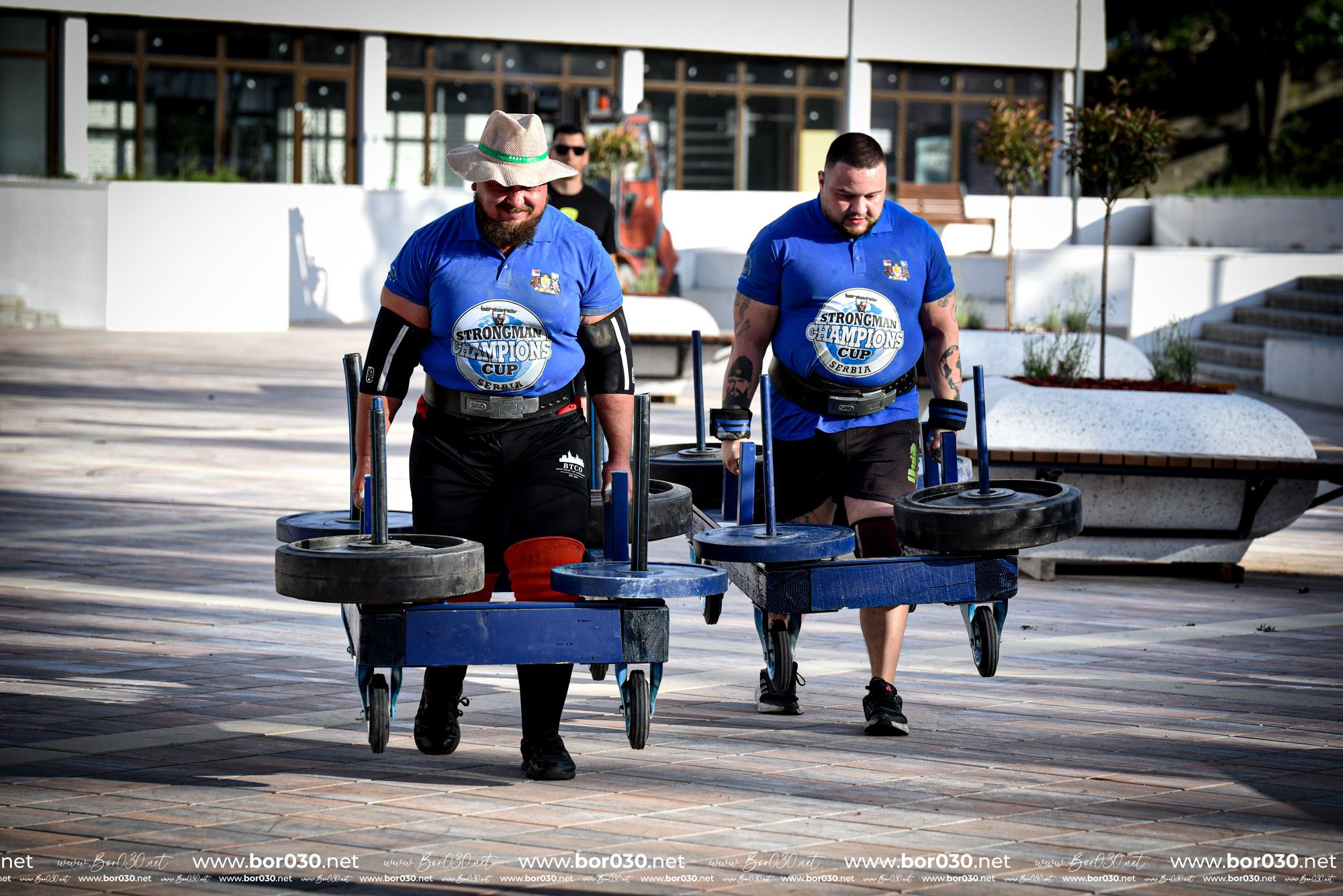
For a Strongman, a competition is not just one day. It can become the reference point around which a week, a month or even an entire season is reorganized. Training changes, sleep becomes more important, meals become more structured, holidays move, family schedules adapt and sometimes even professional decisions are made around a competition date.
This reality has two sides. A well-built calendar can provide structure, motivation and direction. A calendar dominated by competitions can also turn life into a sequence of preparation, stress, competition and recovery. Research in high-performance sport shows that competitive, organizational and personal stressors can accumulate, making stress management and recovery important parts of athletic sustainability.
1. Competition becomes the reference point
When an important competition is six or eight weeks away, many decisions begin to revolve around it. The question is no longer only what you do today, but what your body needs to be able to do on that day.
2. Life needs a calendar too
A mature calendar includes competitions, training and recovery, but also work, family, relationships, money, travel and personal time. If these are ignored, sport can become impossible to sustain even when the training program is excellent.
3. Not every competition is the main competition
Some competitions are major objectives. Others are tests, developmental stages, opportunities for experience or simply events you enter because you enjoy competing. The difference should be established before registration.
4. The competition calendar needs a hierarchy
A season without priorities can turn every competition into a final. If every event is treated as decisive, stress and recovery cost increase. A good season has peaks, building periods and periods in which the athlete can breathe.
5. Life between competitions is not a break
Fitness is built between competitions. That is where tissues recover, strength develops, technique is repaired, body mass is adjusted and work capacity is rebuilt.
6. The next competition does not automatically start after the last one
A common mistake is to finish one competition and immediately begin counting down to the next. The body and nervous system need a transition period. Research in elite athletes shows that sleep can be impaired during competition periods, while competitive and organizational stress adds to physical load.
7. The first days after competition matter
Immediate recovery is not wasted time. It is the period in which the athlete can reduce intensity, analyze what happened and allow the body to leave the competitive state.
8. Do not turn every result into a verdict about yourself
A poor placing can mean a bad day, an unfavorable event, a tactical mistake, a logistical problem or simply stronger opponents. The result is information, not identity.
9. Victory can create the same problem as defeat
After a great result, the temptation is to continue without a break because the athlete feels in form. Sometimes success makes it harder to accept that the body still needs recovery.
10. Competition occupies mental space before physical space
As competition approaches, anticipation can grow: calculations, scenarios, opponents, weights, rules and the repeated question of whether you are ready enough. This activation can be useful, but it needs a limit.
11. Learn to have days when competition does not exist
A healthy life cannot consist entirely of Strongman. A conversation, a meal, a walk or a day without talking about competition can help separate the athlete from the event.
12. Work has to survive the season
For athletes with professional careers, competitions can require days off, shift changes, travel and recovery periods. The calendar should be communicated early, not during the final week.
13. Family should know where your season stands
A partner and family do not need every technical detail, but they need to know the busy periods, travel and times when the athlete will be less available.
14. A relationship should not live between competitions
If every important personal moment is pushed around competitions, the relationship can become permanently dependent on the sporting calendar. Some periods need to be protected for personal life, not only performance.
15. Friends need room in the season
Social isolation can develop subtly: fewer outings, fewer conversations and more refusals. Not every social interaction threatens progress.
16. Nutrition should not become a prison
Near competition, dietary discipline may increase. But useful nutrition also needs to be sustainable. If every meal becomes a source of anxiety, the psychological cost may exceed the marginal benefit of perfection.
17. Body mass must be managed in the context of the season
Gaining, maintaining or losing body mass should be related to the calendar. It rarely makes sense to force large changes immediately before an important competition if they reduce energy, recovery or training quality.
18. Training changes as competition approaches
As competition becomes the priority, training should move closer to event demands while accumulated fatigue is controlled. In Strongman, competition preparation includes not only strength but implement technique, pacing, transitions and strategy.
19. Do not try to fix everything in the final two weeks
If an event is weak, the temptation is to attack it obsessively before competition. In many cases, two weeks cannot build a quality that has been missing for months. They can, however, create fatigue or irritation.
20. Tapering is psychological too
Reducing training load before competition can create the feeling that the athlete is doing too little. This is where discipline matters: more training does not automatically mean more readiness in the final part of a cycle.
21. Sleep becomes a season priority
Competition can reduce sleep duration and quality, and nights immediately before competition are often worse than normal. Protecting sleep therefore needs to begin well before competition day, not only on the critical night.
22. Stress does not come only from the event
Entry fees, transport, accommodation, money, rules, communication with organizers, work and relationships can all become stressors. An athlete can be physically prepared and still arrive psychologically overloaded.
23. Learn to separate problems
A transport problem should not become a conclusion about athletic form. An argument at home should not become proof that you will lose the competition. Separating problems reduces mental contamination between domains.
24. Competition can become an identity source
The more you compete, the more the Strongman identity can occupy space. It is natural to be proud of that identity. The problem appears when every other role disappears.
25. You need space between competitions
Sometimes the best decision for a season is not to enter an event. A competition-free period can allow recovery, rebuilding and motivation to return.
26. Financially, every competition has a price
The entry fee is only the beginning. Transport, accommodation, food, equipment, time off work and unexpected costs must be included. A good season also needs to be financially sustainable.
27. Do not let the season consume all your days off
If every day off is used for competition or recovery, personal life can lose its space. A mature calendar also includes days off that have nothing to do with sport.
28. Competitions require a support system
Coaches, partners, family, teammates, friends and community can reduce the logistical and psychological cost of a season. Research in elite athletes suggests that social support and coping strategies can play an important role in stress management.
29. Plan the period after the season too
A season does not end with the last event. There is analysis, recovery, possible medical assessment, rest and the decision about the next objective. Without this stage, the next season can start before the previous one has truly ended.
30. Ask yourself whether you still enjoy competing
Sometimes performance continues through inertia. The calendar fills up and the athlete forgets to check whether motivation is still real. Enjoyment of competition is not a psychological luxury. It is useful information about sustainability.
31. When you need to say no
You can decline a competition because it does not fit recovery, work, family, finances or the season objective. Saying no to an event is not a lack of ambition.
32. Practical model: Build - Prepare - Compete - Recover - Live
Build: develop capacity. Prepare: bring training closer to competition. Compete: execute. Recover: leave the competitive stress state. Live: reclaim personal space and build your life. Then the cycle can begin again, but it should not become a loop with no exit.
33. What does a healthy season look like?
It has clear objectives, preparation periods, real recovery, competitions with different roles, time for work and family, and enough space for the athlete to remain a person rather than only a competitor.
34. The Failure Point of life around competitions
The Failure Point appears when competition consistently consumes more than the rest of life can support. Signs can include irritability, isolation, repeated conflict, poor sleep, financial strain, loss of interest in non-sport activities, compulsive training and the feeling that every day exists only for the next competition.
At that point, the answer is not always more discipline. Sometimes it is a less crowded calendar, a break, reduced training load, renegotiated priorities or professional support. Research on elite-athlete mental health shows that sporting, organizational and personal stressors can accumulate, and coping and intervention need to fit the context.
35. Conclusion: competition should be part of life, not replace it
A Strongman inevitably lives around competitions. He calculates preparation periods, organizes travel, protects sleep, adjusts training and plans recovery. But a mature athlete understands that all of this exists to support a life, not to swallow it.
The best question is not “How many competitions can I do in a year?” It is “What calendar allows me to compete well while remaining healthy, functional and present in the rest of my life?” That is where real sustainability begins.
Selected references
1. Winwood PW, Pritchard HJ, Wilson D, Dudson M, Keogh JWL. The Competition-Day Preparation Strategies of Strongman Athletes. J Strength Cond Res. 2019;33(9):2308-2320. DOI: 10.1519/JSC.0000000000003267.
2. Roberts SSH, Teo WP, Warmington SA. Effects of training and competition on the sleep of elite athletes: a systematic review and meta-analysis. Br J Sports Med. 2019;53(8):513-522. DOI: 10.1136/bjsports-2018-099322.
3. Rice SM, Purcell R, De Silva S, Mawren D, McGorry PD, Parker AG. The Mental Health of Elite Athletes: A Narrative Systematic Review. Sports Med. 2016;46:1333-1353. DOI: 10.1007/s40279-016-0492-2.
4. Reardon CL, Hainline B, Aron CM, et al. Mental health in elite athletes: International Olympic Committee consensus statement. Br J Sports Med. 2019;53:667-699. DOI: 10.1136/bjsports-2019-100715.
5. Frank R, Nixdorf I, Beckmann J. An overview of stress and burnout in athletes. In: Routledge Handbook of Sport and Exercise Psychology. 2017.
6. Kegelaers J, Wylleman P, Oudejans R. A systematic review of organizational stressors in high-performance sport. International Journal of Sport and Exercise Psychology. 2022.
7. Coping strategies for handling stress and providing mental health in elite athletes: a systematic review. Front Sports Act Living. 2023;5:1265783. DOI: 10.3389/fspor.2023.1265783.
8. Wang W, Schweickle MJ, Arnold ER, Vella SA. Psychological Interventions to Improve Elite Athlete Mental Wellbeing: A Systematic Review and Meta-analysis. Sports Med. 2025;55:877-897. DOI: 10.1007/s40279-024-02173-3.
More From The Journal

Training
The Science of Strongman Training - Episode X: Competition Programming
How to build a complete Strongman competition preparation block: calendar, events, volume, intensity, specificity, simulations, autoregulation, tapering and fatigue management.
Training
The Science of Strongman Training - Episode IX: Peaking
Peaking in Strongman: how to turn months of training into maximal competition performance by reducing fatigue, preserving adaptations and managing specificity.