
Training
The Life of a Strongman - Sleep: The Recovery You Cannot Negotiate
September 3, 2026
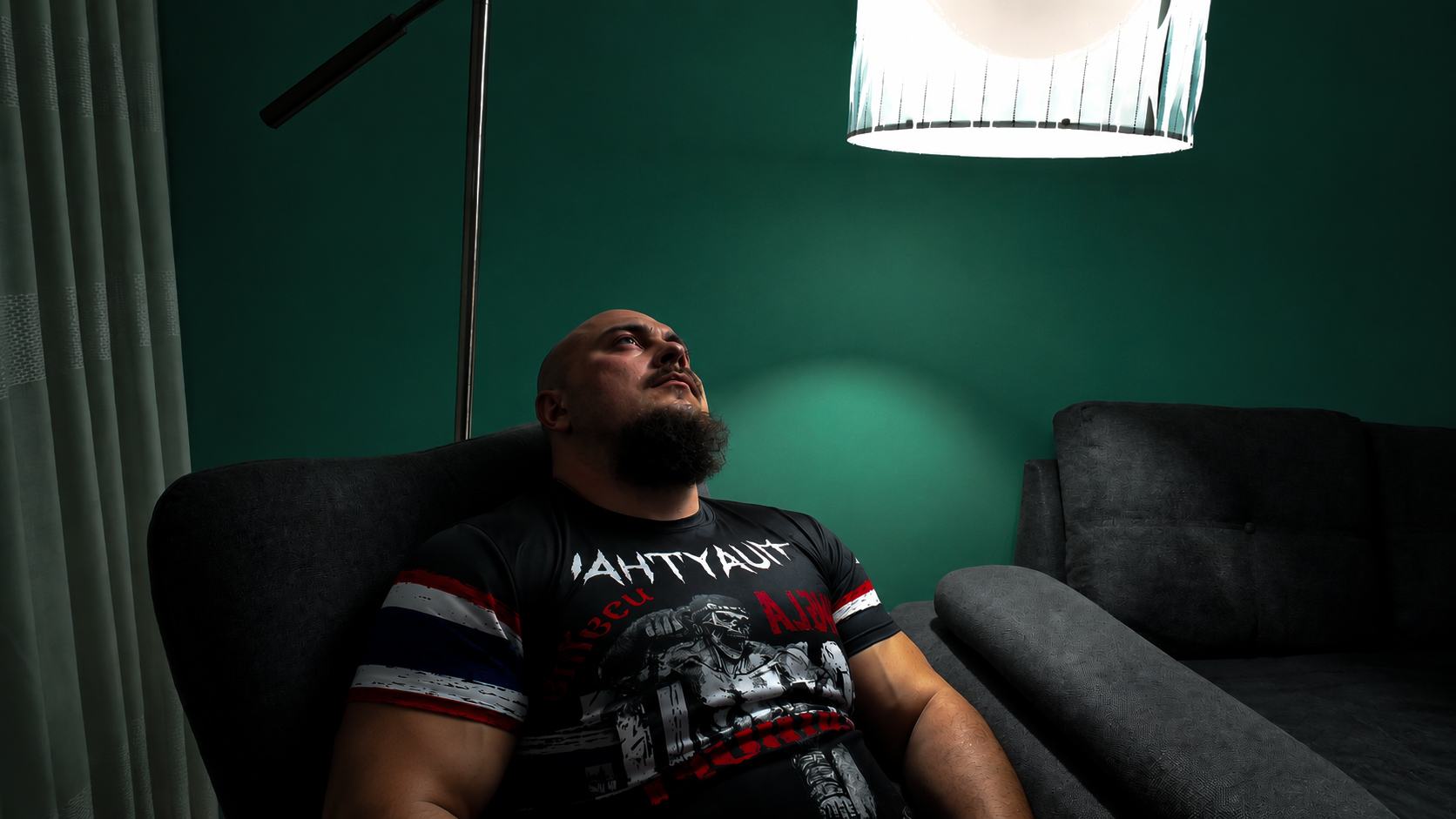
The Life of a Strongman - Sleep: The Recovery You Cannot Negotiate
A Strongman can control the bar, the weight of a sandbag, the pace of a farmer's walk and many details of a competition. There is one thing he cannot outmuscle forever: the biological need for sleep. You can add another session, another set, another supplement or another coffee. You cannot turn chronic sleep loss into recovery through willpower.
In strength sport, sleep is not simply the pause between two training days. It is one of the periods in which the body repairs, reorganizes and consolidates what training has demanded. Sports literature shows that insufficient or poor-quality sleep can affect physical performance, cognitive function and recovery, while recent systematic reviews have found negative effects of sleep loss across several forms of physical performance, including strength, power and muscular endurance.
1. Sleep is not the absence of training
One of the most persistent mistakes in sport is treating recovery as simply doing nothing. Sleep is the opposite. During sleep, the body moves through organized physiological states that influence the nervous system, metabolic regulation, immune function and recovery processes.
For Strongman, the importance is amplified by the nature of the sport. A training session can create muscular, neural, metabolic and mechanical stress at the same time. Sleep is one of the few periods in which these systems can recover without the athlete deliberately stressing them again.
2. How much should a Strongman sleep?
There is no perfect number that applies to every athlete. Expert consensus on athlete sleep recommends an individualized approach because sleep needs vary with training load, stress, travel, competition and individual characteristics. However, habitual sleep below roughly seven hours per night is considered a warning sign for inadequate sleep in athletes.
For a Strongman training hard, a practical target of 8 to 9 hours in bed may be more realistic than believing six hours is enough simply because the athlete has become accustomed to it. During periods of high volume, competition, psychological stress or energy restriction, perceived sleep need may increase.
3. Time in bed is not the same as actual sleep
Spending nine hours in bed does not automatically mean nine hours of sleep. There may be long sleep latency, repeated awakenings, prolonged periods awake or fragmented sleep. Recovery depends on duration, continuity and perceived quality.
A Strongman who says “I slept eight hours” should therefore distinguish time in bed from actual sleep time. In sport practice, monitoring can use sleep diaries, questionnaires and, when indicated, clinical assessment or polysomnography. Consumer wearables can help identify trends, but should not be treated as perfect clinical instruments.
4. Sleep and the nervous system
Strongman is a sport in which the central nervous system plays a major role. Heavy lifts require motor recruitment, coordination, stabilization and the ability to produce force rapidly. When sleep is insufficient, the issue is not simply “feeling tired.” Brain regulation of attention, motivation, effort and motor control can also be affected.
Reviews of sleep and athletic performance emphasize that sleep loss can affect muscular strength, speed and other forms of physical performance as well as vigilance, memory, decision-making and other cognitive functions. For Strongman, that combination matters because performance is not only about how much force you have, but how precisely you can organize that force into an execution.
5. Maximal strength is not immune to sleep loss
Some individual studies have found mixed results after a single poor night, and effects may depend on the exercise, time of day and protocol. But the broader picture becomes clearer when the literature is considered cumulatively. A meta-analysis of 69 publications found an overall reduction in performance following sleep loss, with negative effects across multiple categories including strength and power.
A systematic review focused on resistance exercise found that consecutive nights of sleep restriction can reduce force output in multi-joint movements. That is relevant to squats, deadlifts, overhead presses and other movements central to Strongman preparation.
6. Why can an athlete feel fine and still be affected?
Subjective experience is not a perfect instrument. An athlete may be accustomed to six hours of sleep and believe he functions normally while performance, movement velocity or effort regulation are already affected. Over longer periods, people can recalibrate what they consider normal.
Sleep should therefore be tracked through several signals: mood, sleepiness, training performance, bar velocity when available, resting heart rate in context, perceived effort and ability to concentrate. No single marker is perfect on its own.
7. Sleep and muscular recovery
Training creates microdamage and stress on tissues, and recovery is a complex process. Sleep contributes to endocrine and immune regulation and may support tissue recovery. Literature on sleep and exercise-related muscle injury suggests potential pathways through which sleep extension may support recovery, including effects on inflammation and local growth factors, although direct sport research is still developing.
8. Sleep, testosterone and hormones
In strength-sport culture, sleep is often reduced to a simple formula: “sleep to produce testosterone.” Reality is more complex. Sleep influences endocrine axes and hormonal rhythms, but one hormone does not explain Strongman performance.
It is more accurate to view sleep as part of the physiological environment in which the body recovers and adapts. Sleep restriction can alter hormonal and metabolic responses, but it should not be reduced to a simplistic story about “losing testosterone in one bad night.”
9. Sleep and metabolism
Sleep also matters for metabolism. Sleep restriction has been associated with changes in insulin sensitivity, appetite regulation and eating behavior. For a Strongman, this matters especially during periods of very high energy intake or when body mass is being deliberately controlled.
An athlete sleeping poorly may develop an unpleasant combination: more hunger, lower perceived energy, stronger cravings for highly palatable foods and less capacity to manage dietary discipline. Sleep therefore becomes an indirect part of nutrition strategy.
10. Sleep and body mass
In a sport where body mass can be strategically important, sleep has an interesting relationship with weight. A Strongman may want to gain, maintain or reduce body mass. All three goals become easier to manage when recovery is good.
Sleep loss does not automatically cause fat gain in every athlete, but it can influence appetite, food choice and tolerance of fatigue. Sleep should therefore be included when analyzing unexpected changes in weight or appetite.
11. Sleep and immune function
A Strongman who becomes sick frequently may not have only a training-program problem. Insufficient sleep is associated with increased vulnerability to some health problems. Athlete sleep consensus notes that habitual sleep below seven hours may increase susceptibility to respiratory infection in the general population, while athletes also face the additional stress of training, travel and competition.
12. Sleep and pain
The relationship between sleep and pain is bidirectional. Pain can fragment sleep, while insufficient sleep can alter pain perception and tolerance. For a Strongman who may experience periods of persistent musculoskeletal discomfort, this cycle can become important.
This does not mean sleep heals an injury. It means good sleep creates a more favorable context for recovery and physical stress management. Persistent or worsening pain requires appropriate medical assessment, not simply more hours in bed.
13. Sleep and injury risk
Evidence linking sleep directly to sports injury is still developing, but sports literature indicates associations between sleep problems and increased injury risk or poorer recovery. For Strongman, the mechanism is plausible: fatigue can affect attention, motor control, decision-making and tolerance of loading.
A heavy deadlift is not only a strength problem. It is also a positioning, bracing, timing and decision problem. If poor sleep reduces precision in those components, the margin for error can shrink.
14. Sleep and technique
Technique is not permanently fixed. It has to be executed, practiced and maintained under fatigue. When sleep is insufficient, an athlete may have less attention available for details and may enter automatic execution sooner, but with less precision.
This is especially important in events involving unstable implements or high technical demands. An atlas stone, log, sandbag or yoke does not respond exactly like a fixed barbell. Body control has to remain active.
15. Sleep and motivation
A Strongman can be extremely motivated and still be under-recovered. Motivation may allow an athlete to start a hard session, but it cannot fully remove the physiological cost of inadequate sleep.
Sleep loss can also affect mood and psychological tolerance of stress. When training, nutrition, work, family and competition accumulate, reduced psychological recovery can become as important as muscular fatigue.
16. Sleep before a hard training session
The night before an important training session matters, but it should not become an obsession. One poorer night does not automatically ruin a session. The problem appears when poor nights become the pattern.
If an athlete slept badly, the decision should consider the full picture: fatigue level, warm-up performance, heart rate and general state, accumulated stress and the importance of the session. Sometimes training can remain unchanged. At other times it is smarter to reduce volume, avoid maximal attempts or move the session.
17. Sleep before competition
The night before competition has a special psychological problem: pressure. The athlete knows the contest is coming and may analyze scenarios, check the schedule, travel, weigh-in and events, leaving the brain active exactly when it should be settling down.
The best way to manage this night is not to force sleep. It is to build a predictable routine in the days before and accept that one imperfect night does not erase weeks of preparation. Athlete sleep consensus recommends individualized interventions and highlights anxiety, competition and travel as important contributors to sleep disturbance.
18. Travel and time-zone changes
Strongmen may travel for competitions by car, plane or combinations of transport. When time zones change, the problem is not only sleep duration but alignment of the circadian rhythm with the environment.
Planning light exposure, sleep timing, meals and training can help adaptation. For important travel, the strategy should begin before departure rather than on the evening the athlete arrives at the competition.
19. Circadian rhythm
The body does not function identically at every hour. Core temperature, alertness, hormonal secretion and the sleep-wake rhythm change across the day. Research in athletes indicates that time of day can influence performance and that circadian desynchronization can impair performance in some contexts.
For Strongman, this means competition time matters. An athlete accustomed to training in the evening may need adaptation if the main event occurs in the morning. Ideally, key sessions near competition can reproduce the approximate time and conditions of the contest.
20. Can caffeine fix fatigue?
Caffeine can increase alertness and improve performance in some contexts, but it does not replace sleep. If used late, it can further reduce the quality of the following night's sleep, creating a cycle in which the athlete uses a stimulant to compensate for a deficit that the stimulant may help perpetuate.
For Strongman, caffeine should be viewed as a strategic tool, not permission to sleep less.
21. Training and sleep can support each other
The relationship is not one-way. Sleep supports recovery from training, but resistance training can also improve sleep. A systematic review of randomized controlled trials found chronic resistance exercise benefits across several aspects of sleep, with particularly favorable effects on sleep quality.
The problem appears when training dose exceeds recovery capacity. A reasonable training load may support sleep. A program that keeps the system permanently stressed can do the opposite.
22. Naps and daytime sleep
A nap can be a useful tool for an athlete who cannot fully meet sleep needs at night. But it should not become a permanent excuse for an inadequate nighttime schedule.
Timing and duration matter. A shorter nap can reduce sleepiness without producing large sleep inertia, while a longer nap may be useful in certain contexts but can interfere with nighttime sleep. The choice should fit the athlete's schedule.
23. Sleep hygiene: the boring things that work
Sleep does not need magic. It needs consistency. Relatively stable bed and wake times, a dark and cool bedroom, reduced bright light before bed, limiting late stimulants and a relaxation routine can help.
For a Strongman, there is also a simple rule: do not turn the final 30 minutes of the day into an extension of competition. If you spend the pre-sleep period obsessively checking results, reviewing lifts, arguing online or building tomorrow's program, the body may be in bed while the brain is still at the contest.
24. The bedroom as part of the equipment
A Strongman invests in belts, shoes, knee sleeves, training equipment and supplements. The bedroom deserves the same logic. Mattress, temperature, darkness, noise and comfort are not decorative details when sleep is part of performance.
There is no need for sophisticated gadgets. A dark, quiet and cool environment may do more than a collection of devices promising “sleep optimization.”
25. Sleep monitoring
A simple diary can be enough: bedtime, approximate sleep onset, wake time, estimated sleep duration, perceived quality and next-morning state. If wearables are used, they can help identify trends rather than turn every night into an exam.
A modern paradox is that an athlete can become so obsessed with a sleep score that sleep itself gets worse. If an app says you slept “72” but you feel good and performance is normal, there is no reason to panic automatically. Monitoring should reduce uncertainty, not create it.
26. When the problem is no longer sleep hygiene
If a Strongman snores heavily, has observed breathing pauses, wakes gasping, has excessive daytime sleepiness, morning headaches or repeated unexplained awakenings, the problem may go beyond sleep hygiene. Medical evaluation may be appropriate, including assessment for conditions such as obstructive sleep apnea.
This deserves particular attention in athletes with very high body mass because anatomy and risk factors may differ from those of the general population. It is not a problem that can be solved through “more willpower.”
27. Sleep during high-volume phases
As training stress rises, sleep becomes more important. During an accumulation phase with many sessions, events and demands on the posterior chain, grip and nervous system, one poor night may be absorbed. Five poor nights in a row are a different problem.
That is why sleep should be treated as a programming variable. If training volume increases, you should also ask whether the time available for recovery is increasing.
28. Sleep during a calorie deficit
During weight loss, sleep becomes even more important. Energy restriction is already a stressor while training continues to demand resources. Reducing calories and sleep at the same time can amplify fatigue and make performance preservation more difficult.
For a Strongman trying to reduce body mass without losing strength, sleep is one of the cheapest recovery interventions available.
29. Sleep during taper
Before competition, reducing training volume can allow freshness to accumulate. But tapering does not work optimally if the athlete continues to sleep too little.
The final days before competition are not the time for short nights and improvised recovery. If you reduced training volume, you created space for sleep. Use it.
30. Sleep during the final week before competition
A good strategy is not trying to recover everything in the night before competition. Extending sleep across the preceding days may be more realistic than putting pressure on yourself to produce a perfect night immediately before the contest.
During this period, the routine should become predictable. Bedtimes, meals, light exposure, caffeine and training should be as controllable as possible. The more variables you remove, the less room there is for surprises.
31. Sleep and tactical decisions
A Strongman does not only need rested muscles. He needs a brain capable of making decisions under pressure. Weight selection, risk calculation, adaptation to opponents and changes of strategy between events all depend on attention and cognitive processing.
During a long contest, sleep in the preceding days may indirectly contribute to decision quality. An extremely strong athlete who makes poor decisions because he is exhausted can lose to someone slightly weaker but more lucid.
32. Sleep is not the same as rest
You can lie on a couch for three hours and still not sleep enough. You can take a day off training and still not be recovered. Physical rest is only one part of recovery. Sleep is a distinct biological process and cannot be completely replaced by simply doing nothing.
33. The practical model: Sleep - Recover - Perform - Repeat
For a Strongman, sleep can be viewed through a simple cycle: Sleep, the body enters recovery; Recover, systems stressed by training repair and adapt; Perform, the athlete can again produce force and technical quality; Repeat, the process can continue without unnecessary accumulation of fatigue.
If Sleep is chronically insufficient, the whole cycle becomes more fragile. Performance does not necessarily disappear overnight. The margin for error simply becomes smaller.
34. The Failure Point of sleep
The Failure Point appears when the athlete begins using willpower, caffeine and motivation to cover what should be solved through sleep. A Strongman can survive a few poor nights. He cannot build indefinitely on a recovery deficit.
The signs can be subtle: the same weight feels heavier, warm-ups take longer, velocity drops, RPE rises, irritability increases, technique becomes less precise, daytime sleepiness appears and motivation begins to fluctuate.
35. Conclusion: you do not train during sleep, but you become better because of it
Sleep is not the glamorous part of a Strongman's life. It does not appear in competition videos and it makes no noise. But it is part of the infrastructure that allows the spectacle to exist.
A Strongman who only wants to be strong in today's training session can ignore sleep. A Strongman who wants to be strong on Monday, three months from now and on competition day has to treat sleep as part of the program.
There is no belt, pair of knee sleeves or supplement that permanently compensates for poor sleep. Sometimes the most mature recovery decision is not to add something. It is to turn off the light, let the body do its work and come back tomorrow better prepared.
Selected references
1. Walsh NP et al. Sleep and the athlete: narrative review and 2021 expert consensus recommendations. Br J Sports Med. 2021;55:356-368. DOI: 10.1136/bjsports-2020-102025.
2. Knowles OE et al. Inadequate sleep and muscle strength: Implications for resistance training. J Sci Med Sport. 2018;21(9):959-968. DOI: 10.1016/j.jsams.2018.01.012.
3. Craven D et al. Effects of Acute Sleep Loss on Physical Performance: A Systematic and Meta-Analytical Review. Sports Med. 2022;52:2663-2688. DOI: 10.1007/s40279-022-01606-1.
4. Easow J et al. Implications of sleep loss or sleep deprivation on muscle strength: a systematic review. Sleep Breath. 2025;29(4):242. DOI: 10.1007/s11325-025-03413-0.
5. Grandner MA et al. Sleep and Athletic Performance: Impacts on Physical Performance, Mental Performance, Injury Risk and Recovery, and Mental Health: An Update. Sleep Med Clin. 2022.
6. Kovacevic A et al. The effect of resistance exercise on sleep: A systematic review of randomized controlled trials. Sleep Med Rev. 2018;39:52-68. DOI: 10.1016/j.smrv.2017.07.002.
7. Bonnar D et al. How does sleep help recovery from exercise-induced muscle injuries? Sports Med. 2021. DOI: 10.1016/j.smhs.2021.04.001.
8. Halson SL. Sleep in elite athletes and nutritional interventions to enhance sleep. Sports Med. 2014;44 Suppl 1:S13-S23.
More From The Journal
Training
The Science of Strongman Training - Episode X: Competition Programming
How to build a complete Strongman competition preparation block: calendar, events, volume, intensity, specificity, simulations, autoregulation, tapering and fatigue management.
Training
The Science of Strongman Training - Episode IX: Peaking
Peaking in Strongman: how to turn months of training into maximal competition performance by reducing fatigue, preserving adaptations and managing specificity.