
Psychology
The Life of a Strongman - Relationships and Personal Life: When Sport Takes Up Almost Everything
September 3, 2026
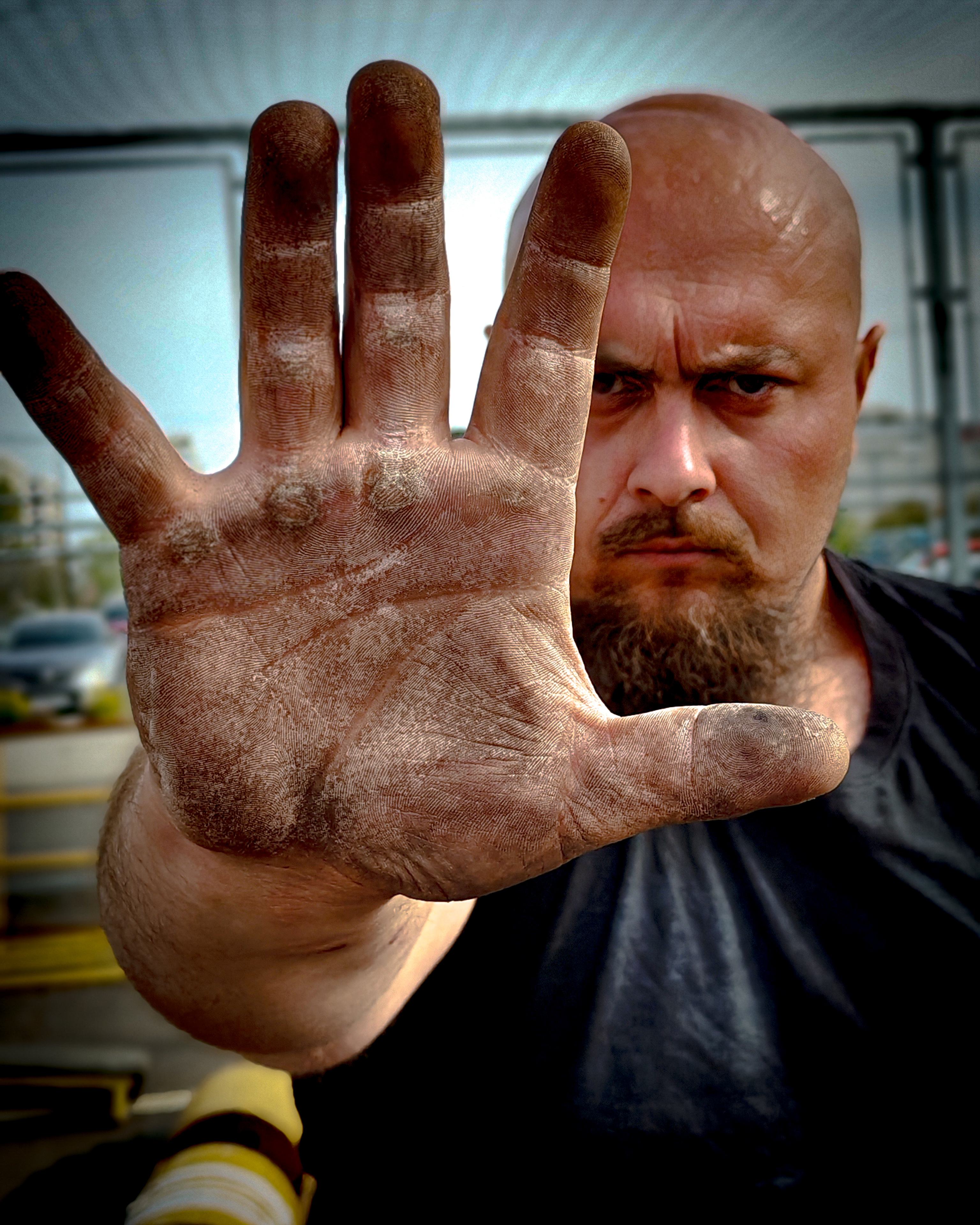
The Life of a Strongman - Relationships and Personal Life: When Sport Takes Up Almost Everything
A Strongman does not enter the gym alone, even when it looks as if everything is decided there. He enters with the work schedule, the previous night's sleep, financial concerns, relationship dynamics, family, friends and all the things that never appear in a training log. Performance is produced by an athlete, but the athlete lives inside a network of relationships.
Research on dual careers and athlete mental health indicates that social support, functional relationships and healthy sport environments are associated with better psychological outcomes, while role conflict and accumulated stress can increase vulnerability.
1. Sport should not swallow the person
When a sport becomes extremely important, there is a temptation to organize every aspect of life around it. Training becomes the center of the day, competition the center of the month, and the season the center of the year. Over time, everything that does not directly contribute to performance can begin to look useless.
This is one of the most dangerous confusions: something being important does not mean everything else must be eliminated.
2. A healthy relationship should not compete with Strongman
A partner is not an opponent for training time. Neither is family an obstacle. A healthy relationship can become a source of stability, predictability and support.
The problem appears when the athlete interprets every need of the other person as interference with sport, or when the partner begins to feel that every other priority is permanently second.
3. Time is the currency of relationships
You cannot say a relationship is a priority if you never allocate time to it. Grand gestures are not required. Sometimes a meal together, an evening without a phone, a real conversation or a protected day away from training has more value than a complicated social activity.
4. Strongman has an unusual schedule
Long training sessions, frequent meals, travel, competitions and recovery periods can make social life harder to synchronize with other people's schedules. That does not make relationships incompatible with sport. It means they have to be planned.
5. Communication must come before conflict
A partner who finds out at the last minute that the weekend is occupied by a competition or that six difficult preparation weeks are coming will experience the situation differently from someone who was included in the plan from the beginning.
Good communication does not mean asking permission for every training session. It means making visible the periods when sport will demand more and discussing their impact in advance.
6. Family can be a resource or a source of conflict
Family support is associated with better psychological outcomes among athletes pursuing multiple careers. But support does not appear automatically. It is built through communication, reciprocity and clear boundaries.
7. Do not turn family into your technical staff
A partner or parent may care deeply about the sport without automatically becoming a coach, nutritionist or manager. Sometimes the relationship needs precisely the space where Strongman is not the main topic.
8. Friendships change when lifestyle changes
As training, scheduled meals, strict sleep and competitions appear, some social habits disappear. Friends may not understand why you cannot stay out late before training or why you do not want to completely rearrange your schedule for a party.
Not every relationship has to remain equally close. But total isolation is not a performance strategy.
9. Social life is not wasted time
An athlete can begin to treat every activity that does not produce kilograms on the bar as wasted time. That is too narrow a view. Relationships, relaxation and social activities can contribute to psychological wellbeing and to the feeling that life is more than performance.
10. Still, boundaries are real
You do not have to accept every invitation to prove that you have a social life. During important periods, some activities need to be declined. The difference is between a communicated boundary and permanently disappearing from the lives of people close to you.
11. Your partner does not have to be a Strongman fan
A relationship does not need two people obsessed with the same sport. It needs respect for what matters to each person.
12. But your partner needs to understand the reality of the sport
At the same time, a relationship is difficult to sustain if one person has no context for why training, sleep, nutrition or competitions matter. Expertise is unnecessary. Context and respect are not.
13. Do not use performance to justify everything
“I have to train” may be true. But it cannot become the universal answer to every personal responsibility. Performance does not cancel promises, obligations or the needs of people close to you.
14. Competitions affect the whole family
A competition often means travel, money, days off work, stress and recovery. For a partner or family, competition can change everyone's schedule, not only the athlete's.
15. Sometimes family becomes part of performance logistics
Transport, meals, childcare, household routines or support during competition periods can become practical parts of a sporting career. That support should be recognized, not treated as invisible obligation.
16. Gratitude must be concrete
“Thank you for supporting me” matters. But it matters even more to show through behavior that you see the cost the other person carries: time, flexibility, travel, patience and sometimes their own compromises.
17. Do not let sport become the only subject
A relationship in which every conversation eventually reaches training, bodyweight, injuries, rankings or the next competition can become exhausting. Sometimes it is healthy to have evenings when Strongman does not enter the room.
18. The relationship needs its own space
Having time together does not mean doing everything together. Personal space, separate hobbies and individual friendships can protect both people's autonomy.
19. Relationships and sporting stress
A poor sporting period can change mood. An injury can change routine. A lost competition can produce frustration. If all of this comes home unprocessed, the relationship can become the place where all the stress is discharged.
20. Learn to separate the person from the result
A poor placing does not make you a poorer partner. A bad training day should not become a bad day for the entire family.
21. Injury changes relationships too
When an athlete is injured, roles can change. The athlete may need help, become frustrated or lose part of a sporting identity. For a partner and family, this can mean additional responsibilities.
Injury is therefore not only a tissue problem. It can also be a social and psychological problem.
22. Strongman friends matter, but they are not enough
Sporting peers provide understanding that people outside the sport may not have. But if the entire social network consists only of Strongmen, perspective can become very narrow.
23. Community can protect against isolation
A healthy group of peers, coaches, friends and family can provide emotional and practical support. Recent research on athletes emphasizes the role of supportive relationships in personal and sporting development.
24. But the sport community can also become an echo chamber
If everyone around you constantly discusses bodyweight, rankings, PRs and competitions, it can become difficult to remember that there is a world outside competition. An athlete needs people who know them without knowing how much they lifted last week.
25. Relationships need boundaries with the coach
A coach can play an important role, but should not become the referee of every personal decision. A healthy coach-athlete relationship has clear objectives, boundaries and respect for the person's autonomy.
26. Social media changes relational pressure
A Strongman's life can become public: results, photographs, travel, conflicts, comments and comparisons. Pressure to appear permanently motivated or invincible can reach personal relationships as well.
27. Do not compare your relationship with another athlete's relationship
One couple may function with a lot of time together, another with more space. Some families attend every competition, others prefer to stay home. There is no single correct structure.
28. Personal life should be planned, but not mechanized
A calendar can protect a dinner, a day off or a vacation. But relationships are not management projects. Planning should create room for closeness, not turn closeness into a checkbox.
29. Learn to be present
You can be physically beside someone while mentally living in the next competition. The phone, training log and calculations can occupy the same table. Real presence means being able to temporarily switch off athlete mode.
30. Personal life should not be sacrificed for every competition
Not every competition justifies the same personal cost. The more important the competition, the easier it is to justify greater sacrifice. For minor objectives, the relationship cost may be disproportionate.
31. When you need to say no to sport
There are moments when a birthday, family problem, a partner's need or simply a difficult period in life has to take priority. Saying no to a training session or competition does not cancel your identity as a Strongman.
32. Do not turn sacrifice into debt for other people
If someone supports you, that does not mean you owe them a performance. Healthy relationships do not operate through an emotional invoice where every sacrifice must be repaid with medals.
33. Practical model: Perform - Connect - Protect - Live
Perform, pursue the sporting objective. Connect, keep relationships active. Protect, protect time, boundaries and important people. Live, build a life that has value even on days without competition.
The model does not ask sport to become less important. It simply asks that sport not become the only way you measure whether your life has value.
34. The Failure Point of relationships and personal life
The Failure Point appears when the cost of sport consistently exceeds the capacity of relationships to absorb the stress. Signs can include social withdrawal, repeated conflict, lack of time for a partner or family, irritability, the feeling that sport always comes first, and loss of interest in anything outside Strongman.
The solution is not always to quit sport. It may involve temporarily reducing training volume, choosing competitions more carefully, establishing periods without training, communicating better or seeking professional support when conflict becomes difficult to manage.
35. Conclusion: performance is more valuable when there is a life to return to
A Strongman can lift enormous weights, travel for competitions, live for months under a strict schedule and build an impressive career. But all of this happens inside a life that includes people.
Partners, family, friends and community are not decoration around performance. They are part of the system that allows the athlete to continue. Research on dual careers and athlete mental health supports this perspective: functional relationships and social support are important resources, not distractions.
A mature Strongman does not only ask, “How much can I sacrifice for sport?” He also asks, “What kind of life do I want to have after the next competition is over?”
Selected references
1. Svensson J, Linnér L, Ivarsson A, Stambulova N. Towards an expanding horizon: a systematic critical review of research on dual careers in sport and work. International Review of Sport and Exercise Psychology. 2026. DOI: 10.1080/1750984X.2026.2684923.
2. Aalto EP, Pons J, Alcaraz S, Zamora-Solé R, Ramis Y. Psychological and social factors associated with mental health of European dual career athletes: A systematic review. European Journal of Sport Science. 2024;24(12):1844-1864. DOI: 10.1002/ejsc.12218.
3. Stambulova N, Wylleman P, Torregrossa M et al. FEPSAC Position Statement: Athletes’ dual careers in the European context. Psychology of Sport and Exercise. 2024;71:102572. DOI: 10.1016/j.psychsport.2023.102572.
4. Hallmann K, Weustenfeld NH. Constraints and facilitators of elite athletes’ dual careers: a systematic literature review. International Journal of Sport Policy and Politics. 2024;17(1):167-184. DOI: 10.1080/19406940.2024.2377546.
5. The give and take of social support in professional athlete career pathways. International Journal of Sports Science & Coaching. 2026. DOI: 10.1080/02640414.2026.2619321.
6. Ferreira JG, Rodrigues F, Sobreiro P, Silva M, Santos FJ, Carvalho G, Hernández Mendo A. Social support, network, and relationships among coaches in different sports: a systematic review. Frontiers in Psychology. 2024;15:1301978. DOI: 10.3389/fpsyg.2024.1301978.
More From The Journal

Training
The Science of Strongman Training - Episode X: Competition Programming
How to build a complete Strongman competition preparation block: calendar, events, volume, intensity, specificity, simulations, autoregulation, tapering and fatigue management.
Training
The Science of Strongman Training - Episode IX: Peaking
Peaking in Strongman: how to turn months of training into maximal competition performance by reducing fatigue, preserving adaptations and managing specificity.