
Training
The Life of a Strongman - Work and Sport: Building a Career Without Losing the Athlete
September 3, 2026
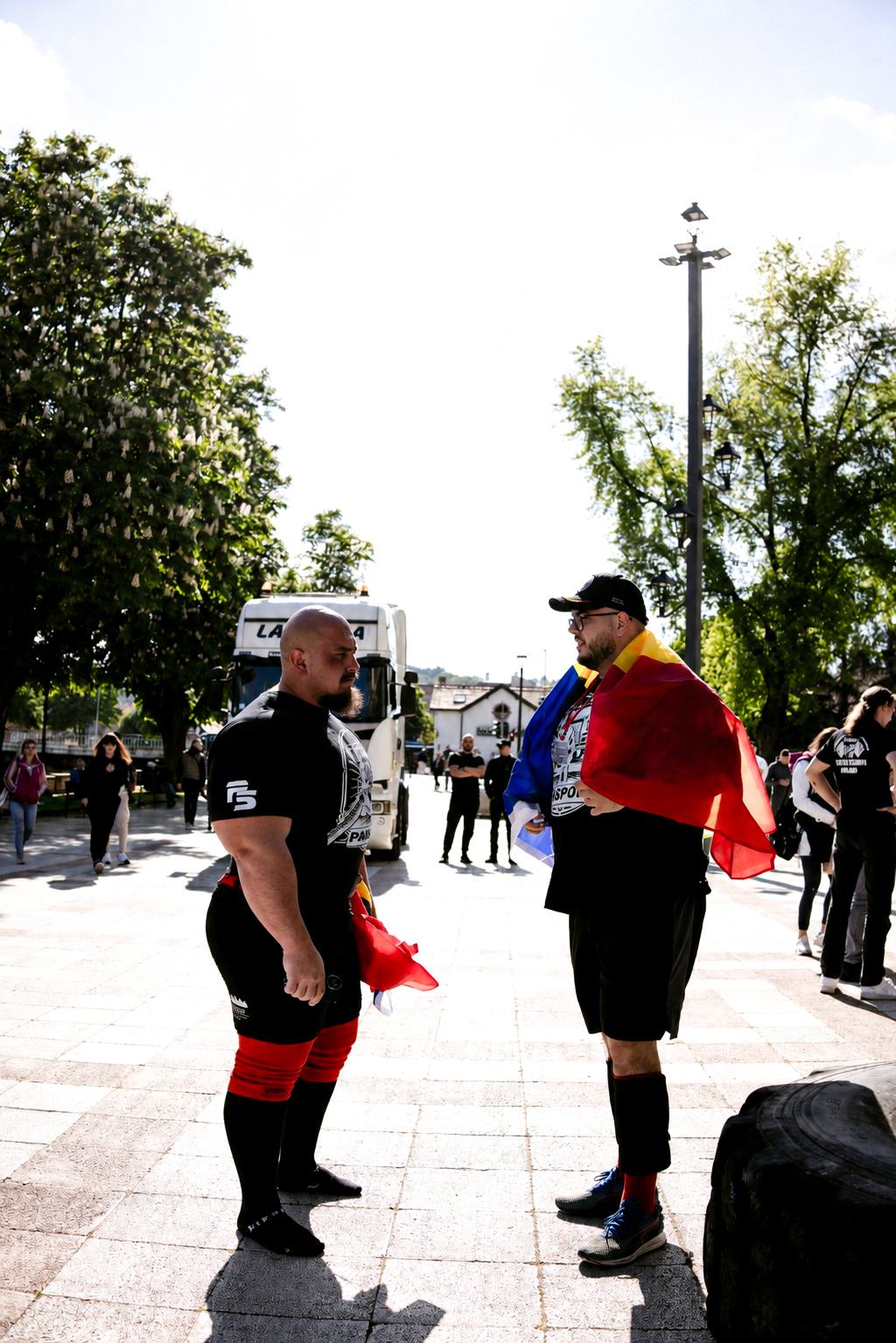
The Life of a Strongman - Work and Sport: Building a Career Without Losing the Athlete
For most Strongman athletes, sport does not exist in a vacuum. Between training, competitions and recovery there is work, family, travel, bills, responsibilities and sometimes a second job. One of the least discussed performance problems is therefore not how much the body can tolerate in a session, but how much total life stress the athlete can tolerate before training begins to collapse.
Research on athletes who combine sport and employment shows that common difficulties include conflicting schedules, physical and mental fatigue, and the pressure to meet standards in both domains. Planning, prioritization and supportive or flexible employers can also become important resources.
1. High-performance sport does not automatically replace work
Strongman has demanding requirements, but for many athletes it is not an occupation that generates enough income to support an entire life. The athlete therefore has to build two systems at once: the sporting system and the professional system.
The problem is not that you work. The problem appears when work and sport are organized as two completely independent lives, each demanding maximum output from the same person.
2. Work has a physiological cost
A work schedule is not merely occupied time. It can include standing, walking, lifting, manual labor, driving, night shifts, psychological stress or prolonged concentration. All of these consume resources that also matter for training.
For a Strongman who performs physical work, a workday may already represent a meaningful load on the legs, back, grip and cardiovascular system. Treating training as the only demanding activity is a programming error.
3. Work also has a cognitive cost
A mentally demanding job may not produce muscular soreness, but it can reduce readiness for decision-making, concentration and self-regulation. The athlete arrives at the gym with the same musculature but a different readiness state.
In strength sport, where technique, load selection and effort control matter, cognitive fatigue is not a trivial variable.
4. Time is the first limited resource
A Strongman needs more than two or three hours for training. There is commuting, eating, preparation, sleep, mobility, recovery, family and professional obligations. Once everything is added together, the day becomes a resource-management problem.
A good program is therefore not necessarily the longest one. It is the one that produces the required adaptation within the available time.
5. Not all hours are equal
One free hour after eight hours of physical work does not have the same value as one free hour in the morning after good sleep. The schedule must consider the quality of the recovery and readiness window, not only the number of free hours.
6. Schedule conflict is a major dual-career problem
Recent research on working athletes identifies schedule conflicts, simultaneous work and sport attendance, and physical or mental fatigue as important barriers.
In Strongman, the problem can be amplified because specific training may require equipment, space and additional travel time.
7. Physical work changes how training should be programmed
If the job involves lifting, carrying, walking, climbing, static positions or repetitive work, these activities should be considered part of the weekly load. They are not Strongman training in the technical sense, but they represent mechanical and energetic stress.
A physically working athlete may need less accessory volume, more recovery between hard sessions, or a different distribution of event days.
8. Sedentary work creates a different problem
A desk job does not create the same mechanical load, but it can mean many hours sitting, commuting and psychological stress. In this case, the issue may be reduced general movement and accumulated mental stress rather than direct muscular fatigue.
9. Night shifts are a separate category
Shift work can complicate sleep and daily rhythms. For a strength athlete, this can directly affect the ability to place heavy training inside periods of higher readiness.
In these situations, programming should start from actual sleep and shift rotation rather than from an idealized week.
10. Commuting to work and the gym counts
Commuting is a time cost and sometimes an energy cost. A two-hour session can become four hours if the gym is far away and equipment must be transported or traffic is difficult.
Sometimes proximity to an appropriate gym or workplace has more sporting value than a marginally better piece of equipment.
11. Money influences performance
Nutrition, gym access, equipment, travel, competition fees, recovery and time away from work all cost money. For a self-funded athlete, financial pressure can become a performance variable.
A realistic sport budget is not a luxury. It is part of career planning.
12. Work can protect the sporting career
Dual-career research indicates that parallel professional development can help prepare athletes for post-sport transition and support more sustainable careers.
Dual-career research indicates that parallel professional development can help prepare athletes for post-sport transition and support more sustainable careers. citeturn0search0turn0search3
13. Do not make sport your only identity
When the entire identity becomes “I am a Strongman,” every bad training session can feel like a personal failure. A broader professional and social identity can provide psychological stability and perspective.
Research on athlete transitions emphasizes career planning, psychological support and an identity that can evolve as sport evolves.
14. But work should not become the dominant identity either
Balance does not mean giving up ambition. If Strongman is the primary objective for a period, the professional schedule has to allow sport to receive the resources it needs.
15. Professional flexibility can be a sporting resource
Flexible schedules, shift swaps, remote work where possible, or an employer who understands competition periods can reduce conflict between the two careers. Dual-career research identifies support and workplace flexibility among important resources.
16. Learn to negotiate time
You do not need to explain the entire Strongman world to every colleague. It is useful, however, to communicate competition periods, travel and windows where predictability is important.
17. Training must adapt to work, not pretend work does not exist
An ideal program on paper can be useless if real life cannot support it. Sometimes four excellent sessions are more productive than six mediocre sessions forced into an impossible calendar.
18. Not every day has to be maximal
In a life combining work and sport, some days will be building days and others maintenance days. Autoregulation matters: warm-up performance, RPE and early-set performance can indicate whether the planned dose should stay, be reduced or be moved.
19. The weekend is not automatically recovery
If the weekend includes extra work, travel, household responsibilities and hard training, there is no recovery simply because it is Saturday.
20. Holidays and travel must be integrated into the plan
Travel can reduce sleep, alter meals and change equipment access. It should not be treated as an accident in the program, but as a variable that can be anticipated.
21. When physical work becomes hidden training
If the job includes hundreds of lifts or hours of carrying, adding enormous accessory volume for the same tissues may be unnecessary. Sometimes the problem is not lack of stimulus but lack of recovery.
22. When mental work becomes hidden fatigue
Professional stress does not appear in a logbook as kilograms. But it can affect sleep, mood, concentration and perceived effort. Total load therefore has to be viewed beyond the weights on the bar.
23. A sporting career needs a financial calendar
Competitions cost more than entry fees. There is transport, accommodation, food, equipment, time away from work and sometimes post-competition recovery. Financial planning can prevent an athlete from entering competition under avoidable financial pressure.
24. Sponsors and sport income must be treated realistically
A sponsor can reduce certain costs, but sport income should not be assumed before it is real. The budget should be built on stable income, while sponsorship support should be treated as a bonus until it becomes predictable.
25. Work and sport can create reciprocal skills
Sport can develop discipline, tolerance for discomfort, planning and goal-oriented work. Employment can develop communication, organization, financial responsibility and skills that remain after sport.
26. Do not sacrifice health for a Strongman image
Working ten hours, doing a brutal training session, sleeping five hours and repeating the pattern is not proof of character. It is an equation that can become unsustainable.
27. Dual career requires clear priorities
You cannot simultaneously maximize professional progress, sporting progress, social life and recovery every week. Priorities have to change with the season.
28. Practical model: Work - Train - Recover - Live
A simple model is Work, build income and stability; Train, allocate the resources needed for performance; Recover, protect sleep, nutrition and recovery time; Live, preserve relationships, identity and life outside sport.
The model does not demand perfect balance every day. It asks that one component does not permanently destroy the others.
29. Planning the real week
Before writing the training program, map work hours, commuting, likely sleep, meals, family obligations and recovery days. Only then place the hard sessions.
30. Planning around competition
The more important the competition, the more carefully work-sport conflict should be controlled. If possible, the days immediately before competition should be protected from extra work, unnecessary travel and avoidable stress.
31. After competition, work does not disappear
Post-competition recovery has to be included in the professional calendar. A hard competition followed immediately by a physically demanding workday can prolong fatigue and affect the following week.
32. When you have to choose
Sometimes a choice is unavoidable. You may need to decline a competition, reduce work hours, change a schedule or postpone a sporting objective. The best decision is not the one that looks toughest, but the one that serves the long-term objective.
33. Do not turn sacrifice into a measure of worth
Strength sports can create a culture where the more you suffer, the more dedicated you appear. But sacrifice is not automatically productive. A long sporting career is built through repeated decisions that allow progress, not through destruction of resources.
34. The Failure Point between work and sport
The Failure Point appears when total life demand exceeds recovery capacity. Signs can include stalled performance, poorer sleep, irritability, reduced motivation, unusually high RPE, recurring problems and an inability to consistently complete training.
The solution may be less volume, different training days, greater workplace flexibility, more sleep or even a temporary reduction in goals. The important task is to identify the system producing the problem rather than accusing the athlete of lacking discipline.
35. Conclusion: a Strongman must build the life around the strength
Strength is not the only resource of a Strongman. Time, money, sleep, mental energy, relationships and professional development belong to the same system. When one component collapses, the effect can reach the training floor.
Work is not the enemy of sport. Sport should not have to become the enemy of professional life either. The goal is to build an architecture in which both can coexist well enough for performance to remain possible while life after sport remains solid.
A mature Strongman does not only ask, “How much can I pull?” He also asks, “How much can I sustain, year after year, without destroying the rest of my life?”
Selected references
1. Towards an expanding horizon: a systematic critical review of research on dual careers in sport and work. International Journal of Sports Science & Coaching. 2026.
2. Hallmann K, Weustenfeld NH. Constraints and facilitators of elite athletes' dual careers: a systematic literature review. International Journal of Sport Policy and Politics. 2024;17(1):167-184. DOI: 10.1080/19406940.2024.2377546.
3. Stambulova N, Wylleman P, Torregrossa M et al. FEPSAC Position Statement: Athletes' dual careers in the European context. Psychology of Sport and Exercise. 2024;71:102572. DOI: 10.1016/j.psychsport.2023.102572.
4. Di Rocco F, Romagnoli C, Ciaccioni S et al. Sustainable Career Transitions and Mental Health Support in Elite Sport: A Systematic Review of Evidence and Practices. Sports. 2025;13(12):438. DOI: 10.3390/sports13120438.
5. Pons J et al. Psychological and social factors associated with mental health of European dual career athletes: A systematic review. European Journal of Sport Science. 2024.
6. Winwood PW, Keogh JWL, Harris NK. The strength and conditioning practices of strongman competitors. J Strength Cond Res. 2012;26(12):3118-3128.
7. Winwood PW et al. The Competition-Day Preparation Strategies of Strongman Athletes. J Strength Cond Res. 2019;33(9):2308-2320. DOI: 10.1519/JSC.0000000000003267.
8. Halson SL. Monitoring training load to understand fatigue in athletes. Sports Med. 2014;44 Suppl 2:S139-S147.
More From The Journal

Training
The Science of Strongman Training - Episode X: Competition Programming
How to build a complete Strongman competition preparation block: calendar, events, volume, intensity, specificity, simulations, autoregulation, tapering and fatigue management.
Training
The Science of Strongman Training - Episode IX: Peaking
Peaking in Strongman: how to turn months of training into maximal competition performance by reducing fatigue, preserving adaptations and managing specificity.