
Psychology
The Life of a Strongman - Travel and Competition: How to Protect Performance Away From Home
September 3, 2026
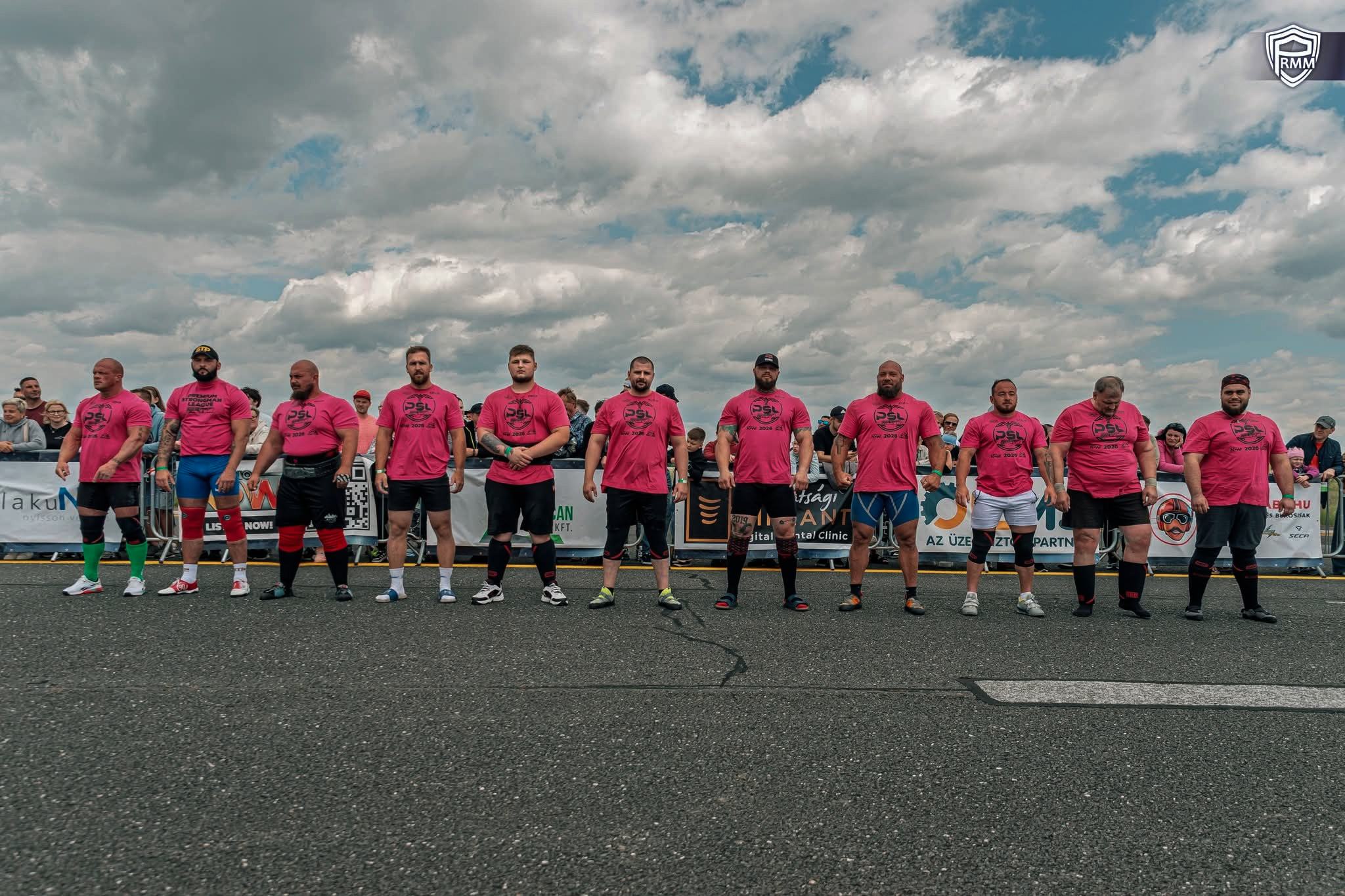
The Life of a Strongman - Travel and Competition: How to Protect Performance Away From Home
For a Strongman, competition does not begin when he is called to the first event. It begins days earlier: travel, packing, sleep, meals, schedule changes, delays and all the logistical decisions that can consume energy before the athlete lifts the first object.
Research in athletes shows that long-distance travel can disrupt sleep, circadian rhythms, perceived fatigue and some components of performance. Recent literature also shows that effects vary according to distance, travel direction, number of time zones and individual characteristics.
1. Competition starts before competition
An athlete can arrive without an injury and without missing training, yet still not be fully ready. Travel can introduce fatigue, fragmented sleep, irregular nutrition and administrative stress.
2. The journey is part of preparation
If travel is treated as separate from preparation, the athlete loses control of an important part of competition readiness. The plan should include transport, accommodation, meals, sleep, warm-up and recovery time.
3. Short travel is not always easy
Even a domestic trip of a few hours can mean prolonged sitting, missed meals, poor hydration and late arrival. Distance alone does not define the cost of travel.
4. Long travel changes the equation
Long flights add immobility, environmental change, sleep disruption and sometimes time-zone shifts. A systematic review in elite athletes found consistent effects on perceived jet lag and some physiological markers, while performance effects were less uniform.
5. Jet lag is not the same as travel fatigue
Jet lag occurs when the circadian system is out of sync with local time. Travel fatigue can exist without crossing time zones. The distinction matters for strategy.
6. Time zones must be planned
Travel direction and the number of time zones crossed can alter the magnitude of circadian disruption. Recent research suggests eastward travel can sometimes create more difficult circadian adjustment than westward travel.
7. Sleep is often the first victim of poor travel organization
Very early departures, late arrivals, unfamiliar rooms and time-zone changes can reduce or fragment sleep. A meta-analysis in athletes identified travel and jet lag among factors that can impair sleep during training and competition periods.
8. Do not try to recover everything in one night
After difficult travel, the temptation is to sleep as long as possible regardless of timing. Sometimes it is more effective to rebuild the local schedule progressively, protecting bedtime and light exposure according to travel direction.
9. The hotel temporarily becomes your recovery room
Bed, room temperature, noise, light, air conditioning and phone use can influence recovery. You cannot control the hotel completely, but you can control part of the routine.
10. Nutrition has to travel with you
A Strongman who relies on large food quantities cannot leave nutrition to chance. Travel can change meal timing and access to familiar foods. Planning safe, nutritious foods is part of performance.
11. Do not experiment with food before competition
The new restaurant may be interesting, but the day before competition is not the ideal time for digestive experiments. Familiarity has value when the stakes are high.
12. Hydration should be simple
Travel, dry aircraft air and schedule changes can make hydration harder. The answer is not chaotic drinking, but maintaining access to fluids and a familiar hydration and electrolyte routine.
13. A Strongman competition bag is not a normal bag
Shoes, belt, grip equipment, clothing, prescribed medication, permitted supplements and recovery items should be organized so critical items do not depend on a single piece of luggage.
14. Check equipment before departure
A competition is not the place to discover that the right shoes were forgotten or that equipment is incompatible with the event. A simple checklist reduces an entirely avoidable risk.
15. Accommodation matters more than it seems
Distance to the venue, food access, room quietness, breakfast timing and the ability to reach the competition quickly can influence the entire day. Good accommodation is not luxury. It is logistics.
16. Do not turn the day before competition into sightseeing
The new city is tempting. But excessive walking, standing, late meals and tourism can consume resources the athlete will need the next day.
17. Warm-up starts with routine, not the first set
Available Strongman data show that most competitors use a competition-day warm-up, and their strategies are generally practiced in training.
18. Do not warm up more just because you are nervous
Emotion can push an athlete to repeat too many movements before an event. Warm-up should prepare, not consume.
19. Competition changes the perception of time
Waiting hours can feel endless, while time between events can disappear. The athlete should know when to eat, rest, warm up and switch into competition focus.
20. Waiting is an event of its own
In Strongman, you are not lifting continuously. You wait, observe, warm up again and manage energy. Control between events can be almost as important as execution.
21. Adrenaline has to be managed
An athlete who is too passive may struggle to enter an event. An athlete who remains hyper-aroused for hours can waste mental energy. Psychological preparation needs a deliberate build-up and a deliberate downshift.
22. Travel can affect decisions, not only the body
Fatigue and sleep loss can change mood, attention and perceived difficulty. After difficult travel, important decisions should rely as much as possible on the plan prepared beforehand.
23. Do not change strategy for every inconvenience
A delayed flight does not automatically mean the entire plan must change. An imperfect hotel does not mean preparation is ruined. Strategy should be adapted proportionally to the problem.
24. International competitions require another level of planning
Borders, time zones, customs rules, climate changes and different access to food or medical services make logistics more complex. Sports-medicine literature recommends methodical international travel planning, including food, health, equipment and emergency considerations.
25. Climate can become an opponent
Heat, humidity, cold or altitude can alter perceived effort and hydration and recovery needs. An athlete should know the expected environment before arriving.
26. Do not assume the body adapts instantly
When the environment differs substantially from home, the body needs time to adapt. Arriving very close to competition can reduce the opportunity for acclimatization, especially with major time-zone or climate changes.
27. Post-competition travel matters too
After competition, the athlete may be fatigued, dehydrated, tense and mentally activated. A long journey immediately afterward can increase the recovery cost. When possible, the first hours after competition should be protected.
28. Not every competition deserves the same travel cost
A distant competition means money, time, days off work, stress and recovery cost. Its value should be measured against the season objective, not only the desire to participate.
29. Travel is also a financial problem
Transport, accommodation, food, fees, equipment and days away from work form the true cost of competition. For an athlete who competes often, this cost can directly influence the sporting calendar.
30. Plan B is mandatory
Lost luggage, a broken car, a cancelled flight, delays, unavailable accommodation or a changed schedule can happen. You cannot control the event, but you can control how fragile your plan is.
31. Build a competition routine that can travel
The less your routine depends on home, the easier it is to transfer. Similar meal timing, the same warm-up sequence, the same key equipment and the same mental cues reduce uncertainty.
32. Practical model: Travel - Stabilize - Prepare - Compete - Recover
Travel, arrive with the lowest reasonable cost. Stabilize, rebuild sleep, nutrition and rhythm. Prepare, check equipment, venue and strategy. Compete, execute without unnecessary improvisation. Recover, protect the first hours and days after competition.
33. What should be in the competition bag?
Documents, phone and chargers, primary equipment, backup equipment, shoes, clothes, familiar foods, fluids, electrolytes and personal items required by the routine. Medication must be handled according to medical instructions and transport rules.
34. The Failure Point of travel and competition
The Failure Point appears when logistics consume so much energy that the athlete arrives with fewer resources than planned. Signs can include degraded sleep, missed meals, irritability, dehydration, chaotic warm-up, poor concentration and impulsive decisions.
At that point, the problem is no longer just travel. Preparation was not designed for the real world. A good competition plan must survive delays, imperfect hotels, long journeys and schedule changes.
35. Conclusion: you must be able to transport the athlete and the routine together
A Strongman does not always compete in his own gym, his own city or his own bed. Sometimes he crosses countries, time zones and entire days of travel for a few minutes in which everything is decided.
Travel therefore should not be treated as the time between training and competition. It is part of preparation. The sports literature supports an integrated approach to sleep, circadian rhythm, nutrition, recovery and logistics, even though evidence for some interventions remains limited.
Performance away from home begins when you can take with you the things that truly matter: routine, control and the ability to adapt without losing your identity as an athlete.
Selected references
1. Winwood PW, Pritchard HJ, Wilson D, Dudson M, Keogh JWL. The Competition-Day Preparation Strategies of Strongman Athletes. J Strength Cond Res. 2019;33(9):2308-2320. DOI: 10.1519/JSC.0000000000003267.
2. Janse van Rensburg DC, Jansen van Rensburg A, Fowler P, et al. How to manage travel fatigue and jet lag in athletes? A systematic review of interventions. Br J Sports Med. 2020;54(16):960-968. DOI: 10.1136/bjsports-2019-101635.
3. Walsh NP, Halson SL, Sargent C, et al. Sleep and the athlete: narrative review and 2021 expert consensus recommendations. Br J Sports Med. 2021;55:356-368. DOI: 10.1136/bjsports-2020-102025.
4. Rossiter A, Warrington GD, Comyns TM. Effects of Long-Haul Travel on Recovery and Performance in Elite Athletes: A Systematic Review. J Strength Cond Res. 2022;36(11):3234-3245. DOI: 10.1519/JSC.0000000000004021.
5. Waterhouse J, Reilly T, Atkinson G, Edwards B. Jet lag: trends and coping strategies. Lancet. 2007;369:1117-1129.
6. Reilly T, Waterhouse J, Burke LM, Alonso JM. Nutrition for travel. J Sports Sci. 2007;25 Suppl 1:S125-S134. DOI: 10.1080/02640410701607445.
7. International travel and the elite athlete. Clin Sports Med. 2011.
8. Benito A, Boppre G, Lopes A, et al. Do Long-Haul Travel and Jet Lag Affect Athletes' Physiological, Humoral and Performance Outcomes? A Systematic Narrative Review. Sports. 2026;14(3):93. DOI: 10.3390/sports14030093.
More From The Journal
Training
The Science of Strongman Training - Episode X: Competition Programming
How to build a complete Strongman competition preparation block: calendar, events, volume, intensity, specificity, simulations, autoregulation, tapering and fatigue management.
Training
The Science of Strongman Training - Episode IX: Peaking
Peaking in Strongman: how to turn months of training into maximal competition performance by reducing fatigue, preserving adaptations and managing specificity.