
Psychology
The Life of a Strongman - Injuries and Sacrifices: The Price of Performance
September 3, 2026

The Life of a Strongman - Injuries and Sacrifices: The Price of Performance
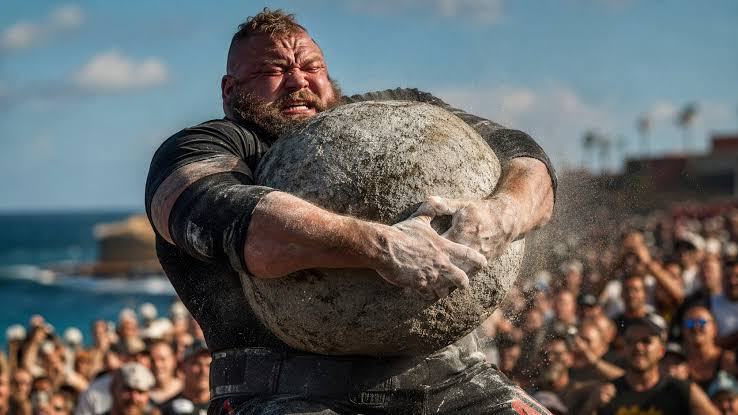
In Strongman, the body is the working instrument. You build it, load it, test it and repeatedly take it close to its limits. But there is an important difference between accepting that sport involves risk and turning injury or suffering into proof of worth. An athlete can be deeply committed without treating pain as a trophy.
Research on Strongman and strength sports shows that heavy loading, repeated events and competition demands create a distinctive stress profile. At the same time, literature on elite athletes shows that injury is not only a physical event: it can affect sleep, mood, identity, work, relationships and competition participation. This chapter treats sacrifice as a resource-management problem, not a medal.
1. Injury is part of risk, not the athlete's identity
Every high-performance sport involves risk. But the fact that injury can happen does not mean it should be sought, glorified or ignored. A Strongman's identity needs to remain broader than the condition of his joints in a particular week.
2. Not every pain means injury
Pain, soreness, stiffness and training discomfort are not synonyms for injury. On the other hand, new, progressive, persistent pain or pain associated with loss of function deserves evaluation. An athlete should not diagnose himself or turn pain tolerance into a character test.
3. The body is not a replaceable part
A “break it and fix it” mentality may work as a slogan, but it is a poor long-term career strategy. Tissues need time, progressive loading and adaptation. Sometimes the strongest decision is to reduce loading rather than add more.
4. Injury has causes, but rarely one single cause
In sport, injuries usually result from interactions among load, tissue capacity, technique, fatigue, history, context and external factors. Searching for one explanation after every problem can be overly simplistic.
5. Loading can be useful and can become excessive
Training creates stress to stimulate adaptation. Problems arise when demand repeatedly exceeds recovery and adaptation capacity. There is no universal volume or intensity threshold that is safe for every athlete at every moment.
6. Fatigue changes how you move
As fatigue increases, speed, coordination, technical control and force production can decline. In Strongman events, where implements are large and the environment is variable, technique under fatigue becomes an important part of risk management.
7. Technique does not eliminate risk, but it can manage it
Efficient technique can reduce unnecessary movement and distribute stress more effectively. But even excellent technique does not make a heavy event risk-free. The goal is to control what can be controlled.
8. Injury history matters
A previous problem can influence load tolerance and how an athlete approaches an event. Return should be individualized, and loading progression should consider function and response to effort, not only the calendar.
9. Return is not simply the disappearance of pain
Return to sport should address function, load capacity, strength, control and the real demands of the event. An athlete may have less pain and still not be ready for a heavy stone, maximal deadlift or fast yoke.
10. Recovery is a process, not a pause
Effective recovery includes load management, sleep, adequate nutrition, progressive return and, when necessary, medical assessment and rehabilitation. The goal is not merely to return to the gym, but to rebuild the capacity to tolerate the sport's demands.
11. Sacrifice needs a limit
Sacrifice can be necessary. Certain social activities, vacations, meals or opportunities may be adjusted for a sporting goal. But limitless sacrifice becomes a strategy in which every cost can be justified.
12. Not every competition is worth every risk
A competition may be important, but not every competition has the same value. If participation requires competing injured, ignoring persistent warning signs or sacrificing necessary recovery, the benefit-to-cost ratio needs to be recalculated.
13. Pain is not currency for respect
Strength sports can create cultural pressure to prove that you can continue regardless of what you feel. But sporting courage does not mean ignoring information from the body. Sometimes discipline means stopping.
14. Injury can affect the mind
Losing the ability to do what defines the daily routine can produce frustration, anxiety, sadness or a sense of lost athletic identity. The injured athlete needs a psychological strategy, not only a physical protocol.
15. When you cannot compete, you are still a Strongman
A rigid athletic identity makes injury harder to tolerate. If personal worth is tied exclusively to results, every break becomes a threat. A broader identity makes psychological recovery more stable.
16. Work does not disappear when you get injured
For a working athlete, injury can affect income, schedule and the ability to meet responsibilities. The recovery plan therefore needs to account for real life, not only the training program.
17. Family sometimes pays part of the sacrifice
When sport involves travel, expenses, restrictions and recovery, the cost can be distributed across the family. Sacrifice is healthy only when it is consciously accepted, discussed and does not become a permanent debt to others.
18. Lost time is also a cost
An injury can consume months of progress, rehabilitation sessions, specialist visits and periods in which goals must be postponed. The cost is not only financial or physical. It is also the time in which you cannot do what you planned.
19. Do not recover lost progress in one month
After a layoff, the temptation is to return quickly to previous weights. Cardiovascular capacity, strength, tissue tolerance and coordination do not necessarily return at the same rate. Progression has to be rebuilt.
20. Return to competition differs from return to the gym
Competition adds adrenaline, time limits, unfamiliar implements, event order, pressure and repeated effort. Being able to perform a movement in the gym does not automatically mean being ready to perform it at competition intensity.
21. Tapering can protect, not only optimize
Strategically reducing load before competition can reduce accumulated fatigue and allow existing capacity to be expressed. The final days are not the ideal place to prove how much more you can tolerate.
22. Do not turn every pain into a project
Monitoring is useful, but hypervigilance can become counterproductive. A good system tracks meaningful changes: function, performance, persistent symptoms, sleep and response to loading. When important uncertainty exists, professional assessment is more valuable than guessing.
23. Recovery should not become a collection of procedures
Not every popular recovery method has the same evidence base or usefulness. Priorities remain well-dosed loading, sleep, nutrition, stress management and specific rehabilitation when indicated.
24. Financial sacrifice must be calculated
Injury can create costs for consultations, investigations, rehabilitation and lost income. If the sporting budget has no reserve, a physical problem can quickly become an economic problem.
25. An overloaded calendar reduces recovery space
When competitions are too close together, a minor problem may not have time to settle before the next demand. The calendar needs building, competition and recovery periods, not only competition dates.
26. Sometimes the biggest sacrifice is stepping away
Skipping a competition, a PR or even a training period can feel like failure. But if it protects the ability to compete six months or three years later, it may be one of the most valuable decisions of a career.
27. Do not confuse availability with health
An athlete can be able to step on the competition floor and still not be in a good state. “Can I do it?” and “Is it smart to do it?” are different questions.
28. Professional support can shorten the road
Sports physicians, physiotherapists, physical therapists, coaches and, when necessary, sports psychologists can contribute to better decisions. Roles should be clear, and diagnosis and treatment should not be replaced by internet advice.
29. Build an injury plan before injury happens
A simple plan can include medical contacts, an emergency financial reserve, how training will be modified, communication with coach and family and criteria for progressive return. When a problem appears, you do not have to invent everything under pressure.
30. Sacrifice must serve the objective
If sacrifice does not increase the probability of reaching the objective and merely maintains the image of a tough athlete, its value is questionable. Good sacrifice is strategic: you give up something to protect something more important.
31. The mature question: what do I want to be able to do three years from now?
Daily decisions change when the horizon becomes longer. Missing one workout matters little. Worsening an injury that changes your season matters enormously. A career is built through accumulating sustainable decisions.
32. Practical model: Reduce - Recover - Rebuild - Return - Sustain
Reduce: reduce demand when necessary. Recover: recover and address the problem. Rebuild: rebuild capacity. Return: progressively return to sport demands. Sustain: build a strategy that allows continuation without repeating the same problem.
33. A good season is not a season without any problem
High-performance sport cannot eliminate risk completely. A good season is one in which problems are recognized early, managed intelligently and not turned into larger crises through ego or haste.
34. The Injury and Sacrifice Failure Point
The Failure Point appears when the cost of sport exceeds the athlete's ability to absorb it: repeated injuries, persistent pain, continued performance decline, incomplete recovery, lack of sleep, conflict with work or family, debt and the feeling that you must continue regardless of consequences.
At that point the strategy must change. Sometimes a reduction in load is enough. Other times a break, medical assessment, rehabilitation, calendar change or withdrawal from a competition is necessary. There is no honor in turning a manageable problem into a chronic one.
35. Conclusion: the most valuable Strongman is the one who can continue
Injuries and sacrifices are part of high-performance sport, but they do not have to define it. A mature Strongman knows how to work extremely hard, but also when to reduce, when to stop and when to ask for help.
Strength is not measured only by the weight lifted on a good day. It is also measured by the ability to build years of training without destroying the body, health, work and life around the sport. Sacrifice has value only when it serves the athlete's future. True performance is not what consumes you fastest, but what you can sustain longest.
Selected references
1. Winwood PW, Keogh JWL, Harris NK. The strength and conditioning practices of strongman competitors. J Strength Cond Res. 2012;26(12):3118-3128.
2. Winwood PW, Pritchard HJ, Wilson D, Dudson M, Keogh JWL. The Competition-Day Preparation Strategies of Strongman Athletes. J Strength Cond Res. 2019;33(9):2308-2320. DOI: 10.1519/JSC.0000000000003267.
3. Hainline B, Reardon CL, et al. Mental health in elite athletes: International Olympic Committee consensus statement. Br J Sports Med. 2019;53:667-699. DOI: 10.1136/bjsports-2019-100715.
4. Rice SM, Purcell R, De Silva S, Mawren D, McGorry PD, Parker AG. The Mental Health of Elite Athletes: A Narrative Systematic Review. Sports Med. 2016;46:1333-1353. DOI: 10.1007/s40279-016-0492-2.
5. Halson SL. Monitoring training load to understand fatigue in athletes. Sports Med. 2014;44 Suppl 2:S139-S147.
6. Ardern CL, Glasgow P, Schneiders A, et al. 2016 Consensus statement on return to sport from the First World Congress in Sports Physical Therapy, Bern. Br J Sports Med. 2016;50:853-864. DOI: 10.1136/bjsports-2016-096278.
7. Bahr R. Why screening tests to predict injury do not work—and probably never will: a critical review. Br J Sports Med. 2016;50:776-780. DOI: 10.1136/bjsports-2016-096256.
More From The Journal

Training
The Science of Strongman Training - Episode X: Competition Programming
How to build a complete Strongman competition preparation block: calendar, events, volume, intensity, specificity, simulations, autoregulation, tapering and fatigue management.
Training
The Science of Strongman Training - Episode IX: Peaking
Peaking in Strongman: how to turn months of training into maximal competition performance by reducing fatigue, preserving adaptations and managing specificity.