
Training
The Failure Point - Episode X: Why an Athlete Can Have Every Quality and Still Lose
September 2, 2026
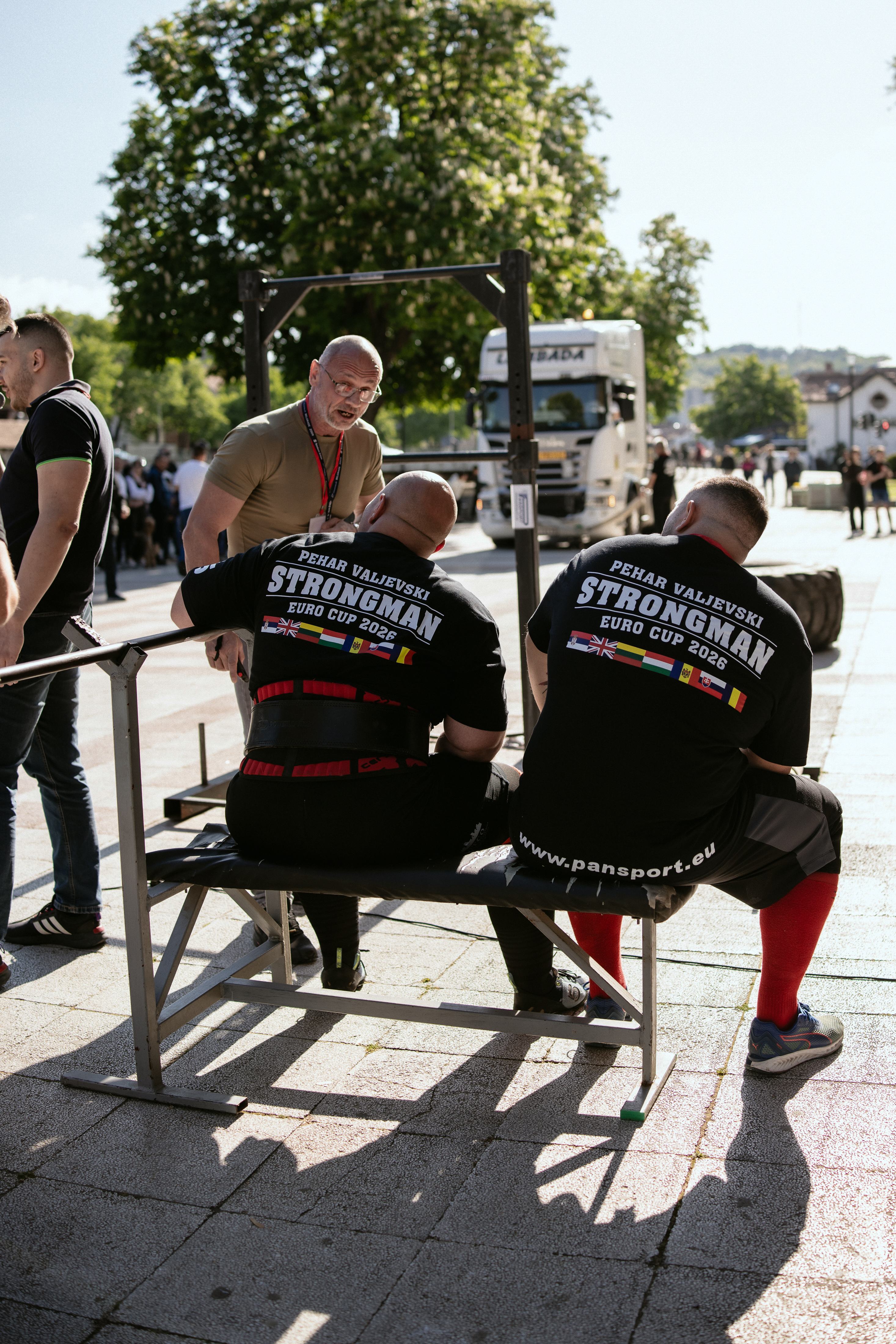
The Failure Point - Where Does a Strongman’s Performance Stop Improving?
Episode X: Why an Athlete Can Have Every Quality and Still Lose
There is a particular type of defeat that is difficult to explain. The athlete is strong. Fast. Well conditioned. Technically skilled. Experienced. Muscular. Recovered. In the gym, he moves weights that command respect. Yet in competition, he loses.
The explanation is not necessarily that one quality is missing. It may be that the athlete cannot integrate all of them. Strongman does not test strength, power, speed and endurance in separate rooms. It compresses them into one system: an athlete who must produce force, move, control unfamiliar objects, manage fatigue and make decisions in real time.
Strongman biomechanics research already shows that performance depends on event-specific determinants. For example, higher Farmer’s Walk performance is associated with greater stride length and rate and reduced ground contact time, while Tire Flip performance is strongly related to the duration of the second pull. [1] General strength therefore does not guarantee that an athlete can express that strength in the exact form demanded by the event.
1. Performance is not the sum of qualities
A simple model says strength + power + technique + conditioning + body mass + psychology = performance. Reality is closer to a network of interactions. Strength can support power. Body mass can improve stability but cost speed. Conditioning can support repeated efforts, while excessive conditioning can compete with strength and power development. Technique allows force to become movement, but technique must survive fatigue.
Two athletes can therefore possess similar qualities when measured separately and still produce very different competition performances when those qualities must operate simultaneously.
2. Maximal strength is not the same as competitive strength
An athlete can have an enormous deadlift and still not be the best athlete in a repeated deadlift event, loading event or carry. Maximal strength is a capacity. Competition requires that capacity to be expressed in a particular position, with a particular implement, at a particular rhythm and often after a previous event.
Strength becomes performance only when it can be transferred to the actual task. The Strongman biomechanics review highlights this specificity by identifying different performance determinants across events. [1]
3. Power can exist but fail to appear when needed
Power is not simply how quickly an athlete can produce force in a fresh test. In competition, it has to appear at the right moment. An athlete may have excellent power early in the day and fail to express it after a heavy deadlift, carry or event that produces substantial fatigue.
Recent fatigue research indicates that physical fatigue can impair performance, with effects depending on the task and fatigue protocol. [2] In Strongman, where events occur sequentially, this becomes particularly important.
4. Technique is the ability to organize qualities
Technique is not a quality separate from strength. It is how strength becomes movement. An athlete may have enough force to move an implement but lose because of position, timing, path or poor distribution of effort.
More importantly, technique has to survive fatigue. A perfect movement performed fresh is not enough if, after several events, the athlete can no longer maintain the same mechanical organization. Fatigue literature indicates that motor skill execution can change as fatigue accumulates. [3]
5. Conditioning can decide a competition without being the main event
A Strongman may not lose because he was weaker in the event where he lost. He may lose because he arrived at that event in a worse physiological state than his opponent.
The ability to recover between events changes the value of every other quality. If two athletes have the same maximal strength but one preserves speed, coordination and force production better after repeated efforts, that athlete may possess a major competitive advantage.
6. Body weight can be an advantage in one event and a cost in another
Body mass can contribute to stability and force production, but in locomotor events the athlete must also move their own mass. Optimal body weight is therefore not a universal constant. It should be considered relative to the structure of the competition.
An athlete may lose not because he is objectively too heavy or too light, but because the mechanical benefit of his mass is outweighed by its locomotor cost in that particular contest.
7. Recovery turns qualities into availability
An athlete does not compete with everything he has built over the previous months. He competes with what he can express on that day. This makes recovery an integration variable rather than a separate activity.
An athlete can have the best strength of his career and still express less of it if residual fatigue remains. In Strongman, a survey of 454 athletes found that 87% used a taper, with a typical duration of about 8.6 days and a reported volume reduction of about 45.5%. [4] Fitness has to be available, not merely present.
8. You can lose through sequencing
Event order matters. An athlete who is excellent at every event can still have a fatigue profile that is poorly matched to the sequence. If two events stress the same tissues or energetic capacities, the first can reduce performance in the second.
The final result therefore depends not only on the level of each quality but also on how those qualities interact over time.
9. Competition also tests decision-making
In training, the athlete knows the load, repetitions and usually the objective. Competition introduces opponents, ranking, time pressure, changing strategy and the psychological importance of the result.
An athlete may have the physical capacity to win and still make decisions that move him away from first place: starting too aggressively, spending energy unnecessarily, chasing an opponent at the wrong moment or forcing a repetition that was not required for the ranking.
10. Psychology can change force expression
Psychological preparation is not decoration. A 2026 study of 200 competitive strength athletes, including Strongmen and Strongwomen, found significantly greater deadlift velocity under a psyching-up condition than in control, with an approximately 18.6% increase in performance based on bar velocity. [5] The study does not show that every strategy works for every athlete, but it demonstrates how activation state can influence the expression of an existing physical capacity.
Psychology does not create strength from nothing. It can change how much of available strength is expressed.
11. The athlete who wins may simply have the smaller expression deficit
Imagine two athletes. The first has 100 units of capacity but expresses 82 on competition day. The second has 95 but expresses 92. The first is more capable on paper. The second is more performant on the day.
This is one of the most important differences between potential and performance. Capacity is what you have. Performance is what you manage to use.
12. Competition rewards efficiency, not capacity alone
Every repetition in competition has a cost. Every unnecessary step, poorly timed pause, excessive tension or premature burst can reduce the resources available later.
This is why a less spectacular athlete in an isolated test can still be better in competition. He spends less energy for the same amount of useful work.
13. Specificity is necessary but not sufficient
Training has to prepare the actual demands of competition, but no program can perfectly reproduce the controlled chaos of a Strongman competition day. Strongman biomechanical literature remains limited, with many small samples and simplified methods. [1][6] Athletes therefore need both general capacities and the ability to transfer those capacities into variable contexts.
14. Sometimes you prepare the events but not the competition
An athlete can train every event separately and still be unprepared for the real sequence: deadlift, then carry, then loading, then overhead work, then another event that stresses the back and grip.
Competition sometimes has to be trained as a system. Not only “can I lift this implement?” but “can I lift it after spending resources on the events before it?”
15. Competition-day preparation begins before competition day
Research on competition-day preparation in Strongman shows athletes commonly use warm-ups, cognitive strategies, intensity monitoring and practiced event-specific preparation. [7] These details cannot compensate for poor physical preparation, but they can prevent unnecessary loss of capacity that has already been built.
16. Competition day is not the moment to prove how tough you are
A complete athlete can lose because he tries to prove that he is complete. He starts too aggressively, forces every repetition, ignores fatigue signals and spends resources winning small battles inside a long competition.
Competitive performance sometimes requires not using everything you have. Saving part of your capacity for the moment when the ranking difference becomes decisive is a skill, not a lack of aggression.
17. The best athlete can lose because of one weak link
A highly developed profile can still be vulnerable if one quality sits far below the others. Grip can limit a very strong athlete. Speed can limit a very large athlete. Recovery can limit extraordinary strength. Technique can limit an athlete who has the physical engine required.
In a multi-event competition, one weak link can produce a disproportionate loss of points even when the visible difference between athletes appears small.
18. Why this is the real Failure Point
The Failure Point is not only the moment when one quality reaches zero. It is the moment when the system can no longer integrate all the qualities the athlete possesses.
Strength exists but cannot be expressed quickly enough. Conditioning exists but technique deteriorates. Technique exists but fatigue changes it. Body mass provides stability but reduces speed. Psychology is strong but arousal is poorly dosed. Recovery is generally good but the taper was wrong for that competition.
This is the difference between a complete athlete and a competitively complete athlete. The first has all the pieces. The second knows how to use them together.
Conclusion
A Strongman can possess every quality needed to win and still lose. That is not a contradiction. It is a consequence of integrated performance.
Strength, power, technique, conditioning, body mass, recovery, psychology and strategy do not operate independently. They influence one another, and competition tests precisely that interaction. Strongman literature identifies event-specific biomechanical determinants, while research on fatigue, tapering and psychological preparation shows that what matters is not only the capacity built but the capacity expressed at the right time. [1][2][4][5]
That is why the right question after a defeat is not always “What am I missing?” Sometimes the better question is: “What did I have, but fail to express?”
That is where the real Failure Point lives.
Scientific References
1. Hindle BR, Lorimer A, Winwood PW, Keogh JWL. The Biomechanics and Applications of Strongman Exercises: a Systematic Review. Sports Medicine - Open. 2019;5:49. doi:10.1186/s40798-019-0222-z. PMID:31820223.
2. Yu H, Zhang Y, Zhang X, Qu Y, Wang C, He Y. Fatigue protocols and athletic performance: a systematic review with a focus on ecological relevance. 2026. PMID:42099913.
3. Knicker AJ, Renshaw I, Oldham ARH, Cairns SP. Interactive processes link the multiple symptoms of fatigue in sport competition. Sports Medicine. 2011;41(4):307-328. doi:10.2165/11586070-000000000-00000. PMID:21425889.
4. Winwood PW, Dudson MK, Wilson D, et al. Tapering Practices of Strongman Athletes. Journal of Strength and Conditioning Research. 2018;32(5):1181-1196. doi:10.1519/JSC.0000000000002453. PMID:29373426.
5. Cusimano K, Moran J, Tod D, Freeman P. The Effects of Psyching-Up on Deadlift Performance in Competitive Strongmen, Strongwomen, and Powerlifters. Journal of Strength and Conditioning Research. 2026;40(5):576-584. doi:10.1519/JSC.0000000000005361. PMID:41628393.
6. Hindle BR, Lorimer A, Winwood P, Keogh JWL. A systematic review of the biomechanical research methods used in strongman studies. Sports Biomechanics. 2020;19(1):90-119. doi:10.1080/14763141.2019.1598480. PMID:31132028.
7. Winwood PW, Keogh JWL, Hume PA, et al. The Competition-Day Preparation Strategies of Strongman Athletes. Journal of Strength and Conditioning Research. 2019. PMID:31343547.
More From The Journal

Training
The Science of Strongman Training - Episode X: Competition Programming
How to build a complete Strongman competition preparation block: calendar, events, volume, intensity, specificity, simulations, autoregulation, tapering and fatigue management.
Training
The Science of Strongman Training - Episode IX: Peaking
Peaking in Strongman: how to turn months of training into maximal competition performance by reducing fatigue, preserving adaptations and managing specificity.