
Training
The Failure Point - Episode IV: When Is Conditioning Too Much?
September 2, 2026
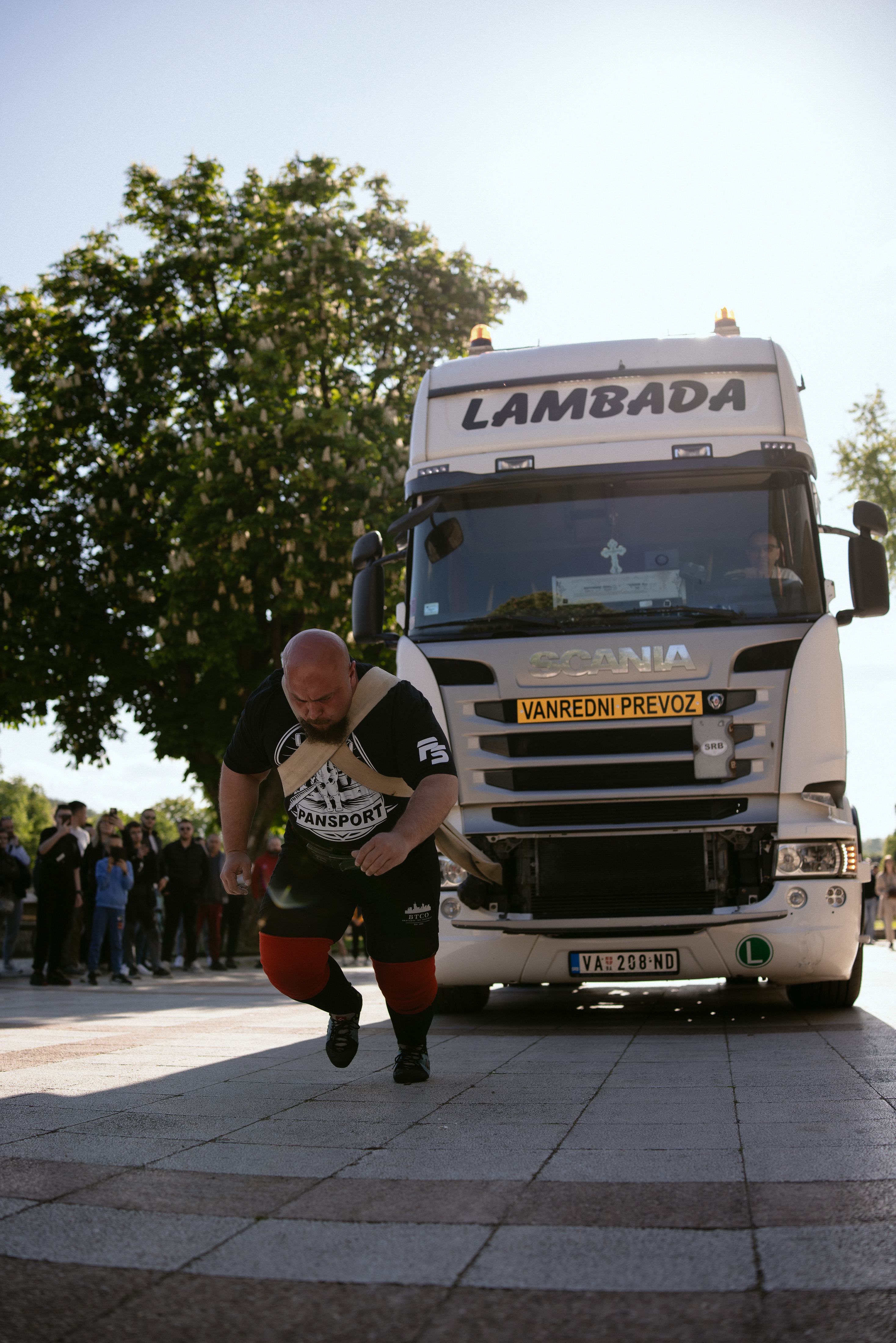
The Failure Point - Where Does a Strongman’s Performance Stop Improving?
Episode IV: When Is Conditioning Too Much?
Conditioning is one of the most useful and, at the same time, one of the easiest components of Strongman preparation to abuse. A Strongman needs to repeat hard efforts, recover between events, tolerate medley density and continue producing force while the heart rate is already high. That is precisely where the problem begins. The fact that an athlete can tolerate more conditioning does not automatically mean more conditioning is required. At a certain point, work capacity becomes a metabolic and neuromuscular cost that starts competing with the qualities the athlete actually needs to build: strength, power, speed, technique and the ability to express all of them on competition day.
1. Conditioning Is Not Simply Cardio
In Strongman, conditioning should be defined more broadly than running, cycling or conventional cardio. Conditioning is the ability to sustain and repeat specific work, recover between efforts and preserve a sufficient proportion of neuromuscular performance as fatigue accumulates. A Farmer’s Walk, Sandbag and Loading medley is conditioning. Deadlift for reps is conditioning. An implement circuit is conditioning. Even a strength-oriented session can have a substantial conditioning component when density is high. Conditioning is therefore not separate from Strongman. It is a property of the system that determines how well an athlete can repeatedly produce force over time. The problem begins when this capacity is trained independently from the actual competition demand and starts consuming resources that should be available for other adaptations.
2. Why Strongman Needs Conditioning
A Strongman does not only need to be strong. He needs to be able to be strong again and again. Competition rest periods are not the same as perfect gym-set recovery. An athlete may finish a Yoke, recover for several minutes and then face deadlift for reps. A maximal-strength event can be followed by a carry. The athlete may reach the final event with the same musculature, joints and nervous system already stressed. Good conditioning increases the ability to recover and maintain performance. Research on the physiological responses to Strongman training shows that implement-based sessions can impose meaningful cardiovascular and metabolic demands, explaining why the sport cannot be treated as a sequence of maximal singles with perfect rest. [1]
3. The Problem Begins When Conditioning Becomes the Goal
A common programming error is turning conditioning into a parallel competition. The athlete starts chasing longer distances, longer circuits, shorter rests and higher heart rates because those variables are easy to measure. But a Strongman does not win because he completed the most impressive metabolic workout. He wins if he can produce and repeat the performance required by the events. If a conditioning session leaves you feeling exceptionally worked but the following days show lower Log Lift velocity, reduced deadlift performance, poorer stone technique or weaker heavy carries, conditioning has probably exceeded its role. There is nothing inherently valuable about finishing exhausted. Useful adaptation is adaptation connected to the sporting objective.
4. Conditioning Can Compete With Strength
Concurrent strength and endurance training is not automatically incompatible. A meta-analysis including 59 studies and 1,346 participants found, under certain conditions, blunted lower-body strength adaptations in males and small-to-moderate negative effects on power development. At the same time, strength-trained athletes appeared less vulnerable than untrained participants to some forms of interference. [2] This matters for Strongman. We should not conclude that any conditioning destroys strength. The relevant variables are dose, modality, frequency, density, proximity to heavy sessions and how specific the conditioning is. Well-selected conditioning can support performance. Excessive conditioning can consume the very capacity it is supposed to protect.
5. Interference Is Not Only a Molecular Problem
Concurrent-training discussions often focus on cellular mechanisms and the so-called interference effect. For a Strongman, the practical problem begins much earlier. If you perform a hard carry session and then add a long lower-body conditioning workout, the next squat or deadlift session may be affected by residual fatigue. If you perform intense intervals before Log Lift, velocity and technical quality may fall. If you perform too many implement circuits, grip, trunk and hips may no longer be fresh for the sessions where strength is the priority. In other words, conditioning can interfere through programming before subtle molecular mechanisms become practically important. In a sport with many overlapping demands, this scheduling interference may be more important than theoretical differences in cellular signaling.
6. Work Capacity Is Not the Same as Performance Capacity
An athlete can become very good at work and still fail to become better at competition. A Strongman may complete a ten-implement circuit, sustain a very high heart rate and tolerate impressive volumes. Yet competition may require a 90 percent maximal lift, rapid Yoke movement and a fast Sandbag load. What matters is the ability to express force under those specific conditions. Conditioning should protect that ability, not replace it. The distinction is subtle but fundamental: work capacity asks, “How much work can I tolerate?” Performance capacity asks, “How well can I perform when it matters?”
7. A High Heart Rate Does Not Automatically Mean Good Conditioning
Heart rate is information, not a universal target. A circuit that produces a very high heart rate may be excellent for one purpose and unnecessary or costly for another. In Strongman, cardiovascular response is influenced by muscle mass involved, load, implement type, effort duration, trunk position and rest intervals. Strongman research has shown substantial acute physiological demands during implement training, including elevated metabolic stress. [1] But a highly demanding session is not automatically an optimal session. Conditioning should be judged by what it does to subsequent performance, not only by how difficult it feels while it is happening.
8. When Conditioning Starts Reducing Speed
Speed is one of the first qualities to suffer from poorly dosed conditioning. Not because the cardiovascular system becomes “too good”, but because accumulated fatigue reduces the ability to produce and coordinate force rapidly. For Strongman, this distinction is critical. A deadlift may be strong enough to leave the floor but too slow to support fast repetitions. A Farmer’s Walk may remain stable but become slow. A Tire Flip may remain possible while the second pull becomes delayed. Good conditioning should increase fatigue resistance without turning the athlete into someone who can continue working but can no longer accelerate.
9. Conditioning Can Hide a Recovery Problem
Sometimes an athlete says he is not conditioned enough because he gets tired. Fatigue, however, is not always a lack of conditioning. It can reflect poor sleep, inadequate energy intake, too many hard sessions, too few easy days or excessive total training load. If every bad week is answered with more conditioning, a spiral develops. Research on overreaching in strength sports suggests that short periods of high volume or intensity can produce functional overreaching, while chronic high loading can contribute to non-functional overreaching. Evidence for true overtraining syndrome in strength sports is much more limited. [3]
10. Non-Specific Conditioning Is the Easiest to Overuse
Running, cycling, rowing, sled work or general circuits can all be useful. They can improve aerobic capacity, increase tolerance to work and provide a way to add activity with a different mechanical load. The problem appears when non-specific conditioning becomes so extensive that it occupies recovery resources needed for Strongman. If the goal is improving the ability to recover between two 60-to-90-second events, carefully dosed intervals may be more rational than hours of monotonous work. Specificity does not mean doing only implements. It means choosing the method that develops the desired quality with the least unnecessary cost.
11. Specific Conditioning Can Be Even More Fatiguing
This is the Strongman paradox: the most specific conditioning can also be the most expensive. A circuit involving Yoke, Farmer’s, Sandbag and Loading reproduces the sport extremely well, but simultaneously stresses grip, trunk, hips, posterior chain and tissues already loaded by strength training. Specificity is not synonymous with efficiency. Sometimes a bike interval can improve part of aerobic capacity without adding another dose of spinal and lower-limb mechanical stress. At other times, close to competition, specific implements are indispensable. The skill lies in knowing when general adaptation is needed and when specific transfer is the priority.
12. Conditioning Must Respect the Hierarchy of Goals
During a general development phase, conditioning can occupy more space. During a maximal-strength phase, it should be enough to maintain work capacity without damaging priority sessions. As competition approaches, conditioning should become more specific and carefully dosed. Goal hierarchy matters. If the main event is Max Deadlift, sacrificing recovery for a metabolic circuit makes little sense. If the competition contains a four-event medley, the ability to repeat efforts may become almost as important as maximal strength. Programming must reflect the competition rather than the coach’s favorite method.
13. Signs That You Have Passed the Useful Point
There is no universal threshold in minutes, kilometers or sessions. The signals are functional. If strength-training velocity drops persistently, normal working weights feel unusually heavy, recovery between sessions becomes longer, technique deteriorates or priority-event performance declines while conditioning volume continues to rise, the dose needs reassessment. Other signals can include reduced motivation for important sessions, poorer sleep and the feeling that each session begins before the previous one has been recovered from. One indicator does not prove excessive conditioning. A repeated pattern is much more informative.
14. What Well-Dosed Conditioning Looks Like
Well-dosed conditioning is not the conditioning that destroys you. It is the conditioning that allows you to do more of what matters. You can finish a session feeling that you worked hard while still being able to produce force, maintain speed and repeat technique over the following days. In an advanced Strongman, conditioning should improve tolerance to density, recovery between efforts and preservation of performance as competition progresses. If its main effect is exhaustion, it is not enough to say that you worked hard. You have to ask what capacity was gained and what capacity was sacrificed to gain it.
15. Conditioning and Breathing in Strongman Events
Conditioning also has a technical component. In many events, the athlete must generate intra-abdominal pressure, stabilize the trunk and breathe within short windows. Better aerobic capacity does not automatically solve the problem of breathing under bracing. A well-conditioned Strongman must alternate rigidity with controlled relaxation, recover breathing without losing position and regulate pace. This becomes particularly important in carries, medleys and repetition events. Specific conditioning should therefore include the ability to breathe under load, not merely the ability to tolerate a high heart rate.
16. Density Is the Hidden Variable
Two athletes can perform the same volume and still experience completely different sessions. The difference may be density: how much work is performed within a given time. Five sets in an hour are not the same as five sets in twenty minutes. In Strongman, density can increase the cost of a session dramatically because implements stress multiple systems at once. Reducing rest is therefore a form of progression that must be used carefully. If you reduce rest while keeping the same load, you have not performed “the same workout faster”. You have changed the physiological stress.
17. Conditioning and the Taper
As competition approaches, one of the common mistakes is maintaining high conditioning because the athlete fears losing fitness. Strongman practice shows that tapering is frequently used before competition and that reducing volume is a central part of the strategy. In a study of 454 Strongman athletes, 87% reported using a taper, with an average volume reduction of about 45.5%. [4] Not every gram of fitness needs to be trained into the final days. Sometimes performance rises precisely because the fatigue that was masking it is reduced.
18. Choosing Between Aerobic Work, Intervals and Specific Conditioning
If the goal is building an aerobic base with low mechanical cost, cyclic work may be useful. If the goal is tolerance to repeated hard efforts, intervals may be more appropriate. If the goal is performance in a medley, specific implements become essential. No method is universally superior. The choice should consider the season phase, events, athlete level, recovery capacity and the other stressors already present in the program. Good conditioning is a precision tool, not a fixed tax every Strongman must pay.
19. When Conditioning Should Be Reduced
Reduction is justified when conditioning begins to interfere with the primary objective. It may be enough to reduce frequency, duration, density or intensity. It does not automatically need to be removed. Sometimes two sessions become one. Sometimes intervals are shortened. In other cases, the modality changes from heavy carries to cycling to reduce mechanical stress. The key is not treating conditioning as binary: “I do it” or “I do not do it”. It can be adjusted almost as precisely as the weight on the bar.
20. The Conditioning Failure Point
The conditioning failure point is not the moment you can no longer complete the circuit. It is the moment when additional work capacity begins reducing the performance that actually matters. If you can do more conditioning but become slower, weaker, less technical and harder to recover, you have moved beyond the useful point. Strongman does not require an athlete to work indefinitely. It requires the ability to produce very high force and power, repeat it under fatigue and reach the final event with enough performance left to matter. Good conditioning builds that capacity. Excessive conditioning consumes it.
Conclusion
Too much conditioning does not simply mean too many minutes of cardio. It means too much stress relative to what the athlete needs to produce. A Strongman needs an engine that can sustain effort, but the engine is not the whole machine. If improving work capacity requires sacrificing strength, speed, technique or recovery, the athlete is paying too much for the adaptation obtained. The best fitness for Strongman is not the ability to complete the longest workout. It is the ability to preserve as much performance as possible when training or competition becomes long, heavy and unforgiving.
Scientific References
1. Harris NK, Woulfe CJ, Wood MR, Dulson DJ, Gluchowski AK, Keogh JWL. Acute Physiological Responses to Strongman Training Compared to Traditional Strength Training. Journal of Strength and Conditioning Research. 2016;30(5):1397-1408. doi:10.1519/JSC.0000000000001217. PMID:26439778.
2. Huiberts RO, Wüst RCI, van der Zwaard S. Concurrent Strength and Endurance Training: A Systematic Review and Meta-Analysis on the Impact of Sex and Training Status. Sports Medicine. 2024;54:485-503. doi:10.1007/s40279-023-01943-9.
3. Bell L, Ruddock A, Maden-Wilkinson TM, Rogerson D. Overreaching and Overtraining in Strength Sports and Resistance Training: A Scoping Review. Journal of Sports Sciences. 2020;38(16):1897-1912. doi:10.1080/02640414.2020.1763077. PMID:32602418.
4. Winwood PW, Pritchard HJ, Wilson D, Dudson M, Keogh JWL. Tapering Practices of Strongman Athletes. Journal of Strength and Conditioning Research. 2018;32(5):1181-1196. PMID:29373426.
5. Hindle BR, Lorimer A, Winwood P, Keogh JWL. The Biomechanics and Applications of Strongman Exercises: A Systematic Review. Sports Medicine - Open. 2019;5:49. doi:10.1186/s40798-019-0222-z. PMID:31820223.
6. Gao J, Yu L. Effects of concurrent training sequence on VO2max and lower limb strength performance: a systematic review and meta-analysis. Frontiers in Physiology. 2023;14:1072679. doi:10.3389/fphys.2023.1072679.
7. Hindle BR, Lorimer A, Winwood P, Keogh JWL. A systematic review of the biomechanical research methods used in strongman studies. Sports Biomechanics. 2020;19(1):90-119. doi:10.1080/14763141.2019.1598480. PMID:31132028.
More From The Journal

Training
The Science of Strongman Training - Episode X: Competition Programming
How to build a complete Strongman competition preparation block: calendar, events, volume, intensity, specificity, simulations, autoregulation, tapering and fatigue management.

Training
The Science of Strongman Training - Episode IX: Peaking
Peaking in Strongman: how to turn months of training into maximal competition performance by reducing fatigue, preserving adaptations and managing specificity.