
Training
The Failure Point - Episode III: Why Technique Can Limit Strength
September 2, 2026
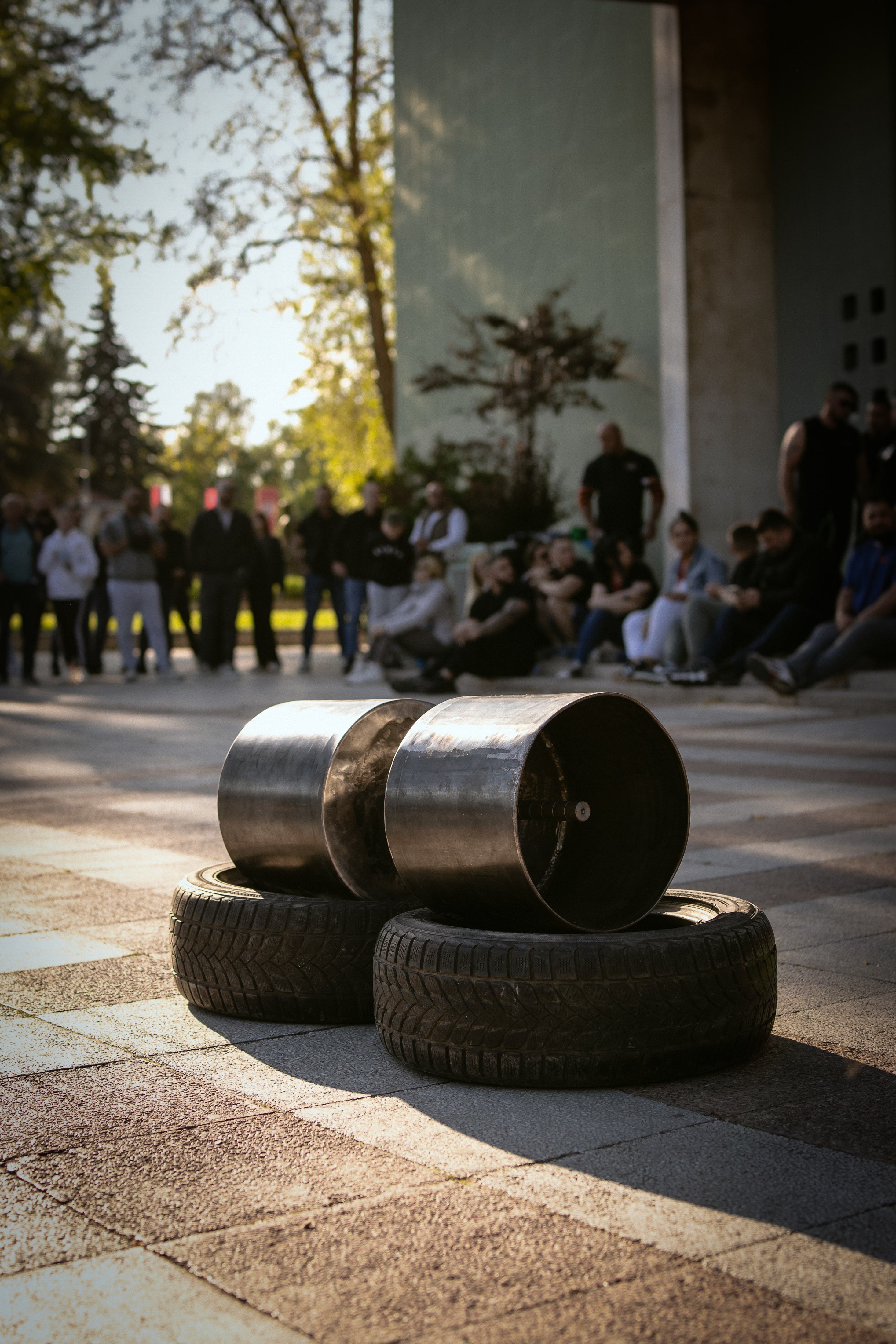
The Failure Point - Where Does a Strongman’s Performance Stop Improving?
Episode III: Why Technique Can Limit Strength
You can become stronger and still fail to lift more. Your legs can be stronger, your back stronger, your grip stronger and your muscle mass greater, while performance in a Strongman event barely changes. It is not a contradiction. Muscular strength is the raw capacity of the system. To become performance, that capacity must be directed through position, leverage, coordination, timing and implement control.
1. The Strength You Have Is Not Identical to the Strength You Can Use
A general strength test does not tell us how efficiently an athlete can apply force in a specific event. Strongman requires transfer from the ground into the legs, hips, trunk and implement. If position does not permit efficient transfer, part of muscular capacity remains unused. This is why two athletes with similar general strength can produce very different results in a specific event.
2. Technique Changes Leverage
In biomechanics, the distance between a force line and a joint axis changes the external moment the musculature must oppose. A small positional change can alter the demand on the hip, knee, shoulder or trunk. In Strongman, log diameter, deadlift start height, stone position and the distance between body and load can change the mechanical problem without changing the nominal weight.
3. The First Technical Error Can Become a Strength Problem
A lift is not always lost because one muscle simply runs out of force. Often the sequence begins to break down. If the starting position is poor, the athlete compensates immediately. If the hips rise too quickly, the trunk may become more inclined. If the implement moves away from the body, the external moment increases. If timing is delayed, the legs and trunk no longer contribute within the same useful window. The athlete may have enough strength but no longer have a mechanical configuration in which that strength can be expressed.
4. Timing Decides More Strongman Events Than It Seems
Atlas Stones, Tire Flip, Log Lift, Axle and Loading contain sequences in which timing between segments matters. Tire Flip research identified the duration of the second pull as an important performance determinant. In Farmer’s Walk, higher-performing athletes showed greater stride length, higher stride rate and shorter ground-contact time. In Yoke Walk, higher velocity was associated with changes in stride length, stride rate and lower-limb range of motion. Performance is not only about how much force you produce, but when and how you produce it.
5. Why Technique Can Make a Weight Feel Heavier
If the distance between the body and the load increases, the external moment can increase. If the object’s center of mass shifts, the body must reorganize. If a step is too long during a carry, control and contact time can change. Under a very heavy yoke, unnecessary oscillations can reduce speed. In an Atlas Stone, poor lap positioning can leave the athlete in a disadvantageous configuration for the final drive. The weight has not changed. The mechanical problem has.
6. Movement Economy Is a Form of Performance
An efficient athlete does not necessarily produce more force at every instant. The athlete produces enough force in the right direction and avoids spending energy on movements that do not contribute to the result. In a carry, every unnecessary implement oscillation may require correction. In a loading event, every extra repositioning costs time and energy. In a medley, those losses accumulate from one object to the next.
7. General Strength Does Not Guarantee Specific Technique
General exercises provide a strong foundation, but Strongman implements change geometry, texture, center of mass, grip and sometimes force direction. An athlete can have an excellent deadlift and still be inefficient at a Sandbag Load, where the task requires keeping a deformable object close and transitioning from pulling to positioning. General strength is the foundation. Specific technique determines how much of that foundation reaches the result.
8. Technique Under Fatigue Is the Real Test
Technique can look excellent on the first repetition and disappear on the tenth. Fatigue changes velocity, coordination, trunk control and the ability to maintain positions. Technique therefore has to be evaluated under the fatigue conditions relevant to the event. A valuable technical solution is one that survives not only the load, but also accumulating fatigue.
9. Technique Is Not Aesthetic Form
In Strongman, good technique is a solution that produces performance at an acceptable cost and can be repeated. There is not necessarily one identical form for every athlete. Anthropometry, mobility, segment lengths and implement geometry can change the efficient solution. The goal is not visual uniformity, but a favorable relationship between position, force, velocity, control and repeatability.
10. The Technical Failure Point
The critical point appears when available strength is greater than the amount of strength the technique can transmit. The athlete feels that the load is too heavy even though general strength tests suggest otherwise. Sometimes the answer is not another increase in strength. It is a change in position, timing, path, grip, rhythm or implement control. High-level Strongman is not simply a contest between muscles. It is a contest between systems capable of turning strength into useful movement.
Conclusion
Strength is the raw material. Technique is the mechanism that delivers it. When the mechanism is poor, part of the athlete’s physical capacity remains trapped before it reaches the implement. That is why the best way to lift more is sometimes not to become immediately stronger, but to learn how to use the strength already available. In Strongman, progress occurs when strength, position, timing, velocity and control operate as one system.
Scientific References
1. Hindle BR, Lorimer A, Winwood P, Keogh JWL. The Biomechanics and Applications of Strongman Exercises: A Systematic Review. Sports Medicine - Open. 2019;5:49. doi:10.1186/s40798-019-0222-z. PMID:31820223.
2. Hindle BR, Lorimer A, Winwood P, Brimm D, Keogh JWL. The Biomechanical Characteristics of the Strongman Yoke Walk. Frontiers in Sports and Active Living. 2021;3:670297. doi:10.3389/fspor.2021.670297. PMID:33981993.
3. Hindle BR, Lorimer A, Winwood P, Brimm D, Keogh JWL. The biomechanical characteristics of the strongman atlas stone lift. PeerJ. 2021;9:e12066. doi:10.7717/peerj.12066. PMID:34557349.
4. Keogh JWL, Payne AL, Anderson BB, Atkins PJ. A brief description of the biomechanics and physiology of a strongman event: the tire flip. Journal of Strength and Conditioning Research. 2010;24(5):1223-1228. doi:10.1519/JSC.0b013e3181cc61cd. PMID:20386131.
5. Hindle BR, Lorimer A, Winwood P, Keogh JWL. A systematic review of the biomechanical research methods used in strongman studies. Sports Biomechanics. 2020;19(1):90-119. doi:10.1080/14763141.2019.1598480. PMID:31132028.
More From The Journal

Training
The Science of Strongman Training - Episode X: Competition Programming
How to build a complete Strongman competition preparation block: calendar, events, volume, intensity, specificity, simulations, autoregulation, tapering and fatigue management.
Training
The Science of Strongman Training - Episode IX: Peaking
Peaking in Strongman: how to turn months of training into maximal competition performance by reducing fatigue, preserving adaptations and managing specificity.