
Pharmacology
Testosterone and Its Derivatives - Episode 5: Testosterone Undecanoate
September 7, 2026
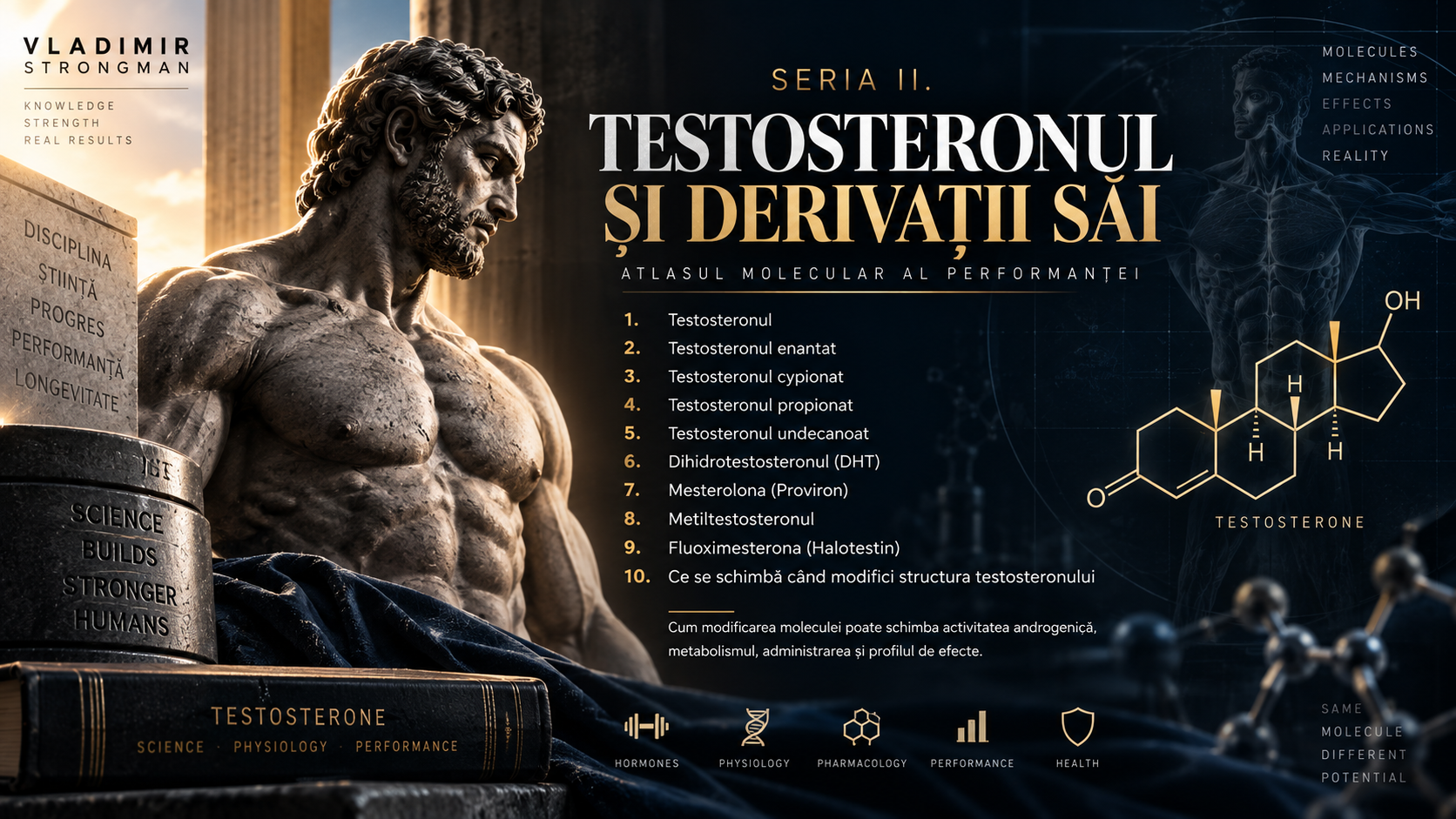
1. Why is testosterone undecanoate a special episode?
After enanthate, cypionate and propionate, testosterone undecanoate forces us to widen the lens. It is still a testosterone ester, but its long and highly hydrophobic chain can be used in two important pharmacologic strategies: as an injectable preparation with prolonged depot release and as an oral formulation designed to exploit preferential lymphatic absorption.
This creates one of the clearest demonstrations in pharmacology that the active molecule and its formulation are not the same thing. The same testosterone molecule can be delivered through very different routes, and the formulation can radically change the journey through the body without turning testosterone into a completely different androgen.
2. What is testosterone undecanoate?
Testosterone undecanoate is an ester of testosterone formed by esterification of the 17 beta hydroxyl group with undecanoic acid. The undecanoate group has a long aliphatic chain, which increases lipophilicity and changes its pharmacokinetic behavior compared with shorter testosterone esters.
The word 'undecanoate' therefore does not describe an androgen with a different receptor. After hydrolysis, testosterone is released and can follow the usual androgenic pathways, including androgen receptor activation and conversion to DHT or estradiol in tissues where those enzymes are active.
3. What does a long chain mean?
A long chain means that the fatty-acid portion attached to testosterone contains more carbon atoms than short esters such as propionate. As the ester becomes more hydrophobic, its interaction with the lipid phase of a formulation and with the aqueous environment of tissues changes.
This is not merely chemistry on paper. It can influence how quickly the ester leaves an oily depot after injection and, in oral administration, how the substance interacts with dietary lipids and the intestinal lymphatic system.
4. What is lipophilicity?
Lipophilicity is the tendency of a molecule to associate more readily with fat-rich environments than with aqueous environments. For testosterone undecanoate, this property is central to its behavior in oily vehicles and to the distinctive nature of its oral absorption.
When a molecule's fate depends strongly on the lipid phase, the formulation becomes part of the pharmacology. With undecanoate, the vehicle and administration context are not merely packaging details.
5. What is injectable testosterone undecanoate?
The injectable form is designed to create prolonged release from a depot at the administration site. The ester remains for a period within the depot, then transfers gradually into the extracellular environment and is hydrolyzed to provide testosterone.
Pharmacokinetic studies in hypogonadal men show that after intramuscular administration testosterone concentrations rise during the first week and then decline progressively, returning toward the lower end of the normal range over several weeks. This is very different from the profile of a short ester.
6. Why is the injectable form so persistent?
Persistence results from the combination of ester structure and depot behavior. There is no single 'magic' property responsible for duration. Release from the depot, hydrolysis, distribution and elimination together create the observed profile.
In pharmacokinetics, this distinction matters: the period during which a formulation generates relevant blood concentrations can be longer than the period in which free testosterone would remain present after it becomes systemically available.
7. What is hydrolysis?
Hydrolysis is cleavage of an ester bond through a reaction involving water. In the body, esterases catalyze this conversion, and esterified testosterone becomes free testosterone.
Undecanoate should therefore not be imagined as a separate hormone that acts permanently in unchanged form. The ester is mainly a delivery strategy, while released testosterone supplies the familiar androgenic biology.
8. What makes the oral form different?
Oral testosterone undecanoate is unusual because it uses an absorption pathway that can largely avoid the immediate hepatic first-pass effect. Instead of relying primarily on the portal circulation, a relevant fraction can be incorporated into chylomicrons and transported through intestinal lymphatics toward the systemic circulation.
This property was documented in classic pharmacology studies and helps explain why an oral testosterone ester can have systemic androgenic activity.
9. What is the intestinal lymphatic system?
The intestinal lymphatic system is a network of vessels involved in transporting certain absorbed lipids. Highly lipophilic molecules can enter enterocytes, associate with triglyceride-rich particles called chylomicrons, and then move through lymphatic vessels.
For a lipophilic drug, this route can be important because it reduces immediate dependence on passage through the liver before systemic circulation is reached.
10. What is the hepatic first-pass effect?
First-pass metabolism is the presystemic metabolism that can occur after intestinal absorption but before a large portion of a substance reaches systemic circulation. For orally administered molecules, this may occur in the gut wall and in the liver.
Free testosterone is poorly suited to oral administration because it undergoes substantial presystemic metabolism. Undecanoate partly solves this problem through its lipid properties and lymphatic absorption.
11. Why does food matter for oral undecanoate?
Oral testosterone undecanoate absorption is closely linked to the processing of dietary lipids. Pharmacologic sources and clinical studies show that absorption is strongly favored in the fed state compared with fasting.
The mechanism is straightforward: chylomicron formation depends on intestinal handling of dietary fat. For a drug that takes advantage of lymphatic transport, lipid digestion becomes part of the absorption process.
12. What do studies show about lymphatic absorption?
In a classic human study using labeled testosterone undecanoate, radioactivity appeared in lymph and plasma over the same general period, and a substantial portion of the ester was identified in lymph. The findings supported systemic delivery through lymphatic transport followed by systemic metabolism.
Later work further demonstrated the major contribution of lymphatic transport to systemic availability of the ester after postprandial administration, making undecanoate a classic example of pharmacokinetic design based on physicochemical properties.
13. What is a chylomicron?
A chylomicron is a lipoprotein particle produced in the intestine to transport absorbed dietary fat. It acts as a biological vehicle for lipids and, under appropriate conditions, for highly lipophilic molecules associated with those lipids.
This is one of the key ideas behind oral undecanoate: the molecule takes advantage of normal lipid-absorption physiology to alter the pharmacokinetic route.
14. Is undecanoate a prodrug?
Functionally, androgen esters can be regarded as forms that release testosterone through hydrolysis. The term 'prodrug' describes a substance given in a form that is converted in the body into an active form.
For undecanoate, that conversion is relevant, but the term should be used precisely: the ester has its own pharmacokinetic properties, while systemic androgenic activity largely comes from released testosterone and its metabolites.
15. Why can DHT rise disproportionately after the oral form?
The literature on oral undecanoate describes a distinctive pattern in which serum DHT can rise more prominently than a simple comparison of testosterone concentration might predict. Part of the explanation is related to the intestinal and systemic handling of the ester.
This does not mean that every increase in serum DHT produces a proportional increase in DHT in every tissue. Androgen metabolism is tissue dependent, and a blood concentration alone does not fully describe local intracrine signaling.
16. What is intracrine metabolism?
Intracrine metabolism refers to local production, conversion and use of hormones within tissues, allowing an important part of hormonal signaling to be regulated locally. In androgen biology, testosterone can be converted locally to DHT or other metabolites.
This is why the same blood concentration does not automatically mean the same androgenic signal in every organ.
17. Are injectable and oral undecanoate the same thing?
Chemically, they contain the same ester. Pharmacologically, they are not the same formulation and do not take the same path through the body. The administration route completely changes the absorption phase.
The injectable form relies on a depot at the administration site. The oral form exploits lipid absorption and lymphatic transport. Same ester, two different pharmacokinetic problems.
18. Why is this an important pharmacology lesson?
Because it shows that the drug substance and the formulation are not interchangeable concepts. In medicines, the active molecule is only one part of the story. Vehicle, route, dissolution, transport and metabolism can radically alter exposure.
Undecanoate is a particularly good case where the formulation becomes almost as interesting as the molecule itself.
19. What is bioavailability?
Bioavailability describes the fraction of an administered dose that reaches systemic circulation in a form relevant to exposure measurement. Intravenous administration is considered 100% bioavailable. Oral administration is reduced by incomplete absorption and presystemic metabolism.
Oral undecanoate is an example in which absolute bioavailability of the ester can be low, yet lymphatic transport still provides useful systemic exposure to testosterone.
20. Why can we not simply compare milligrams between forms?
One milligram of an ester and one milligram of free testosterone do not represent the same mass of active testosterone molecule. The ester includes the attached fatty-acid component. In addition, route and bioavailability change how much ultimately reaches systemic circulation.
Therefore, crude milligram-for-milligram comparisons across different products can be misleading. Proper pharmacology compares exposure, not just the number printed on a label.
21. What are Cmax, Tmax and AUC?
Cmax is the maximum observed concentration. Tmax is the time at which that peak occurs. AUC, the area under the curve, represents total exposure over a defined interval.
With undecanoate, these measures must be interpreted in relation to the route. Oral exposure can show variation associated with food and lymphatic absorption, while injectable exposure is strongly shaped by depot behavior.
22. What is half-life?
Half-life is the time required for a relevant concentration or amount to decrease by about one half under the pharmacokinetic model being used. It is not the same thing as duration of clinical effect.
In a depot preparation, slow absorption can strongly influence the observed profile, so one half-life number does not capture the entire process.
23. What is flip-flop kinetics?
Flip-flop kinetics occurs when absorption from the administration site is slower than systemic elimination. In that case, the terminal slope of the blood concentration curve can reflect absorption more than elimination itself.
The concept is relevant to depot formulations and explains why a long duration should not automatically be attributed to slow elimination of the free hormone.
24. How does injectable undecanoate behave over time?
Published data for injectable preparations show an initial rise in testosterone followed by a progressive decline over many weeks. A classic study found that testosterone increased markedly during the first week and approached the lower end of the normal range around days 50 to 60.
These findings illustrate the purpose of a long ester: reducing rapid fluctuations and prolonging systemic testosterone release.
25. Why is the oral form more variable?
Oral variability comes from digestion, dietary fat content, chylomicron formation, intestinal absorption and individual differences in transport and metabolism. Not every capsule produces the same exposure under every feeding condition.
This is why oral undecanoate cannot be reduced to the idea that it is simply 'testosterone placed in a capsule'.
26. Is undecanoate more anabolic than other esters?
No. Esterification does not create testosterone with a superior androgen receptor. It mainly changes how testosterone is delivered and how exposure unfolds over time.
If two formulations create different exposures, measured effects may differ. But the explanation belongs in concentration, duration, AUC, metabolism and biological context, not in an assumed intrinsic 'anabolic strength' of the undecanoate chain.
27. What happens to the hormonal axis?
Exogenous testosterone can suppress GnRH, LH and FSH secretion through negative feedback. This principle applies across testosterone esters and depends on systemic androgen exposure.
Therefore, the difference among propionate, enanthate, cypionate and undecanoate is primarily a difference in delivery profile. Endocrine feedback responds to the available hormonal signal, not to the ester name itself.
28. What happens to DHT and estradiol?
After testosterone is released, some tissues can convert it to DHT through 5-alpha-reductase, while others can aromatize it to estradiol. This is part of normal testosterone biology and does not disappear because the ester chain is long.
With the oral form, the DHT profile can be distinctive because the handling and metabolism of undecanoate are unusual. Again, serum concentration and local intracrine signaling are not identical concepts.
29. What does physiologic exposure mean?
Physiologic exposure means a testosterone profile compatible with the ranges and rhythms considered normal for the individual, taking sampling time and clinical context into account. It does not mean 'without effect'.
In medical therapy, the usual goal is an appropriate and monitorable level of exposure, not the highest concentration that can be achieved.
30. Undecanoate in medicine
Testosterone undecanoate has an important place in modern medicine because it exists as both a non-alkylated oral formulation and as long-acting injectable preparations. These products were developed to solve different administration and pharmacokinetic problems.
In clinical practice, formulation choice is not based on 'stronger ester' language. It depends on indication, pharmacokinetics, tolerability, monitoring and patient characteristics.
31. Undecanoate in sport
In strength sports, the word 'undecanoate' can sound extremely powerful simply because the ester is long. Pharmacologically, the conclusion is simpler: the long chain changes how and how quickly testosterone is delivered.
Chronic exposure to exogenous androgens can have systemic consequences, and changing the ester does not remove the biological risks of exogenous testosterone. Performance use also needs to be distinguished clearly from medical indications and anti-doping rules.
32. Why is the oral-versus-injectable distinction essential?
Because an article that discusses 'testosterone undecanoate' without specifying the route can accidentally mix two different pharmacokinetic stories. Oral administration is influenced by intestinal absorption and lymphatic transport. Injectable administration is dominated by the depot at the injection site.
This distinction is also essential when interpreting studies, laboratory results and statements about duration.
33. What is interindividual variability?
Interindividual variability means that two people can have different exposure from the same formulation. With oral undecanoate, differences in digestion, food intake, intestinal transport and metabolism can matter. With injectable preparations, tissue properties and depot behavior can contribute as well.
For this reason, a result from one subject should not automatically become a universal rule.
34. What is intraindividual variability?
Intraindividual variability means that the same person can show different profiles at different times. For oral undecanoate, meals and food composition can affect absorption. For blood measurements, sampling time can alter the result because it captures a different phase of the concentration curve.
This leads to a simple rule: laboratory data should be interpreted together with pharmacokinetics.
35. Why can laboratory testing not tell the whole story by itself?
Because a laboratory result is a photograph, while pharmacokinetics is a movie. Two people with the same measured value at one moment can have very different exposure before and after that sample.
For undecanoate, this principle is particularly important because oral and injectable forms create different curves and are influenced by different factors.
36. What should we understand about low oral bioavailability?
A low absolute bioavailability does not automatically mean a drug is ineffective. Sometimes a formulation is deliberately designed to exploit a route of absorption that suits the molecule. With undecanoate, lymphatic transport contributes to systemic testosterone exposure.
However, variability in oral absorption remains an important limitation and explains why oral and injectable forms should not be treated as pharmacokinetic equivalents.
37. What should a strongman remember?
Testosterone undecanoate is a perfect example of the central idea of this series: the ester changes transport and timing, not the identity of the final androgen. The long chain increases lipophilicity and supports different pharmaceutical strategies.
For the injectable form, the key is depot behavior and slow release. For the oral form, the key is lipid absorption and lymphatic transport. After that, testosterone enters the biology we have already discussed: androgen receptor signaling, DHT, estradiol, endocrine feedback and tissue metabolism.
38. Conclusion
Testosterone undecanoate is one of the best examples of how sophisticated pharmacology becomes when chemistry, formulation and physiology work together. As a long-chain ester, it can produce prolonged injectable depot release, yet it can also be used in an oral formulation that takes advantage of intestinal lipid transport to largely bypass first-pass metabolism.
This dual strategy shows why it is inaccurate to describe an ester simply as 'stronger' or 'weaker'. The important variables are exposure and pharmacokinetic route. The final androgen remains testosterone, while tissues, receptors and metabolites shape the biological effects.
Selected sources
Handelsman DJ. Androgen Physiology, Pharmacology, Use and Misuse. Endotext, NCBI Bookshelf.
Horst HJ, Höltje WJ, Dennis M, Coert A, Geelen J, Voigt KD. Lymphatic absorption and metabolism of orally administered testosterone undecanoate in man. Klinische Wochenschrift. 1976;54(18):875-879. PMID 966635.
A pharmacokinetic study of injectable testosterone undecanoate in hypogonadal men. PMID 9876028.
Shackleford DM et al. Contribution of lymphatically transported testosterone undecanoate to the systemic exposure of testosterone after oral administration. Journal of Pharmacology and Experimental Therapeutics. 2003;306(3):925-933. PMID 12807999.
Schnabel PG et al. The effect of food composition on serum testosterone levels after oral administration of Andriol Testocaps. Clinical Endocrinology. 2007;66(4):579-585. PMID 17371478.
More From The Journal

Training
The Science of Strongman Training - Episode X: Competition Programming
How to build a complete Strongman competition preparation block: calendar, events, volume, intensity, specificity, simulations, autoregulation, tapering and fatigue management.

Training
The Science of Strongman Training - Episode IX: Peaking
Peaking in Strongman: how to turn months of training into maximal competition performance by reducing fatigue, preserving adaptations and managing specificity.