
Pharmacology
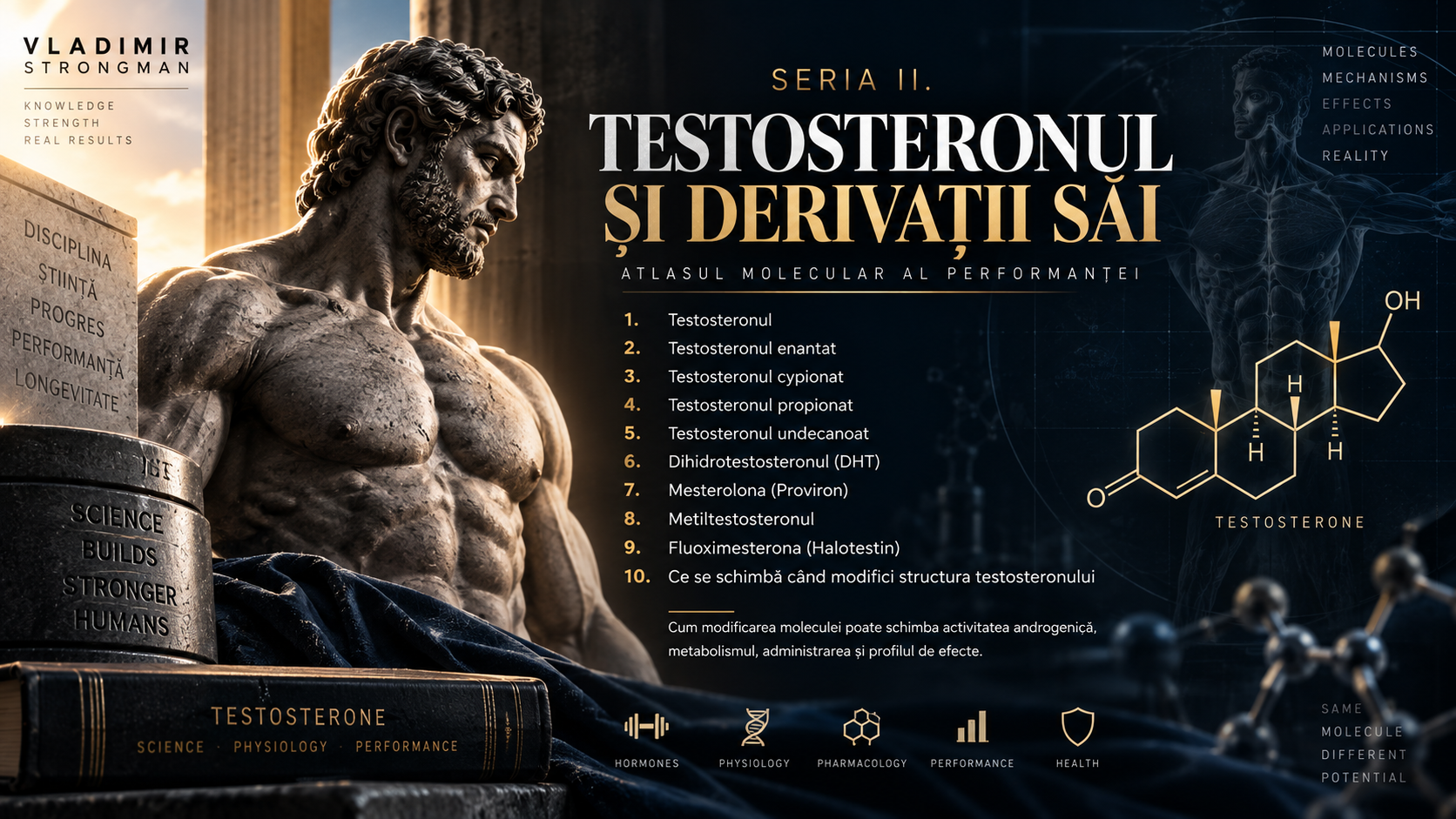
Testosterone and Its Derivatives - Episode 4: Testosterone Propionate
September 7, 2026
1. Why continue the series with testosterone propionate?
After enanthate and cypionate, testosterone propionate is the natural next step for understanding why three preparations that ultimately deliver the same active molecule can have very different pharmacokinetic profiles. The difference is not that one contains a 'stronger testosterone', but that the molecule is modified by esterification, and that modification changes how the preparation leaves the administration site and reaches the circulation.
In pharmacology, propionate is an excellent example for separating two concepts that are often mixed together: the identity of the active substance and the way that substance is delivered. The biologically relevant active molecule after hydrolysis is free testosterone, while propionate is the esterified form that supports depot delivery.
2. What is testosterone propionate?
Testosterone propionate is an ester of testosterone. Esterification means attaching the hydroxyl group at the 17 beta position of testosterone to a carboxylic acid, in this case propionic acid, producing a more lipophilic molecule that is suited to administration as an oily depot preparation.
The term 'propionate' therefore describes the group added to testosterone. It does not name a completely different hormone. Once the ester reaches the biological environment and is hydrolyzed, testosterone is released and follows the usual physiological and pharmacological pathways of the androgen.
3. What does propionate mean chemically?
Propionate has a short aliphatic chain containing three carbon atoms. The length and nature of the ester chain influence lipophilicity and the partitioning of the ester between the oily depot and the aqueous tissue environment. This property contributes to the rate at which the ester leaves the administration site.
Endotext describes propionate as the short-chain ester, in contrast with enanthate and cypionate, which have longer structures and generally produce more prolonged depot release. The chemistry of the ester chain therefore becomes part of the pharmacokinetic story.
4. What is lipophilicity?
Lipophilicity describes a molecule's tendency to associate with lipid-rich environments rather than aqueous environments. A more lipophilic compound can partition differently between oil and the water-based environment of tissues than a less lipophilic compound.
For testosterone esters, this property helps explain the behavior of an injectable depot. The ester starts in an oil phase, and its release into extracellular fluid is influenced by the balance between those environments.
5. Why does esterification change duration of action?
Free testosterone is handled too quickly to produce the same release profile as an ester injected in an oily vehicle. Esterification changes the physicochemical properties of the molecule and allows a local reservoir to release the ester progressively.
The key point is that the ester does not turn testosterone into a new androgen. It primarily changes pharmacokinetics, meaning how the body is exposed to the active molecule over time.
6. What is hydrolysis?
Hydrolysis is a chemical reaction in which an ester bond is cleaved in the presence of water. In the body, androgen esters are hydrolyzed by esterases, enzymes that convert esterified testosterone into free testosterone.
This explains why propionate should not be viewed as a molecule that simply remains unchanged in circulation. The esterified form mainly functions as a delivery and release intermediate, while the androgenic effects come largely from testosterone released after hydrolysis.
7. What is a depot preparation?
A depot preparation is a formulation that creates a local reservoir from which a substance is absorbed progressively. With testosterone esters in an oily vehicle, the depot at the injection site acts as a temporary source of systemic delivery.
In other words, an injection does not mean that the entire amount instantly appears in the blood. A major part of the pharmacokinetic profile is determined by what happens before the ester reaches systemic circulation.
8. Why does propionate have faster release?
The propionate chain is short, and the ester has different lipophilicity and partitioning behavior from longer-chain testosterone esters. Endotext describes it as a short-duration ester, while enanthate and cypionate produce more prolonged depot release.
This does not mean propionate disappears immediately. It means the absorption-limited phase is shorter, so systemic exposure can change more rapidly after administration.
9. What do pharmacokinetic studies show?
Studies using isotopically labeled testosterone propionate have shown that the ester is transferred progressively from the injection site into systemic circulation. In one study in healthy men, the active testosterone derived from the ester remained above the physiological testosterone level for approximately 48 hours after an experimental 25 mg intramuscular administration.
The value of these data is conceptual: they show that systemic exposure is not the result of a single instant event. There is a sequence of depot formation, release, hydrolysis, distribution and elimination.
10. What is pharmacokinetics?
Pharmacokinetics describes what the body does to a substance: absorption, distribution, metabolism and elimination. For testosterone propionate, pharmacokinetics is strongly influenced by the rate at which the ester leaves the depot and is then converted to free testosterone.
That is why two products that ultimately deliver the same molecule can produce very different concentration-time curves.
11. What is pharmacodynamics?
Pharmacodynamics describes what the substance does to the body. For testosterone, this includes androgen receptor activation and conversion into metabolites such as dihydrotestosterone and estradiol, which contribute to different effects in different tissues.
This creates an important distinction: pharmacokinetics tells us when and how quickly testosterone becomes available, while pharmacodynamics tells us what happens after the hormonal signal is available in tissue.
12. What is half-life?
Half-life is the time required for a relevant amount or concentration of a substance to fall by half under the pharmacokinetic model being used. It is not synonymous with the total duration of an effect and should not be turned into a simplistic rule that 'after one half-life nothing remains'.
With testosterone esters, the observed blood profile can reflect both systemic elimination and slow absorption from the depot. One half-life number therefore does not perfectly describe the entire process.
13. Why should propionate and cypionate not be compared using one number?
An ester does not have a single parameter that summarizes everything. Absorption rate, testosterone exposure over time, area under the curve, time to peak, vehicle properties and administration site all matter.
Propionate has a shorter profile than cypionate because the ester chain and depot behavior differ. Cypionate and enanthate, by contrast, have very similar pharmacokinetic profiles and are considered pharmacologically similar in testosterone replacement.
14. What are Cmax, Tmax and AUC?
Cmax is the maximum observed concentration. Tmax is the time at which that maximum occurs. AUC, the area under the curve, reflects total exposure over a defined interval.
For an article about propionate, these concepts are more useful than the vague statement that it 'hits fast'. Pharmacology is based on the shape of the concentration-time curve, not gym slang.
15. What does the shape of the curve tell us?
A curve that rises and falls more rapidly produces greater temporal variation than a prolonged curve. For a shorter-acting ester, the time between increasing concentration and declining concentration is more compact than with a longer-chain ester.
In practice, this means that blood sampling time can have a major influence on the measured value.
16. Why does laboratory timing matter so much?
A laboratory result is a snapshot of concentration at a particular moment. With a shorter-profile formulation, a sample taken relatively soon after administration may capture a different phase from a sample taken much later.
This is one reason comparisons between laboratory results can become misleading when the interval between administration and sampling and the assay method are not considered.
17. What role does the oily vehicle play?
The oily vehicle is not pharmacokinetically neutral. Viscosity, volume and physicochemical properties of the oil can influence diffusion and transfer of the ester from the depot into surrounding tissue.
Therefore, two products containing the same ester should not automatically be assumed to be identical in every detail simply because the ester name is the same.
18. What role does administration site play?
The administration site can influence depot properties and absorption rate. Local tissue composition, blood flow and the geometry of the depot can alter the observed profile.
Therefore, 'the pharmacokinetics of propionate' should be viewed as the description of a system rather than an absolute constant that is identical in every product and every circumstance.
19. Is propionate more anabolic than enanthate?
That is not the correct pharmacological interpretation of the esters. After hydrolysis, both release testosterone. The ester primarily changes exposure over time rather than creating a new androgen with a different androgen receptor.
Differences in perceived effects are therefore more appropriately related to exposure profile, concentrations reached, individual variability and biological context, not to the idea that propionate has a 'more anabolic' receptor effect.
20. Why can propionate feel 'faster'?
A profile with faster absorption and faster concentration changes can produce detectable changes over a shorter time window. The human brain often translates rapid change into 'more powerful', but these are different concepts.
A substance that raises concentration more quickly is not automatically more active at the receptor. Speed and biological intensity must be analyzed separately.
21. What happens to testosterone after hydrolysis?
After propionate is hydrolyzed, free testosterone can enter tissues and bind the androgen receptor. In some tissues it may be reduced to DHT by 5-alpha-reductase, while in others it may be converted to estradiol by aromatase.
This sequence explains why the ester is only the beginning of the story. After testosterone is released, androgen and estrogen biology takes over.
22. What happens to the hypothalamic-pituitary-gonadal axis?
Exogenous testosterone can exert negative feedback on the hypothalamic-pituitary-gonadal axis. The hypothalamus and pituitary reduce signals that support endogenous testicular production when the body detects sufficient androgen exposure.
This is not unique to propionate. It reflects systemic androgen availability and exposure intensity rather than the ester name itself.
23. What is clearance?
Clearance is a measure of the volume of plasma from which a substance is removed per unit time, according to the pharmacokinetic model being used. It is an important elimination property, but it should not be confused with the rate of release from the injectable depot.
With propionate, depot absorption may initially limit systemic appearance, while metabolism and elimination become important after testosterone is released.
24. What is distribution?
Distribution is the process by which a substance moves among the body's compartments. Circulating testosterone is transported mainly bound to plasma proteins such as SHBG and albumin, while the free fraction can enter tissues.
Therefore, total blood testosterone concentration and biologically available testosterone are not identical concepts.
25. What does 'short ester' mean?
When propionate is called a short ester, this refers to the length of the esterified side chain and its consequences for physicochemical and pharmacokinetic behavior. It does not mean that the testosterone molecule itself becomes smaller or that its biological actions are completely different.
It is a chemical and pharmacological description, not a judgment about product quality.
26. Propionate versus enanthate
Propionate has a short ester chain and a shorter release profile. Enanthate has a longer chain and a more persistent depot. Endotext describes propionate as short acting, while enanthate is a longer-acting ester.
The main practical difference is the shape of exposure over time. The final androgenic molecule is testosterone, not a separate hormone called enanthate.
27. Propionate versus cypionate
Cypionate has a more substantial structure and a more prolonged release profile than propionate. Pharmacologically, cypionate behaves much more like enanthate than propionate.
This matters when interpreting sports discussions: the major difference between propionate and cypionate is pharmacokinetic timing and management of exposure, not a change in the identity of the active hormone.
28. Why can the same molecule feel different?
Subjective perception is influenced by changes in concentration, fluid balance, estradiol, individual metabolism, sleep, training and many other factors. Not all of these changes are caused directly by the ester.
Saying that one ester 'feels stronger' is a subjective observation, not a pharmacological definition. Science is better served by concentration-time curves, biomarkers and measurable outcomes.
29. What is interindividual variability?
Interindividual variability means differences between people. Two people can receive the same formulation and show different concentrations, symptoms or biological responses.
Genetics, body size, body composition, local blood flow, transport proteins, metabolic enzymes and baseline hormonal state all contribute to this variation.
30. What is intraindividual variability?
Intraindividual variability means that the same person can show different responses at different times. Food intake, hydration, body weight, training, health status and sampling time can all affect observed values.
That is why interpreting a single laboratory result without context can be misleading.
31. What does 'exposure' mean?
Exposure is the body's contact with the substance over time. In pharmacokinetics, AUC is one of the main measures of total exposure over a defined interval.
Two formulations can have similar peak concentrations but different total exposure, or similar exposure with very different curve shapes.
32. Why does accumulation matter?
When administration is repeated before previous exposure has fully dissipated, accumulation can occur. With a shorter ester, the curve changes more quickly, while with a longer ester more drug remains in the depot and body for longer.
Accumulation helps explain why repeated administration does not produce the same profile as a single administration.
33. What is steady state?
Steady state describes a situation in which the average rate of drug input is balanced by the average rate of elimination. Under repeated administration, concentrations oscillate around an average level, and the size of those oscillations depends on the pharmacokinetics of the formulation.
For shorter-profile esters, the amplitude of the oscillations may be more apparent when the interval between administrations is long relative to the elimination behavior.
34. Why is propionate useful for understanding pharmacology?
Because it makes the relationship between chemical structure and pharmacokinetic behavior easy to see. A relatively small change in the ester chain can alter lipophilicity, partitioning within the vehicle and the duration of depot release.
It is an excellent example of the principle that the same active molecule can be 'packaged' pharmacologically in different ways to change the timing of exposure.
35. What does propionate not change?
Propionate does not change the biological identity of testosterone after hydrolysis. It does not create a different androgen receptor and does not separate testosterone from processes such as aromatization and conversion to DHT.
Therefore, the central idea of this series remains the same: the ester mainly changes pharmacokinetics, while testosterone and its metabolites drive the relevant androgenic and estrogenic biology after release.
36. What should be understood about medical use?
Clinical testosterone use must be separated from sports-performance discussions. In medicine, the aim is to restore appropriate exposure for a clear indication while monitoring benefits and risks.
Modern clinical practice often favors longer-acting esters in replacement therapy because they reduce administration frequency. Propionate has a shorter duration and is less commonly used today in adults.
37. What should a strongman remember?
For a strength athlete, the central lesson is not that propionate is 'better', but that formulation changes how the body is exposed to testosterone over time. Propionate is a short ester with faster depot release than enanthate and cypionate.
Understanding these differences helps interpret laboratory results, concentration changes and discussions of effects correctly. Release speed, measured concentration and biological potency are not the same thing.
38. Conclusion
Testosterone propionate demonstrates how strongly pharmaceutical form can influence the behavior of a hormone molecule. Esterification of the 17 beta hydroxyl group makes testosterone more lipophilic and allows it to be formulated in an oily vehicle that creates a local depot. From there, the ester is released progressively and then hydrolyzed to provide active testosterone.
Compared with enanthate and cypionate, the propionate chain is shorter and the release profile is faster. Pharmacokinetic studies confirm progressive transfer from the depot and a shorter systemic exposure profile. Propionate should not, however, be described as a 'more anabolic testosterone'. It is another delivery form for the same active hormone.
For this series, that is the key lesson: ester chemistry controls timing to a large extent, while testosterone and its metabolites control the biology of the androgenic signal. The next step is to examine another derivative and see how another structural modification generates a different pharmacological profile.
Selected sources
Handelsman DJ. Androgen Physiology, Pharmacology, Use and Misuse. Endotext, NCBI Bookshelf.
Fujioka M, Shinohara Y, Baba S, Irie M, Inoue K. Pharmacokinetic properties of testosterone propionate in normal men. Journal of Clinical Endocrinology and Metabolism. 1986;63(6):1361-1364. PMID 3782423.
Testosterone Therapy With Subcutaneous Injections: A Safe, Practical, and Reasonable Option. PMC, review of testosterone ester absorption kinetics and depot behavior.
More From The Journal

Training
The Science of Strongman Training - Episode X: Competition Programming
How to build a complete Strongman competition preparation block: calendar, events, volume, intensity, specificity, simulations, autoregulation, tapering and fatigue management.

Training
The Science of Strongman Training - Episode IX: Peaking
Peaking in Strongman: how to turn months of training into maximal competition performance by reducing fatigue, preserving adaptations and managing specificity.