
Pharmacology
Testosterone and Its Derivatives - Episode 3: Testosterone Cypionate
September 7, 2026
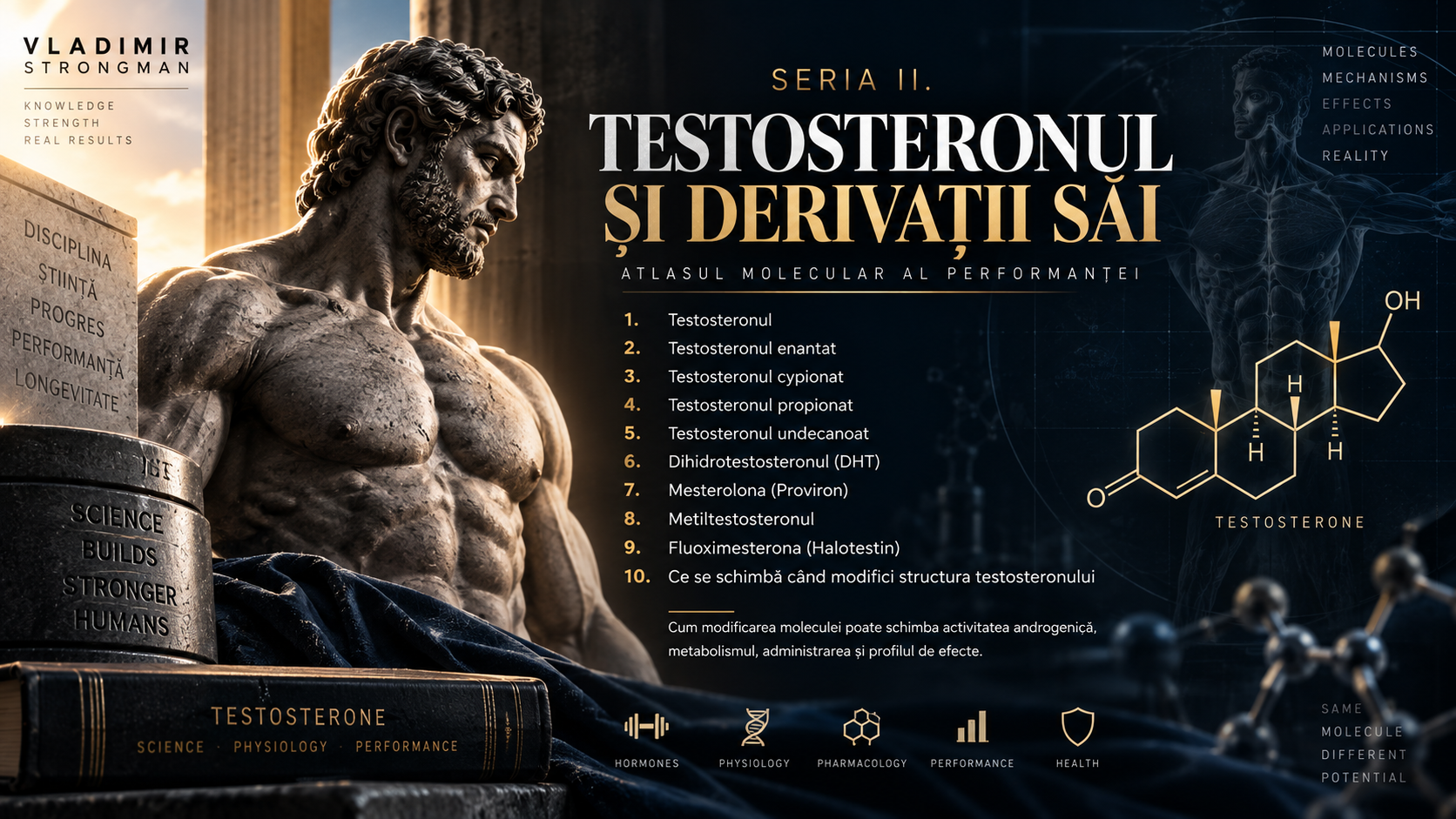
1. Why continue with testosterone cypionate?
After testosterone itself and testosterone enanthate, the next logical step is testosterone cypionate. The reason is straightforward: the same parent molecule, testosterone, can be converted into another esterified form without becoming a completely new hormone. The main difference is how the molecule is delivered and released. This lets us understand a fundamental pharmacological principle: chemical form and pharmaceutical formulation can profoundly change exposure over time even when the final hormone reaching the receptor is the same.
2. What is testosterone cypionate?
Testosterone cypionate is an ester of testosterone. The word “ester” describes a chemical modification made at testosterone’s 17-beta-hydroxyl group. This modification changes the molecule’s physicochemical properties and, especially in oil-based injectable formulations, slows its release from the administration site. Once the ester leaves the depot, it is hydrolyzed and free testosterone becomes available to the body.
3. What does “cypionate” mean?
“Cypionate” is the name of the ester group attached to testosterone. Cypionate is derived from cyclohexanecarboxylic acid. Unlike a simple aliphatic ester, this group contains a cyclohexyl ring, meaning a six-carbon ring. You do not need to memorize the chemistry to understand the pharmacology, but it is useful to know that this modification changes lipophilicity and the molecule’s behavior in an oil vehicle.
4. What is lipophilicity?
Lipophilicity describes how well a substance behaves in lipid- or fat-rich environments. A more lipophilic molecule tends to prefer oily environments over pure water. For testosterone esters, this property contributes to the molecule remaining for a period in the oil phase after administration. When release from the oil is slower, the appearance of testosterone in blood can be spread over a longer period.
5. Is cypionate testosterone or a different hormone?
It is an esterified form of testosterone, not a completely different androgen. The cypionate ester functions as a delivery modification. After hydrolysis, the resulting free testosterone follows the biological pathways described in Episode 1: it can activate the androgen receptor and can be locally converted to DHT or estradiol. Cypionate should therefore primarily be compared by pharmacokinetics and formulation, not as though it were a completely new receptor ligand.
6. What is hydrolysis?
Hydrolysis is a chemical reaction in which a bond is broken with the help of water. In the body, enzymes called esterases break the ester bond and release testosterone. This explains how the ester can change the rate of delivery without permanently changing the hormone. In a sense, it is a reversible chemical form of packaging.
7. What is a depot formulation?
A depot formulation creates a local reservoir from which a substance is released gradually. With a testosterone ester in an oil vehicle, the administration site temporarily becomes the starting point for molecules entering the circulation. The entire ester does not enter blood instantly. It must leave the oil phase gradually and enter the surrounding extracellular fluid. This slow release can become the main step controlling the concentration profile over time.
8. Why does the route of administration matter?
The route of administration tells us where the substance is placed before entering the circulation. Intramuscular means into muscle tissue, while subcutaneous means into the tissue beneath the skin. This difference can influence absorption rate, tolerability, and the concentration profile. The FDA label for testosterone cypionate describes the product as an injection for intramuscular use. Other testosterone products may be formulated differently, which is why the ester name should not be confused with one universal administration route.
9. What is absorption?
Absorption is the movement of a substance from the site where it was administered into systemic circulation. With an oil-based testosterone cypionate preparation, absorption does not simply mean “injection and blood.” There is a sequence: local depot, release from the oil, movement into the surrounding aqueous environment, ester hydrolysis, and appearance of testosterone in circulation. That sequence helps explain why the profile is more prolonged than that of free testosterone.
10. What does the FDA say about cypionate absorption?
The FDA label explains that testosterone esters are less polar than free testosterone and that, when testosterone cypionate is injected intramuscularly in oil, it is slowly absorbed from the lipid phase. The document therefore describes a prolonged-release preparation in the context of replacement therapy. This describes product pharmacokinetics, not an individual administration recommendation.
11. What is pharmacokinetics?
Pharmacokinetics is the study of what the body does to a substance. The four basic ideas are absorption, distribution, metabolism, and elimination. For cypionate, pharmacokinetics is central because the ester mainly changes the rate of release and the shape of the concentration curve. In other words, the same hormonal base can behave differently over time depending on its ester.
12. What is pharmacodynamics?
Pharmacodynamics is the study of what a substance does to the body. Once testosterone is released, it can activate the androgen receptor and produce genomic and cellular effects. Pharmacokinetics follows the molecule’s journey, while pharmacodynamics follows the body’s response. Keeping these concepts separate is one of the most important keys to understanding testosterone esters.
13. What is half-life?
Half-life is the time required for a measured amount or concentration to fall to about one-half under the conditions of the pharmacokinetic model being used. For testosterone cypionate given intramuscularly, the FDA label lists an approximate half-life of eight days. This should not be interpreted as “after eight days it is gone.” It is better understood as a measure of the rate of decline in a particular context.
14. Why is half-life not the same as duration of effect?
A biological effect can continue while concentration remains sufficient for that effect, and different tissues may have different thresholds and sensitivities. In addition, with a depot formulation, release from the administration site continues while elimination is also occurring. Therefore, no single number perfectly describes how long all effects last.
15. What are Cmax, Tmax, and AUC?
Cmax is the highest observed concentration after administration. Tmax is the time to reach that peak. AUC means “area under the curve” and describes total exposure over a defined interval. The FDA reported that, after a single 200 mg intramuscular dose of testosterone cypionate in 26 hypogonadal adult men, mean Cmax was 758 ng/dL and median Tmax was about 71.7 hours. These values describe one product and one study, not a universal rule for every preparation or person.
16. What does the shape of the curve tell us?
A concentration-time curve shows when testosterone appears, how quickly it rises, and how slowly it falls. With a depot ester, the rise is influenced by release from the depot, while the decline reflects the combination of ongoing release, distribution, and elimination. That is why the same amount of chemically equivalent testosterone can have a very different curve depending on the ester form.
17. Why are cypionate and enanthate considered very close?
Both are long-acting testosterone esters and, in oil-based injectable preparations, they produce similar pharmacokinetic profiles. Endotext describes testosterone cypionate and enanthate as having similar pharmacokinetics and as pharmacologically equivalent in the context of androgen replacement therapy. This does not mean every commercial product behaves identically in every setting, because formulation, vehicle, route, and individual factors also matter.
18. Does that mean they are “the same”?
Not absolutely. “Similar” is more accurate than “identical.” Cypionate and enanthate have different ester structures, and those chemical differences can alter certain properties of the molecule and formulation. Yet after hydrolysis, both release testosterone. In clinical practice, formulation and individual profile may matter more than internet rankings about which ester is “stronger.”
19. Why does a longer ester not automatically mean more anabolism?
The ester mainly influences pharmacokinetics. It can change how quickly testosterone appears and how long exposure is maintained. It does not turn testosterone into a completely different androgen-receptor ligand. After hydrolysis, the active hormone is still testosterone. Therefore, the length or molecular weight of the ester should not be used to infer a direct “anabolic power.”
20. What does “less polar” mean?
Polarity describes how the distribution of electrical charge in a molecule influences its interaction with other substances, especially water. A less polar molecule generally has less affinity for aqueous environments. The FDA label notes that testosterone esters are less polar than free testosterone, contributing to their slow absorption from the lipid phase when injected in oil.
21. Why is the oil important?
The oil is the vehicle, meaning the medium that carries and holds the molecule in the injectable formulation. A lipophilic ester partitions well into this environment. Partitioning is the tendency of a molecule to distribute between two different environments. For testosterone esters, the relationship between the oil phase and the extracellular fluid influences the rate of release and therefore the blood concentration profile.
22. What is clearance?
Clearance is a measure of how efficiently the body removes a substance from the circulation. It is not simply “how fast the drug disappears,” but a relationship between elimination and blood concentration. Clearance is influenced by organs such as the liver and kidneys and by metabolic processes. For a depot ester, clearance must be conceptually separated from release from the depot.
23. What is distribution?
Distribution describes movement of a substance from blood into different tissues and body compartments. After testosterone is released, it circulates and binds proteins such as SHBG and albumin. A small fraction remains free, and that free fraction contributes to biological availability. Distribution is not instantaneous and is not identical in all tissues.
24. What happens to testosterone after it reaches tissue?
Testosterone can enter cells and bind the androgen receptor. In certain tissues, 5-alpha-reductase can convert it to DHT, while aromatase can convert it to estradiol. This means cypionate is not the final stage of the story. Cypionate is the administered form; free testosterone is what enters the physiology described in Episode 1.
25. What happens to the hypothalamic-pituitary-gonadal axis?
Exogenous testosterone can exert negative feedback on the hormonal axis. When the body detects sufficient androgenic signaling, GnRH, LH, and FSH secretion can fall. Endogenous testicular testosterone production and the stimulation supporting spermatogenesis can therefore be reduced. This effect belongs to exogenous androgen exposure generally and is not unique to cypionate.
26. Why does negative feedback matter when interpreting cypionate?
Because a prolonged-release preparation does not merely mean a longer blood concentration. It can also mean a longer period during which the endocrine axis receives an exogenous androgenic signal. This is one reason medically used testosterone should be administered and monitored according to the indication and product characteristics.
27. Cypionate in medical therapy
Testosterone cypionate is indicated for androgen replacement therapy in males with conditions associated with deficiency or absence of endogenous testosterone, according to the FDA label. In hypogonadism treatment, the goal is appropriate physiological replacement with monitoring of response and adverse effects.
28. What does “physiological exposure” mean?
It means exposure intended to approximate appropriate physiological levels and dynamics for the treated person, rather than intentionally pursuing very high concentrations. Endocrine Society guidance recommends monitoring testosterone during replacement therapy and targeting an appropriate range. For injectable enanthate or cypionate, the guideline discusses measuring testosterone midway between injections.
29. Cypionate in sport
In competitive sport, exogenous testosterone may be used outside medical indications, and the context is different from testosterone replacement for hypogonadism. Androgen exposure can affect muscle mass, erythropoiesis, lipids, reproductive function, and other systems. Anti-doping organizations may also prohibit exogenous testosterone. In an educational article, it is important to distinguish pharmacological explanation from a recommendation to use it.
30. Why do athletes perceive cypionate differently?
Perception can vary because of baseline androgen status, body composition, training, diet, sleep, tissue sensitivity, and other variables. In addition, some of what is attributed to a molecule may come from simultaneous changes in training, body weight, or recovery. Subjective experience is not a pharmacokinetic measurement.
31. Cypionate versus enanthate: what should actually be compared?
A meaningful comparison includes ester structure, lipophilicity, oil formulation, route of administration, absorption rate, Cmax, Tmax, AUC, half-life, and individual variability. Comparing only names or the impression that one ester is “stronger” does not make pharmacological sense. Endotext considers cypionate and enanthate very close pharmacologically, while the FDA label shows prolonged absorption of cypionate after intramuscular administration.
32. Why do values sometimes differ between sources?
Because half-life is not the only determinant of the profile. Studies may use different products, populations, measurement methods, and pharmacokinetic models. Formulation and route can also change absorption. Therefore, two sources reporting slightly different numbers do not automatically contradict each other.
33. What is interindividual variability?
Interindividual variability means that different people can respond differently to the same substance. Differences may arise from absorption, distribution, enzymes, binding proteins, body weight, body composition, age, liver and kidney function, or other biological characteristics. A study average therefore does not perfectly describe every person.
34. What is intraindividual variability?
It is variation that can occur within the same person over time. Sleep, body weight, metabolic state, administration site, product, and other factors can influence results. Thus, even the same person may not produce precisely the same concentration curve every time.
35. Why should cypionate not be described by one number?
One number, whether half-life, Cmax, or a concentration at a particular time, is only one slice of the story. Real pharmacology is a curve and a network: absorption, distribution, metabolism, elimination, receptors, metabolites, and tissue response. Cypionate is a good example of this principle.
36. What changes with esterification and what does not?
Mainly the physicochemical properties and pharmacokinetics change: solubility, partitioning into oil, release rate, and the concentration-time profile. What does not change is the fact that after hydrolysis the body receives testosterone and that this testosterone can follow the same metabolic and signaling pathways as endogenous hormone. This is the key to the entire series.
37. What should a strongman remember?
Testosterone cypionate is an ester of testosterone designed for prolonged release. Cypionate mainly changes pharmacokinetics; it does not turn testosterone into a different hormone. A depot formulation creates an exposure curve, not a perfectly flat concentration. Terms such as lipophilicity, depot, hydrolysis, Cmax, Tmax, AUC, clearance, distribution, and half-life describe different pieces of the same picture. Cypionate and enanthate are pharmacologically very close, but they should not be confused with perfectly identical products.
38. Conclusion
Testosterone cypionate shows very clearly how an esterified hormone form works. The parent molecule remains testosterone. The cypionate ester changes its physicochemical properties and, in oil-based formulations, permits depot formation that releases the ester gradually. After hydrolysis, free testosterone enters the circulation and the same physiology described in Episode 1. That is why a serious comparison between cypionate and enanthate should not be reduced to “which is stronger?” but should ask: how do structure, formulation, and the exposure curve differ?
Selected sources
Handelsman DJ. Androgen Physiology, Pharmacology, Use and Misuse. Endotext.
U.S. Food and Drug Administration. Testosterone Cypionate Injection prescribing information.
Endocrine Society. Recommendations for Monitoring of Men Receiving Testosterone Therapy.
More From The Journal

Training
The Science of Strongman Training - Episode X: Competition Programming
How to build a complete Strongman competition preparation block: calendar, events, volume, intensity, specificity, simulations, autoregulation, tapering and fatigue management.

Training
The Science of Strongman Training - Episode IX: Peaking
Peaking in Strongman: how to turn months of training into maximal competition performance by reducing fatigue, preserving adaptations and managing specificity.