
Pharmacology
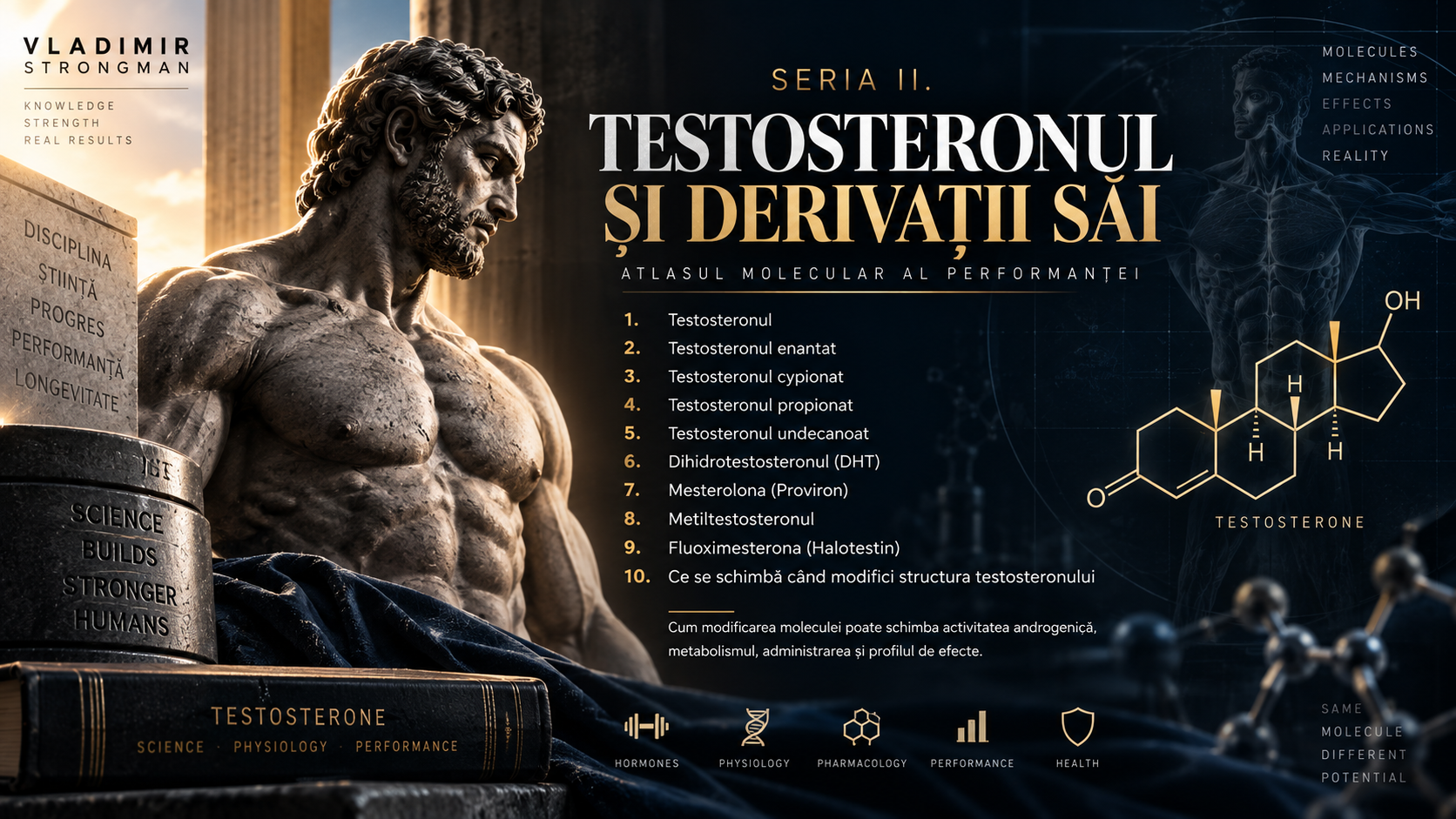
Testosterone and Its Derivatives - Episode 10: What Changes When You Modify the Structure of Testosterone
September 8, 2026
1. Why does testosterone structure matter?
Testosterone has a very precise chemical structure. It is not just a formula in a textbook. The shape of the molecule determines how enzymes recognize it, how it interacts with the androgen receptor, how quickly it is transformed, and by which route it can be administered.
That is why changing a single detail of testosterone can change much more than the name of the molecule. Absorption, duration, distribution, metabolism, and aromatization can all change. The relationship between molecular structure and biological effect is one of the central ideas in modern pharmacology.
2. The starting molecule
Testosterone has a steroid scaffold made of four carbon rings and several functional groups that give it its specific properties. Two regions are especially important for this discussion: the A-ring, which influences metabolism and enzyme interactions, and the C17 position, where modifications can strongly change pharmacological behavior.
In simple terms, not every part of the molecule has the same job. Some regions mainly affect receptor behavior, others metabolism, and others change how the substance enters and remains in the body.
3. First idea: change the shape, change the behavior
Think of the molecule as a molecular puzzle. Change one important piece and the whole structure may be recognized differently by the body. This is exactly what happens with testosterone derivatives.
Modern literature groups many of these modifications by where they are made: esterification at C17, 17-alpha alkylation, removal of the C19 methyl group, A-ring modifications, halogenation, and combinations of these changes. Each family has different consequences for pharmacokinetics and pharmacodynamics. citeturn224035search1turn224035search5
4. What does esterification at C17 mean?
In testosterone, the 17-beta hydroxyl group can be esterified. In practical terms, a chain is attached that makes the molecule more lipophilic, meaning more compatible with fatty environments.
For injectable preparations in an oil vehicle, this modification favors slow release from the local depot. The result is prolonged exposure, not a new receptor. citeturn224035search1turn224035search10
5. Why can an ester prolong duration?
A testosterone ester is, in simple terms, a more fat-soluble version of the molecule. When injected into oil, it can form a local depot from which the active steroid is released gradually.
This gives us an important lesson: the apparent duration of a drug can be determined by how it is released from the administration site, not only by how quickly it is destroyed after reaching the bloodstream. citeturn224035search10
6. Enanthate and cypionate: same principle, related molecules
Testosterone enanthate and testosterone cypionate are classic testosterone esters. Both mainly alter pharmacokinetic properties and are used to obtain prolonged release after parenteral administration.
At the androgen receptor, the active part is testosterone released by ester hydrolysis. This is why esterification is primarily a pharmacokinetic intervention. citeturn224035search1turn224035search10
7. Second idea: 17-alpha alkylation
If C17 esterification is mainly about slow release, 17-alpha alkylation addresses almost the opposite problem: allowing an androgen to survive first-pass metabolism and remain active after oral administration.
Adding a methyl or ethyl group at the 17-alpha position interferes with oxidation of the 17-beta hydroxyl group and increases oral bioavailability. citeturn224035search6turn224035search7
8. The gain is oral activity
In very simple terms, the chemist is trying to prevent the liver from destroying the molecule before it can have a systemic effect.
Methyltestosterone and fluoxymesterone are classic examples. They were designed to retain androgenic activity after oral administration. citeturn224035search2turn224035search4
9. But there is a hepatic cost
The same structural change that increases resistance to first-pass metabolism is associated with the less favorable hepatic profile of many 17-alpha-alkylated androgens.
This makes 17-alpha alkylation one of the clearest lessons in drug design: you gain a desired property and may lose some safety. citeturn224035search2turn224035search8
10. Third idea: remove the C19 methyl group
Nandrolone is known as 19-nortestosterone because it lacks the methyl group at carbon 19. A seemingly small change can alter how the molecule is oriented and recognized within hormone pathways.
This modification changes both metabolism and the balance between some anabolic and androgenic effects. It does not mean that nandrolone is 'testosterone without androgenic effects'; it has a different profile. citeturn224035search2turn224035search10
11. Why does C19 matter so much?
The C19 methyl group indirectly contributes to how the steroid scaffold is recognized by enzymes and receptors. Removing it can change susceptibility to 5-alpha-reductase and the relationship with aromatase.
This is an elegant pharmacology example: a carbon that looks like a small chemical detail can influence an entire metabolic network. citeturn224035search2turn224035search8
12. What does 5-alpha-reductase do?
5-alpha-reductase converts testosterone into dihydrotestosterone, or DHT. The reaction changes the geometry of the molecule and can increase stabilization of the hormone-receptor complex in certain tissues.
DHT is especially relevant to tissues in which androgen signaling is amplified through this local pathway. citeturn224035search9turn224035search3
13. If you modify the molecule, you can change 5-alpha reduction too
Some structural modifications make a molecule less susceptible to 5-alpha-reductase, while others create a steroid that no longer needs this conversion to have androgenic activity.
This is where DHT derivatives such as mesterolone enter the story, along with other structurally modified molecules. citeturn224035search2turn224035search9
14. Another key point: aromatase
Aromatase converts androgens such as testosterone into estrogens, including estradiol. If steroid structure is changed enough, that conversion can be prevented.
This explains why some testosterone derivatives are aromatizable and others are not. The difference is structural, not a rule based on whether a substance is oral or injectable. citeturn224035search2
15. Structural changes can make a molecule less aromatizable
Removing the C19 methyl group or modifying the A-ring can alter the reaction catalyzed by aromatase. Some molecules become very poor substrates for this pathway.
But lack of aromatization does not mean lack of adverse effects. It changes part of the hormonal profile; it does not turn a molecule into a universally safe compound.
16. The A-ring: where chemistry gets especially interesting
Changes to the A-ring can influence recognition by receptors and enzymes. Adding atoms, changing saturation, or replacing a carbon atom with oxygen can alter the molecule's properties.
Oxandrolone is an example in which an oxygen atom introduced into the A-ring changes the stability and metabolism of the 3-keto group and contributes to its distinct pharmacological profile. citeturn224035search8turn224035search10
17. Introducing fluorine
Fluoxymesterone, discussed in Episode 9, shows what can happen when fluorine appears at a precise position in the molecule. A fluorine atom can change electronic distribution and how certain regions of the steroid are recognized.
Important: fluorine is not a magical ingredient. It must be understood as part of the whole molecular architecture.
18. Position matters as much as the element
It is not enough to say 'it contains fluorine.' Where the fluorine sits matters. In steroid chemistry, exact position can dramatically change receptor activity or metabolism.
The same principle applies to methyl, ethyl, hydroxyl, and other substituents. Three-dimensional structure is an essential part of biological effect.
19. The androgen receptor: the common target
Many of these different molecules ultimately act at the androgen receptor. The receptor is an intracellular protein that, once activated, can influence gene expression.
Differences between molecules can come from how well they bind, how long they remain associated with the receptor, which cofactors they recruit, and in which tissues they reach meaningful concentrations.
20. Affinity is not everything
A molecule with high receptor affinity is not automatically 'better.' Final effect depends on concentration, metabolism, distribution, receptor expression, and biological context.
That is why simplified tables with one number for 'anabolic strength' cannot fully summarize steroid pharmacology.
21. Structure can change pharmacokinetics
Pharmacokinetics describes what the body does to the molecule. Structural changes can alter absorption, distribution, protein binding, enzymatic transformation, and elimination.
For example, esterification increases lipophilicity and can prolong release from an oil depot, while 17-alkylation increases resistance to first-pass hepatic metabolism. citeturn224035search1turn224035search6
22. Structure can change pharmacodynamics
Pharmacodynamics describes what the molecule does to the body. Changing structure can alter receptor affinity, cofactor recruitment, gene activation, and tissue effects.
Some differences are subtle in the laboratory but become important when the molecules are exposed to the human body.
23. Why two molecules with the same receptor are not identical
Testosterone, DHT, nandrolone, mesterolone, and fluoxymesterone can all be discussed through the androgen receptor, but that does not make them interchangeable. Their structures and metabolism create distinct profiles.
This is one of the most important conclusions of the series: the same switch does not mean the same key.
24. Structural changes can change the route of administration
Unmodified testosterone is not convenient as an oral molecule because of extensive first-pass metabolism. With certain structural changes, orally active derivatives can be created.
With other modifications, forms suited to intramuscular depot administration can be produced. In other words, chemistry can influence not only what a molecule does, but how it can be delivered.
25. Structural changes can change duration
A more lipophilic ester can favor slow release from an oil vehicle. Other modifications can lengthen or shorten the time during which active drug is available.
Duration should not be confused with molecular 'strength.' A substance can remain in the body longer without necessarily having higher receptor affinity.
26. Structural changes can change local metabolism
Enzymes in different tissues can handle testosterone derivatives differently. Some are more easily reduced by 5-alpha-reductase, others are protected from certain transformations, and some cannot enter particular pathways at all.
This means that blood concentration does not always tell the whole story of what is happening in a tissue. Local metabolism can change the biological signal.
27. What about SHBG?
SHBG is a transport protein that binds sex hormones in the blood. Structural changes in androgens can alter their interaction with SHBG and therefore influence free fraction or hormone distribution.
But there is no simple rule such as 'lower SHBG equals better.' The biological effect depends on the entire hormonal system and on actual tissue concentrations.
28. Why A-ring structure also matters for aromatization
Aromatase recognizes a particular steroid geometry and performs a specific series of reactions. Changes to the A-ring can interfere with that process.
This is one reason molecules with closely related origins can have very different relationships with estrogen pathways.
29. Why structure matters for DHT
5-alpha-reductase acts on a particular steroid configuration. Modify the substrate enough and the conversion to DHT can be reduced or eliminated.
Some drug-design strategies aim for exactly this separation: retaining androgenic activity while changing local metabolism. The result is not perfectly selective, but it demonstrates how strongly biology is controlled by structure.
30. Why 19-nor does not mean 'no androgenic activity'
Nandrolone illustrates this very well. Removing the C19 group changes the profile, but the molecule remains an androgen receptor agonist.
The key is to think in terms of profiles rather than absolute labels. A structural change can shift the balance without transforming the compound into something devoid of androgenic effects.
31. Why 17-alpha alkylation does not mean 'all are the same'
Methyltestosterone, fluoxymesterone, oxandrolone, oxymetholone, and stanozolol share structural features, but their differences are important. These differences alter receptor affinity, metabolism, aromatization, and systemic effects.
The class is a starting point, not the complete description.
32. One atom can change a lot, but not by itself
When you hear 'a methyl group was added' or 'oxygen was introduced,' do not assume there is only one consequence. A structural modification can influence several properties at once.
That is what makes medicinal chemistry so interesting: a structural change can trigger a chain of biological consequences.
33. How biological risk can change
There is no single line from 'safer' to 'more dangerous.' Changing one property can reduce one risk while increasing another.
For example, a modification that improves oral stability can increase hepatic burden, while one that reduces aromatization can change other hormonal effects.
34. Why the athlete sees only part of the equation
An athlete sees strength, body weight, recovery, or visible changes. They do not directly see cholesterol, bilirubin, gonadotropin suppression, or hepatic changes.
That is why a molecule should not be judged only by training effects. The structure producing that effect may be changing several other systems at the same time.
35. Why there is no 'perfect steroid'
If we could modify testosterone without any trade-offs, we would have an ideal molecule. In reality, every structural change brings advantages and disadvantages.
Medicinal chemistry tries to find the right balance for a clinical purpose, not to create a magical compound.
36. A simple map of the modifications
If you want to remember only the map, think of it this way: C17 beta esterification usually means greater lipophilicity and prolonged release from a depot; C17 alpha alkylation means improved oral activity with a hepatic cost; removing C19 opens the 19-nor family; A-ring changes can alter metabolism and aromatization; and additional modifications, including halogens, can create very different profiles.
This map does not replace detailed pharmacology, but it lets you understand why molecules from the same family do not behave identically. citeturn224035search1turn224035search2turn224035search5
37. The fundamental lesson
When you modify testosterone, you are not simply changing its 'strength.' You can change where it goes, how long it remains, how it is transformed, whether it aromatizes, whether it is reduced to DHT, how it binds the receptor, and which organs are exposed.
That is why the best pharmacology questions are not 'which one is stronger?' but 'what changed in the molecule, and what consequences does that change produce?'
38. Conclusion
Testosterone is an extraordinary starting point for medicinal chemistry. Through relatively small structural changes, scientists created molecules that differ in route of administration, duration, metabolism, aromatization, and androgenic profile.
Within our series, this may be the most important idea so far: structure is the skeleton of pharmacology. Change the skeleton and the body may 'read' the molecule differently.
The next episodes become much easier to understand from this perspective: we do not start with trade names or sports reputations, but with the molecule and what was changed in its structure.
Selected sources
Handelsman DJ. Androgen Physiology, Pharmacology, Use and Misuse. Endotext, NCBI Bookshelf.
Kicman AT. Pharmacology of anabolic steroids. British Journal of Pharmacology.
Anabolic-Androgenic Steroids Revisited: Structural Biology, Receptor Signaling, and Mechanisms of Anabolic-Androgenic Dissociation. 2026 review.
The role of 5alpha-reduction in steroid hormone physiology. Endocrine Reviews.
More From The Journal

Training
The Science of Strongman Training - Episode X: Competition Programming
How to build a complete Strongman competition preparation block: calendar, events, volume, intensity, specificity, simulations, autoregulation, tapering and fatigue management.

Training
The Science of Strongman Training - Episode IX: Peaking
Peaking in Strongman: how to turn months of training into maximal competition performance by reducing fatigue, preserving adaptations and managing specificity.