
Physiology
Bones, Tendons and Ligaments: Structures That Must Withstand Force - Episode 3: The Tendon - The Structure That Transmits Force
September 6, 2026
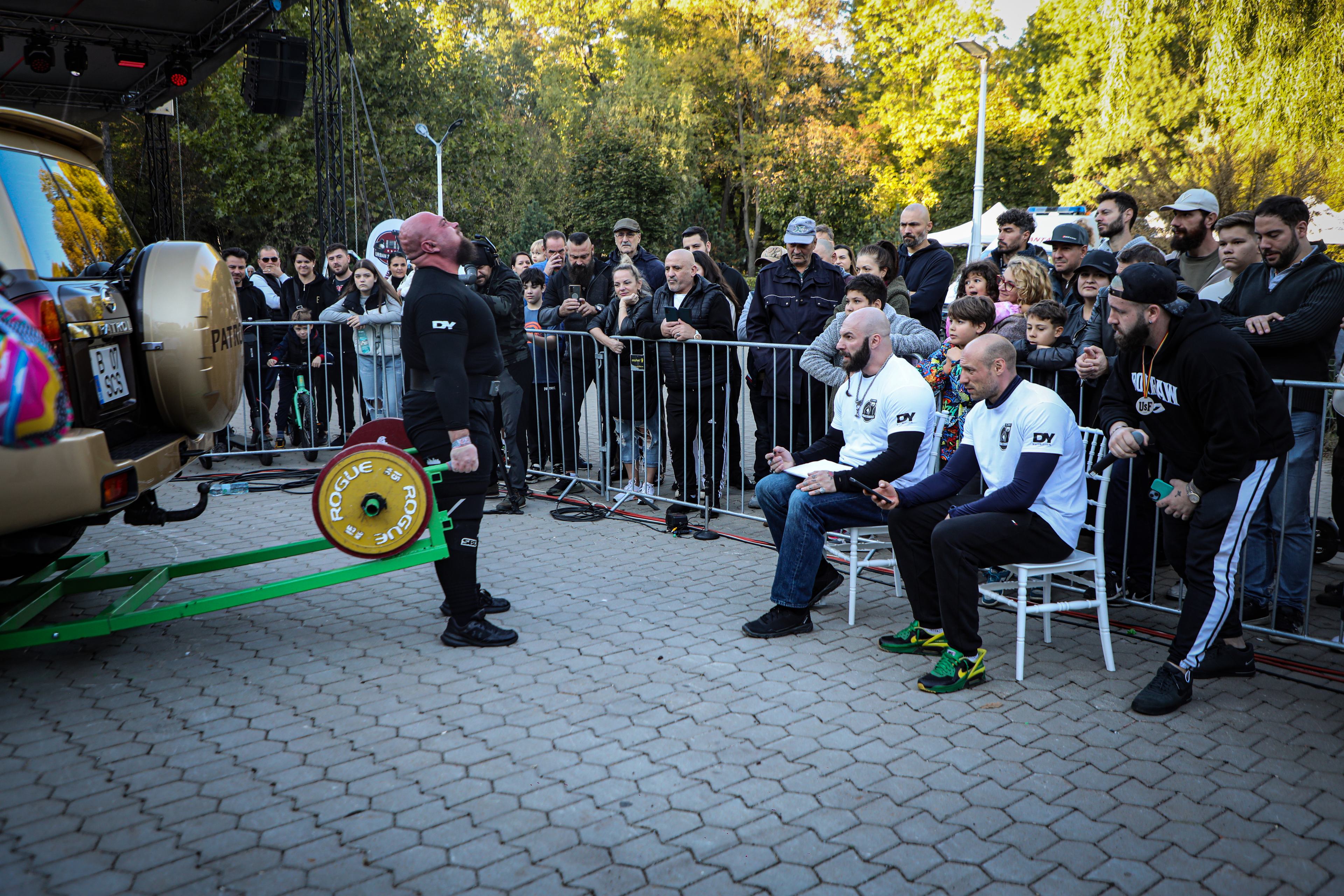
Introduction - the tendon, the structure that transmits force
If muscle is the motor, bone is the structure that receives and distributes force, and the joint is the system in which movement becomes possible, the tendon is the mechanical link through which all of these components communicate. A tendon is not simply a biological rope. It is specialized connective tissue rich in collagen, hierarchically organized, and capable of transmitting very large forces between muscle and bone. In strength sports this role is obvious: when a Strongman produces massive contraction in the biceps, triceps, quadriceps, hamstrings, or gastrocnemius, the force generated by muscle fibers must cross the tendon before it can act on the skeleton.
Transmission is not its only function. Tendons also store and release elastic energy, influence joint behavior, shape the rate of force transmission, and contribute to movement efficiency. They are also living tissues that sense loading, remodel their extracellular matrix, and can become more robust or more vulnerable depending on the relationship among stimulus, recovery, age, and biological capacity. Understanding tendon in Strongman therefore requires anatomy, biomechanics, cell biology, and load programming at the same time.
1. What is a tendon?
A tendon is dense connective tissue whose primary role is to connect muscle to bone and transmit the force created by muscular contraction to the skeleton. Most tendons are composed largely of type I collagen arranged in bundles oriented mainly along the direction of force. Between these bundles are specialized cells, extracellular matrix, proteoglycans, and glycoproteins that contribute to tissue organization and mechanical behavior.
The image of a completely passive cable is misleading. Tendons have their own metabolism and their own ability to respond to loading. Tenocytes and other matrix-associated cells detect mechanical deformation and modify synthesis and degradation of extracellular matrix components. A structure that looks static is therefore biologically dynamic.
1.1. Why does type I collagen dominate?
Type I collagen gives tendon its combination of tensile strength and controlled deformation. Collagen molecules assemble into fibrils, fibrils form fibers, fibers are grouped into fascicles, and fascicles form the macroscopic tendon. This hierarchical architecture allows force to be transferred across several structural levels.
For a strength athlete, this means that an increase in muscular force must eventually be matched by the ability of connective tissue to transmit that force. Muscle can become stronger relatively quickly through neural and hypertrophic adaptations, whereas tendon adaptation is slower. That timing difference is central to understanding many overuse problems.
2. The hierarchical architecture of tendon
Tendon works because it is organized across levels. At the molecular level, collagen molecules form fibrillar structures. At a smaller tissue scale, fibrils are arranged into fibers. Fibers are grouped into fascicles, and fascicles form the tendon. Around them are extracellular matrix and connective-tissue structures that organize the tissue and permit relative movement between components.
This hierarchy has an important mechanical consequence: tendon behavior cannot be understood from the properties of a single collagen molecule. The incoming force is distributed through thousands of interacting structural elements. Fiber orientation, diameter, cross-linking, and matrix organization all influence global stiffness and strength.
2.1. Fascicles, endotenon, and epitenon
Tendon fascicles are organized and surrounded by connective structures such as the endotenon and epitenon. These are not simply packaging. They contribute to vascular supply, mechanical organization, and the relative movement of tissue components. Some tendons also have synovial sheaths or bursae that reduce friction where the tendon moves through anatomically constrained spaces.
For a Strongman athlete, this organization matters when the same tendon crosses regions where its direction changes. A tendon does not always behave like a perfectly straight cable. It can bend, experience local compression, or face simultaneous tension and shear.
3. Tendon and force transmission from muscle to bone
Force generated by a muscle fiber must reach bone to create movement. In the mechanical chain, tendon is the transmission interface. As the muscle contracts, tension is propagated through the muscle-tendon unit and reaches the tendon, where it is transmitted to its bony insertion.
Tendon does not transmit force as a perfectly rigid component. It deforms. That deformation is a functional feature because it allows temporary storage of elastic energy. During fast stretch-shortening actions, stored energy can be recovered and contribute to movement efficiency.
3.1. The tendon-bone interface - enthesis
The region where tendon connects to bone, known as the enthesis, is mechanically complex. Force must be transferred from a soft collagen-rich tissue into mineralized tissue that is much stiffer. A sharp transition would create extreme stress concentrations. The enthesis therefore contains graded organization that reduces the mechanical discontinuity between tissues.
Some insertions contain fibrocartilaginous regions that allow a progressive transition from tendon to bone. This architecture is crucial in high-force sport because many tendon problems occur near the insertion or in areas where tendon experiences both tensile and compressive loading.
4. Tendon is not completely rigid - why elasticity matters
A very compliant tendon and a very stiff tendon can behave differently mechanically. When tendon is stretched, it stores elastic energy. During some rapid movements that energy can be recovered, improving mechanical efficiency. Tendon stiffness also influences how quickly muscular force is transmitted to a joint.
For a strength athlete, this property has a practical dimension. There is no single tendon stiffness that is optimal for every event. A stiffer tendon may favor rapid force transmission in one movement, while a more compliant tendon can permit greater elastic energy storage under different conditions. Tendon is therefore part of fine biomechanical tuning.
4.1. The stress-strain curve
The relationship between stress and strain is not perfectly linear from the start. In the early region, collagen structures contain waviness and become progressively aligned as load rises. After this region, behavior becomes more nearly linear until functional limits are exceeded.
This curve explains why tendon can tolerate many loads without injury while also showing how excessive stress can cause tissue damage. Programming therefore depends not only on absolute force but also on where loading occurs on the mechanical curve and how many cycles accumulate.
5. Viscoelasticity - tendon has short-term mechanical memory
Tendon is viscoelastic. Its response depends not only on how far it is stretched but also on how quickly it is stretched and on the immediate history of loading. Two exposures with the same amplitude can create different responses if they occur at different rates.
Creep is a classic example, in which deformation increases over time under a constant load. Stress relaxation is another, where tension decreases over time when length is held constant. These properties mean tendon does not behave like an ideal spring.
5.1. Why warm-up and early repetitions can change the response
Tendons can show transient changes in stiffness and hysteresis during a session. Early repetitions may have a somewhat different mechanical response from repetitions performed after the tissue has been loaded and warmed. This does not mean warm-up makes tendon indestructible. It means short-term viscoelastic properties can change.
For Strongman, where some exercises involve huge loads and unusual movement patterns, progressive loading inside the session can therefore be more sensible than jumping immediately to the working weight. Warm-up is not just psychological preparation. It is mechanical and physiological preparation as well.
6. The tendon cell - tenocyte and mechanobiology
Tenocytes are specialized tendon cells embedded throughout the extracellular matrix. They are not passive occupants. They detect mechanical changes and adjust matrix production. When tendon is loaded within a favorable range, mechanical signals can stimulate processes involved in matrix maintenance and remodeling.
Tendon mechanotransduction involves integrins, the cytoskeleton, ion channels, cytokines, growth factors, and changes in gene expression. The result is a network of signals rather than a single pathway. In healthy tissue, this network helps tendon remain adapted to its habitual level of demand.
6.1. Loading becomes a biological signal
When tendon deforms, its cells receive information about the mechanical environment. Depending on magnitude, frequency, and biological context, this information can alter collagen turnover and matrix organization. This is why training can increase tendon capacity, and also why excessive loading can cause tissue breakdown.
Practically, tendon does not require maximal loading every session. It requires a dose that it can interpret and process. Too little stimulus produces little adaptation, while too much or too rapid loading can exceed repair capacity.
7. How tendon adapts to resistance training
Tendon adaptation may involve changes in stiffness, mechanical properties, thickness, and extracellular-matrix structure. Resistance-training studies show that tendons can respond to chronic loading, but the magnitude and character of the response depend on loading dose, program duration, age, and the tissue's starting condition.
One of the most important ideas is that tendon adaptation is generally slower than many muscle adaptations. An athlete may feel stronger quickly and lift heavier weights within a relatively short period. Tendon does not increase capacity at the same rate. This creates the possibility that the muscle motor becomes stronger faster than the transmission tissue becomes robust.
7.1. Why experienced athletes are not automatically protected
Years of training produce meaningful adaptations, but experience does not erase biology. A highly adapted tendon can still become vulnerable if load rises rapidly, movement changes, volume and intensity combine in a new way, or recovery deteriorates. Training history may provide protection through adaptation, but it never cancels risk.
In Strongman, implement changes can create exactly that situation. An athlete may tolerate years of deadlift and yoke work, then introduce an event that stresses a tendon through an unfamiliar angle. General strength does not guarantee local tissue tolerance.
8. New collagen, old collagen, and matrix remodeling
The tendon matrix is continuously maintained. Collagen molecules are synthesized, modified, organized, and degraded. Enzymes such as matrix metalloproteinases participate in remodeling, and the balance between synthesis and breakdown helps determine tissue state.
Mechanical loading can increase collagen turnover. In a favorable environment, this remodeling is part of normal adaptation. During sustained overload, degradation and disorganization can exceed effective rebuilding. This is one of the biological bases for the modern concept of tendinopathy, which is not simply tendon inflammation.
9. Tendinopathy - when tissue no longer responds adequately
Tendinopathy is a spectrum of tendon changes associated with pain and altered function. It should not be reduced to the simple phrase “tendon inflammation.” Histology and clinical presentation can include changes in collagen organization, cell behavior, matrix, and vascularity, while pain is influenced by multiple biological and neurophysiological systems.
For a Strongman athlete, a common context is repeated loading on a structure that has not had enough time to adapt. Tendinopathy can therefore occur even in extremely strong athletes. General force capacity and the health of one particular tendon are not the same variable.
9.1. Tendon continuity is more important than one hard session
Tendinopathy usually develops over a period in which demand repeatedly exceeds the tissue's capacity to respond. One hard session may be the event that makes symptoms noticeable, but the underlying cause may be accumulated loading from previous weeks. Programming should therefore examine the trend, not only the workout on which pain appeared.
When exercise volume, frequency, or range changes abruptly, local tendon stress can rise much faster than the training log suggests. For tendon, “just a few more sets” can mean hundreds of additional loading cycles in tissue already operating near its current functional limit.
10. Tendon vascularity and the myth of the completely avascular tissue
Tendons have relatively limited vascularity compared with muscle, but they are not completely bloodless. Blood supply varies among tendons, along different regions of the same tendon, and depending on the surrounding structures. Some tendon regions have comparatively lower vascularity than others.
Limited vascularity is one reason healing of some tendon injuries can be slow. However, healing is also influenced by local biology, mechanical loading, and the nature of the injury. The idea that a tendon cannot adapt because it does not receive enough blood is incorrect. It adapts through a slower and different biological process.
11. Tendon stiffness and performance in strength sports
Tendon stiffness influences the relationship between muscle force and joint movement. A stiffer tendon can transmit force rapidly and allow fast development of tension. A more compliant tendon deforms more and can store more elastic energy under some conditions. There is no single stiffness value that maximizes every form of performance.
In Strongman, the relationship is especially interesting because the sport includes slow maximal lifts as well as dynamic events. In a maximal deadlift, efficient force transmission can be critical. In a carry or repeated event, elastic properties and time-dependent behavior may matter differently.
11.1. Tendon as a regulator of transmission, not merely a passive link
Changing tendon stiffness changes the relationship between fascicle length and total muscle-tendon-unit length. Fascicles may operate in a different part of the length-tension relationship. Tendon properties can therefore indirectly change how muscle produces and transmits force.
This is one of the elegant ideas in biomechanics: a structure that appears to be only a connecting cable can alter the function of the motor it connects. At elite level, such details can influence mechanical efficiency and movement economy.
12. Why tendon adapts more slowly than muscle
Muscle has relatively rapid protein turnover and can respond to training through neural and structural adaptations that become measurable quickly. Tendon contains collagen-rich matrix with slower turnover and lower metabolic activity. Structural change therefore requires time.
This explains a frequent mismatch in strength training. An athlete can progress from one weight to another at a pace that is realistic for the neuromuscular system but too fast for connective tissue. Tendon can therefore lag behind, not because it is inherently weak, but because its biological clock moves differently.
13. Progressive loading - the main tool for tendon adaptation
For tendon, progression is a way of dosing the stimulus. Gradual increases give tissue time to interpret loading and remodel the matrix. Progression can be created through heavier loads, more repetitions, higher frequency, greater range, or increased movement complexity.
Progression does not need to be linear. Sometimes load can remain stable while volume or time under tension changes. At other times intensity can rise while repetitions fall. For tendon, controlling total stress is more important than forcing more kilograms into every week.
13.1. Why isometrics can be useful in some contexts
Isometric contractions create substantial tension with relatively little change in muscle-tendon length. In some settings they can be useful for pain management and controlled loading, but their effects depend on the tendon, joint position, dose, and objective. Isometrics are not universal cures and should not replace long-term progressive loading.
In Strongman, isometric loading can also be used as specific preparation. Heavy holds and static positions may load tendon structures in a controlled manner. Any use should still be integrated into the total program.
14. Eccentric, concentric, and isometric loading are not identical for tendon
Tendon loading changes with muscle contraction mode. During eccentric action, muscle produces force while lengthening, and the muscle-tendon unit can experience a distinctive distribution of strain. During concentric action, tendon can store and transmit a different amount of energy. During isometrics, tension can be high with limited displacement.
Two exercises with the same repetitions and external load therefore do not necessarily create the same tendon dose. Joint angle, velocity, and the way force is shared between muscle fascicles and tendon all modify the mechanical environment.
14.1. Why Strongman must account for the implement, not only the exercise name
A log, axle, stone, or sandbag can change joint angles, grip position, and center of mass. Those changes alter muscle length, tendon excursion, and joint moments even when external mass stays similar. For a coach, the implement is part of the dose. For tendon, movement geometry can matter as much as kilograms.
15. Tendon and the Strongman kinetic chain
In a Strongman event, tendon works within a network. Force starts in muscle, crosses tendon, passes through a joint, and is transferred to bone or implement. During a yoke carry, for example, loading is distributed through the legs, pelvis, and trunk. During a farmer carry, hand and forearm structures must control the load while shoulder and trunk stabilize. During a stone load, the hips, trunk, and arms create a combination of tensile and compressive forces.
This means a tendon problem can be influenced by the entire kinetic chain. A technique change that increases local force at one joint may alter tendon loading even if external weight remains unchanged. Biomechanics connects anatomy to programming.
16. When does tendon become stronger and when does it become vulnerable?
A tendon adapts when mechanical stimulus is sufficient to induce remodeling but compatible with recovery capacity. Factors that can increase vulnerability include rapid increases in loading, repetitive exposure to the same gesture, abrupt exercise changes, aging, some metabolic conditions, and certain medications. Risk is not identical across tendons.
A highly loaded tendon is not automatically a healthy tendon. Adaptation and overload are both possible outcomes of the same basic variable, mechanical loading. Dose, timing, and biological capacity determine which direction the tissue moves.
16.1. Age changes the rate of adaptation
With aging, tendon properties can change. Stiffness, matrix turnover, collagen structure, and adaptive capacity can all be altered. This does not mean a master athlete cannot adapt. It means time and load management become even more important.
For an experienced Strongman, a progression that was easily tolerated at 25 may require more time at 45 or 50. Performance does not need to disappear, but it must be built on a realistic biological calendar.
17. Tendon and recovery
Tendon is not loaded only during the exercise you label as tendon work. It is also loaded by other movements in the same session and throughout the week. An athlete may think they trained triceps once, while the triceps tendon is also exposed during pressing, log work, bench, overhead work, and other tasks.
Tendon recovery therefore has to be considered cumulatively. The answer is not necessarily to remove all loading between sessions, but to create enough space for biological adaptation so that the next exposure does not constantly arrive before the previous one has been processed.
18. Tendon pain is not a perfect echo of tissue damage
Pain is a complex phenomenon and cannot be read as a direct report of how much collagen is damaged. Structural changes may exist with little pain, while substantial pain can occur without major rupture. Nervous-system processing, local inflammatory signaling, sensitization, and context can all influence the pain experience.
For athletes, this means tendon pain should be interpreted in context. It should not be ignored, but it also should not automatically be translated into “the tendon is torn.” Good assessment combines symptoms, function, loading history, and, when indicated, medical examination and imaging.
19. Tendon rupture - the difference between overload and structural failure
A tendon rupture occurs when applied demand exceeds structural capacity. It can be acute, with a clear event, or occur on a tendon already compromised by previous degeneration. The Achilles, quadriceps, patellar, distal biceps, and pectoral tendons are among the structures that can be involved in strength sport.
In Strongman, extreme loads can make an acute event dramatic. But the mechanism should not be reduced to “the weight was too heavy.” A familiar external load may be tolerated, while a change in joint angle, velocity, or tendon position creates the conditions for failure. Tissue fails when local demand exceeds its mechanical capacity, not because a particular number on the bar is magical.
20. Tendon as an energy accumulator
During fast movement, tendon can behave like a biological spring. Muscle produces force, tendon elongates and stores energy, and some of that energy can then be returned. This mechanism is central to running and jumping, but it also appears in strength movements whenever stretch-shortening behavior is involved.
In Strongman, the role may be less obvious than in sprinting, but it is still present. Lifting an object from the floor, accelerating a carry, or moving rapidly through a change of direction involves the elastic properties of the muscle-tendon system.
21. Tendon and mechanical economy
A well-adapted muscle-tendon system can transmit force efficiently. If mechanical energy is lost through poorly controlled deformation or inefficient technique, energetic cost and muscular demand can rise. In elite sport, small differences can become large differences over the duration of an event.
Tendon is therefore not merely protective tissue. It is part of performance. Its properties influence how quickly force develops, how much energy is stored, and how movement is transferred through the joints.
22. Nutrition, hormones, and tendon
Tendon needs resources to remodel its extracellular matrix. Collagen synthesis is influenced by amino-acid availability, energy, and micronutrients. No supplement, however, replaces the basic principles of progressive loading and recovery.
Hormonal status, age, metabolic health, and overall systemic condition can modify tendon responses. An athlete who is underfueled, ill, or chronically under-recovered may adapt differently from an athlete with adequate nutrition, sleep, and recovery.
22.1. Collagen and vitamin C - where the promise ends and evidence begins
Vitamin C is required for normal collagen biosynthesis, and sports research has investigated whether vitamin C combined with gelatin or collagen can alter markers of collagen synthesis. Experimental findings are interesting, but they should not be converted into the claim that a supplement repairs a tendon or prevents rupture. Supplements may have a role within an adequate overall diet, but expectations must remain evidence-based.
23. Strongman - why the tendon faces a special challenge
Strongman is unusual because it combines heavy loads, irregular implements, extreme joint positions, and events that are absent from conventional barbell sports. Tendons can be loaded from unfamiliar angles and may have to transmit force while the joint is in a challenging position.
An athlete may be exceptionally strong in squat and deadlift but poorly prepared for a large volume of stones, a particular pressing event, or a carry that changes shoulder position. Specificity is not only about the muscle. It is about the tendon.
23.1. The implement changes which tendon is stressed
A standard barbell distributes load in a relatively predictable manner. A large log, axle, stone, or sandbag changes diameter, grip, and center of mass. These differences can alter muscle length, tendon excursion, and joint moments. A new implement therefore functions as a new stimulus even when its external mass is familiar.
24. How should tendon be programmed in an advanced Strongman athlete?
Tendon programming does not mean treating every kilogram as a pharmaceutical dose. It means progressively building tissue capacity for the demands of the sport. Within a training block, volume can rise gradually, followed by higher intensity, and later by more competition-specific implements.
Load distribution is also important. If one event heavily stresses the patellar tendon, it is not reasonable to assume that large amounts of similar loading can be added without cost. Tendon does not read the exercise label. It experiences tension and repetition.
24.1. The golden rule: performance should rise before risk explodes
A good program improves performance without producing disproportionate increases in pain, morning stiffness, loss of function, or local symptoms. These signals are not diagnoses by themselves, but they can indicate that current loading deserves review. Tendon can tolerate a lot, but not infinitely.
25. Conclusion - tendon is the living bridge between force and movement
Tendon is much more than a passive connection between muscle and bone. It is a living, hierarchically organized tissue dominated by type I collagen, capable of transmitting high forces, storing and returning energy, and adapting through mechanotransduction. Its stiffness and viscoelastic behavior shape how muscular force becomes movement.
For Strongman, tendon is one of the most important links in the locomotor system. Muscle can become extraordinarily strong, but that force must travel through tendons that are adapted to transmit it. Bone can be robust, but tendon is the connecting structure. When that link is well prepared, it becomes almost invisible. When capacity is exceeded, it quickly becomes central to the problem.
In the next episode, we will continue the force pathway and move to the ligament, a structure that does not transmit muscular force in the same way as tendon but instead stabilizes joints and controls movement between bone segments.
Scientific bibliography
1. Wang JH-C. Mechanobiology of tendon. Journal of Biomechanics. 2006;39(9):1563-1582.
2. Magnusson SP, Narici MV, Maganaris CN, Kjaer M. Human tendon behaviour and adaptation, in vivo. Journal of Physiology. 2008;586(1):71-81.
3. Kjaer M. Role of extracellular matrix in adaptation of tendon and skeletal muscle to mechanical loading. Physiological Reviews. 2004;84(2):649-698.
4. Bohm S, Mersmann F, Arampatzis A. Human tendon adaptation in response to mechanical loading: a systematic review and meta-analysis. Sports Medicine. 2015;45:1531-1547.
5. Screen HRC, Berk DE, Kadler KE, Ramirez F, Young MF. Tendon functional extracellular matrix. Journal of Orthopaedic Research. 2015;33(6):793-799.
6. Cook JL, Rio E, Purdam CR, Docking SI. Revisiting the continuum model of tendon pathology: what is its merit in clinical practice and research? British Journal of Sports Medicine. 2016;50:1187-1191.
7. Wang JHC, Guo Q, Li B. Tendon biomechanics and mechanobiology - a minireview of basic concepts and recent advancements. Journal of Hand Therapy. 2012;25(2):133-141.
8. Baar K. Training for endurance and strength: mechanisms of tendon adaptation. International Journal of Sports Physiology and Performance. 2007;2(3):264-270.
More From The Journal

Training
The Science of Strongman Training - Episode X: Competition Programming
How to build a complete Strongman competition preparation block: calendar, events, volume, intensity, specificity, simulations, autoregulation, tapering and fatigue management.

Training
The Science of Strongman Training - Episode IX: Peaking
Peaking in Strongman: how to turn months of training into maximal competition performance by reducing fatigue, preserving adaptations and managing specificity.