
Pharmacology
Series: Performance-Enhancing Substances That Do Not Directly Build Muscle - Episode 8: Plasma Volume and Performance
September 8, 2026
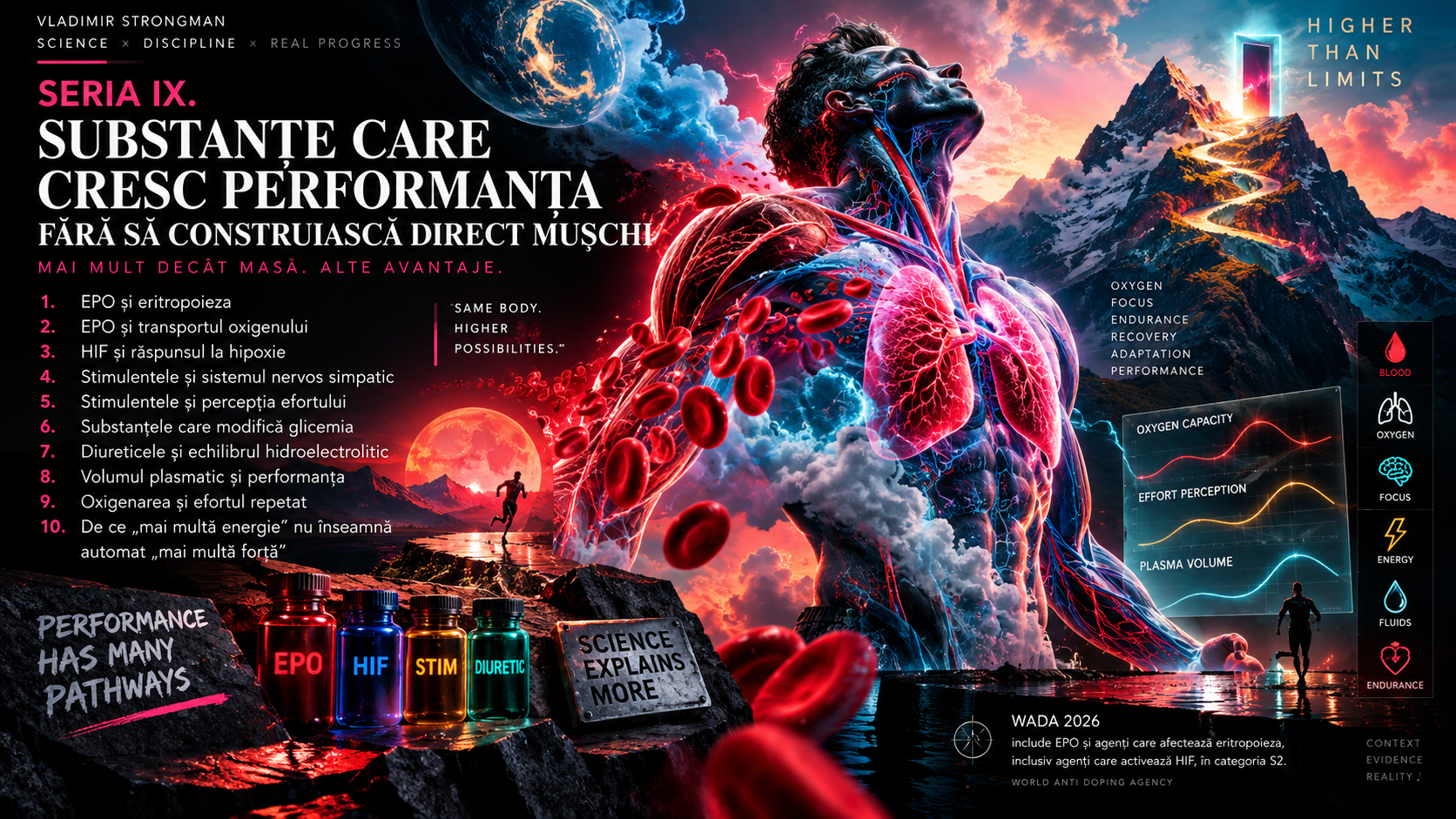
After the episode on diuretics and fluid-electrolyte balance, the next logical step is plasma volume. A large part of blood is plasma, the liquid phase carrying electrolytes, proteins, hormones and nutrients. The amount of plasma can influence cardiac filling, cardiac output, cooling and maintenance of blood pressure during exercise.
Plasma volume does not build muscle, but it changes the environment in which muscle works. An athlete may have the same muscle mass and strength yet tolerate repeated events better if circulation and thermoregulation work efficiently. It is an invisible adaptation that can become very visible late in a contest.
This article explains physiology and risk rather than protocols for artificial plasma expansion. Intravenous fluids, albumin and other products have specific medical indications, and some intravenously administered plasma expanders are prohibited under anti-doping rules.
1. What plasma is
Plasma is the liquid component of blood. It consists mainly of water but also contains sodium, chloride, bicarbonate, glucose, amino acids, hormones and proteins such as albumin. Red cells, white cells and platelets are suspended in this liquid phase.
2. Plasma volume and blood volume
Blood volume includes both plasma and blood cells. If plasma falls because of dehydration, hematocrit can rise without the body producing more red cells. Conversely, plasma expansion can lower hematocrit through dilution.
3. Why plasma matters for circulation
The cardiovascular system needs enough volume inside the vessels to maintain venous return and cardiac filling. Plasma contributes directly to this volume. If it falls substantially, the heart receives less blood between beats and the body compensates with a higher heart rate and vasoconstriction.
4. Venous return and preload
Venous return is the amount of blood returning to the heart. When circulating volume is adequate, the ventricles fill better before contraction. Through the Frank-Starling mechanism, within physiological limits, better filling allows the heart to eject more blood with each beat.
5. Stroke volume
Stroke volume is the amount of blood ejected by the heart in one contraction. It depends on ventricular filling, contractility and the resistance against which the heart pumps. Adequate plasma volume can help maintain stroke volume, especially in heat or repeated exercise.
6. Cardiac output
Cardiac output is the product of heart rate and stroke volume. If stroke volume is maintained better, the heart can deliver high output without depending exclusively on a rising pulse. For the athlete, this can mean more stable circulation for the same external work.
7. Plasma volume and blood pressure
Blood pressure is not determined only by fluid volume, but circulating volume has an important role. When plasma falls, the body activates the sympathetic nervous system, renin, angiotensin, aldosterone and vasopressin to preserve pressure and organ perfusion.
8. Hemoconcentration
When water is lost from the plasma compartment, the concentration of cells and some solutes rises. A higher hematocrit after dehydration does not automatically mean a real increase in red-cell mass. This difference matters when laboratory tests are compared under different hydration conditions.
9. Physiological hemodilution
In trained athletes, particularly after aerobic training or heat adaptation, plasma volume may increase. Hemoglobin concentration and hematocrit can appear slightly lower because the same red-cell mass is distributed through more liquid. This sports pseudoanemia must be distinguished from true anemia.
10. Plasma and oxygen transport
Oxygen is transported mainly by hemoglobin inside red cells, not by plasma. Plasma nevertheless influences oxygen delivery indirectly through stroke volume and cardiac output. Performance depends both on how much oxygen blood contains and how much blood can be pumped to tissues.
11. Plasma and heat transport
Blood also transports heat. Active muscles produce large amounts of thermal energy, and circulation moves it toward the skin for dissipation. Adequate plasma volume helps the body support muscle perfusion and skin perfusion at the same time, two demands that compete especially when competition takes place in hot conditions.
12. Sweating and plasma loss
Sweating is the main cooling mechanism during intense exercise in the heat. The water lost through sweat comes from body fluid compartments, and if losses are large and intake does not compensate, plasma volume falls. This creates a conflict between cooling, maintaining pressure and supporting blood flow to working muscle.
13. Dehydration and plasma-volume contraction
Dehydration can reduce plasma volume, increase osmolality and impair thermoregulation. During exercise this can mean lower stroke volume, a higher heart rate for the same intensity, higher body temperature and greater perceived exertion. The magnitude depends on fluid loss and environmental conditions.
14. Cardiovascular drift
During prolonged exercise, particularly in the heat, heart rate may gradually rise even when external intensity stays relatively constant. Part of this cardiovascular drift relates to reduced stroke volume, redistribution of blood toward the skin and changes in plasma volume. The athlete experiences the same work as progressively more expensive.
15. Albumin and oncotic pressure
Albumin is the main plasma protein and contributes importantly to oncotic pressure, the force favoring retention of water within the vascular space. Total albumin mass and the distribution of plasma proteins influence fluid movement between blood and tissues. Training and heat adaptation can modify this balance.
16. Sodium and extracellular volume
Sodium is the main cation of extracellular fluid and one of the major determinants of its volume. The kidneys tightly regulate sodium excretion. When the body conserves sodium, it usually retains more water as well, which is why sodium and plasma volume are tightly linked.
17. Renin, angiotensin and aldosterone
When the kidneys sense reduced perfusion or sodium delivery, the renin-angiotensin-aldosterone system can be activated. Angiotensin II supports vasoconstriction, while aldosterone promotes renal sodium reabsorption. The overall effect is defense of blood pressure and circulating volume.
18. Vasopressin
Vasopressin, also called antidiuretic hormone, helps the kidneys conserve water. Secretion rises when plasma osmolality increases or circulating volume falls enough. Together with thirst, it forms one of the main defenses against dehydration and excessive plasma loss.
19. Natriuretic peptides
When the heart chambers are stretched by greater volume, natriuretic peptides can promote sodium and water excretion. They act as a physiological brake on retention systems. The body does not try to keep as much fluid as possible; it tries to maintain a range in which perfusion and pressure remain functional.
20. Why more volume is not automatically better
Adequate filling is useful, but excessive fluid loading can increase cardiac stress, promote edema and dilute sodium if water intake exceeds the body's ability to eliminate it. Physiology aims for balance, not maximum volume. That principle remains central throughout this episode.
21. Plasma volume can change during the event itself
Plasma volume is not rigidly constant. During exercise, capillary pressures, sweating and water shifts between blood and tissues can rapidly alter how much fluid remains inside the vessels. Changes occurring within minutes should not be confused with structural adaptations developed over weeks of training.
22. Strength exercise can cause transient hemoconcentration
Heavy sets, intense contractions and high intravascular pressures can temporarily shift fluid from plasma toward the interstitial space. Blood tests collected immediately after exercise may show higher hemoglobin or hematocrit than at rest. Red-cell mass has not increased within minutes.
23. The Valsalva maneuver and extreme pressures
Maximal lifting often uses the Valsalva maneuver to stiffen the trunk. High intrathoracic pressure temporarily changes venous return and blood pressure. Plasma volume does not remove these oscillations, but adequate circulating volume gives the cardiovascular system a more stable starting point.
24. Plasma restoration after exercise
After exercise, fluid redistributes, the kidneys modify water and sodium excretion, and food and drink contribute to restoration. Plasma volume can recover relatively quickly when losses are moderate, but severe dehydration and heat stress can prolong the process.
25. Heat acclimation can expand plasma volume
Repeated exercise in the heat can produce an early increase in plasma volume. This helps maintain stroke volume and supports blood flow to the skin. Sweating also becomes more efficient and may begin earlier, reducing the thermal cost of exercise.
26. Endurance training and plasma expansion
Endurance training is classically associated with increased plasma volume and, over time, greater total blood volume. The adaptation supports higher stroke volume and improved thermoregulation. A strongman does not need to become a marathon runner to benefit from intelligent cardiovascular conditioning.
27. Strength training provides a different stimulus
Strength training produces major circulatory responses but does not reproduce the same volume stimulus as aerobic work. Adaptation depends on session density, effort duration, muscle mass involved and recovery. Tolerating five events in one day is therefore not built through maximal repetitions alone.
28. Hydration is individual, not a universal formula
Sweat rate varies greatly between athletes and changes with temperature, humidity, acclimation, clothing and body size. The same fluid intake can be inadequate for one athlete and excessive for another. The goal is to preserve function, not hit one universal number.
29. Glycogen, water and body mass
Glycogen storage is associated with water storage in muscle and liver. When carbohydrate stores change, body mass and total body water can also change. This does not mean all extra water enters plasma, but it illustrates how tightly fuel, hydration and scale weight are connected.
30. Carbohydrates and fluid absorption
In the intestine, glucose and sodium transport can facilitate water absorption, which is why rehydration solutions often contain both. In sport, drink concentration, gastrointestinal tolerance and energy needs all matter. A more concentrated drink is not automatically a more effective drink.
31. The gut is a practical limit to rehydration
Fluid that is swallowed does not instantly enter plasma. It must leave the stomach and be absorbed by the intestine. During very intense exercise, gastrointestinal blood flow can fall and large fluid volumes may cause nausea or fullness. Effective rehydration therefore depends partly on gastrointestinal tolerance.
32. The kidneys are major short-term regulators
The kidneys determine how much water and sodium are lost in urine. They respond to hormones, pressure, osmolality and renal blood flow. When circulating volume is threatened, excretion can fall; when there is excess, the body attempts to eliminate it. Plasma volume is therefore continuously regulated.
33. Body mass is useful but imperfect
Changes in body mass before and after a session can provide information about net water loss, but they do not directly reveal plasma change. Food, urine, glycogen and intestinal contents also affect the scale. The measure is most useful when interpreted in context.
34. Urine color has limits
Very dark urine can suggest water conservation, while very dilute urine may follow high fluid intake. Vitamins, foods, medications and time of day can also change appearance. Urine color is a simple clue, not a direct measurement of plasma volume.
35. Thirst is useful but not perfect
Thirst responds mainly to rising osmolality and falling circulating volume. It is an excellent protective mechanism in ordinary life, but during long contests, heat or repeated exercise it may appear after fluid losses have already begun. Absence of thirst does not guarantee ideal hydration.
36. Plasma volume and the brain
The brain depends on stable perfusion. Reduced circulating volume and rising body temperature can contribute to dizziness, poorer concentration and greater perceived effort. In Strongman, where technique and decisions must remain sharp after several events, these effects can matter as much as local muscle fatigue.
37. Post-exercise orthostatic hypotension
After abrupt cessation of intense exercise, the muscle pump disappears, vessels may remain dilated and blood can pool in the lower limbs. If circulating volume is reduced, standing dizziness may be more pronounced. Cardiovascular recovery after an event therefore deserves attention.
38. Cramps are not simply a plasma problem
Exercise-associated cramps have complex physiology. Dehydration and electrolyte losses may contribute in some situations, but neuromuscular fatigue and individual history are also important. Reducing every cramp to a lack of water and salt oversimplifies the problem.
39. Medications can modify circulating volume
Diuretics, some blood-pressure medications and other therapies can alter sodium retention, urine production or vascular tone. An athlete receiving treatment may therefore respond differently to heat and exercise. Medication adjustment belongs to medical care, not contest strategy.
40. Physiological plasma expansion is not pathological fluid retention
Greater plasma volume in an adapted athlete is not the same as edema from heart, kidney or liver disease. The former is a regulated adaptation of the vascular compartment; the latter may reflect disease and abnormal fluid distribution. Context completely changes the meaning of the phrase more water.
41. Plasma volume on contest day
A Strongman contest can last for hours, with waiting periods, warm-ups, maximal events and metabolically demanding efforts. During that time sweating, food intake, stress and temperature continuously alter fluid distribution. Performance in the fifth event partly depends on how well circulation was preserved after the first four.
42. Yoke and Farmers Walk
Yoke and Farmers combine enormous muscular tension with fast movement and high cardiovascular demand. Reduced plasma volume does not instantly remove maximal strength, but it can accelerate heart rate, increase perceived effort and slow recovery after the finish. The effect becomes clearer across repeated events.
43. Truck Pull
Truck Pull simultaneously challenges large muscle groups, ventilation and circulation. Even when short, the effort can be extremely intense and generate substantial heat. If the athlete starts dehydrated, cardiovascular recovery afterward can be slower and the cost carries into later events.
44. Medleys quickly punish weak circulation
A medley combines several tasks without complete recovery. Muscle mass alone is not enough. Cardiac output, heat tolerance and the ability to maintain perfusion become important. Well-supported plasma volume does not make an unconditioned athlete fast, but it can remove one physiological brake.
45. Maximal events: the effect is less direct
In a maximal deadlift or one-repetition log press, performance is dominated by strength, technique and neural activation. Plasma volume matters less directly than in prolonged work. Yet after hours of heat and dehydration, cardiovascular state, concentration and the ability to warm up can still be impaired.
46. Holds and muscular occlusion
During Hercules Hold, Farmers Hold or Front Hold, sustained contraction compresses vessels and limits local blood flow. Plasma volume cannot overcome this mechanical compression, but it influences systemic circulation around the event and the speed of recovery after tension is released.
47. Recovery between events
Between events, the body must lower temperature, restore blood distribution and replace fluid and fuel. Good hydration does not replace sleep or conditioning, but it gives the circulation the resources needed to move closer to baseline before the next warm-up.
48. Heat and humidity are a difficult combination
In high humidity, sweat evaporates less effectively. An athlete can lose substantial fluid without obtaining the same cooling. Plasma volume may therefore fall while body temperature continues to rise. For a very large athlete, this can turn an ordinary day into major thermal stress.
49. Cold changes blood distribution
In cold conditions, peripheral vasoconstriction moves more blood centrally and can promote cold-induced diuresis. Thirst may feel less obvious even though fluid losses continue through breathing and urine. Hydration therefore still matters in winter.
50. Very large athletes face a special thermal problem
A large body generates substantial heat during exercise and has a less favorable surface-area-to-volume ratio for dissipating it. Heavy Strongman athletes can have high sweat rates and major circulatory demands. Plasma volume and heat acclimation may therefore matter disproportionately compared with smaller athletes.
51. Hemoglobin and hematocrit require context
A single hemoglobin or hematocrit value can be influenced by dehydration, posture, time of day and recent exercise. To determine whether red-cell mass changed or only plasma shifted, context and sometimes repeated measurements are needed. One laboratory result never tells the whole story.
52. EPO and plasma volume are different variables
EPO increases red-cell production and can alter total hemoglobin mass. Plasma expansion increases the liquid portion of blood. Both can change hematocrit, but through opposite mechanisms. A lower hematocrit therefore does not automatically mean fewer red cells, and a higher value does not automatically mean increased erythropoiesis.
53. Viscosity is the other side of the equation
If the proportion of red cells rises substantially, blood becomes more viscous and the heart pumps against greater resistance. Adequate plasma can reduce relative cell concentration, but it does not make excessive red-cell mass risk free. Oxygen transport and blood fluidity must be considered together.
54. Plasma expanders have medical uses
Medicine uses fluids and products to support circulating volume in specific settings such as hemorrhage, surgery or critical illness. Albumin, dextrans and other products are not sophisticated sports drinks. They have indications, contraindications and risks requiring medical assessment.
55. Plasma expanders and WADA 2026
The 2026 WADA Prohibited List includes certain intravenously administered plasma expanders in section S5, including albumin, dextran, hydroxyethyl starch and mannitol. They are grouped with diuretics and masking agents and are prohibited at all times, subject to applicable medical and anti-doping procedures.
56. Intravenous infusion rules are separate
WADA 2026 separately addresses intravenous infusions and injections under M2.2. More than a total of 100 mL in a 12-hour period is prohibited except for the stated exceptions involving hospital treatment, surgical procedures or clinical diagnostic investigations. Rules about the method and rules about the substance must be checked independently.
57. IV hydration is not automatically routine recovery
Intravenous administration bypasses the gastrointestinal tract and places fluid directly into the circulation. In medicine this can be necessary, but outside an indication it does not remove risks of imbalance, fluid overload or venous-access complications. Tested athletes also face regulatory implications.
58. Adaptation beats the last-minute solution
Heat acclimation, cardiovascular conditioning and a familiar hydration strategy build tolerance that cannot be fully reproduced by an intervention on contest morning. Physiology responds better to adaptation than improvisation, particularly in multi-event sports.
59. Warning signs should not become strategy
Persistent dizziness, confusion, fainting, severe headache, repeated vomiting, absent urination or signs of heat illness are not simply signals to push harder. They may indicate a medical problem and justify stopping exercise and obtaining appropriate evaluation.
60. Conclusion: plasma is the liquid infrastructure of performance
Plasma volume does not add muscle fibers and does not lift a weight by itself. It supports cardiac filling, cardiac output, blood pressure, heat transport and recovery between efforts. In Strongman, where maximal strength meets heat, duration and repeated events, this liquid infrastructure can determine how much existing strength remains available at the end.
One of the most useful ideas is that the body does not separate performance into isolated drawers. Plasma volume, sympathetic activity, blood glucose, electrolytes and temperature influence each other. If plasma falls, heart rate can rise; if temperature rises, skin blood flow demand increases; if sodium balance changes, water distribution changes. Each episode describes one piece, but competition forces all pieces to work simultaneously.
In Strongman, the advantage of good plasma regulation often appears indirectly. The athlete does not feel that they have more plasma; they notice that heart rate settles faster, heat is tolerated better, collapse after a medley is less likely and technical execution remains possible late in the contest. Adaptation becomes visible through the absence of problems that would otherwise limit performance.
Body weight should not be confused with functional hydration. A very heavy athlete can still be hypovolemic after major fluid losses, while another athlete may weigh more after carbohydrate and sodium intake without every additional kilogram representing plasma. The scale describes total mass, not its distribution between compartments.
For athletes competing in heat, acclimation is probably one of the most underestimated legal performance strategies. It does not produce the dramatic sensation of a stimulant and does not transform physique in a photograph, but it can modify plasma volume, sweating and cardiovascular stability. It is a clear example of improved performance through adaptation rather than direct muscle construction.
The broader conclusion is the same as in earlier episodes: more is not automatically better. Too little plasma compromises circulation, while uncontrolled fluid loading can create different problems. Performance emerges when systems are regulated within the range appropriate for the task, not when one variable is pushed to an extreme.
Sources and recommended reading
1. Guyton and Hall. Textbook of Medical Physiology. Chapters on body fluids, kidneys, cardiovascular control and extracellular-volume regulation.
2. Boron & Boulpaep. Medical Physiology. Fluid compartments, oncotic pressure, renal physiology and circulatory control.
3. Convertino VA. Blood volume: its adaptation to endurance training. Classic work on blood-volume adaptation to training.
4. Sawka MN et al. American College of Sports Medicine Position Stand: Exercise and Fluid Replacement.
5. Périard JD et al. Reviews on heat acclimation, thermoregulation and cardiovascular adaptation.
6. González-Alonso J et al. Research on dehydration, cardiac output, body temperature and cardiovascular drift during exercise.
7. National Athletic Trainers' Association and other consensus guidance on hydration, exertional heat illness and fluid replacement in athletes.
8. Reviews of acute plasma-volume shifts, hemoconcentration and hemodilution during and after exercise.
9. World Anti-Doping Agency. The 2026 Prohibited List. Section S5: diuretics, masking agents and intravenously administered plasma expanders.
10. World Anti-Doping Agency. The 2026 Prohibited List. Section M2.2 on intravenous infusions and injections.
Editorial note: this material is educational and explains physiology and pharmacology in a sports context. It is not medical advice, an individualized hydration protocol, an indication for intravenous therapy or instructions for using plasma expanders. Problems involving hydration, blood pressure, kidneys, electrolytes or medication should be assessed individually by qualified medical professionals.
More From The Journal

Training
The Science of Strongman Training - Episode X: Competition Programming
How to build a complete Strongman competition preparation block: calendar, events, volume, intensity, specificity, simulations, autoregulation, tapering and fatigue management.

Training
The Science of Strongman Training - Episode IX: Peaking
Peaking in Strongman: how to turn months of training into maximal competition performance by reducing fatigue, preserving adaptations and managing specificity.