
Pharmacology
Series: Performance-Enhancing Substances That Do Not Directly Build Muscle - Episode 6: Substances That Modify Blood Glucose
September 8, 2026
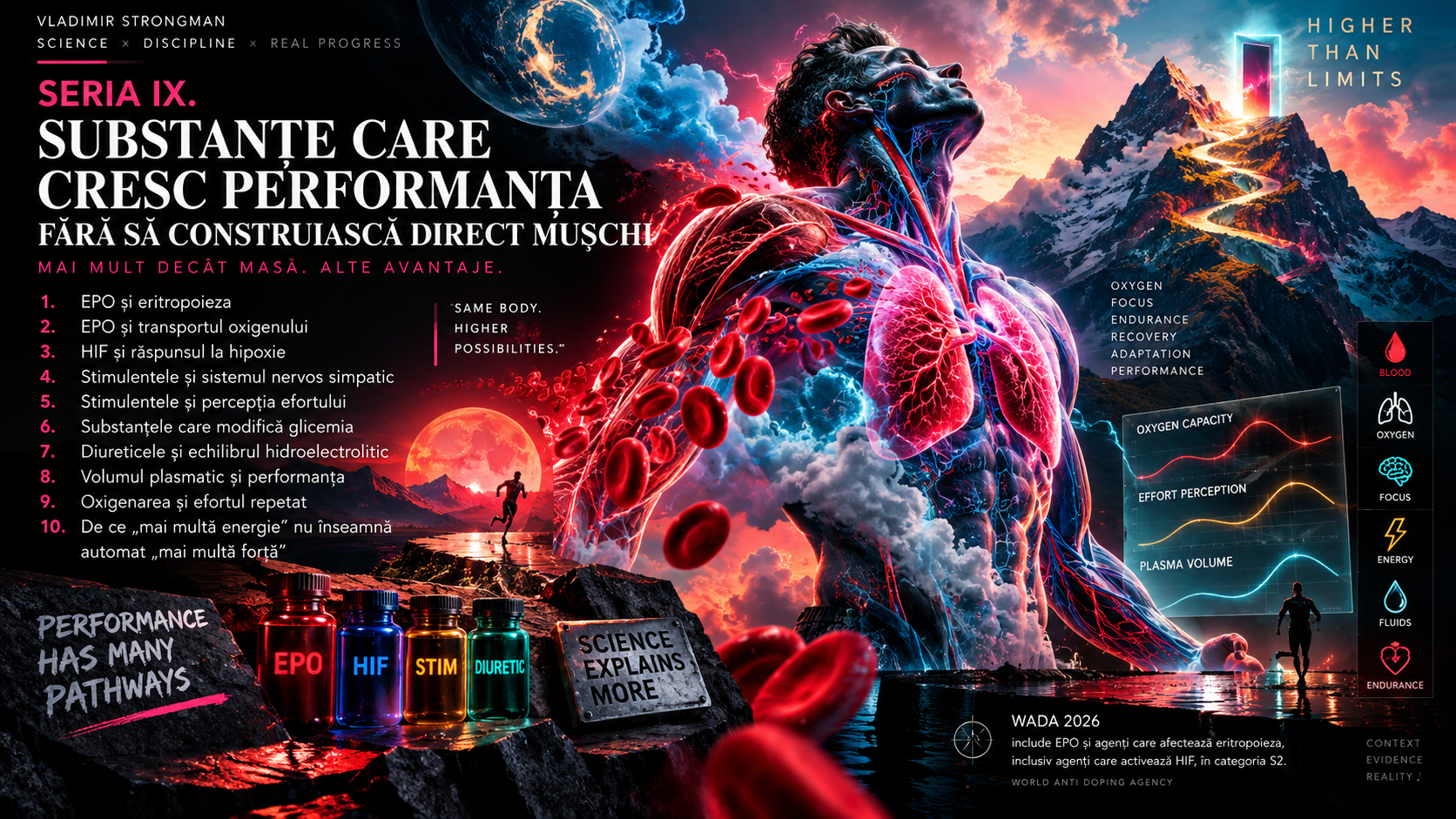
After stimulants and perceived exertion, episode 6 moves toward the fuel circulating in the blood. Blood glucose looks like a simple number, but behind it is a tightly regulated system involving the liver, muscle, pancreas, nervous system and several hormones. For a strength athlete, glucose is not merely “sugar in the blood.” It is one of the substrates supporting the brain, muscle contraction and restoration of energy stores.
Some substances lower glucose, others raise it, and others change its dynamics without an obvious immediate effect. Some are natural hormones such as insulin, glucagon and catecholamines. Others are medications legitimately used for diabetes or other diseases. In sport, interest in these agents has created confusion because changing a metabolic marker does not automatically improve performance.
This episode explains mechanisms without manipulation protocols. The reason is simple: blood glucose can move rapidly from performance territory into a medical emergency. Severe hypoglycemia can impair judgment, coordination and consciousness, while marked hyperglycemia can promote dehydration and worsen performance. Understanding the system is useful; uncontrolled experimentation with it can be dangerous.
1. What blood glucose means
Blood glucose is the concentration of glucose in the circulation. Glucose comes from food, glycogen breakdown and hepatic glucose production. The body attempts to keep it within a relatively stable range because the brain and other tissues depend on continuous energy supply. The value is not fixed: it changes after meals, during exercise, under stress, during sleep and under the influence of hormones and medications.
2. Blood glucose is not the same as muscular energy
Muscle does not run directly on blood glucose. It uses ATP, which is regenerated through phosphocreatine, glycolysis and oxidative metabolism. Circulating glucose contributes, but muscle also stores its own glycogen. A higher glucose reading therefore does not automatically mean greater strength, just as a full fuel tank alone does not determine how much power an engine can produce.
3. Insulin is the main hormone that lowers blood glucose
Insulin is secreted by pancreatic beta cells when glucose availability rises, especially after eating. It promotes glucose uptake and use in certain tissues, stimulates glycogen formation and suppresses hepatic glucose production. It also influences fat and protein metabolism. Its action is essential to normal physiology, but exogenous administration outside a medical indication can cause severe hypoglycemia.
4. GLUT4 and glucose entry into muscle
In skeletal muscle, an important mechanism is movement of the GLUT4 transporter toward the cell membrane. Insulin stimulates this process, but muscle contraction can also activate it through partly insulin-independent pathways. This helps explain why exercise can improve glucose uptake even when insulin sensitivity is imperfect. Active muscle becomes a highly effective consumer of glucose.
5. Glucagon pushes blood glucose in the opposite direction
Glucagon is secreted by pancreatic alpha cells and becomes important when glucose falls or when the body must maintain glucose supply between meals. It stimulates the liver to release glucose through glycogenolysis and to produce glucose through gluconeogenesis. Insulin and glucagon are not merely opposite switches. They are parts of a system continuously adjusting energy flow.
6. The liver is the central buffer of blood glucose
The liver can store glucose as glycogen and release it when needed. It can also produce glucose from lactate, glycerol and certain amino acids. During exercise, hepatic regulation is essential for preventing excessive falls in blood glucose. Any substance that changes insulin-glucagon signaling or hepatic glucose production can therefore alter the metabolic response to exercise.
7. Catecholamines can raise glucose during intense exercise
Adrenaline and noradrenaline, discussed in the sympathetic nervous system episode, promote fuel mobilization. They stimulate glycogen breakdown and can increase hepatic glucose production. During very intense effort, blood glucose may temporarily rise, particularly when sympathetic activation is strong. This is one reason exercise does not lower glucose in the same way under every condition.
8. Cortisol supports glucose availability during stress
Cortisol contributes to the stress response and can promote hepatic glucose production, substrate mobilization and reduced insulin sensitivity in some contexts. Glucocorticoid medications can raise blood glucose, sometimes substantially in susceptible individuals. In sport, this matters both metabolically and medically because drug-induced hyperglycemia is not a useful form of “extra energy.”
9. Growth hormone can reduce insulin sensitivity
Growth hormone has complex metabolic effects. These include stimulation of lipolysis and a tendency to reduce insulin action on glucose use. Excessive or prolonged exposure can contribute to higher glucose and insulin resistance. This is a clear example of a substance associated with performance in some contexts that may worsen glycemic control rather than “optimize” it.
10. Exercise changes glucose by itself
Muscular activity increases glucose uptake and insulin sensitivity, but the response depends on intensity, duration, nutrition and hormonal state. Prolonged aerobic exercise tends to consume glucose, while very intense short efforts can cause a temporary rise through catecholamines and hepatic glucose output. In Strongman, where maximal bursts alternate with waiting periods, glycemia can be highly dynamic.
11. Why hypoglycemia matters so much
Hypoglycemia is a fall in glucose below the level needed for normal function. The ADA 2026 standards treat values below 70 mg/dL as clinically important, while severe events can cause confusion, seizures, loss of consciousness or other emergencies. For an athlete handling hundreds of kilograms, even moderate impairment of attention and coordination can turn a technical event into a major safety risk.
12. Adrenergic symptoms are an alarm system
When glucose falls, the body activates counterregulatory mechanisms. Tremor, sweating, palpitations, hunger, anxiety and restlessness may appear. These symptoms are linked largely to sympathetic activation and catecholamines. They are not merely unpleasant. They are biological warning signals that glucose availability is becoming inadequate. Ignoring them during intense exercise can be dangerous.
13. The brain is vulnerable to falling glucose
The brain relies heavily on glucose and has limited reserves. When blood glucose falls substantially, concentration can deteriorate, reactions may slow, vision can change and coordination may suffer. During competition these signs can be mistaken for ordinary fatigue or stress, but the consequences can be much more serious than a simple loss of performance.
14. Hyperglycemia does not mean unlimited usable fuel
High blood glucose does not guarantee efficient glucose use by tissues. If insulin action is inadequate, glucose can remain in the circulation while cells struggle to use it appropriately. Significant hyperglycemia promotes osmotic diuresis, loss of water and electrolytes and fatigue. In pathological situations it can progress toward serious metabolic emergencies.
15. Exogenous insulin is a medication, not a simple metabolic tool
Exogenous insulin is essential for people with type 1 diabetes and is also used in some cases of type 2 diabetes. Outside a medical indication, using it in an attempt to alter nutrient storage or performance carries a real risk of severe hypoglycemia. The distance between a desired metabolic effect and an emergency can become dangerously small when the hormone is administered without medical supervision.
16. Why insulin attracts interest in bodybuilding and strength sports
Insulin is anabolic in a metabolic sense: it supports glycogen storage, suppresses protein breakdown and promotes nutrient handling under appropriate conditions. This created the idea that additional insulin might amplify recovery or muscle gain. The problem is that these effects cannot be separated from insulin's glucose-lowering action. In a healthy body, endogenous secretion is already finely regulated according to need.
17. Insulin is prohibited by WADA
The WADA 2026 Prohibited List places insulins and insulin-mimetics in section S4.4, metabolic modulators prohibited at all times, both in and out of competition, except where the applicable medical mechanisms such as a Therapeutic Use Exemption apply. For tested athletes, this matters even though insulin is a legitimate medicine.
18. Insulin secretagogues can cause hypoglycemia
Some diabetes medications, particularly sulfonylureas and glinides, stimulate the pancreas to release insulin. They can therefore increase hypoglycemia risk, especially when combined with exercise or inadequate food intake. They are not performance drugs, and there is no sound rationale for a person without a medical indication to use them to “force” glucose into muscle.
19. Metformin works differently
Metformin primarily reduces hepatic glucose production and improves insulin sensitivity. When used alone, hypoglycemia risk is generally much lower than with insulin or secretagogues. It is an important medication for type 2 diabetes and other medical contexts, but taking it without an indication does not automatically create a “better performing” metabolism. Gastrointestinal effects and the clinical context matter.
20. Metformin and training adaptation
Research has explored whether metformin changes exercise responses and metabolic adaptation. The evidence does not support a universal performance benefit in healthy athletes. In some settings, training adaptations may even be blunted in certain individuals. The key lesson is that improving a metabolic parameter in a person with disease is not equivalent to creating a sporting advantage in a healthy person.
21. GLP-1 receptor agonists change glucose and appetite
GLP-1 receptor agonists are used in diabetes and, for some molecules and indications, obesity management. They increase glucose-dependent insulin secretion, reduce glucagon in certain settings, slow gastric emptying and influence satiety. For an athlete, appetite and gastrointestinal effects can matter as much as the change in glucose, especially when very high energy intake is required.
22. GLP-1 is not performance fuel
A medication that improves glycemic control or produces weight loss in a medical indication does not automatically improve performance. For a strength athlete, reduced appetite, nausea, gastric fullness and difficulty consuming enough energy can become limiting. The real effect depends on goals, metabolic status, energy intake and individual tolerance.
23. SGLT2 inhibitors increase urinary glucose loss
SGLT2 inhibitors reduce renal glucose reabsorption and increase glucose loss in urine. This can lower blood glucose without directly stimulating insulin. These medications provide important benefits in selected populations with diabetes, heart failure or kidney disease, but losing glucose and water changes energy and fluid balance, both highly relevant during intense exercise.
24. SGLT2 inhibitors and dehydration
Through glycosuria and its osmotic effect, SGLT2 inhibitors can increase water loss. In a hot competition with multiple events and heavy sweating, anything that alters hydration can matter. This does not mean the medication is automatically incompatible with sport when medically prescribed, but its use requires clinical context and appropriate monitoring.
25. Euglycemic ketoacidosis is rare but serious
SGLT2 inhibitors are rarely associated with ketoacidosis that may occur without very high glucose. Risk can rise in settings such as acute illness, prolonged fasting or markedly reduced carbohydrate intake in susceptible people. For athletes, the important message is that a glucose value that does not look dramatic does not always exclude a serious metabolic problem.
26. DPP-4 inhibitors have a subtler glucose effect
DPP-4 inhibitors prolong the action of endogenous incretins and help control glucose, with relatively low hypoglycemia risk when used alone. They illustrate that not all glucose-lowering drugs act through the same pathway. Understanding mechanism is more useful than simplistically labeling every glucose-lowering substance as “insulin-like.”
27. Thiazolidinediones increase insulin sensitivity
Thiazolidinediones act through PPAR-gamma receptors and can improve insulin sensitivity in tissues. Their effects develop slowly rather than producing an acute performance change. Relevant adverse effects can include fluid retention and weight gain. Once again, a useful metabolic medicine should not be confused with a sports optimization tool.
28. Insulin sensitivity is not a binary switch
Insulin sensitivity describes how effectively tissues respond to a given insulin signal. It varies with body composition, physical activity, sleep, energy intake, inflammation, genetics and many other factors. There are not simply “sensitive” and “resistant” states. It is a continuum that can shift over time and differ between tissues.
29. Trained muscle handles glucose differently
Regular training increases the muscle's capacity to use and store glucose. Adaptations involve glucose transporters, metabolic enzymes and insulin sensitivity. For most healthy athletes, these changes created by training, nutrition and recovery are more relevant and safer than attempting to pharmacologically manipulate blood glucose.
30. Muscle glycogen is the local reserve
Muscle glycogen is glucose stored directly in muscle fibers and used locally during exercise. During repeated events or medleys, depletion can contribute to reduced work capacity. Glycogen restoration depends on carbohydrate intake, time, enzyme activity and insulin signaling. This explains why recovery nutrition matters without requiring exogenous hormonal manipulation.
31. Carbohydrates are the most obvious way to change blood glucose
Before medications, the most common influence on blood glucose is food. Digestible carbohydrates are broken down into glucose and other monosaccharides, absorbed and metabolically processed. Amount, food form, combinations with fat, protein and fiber, and meal timing all influence the glucose curve. For an athlete, this is normal physiology, not an abnormality that must be eliminated.
32. Glycemic index does not tell the whole story
Glycemic index describes the relative speed with which a standardized amount of carbohydrate raises blood glucose, but real meals are more complex. Portion size, fiber, fat, protein, processing and individual response change the result. For an athlete, the useful question is not whether a food produces any glucose rise, but whether it supports digestion, energy and recovery in the training context.
33. Fructose and liver glycogen
Fructose is metabolized largely by the liver and can contribute to restoration of hepatic glycogen. In sports nutrition, mixtures of carbohydrates can make sense when energy requirements are high. This does not turn sugar into a performance drug. It simply reflects the body's ability to use different carbohydrate sources to restore different energy stores.
34. Competition stress can raise blood glucose
An athlete may have higher glucose on competition day without unusual food intake. Adrenaline, noradrenaline and cortisol can increase hepatic glucose production before and during effort. The same system that raises heart rate and vigilance also mobilizes fuel. An isolated value should therefore be interpreted in the context of stress, sleep, nutrition and exercise.
35. Repeated events change carbohydrate demand
A single maximal lift relies heavily on the phosphagen system, but a Strongman day is not one lift. Warm-ups, medleys, carries, truck pulls, stones and repetitions for time accumulate energy demand. As total work rises, glycogen and carbohydrate availability become more important for maintaining work capacity.
36. Long waits between events complicate glucose responses
Strongman competitions can involve tens of minutes or even hours between events. During that time sympathetic activation rises and falls, the athlete eats, hydrates and warms up again. Glucose may oscillate for entirely physiological reasons. Trying to hold it artificially at one fixed number does not reflect how the body actually operates during competition.
37. Dehydration and blood glucose can interact
Significant hyperglycemia can increase urinary water loss, while dehydration alters the circulatory environment and exercise response. In a very large athlete who sweats heavily, fluid balance is already challenging. Substances that affect both glycemia and water loss can add another layer of complexity.
38. CGM measures interstitial glucose, not blood directly
Continuous glucose monitors estimate glucose in interstitial fluid. During rapid changes there can be a lag relative to blood glucose. CGM can be extremely useful for people with diabetes. In healthy athletes, however, every fluctuation displayed by a sensor should not be treated as a problem or an opportunity for pharmacological optimization.
39. A post-meal “spike” is not automatically pathological
After a carbohydrate-containing meal, glucose rises and the pancreas responds with insulin secretion. That is normal physiology. Magnitude, duration, context and overall metabolic health matter more than the mere presence of a rise. Online discussions sometimes frame any postprandial variation as dangerous, turning a normal mechanism into unnecessary anxiety.
40. Fasting glucose alone does not measure insulin resistance
A normal fasting glucose does not exclude every metabolic problem, while one mildly elevated value does not establish a diagnosis. Evaluation may include clinical context, repeat glucose, HbA1c and, in selected settings, fasting insulin or additional testing. Insulin resistance should not be reduced to one number taken out of context.
41. HbA1c shows a longer picture, not the present moment
Glycated hemoglobin, HbA1c, broadly reflects average glucose exposure over several months, with greater influence from more recent weeks. It does not describe what happens during one event or one meal. It is clinically useful but does not replace interpretation of glucose, symptoms and metabolic context.
42. Fasting insulin and HOMA-IR are estimates, not verdicts
Fasting insulin and formulas such as HOMA-IR can provide information about the insulin-glucose relationship, particularly in research and selected clinical contexts. They have biological and methodological variability and should not be interpreted in isolation. Results in an athlete can be influenced by body size, recent diet, sleep, stress and training.
43. Beta-adrenergic agonists can alter blood glucose
Beta-adrenergic receptor stimulation can influence glycogen breakdown, insulin secretion and fuel mobilization. Some beta-agonist medications can cause temporary increases in glucose together with effects such as tremor and tachycardia. These mechanisms again show that greater activation does not necessarily provide a useful metabolic advantage.
44. Thyroid hormones change the rate of glucose metabolism
Thyroid hormones influence energy expenditure, intestinal glucose absorption, hepatic glucose production and sensitivity to catecholamines. Hyperthyroidism can alter glucose tolerance, while hypothyroidism produces a different metabolic profile. Using thyroid hormones outside a medical indication can destabilize several systems at once, not only blood glucose.
45. Anabolic steroids can influence insulin sensitivity
Exposure to supraphysiological androgen doses can alter body composition, lipids, liver function and insulin sensitivity, with effects depending on compound, dose, duration and individual context. Not all metabolic changes move in the same direction. Greater muscle mass may support glucose uptake while other systemic effects may impair metabolic health.
46. Growth hormone and insulin can pull metabolism in different directions
Insulin promotes glucose storage and use, while growth hormone can reduce insulin sensitivity and increase fat mobilization. In normal physiology these signals change with meals, sleep and activity. When one or both are manipulated pharmacologically, the resulting balance becomes much harder to predict.
47. Glucocorticoids are a classic cause of drug-induced hyperglycemia
Prednisone, dexamethasone and other glucocorticoids can raise blood glucose by increasing hepatic glucose production and reducing insulin sensitivity. This effect is well established in medicine and can occur even in people without previous diabetes. For an athlete receiving such treatment, higher glucose should be viewed as a pharmacological effect, not as “extra energy.”
48. Alcohol can complicate glucose control
Alcohol is metabolized preferentially by the liver and can temporarily reduce hepatic gluconeogenesis. In people treated with insulin or secretagogues, this can increase hypoglycemia risk, including delayed episodes. Alcoholic drinks can also contain carbohydrates, so the glycemic response can be complex and difficult to predict.
49. Infection and inflammation can raise blood glucose
During illness, stress hormones and inflammatory mediators can increase glucose production and reduce insulin sensitivity. An unusually high glucose reading can therefore appear during infection, fever or inadequate recovery. For athletes, this is another reason not to interpret every metabolic value separately from overall health.
50. Poor sleep can impair glycemic control
Sleep deprivation and repeated sleep fragmentation can reduce insulin sensitivity and alter hormones involved in appetite and stress. An athlete who obsessively tracks supplements and medications while sleeping poorly may be trying to pharmacologically fix a problem driven largely by recovery. Glycemic control is deeply connected to sleep, not just to what is consumed before training.
51. Insulin sensitivity can increase after exercise
After exercise, muscle can remain more insulin-sensitive for a period, supporting glucose uptake and glycogen restoration. This is a useful physiological recovery response. In people using insulin or medications that stimulate its secretion, the same increase in sensitivity can contribute to delayed hypoglycemia, which is why exercise and treatment need medical coordination.
52. The post-meal “sugar crash” is often oversimplified
Sleepiness, low energy or hunger after a meal does not automatically prove reactive hypoglycemia. These symptoms have many possible causes and should be correlated with actual measurements and clinical context. In sport, the phrase “my blood sugar crashed” is often used for any subjective decline in energy even when the mechanism may be completely different.
53. Meal timing matters, but it should not become an obsession
The timing of carbohydrate intake can affect fuel availability, digestive comfort and glycogen restoration. For most athletes, however, total energy intake, total carbohydrate availability and gastrointestinal tolerance matter more than chasing one “perfect” minute. Physiology operates through flexible windows rather than clocks that suddenly close.
54. Hypoglycemia symptoms can resemble competition nerves
Tremor, sweating, palpitations and anxiety occur both in hypoglycemia and in normal sympathetic activation before an event. The difference cannot always be established by sensation alone. In people at medical risk, measuring glucose is more useful than guessing. During competition, mistaking a metabolic problem for simple adrenaline can delay necessary action.
55. Technical coordination can fail before muscle “runs out of fuel”
In hypoglycemia, one of the earliest risks to an athlete may be nervous system impairment: attention, reaction, decision-making and coordination. On a yoke, farmers walk or log press, that can be more dangerous than a simple reduction in strength. Performance depends not only on muscular energy but also on the brain's ability to control movement precisely.
56. Hyperglycemia can impair performance through water and electrolytes
When glucose is high enough to exceed renal reabsorptive capacity, glucose spills into urine and draws water with it. The result can be increased urination, thirst and electrolyte loss. In a sport where large body size and heat already raise thermal strain, this mechanism can further reduce work capacity.
57. Body composition influences glycemic control
Muscle mass provides a large reservoir for glucose disposal, but a high body mass does not automatically protect against insulin resistance. Visceral fat, inflammation, sleep, activity and genetics all matter. Two athletes at the same body weight can have very different metabolic profiles, making it unwise to copy another person's strategy.
58. Combining substances makes glucose harder to predict
One substance may increase insulin sensitivity, another may raise hepatic glucose output, and another may suppress appetite or alter hydration. When multiple medications, hormones and stimulants are combined, the final effect is not a simple sum. Interactions become difficult to predict, especially under exercise, heat and irregular food intake.
59. When glucose values deserve medical evaluation
Repeated abnormal values, hypoglycemic symptoms, excessive thirst, frequent urination, unexplained weight loss or episodes of confusion deserve medical evaluation. A glucose meter or sensor can provide information but does not replace diagnosis. If a real metabolic problem exists, the goal is to identify and treat the cause rather than hide the numbers before training.
60. Conclusion: blood glucose is a regulated variable, not a performance accelerator
Blood glucose needs to remain sufficiently stable for the body to function, not be artificially pushed toward an extreme. Insulin, glucagon, catecholamines, cortisol, diabetes medications and other substances can alter that balance. Sometimes the effect is therapeutic and lifesaving; at other times it can impair performance or become dangerous. In sport, healthy metabolic control is more valuable than chasing a “perfect” number.
The most important distinction is between treatment and optimization. In a person with diabetes, a glucose-lowering drug can correct a genuine problem and make exercise safer. In a healthy person, the same intervention may move a normal system into an unstable range. The effect of a molecule cannot be judged separately from the body receiving it.
Strongman is an excellent example of why metabolic simplifications fail. A ten-second event, a one-minute medley and an eight-hour competition day place different demands on metabolism. Blood glucose, glycogen, hydration and the nervous system interact continuously. There is no single ideal glucose value for every moment of a competition.
Another important message is that long-term metabolic status matters more than a snapshot. Insulin sensitivity, blood pressure, lipids, liver health, sleep and body composition evolve together. A strategy that temporarily creates a “pretty” glucose reading while worsening the rest of the system is neither a health strategy nor a robust performance strategy.
For athletes with diabetes, high-level performance is possible, but it requires individualization, education and monitoring. Exercise can lower or raise glucose depending on type and intensity, and the response may continue for hours afterward. Sports medicine, diabetes care and the athlete's own experience need to work together rather than be replaced by universal internet rules.
In anti-doping terms, insulin deserves separate attention because the WADA 2026 Prohibited List includes insulins and insulin-mimetics among metabolic modulators prohibited at all times. This does not invalidate legitimate medical use, but athletes requiring treatment must follow the applicable anti-doping procedures. Medicine and sporting regulation are two systems that must be managed at the same time.
Sources and recommended reading
1. Guyton and Hall. Textbook of Medical Physiology. Chapters on insulin, glucagon, carbohydrate metabolism and regulation of blood glucose.
2. American Diabetes Association. Standards of Care in Diabetes - 2026. Sections on glycemic goals, hypoglycemia, physical activity and glucose-monitoring technologies.
3. Colberg SR et al. Physical Activity/Exercise and Diabetes: A Position Statement of the American Diabetes Association. Diabetes Care.
4. Richter EA, Hargreaves M. Exercise, GLUT4, and skeletal muscle glucose uptake. Physiological Reviews.
5. DeFronzo RA and reviews on the pathophysiology of insulin resistance and type 2 diabetes.
6. Reviews and clinical guidelines on GLP-1 receptor agonists, DPP-4 inhibitors and incretin-based therapies.
7. Reviews and clinical guidance on SGLT2 inhibitors, glycosuria, hydration and euglycemic ketoacidosis.
8. Research on metformin, insulin sensitivity and the interaction between metabolic therapy and exercise adaptation.
9. World Anti-Doping Agency. The 2026 Prohibited List. S4.4: Metabolic Modulators, including insulins and insulin-mimetics.
10. Reviews on growth hormone, glucocorticoids, thyroid hormones, catecholamines and their effects on glucose metabolism.
Editorial note: educational material, not medical advice and not a guide to using medications or hormones. People with diabetes, symptoms of hypo- or hyperglycemia, or treatments that affect glucose should adapt exercise together with medical professionals who know their history.
More From The Journal

Training
The Science of Strongman Training - Episode X: Competition Programming
How to build a complete Strongman competition preparation block: calendar, events, volume, intensity, specificity, simulations, autoregulation, tapering and fatigue management.

Training
The Science of Strongman Training - Episode IX: Peaking
Peaking in Strongman: how to turn months of training into maximal competition performance by reducing fatigue, preserving adaptations and managing specificity.