
Pharmacology
Series: Performance-Enhancing Substances That Do Not Directly Build Muscle - Episode 5: Stimulants and Perception of Effort
September 8, 2026
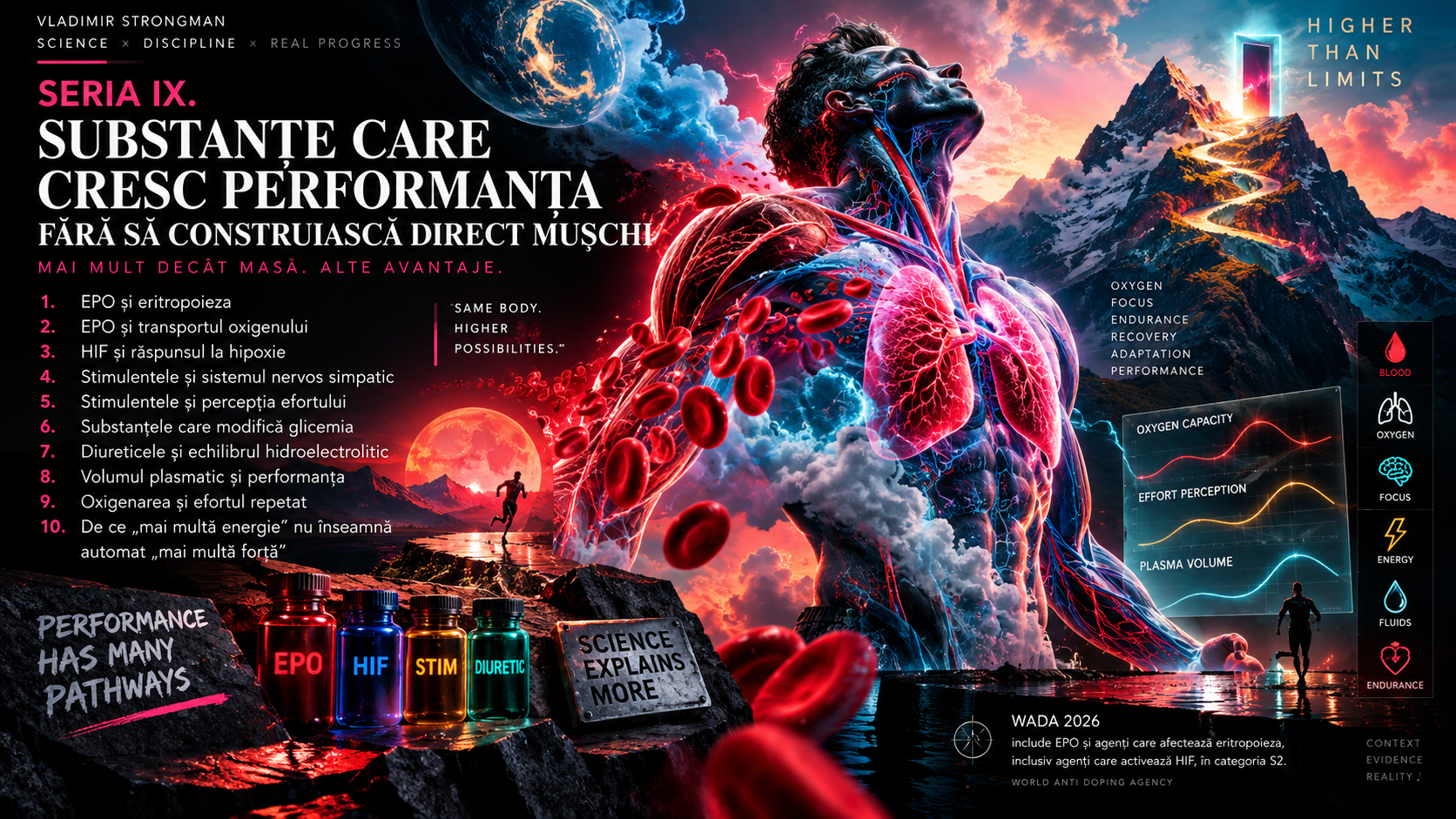
In the previous episode we followed the sympathetic nervous system, the biological accelerator that raises heart rate, blood pressure, alertness and fuel mobilization within seconds. Episode 5 moves one step further: what happens when a stimulant changes the way the brain interprets effort? The muscle may be capable of producing the same force, yet the sensations of heaviness, fatigue, pain or lack of motivation can change. That apparently subtle shift can influence pacing, tolerance of repeated work and decisions made during an event.
Perception of effort is not a simple thermometer of muscular fatigue. It is an estimate constructed by the brain from signals coming from muscle, heart, lungs, temperature, pain, breathing, emotions, experience and expectations. Two athletes can therefore perform the same task and describe it very differently, while the same athlete can experience an identical load as manageable one day and crushing on another. Stimulants are interesting precisely because they can alter some of these filters without creating new muscle tissue.
This is also where the central trap appears: feeling more capable is not identical to being more capable. A substance may reduce sleepiness, increase concentration or blunt the sensation of effort while core temperature, blood pressure, energetic depletion or tissue stress continue to accumulate. In strength sports, where an athlete may already operate near cardiovascular and mechanical limits, the difference between an alarm signal and the underlying problem becomes extremely important.
1. What a stimulant actually means
In a broad sense, a stimulant is a substance that increases activity in certain central nervous system circuits or amplifies signals associated with alertness and mobilization. Some act mainly through adenosine, others through dopamine, noradrenaline or combinations of several neurotransmitters. The perceived result may be more energy, attention, competitiveness or psychological tolerance of discomfort. The word “stimulant” does not automatically tell us how large the effect is, how safe the substance is or whether it is permitted in regulated sport.
2. Perception of effort is not the same as fatigue
Fatigue describes a reduction in the capacity to produce or maintain performance, while perception of effort describes how hard a person feels they are working. The two are related but not identical. An athlete can feel extremely strained and still possess physiological reserve, or have impaired capacity without accurately sensing how close the system is to its limit. Stimulants can alter this relationship, which helps explain why performance may change even when the muscle has not suddenly become stronger.
3. RPE scales try to turn a sensation into a number
Sport commonly uses RPE, rating of perceived exertion, scales to express how difficult an effort feels. Several versions exist, from traditional Borg scales to simple ranges from very easy to maximal. RPE is not a laboratory assay, but it can be surprisingly useful when tracked over time. It integrates breathing, muscular tension, pain, task difficulty and mental state. Precisely because it is an integrated perception, stimulants can modify it without necessarily changing every physiological component underneath it.
4. The brain integrates many signals before deciding “this is hard”
During an event, the brain simultaneously receives information about muscular tension, breathing, heart rate, temperature, acidity, pain and energetic state. At the same time, it knows the goal, the remaining distance or time, the opponents and previous experience. Perception of effort emerges from this integration rather than from one sensor. A substance that changes alertness or pain processing can therefore alter the experience of effort even if it has not fundamentally changed the condition of the muscle. It changes how the picture is read.
5. Central and peripheral fatigue are different
Peripheral fatigue develops in muscle and within the mechanisms that produce contraction: metabolite accumulation, ionic changes, reduced energetic availability and altered fiber excitability. Central fatigue refers to a reduction in the voluntary neural drive that the nervous system can send toward muscle. Stimulants act mainly on central and perceptual components. They cannot erase every peripheral limitation on command, and that distinction explains why the feeling of “I can keep going” does not guarantee that the tissue is equally prepared to do so.
6. Effort has both sensory and motivational components
When an athlete says “I cannot continue,” sometimes muscle force is truly collapsing and sometimes the perceived price of continuing has become too high. The brain weighs discomfort against the value of the goal. The same pain may be tolerated more readily in a final than in an ordinary training session. Stimulants can shift that balance by increasing alertness, motivation or tolerance of unpleasant sensations. The limits do not disappear, but the point at which an athlete chooses to slow down can move.
7. Stimulants may change the dashboard more than the engine
A useful image is the difference between an engine and a dashboard. Muscle, heart and metabolism are the engine; sensations of effort, pain and sleepiness are part of the dashboard that reports how hard the system is working. Some stimulants change the dashboard more than the engine. The athlete may feel that more reserve is available and maintain a higher pace, while the metabolic cost continues to accumulate. This separation is one of the most important ideas when discussing performance enhancement without direct hypertrophy.
8. Adrenaline and noradrenaline prepare the body for action
Intense exercise naturally increases sympathetic activity and catecholamines. Adrenaline and noradrenaline contribute to heart rate, blood-flow redistribution, fuel mobilization and alertness. Some stimulants amplify this adrenergic environment directly or indirectly. The result may be a stronger sense of activation, faster reaction and greater readiness for work. The same mechanism, however, can raise blood pressure, increase tremor and reduce fine motor control when activation exceeds the useful range.
9. Dopamine links effort with motivation and reward
Dopamine participates in motivation, reward prediction, action selection and motor control. It is not simply a “pleasure chemical.” In performance, altered dopaminergic signaling can change how valuable the goal appears and how willing an athlete is to pay the perceived cost required to reach it. Some stimulants strongly affect this pathway. That can increase willingness to work, but it may also encourage overestimation of capacity or more impulsive decision-making under pressure.
10. Adenosine is one of the brain’s natural brakes
Adenosine accumulates in relation to metabolic activity and contributes to sleepiness and reduced neuronal excitability. During a long day or after repeated effort, this signal is part of the sensation that the body needs rest. Caffeine is famous because it blocks adenosine receptors and temporarily reduces the impact of this brake. It does not erase sleep need or rebuild spent energy. It changes the perception of one component of fatigue rather than cancelling the biology that produced it.
11. Caffeine blocks adenosine; it does not create energy from nothing
Caffeine is the best-known stimulant in sport and one of the most extensively studied. Its major central action is antagonism of adenosine receptors. By reducing signaling associated with sleepiness and inhibition, neural activity can feel more available and alertness increases. This does not mean that the body has received new fuel. Glycogen, sleep and recovery are not replaced. Caffeine may make the cost of effort easier to tolerate, but it does not turn an exhausted reserve into a full one.
12. Caffeine can lower RPE, but the effect is not identical in every study
Classic meta-analyses found that caffeine can, on average, reduce perceived exertion during exercise. More recent work shows that the effect depends on event type, population and methodology. Performance sometimes improves without a clear reduction in RPE, suggesting that an athlete may produce more work at the same perceived difficulty. This is an important distinction: a stimulant does not have to make exercise feel easy in order to alter the final performance outcome.
13. More performance at the same RPE is still a major change
If an athlete rates an event as equally difficult as usual but moves faster, completes more repetitions or maintains power longer, the relationship between perception and work output has changed. The brain is accepting a higher output for the same subjective price. In Strongman, where many events are limited by time and by the ability to continue under discomfort, such a shift may matter more than a small variation in one-repetition maximal strength.
14. Expectations can modify the perceived effect
The placebo effect is highly relevant when discussing stimulants. If an athlete believes they have received something that will make them more energetic, they may become more motivated, pace more aggressively and tolerate discomfort better even when the active drug is absent. Caffeine research has shown that expectations can influence performance and perception. Pharmacology is not imaginary; rather, the final result emerges from the interaction between molecule, brain, context and the athlete’s beliefs.
15. Tolerance can change the response to a stimulant
Repeated exposure to some stimulants can alter sensitivity and subjective experience. A habitual caffeine consumer may describe effects differently from someone who rarely uses it. Tolerance is neither simple nor necessarily complete, and responses may differ across alertness, sleep, blood pressure and performance. Consumption history therefore matters when interpreting studies and personal experience. Increasing exposure is not automatically a solution when the subjective effect feels weaker.
16. Stimulation can hide sleepiness without repairing sleep loss
A sleep-deprived athlete may become more alert after a stimulant, but sleep loss continues to affect memory, emotional regulation, metabolism and recovery. The danger is confusing improved wakefulness with complete restoration of function. In a long competition, the difference can matter: the athlete feels active enough to force the pace while coordination, judgment or cardiovascular tolerance may still be impaired by the poor night of sleep.
17. Pain and effort overlap, but they are not the same experience
Muscular pain, pressure, metabolic burning and perception of effort can occur at the same time, but they are distinct experiences. A stimulant may alter attention to pain or tolerance of it, influencing how long an athlete continues. The problem is that pain may represent ordinary intense effort or a developing injury. Reducing the subjective importance of the signal says nothing certain about its cause. Greater tolerance can therefore become a double-edged adaptation.
18. Stimulants can alter central motor drive
Voluntary force depends not only on muscle properties but also on the signal sent by the nervous system. Under some conditions, central stimulation may help sustain recruitment and motor drive as fatigue develops. The effect is contextual and should not be confused with creating new motor units or building muscle. A stimulant may modify the nervous system’s willingness or ability to demand effort while the structural capacity of the muscle remains unchanged.
19. Attention and reaction time matter even in strength sports
Strongman may look like a sport in which reaction speed matters little, but attention has many roles: hearing referee commands, selecting positions, switching rapidly between implements, controlling breathing and maintaining technique under fatigue. Appropriate alertness can help these processes. Hyperactivation, however, can create rushing and errors. An athlete who is extremely alert but unable to control pacing may lose more time through mistakes than was gained at the start.
20. More activation can reduce precision
For simple explosive tasks, higher activation may be useful. For tasks requiring precision, synchronization or rapid decision-making, excessive activation can produce tremor, stiffness and impulsivity. This is why an athlete can feel intensely fired up yet perform worse technically. In log press, axle, stone loading or any event requiring positional corrections under pressure, efficiency depends on a balance between intensity and control rather than intensity alone.
21. There is an optimal activation zone, not a universal maximum
Performance does not rise linearly with arousal. Too little activation can mean sleepiness, low competitive drive and slow reactions; too much can mean anxiety, tremor, chaotic breathing and poor decisions. The optimal zone differs between people and events. A maximal deadlift may tolerate more activation than a technical loading event. Stimulants can move an athlete toward the useful zone or push them beyond it. More stimulated is therefore not synonymous with more capable.
22. Anxiety can turn energy into noise
Central stimulation and sympathetic activation can produce sensations resembling anxiety: rapid heartbeat, sweating, restlessness, muscular tension and narrowed attention. An athlete familiar with them may interpret these signals as readiness. Another may experience them as distraction. When the mind begins monitoring every heartbeat or tremor, cognitive resources shift from the task toward internal sensations. The energy is still present, but it is used less efficiently.
23. The heart responds to stimulants, not only the brain
Many stimulants influence heart rate, contractility or vascular tone. Intense exercise already produces major cardiovascular activation, and the effects can overlap. During a short event an athlete may notice only a stronger sense of energy. Across a long contest, the same activation may contribute to palpitations, slower recovery between events and greater cardiovascular load. It is a clear example of an effect that cannot be judged only by the subjective feeling of performance.
24. Blood pressure can be the invisible part of the story
Heavy lifting, the Valsalva maneuver and large muscular contractions can produce impressive increases in blood pressure even without stimulants. A sympathomimetic substance may add another layer to this physiology. Athletes do not always directly feel arterial pressure, so “I feel fine” provides no guarantee. In strength sports, where vascular pressure may already become extreme for brief periods, the cardiovascular effects of stimulation deserve more attention than the simple sensation of energy.
25. Stimulants and thermoregulation can come into conflict
Exercise produces heat, and the body must dissipate it through skin blood flow and sweating. Adrenergic stimulation can alter perceived fatigue and cardiovascular responses, while some stimulants can further increase heat production or tolerance of effort. The problem appears when the athlete keeps working hard because they feel capable while core temperature continues to rise. In very hot conditions, the distance between perceived energy and the thermal limit can become dangerous.
26. Caffeine is not simply a dehydration agent
The idea that any caffeine intake automatically dehydrates an athlete is too simple. Diuretic effects exist in certain contexts, but normal fluid intake and habituation make the picture more complex. The practical sporting issue is not that coffee instantly steals water from the body, but that stimulation can alter behavior, sweating and fatigue perception in an already demanding environment. Hydration should be judged in context rather than through a single rule about caffeine.
27. Heat is one environment where masking fatigue becomes risky
In an outdoor competition under strong sun, the body may limit performance not because muscle has lost all force, but to protect core temperature and circulation. If a stimulant reduces perceived effort or increases willingness to continue, the athlete may push harder while cooling systems are already near their limit. Central stimulant effects therefore need to be interpreted together with the environment rather than in an imaginary laboratory with perfect temperature.
28. Maximal strength and the ability to repeat effort are different qualities
A stimulant may have a modest or inconsistent effect on a single maximal repetition yet matter more when an athlete must maintain speed, concentration and motivation across repeated efforts. Strongman has exactly this structure: one contest may combine maximal strength, carries, repetitions and long waiting periods. The impact of stimulants therefore needs to be judged across the whole competition profile. A substance that does not change a personal record may still alter how the athlete reaches the final event.
29. In a medley, perceived effort can determine pacing
A medley forces the athlete to constantly decide how fast to start, when to breathe and how much discomfort to accept before the next implement. If the opening seconds feel easier, the athlete may choose a more aggressive pace. Sometimes that produces a better result; sometimes it creates a brutal collapse at the end. A stimulant that changes RPE can therefore influence strategy as much as physiology. The best performance occurs when altered perception is paired with intelligent pacing.
30. Truck pulls and carries show the difference between strength and tolerance
In truck pull, yoke or farmers walk, strength is essential but it is not the only limitation. Heart rate climbs, breathing becomes violent, muscles become metabolically stressed and the brain receives a wave of unpleasant signals. A stimulant can change how threatening those signals feel and how willing the athlete is to continue. It does not make the implement mechanically lighter. It changes the relationship between the real difficulty of the task and the athlete’s decision not to slow down.
31. Isometric events are a brutal test of perception
In Hercules hold, front hold or farmers hold, the athlete cannot hide discomfort by changing pace. Muscle remains under tension, local blood flow is restricted and burning and pressure increase second by second. Perceptual tolerance becomes extremely visible in these events. A stimulant may change alertness, motivation and attention to pain, but it does not change the fact that muscular and circulatory structures are under genuine mechanical stress.
32. Pacing is a continuous negotiation between brain and body
In any event lasting more than a few seconds, an athlete consciously or unconsciously adjusts pace according to internal signals. If perceived effort changes, that negotiation changes. The athlete may start harder, postpone slowing down or maintain a pace that would normally feel unsustainable. This can be ergogenic, but it can also distribute resources poorly. Perception is not merely a feeling; it is part of the control system governing performance.
33. Recovery between events can feel better than it really is
After a hard event, an athlete may be metabolically, cardiovascularly and neurologically fatigued. A stimulant can reduce sleepiness and the sensation of exhaustion, making the interval between events feel more restorative. Phosphocreatine restoration, heat removal, blood-pressure normalization and tissue recovery still have their own timelines. Alertness is not a biomarker of recovery. Across a multi-event contest, confusing “I feel ready” with “I am restored” can influence decisions for the rest of the day.
34. Masking warning signals can push an athlete too far
Fatigue and pain are not always enemies. Sometimes they are signals that prevent an athlete from maintaining a pace the system can no longer safely support. If a stimulant reduces the importance of those signals, the behavioral limit can move closer to the true physiological limit. Under some conditions that can improve performance; under others it can increase the risk of overheating, collapse, injury or technical failure. Advantage and danger can arise from the same mechanism.
35. Ignored pain may be an injury that continues to worsen
Stimulants are not classical analgesics, but they can alter attention and the emotional response to discomfort. In sports involving enormous loads, this matters. A tendon or muscle may already be injured, while competition atmosphere, adrenaline and central stimulation make the signal easier to ignore. Being able to continue does not demonstrate structural integrity. Psychological capacity to push through pain must be separated from the mechanical capacity of tissue to tolerate another repetition.
36. Stimulants are not synonymous with metabolic energy
Athletes often say that a stimulant “gives energy,” but the phrase is misleading. The molecule does not directly refill glycogen or replace spent ATP. It is more accurate to say that it can increase alertness, willingness to work and mobilization of certain resources. Sometimes this allows more aggressive use of energy that was already present. If the tank is nearly empty, making the driver more awake does not increase the amount of fuel remaining.
37. Glycogen and energetic substrates still matter
In repeated events and long competitions, carbohydrate availability, hydration and energy intake remain major factors. A stimulant can alter how fatigue is perceived, but it cannot turn inadequate nutrition into a sound strategy. If the athlete works harder because of stimulation, resources may even be consumed faster. The perceptual effect therefore has to be understood within metabolism. The brain may permit more work, but the energy required for that work must still come from the body.
38. Amphetamine-type drugs show how powerful central stimulation can become
Amphetamine-type substances strongly increase catecholaminergic signaling and can alter alertness, motivation, fatigue perception and behavior. Sports research has shown that such medications can improve certain forms of performance in some individuals, but with important cardiovascular and thermal effects. They are not simply a stronger version of caffeine; they are a distinct pharmacological category with different risks and anti-doping status.
39. Methylphenidate can alter performance and perception without building muscle
Methylphenidate is prescribed for medical indications such as ADHD and acts on dopamine and noradrenaline transport. Sports studies have reported changes in performance, heart rate, temperature and perceived exertion under some conditions. Because it can alter output without hypertrophy, it fits the theme of this series. A medical role does not justify non-medical use in healthy athletes, and regulated sport requires careful compliance with anti-doping rules.
40. Modafinil promotes wakefulness, but it is not a substitute for recovery
Modafinil is used medically for certain sleep disorders and promotes wakefulness through complex central mechanisms. Sporting interest comes from its ability to reduce sleepiness and maintain cognitive function. Being awake, however, is not the same as being recovered, and its effects cannot be reduced to mental clarity. Modafinil is listed by WADA among stimulants prohibited in competition, clearly separating it from caffeine in anti-doping terms.
41. Ephedrine and pseudoephedrine are not equivalent to stronger coffee
Ephedrine and pseudoephedrine have sympathomimetic effects and can influence cardiovascular function, alertness and perceived effort. They also occur in medical contexts, which can make them seem ordinary. Their effects on blood pressure, heart rate and the nervous system can nevertheless become relevant during hard exercise. Anti-doping status is specifically regulated for such substances, so athletes should check medications rather than assume that an over-the-counter cold product is automatically competition-compatible.
42. Cocaine can mask fatigue, but its physiological cost is major
Cocaine is a powerful stimulant affecting dopamine and catecholamines and can produce euphoria, alertness and reduced fatigue perception. Those effects do not make it a legitimate performance tool. Risks include arrhythmias, ischemia, hypertension, neurological events and impulsive behavior. WADA lists it among stimulants prohibited in competition and also classifies it as a substance of abuse. The feeling of power can therefore conceal cardiovascular load that is disproportionately large.
43. Nicotine stimulates the nervous system, but it is not a simple ergogenic aid
Nicotine activates nicotinic receptors and can increase alertness, attention and sympathetic activity. At the same time it can raise heart rate and blood pressure and has substantial dependence potential. Its effects on physical performance are not consistent enough to view it as a sports supplement. In 2026, nicotine is included in WADA’s in-competition Monitoring Program but is not on the Prohibited List. Monitoring does not mean medical approval or absence of risk.
44. Caffeine is monitored by WADA in 2026, but it is not prohibited
Caffeine occupies an interesting position in modern sport: it has demonstrated ergogenic effects in many settings, is widely used and, in 2026, sits in WADA’s Monitoring Program rather than on the Prohibited List. That distinction matters. Monitoring allows WADA to observe patterns of use without making caffeine an anti-doping violation. Its current status does not mean that every amount or every combination is free of adverse effects.
45. WADA prohibits many stimulants in competition
The 2026 WADA Prohibited List includes a wide range of stimulants in section S6, from amphetamines and modafinil to numerous sympathomimetic agents and analogues. Some are legitimate medications for specific indications, while others appear in grey-market products or contaminated supplements. A medical use does not cancel anti-doping rules. Athletes who require treatment need to verify their medication status and follow the formal therapeutic-use process when applicable.
46. Contaminated supplements are a real stimulant problem
Products marketed for energy, fat loss or focus have at times been found to contain undeclared stimulants or poorly studied analogues. A label does not always guarantee that a product contains only what it claims. This is particularly risky for tested athletes. Strict liability means that an incorrect label does not automatically erase consequences. Independent certification can reduce risk, but it does not make the supplement market completely uncertainty-free.
47. “Pre-workout” is a marketing label, not a pharmacological class
Two products called pre-workout can have completely different compositions. Some contain caffeine and familiar nutritional ingredients; others contain complex blends, extracts or compounds with less predictable stimulant effects. Physiologically, the body responds to molecules rather than the marketing name on the tub. Evaluation therefore needs to begin with the real ingredient list, manufacturer transparency and anti-doping status of the components rather than the promise printed on the label.
48. Combining stimulants can amplify risk, not only effect
When several substances simultaneously increase central or sympathetic activation, cardiovascular and psychological effects can add up in difficult-to-predict ways. Palpitations, tremor, anxiety, insomnia and overheating do not necessarily increase in proportion to sporting benefit. The body does not treat each stimulant in an isolated compartment. During hard exercise, where natural adrenaline is already high, overlapping signals can push the system from a performance zone into instability.
49. Arrhythmias are a risk that does not appear in an RPE score
RPE tells us how hard an athlete feels they are working, not whether the heart’s electrical rhythm is stable. An event can feel controllable while palpitations or arrhythmic susceptibility are present. Stimulants, dehydration, heat, electrolyte disturbance and intense exercise can interact. Subjective perception is therefore valuable but insufficient for safety. Not every important physiological limit is consciously perceived before it becomes a problem.
50. In strength sports, blood pressure deserves separate attention from effort perception
An athlete can become highly tolerant of effort while still mounting a major hypertensive response. Stimulants can increase sympathetic tone, while heavy lifting adds vascular compression and intrathoracic pressure. None of these components is directly measured by RPE. For strength sports, the distinction is essential: a weight feeling good does not reveal the size of the hemodynamic stress. Perception and physiology should be treated as different windows onto the same event.
51. Sleep is where today’s stimulation can cost tomorrow’s performance
A stimulant may temporarily improve alertness, but if it disrupts sleep onset or sleep quality, the cost can appear hours later. Sleep supports neural recovery, hormonal regulation, motor memory and appetite control. In an athlete who trains frequently, a gain during one session can be cancelled if the following night is compromised. Evaluation should therefore extend beyond the period in which the athlete feels energetic and include what happens after the acute effect has disappeared.
52. Tolerance, dependence and withdrawal can completely change the relationship with a stimulant
Repeated use of some stimulants can produce tolerance, while stopping may lead to fatigue, headache, irritability or poorer concentration. A major confusion can then arise: the substance may appear to improve performance simply because it temporarily reverses symptoms created by its absence. With stimulants carrying high dependence potential, the issue is more serious. A performance strategy is not truly efficient if normal function becomes dependent on the presence of a drug.
53. Individual response can vary enormously
Two people can respond differently to the same substance because of genetics, body size, habituation, sleep, anxiety, medication and metabolic rate. For caffeine, variation in metabolizing enzymes and adenosine-receptor biology is studied precisely because response is not universal. Some people report concentration and performance, others restlessness or impaired sleep. Research provides group averages; the real athlete always exists as an individual around that average.
54. Placebo and nocebo can change performance before pharmacology fully enters the picture
If an athlete is convinced that a substance will help, they may approach an event with greater confidence and aggression. If they expect tremor or palpitations, they may notice and amplify every sensation. Placebo and nocebo effects are real consequences of expectation on attention and behavior. This is why placebo conditions matter so much in controlled studies. In sport, packaging, ritual and product reputation can influence experience even before the molecule has reached its full effect.
55. RPE is a training tool, but stimulants can change its calibration
Many athletes use RPE to judge how difficult a set was or how much reserve remained. If a stimulant reduces perceived effort, the same load may receive a lower score than usual. That does not make RPE useless, but it changes the context. A training log becomes more valuable when it also records sleep, stimulants, temperature and stress. Otherwise, a perceptual shift may be mistaken for a structural improvement in fitness.
56. Perception should be compared with performance and physiological signals
RPE becomes more informative when placed next to time, repetitions, velocity, heart rate, recovery and technical quality. If effort feels easier and performance rises, there may be a genuine advantage. If effort feels easier while technique deteriorates and heart rate remains unusually high, the story is different. No single marker explains everything. Combining perception with objective data gives a better picture than enthusiasm generated by the feeling of energy alone.
57. Not every form of fatigue should be defeated
Performance culture can turn fatigue into an enemy that must always be eliminated. Physiologically, fatigue is also protective. It can reduce pace before temperature, energy stores, tissues or the cardiovascular system enter a dangerous zone. Sometimes overcoming premature discomfort is useful; at other times listening to it is smarter. Stimulants complicate that decision because they can weaken the signal without necessarily reducing the cause that generated it.
58. Prescription stimulants can have legitimate indications and separate sporting rules
Some stimulant medications are legitimate treatments for conditions such as ADHD or sleep disorders. For a patient, the purpose is restoring function rather than gaining a sporting advantage. In regulated sport, the same substance may require specific anti-doping procedures, including status verification and, when criteria are met, a Therapeutic Use Exemption. Medical treatment and non-medical performance use are different contexts even when the molecule has the same name.
59. Perception is a real component of performance, not merely an impression
A sporting result emerges from the interaction between physical capacity and the brain’s decisions about how much of that capacity to use. Perceived effort, pain, motivation and expectations influence that decision. This is why a substance can improve performance without building muscle or dramatically changing maximal strength. It can alter access to existing resources. Because it works partly through perception, it can also make true limits harder to recognize.
60. Conclusion: stimulants change the relationship between effort and what effort means
Stimulants can influence performance through alertness, motivation, catecholamines, adenosine, attention and perceived effort. Sometimes an athlete produces more work at the same perceived difficulty; sometimes they simply feel more energetic without a proportional benefit. Blood pressure, temperature, sleep and injury risk can meanwhile change independently of subjective sensation. The central lesson is simple: the brain actively participates in setting the limit, and moving that limit can be useful or dangerous depending on context.
Understanding perceived effort also changes how we view fatigue. The body does not always wait until a substrate is completely exhausted before reducing performance. It anticipates, integrates signals and adjusts behavior. Stimulants can modify that anticipation. Sometimes they provide access to reserve that already existed; at other times they make the athlete believe that the reserve is larger than it really is. The difference cannot be determined from the feeling of energy alone.
For Strongman, this theme is especially relevant because a contest combines very different efforts. One day can move from a maximal attempt to a carry, then to a hold and a repetition event. An activation level that helps deadlift may be excessive for a technical event or may compromise recovery before the final. Treating stimulation as a universal switch ignores the fact that every event demands a different balance of aggression, control and economy.
Stimulant research also has important limitations. Studies are often small, use different sports and protocols, and individual response can be large. Results from cycling or running do not automatically transfer to Strongman, while findings in rested laboratory participants do not perfectly describe an eight-hour contest performed in heat after travel, stress and poor sleep. Mechanisms may be general, but the magnitude of the effect remains context-dependent.
Perceived effort should not be viewed as an error that pharmacology needs to correct. It is a regulatory system built to integrate risk and resources. Training, experience and repeated exposure can recalibrate perception together with cardiovascular, muscular and technical adaptations. Pharmacological stimulation can move perception faster than the rest of the system adapts, and that is one of the major differences between training and a substance.
This episode connects directly to the main theme of the series: performance is much larger than muscle mass. EPO can change oxygen transport, HIF can change hypoxic adaptation, the sympathetic system can mobilize the body, and stimulants can change how difficult the same effort feels. Each pathway can provide an advantage without direct hypertrophy, but each carries its own trade-offs. Performance physiology is not a collection of shortcuts; it is a network in which every gain changes other parts of the system.
Sources and recommended reading
1. Borg G. Borg's Perceived Exertion and Pain Scales. Foundational resources on measurement of perceived exertion.
2. Doherty M, Smith PM. Effects of caffeine ingestion on rating of perceived exertion during and after exercise: a meta-analysis. Scandinavian Journal of Medicine & Science in Sports, 2005.
3. Systematic review and meta-analysis of acute caffeine supplementation in rugby players, 2026: performance, perceptual responses and physiological markers.
4. Systematic review and meta-analysis on acute caffeine intake and muscular power during resistance exercise, 2025.
5. ADHD Prescription Medications and Their Effect on Athletic Performance: A Systematic Review and Meta-analysis. Sports Medicine - Open, 2022.
6. Swart J et al. Exercising with reserve: evidence that the central nervous system regulates prolonged exercise performance. British Journal of Sports Medicine, 2009.
7. Caffeine Placebo Effect in Sport and Exercise: A Systematic Review, 2024.
8. Reviews on central fatigue, catecholamines, thermoregulation, pain perception and pacing during exercise.
9. World Anti-Doping Agency. The 2026 Prohibited List, section S6: Stimulants.
10. World Anti-Doping Agency. The 2026 Monitoring Program: caffeine, nicotine and other monitored stimulants.
Editorial note: this material is educational and does not constitute medical advice, a protocol for use, a drug combination or a guide to avoiding anti-doping controls. Some stimulants are medicines with precise clinical indications, and many substances in this category are prohibited in competition under WADA rules. Athletes using prescribed treatments should verify their status through official anti-doping resources and follow the applicable medical procedures.
More From The Journal

Training
The Science of Strongman Training - Episode X: Competition Programming
How to build a complete Strongman competition preparation block: calendar, events, volume, intensity, specificity, simulations, autoregulation, tapering and fatigue management.

Training
The Science of Strongman Training - Episode IX: Peaking
Peaking in Strongman: how to turn months of training into maximal competition performance by reducing fatigue, preserving adaptations and managing specificity.