
Pharmacology
Series: Performance-Enhancing Substances That Do Not Directly Build Muscle - Episode 4: The Sympathetic Nervous System
September 8, 2026
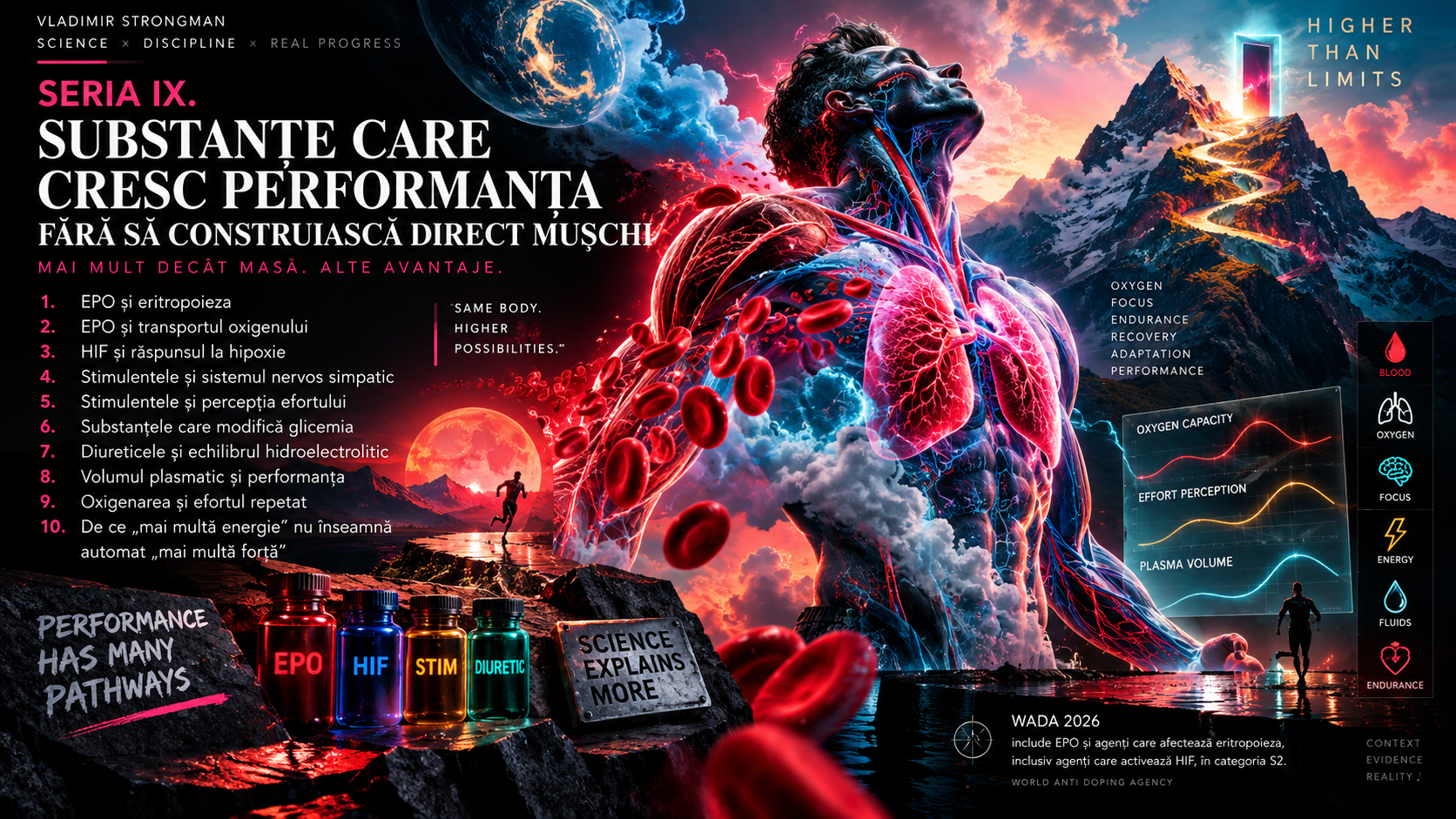
In the first three episodes we followed performance through blood and oxygen: EPO, oxygen transport and the HIF system. Episode 4 turns to a much faster mechanism. Before the body produces a single new red blood cell, it can change heart rate, blood pressure, blood distribution, glucose availability, alertness and tolerance to effort within seconds. Much of this rapid mobilization is coordinated by the sympathetic nervous system.
The sympathetic nervous system does not directly build muscle and does not by itself increase muscle mass. Yet it can radically change how an athlete uses what is already there. During a maximal attempt, a truck pull or a medley, the body must rapidly move from a relatively calm state to one capable of supporting enormous energy and circulatory demand. The sympathetic system is one of the main networks that makes this transition possible.
This is also why stimulants and sympathomimetic drugs attract attention. They can amplify signals that naturally occur during effort, but this is exactly where activation must be separated from performance. Sufficient activation may help; excessive activation can produce tremor, tachycardia, very high blood pressure, anxiety, overheating and loss of technical control. The sympathetic system is a biological accelerator, but flooring an accelerator does not automatically make every race faster.
1. What the sympathetic nervous system is
The sympathetic nervous system is one of the two major branches of the autonomic nervous system. It regulates functions that do not require conscious commands every second: heart rate, vascular tone, sweating, fuel mobilization and many other responses. During exercise, sympathetic activity progressively rises to help the body meet demand. It is not a system reserved for panic. It works continuously, including at rest, with its output adjusted to the situation.
2. The autonomic nervous system works in the background
The autonomic nervous system maintains much of internal physiology without voluntary control. Sympathetic and parasympathetic branches are not two buttons that simply cancel each other. Their contributions change constantly. At rest, parasympathetic control of the heart is important. As exercise begins, parasympathetic withdrawal and increasing sympathetic activity allow the cardiovascular system to adapt quickly. The transition can start even before the first repetition is performed.
3. Sympathetic versus parasympathetic is not good versus bad
Popular explanations often label the sympathetic system as stress and the parasympathetic system as relaxation. Physiology is more nuanced. We need sympathetic control to exercise, stand up without fainting and maintain perfusion. We need parasympathetic control for economy, digestion and recovery. Good performance means being able to increase activation when needed and bring it back down after the task is over. Flexibility matters more than permanently favoring one branch.
4. Where sympathetic signals begin
Sympathetic preganglionic neurons originate mainly in thoracic and upper lumbar regions of the spinal cord. Their signals travel to sympathetic ganglia and then to the heart, blood vessels, glands and other tissues. This architecture allows a broad response without requiring identical output to every organ. Sympathetic traffic can increase more strongly to some regions than others depending on exercise, temperature, blood pressure and metabolic need.
5. Ganglia are relay stations
A sympathetic signal usually does not travel through one uninterrupted neuron from the spinal cord to the target organ. It passes through ganglia, where one neuron communicates with another. Acetylcholine is the major transmitter in the ganglion. At many target organs, the postganglionic neuron then releases norepinephrine. These relay points help distribute and regulate the signal. The system resembles a network with several control nodes rather than one simple cable.
6. Norepinephrine is the main neural messenger
At most sympathetic postganglionic endings, norepinephrine is the principal neurotransmitter. It binds adrenergic receptors and changes target-tissue activity. In many blood vessels it promotes vasoconstriction, while in the heart it contributes to increased rate and contractility. The amount released and the response of receptors depend on stimulus intensity and tissue. This is why the phrase “more norepinephrine” cannot by itself predict the effect on the whole body.
7. Epinephrine comes largely from the adrenal medulla
The adrenal medulla functions like an endocrine extension of the sympathetic system. When activated, it releases mainly epinephrine and a smaller amount of norepinephrine into the bloodstream. These catecholamines can reach many organs at once and prolong or amplify the response to stress and exercise. During intense effort, local neural signaling and circulating hormones work together. This is why exercise physiology often refers to the sympathoadrenal system.
8. Alpha and beta receptors decide what the signal means
Epinephrine and norepinephrine do not cause the same effect everywhere. Tissues express different adrenergic receptors, especially alpha and beta families. Beta-1 receptors are important in the heart, alpha-1 receptors in many blood vessels, and beta-2 receptors in the airways and some vascular beds. The final effect depends on receptor distribution, catecholamine concentration and local tissue conditions. The same hormone can accelerate the heart while relaxing smooth muscle elsewhere.
9. “Fight or flight” is useful but too simple
The phrase “fight or flight” captures rapid mobilization but can make it sound as though sympathetic activity appears only in extreme situations. In reality, its output rises gradually and selectively. A brisk walk, standing up, heat, cold, strong emotion and a maximal deadlift all use the same network to different degrees. The sympathetic system is better understood as a manager of mobilization than as an alarm with only two positions: off and panic.
10. Activation starts before the effort
The brain can anticipate exercise. As an athlete approaches the bar, tightens a belt, hears the command and knows a maximal attempt is coming, heart rate can rise before the muscles produce significant force. This feed-forward mechanism is often called central command. Signals from higher brain regions prepare movement and cardiovascular systems at the same time. The body does not wait for a metabolic crisis before beginning mobilization.
11. The heart speeds up to increase cardiac output
During exercise the heart must deliver more blood to active tissues. Early in exercise, heart rate rises largely through withdrawal of parasympathetic braking. As intensity increases, sympathetic activation becomes increasingly important. Beta-1 stimulation raises heart rate and contributes to greater contractile force. The result is higher cardiac output, supporting transport of oxygen, glucose and hormones while also helping remove heat.
12. Sympathetic activity also increases cardiac contractility
It is not only how fast the heart beats that matters, but also how forcefully it ejects blood. Sympathetic stimulation increases myocardial contractility and accelerates relaxation, helping the heart function at higher rates. This reserve is crucial during maximal effort. Yet an extremely high heart rate is not the same as maximal performance. If filling time becomes too short or rhythm becomes unstable, the cardiovascular accelerator can become a limitation.
13. Blood flow is redistributed, not simply “opened up”
During exercise, the body must decide where blood is most useful. Sympathetic activation constricts vessels in some territories, helping maintain arterial pressure and redistribute flow. In active muscle, local metabolites can oppose part of this vasoconstriction and preserve perfusion. The vascular response to exercise is therefore a negotiation among central command, sympathetic output and the local signals from tissue demanding oxygen.
14. Active muscle protects its own blood flow
Working muscle produces adenosine, carbon dioxide, hydrogen ions, potassium and other signals that favor local vasodilation. These mechanisms can reduce the constrictor effect of sympathetic activity in the active region, a phenomenon sometimes called functional sympatholysis. It is an elegant compromise: systemic pressure is defended while the tissue doing the work continues to receive blood. When a large muscle mass is active, this balance becomes especially important.
15. Blood pressure rises for a reason
Strength exercise can produce very large but brief increases in arterial pressure, especially during near-maximal contractions and the Valsalva maneuver. Sympathetic activity contributes by increasing cardiac output and vascular tone. This pressure helps maintain perfusion, but it also loads the heart and vessel walls. The fact that pressure can rise physiologically during lifting does not make high resting blood pressure irrelevant to a strength athlete.
16. Breathing is coordinated with mobilization
The increase in ventilation during exercise is not caused by the sympathetic system alone, but autonomic mechanisms help regulate the airways and coordinate the response. Epinephrine can promote bronchodilation through beta-2 receptors, reducing airway resistance. At the same time, respiratory centers respond to central command, carbon dioxide, pH and muscular signals. Fast breathing is therefore the product of a network rather than a single stress hormone.
17. Glycogen becomes rapidly available fuel
Catecholamines promote glycogen mobilization in liver and muscle. In the liver, the goal is to help support blood glucose; in muscle, local glycogen can be used rapidly to produce ATP. During a medley or heavy repetition event, rapid carbohydrate availability is critical. The sympathetic system does not create energy from nothing. It helps unlock stored fuel at the moment energy demand suddenly rises.
18. Fat is mobilized too
Adrenergic signaling can increase lipolysis in adipose tissue and release fatty acids into the circulation. These fuels matter more during longer work and between events than during a few seconds of maximal force. In a long competition, however, metabolism does not operate in isolated compartments. The ability to combine and switch among fuel sources contributes to maintaining energy across the day.
19. Blood glucose is defended during stress
The brain and active muscle need fuel, and the body attempts to prevent dangerous falls in glucose. Catecholamines can increase hepatic glucose production and temporarily alter insulin and glucagon secretion. These responses are useful during exercise. Persistent sympathetic activation outside exercise can be metabolically less favorable. The same mechanism can therefore be adaptive in the short term and problematic when it remains chronically elevated.
20. Lactate rises for several reasons
During intense effort, glycolysis accelerates and lactate production can rise rapidly. Catecholamines promote glycogen mobilization and contribute indirectly to this metabolic flux. Lactate is not useless waste; it can be transported and reused as fuel. For a strongman, high lactate after a medley reflects the metabolic intensity of the event rather than simple poisoning of the muscle. Sympathetic activity supports effort but does not abolish metabolic fatigue.
21. Sweating is under sympathetic control too
Sweat glands are an interesting exception: their control is sympathetic, yet acetylcholine is the main transmitter at many of these terminals rather than norepinephrine. As body temperature rises, sweating allows heat loss through evaporation. In a hot competition with equipment, belts and high body mass, thermoregulation can become a performance factor. Sympathetic activation helps, but without sufficient fluid replacement and cooling, the system can be overwhelmed.
22. Pupils and vigilance change as well
Sympathetic activation dilates the pupil and forms part of a broader orientation toward the environment. At the same time, catecholaminergic systems in the brain increase vigilance and attention. This can help an athlete respond to commands, focus on technique and ignore distractions. Too much vigilance can become hypervigilance, however, causing rushed execution, loss of technical detail or excessive reaction to irrelevant stimuli.
23. Activation can improve focus only up to a point
Psychomotor performance does not increase linearly with arousal. Too little activation can mean sluggishness, poor intent and slow reactions. A moderate or high level suited to the task can improve focus. Beyond a point, attentional narrowing, errors and rushed movement appear. A simple deadlift and a technical loading event do not necessarily require the same psychological state. The optimal level depends on both athlete and event.
24. Sympathetic nerves do not directly recruit every motor unit
Skeletal muscle force is produced through somatic motor commands to motor neurons and muscle fibers, not because sympathetic nerves directly tell the muscle to contract. Yet central arousal, catecholamines, circulation and fuel availability change the environment in which the motor system operates. An athlete can therefore feel more aggressive and produce a more forceful effort without the sympathetic system being identical to voluntary motor control.
25. Pain perception can be altered
Acute stress and intense exercise can temporarily modify pain perception through central and hormonal mechanisms. This may help an athlete finish a demanding event, but there is a reverse side: feeling less pain does not mean tissue is protected. A highly activated athlete may ignore warning signals that would be obvious at rest. The psychological alarm can be dampened while mechanical loading remains extremely high.
26. Tremor shows that activation has costs
Excessive adrenergic activation can cause fine tremor, palpitations and restlessness. In a very simple strength event, slight tremor may not matter. In a task requiring precision, grip placement or object control, it can become a disadvantage. This is one of the clearest examples that “more stimulated” does not mean “more capable.” The body may have abundant energy available while losing some fine control.
27. Maximal strength benefits mainly from readiness to express existing capacity
During a maximal attempt lasting seconds, the sympathetic system cannot build new structures. Its role is to prepare the environment: heart, pressure, vigilance and fuel access. Increased intent and arousal can sometimes help an athlete express more of existing strength. Technique, muscle mass, tendons and neural capacity remain decisive. Epinephrine cannot replace kilograms of strength that were never built in training.
28. During a medley, sympathetic drive is operating at high capacity
A medley combines movement, lifting, direction changes and enormous metabolic demand. Heart rate rises, pressure must be maintained, blood is redistributed, glycogen is mobilized and thermoregulation intensifies. Here the sympathetic system is not merely psychological background; it is part of the physiological infrastructure of the event. Efficient activation can help maintain pace, while excessive activation can make an athlete start too hard and collapse later.
29. Truck pull is an example of whole-body mobilization
In truck pull, nearly the entire body works against a large resistance and cardiovascular and metabolic demand rises quickly. Breathing becomes violent, arterial pressure increases and concentration must be maintained while metabolites accumulate. Sympathetic activation is natural and necessary. An overly aggressive start, however, can consume anaerobic reserves too quickly. Physiology rewards not only aggression but also how it is paced over the duration of the event.
30. Holds combine sympathetic drive with muscle reflexes
In farmers hold, Hercules hold or front hold, continuous contraction compresses blood vessels and allows metabolites to accumulate. Receptors in muscle send signals to the central nervous system, increasing the cardiovascular response through the exercise pressor reflex. Sympathetic activity helps defend pressure and perfusion while discomfort rises. Endurance in these events therefore depends on more than the forearms or shoulders; the whole systemic response must be tolerated.
31. Competition emotion can activate the system before warm-up
A competition does not begin physiologically at the first whistle. Travel, spectators, music, opponents, starting order and anticipation can raise sympathetic activation long before an event. For some athletes this is useful. For others it means hours of elevated heart rate and mental expenditure before performance matters. Staying relatively calm between events and raising activation only when needed can preserve energy and attention.
32. Epinephrine and norepinephrine are not identical
Although closely related, epinephrine and norepinephrine have different profiles. Norepinephrine is especially important as a sympathetic neurotransmitter and strongly constricts many vascular beds. Circulating epinephrine has major effects on the heart, airways and metabolism and can activate beta-2 receptors more prominently under some conditions. In practice the body uses both. Reducing the entire stress response to “adrenaline” misses much of the mechanism.
33. The adrenal medulla turns a neural signal into a hormonal one
Sympathetic preganglionic fibers reach chromaffin cells of the adrenal medulla. These cells behave somewhat like modified postganglionic neurons and release catecholamines into the bloodstream. The response can therefore become systemic. Neural signaling is fast and directed, while circulating hormones reach many tissues. Together they provide both precision and breadth when the body faces a major challenge.
34. The baroreflex does not switch off during exercise
Baroreceptors in the carotid arteries and aorta monitor stretch produced by arterial pressure. During exercise, the reflex is not simply disabled; its operating point is reset so the body can control a higher pressure. This allows increased cardiac output while still protecting against excessive fluctuations. Exercise cardiovascular physiology is therefore active control, not a temporary abandonment of homeostasis.
35. The exercise pressor reflex comes from working muscle
Mechanical and metabolic receptors in active muscle send information to the central nervous system. As mechanical tension and metabolite accumulation rise, these signals can amplify sympathetic activity and the cardiovascular response. This is the exercise pressor reflex. During a heavy set, the brain does not have to guess how hard the muscle is working; it receives continuous feedback from the periphery. The final response combines anticipation with information arriving from the body.
36. The metaboreflex becomes obvious when blood flow is restricted
When blood flow falls in a contracted muscle, metabolites accumulate. Chemically sensitive afferents send signals that increase sympathetic activation and help maintain blood pressure. If intense contraction ends while local occlusion is maintained, the cardiovascular response can remain elevated. This helps explain why relatively small active muscle masses during isometric work can produce surprisingly large cardiovascular stress.
37. Hypoxia from the previous episode also talks to the sympathetic system
Episode 3 discussed HIF and cellular responses to low oxygen. At the whole-body level there is also a much faster response: chemoreceptors detect changes in oxygen, carbon dioxide and pH and can influence ventilation and sympathetic output. HIF changes gene expression over minutes and hours; the nervous system can alter circulation within seconds. The two levels complement each other and show how seriously the body treats oxygen availability.
38. Heat increases sympathetic demand too
In heat, blood must also reach the skin for cooling while active muscles demand perfusion. Plasma volume can fall through sweating and the heart often compensates with a higher rate. Sympathetic control participates in this redistribution. For a very heavy athlete, large heat production and a lower surface-area-to-mass ratio can make cooling difficult. A stimulant that further increases heart rate or heat production may worsen the problem rather than solve it.
39. Dehydration forces the system to compensate
When plasma is lost through sweating, circulating volume falls. To maintain pressure and output, the body can raise heart rate and vascular tone. Sympathetic activation becomes part of the compensation. There is a limit, however. If volume becomes too low, the heart cannot compensate forever. Performance can fall even while the athlete feels strongly stimulated. Psychological energy cannot replace missing blood volume.
40. Sleep is when the accelerator should come down
During normal sleep, sympathetic activity and blood pressure tend to fall in several stages, providing cardiovascular recovery. Fragmented sleep, stress and obstructive sleep apnea can disrupt this decline and produce repeated activation. For an athlete, autonomic recovery matters as much as competition mobilization. If the body keeps the accelerator pressed all night, there is less reserve available the next day.
41. Caffeine affects the system but is not “adrenaline in a cup”
Caffeine acts mainly by blocking adenosine receptors and can increase alertness; under some conditions it can also amplify catecholamine responses. Its action is not identical to directly stimulating an adrenergic receptor and varies with tolerance, sleep and the amount consumed. For this series, the important mechanistic lesson is that some substances can influence performance through the brain and arousal without directly building muscle tissue.
42. Sympathomimetics imitate or amplify adrenergic signaling
The term sympathomimetic describes substances that reproduce some effects of sympathetic activation. Some directly stimulate adrenergic receptors, while others increase catecholamine release or reduce reuptake. Effects can include greater alertness, heart rate, blood pressure and fuel mobilization. This is a broad family rather than one drug. The mechanism that may offer performance benefits is also the mechanism that can produce cardiovascular or neurological toxicity.
43. Beta-2 receptors show how complex the response is
Beta-2 receptors are present in the airways, blood vessels and other tissues. Their activation can produce bronchodilation and metabolic effects. In medicine, beta-2 agonists are mainly used for respiratory disease, while anti-doping rules contain precise conditions and exceptions for some therapeutic uses. The useful lesson for athletes is not to search for a pharmacological shortcut, but to understand that the same receptor can have valuable clinical effects and unwanted systemic consequences.
44. Some common medicines can have stimulant effects
Some cold or decongestant medicines contain compounds with sympathomimetic activity. For a drug-tested athlete, over-the-counter status does not guarantee irrelevance to anti-doping rules. Thresholds, routes of administration and substance status must be checked in official sources. This is why reading labels and verifying medication is more reliable than assuming that anything sold in a pharmacy must be safe for competition.
45. WADA 2026 places stimulants in category S6
The 2026 WADA Prohibited List places stimulants in section S6 and prohibits them in competition, with rules that differ among substances and with specific thresholds or exceptions for some compounds. The category includes both non-specified and specified stimulants. Athletes should verify any substance against the current official list. Discussion of mechanisms here is educational and is not a guide to use or avoiding detection.
46. More activation does not automatically mean more performance
It is intuitive to assume that if a little activation helps, more should help more. Biology rarely behaves so simply. As arousal rises, attention and energy may improve, but beyond a point tremor, disorganized breathing, unnecessary muscle tension, rushed decisions and wasted energy appear. The optimal zone is individual and task-specific. A skilled athlete is not the one who can activate the sympathetic system the hardest, but the one who can use activation efficiently.
47. Tachycardia can become a limitation
An increased heart rate is normal and necessary during exercise. A disproportionately high rate at rest or before an event, however, may reflect stress, dehydration, heat, illness, poor sleep or stimulant effects. If the heart is beating very fast without a corresponding gain in useful output, the cost may exceed the benefit. Palpitations can also increase anxiety and destabilize concentration. Heart rate is a tool of performance, not a score by itself.
48. Arrhythmias are the dangerous side of the accelerator
Catecholamines increase cardiac excitability. In most healthy people, the physiological exercise response is tightly controlled. Individual predisposition, dehydration, electrolyte disturbance, some medications or stimulant combinations can raise arrhythmia risk. Performance goals do not justify ignoring syncope, chest pain or persistent palpitations. When the electrical system of the heart becomes unstable, the issue is no longer sports optimization but safety.
49. Hypertension and sympathetic activation can reinforce each other
Elevated sympathetic activity contributes to some forms of hypertension, while hypertension can alter cardiovascular reflexes. Strength athletes experience large pressure peaks during heavy lifting on top of their resting baseline. If resting pressure is already high, the safety margin changes. Pharmacological stimulation should not be judged only by how an athlete feels, because arterial pressure can rise substantially without obvious symptoms.
50. Overheating is a real risk
Intense exercise produces heat, and sympathetic activity is part of thermoregulatory control. Some stimulants can further increase heat production, vascular effects or heart rate. In hot conditions, the combination of high body mass, equipment, dehydration and excessive stimulation can become dangerous. Feeling energetic is not a reliable thermometer. When core temperature rises too far, cognitive and muscular performance deteriorate even if motivation remains high.
51. Digestion receives lower priority during stress
In a strongly mobilized state, the body redistributes resources and gastrointestinal activity can decline. This helps explain why competition nerves may cause dry mouth, nausea, cramps or loss of appetite. During a long day of events, nutrition becomes difficult exactly when energy is needed. Excessive sympathetic activation can turn a psychological problem into a metabolic one if the athlete can no longer eat and drink effectively between events.
52. Anxiety can look like “competition energy”
High heart rate, fast breathing, sweating and muscle tension occur in both useful mobilization and anxiety. The difference is partly physiological but also involves interpretation and control. One athlete may experience the same arousal as readiness while another experiences loss of control. Stimulants can amplify either pattern. Psychological regulation of competition state can therefore be as important as any chemical intervention.
53. Poor sleep can leave sympathetic drive elevated the next day
Sleep deprivation alters autonomic regulation, increases perceived effort and impairs attention. A tired athlete may try to compensate with more stimulation, but stimulation does not restore every function of sleep. It can mask sleepiness while coordination, judgment and recovery remain impaired. In a sport involving very heavy objects, the difference between feeling awake and actually being recovered matters for both safety and performance.
54. Chronic activation is different from a competition spike
The sympathetic system is designed to respond rapidly and then reduce its output. When psychological stress, poor sleep, illness or other factors keep activation high for days or weeks, the effects differ from a short pre-event spike. Resting blood pressure can rise, sleep can fragment and fatigue can accumulate. A good performance system requires alternation: strong mobilization when necessary and genuine recovery afterward.
55. “Fried nervous system” is an expression, not a diagnosis
Athletes sometimes say they have “fried their nervous system” after very heavy training. The phrase can describe fatigue, reduced explosiveness or irritability, but it does not correspond to one injury or one physiological marker. Fatigue after maximal work involves the central nervous system, muscle, metabolism, sleep and psychological stress. Sympathetic activity is one piece of the puzzle, not a universal explanation for every day when the bar feels heavy.
56. HRV gives clues but does not directly read “sympathetic level”
Heart-rate variability is used to monitor autonomic regulation, especially vagal influence on the heart. A low value does not automatically mean “too much sympathetic activity,” and a single measurement is affected by breathing, body position, time of day, alcohol, sleep and training. HRV is more useful as an individual trend measured under similar conditions. It is not a magical recovery detector and should be interpreted in context.
57. Training can modify sympathetic regulation
Regular training produces adaptations in autonomic control. Research suggests that aerobic exercise can reduce resting muscle sympathetic nerve activity in some populations at cardiovascular risk, while resting effects in healthy adults are more variable. The important point is that trained athletes can often produce greater output with more efficient regulation. Adaptation does not mean the sympathetic system disappears; it means control becomes better calibrated.
58. Tolerance changes the response to stimulants
Repeated exposure to some stimulants can reduce part of the perceived effect through receptor and signaling adaptations. An athlete may feel that more is needed for the same sensation, while cardiovascular risks do not necessarily decline to the same degree. This creates a classic trap: tolerance to the feeling of stimulation is not identical to complete tolerance of the heart, blood pressure or sleep. Perception and physiology do not always adapt together.
59. Activation can be regulated without drugs
Warm-up, pre-event routines, music, verbal cues, imagery and breathing can change arousal without introducing a substance. Some strategies increase mobilization while others reduce it between events. Their advantage is finer control: the athlete can build a state suited to the task and practice it repeatedly. In a complex sport, controlling one's activation is a performance skill rather than merely a personality trait.
60. Conclusion: the sympathetic system does not build muscle, but it changes how well you use it
The sympathetic nervous system is one of the major infrastructures of acute performance. It accelerates the heart, redistributes blood, mobilizes fuel, supports thermoregulation and changes alertness. It does not directly build muscle mass, but it can alter how existing strength is expressed and repeated. This is why it is a target of both training and pharmacology. The central lesson is balance: enough activation for the task, not maximal activation at any cost.
To understand sympathetic effects on performance, sensation must be separated from mechanism. An athlete may feel that a substance “hits hard” because of palpitations, heat and agitation, but those sensations do not measure how much force or power was gained. Sometimes the subjective effect is larger than the real advantage. Other interventions may improve performance through sleep, hydration or pacing without producing a dramatic stimulant sensation.
In Strongman, this distinction is especially important because events demand different things. A maximal log attempt may tolerate very high psychological arousal. Yoke or loading requires aggression together with positioning, pacing and control. An athlete who enters every event in the same state can be excellent in one and chaotic in another. Efficient sympathetic regulation means matching arousal to the specific task rather than using one intensity level for the entire competition.
The sympathetic system also shows why performance cannot be reduced to muscle mass. Two athletes with similar size and training strength may perform differently if one manages competition stress, temperature, cardiovascular pacing and energy mobilization better. These differences are not obvious in a photograph, but they become very visible after the fourth or fifth event. The ability to regulate a system can matter almost as much as the size of the muscular system it supports.
As in the HIF episode, context determines whether a response is useful or harmful. Sympathetic activation during a twenty-second sprint is normal adaptation. Similar activation maintained through the night because of apnea, anxiety or stimulant exposure can impair recovery. Biology does not label mechanisms good or bad. It uses them to solve problems. The athlete must understand when the mechanism helps and when its cost begins to exceed the advantage.
The final idea may be the most important for the whole series: performance can improve without adding a gram of muscle, but every pathway that raises performance has its own limit. More oxygen may mean more viscous blood. More activation may mean pressure, tremor and heat. Physiology is a system of trade-offs. Understanding those trade-offs is more useful than searching for one switch that raises every component of performance at once.
Sources and recommended reading
1. Guyton and Hall. Textbook of Medical Physiology. Chapters on autonomic control, catecholamines and cardiovascular physiology.
2. Boron & Boulpaep. Medical Physiology. Autonomic control, adrenergic receptors and cardiovascular physiology.
3. Fu Q, Levine BD. Exercise and the autonomic nervous system. Handbook of Clinical Neurology, 2013.
4. Fisher JP, Young CN, Fadel PJ. Autonomic adjustments to exercise in humans. Comprehensive Physiology, 2015.
5. Christensen NJ, Galbo H. Sympathetic nervous activity during exercise. Annual Review of Physiology, 1983.
6. Zouhal H et al. Reviews on catecholamines and the effects of exercise and training.
7. Meyer SE et al. The impact of exercise training on muscle sympathetic nerve activity: systematic review and meta-analysis. Journal of Applied Physiology, 2024.
8. Besnier F et al. Exercise training-induced modification in autonomic nervous system: an update. Annals of Physical and Rehabilitation Medicine, 2017.
9. World Anti-Doping Agency. The 2026 Prohibited List, section S6: Stimulants.
10. Reviews of the exercise pressor reflex, baroreflex, catecholamines, thermoregulation and autonomic control during exercise.
Editorial note: this material is educational and does not constitute medical advice, a stimulant-use protocol or a guide to doping. Sympathomimetics and stimulants can have important cardiovascular, neurological and thermal effects. Athletes subject to anti-doping control should verify medicines and substances against the current WADA Prohibited List and official resources.
More From The Journal
Training
The Science of Strongman Training - Episode X: Competition Programming
How to build a complete Strongman competition preparation block: calendar, events, volume, intensity, specificity, simulations, autoregulation, tapering and fatigue management.
Training
The Science of Strongman Training - Episode IX: Peaking
Peaking in Strongman: how to turn months of training into maximal competition performance by reducing fatigue, preserving adaptations and managing specificity.