
Pharmacology
Series: Performance-Enhancing Substances That Do Not Directly Build Muscle - Episode 3: HIF and the Hypoxic Response
September 8, 2026
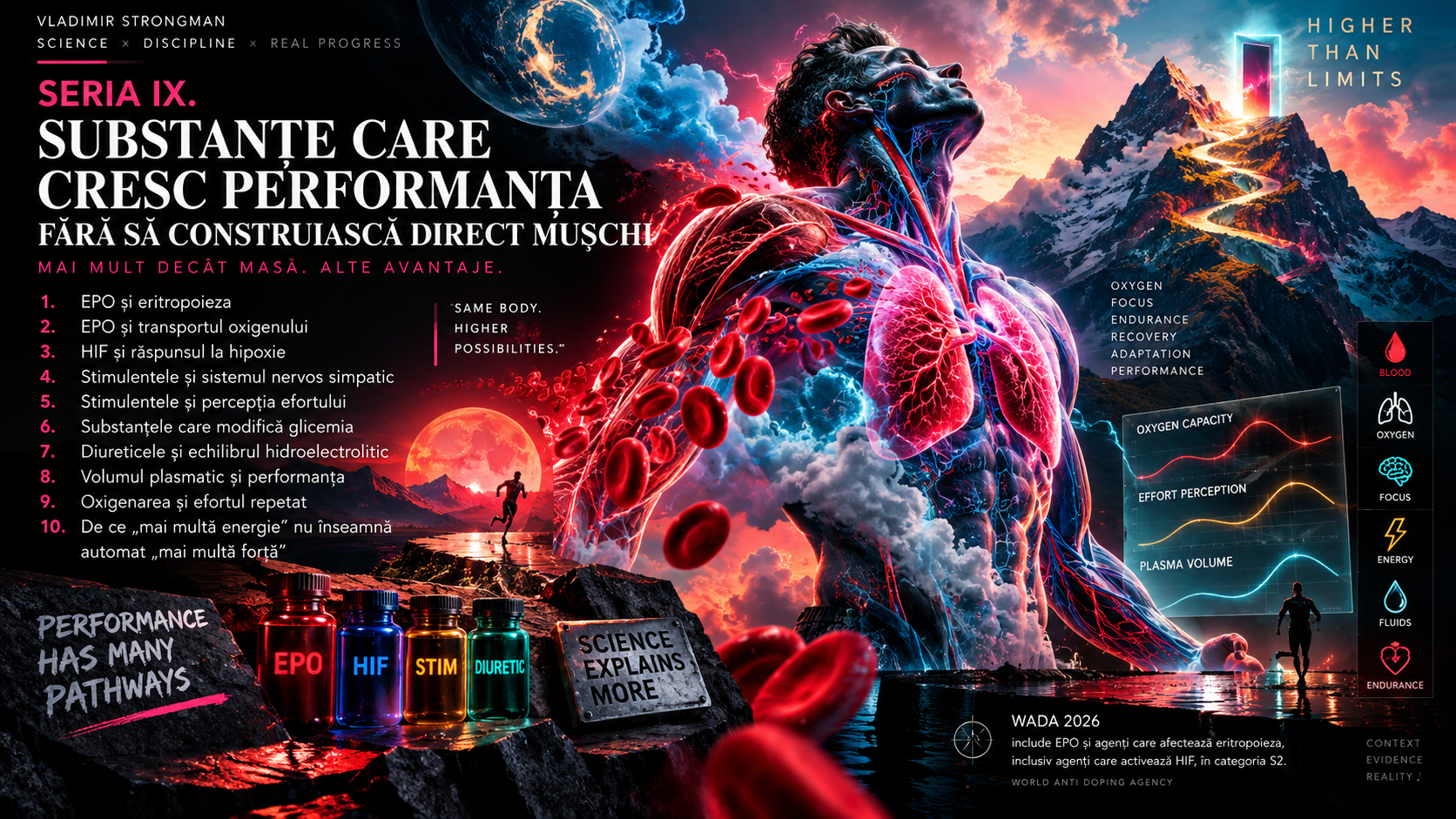
In the first two episodes we discussed EPO, red-blood-cell production and oxygen transport. Episode 3 moves closer to the point where the whole story begins: how does the body know that oxygen is not sufficient? The body does not have one single oxygen detector. It has a molecular network that senses change and activates an adaptation program. At the center of that network is HIF, short for hypoxia-inducible factor.
HIF is not a substance that circulates through blood like a classic hormone. It is a regulatory system inside cells. When oxygen is sufficient, certain HIF components are rapidly marked for destruction. When oxygen falls, that process changes, HIF becomes stabilized and begins activating genes that help the body adapt. These effects include stimulating EPO, changing energy metabolism, supporting blood-vessel responses and altering how cells handle glucose and iron.
This matters for performance because hypoxia does not only mean altitude. A working muscle can temporarily experience reduced oxygen availability, and the body must quickly decide how to distribute resources. HIF is one of the bridges between low oxygen and biological adaptation. It is not a “super-performance button,” but a survival network that sport, altitude and certain medicines can influence in very different ways.
1. What hypoxia means
Hypoxia means that a tissue or the whole organism is receiving less oxygen than it needs for the circumstances. It should not be confused with hypoxemia, which more specifically means low oxygen in arterial blood. A muscle can become locally hypoxic during a very strong contraction even if finger oxygen saturation remains normal. At altitude the cause is different because oxygen pressure is lower. HIF matters because it can respond to these changes at the cellular level.
2. HIF is a cellular alarm system
A useful analogy is an alarm that works in reverse. When oxygen is plentiful, the alarm is continuously switched off and parts of it are dismantled. When oxygen falls, the system that switches it off becomes less effective, so HIF remains active. It moves into the cell nucleus and changes the expression of genes that can help adaptation to low oxygen. The body does not wait until the cell is completely starved of oxygen. It reacts to the changing environment early.
3. HIF is not one single thing
When we say HIF, we are talking about a family of transcription factors. The best-known forms are HIF-1α and HIF-2α, which pair with a more stable HIF-β subunit. HIF-1α and HIF-2α overlap but are not identical. Simplified, HIF-1α is strongly involved in rapid metabolic adaptation, while HIF-2α has a major role in EPO regulation and systemic oxygen balance. Tissue, timing and duration of hypoxia all change which part of the system matters most.
4. In normal oxygen, HIF-α is rapidly removed
Under normal oxygen conditions, enzymes called prolyl hydroxylases, or PHDs, chemically modify HIF-α. This modification allows another protein, VHL, to recognize it and direct it toward cellular degradation. HIF-α therefore does not accumulate. The cell keeps the hypoxia program turned off when it is not needed. It is an elegant system because HIF does not need to be built from scratch when oxygen falls. The cell simply slows down its destruction.
5. When oxygen falls, the brake is released
PHD enzymes need oxygen in order to work. When oxygen availability falls, their activity decreases. HIF-α is no longer marked as efficiently for degradation, so it becomes stabilized and accumulates. It can then enter the nucleus, join HIF-β and bind to regions of DNA called hypoxia-response elements. From there it changes gene expression. In simple terms, a physical shortage of oxygen is translated into a biological program.
6. HIF-1α and HIF-2α do not do exactly the same job
HIF-1α is especially important in rapid responses to hypoxia and activates genes involved in glycolysis, glucose transport and local cellular adaptation. HIF-2α has a particularly important role in regulating erythropoietin, especially in specialized kidney cells. The two forms can cooperate but they also regulate different gene sets. For the reader, the useful idea is that HIF is not one switch. It is more like a control panel with several circuits.
7. The kidney uses HIF to regulate EPO
In adults, the kidney is the main source of EPO. Specialized interstitial kidney cells can sense reduced oxygen availability through the HIF system. When HIF-2α becomes stabilized, expression of the EPO gene can rise. EPO then enters the bloodstream and tells bone marrow that the body needs greater oxygen-carrying capacity. HIF therefore connects what the kidney senses with the number of red blood cells produced later.
8. EPO is only one output of the HIF system
It is tempting to reduce HIF to “the mechanism that raises EPO,” but that is a major simplification. HIF controls hundreds of genes and influences blood-vessel formation, glucose metabolism, iron handling, stress responses and cellular adaptation. Some effects are rapid and others take longer. Some are helpful during physiological hypoxia while others can contribute to disease when the system stays active in the wrong context. HIF was not designed for sport. It evolved to help cells survive variable oxygen availability.
9. HIF can change how a cell produces energy
When oxygen becomes limited, the cell must adapt. HIF-1 can increase the expression of glucose transporters and glycolytic enzymes, making it easier to produce ATP through pathways that depend less on oxygen. This is less efficient per molecule of glucose than full mitochondrial oxidation, but it can help a cell continue functioning under difficult conditions. It is a smart emergency strategy: when oxygen falls, the body temporarily changes the way it pays its energy bill.
10. HIF can support the formation of new blood vessels
Another response to hypoxia is increased signaling for angiogenesis, the growth and remodeling of blood vessels. One of the best-known signals is VEGF. The biological idea is straightforward: if a tissue receives too little oxygen, one possible solution is to bring more blood to it. In training, capillary adaptation is complex and depends on the type of exercise. HIF is part of this conversation between local oxygen demand and the vascular infrastructure available to meet it.
11. Iron is part of the hypoxic response
If the body decides to make more red blood cells, it needs iron for hemoglobin. The HIF system also influences mechanisms related to iron absorption and availability. This is why the response to hypoxia cannot be reduced to EPO alone. The hormonal signal has to be coordinated with the raw material required to build red cells. If iron is lacking or locked away by inflammation, the signal may be present while the final increase in hemoglobin remains limited.
12. HIF links oxygen to iron metabolism
During hypoxia, the body can reduce some of the brakes on iron availability and favor its use for erythropoiesis. Hepcidin is an important regulator in this system, while EPO, erythroferrone and inflammation also influence the final result. The simple lesson is that the body does not merely say “make more red cells.” It also tries to make iron easier to use for that construction project.
13. Altitude is a natural laboratory for HIF
At altitude, the percentage of oxygen in air is roughly the same, but atmospheric pressure is lower. Each breath therefore delivers a lower partial pressure of oxygen. The body responds with increased ventilation, cardiovascular changes and activation of hypoxia pathways including HIF. Over time, EPO production may rise and hematological adaptations can follow. Altitude makes one point very clear: HIF is not a pharmacological invention. It is a fundamental environmental adaptation system.
14. Altitude adaptation is not only about red blood cells
During the first hours and days at altitude, ventilation and circulatory changes occur before red-cell mass can change substantially. Longer exposure may produce hematological, metabolic and muscular adaptations. Some people respond much more strongly than others. HIF contributes to this orchestration but does not determine the outcome alone. Genetics, iron status, sleep, training load and exposure duration all influence the final response.
15. Acute and chronic hypoxia are different problems
Hypoxia lasting seconds during an intense contraction is different from hypoxia experienced for days at altitude or during chronic disease. HIF responses depend on intensity, duration, tissue and metabolic state. Some genes respond quickly and then normalize, while others require longer exposure. Not every brief fall in oxygen therefore produces a large rise in EPO or hemoglobin. Biology responds to the pattern of the signal, not merely to its existence.
16. Working muscle can become locally hypoxic
When a muscle contracts very forcefully, pressure inside the tissue can temporarily compress small blood vessels. Blood flow falls and local oxygen availability can decrease even when the lungs and arterial blood are functioning normally. Once the muscle relaxes, blood returns and the tissue is reperfused. These oscillations are common in strength training and Strongman events. They are not the same as living at altitude, but they show that hypoxia can exist locally and briefly inside an otherwise well-oxygenated body.
17. Isometric contractions can strongly reduce local blood flow
During a farmers hold, Hercules hold, front hold or maximal grip, muscle can remain contracted continuously. That tension can compress vessels and temporarily restrict perfusion. The familiar burning, pressure and progressive loss of force reflect several metabolic and mechanical processes. HIF does not explain all of that fatigue, but it belongs to the cellular response to periods of reduced oxygen. Once the weight is released, blood flow returns quickly and the local environment changes again.
18. HIF is not the same as the feeling of being out of breath
An athlete can feel completely out of breath after a medley while arterial oxygen saturation remains normal. Breathlessness is influenced by carbon dioxide, acidity, ventilation, temperature, neural signals and perceived effort. HIF is a cellular mechanism responding to oxygen availability, not a receptor for the sensation of suffocation. The two can occur at the same time, but they are not synonyms. This distinction prevents many misunderstandings about “hypoxia” in the gym.
19. HIF can encourage cells to use more glucose
When oxygen is limited, cells cannot rely on the same amount of oxidative metabolism. HIF-1 can increase glucose transporters and glycolytic enzymes, making it easier to generate ATP through glycolysis. This strategy is useful for survival but is less efficient per molecule of glucose. In sport, this does not mean that HIF activation equals “more energy.” It means the body changes how it produces energy when oxygen becomes a limiting resource.
20. Lactate is part of adaptation to hypoxic work
As glycolysis increases, lactate production may also rise. Lactate is not simple waste. It can be transported and used as fuel by other muscles, the heart and the liver. HIF helps reorganize metabolism so that cells can continue producing ATP under difficult conditions. For an athlete, lactate is only one part of the changing environment during intense exercise. There is no simple equation in which more HIF means more lactate and therefore better performance.
21. Mitochondria must be protected when oxygen is scarce
Mitochondria produce energy efficiently with oxygen, but during severe hypoxia trying to maintain the same oxidative workload can increase cellular stress. HIF can modify enzymes and reduce flux through some oxidative pathways, shifting metabolism toward strategies better suited to low oxygen. This is protective adaptation. The body's first priority is not always maximal performance. It is keeping the cell alive. That is an important difference between survival physiology and the athlete's desire to push limits continuously.
22. HIF also influences cellular pH
A more glycolytic metabolism changes acid-base balance. Cells need to transport lactate and hydrogen ions so that their internal environment remains compatible with enzyme function. HIF can increase the expression of proteins involved in these transport processes. During exercise, falling pH is one factor contributing to reduced force and contraction speed. HIF does not eliminate the problem. It helps the cell adapt to a metabolic environment that has changed.
23. HIF can change the way blood vessels respond
Hypoxic tissues release signals that influence vascular tone and blood-vessel development. Some responses attempt to bring more blood into the low-oxygen area. Others are organ-specific, such as the lung, where local hypoxia can produce vasoconstriction. HIF regulates genes involved in several of these processes. The same signal, less oxygen, can therefore produce different vascular responses depending on the tissue and the physiological purpose.
24. The lung responds to hypoxia differently from muscle
In many tissues, low oxygen encourages vasodilation to increase blood supply. In the lung, local hypoxia can cause vasoconstriction, redirecting blood toward better-ventilated regions. At altitude, however, hypoxia is widespread, so this response can raise pressure in the pulmonary circulation. HIF contributes to longer-term pulmonary vascular adaptation. For athletes this is a reminder that the oxygen response cannot be explained by one rule applied to the whole body.
25. HIF is important in embryonic development too
The HIF system is not an adaptation used only in extreme environments. It is fundamental during embryonic development, when tissues form and blood vessels must be organized in constantly changing conditions. The fact that this mechanism is so deeply conserved shows how essential oxygen sensing is to life. In sport we see only one face of the system. HIF is involved in much more than red cells and performance.
26. The discovery of HIF changed how we understand oxygen
Work by Gregg Semenza, Peter Ratcliffe and William Kaelin clarified how cells sense and adapt to oxygen availability, and this contribution was recognized with the 2019 Nobel Prize in Physiology or Medicine. The discoveries connected fields that once looked separate: EPO, cancer, anemia, altitude and cellular metabolism. For the everyday reader, the message is wonderfully simple: cells contain machinery that can “read” the oxygen environment and change their behavior accordingly.
27. VHL is part of the braking system
VHL is a protein that helps recognize HIF-α after it has been chemically modified under normal oxygen conditions. It helps send HIF toward degradation. If this pathway is genetically disrupted, HIF can remain active even when oxygen is sufficient. Some kidney cancers are associated with disruption of this pathway. This is why HIF activation cannot simply be labeled “good.” A mechanism that is useful during hypoxia can become harmful when it stays active without proper control.
28. PHD enzymes help the cell measure oxygen
PHD enzymes use oxygen, iron and other cofactors to modify HIF-α. Their activity falls as oxygen becomes less available, which is why they are often described as part of the oxygen-sensing machinery. They do not measure oxygen with a literal gauge. Their chemistry simply depends on oxygen availability. That change in enzyme activity allows the HIF system to convert the cellular environment into a concrete genetic response.
29. This is where HIF-stabilizing medicines come from
Medicine has developed drugs called HIF prolyl-hydroxylase inhibitors, or HIF-PHIs. They reduce the activity of enzymes that mark HIF for destruction, so the body responds partly as if oxygen were lower. Some are used for certain forms of anemia associated with chronic kidney disease, depending on the country and indication. These medicines are not simply “oral EPO.” They modify a broader pathway that includes endogenous EPO, iron handling and many other HIF-controlled genes.
30. Stabilizing HIF is broader than administering EPO
Recombinant EPO directly supplies a signal that stimulates erythropoiesis. A HIF-PHI acts higher in the system and can alter many genes, including endogenous EPO production and pathways controlling iron availability. The biological effects are therefore not identical. In medicine this difference can be useful, but it also raises questions about safety and long-term effects. In sport the pathway is relevant precisely because it can influence performance without directly building muscle.
31. Why HIF-PHIs attracted attention in medicine
In chronic kidney disease, anemia often develops because EPO production is inadequate and iron can become difficult to mobilize. HIF-PHIs were developed to stimulate this pathway more physiologically by increasing endogenous EPO and changing iron metabolism. Some drugs in this class are approved in particular countries and clinical situations. The existence of medical uses does not mean the same manipulation is safe or justified in a healthy athlete.
32. A physiological mechanism can become a pharmacological target
Many modern medicines do not invent new functions in the body. They press biological buttons that already exist. HIF-PHIs are a clear example. They use the natural mechanism by which cells respond to low oxygen. The difference is that the signal no longer comes from the environment but from a drug. This can be useful when disease creates a specific need. Outside that context, the same pathway can produce difficult-to-predict effects because HIF controls far more genes than EPO alone.
33. HIF does not directly build muscle
HIF is not a classic anabolic hormone that directly drives muscle hypertrophy. Its performance effects are indirect: it can influence erythropoiesis, iron availability, energy metabolism and adaptation to low oxygen. This fits the central theme of the series. Performance does not depend only on muscle size. The ability to generate energy, transport oxygen and tolerate repeated work can change results even when arm circumference does not change.
34. In endurance sports, the interest is obvious
In running, cycling, cross-country skiing and other endurance sports, the ability to transport and use oxygen is one of the major limits of performance. Any intervention that can increase hemoglobin mass or alter adaptation to hypoxia becomes immediately relevant. HIF sits directly at the intersection of these processes. This is why the HIF pathway matters not only in medicine and research but also in anti-doping. The potential advantage does not require direct hypertrophy to be athletically significant.
35. In Strongman, the effect would be more indirect
Strongman is not limited primarily by VO2max, but it is not a sport of only a few seconds either. Loaded carries, medleys, truck pulls, repetition events and competitions with many events create enormous metabolic demand. A pathway that changes oxygen transport and hypoxic adaptation would matter most for work capacity and recovery rather than maximal strength itself. HIF does not turn a weak athlete into a strong one, but it can alter the environment in which that strength has to be repeated.
36. Large muscle can experience its own metabolic stress
As muscle grows, the vascular network has to support a larger mass of tissue. Training can improve capillarization, but rapid hypertrophy does not guarantee that vascular development keeps perfect pace. During intense contractions, some regions may temporarily receive less oxygen. HIF is one system that helps cells respond to those conditions. That does not mean that “more HIF” is a solution for hypertrophy or performance. It simply shows that oxygen availability remains relevant even inside very large muscles.
37. HIF and angiogenesis do not automatically guarantee better performance
New blood-vessel formation sounds intuitively useful for sport, but angiogenesis is complex and slow. Vessel quality, capillary distribution, fiber type and training status all matter. A higher VEGF or HIF signal does not instantly create a perfect vascular network. The same pathways are also involved in disease, including the blood supply of tumors. Biology does not neatly separate “adaptations for sport” from every other function in the body.
38. HIF is also important in cancer
Tumors often grow faster than their blood supply can develop, creating hypoxic regions. HIF can help tumor cells survive, rely more heavily on glycolysis and stimulate new vessel formation. In some cancers the HIF pathway becomes abnormally active even without severe hypoxia. This does not mean that temporary physiological HIF activation during exercise causes cancer. It means the pathway controls powerful biological processes and deserves more respect than the label “oxygen boost” suggests.
39. HIF can influence pulmonary pressure and circulation
Chronic hypoxia can remodel pulmonary blood vessels and increase pressure in the lung circulation. HIF participates in these adaptations. In healthy people temporarily exposed to altitude, the response is usually manageable, but in lung disease or extreme exposure it can become a problem. This part of physiology is less visible than hemoglobin but equally important. Adaptation to low oxygen comes with costs, and not every change is favorable for performance.
40. Sleep can create repeated episodes of hypoxia
In obstructive sleep apnea, breathing can repeatedly stop for short periods. Oxygen falls and then returns, sometimes dozens or hundreds of times in one night. This intermittent hypoxia is not the same as controlled altitude adaptation. It can increase oxidative stress, sympathetic activation and cardiovascular risk. In very heavy athletes, including Strongman competitors, sleep apnea deserves attention because it can influence recovery as well as pathways linked to hypoxia.
41. Intermittent hypoxia is more complicated than it looks
Short repeated exposure to low oxygen is sometimes used in research and training, but its effects depend heavily on intensity, duration and context. A hypoxic dose that stimulates adaptation in a healthy athlete is not equivalent to nocturnal hypoxia from sleep apnea. The body reads not only that oxygen fell, but how far it fell, for how long and how often. HIF is involved, but the final outcome also includes the nervous system, blood vessels, inflammation and metabolism.
42. HIF can affect insulin sensitivity differently across tissues
The relationship between hypoxia, HIF and glucose metabolism is not simple. In some tissues, HIF activation increases glucose transport and glycolysis. In obesity, however, hypoxia within expanding adipose tissue and the inflammation associated with it may contribute to metabolic dysfunction. The same pathway can be adaptive in one context and problematic in another. Increased glucose use in one cell does not automatically mean better insulin sensitivity across the whole body.
43. Adipose tissue can become hypoxic as it expands
When adipose tissue expands rapidly, blood-vessel growth may not keep pace perfectly with the larger tissue volume. Regions of reduced oxygen availability and activation of HIF pathways can develop. Under some conditions this may contribute to inflammation and metabolic dysfunction. It is an interesting contrast with altitude, where HIF activation can be adaptive. The same biological mechanism takes on a different meaning depending on tissue, intensity and duration.
44. HIF and inflammation can influence each other
Inflammation can modify HIF activity, while hypoxia can change the behavior of immune cells. This interaction matters in infection, chronic disease, tumors and injured tissue. After very hard exercise there is local inflammation and a large need for repair, but that does not make HIF a simple “recovery hormone.” It is one piece in a much larger network that determines how cells respond to stress and resource availability.
45. HIF cannot replace cardiovascular conditioning
Even if the HIF system contributes to hematological and metabolic adaptations, it does not replace training-induced changes in the heart, plasma volume, capillaries, mitochondria and autonomic control. An athlete who has never built work capacity cannot fully compensate through one molecular pathway. Training develops many links of the oxygen chain at once. That is why intelligently programmed conditioning remains one of the most powerful ways to improve repeated performance without directly increasing muscle mass.
46. HIF does not automatically mean more endurance
For an adaptation to improve endurance, it must fit with the rest of the system. Higher EPO and hemoglobin may support oxygen transport, but if the heart, capillaries or mitochondria remain limiting, the benefit can be smaller. HIF activation can also favor a more glycolytic metabolism, which is useful during hypoxia but is not identical to maximal aerobic efficiency. HIF changes the cell's strategy. It does not guarantee that the strategy is ideal for every athletic event.
47. HIF does not automatically mean more strength
Maximal strength depends on muscle mass, architecture, the nervous system, technique, tendons, motivation and many other factors. HIF does not have a direct role comparable to androgen signaling in hypertrophy. In a single maximal lift, its hematological and metabolic effects are secondary. In a long competition, however, recovery and the ability to repeat hard efforts may matter. This is the difference between becoming stronger and being able to use strength repeatedly.
48. More EPO through HIF can bring the same problems as erythrocytosis
If HIF-pathway stimulation increases erythropoiesis enough, hemoglobin and hematocrit can rise. The trade-off discussed in previous episodes returns: greater oxygen-carrying capacity, but potentially more viscous blood. Blood pressure, hydration, smoking, sleep apnea and other substances that raise red-cell mass can all alter risk. HIF is broader than EPO, but it cannot escape the physical consequences of having more red blood cells circulating through the vascular system.
49. Iron can become limiting when erythropoiesis accelerates
Producing red blood cells consumes iron. If erythropoiesis accelerates, demand for iron rises. The HIF system can improve iron availability, but body stores are not infinite. This is why iron status is monitored in medical treatment of anemia. For athletes, the useful lesson is that the body cannot build hemoglobin out of nothing. Activating a molecular pathway cannot bypass missing raw materials, and unnecessary iron supplementation can itself create problems.
50. HIF and dehydration can create misleading laboratory results
Hematocrit is influenced by both red-cell mass and plasma volume. A dehydrated athlete can show a higher value even if red-cell mass has not changed. If true erythropoietic stimulation exists at the same time, dehydration can make the concentration look even higher. Laboratory results therefore have to be interpreted in the context of hydration, temperature, recent training and general health. One isolated number cannot tell whether HIF, EPO, plasma volume or several factors contributed.
51. HIF can be activated in disease, not only at altitude
Lung disease, heart failure, severe anemia, ischemia, tumors and other conditions can create local or systemic hypoxia and activate HIF. Markers linked to hypoxic responses are therefore not specific to sport. A sick body may have very active HIF signaling with no performance advantage whatsoever. This illustrates a basic principle of physiology: an adaptation mechanism may be activated because the body is struggling with a problem, not because it is functioning better than normal.
52. HIF is not a simple routine blood test
Unlike hemoglobin, hematocrit or EPO, HIF activity is not usually assessed with a routine laboratory test that gives an athlete one easy number. HIF works inside cells and can differ between tissues. Research measures it with specific molecular techniques. In everyday practice, its consequences are observed more indirectly through changes in erythropoiesis, metabolism and adaptation to hypoxia.
53. HIF-2α is the main link to EPO
Although HIF-1α is extremely well known, modern research shows that HIF-2α is the dominant form for physiological EPO regulation in the kidney. This difference helps explain why the HIF family should not be treated as one entity. HIF-1α is more closely associated with rapid metabolic adaptation, while HIF-2α plays a major role in oxygen homeostasis and erythropoiesis. The pathways overlap, but their biological emphasis differs.
54. The hypoxic response is partly genetic
Populations that have lived at high altitude for many generations, including some Tibetan and Andean communities, show different genetic adaptations in oxygen-sensing pathways. Some variants affect components related to HIF. This demonstrates that there is no single perfect way to adapt to hypoxia. Evolution has found different solutions to the same environmental problem. In sport, genetics can influence how strongly a person responds to altitude and how much erythropoiesis changes.
55. Altitude response cannot be predicted perfectly
Some athletes increase hemoglobin mass well after altitude exposure while others respond modestly. Iron status, genetics, exposure duration, sleep quality, actual altitude and training load all matter. HIF sits near the center of the signal but does not control the outcome alone. One athlete's experience cannot automatically be applied to another. Performance biology is full of responders and non-responders, and hypoxic adaptation is one of the clearest examples.
56. HIF does not make sea-level training obsolete
Most adaptations that matter for performance can be developed without artificial hypoxia. The heart can increase stroke volume, plasma volume can expand, capillaries can develop and mitochondria can become more efficient through well-designed training at sea level. Altitude and HIF are additional tools and mechanisms, not mandatory foundations of performance. For a Strongman athlete, conditioning, technique and recovery will usually have more practical impact than obsession with one molecular pathway.
57. HIF and WADA: why the pathway appears on the prohibited list
The 2026 WADA Prohibited List includes HIF-activating agents in section S2.1.2, with examples including daprodustat, molidustat, roxadustat, vadadustat, IOX2, cobalt and xenon. The category is prohibited at all times, both in and out of competition. The physiological reason is clear: the pathway can alter erythropoiesis and oxygen-carrying capacity. These names are included for education, not as instructions for use or for avoiding detection.
58. HIF-PHI medicines are not sports supplements
Because some HIF-PHIs are oral medicines, it can be tempting to imagine them as convenient “oxygen boosters.” In reality they are drugs developed for patients with specific indications, and their safety is judged in a medical context. The HIF pathway reaches erythropoiesis, iron metabolism and many other systems. Manipulating it in a healthy athlete is not equivalent to taking a nutritional supplement and cannot be assumed to be free of consequences.
59. The bigger lesson: the body does not measure oxygen with one sensor
HIF is one of the most important components of oxygen sensing, but the body's response also involves chemoreceptors, the nervous system, lungs, heart, kidneys and metabolism. When oxygen falls, ventilation, circulation, red-cell production and cellular behavior can all change. HIF translates part of the signal into longer-lasting genetic adjustments. That is what makes it so remarkable: it links a physical condition in the environment to temporary changes in cellular priorities.
60. Conclusion: HIF is the adaptation program for low oxygen
HIF explains why the body is not passive when oxygen falls. Cells detect the problem and alter gene expression to survive and function: EPO can rise, glucose use can shift, iron availability can change and vascular adaptations can be encouraged. In sport, these effects can influence work capacity without directly building muscle. The same system is also involved in disease and can create costs when activated excessively. HIF is not a trick. It is one of the body's major survival networks.
To understand HIF correctly, adaptation has to be separated from advantage. An adaptation is a response that helps the body function in a more difficult environment. Sometimes it later produces an athletic benefit, while at other times it merely reduces the loss of function. At altitude, for example, HIF is activated because the body is facing a harder situation with less oxygen pressure available. Performance can initially fall before useful adaptations appear. An active adaptation pathway therefore does not mean the athlete is instantly performing better.
The difference between temporary and persistent HIF activation is equally important. During intense training, local hypoxia may last seconds or minutes and is followed by restoration of blood flow. In lung disease, a tumor or severe sleep apnea, the signal may return repeatedly or remain present for much longer. Cells interpret these patterns differently. Research findings from oncology, nephrology or high-altitude biology therefore cannot simply be copied into the weight room without considering the setting in which HIF was activated.
For athletes, the most useful practical lesson is that performance can improve through better oxygen management and work capacity, not only through building more muscle tissue. That lesson does not justify pharmacologically manipulating every pathway that might offer an advantage. HIF controls too many processes to be viewed as a simple hemoglobin regulator. The breadth of the system is exactly what makes it fascinating in medicine and why it must be understood carefully in sport.
This also explains why training remains fundamentally different from drug-driven pathway manipulation. Training exposes the whole organism to a coordinated stress and produces adaptations across the heart, blood volume, capillaries, mitochondria, nervous system and movement skill. A pharmacological intervention can push one molecular pathway without automatically producing the surrounding adaptations that make performance robust. The body is a network, not a collection of isolated switches. HIF is one of the clearest demonstrations of that principle.
A final point is worth keeping in mind when reading studies on hypoxia and performance. A laboratory can isolate one variable, measure HIF signaling in a specific tissue and observe a clear molecular effect. Competition does not isolate anything. The athlete arrives with a particular body mass, hydration state, iron status, sleep quality, training history, cardiovascular capacity and psychological state. Heat, event order and recovery time add further layers. Molecular biology tells us what mechanisms are possible; sport tells us whether those mechanisms matter enough to change the final result. Understanding both levels prevents HIF from becoming either a miracle story or an irrelevant laboratory curiosity.
Sources and recommended reading
1. Semenza GL. Reviews on hypoxia-inducible factors in physiology and medicine.
2. Kaelin WG Jr, Ratcliffe PJ. Oxygen sensing by metazoans: the central role of the HIF hydroxylase pathway.
3. Nobel Prize in Physiology or Medicine 2019. Discoveries of how cells sense and adapt to oxygen availability.
4. Haase VH et al. Hypoxia-inducible factor activators: a novel class of oral drugs for anemia of chronic kidney disease. Hematology ASH Education Program, 2024.
5. European Renal Best Practice. Clinical practice document on HIF-prolyl hydroxylase inhibitors for anemia in chronic kidney disease.
6. Zheng et al. Current research on the HIF-2α-EPO-Hb axis in hypoxic environments: from molecular mechanisms to clinical, 2026.
7. Reviews on oxygen sensing, HIF hydroxylases and cellular adaptation to hypoxia in physiology and disease.
8. World Anti-Doping Agency. The 2026 Prohibited List, section S2.1.2: Hypoxia-inducible factor activating agents.
9. Medical physiology textbooks covering oxygen transport, renal EPO regulation and adaptation to altitude.
10. Reviews of altitude physiology, hypoxic training and interactions among erythropoiesis, iron and exercise performance.
Editorial note: this material is educational and does not constitute medical advice, a protocol for use or a guide to doping. Medicines that modify the HIF system have specific clinical indications and can affect erythropoiesis, metabolism and the cardiovascular system. In sport governed by the WADA Code, HIF-activating agents are prohibited at all times.
More From The Journal

Training
The Science of Strongman Training - Episode X: Competition Programming
How to build a complete Strongman competition preparation block: calendar, events, volume, intensity, specificity, simulations, autoregulation, tapering and fatigue management.

Training
The Science of Strongman Training - Episode IX: Peaking
Peaking in Strongman: how to turn months of training into maximal competition performance by reducing fatigue, preserving adaptations and managing specificity.