
Pharmacology
Series: Performance-Enhancing Substances That Do Not Directly Build Muscle - Episode 1: EPO and Erythropoiesis
September 8, 2026
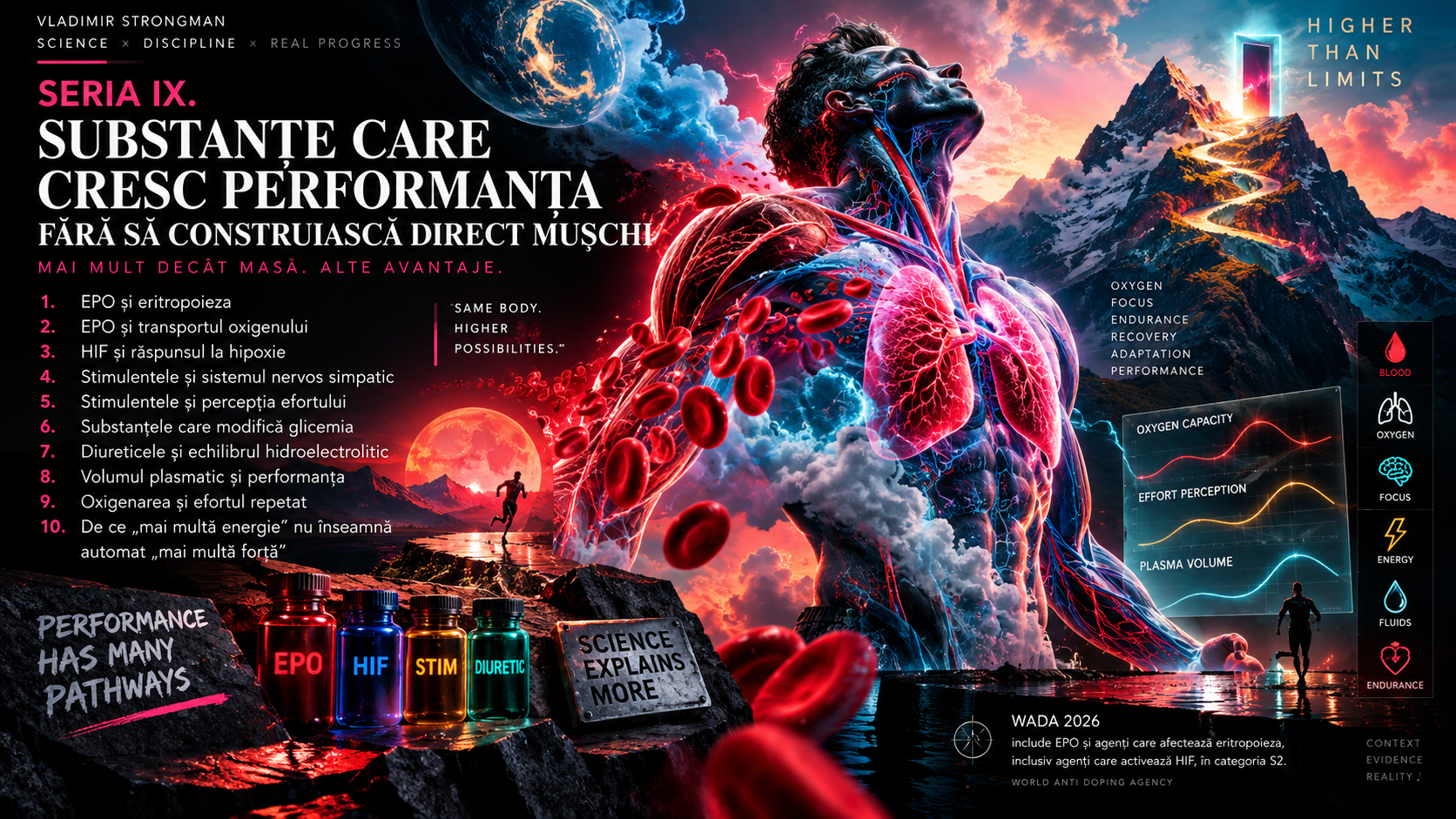
The new series, “Performance-Enhancing Substances That Do Not Directly Build Muscle,” starts from an important idea: not every substance that can change athletic performance is anabolic in the classic sense. Some do not make muscle fibers larger and do not directly increase muscle protein synthesis, yet they can modify other links in the performance chain. EPO is probably the clearest example. Its main action is on the blood and the production of red blood cells, which changes how effectively oxygen can travel from the lungs to working tissues.
For a non-specialist, the topic sounds more complicated than it really is. Imagine the body as a city: the lungs are the loading station for oxygen, the heart is the pump, blood vessels are the roads and red blood cells are the delivery trucks. EPO does not build new muscle factories. It tells the bone marrow that more trucks are needed. More red blood cells can mean more oxygen-carrying capacity, but they can also make the blood more concentrated, more viscous and harder to move through the circulation.
That is why EPO is both fascinating and dangerous. It is an essential natural hormone, an important medicine for selected forms of anemia and, at the same time, a prohibited performance-enhancing substance when misused in sport. This episode explains in plain language what EPO is, what erythropoiesis means, why the kidneys are involved, how hemoglobin and hematocrit change, what this can mean for endurance and strength sports, and why the slogan “more red blood cells always means better performance” is biologically wrong.
1. What EPO is, in a few words
EPO stands for erythropoietin. It is a hormone produced mainly by the kidneys and its central job is to help the body maintain an adequate number of red blood cells. When tissues receive too little oxygen, the kidneys can increase the signal for EPO production. The hormone then travels through the bloodstream to the bone marrow, where it supports the survival and maturation of cells that will become red blood cells. In simple terms, EPO is one of the messages the body uses to say: “we need more capacity to carry oxygen.”
2. What erythropoiesis means
Erythropoiesis is the process by which the body makes red blood cells. It is not instant and it is not a simple on-off switch. Inside the bone marrow, precursor cells move through several stages before becoming mature erythrocytes. EPO is extremely important in this production line, but it does not work alone. The body also needs iron, vitamin B12, folate, protein, functional bone marrow and a suitable internal environment. If one of these key pieces is missing, the EPO signal may be present but the factory cannot work at full capacity.
3. Why the kidney acts as an oxygen sensor
The kidney is not just a filter that makes urine. It is also an endocrine organ that is highly sensitive to oxygen availability. Specialized cells in the kidney can detect when local oxygen delivery is lower than desired. They then activate signals that increase EPO production. It is an elegant feedback system: if oxygen delivery is insufficient, the body tries to increase the number of vehicles available to carry oxygen. This is also why chronic kidney disease can cause anemia. A damaged kidney can lose part of its ability to produce enough erythropoietin.
4. The role of low oxygen
The main physiological trigger for increasing EPO is hypoxia, meaning reduced oxygen availability at the tissue level. Hypoxia can occur for many reasons: high altitude, anemia, certain lung or heart diseases, blood loss or other conditions that reduce effective oxygen delivery. The body does not need to know the story behind the problem before responding. In the kidney, oxygen sensing involves proteins called HIFs, or hypoxia-inducible factors. When oxygen is low, this system becomes more active and helps switch on genes involved in adaptation, including the gene that controls erythropoietin production.
5. Bone marrow is the real factory
EPO does not directly turn blood into a hemoglobin-rich fluid. It sends a signal to the bone marrow. There, precursor cells are developing along the red-blood-cell line. Some of those cells would disappear if they did not receive the right survival signals. EPO helps them survive, proliferate and continue toward maturation. That is why the effect on the blood takes time. The body must actually produce new cells and release them into circulation. This is completely different from the immediate feeling a stimulant can produce in the nervous system within minutes.
6. The life of a red blood cell
A mature red blood cell is highly specialized. It no longer has a nucleus and is essentially optimized to carry hemoglobin and respiratory gases. Red blood cells circulate for several months before older cells are removed mainly by the spleen and other parts of the reticuloendothelial system. The body continuously replaces them. That means erythropoiesis is not a rare event but an ongoing flow. EPO changes the speed of that flow when the body senses that more oxygen-carrying capacity is required.
7. Hemoglobin: the oxygen cargo
Hemoglobin is the protein inside red blood cells that allows them to transport oxygen. In the lungs, hemoglobin binds oxygen. As the blood reaches tissues, some of that oxygen is released where it is needed. For athletic performance, total hemoglobin mass matters greatly because it strongly influences how much oxygen the blood can carry. This is why increasing red-cell mass can have a major impact in sports where aerobic capacity is a limiting factor, even if the muscles do not become any larger.
8. Hematocrit: how much of the blood is made of cells
Hematocrit describes the proportion of blood volume occupied by red blood cells. If blood is separated into cells and plasma, hematocrit roughly tells us how much of the tube is made up of erythrocytes. It is useful, but it can mislead when interpreted alone. Dehydration can reduce plasma volume and make hematocrit appear higher without any true increase in total red-cell mass. In the opposite direction, endurance-trained athletes often expand plasma volume, which can make hematocrit and hemoglobin concentration appear lower even when oxygen-carrying capacity is perfectly adequate.
9. Red blood cell count does not tell the whole story
A complete blood count reports several related values: red blood cell count, hemoglobin, hematocrit and red-cell indices. None should be viewed alone. Two people can have the same number of red cells but cells of different size or different amounts of hemoglobin in each cell. Oxygen transport depends on the whole picture. Athletic performance also depends on far more than blood. The heart, lungs, capillary network, mitochondria, muscles, technique, body mass and movement economy all remain important. Better blood does not erase weaknesses elsewhere in the system.
10. Iron: the raw material the factory cannot work without
EPO can tell the bone marrow to make more red blood cells, but hemoglobin requires iron. When erythropoiesis increases, iron demand rises as well. If iron stores are insufficient, red-cell production can become limited. Ferritin gives information about iron storage, while tests such as transferrin saturation help describe how much iron is available for use. The simple lesson is that a stronger production signal cannot replace missing raw material. You cannot ask a factory to double output if the warehouse is empty.
11. Vitamin B12 and folate matter too
Normal blood-cell production also depends on vitamin B12 and folate. Deficiencies can disrupt red-cell development and produce forms of anemia in which cells become abnormally large or mature incorrectly. This is why the conclusion “low hemoglobin means EPO is needed” is medically wrong without a diagnosis. Anemia is a finding, not one single disease. Causes include iron deficiency, vitamin deficiency, inflammation, blood loss, kidney disease, bone-marrow disorders and many other conditions. Treatment must address the cause rather than chase one laboratory number.
12. Reticulocytes: very young red blood cells
Reticulocytes are young red blood cells that have recently left the bone marrow and entered circulation. Their number helps clinicians understand how actively the marrow is responding. If the body loses blood and the marrow is healthy, production often rises and more reticulocytes appear. If hemoglobin is low but reticulocytes fail to increase as expected, the problem may be inadequate production. For a non-specialist, reticulocytes are essentially the new recruits that have just walked out of the bone-marrow factory and joined the bloodstream.
13. Anemia does not simply mean “too little blood”
Anemia essentially means that the blood has insufficient oxygen-carrying capacity, usually reflected by hemoglobin being too low for the person's context. Blood volume can be normal and anemia can still be present. When hemoglobin falls, efforts that used to feel easy can become difficult, heart rate may rise faster, fatigue can appear sooner and recovery may worsen. This shows how strongly oxygen transport affects performance. But the correct treatment depends on why the anemia exists. The hemoglobin value tells you that there is a problem, not automatically what the solution should be.
14. Why kidney disease can cause anemia
In chronic kidney disease, renal tissue can gradually lose its normal capacity to produce erythropoietin. The bone marrow then receives a weaker signal and red-cell production may fall. Patients can also have inflammation and altered iron metabolism, so the picture is often complex. This is one of the major settings in which erythropoiesis-stimulating medicines have a legitimate and important clinical role. What is treatment for a patient with renal anemia becomes something entirely different when a healthy athlete uses the same biological pathway to gain an advantage.
15. EPO as medicine, not only as a doping story
In medicine, recombinant erythropoietins and other erythropoiesis-stimulating agents changed the treatment of selected forms of anemia, especially those associated with chronic kidney disease and certain cancer settings. The goal is not to push hemoglobin as high as possible. The goal is to correct a clinical problem, reduce symptoms or reduce transfusion needs within targets chosen by the treating team. Monitoring is essential because pushing red-cell production too far can increase harm. This contrast between controlled medical treatment and performance-enhancing misuse is central to understanding EPO.
16. What recombinant EPO is
Recombinant erythropoietin is a biotechnology-produced version of the human hormone. In medicine, these products are designed to reproduce the natural EPO signal and stimulate red-blood-cell formation when the body is not doing enough on its own. Several molecules and formulations exist, with different pharmacological properties, but the underlying idea is the same: the erythropoietin receptor in the bone marrow receives a stronger signal. In sport, this ability to increase red-cell mass is exactly what made EPO famous, controversial and strictly prohibited.
17. Why EPO is not a muscle-building anabolic drug
When we say EPO can enhance performance without directly building muscle, that is the key distinction. Its main performance-related effect is hematological, not hypertrophic. It is not primarily known for directly switching on the machinery that adds contractile proteins to muscle fibers and makes them larger. An athlete could have the same muscle mass but a greater capacity to carry oxygen. In sports where aerobic fatigue is a major limiter, that can make a dramatic difference even if arm, thigh or chest circumference does not change at all.
18. Why endurance sports were so attracted to EPO
In cycling, distance running, cross-country skiing and other endurance disciplines, athletes must sustain high energy output for long periods. Oxygen delivery is one of the central limits of that performance. If the blood can transport more oxygen, the muscles may support aerobic energy production at a higher rate or for longer. That is why blood doping and EPO became so closely associated with endurance sport. The advantage is not a sudden burst of maximal strength. It is the ability to maintain an intensity that would otherwise become unsustainable earlier.
19. The connection with VO2max
VO2max is the maximum amount of oxygen the body can use per minute during intense exercise. It depends on several links in the chain: lungs, heart, cardiac output, hemoglobin, blood flow to muscle and the muscle's ability to use oxygen. Increasing hemoglobin mass can raise one of those limits. That is why EPO can affect VO2max in healthy people. But a higher VO2max does not automatically make someone a champion. Technique, movement economy, metabolic thresholds, training quality, pacing and tactics remain decisive.
20. The simple equation of oxygen delivery
You do not need a complicated formula to understand the concept. Two things matter greatly: how much blood the heart can pump and how much oxygen each unit of blood can carry. If either improves, total oxygen delivery to tissues may increase. Hemoglobin is central to the second part. This is why an endurance-trained athlete with severe anemia can lose a large amount of performance. In the other direction, artificially increasing red-cell mass can improve oxygen delivery, but it also increases blood viscosity and can create a cardiovascular cost.
21. What can change during submaximal exercise
At the same running pace or cycling power, a more capable oxygen-transport system may allow the body to work at a smaller fraction of its maximum capacity. Subjectively, the effort can feel easier and the physiological strain can be lower. This is part of the attraction of blood manipulation: the athlete may not become stronger in one isolated contraction, but may maintain a demanding pace for longer. It changes the cruising engine more than the peak torque of the machine.
22. Recovery between repeated efforts
Oxygen also matters between efforts, even in sports that are not pure endurance. After a heavy set, a sprint or a Strongman event, the body must restore phosphocreatine, manage metabolites and rebuild energy balance. A meaningful part of this recovery depends on aerobic metabolism. That is why oxygen-carrying capacity can influence how quickly an athlete is ready for the next event. The effect is not the same as muscle hypertrophy, but it can change the quality of a long competition day made up of several hard bouts.
23. What this can mean in Strongman
Strongman is an unusual mixture of maximal strength, power, local muscular endurance and conditioning. A maximal log press or a one-repetition deadlift depends mainly on neuromuscular strength and skill. But a long medley, farmer's walk, yoke, truck pull or repetition event can stress the cardiovascular system heavily. Competitions also place several events in one day. For that reason, oxygen transport and aerobic recovery can influence Strongman performance without adding a single kilogram of muscle mass.
24. Events where aerobic capacity matters more
Potential effects would be more relevant in long or repetitive events: carries over distance, loading medleys, truck pulls, deadlift or log for repetitions, circuits and finals that combine several implements. In these events the athlete is fighting not only the load but the inability to continue producing energy at the required rate. The longer the event lasts and the more muscle mass it uses, the more obvious the cardiovascular component becomes. This is why an extremely strong athlete can still lose badly in a long event when conditioning is poor.
25. Events where EPO does not solve the main problem
In a maximal strength event, the primary limitation is usually different: how much force the muscles can generate, how effectively the nervous system recruits them, how good the technique is and whether the tissues can tolerate the load. Better oxygen transport does not turn a 300-kilogram deadlift into 350 kilograms. It may affect conditioning or recovery indirectly, but it cannot replace strength-specific adaptations. This is the difference between something that can modify performance and something that directly builds the ability to produce maximal force.
26. Large body mass changes the equation
A 140- or 160-kilogram athlete has to supply oxygen to a huge amount of tissue and the energy cost of submaximal movement is high. That is one reason cardiovascular conditioning is often a challenge in Strongman. But a large body already places greater demands on the heart and blood pressure. Artificially increasing red-cell mass in that context is not a simple optimization. It can add another burden to a circulation that is already working hard. Potential benefit and potential risk do not necessarily rise in the same proportion.
27. Viscosity: when blood becomes harder to pump
More red blood cells can increase oxygen-carrying capacity, but they also increase the cellular fraction of blood. As hematocrit rises, blood becomes more viscous. Think of the difference between pumping water and a thicker liquid through the same network of pipes. The heart has to push against greater resistance and flow through small vessels may become more difficult. This is one reason excessive erythrocytosis and misuse of erythropoiesis-stimulating drugs can increase cardiovascular danger.
28. Blood pressure and EPO
Therapeutic use of erythropoiesis-stimulating agents requires blood-pressure monitoring because hypertension can develop or worsen. The mechanisms involve more than simple blood viscosity and include vascular effects. For strength athletes this matters greatly because very heavy lifting already produces enormous temporary rises in blood pressure. Adding chronic hypertension or a more difficult circulation can turn a performance calculation into a much more serious cardiovascular problem.
29. Thrombosis: the risk you cannot see in the mirror
One of the most serious concerns with excessive red-cell mass is thrombosis, the formation of a blood clot inside a vessel. A clot can block a vein, travel to the lungs or contribute to severe arterial events. Looking fit and feeling well does not prove that this risk is absent. Hematological doping is dangerous precisely because it changes properties of the blood that are invisible from the outside. Performance can improve at the same time that cardiovascular safety margin becomes smaller.
30. Dehydration can make the problem worse
When an athlete loses water through sweating, plasma volume falls. The blood becomes more concentrated and hematocrit can rise temporarily. If red-cell mass is already very high, dehydration can further increase viscosity and circulatory strain. In long competitions, hot environments, heavy equipment and repeated events, this is not merely theoretical. That is why the idea that a higher hematocrit simply means “more oxygen” ignores half of the story. The body must actually move that blood through a real vascular system under real competitive stress.
31. The heart still has to move all that blood
When talking about performance, it is tempting to look only at the advantage of having more hemoglobin. But the heart is the pump that must move the entire system. More viscous blood can increase the resistance the heart has to overcome. In athletes who already carry very high body mass, have elevated blood pressure, sleep apnea or other cardiovascular stressors, the picture becomes even more complicated. EPO does not act in an abstract body. It acts in a real person who may already have several layers of cardiovascular risk.
32. How an excessively high hematocrit may feel
A high hematocrit does not always produce obvious symptoms. Some people may experience headache, dizziness, visual disturbances, fatigue, facial redness or a sense of pressure, while others may feel almost nothing. Lack of symptoms does not guarantee safety. That is why evaluation relies on laboratory results and medical context, not simply on how an athlete feels. The same high value can have very different causes, including dehydration, altitude, smoking, sleep apnea, testosterone exposure, a blood disorder or an erythropoiesis-stimulating agent.
33. More is not endlessly better
Biology is full of trade-offs. Too little red-cell mass limits oxygen transport, but too much can make circulation more difficult. There is a functional range rather than an endless race toward the highest possible hematocrit. This is a broader lesson in physiology: a variable that helps in one direction can become harmful when pushed too far. With EPO, focusing only on the performance side ignores the price the cardiovascular system may pay for changing the physical properties of the blood.
34. Altitude: the natural version of the same idea
At altitude, the partial pressure of oxygen falls. Air still contains roughly the same percentage of oxygen, but fewer oxygen molecules are available with each breath for transfer into the blood. The body responds with several adaptations, one of which is an increase in EPO signaling. Over time, if iron is available and the exposure is sufficient, total hemoglobin mass may increase. This is why altitude training is used in sport. The crucial difference is that the body is regulating its own response as part of a broad physiological adaptation.
35. EPO rises quickly at altitude, red blood cells more slowly
The hormone signal and the final blood adaptation do not appear at the same time. EPO can increase relatively quickly after exposure to hypoxia, but creating and maturing a larger population of red blood cells requires time. A few hours on a mountain do not instantly transform the blood. The real response depends on exposure duration, altitude, individual biology, iron status, training and recovery. This also reminds us that erythropoiesis is a biological production process, not an immediate effect like the stimulation someone might feel after caffeine.
36. “Live high, train low” and the logic behind it
Some athletes live or sleep at altitude to obtain the hypoxic stimulus but perform their hardest training lower down, where more oxygen is available and training intensity can be maintained. The idea is to capture some altitude adaptations without sacrificing too much training quality. Responses vary significantly among individuals and a large hematological benefit is not guaranteed. Still, the method illustrates the central theme of this series very well: performance can change through oxygen transport even when muscle size is not directly increased.
37. Iron becomes even more important at altitude
If altitude stimulates erythropoiesis, the demand for raw material to build hemoglobin also rises. Athletes with low iron stores may respond poorly or drift into deficiency. That does not mean everyone should automatically take iron. Unnecessary supplementation has its own risks. It simply means iron status matters when the body is trying to make more red blood cells. Laboratory assessment is far more useful than assuming “more iron equals more oxygen.” Human physiology does not reward blind accumulation of nutrients.
38. Blood donation shows the reverse side of the mechanism
After donating blood, a person loses part of the circulating red-cell mass. Plasma volume can recover relatively quickly, but rebuilding red blood cells takes longer. During that period, oxygen-carrying capacity may be temporarily reduced. The loss activates signals that encourage erythropoiesis. For athletes, this is a useful example: performance depends not only on total blood volume but also on how much hemoglobin is carried within that volume. One liter of blood is not always equivalent to another liter from the standpoint of oxygen transport.
39. Blood transfusion and EPO are not the same thing
Both can be misused to increase oxygen-carrying capacity, but they work differently. EPO stimulates the body to manufacture more red blood cells. A transfusion directly introduces red blood cells into the circulation, either from another source or from the athlete's own previously collected blood. From an anti-doping perspective, both belong to prohibited territory but they are handled differently in regulation and detection. The important point is that “blood doping” is a broader term than EPO and includes several ways of artificially modifying oxygen transport.
40. There are other ways to modify oxygen transport
Sports pharmacology did not stop with EPO. Researchers and medicine have explored blood substitutes, compounds that alter hemoglobin behavior and drugs that change the cellular pathways sensing hypoxia. Some have legitimate medical indications, some remain experimental and others are tightly regulated. The larger lesson for this series is that performance can be changed through many systems that have little to do with hypertrophy. Oxygen delivery, blood volume, cardiac function, nervous-system stimulation and even perception of effort can all become performance variables.
41. What WADA says about EPO in 2026
The 2026 WADA Prohibited List places erythropoietins and erythropoietin-receptor agonists in section S2, “Peptide Hormones, Growth Factors, Related Substances and Mimetics.” They are prohibited at all times, both in and out of competition. The rule is not limited to one brand or molecule. It includes EPO, darbepoetins, EPO-based constructs and other agents with similar biological effects. Several classes of substances that affect erythropoiesis, including HIF-activating agents, are also prohibited. The regulation follows the biological effect, not merely the commercial name.
42. The Athlete Biological Passport
Modern anti-doping does not rely only on finding a drug molecule in one sample. The Athlete Biological Passport follows selected biomarkers over time and looks for changes that do not fit the athlete's usual biological pattern. The hematological module can use information related to hemoglobin, reticulocytes and other variables to identify abnormal profiles. The concept is powerful because each athlete becomes, to some extent, their own reference. One unusual number can have many explanations, but a sequence of unusual changes can tell a much clearer story.
43. How EPO can be detected, in broad terms
Anti-doping laboratories can use specialized methods to distinguish certain administered forms of erythropoietin from the pattern of EPO naturally produced by the body. At the same time, longitudinal blood changes can be monitored through the Athlete Biological Passport. The principle matters more than the laboratory details: anti-doping systems can look both for a substance and for the biological footprints left by manipulation of erythropoiesis. Methods continue to evolve because substances, formulations and doping strategies have changed over time.
44. The myth that “a little cannot be seen and cannot be dangerous”
Discussions around EPO often include claims that very small amounts or subtle strategies are somehow safe or invisible. That confuses detectability with safety. Trying to create a smaller biological change does not make individual risk disappear, and people vary greatly in their responses. The biological passport is also designed to identify patterns rather than only dramatic single values. There is no universal trick that turns a prohibited and potentially dangerous intervention into something predictable and harmless.
45. EPO, darbepoetin and longer-acting molecules
EPO is not one single pharmaceutical formulation. Medicine uses epoetins and modified molecules such as darbepoetin and other longer-acting products. They differ in structure, glycosylation, time spent in circulation and clinical use. For this article, turning that list into a pharmacology catalog would not help the ordinary reader. What matters is that they act on the same biological family of signals: stimulation of erythropoiesis. From a sporting perspective, formulation differences do not change the basic principle or their prohibited status.
46. HIF: another route to the same red-cell factory
EPO is only one part of the system the body uses to respond to low oxygen. Higher up the chain is the HIF pathway, the cellular mechanism that helps tissues sense hypoxia and activate a wider adaptation program. Medicine now includes drugs that stabilize HIF and can indirectly increase the body's own EPO production while also changing iron handling. From a sports perspective, these compounds matter because they show that erythropoiesis can be manipulated without directly administering EPO. WADA therefore also prohibits several agents that activate this pathway.
47. Erythropoiesis can be altered through several mechanisms
Beyond EPO and HIF-pathway activators, other classes of medicines can influence the production or maturation of red blood cells through different biological routes. Some were developed for specific hematological diseases and were never intended for sport. The important educational point is that “stimulating erythropoiesis” is a broader category than one injection or one molecule. The body controls red-cell production through a network of signals, and modern medicine can intervene at several points in that network.
48. Why EPO is used in selected forms of anemia
In chronic kidney disease, selected cancer settings and other carefully defined situations, doctors may use erythropoiesis-stimulating agents to treat anemia. The goal is functional: the patient needs enough hemoglobin to carry oxygen and to reduce symptoms or transfusion requirements. Treatment is individualized and monitored with laboratory tests. The same molecules that can be beneficial in a body with inadequate red-cell production can become dangerous in a healthy body when they push red-cell mass beyond what the cardiovascular system can safely handle.
49. Why medical supervision completely changes the context
In legitimate treatment, the clinician starts with a diagnosis, laboratory results, other diseases and a therapeutic goal. Hemoglobin, blood pressure, iron status and clinical response are monitored. In doping, the objective is different: normal physiology is deliberately pushed for competitive advantage. That difference matters. The fact that a drug exists in a hospital does not make it safe for a healthy athlete. Many powerful drugs are appropriate only for certain diseases, certain people and under careful monitoring. Outside that context, the balance between benefit and harm can reverse.
50. The complete blood count: the basic photograph of the blood
A complete blood count is one of the most useful starting tests for understanding erythropoiesis. It reports hemoglobin, hematocrit, red blood cell count and indices describing the size and hemoglobin content of red cells. It can show anemia or erythrocytosis and guide further investigation. But one blood count does not automatically reveal the cause. An unusual result must be interpreted alongside hydration, altitude exposure, smoking, medication, sleep quality, chronic disease and the person's history. The test is a map, not the final diagnosis.
51. Ferritin and transferrin saturation complete the picture
When erythropoiesis is active, iron becomes a practical issue. Ferritin helps describe iron stores, while transferrin saturation gives information about iron that is available for hemoglobin production. Inflammation can alter ferritin, so interpretation is not always straightforward. The lesson for athletes is that hemoglobin and hematocrit should not be viewed without iron context. A bone marrow strongly stimulated to produce new red cells may demand more raw material than the body can provide, limiting the response or creating deficiency.
52. Hemoglobin and hematocrit are not the same value
Hemoglobin describes the concentration of the oxygen-carrying protein, while hematocrit describes the proportion of blood occupied by red cells. They usually move in the same direction, but they are not identical. Both are also concentration-based measurements and can be influenced by plasma volume. A dehydrated athlete may show higher values than when fully hydrated without having produced new red cells overnight. This is one reason longitudinal interpretation and standardized sampling conditions matter.
53. Dehydration can create apparent erythrocytosis
If the liquid portion of blood falls, the cells that remain become more concentrated. It is similar to removing water from soup without adding ingredients: the mixture becomes more concentrated even though the total amount of solid material is unchanged. A high hematocrit after heat exposure, sauna or prolonged exercise therefore does not necessarily prove that red-cell mass has increased. Rehydration may change the measurement. Medical and anti-doping interpretation both take such variables into account because blood is dynamic rather than a fixed number.
54. Smoking and sleep apnea can increase hematocrit
Not every high hematocrit means doping. Smoking can impair effective oxygen transport through carbon monoxide exposure, and the body may partly compensate by increasing red-cell mass. Obstructive sleep apnea produces repeated drops in oxygen during the night and can contribute to erythrocytosis in some people. This is particularly relevant in very large strength athletes, among whom sleep apnea is common. A high value should therefore be investigated rather than automatically assigned to one explanation.
55. Androgens can also increase red blood cell production
Testosterone and other androgens can raise hemoglobin and hematocrit through several mechanisms, including effects on erythropoiesis and iron metabolism. Erythrocytosis is therefore a recognized issue in some forms of testosterone therapy and can become more relevant with androgen abuse. For strength athletes, the combination of very high body mass, blood pressure, sleep apnea and androgen exposure may already push hematocrit upward. Adding another erythropoietic stimulus could stack risks rather than simply stack performance benefits.
56. EPO should not be confused with GH, insulin or anabolic steroids
The previous series discussed insulin, GH, IGF-1, androgens and other hormonal systems. EPO belongs to a conceptually different category. It is primarily a regulator of red-blood-cell production rather than a direct muscle-building hormone. Of course, all body systems interact, but the central EPO pathway is relatively easy to follow: kidney, hormonal signal, bone marrow, red cells, hemoglobin and oxygen. That clear sequence makes EPO a useful opening topic for this new series.
57. Improving oxygen transport without drugs
Endurance and conditioning training improve performance through many adaptations: plasma volume can expand, the heart can pump more effectively, capillarization can improve, mitochondria become more numerous and efficient, and muscle learns to use oxygen better. Altitude exposure can add a hematological adaptation in some athletes. In Strongman, intelligent conditioning can make a huge difference in long events and recovery between events. Not every weak link in performance needs to be solved pharmacologically.
58. The most common myths about EPO
The first myth is that EPO “creates energy.” It does not; it can change oxygen transport. The second is that it helps equally in every sport. It does not; the effect depends heavily on how important aerobic capacity is. The third is that a high hematocrit always means superior performance. It can also reflect dehydration, hypoxia, medication or disease. The fourth is that any drug used in hospitals must be safe. Drug safety depends on the indication, the patient, medical dosing and monitoring.
59. What EPO teaches us about the nature of performance
EPO is a perfect example of the idea behind this series: performance is not synonymous with muscle mass. An athlete is a system where strength, the nervous system, oxygen transport, metabolism, thermoregulation, pain, attention and recovery all meet. One link can be changed without directly altering hypertrophy. With EPO, the main link is blood. That explains both its power in certain sports and its limits in others. Understanding the mechanism is more useful than simply labeling it a “doping drug.”
60. Conclusion: EPO changes transport, not the engine itself
Erythropoietin is a hormone through which the body adjusts red-blood-cell production to oxygen need. By stimulating erythropoiesis, it can increase hemoglobin mass and therefore the capacity of blood to carry oxygen. This can strongly influence endurance and, in some situations, recovery between repeated efforts. But EPO does not directly build muscle and cannot replace strength, technique or training. When red-cell mass is pushed artificially too high, the same change that may enhance performance can also bring hypertension, more viscous blood and thrombotic danger. That combination of effectiveness and risk is why EPO became one of the most famous substances in the history of doping.
Sources and recommended reading
1. Haase VH. Hypoxic regulation of erythropoiesis and iron metabolism. American Journal of Physiology - Renal Physiology. 2010.
2. Jelkmann W. Physiology and pharmacology of erythropoietin. Transfusion Medicine and Hemotherapy. 2013.
3. Lin SL et al. Physiology and pathophysiology of renal erythropoietin-producing cells. Seminars in Nephrology. 2018.
4. World Anti-Doping Agency. The 2026 Prohibited List, section S2.1: Erythropoietins and agents affecting erythropoiesis.
5. World Anti-Doping Agency. Athlete Biological Passport Operating Guidelines and hematological module resources.
6. Ekblom B. Blood boosting and sport. Best Practice & Research Clinical Endocrinology & Metabolism. 2000.
7. Lippi G, Franchini M, Guidi GC. Doping and thrombosis in sports. Seminars in Thrombosis and Hemostasis. 2012.
8. American Society of Hematology and standard hematology references on erythropoiesis, anemia and erythrocytosis.
9. Kidney Disease: Improving Global Outcomes resources on anemia in chronic kidney disease and erythropoiesis-stimulating agents.
10. Standard exercise physiology literature on hemoglobin mass, oxygen delivery, VO2max and altitude adaptation.
Editorial note: this material is educational and does not constitute medical advice, an administration protocol or a guide to doping. Erythropoietin and erythropoiesis-stimulating agents are medicines with specific clinical indications, and inappropriate use can cause severe cardiovascular and thrombotic complications. In sport governed by the WADA Code, EPO and several classes of agents affecting erythropoiesis are prohibited at all times.
More From The Journal

Training
The Science of Strongman Training - Episode X: Competition Programming
How to build a complete Strongman competition preparation block: calendar, events, volume, intensity, specificity, simulations, autoregulation, tapering and fatigue management.
Training
The Science of Strongman Training - Episode IX: Peaking
Peaking in Strongman: how to turn months of training into maximal competition performance by reducing fatigue, preserving adaptations and managing specificity.