
Training
Strongman and the Limits of the Human Body - Episode X: Is There a Theoretical Limit to Strongman?
September 11, 2026
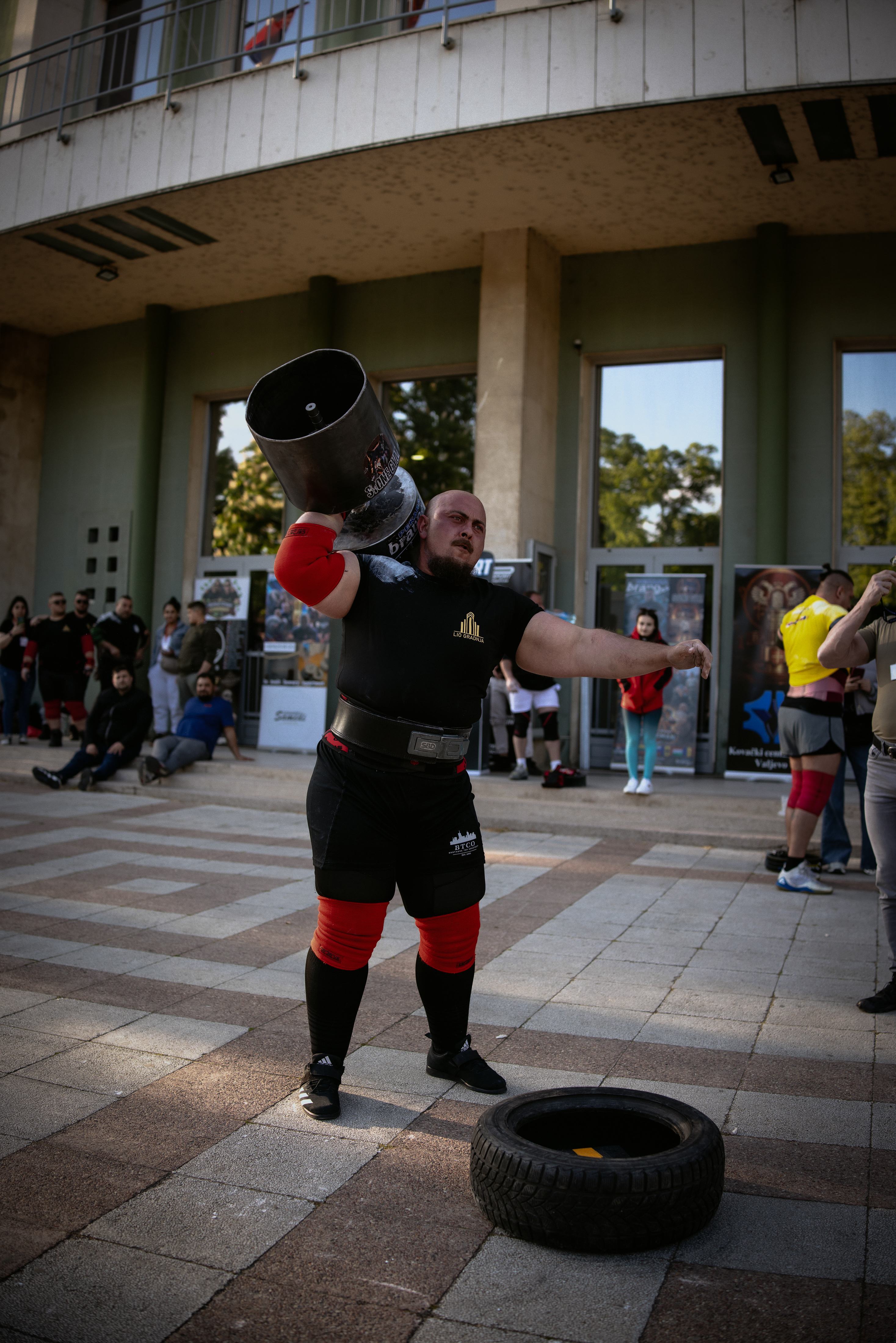
Strongman and the Limits of the Human Body - Episode X: Is There a Theoretical Limit to Strongman?
After nine episodes on force, carrying capacity, grip, spinal loading, body size, muscle mass, performance, recovery and adaptation, we reach the question that connects them all: is there, theoretically, a limit to Strongman? If the body can adapt but cannot adapt infinitely, then somewhere there must be a point at which strength, muscle mass and work capacity can no longer continue to rise.
Science does not currently give us a number such as “a human cannot deadlift more than X kilograms.” There is no demonstrated universal ceiling for Strongman performance. We can, however, build a theoretical model of limits: every component of the system has its own ceiling, and the global limit emerges from their interaction.
1. The first problem: Strongman is not one event
A Strongman limit cannot be reduced to the deadlift. The sport combines lifting, carrying, pressing, pulling, loading, grip, stabilization and repeated effort. An athlete may be close to a limit in one event and have enormous reserve in another. The sport's limit is therefore a system limit.
2. Muscle force has a ceiling
Maximum force depends on physiological cross-sectional area, architecture, fascicle length, fibre type, neural activation and joint mechanics. All can be improved, but none can increase without bound.
3. Muscle cannot occupy the entire body
Even when hypertrophy is remarkable, the body has finite anatomical volume. Muscle must remain compatible with bones, joints, vessels, nerves and organ function. There is no infinite biological space for muscle mass.
4. Specific tension: the microscopic limit
Muscle force relative to cross-sectional area, known as specific tension, provides a perspective on a fundamental limit. If contractile tissue has a finite capacity to produce force per unit area, increases in total force must largely come from greater contractile area, favourable architecture and more effective recruitment.
5. The nervous system has a limit too
Neural recruitment can improve, but there are limits to how many motor units can be recruited, how coordinated activation can become and how long high-level activation can be sustained. Strength is not simply a property of muscle, but of muscle commanded by the nervous system.
6. Tendons must transmit force
Muscle can produce force only if that force is transmitted to the skeleton. Tendons and aponeuroses are essential mechanical links. If muscular force rises faster than tissue tolerance, the system can become limited by the structures that transmit force.
7. Bones and joints cannot be ignored
Force must pass through bones and joints that tolerate compression, shear, torsion and bending moments. Bone adaptation exists, but it does not create an infinitely strong structure. Skeletal geometry and joint surfaces impose mechanical constraints.
8. Body levers set part of the limit
Two athletes with similar muscle mass can produce different performances because of segment lengths, insertion points and joint positions. Biomechanics can amplify or reduce the force available at the implement. Therefore, a physiological limit does not automatically become an identical limit in kilograms lifted.
9. Body mass can increase, but its cost increases too
More mass can support absolute strength and stability in some events, but it also increases locomotor cost, energy requirements and loading on support systems. At some point, each additional kilogram may provide less benefit than cost.
10. The square-cube law
When body dimensions increase, cross-sectional area scales approximately with the square of linear dimension while volume and mass scale with its cube under ideal geometric scaling. Real organisms are not perfectly scalable geometric shapes, but the principle explains why simply making a body larger does not preserve all mechanical relationships.
11. A 200 kg human is not simply a 100 kg human multiplied by two
Increasing mass changes inertia, centre of mass, locomotor cost, energy requirements, cardiovascular demand and joint mechanics. The body must be reorganized, not merely enlarged. This is why records cannot be extrapolated linearly from one body-mass category.
12. Cardiovascular capacity becomes a limiter
A Strongman must supply very large tissues and recover between efforts. As body mass and work volume rise, cardiovascular capacity becomes increasingly important for total demand. Maximal force may continue to rise while the ability to sustain total work does not keep pace.
13. Breathing has its own ceiling
Ventilation, gas exchange and chest mechanics limit the ability to sustain repeated effort. A very large body does not automatically receive a proportionally superior respiratory system. Again, biological scaling is not perfect.
14. Energy is one of the hardest limits
Every performance costs energy. As muscle mass and training volume rise, energy requirements rise too. At an extreme level, it is not enough to produce force. The athlete must be able to fuel, recover and maintain the organism that produces that force.
15. Digestion can become part of the limit
A very large athlete may require enormous food intake. Gastrointestinal capacity, digestive tolerance, meal distribution and nutrient absorption become practical constraints. The performance limit can therefore become indirectly linked to how much the organism can support through nutrition.
16. Recovery cannot scale forever
More mass and more strength permit harder training, but harder training also creates more stress. Sleep, tissues, the nervous system and energy resources must keep pace. This is one of the most important system-level limits.
17. Adaptation has diminishing returns
The more advanced the athlete becomes, the harder it is to dose the stimulus needed for additional progress. Early adaptations are relatively easy to obtain. The final percentages may require years of work and extremely precise load management.
18. The limit is not the same for every event
An athlete may have large force reserve in the deadlift but be limited by grip in the Farmer's Walk. Another may have exceptional overhead strength and be limited by mobility or the ability to move the load quickly. The global limit is the intersection of multiple local limits.
19. Speed is a hidden limit
In many Strongman events it is not enough to move the implement. It must be moved fast enough. Strength without speed can produce one impressive effort but be insufficient in a timed event.
20. Power combines strength and speed
Mechanical power depends on force and velocity. An athlete can increase maximal strength and still fail to become more competitive if too much speed is lost. In Strongman, this relationship explains why mass and strength must be converted into efficient movement.
21. Repeat-effort capacity is another limit
Competition is not one lift. Multiple events in one day require rapid recovery and the ability to produce force again. An athlete can have extraordinary maximal strength but insufficient capacity to repeat competitive efforts.
22. Grip can stop the chain
If the hand cannot transmit force, force produced by the hips and back cannot reach the implement. In carries and holds, grip can become the final link determining performance.
23. The spine and trunk are transmission centres
The trunk must stabilize the body under load. If stiffness and control are insufficient, limb force cannot be transferred efficiently. A Strongman's limit can therefore appear in the centre rather than in the peripheral engine.
24. Technique can save or consume capacity
Efficient technique reduces mechanical and energetic cost. Poor technique can turn the same weight into a much more demanding task. At elite level, small differences in position and timing can determine whether physiological capacity is used or wasted.
25. Tissues need time
Muscle, tendon, bone and other structures do not adapt simultaneously. An athlete can become stronger before all tissues are ready for the new force level. This difference in adaptation time is a real programming constraint.
26. Injuries can lower the ceiling
An injury can temporarily or permanently reduce a system's capacity. Even if muscle function returns, technique, confidence, load tolerance or the affected tissues may remain limiting factors. Biological limits are not fixed throughout life.
27. There is also a psychological limit
Maximal effort requires not only physiological capacity but also the willingness to use it. Fear of injury, competition pressure, stress and experience can alter execution. Psychology does not replace physiology, but it can determine how much physiological capacity becomes real performance.
28. Records do not reveal the absolute limit
A record shows that someone exceeded previous performances under specific conditions. It does not prove that the value is close to the absolute biological limit. Unknowns remain around genetics, technique, equipment, participant selection and testing conditions.
29. Why we cannot simply calculate the limit from a record
Because biological relationships are not linear. If an athlete lifts 500 kg, it does not follow that an athlete twice as strong would lift 1,000 kg. Strength, mass, geometry, velocity, tissues and energetic cost do not scale identically.
30. We can, however, build a theoretical limit
We can imagine the limit as the intersection of multiple ceilings: muscular force, neural recruitment, tendon transmission, bone strength, joint mechanics, cardiovascular capacity, breathing, energy, recovery, speed, grip and health. When one component becomes the primary bottleneck, global progress slows.
31. The theoretical limit is not necessarily the competitive limit
A body could have the physiological capacity for a performance it cannot demonstrate in competition. Rules, equipment, surface, time, event order and strategic demands can lower the practical ceiling.
32. Health may become the final limit
There is a difference between “can produce” and “can sustain safely.” A strategy that improves short-term performance but damages health or the ability to continue a career is not necessarily a solution to the sport's true ceiling. Longevity is part of real performance.
33. The Strongman Failure Point
The theoretical Failure Point appears when any further increase in one quality creates a greater cost elsewhere than the benefit gained. More mass may reduce speed. More strength may increase mechanical cost. More volume may exceed recovery. More bodyweight may impair locomotion. At the limit, the system begins to constrain itself.
34. So is there a limit to Strongman?
Theoretically, yes. If the human organism is finite and each component has limits of structure, energy, control and recovery, total performance must also have a ceiling. What we do not know is where that ceiling lies or whether it is a single value or a range of performance.
35. Conclusion: the limit exists, but we do not know the number
The most scientifically defensible conclusion is that a theoretical ceiling for Strongman performance probably exists, but current evidence is insufficient to express it as a single number. The limit is emergent: it comes from the interaction of muscle, nervous system, tendons, bones, joints, mechanics, grip, energy, cardiovascular and respiratory systems, recovery, psychology and health.
And this is what makes the series interesting. The current record is not the human limit. It is simply the furthest point humans have reached and documented so far. Each generation may move that point farther, but as the system approaches its constraints, progress becomes smaller, more costly and more dependent on details.
Strongman is not the story of a body that can do anything. It is the story of a finite body that, through adaptation, technique and strategy, can reach much farther than it first appears possible.
Selected references
1. Persad LS, et al. Specific tension of human muscle in vivo: a systematic review. Journal of Applied Physiology. 2024;137(4):945-962. DOI: 10.1152/japplphysiol.00296.2024.
2. Jones EJ, Bishop PA, Woods AK, Green JM. Cross-sectional area and muscular strength: a brief review. Sports Medicine. 2008;38(12):987-994. DOI: 10.2165/00007256-200838120-00003.
3. Maganaris CN, Baltzopoulos V, Sargeant AJ. In vivo specific tension of human skeletal muscle. Journal of Applied Physiology. 2001;90(3):865-872.
4. Enoka RM. Neuromechanical basis of kinesiology. Human Kinetics. Relevant literature on neural determinants of force and power.
5. Keogh JWL, Winwood PW. The Biomechanics and Applications of Strongman Exercises: a Systematic Review. Sports Medicine - Open. 2019;5:38. DOI: 10.1186/s40798-019-0222-z.
6. Winwood PW, Keogh JWL, Harris NK. Interrelationships between strength, anthropometrics, and strongman performance in novice strongman athletes. Journal of Strength and Conditioning Research. 2012;26(2):513-522. DOI: 10.1519/JSC.0b013e318220db1a.
7. Hindle BR, Lorimer AV, Winwood PW, Brimm D, Keogh JWL. The Biomechanical Characteristics of the Strongman Yoke Walk. Frontiers in Sports and Active Living. 2021;3:670297. DOI: 10.3389/fspor.2021.670297.
8. Kraemer WJ, Ratamess NA. Fundamentals of Resistance Training: Progression and Exercise Prescription. Medicine & Science in Sports & Exercise. 2004;36(4):674-688.
9. Kraemer WJ, Caldwell LK, Post EM, et al. Body Composition in Elite Strongman Competitors. Journal of Strength and Conditioning Research. 2020;34(12):3326-3330. DOI: 10.1519/JSC.0000000000003763.
10. Balshaw TG, et al. Muscle and tendon morphology of a world strongman and deadlift champion. Journal of Applied Physiology. 2024;137:789-799. DOI: 10.1152/japplphysiol.00342.2024.
11. Winwood PW, Hume PA, Cronin JB, Keogh JWL. Retrospective injury epidemiology of strongman athletes. Journal of Strength and Conditioning Research. 2014;28(1):28-42. DOI: 10.1519/JSC.0b013e3182986c0c.
12. Soligard T, Schwellnus M, Alonso JM, et al. How much is too much? International Olympic Committee consensus statement on load in sport and risk of injury. British Journal of Sports Medicine. 2016;50:1030-1041.
More From The Journal

Training
The Science of Strongman Training - Episode X: Competition Programming
How to build a complete Strongman competition preparation block: calendar, events, volume, intensity, specificity, simulations, autoregulation, tapering and fatigue management.
Training
The Science of Strongman Training - Episode IX: Peaking
Peaking in Strongman: how to turn months of training into maximal competition performance by reducing fatigue, preserving adaptations and managing specificity.