
Training
Strongman and the Limits of the Human Body - Episode VIII: What Happens When You Exceed Your Recovery Capacity?
September 9, 2026
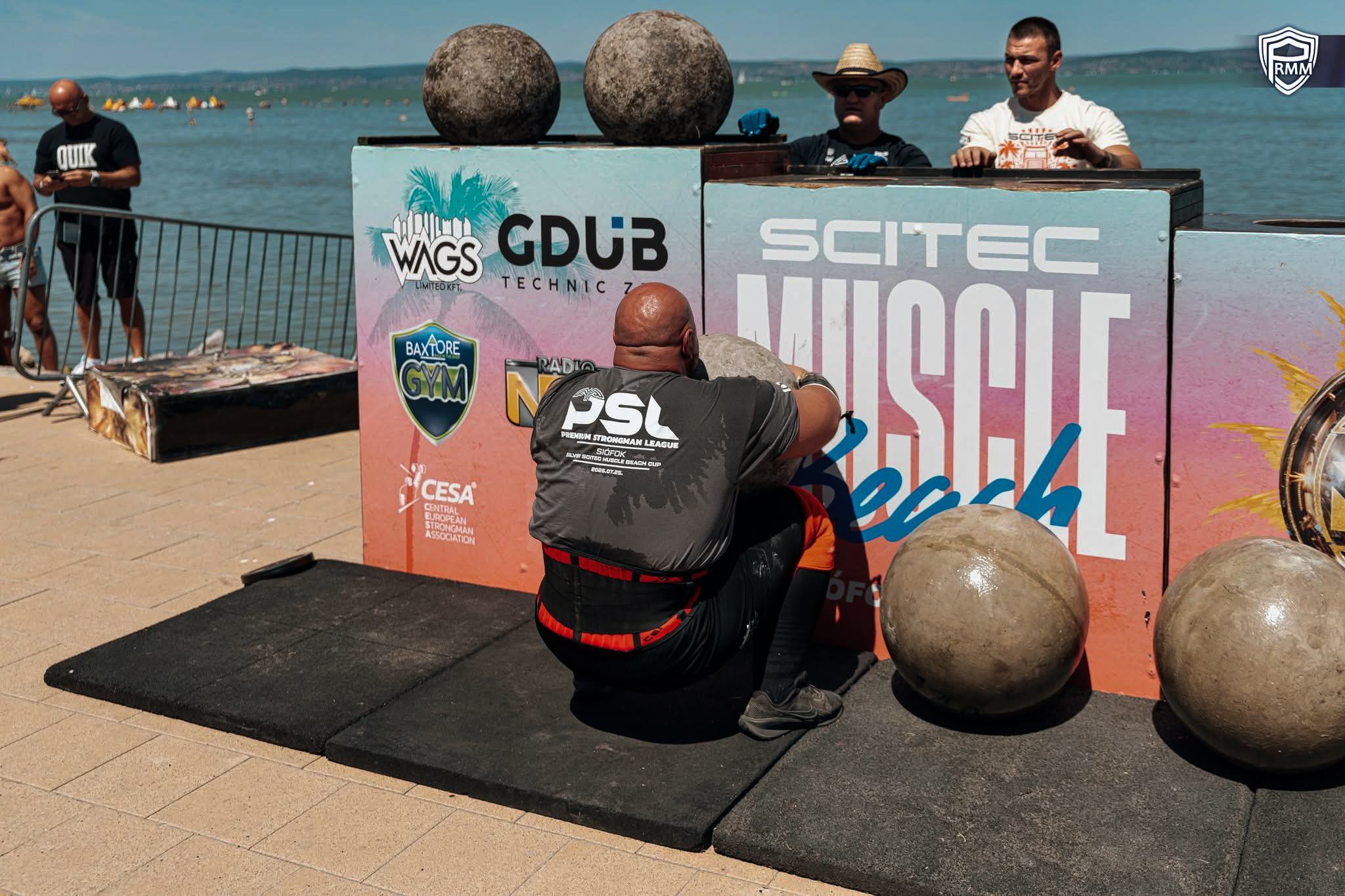
Strongman and the Limits of the Human Body - Episode VIII: What Happens When You Exceed Your Recovery Capacity?
In the previous episodes we examined the limits of force, carrying capacity, grip, spinal loading, body size, muscle mass and performance. All of these systems have one thing in common: they must recover. When training stress repeatedly exceeds recovery capacity, the question is no longer how much you can train, but how much you can actually absorb.
Exceeding recovery capacity does not automatically mean overtraining syndrome. In practice there is a continuum from normal training fatigue and functional overreaching to persistent states in which performance and health are affected. Duration, severity, individual response and the ability to recover determine where an athlete sits on that continuum.
1. Recovery is not simply the absence of soreness
Recovery means that multiple systems return toward levels compatible with the next effort: muscle function, nervous-system readiness, available energy, connective tissues, sleep and psychological state. You can have little soreness and still be incompletely recovered.
2. Training creates stress as well as adaptation
Training is the stimulus for adaptation, but it is also a stressor. A hard session consumes resources, disturbs homeostasis and produces fatigue. Adaptation occurs when the body has enough time and resources to respond to that stimulus.
3. The problem begins when the next stress arrives too early
If the next training session arrives before the athlete has recovered sufficiently, fatigue can overlap with fatigue. One overlap may be normal. Repeating the pattern without control can reduce training quality and turn a useful stimulus into accumulated cost.
4. Accumulated fatigue
Accumulated fatigue is more than feeling tired. It may appear as declining performance, slower movement, poorer coordination, reduced tolerance for volume and slower recovery between sessions. For a Strongman athlete, these small changes matter because events demand high force under complex technical conditions.
5. Adaptation needs time
Hypertrophy, neural adaptation, tendon remodeling and energetic adaptations do not occur at the same rate. Progress therefore cannot be judged from a single session. Good programming gives different components enough time to adapt to the imposed load.
6. Functional overreaching
A short period of increased training load can temporarily reduce performance, followed by recovery and potentially enhanced performance. This is one form of functional overreaching. The key is that the performance reduction is controlled and followed by adequate recovery.
7. Non-functional overreaching
When excessive loading and insufficient recovery persist, performance may remain depressed without the intended adaptive benefit. Mood disturbance, persistent fatigue and reduced willingness to train may appear. At this point, cost begins to exceed benefit.
8. Overtraining syndrome is not simply a bad week
Overtraining syndrome is a severe and persistent condition, not one poor day or one hard training block. Diagnosis is difficult and should not be assigned to every period of fatigue. The term therefore needs to be used carefully.
9. The first signal: performance starts to fall
A practical signal is a change in performance on tasks the athlete previously controlled. If familiar weights become unusually difficult, movement speed falls, technique deteriorates and the same session feels harder, the athlete may have reduced recovery reserve.
10. Sleep is one of the major recovery systems
Sleep is central to recovery. Interventions that increase sleep duration or add naps have shown potential to improve some physical and cognitive outcomes in athletes. An athlete who sleeps poorly while continuing to increase training load is reducing one of the main resources available for restoration.
11. The nervous system is not an infinite reservoir
Near-maximal efforts require neural recruitment and coordination. Frequent repetition of highly demanding efforts can reduce readiness for high-quality execution. There is no single simple marker proving that the nervous system is exhausted, so the phenomenon must be interpreted through performance, subjective state and context.
12. Muscle can recover before tendon
Tissues do not adapt at the same rate. Muscle can tolerate and recover from a load before tendon, aponeurosis or other structures are fully adapted. In Strongman, where loads are large and often unconventional, the gap between muscular capacity and tissue tolerance can become critical.
13. Microtrauma is not the enemy, accumulation matters
Training produces tissue disturbances that are part of adaptation. The problem arises when repeated stress exceeds the capacity for repair and remodeling. Not every bout of soreness indicates pathological overload, and the absence of soreness does not prove complete recovery.
14. Glycogen and energy
Repeated intense work uses energy substrates, and their restoration depends on nutrition, time and total demand. When energy intake is inadequate for the workload, recovery and adaptation can be impaired. For a very large athlete, the energetic cost of training can be substantial.
15. Protein helps, but it cannot repair a poor program
Protein provides amino acids needed for synthesis and adaptation, and the literature supports its role in resistance-training adaptations. But nutrition cannot erase lack of sleep, excessive volume or repeated tissue loading. Recovery is a system, not a supplement.
16. Low energy availability changes the equation
When the body receives too little energy relative to demand, resources available for performance and adaptation are reduced. For Strongman athletes who often aim to gain or maintain large amounts of muscle mass, prolonged inadequate energy intake can become incompatible with optimal recovery.
17. Immunity and total stress
Training is not the only stressor. Work, travel, competitions, psychological stress and poor sleep add to the sporting load. Recovery capacity should therefore be viewed as a global resource, not a separate account reserved for the gym.
18. Psychological stress draws from the same reserve
An athlete may tolerate a given training load during a quiet period and struggle with the same load during professional stress, personal problems or travel. This is one reason identical training weeks can produce very different responses.
19. When technique starts to break down
Fatigue does not only reduce force. It can alter posture, rhythm, coordination and movement path. In Strongman, technical degradation under heavy load can increase mechanical cost and shift stress toward tissues that should not be carrying it.
20. The weights suddenly feel heavier
RPE, movement velocity and the ability to complete planned repetitions can provide useful information about athlete readiness. A familiar load that suddenly feels unusually difficult may indicate reduced readiness even when muscle mass has not changed.
21. Strength can remain while performance disappears
An athlete can retain much of maximal strength and still be unable to sustain competitive volume. Repeat-effort capacity, speed, grip and recovery between events can decline before an isolated maximal test shows a dramatic collapse.
22. Injury risk becomes more relevant when control falls
The relationship between load and injury is complex and does not support a universal formula such as more load equals injury. However, sports literature identifies associations between certain loading patterns and risk, while Strongman-specific data show substantial injury occurrence, including the lower back, shoulder, biceps and knee.
23. Injury changes recovery capacity
An injury adds more than a local limitation. It can change technique, load distribution, sleep and training structure. A cycle can develop: loading creates symptoms, symptoms change execution, altered execution increases cost, and recovery becomes even harder.
24. When load exceeds adaptive capacity
The critical point is not a universal number. It is the relationship between stress and the individual's ability to respond to that stress at that moment. The same session can be an excellent stimulus for one athlete and excessive loading for another.
25. Why you should not chase perfect recovery
Training necessarily creates some fatigue. Incomplete recovery is sometimes unavoidable. The objective is not to eliminate fatigue but to manage a dose of stress the body can absorb and convert into adaptation.
26. A deload is not a punishment
Planned or reactive reduction in training load can allow fatigue to dissipate and technical quality to remain high. For a Strongman, a well-timed deload can protect progress rather than stop it. Sometimes the most productive session is the one you choose not to force.
27. Signals worth monitoring
Performance, RPE, sleep, mood, persistent pain, appetite, motivation, body mass and technical quality can be monitored together. No single indicator is a perfect overtraining detector. Their value comes from changes over time relative to the athlete's normal baseline.
28. Why one test is not enough
A good 1RM does not prove perfect recovery, and a poor 1RM does not prove overtraining syndrome. Performance is influenced by sleep, warm-up, motivation, technique, nutrition and context. Assessment should therefore be longitudinal.
29. Recovery must be individualized
Two athletes with the same body mass and similar results can have different tolerances to volume and frequency. Training history, age, sleep, stress, injuries, nutrition and event specificity change the response. Good programming does not treat the body as a machine with a standard-sized fuel tank.
30. Strongman has a special problem: total cost
A Strongman does not train only conventional strength exercises. Deadlift, yoke, farmer's, loading, overhead work, carries and conditioning may be combined, often with very large loads. The total weekly cost can be much greater than the number of sets suggests.
31. When you should reduce rather than add
If performance is persistently falling, technique is deteriorating, sleep is worsening, pain is increasing and RPE rises on familiar loads, the answer is not automatically another stimulus. Sometimes reducing volume or intensity is the intervention that allows recovery and continued progress.
32. Recovery is part of programming
Intelligent programming does not prescribe only what you do. It also determines when you reduce load, when you build, when you test and when you allow the body to absorb training. Recovery should be designed, not hoped for.
33. The recovery Failure Point
The recovery Failure Point occurs when the body can no longer convert additional training stress into enough adaptation to compensate for its cost. The signal may be declining performance, prolonged recovery, persistent symptoms, technical deterioration or inability to sustain the same quality of work.
34. What does an experienced Strongman do?
An experienced athlete does not try to prove at every session how much he can tolerate. He learns to distinguish productive stress from stress that consumes progress. He adjusts volume, protects movement quality, prioritizes sleep and nutrition and accepts that periods of reduced loading can be part of the path to high performance.
35. Conclusion: the body does not fail because it is tired, but when stress repeatedly exceeds its capacity to adapt
Fatigue is normal. Incomplete recovery is sometimes unavoidable. The problem appears when the imbalance between training load and recovery becomes persistent and begins to reduce performance, degrade technique, affect general well-being and limit tissue tolerance.
For Strongman, the true limit is not how much you can tolerate in one day. It is how much you can tolerate, absorb and transform into adaptation over months and years. The athlete who can survive the hardest single session is not necessarily the one who goes furthest. The athlete who knows when to push and when to stop can preserve performance long enough to turn it into progress.
Selected references
1. Winwood PW, Hume PA, Cronin JB, Keogh JWL. Retrospective injury epidemiology of strongman athletes. Journal of Strength and Conditioning Research. 2014;28(1):28-42. DOI: 10.1519/JSC.0b013e3182986c0c.
2. Keogh JWL, Winwood PW. The Biomechanics and Applications of Strongman Exercises: a Systematic Review. Sports Medicine - Open. 2019;5:38. DOI: 10.1186/s40798-019-0222-z.
3. Lastella M, et al. The Impact of Sleep Interventions on Athletic Performance: A Systematic Review. Sports Medicine - Open. 2023;9:55. DOI: 10.1186/s40798-023-00599-z.
4. Morton RW, Murphy KT, McKellar SR, et al. Protein supplementation and resistance training-induced gains in muscle mass and strength. British Journal of Sports Medicine. 2018;52:376-384. DOI: 10.1136/bjsports-2017-097608.
5. Chan CC, Yung PSH, Mok KM. The Relationship between Training Load and Injury Risk in Basketball: A Systematic Review. Healthcare. 2024;12(18):1829. DOI: 10.3390/healthcare12181829.
6. Meeusen R, Duclos M, Foster C, et al. Prevention, diagnosis, and treatment of the overtraining syndrome: joint consensus statement. Medicine & Science in Sports & Exercise. 2013;45(1):186-205.
7. Halson SL. Monitoring training load to understand fatigue in athletes. Sports Medicine. 2014;44(Suppl 2):S139-S147.
8. Kellmann M, Bertollo M, Bosquet L, et al. Recovery and performance in sport: consensus statement. International Journal of Sports Physiology and Performance. 2018;13(2):240-245.
9. Soligard T, Schwellnus M, Alonso JM, et al. How much is too much? International Olympic Committee consensus statement on load in sport and risk of injury. British Journal of Sports Medicine. 2016;50:1030-1041.
10. Saw AE, Main LC, Gastin PB. Monitoring the athlete training response: subjective self-reported measures. International Journal of Sports Physiology and Performance. 2016;11:68-76.
More From The Journal

Training
The Science of Strongman Training - Episode X: Competition Programming
How to build a complete Strongman competition preparation block: calendar, events, volume, intensity, specificity, simulations, autoregulation, tapering and fatigue management.

Training
The Science of Strongman Training - Episode IX: Peaking
Peaking in Strongman: how to turn months of training into maximal competition performance by reducing fatigue, preserving adaptations and managing specificity.