
Training
Strongman and the Limits of the Human Body - Episode VII: What Limits Performance?
September 8, 2026
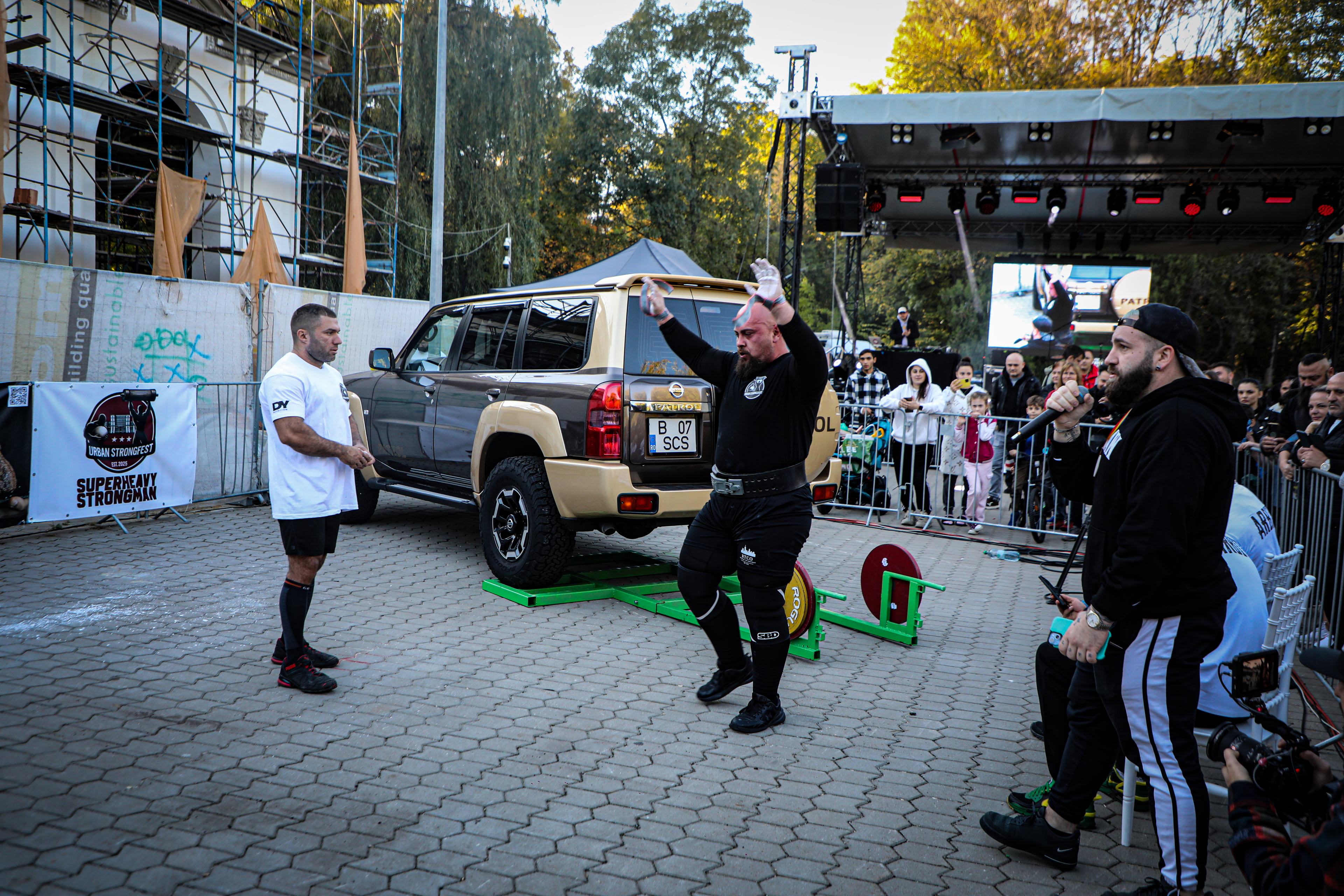
Strongman and the Limits of the Human Body - Episode VII: What Limits Performance?
In the previous episodes we examined how much force a human can produce, how much weight the body can carry, where grip reaches its limit, how much the spine can tolerate, how large an athlete can become, and whether muscle mass has a biological ceiling. The next question connects them all: what actually stops performance when the athlete is already extremely strong?
The answer is not one muscle, one joint or one number. Performance is a system outcome. When one component becomes the weakest link, it can limit what all the other components are capable of producing.
1. Performance is not the same as maximal strength
An athlete can possess enormous maximal strength and still not be the best performer in an event. Strongman combines strength with speed, technique, coordination, local endurance, repeat-effort capacity, stability and fatigue management. Biomechanical literature shows that in events such as the Farmer’s Walk and heavy sled pull, higher performance is associated with movement parameters as well as raw strength.
2. The first limiter: strength
Strength remains the foundation of many events. If an athlete cannot produce enough force to break an implement from the ground, accelerate it or maintain it in position, technique cannot fully compensate for the deficit. But once strength becomes sufficient, other qualities can become more important.
3. Event-specific strength
Strength is not an abstract property. Strength in a squat is not identical to the strength required for an Atlas Stone, Farmer’s Walk or Axle Press. Joint angles, implement position, grip, velocity and technical requirements change how force is expressed.
4. Technique can become the limit
When two athletes have similar strength levels, technique can separate their results dramatically. More efficient technique reduces mechanical losses, optimizes the center of mass and allows force to be applied in the useful direction. In Strongman, unconventional implements make this component particularly important.
5. Whole-body coordination
Many events are not movements of a single segment. Legs, hips, trunk, arms and hands must produce and transmit force in a precise sequence. A delayed or poorly coordinated link can turn a large reserve of strength into modest performance.
6. Speed
Force applied too slowly can become useless when time matters. In the Farmer’s Walk, for example, stride length, stride rate and reduced ground contact time are associated with performance. It therefore matters not only how much force you have, but how quickly you can turn it into movement.
7. Power
Power is the relationship between force and velocity. In events such as the Tire Flip or some loading variations, the ability to produce force rapidly can decide the result. A very strong but slow athlete can lose to an athlete who produces slightly less force in much less time.
8. Grip
Grip is the interface between athlete and implement. If the hands cannot maintain the object, force produced by the legs and trunk can no longer reach the load. In the Farmer’s Walk, the literature explicitly identifies grip strength as a possible limiting factor.
9. The trunk
The trunk functions as a force-transmission platform. In the Yoke Walk, the ability to brace the trunk and hips and tolerate compressive loading may limit performance before the legs have completely exhausted their capacity.
10. The spine
The spine is not merely a passive structure. Internal loading depends on load, geometry, implement position, muscle activation, velocity and fatigue. Sometimes the problem is not that the athlete cannot produce force, but that the body can no longer maintain the position required to express it efficiently.
11. Peripheral fatigue
Peripheral fatigue reduces the muscle’s capacity to produce force. In a multi-event contest, every effort can alter what the athlete can produce in the next event. Performance should therefore not be analyzed as a sequence of completely independent attempts.
12. Central fatigue
The central nervous system contributes to motor-unit recruitment and coordination. Accumulated stress, repeated high-effort work and psychological demand can alter the readiness to produce maximal effort. In competition, the feeling of not being able to continue is not always identical to local muscular exhaustion.
13. Energy availability
ATP, phosphocreatine and glycogen support intense work, while the energy systems operate together. As event duration or repetition increases, energy availability and the ability to recover between efforts become part of the performance limit.
14. Breathing and metabolic cost
A Strongman athlete can produce enormous forces, but the body must also pay the metabolic cost of moving a large body mass. In dynamic events, breathing, ventilation and recovery between efforts can become limiting even when maximal strength remains intact.
15. Recovery
Performance is built between sessions as much as during them. If recovery does not allow muscular, neural and energetic restoration, the ability to produce high-quality training stimuli declines. Recovery is not a break from performance; it is one of its conditions.
16. Sleep
Sleep influences recovery processes, cognitive function and the ability to tolerate training load. For an athlete who must execute technical movements under heavy loads, insufficient sleep can affect several performance components at once.
17. Nutrition
An athlete can have sufficient muscular potential and strength, yet inadequate energy and protein intake can slow adaptation. Nutrition cannot create performance from nothing, but it can remove or amplify existing limitations.
18. Body mass
Body mass can be an advantage when absolute strength and stability matter, but it can become a cost during locomotion, conditioning and recovery. Strongman therefore contains a permanent trade-off between mass that helps and mass that must be moved.
19. Mobility
Sufficient mobility allows the athlete to reach efficient positions and maintain favorable mechanical paths. Maximum mobility is not required everywhere; what matters is enough mobility where the event demands it.
20. Stability
Stability allows force to be transmitted without unnecessary losses. In an unstable event, the ability to control the trunk, pelvis and joints can matter more than a marginal increase in maximal strength.
21. Connective tissues
Muscle can become stronger faster than tendons, aponeuroses and other connective structures adapt to the new loading environment. When these tissues become limiting, the athlete cannot safely use the full muscular potential.
22. Injury
Injury is one of the clearest forms of performance limitation. Available Strongman epidemiology reports substantial injury occurrence, with the lower back, shoulder, biceps and knee among frequently affected regions. At that point the question is no longer how much force the athlete can produce, but how much can be produced without worsening the injury.
23. Pain
Pain can alter muscle recruitment, technique and motor behavior. It is not a perfect dynamometer and does not independently quantify tissue damage, but it can become a signal that limits execution and changes motor strategy.
24. Fear of failure
Performance also contains a perceptual component. If an athlete anticipates that a weight is dangerous or that a movement will fail, motor strategy may change. In a maximal event, confidence and psychological control do not replace physiology, but they can influence how much of that physiology is accessed.
25. Competition pressure
Crowds, standings, opponents and stakes change the environment in which effort is produced. An athlete may lift the same weight in training and competition, but context changes decision-making, pacing, aggression and risk tolerance.
26. Strategy
Strategy can turn the same physical capacity into a completely different result. Attempt selection, pacing, event order and resource conservation influence how much potential remains available for decisive events.
27. Pacing
In events with duration or repeated efforts, starting too fast can create a fatigue debt that is paid before the finish. Effective pacing does not mean being slow; it means using the rhythm that maximizes useful work before the system reaches its limit.
28. Biomechanical efficiency
Two athletes can perform the same external work at different internal costs. A more efficient position, shorter path and better coordination can reduce wasted energy. In Strongman, where implements are often unstable and bulky, efficiency becomes a form of strength.
29. The environment
Temperature, surface, equipment, grip, available space and implement characteristics can change performance. An apparently identical event can become different when external conditions alter friction, stability or force transfer.
30. Experience
Experience does not simply add strength. It reduces errors, improves anticipation and allows the athlete to choose the right technical solution faster. In a sport with variable implements and situations, experience can represent a reserve of performance.
31. Specificity
An athlete can be excellent in one category and average in another. Strongman literature demonstrates important differences between event biomechanical demands, and relationships between individual event performances are not perfect. Preparation therefore needs transferable qualities without sacrificing specificity.
32. What happens when all limits meet?
Maximum performance occurs when strength, technique, speed, energy, recovery, tissues and strategy are sufficiently aligned. Every system does not need to be absolutely maximal. What matters is that none becomes a critical bottleneck.
33. The performance Failure Point
The Failure Point is not necessarily the moment when the athlete can no longer move the weight. It may be the point at which technique degrades, pacing becomes unsustainable, grip fails, the trunk can no longer be stabilized or recovery between events becomes inadequate. Performance can stop before the muscle reaches its absolute physiological limit.
34. What truly limits an elite Strongman?
At high levels, a raw lack of strength becomes less often the only problem. Differences can be created by the combination of technique, power, efficiency, grip, load tolerance, fatigue, recovery, strategy and preparation specificity. The more complete the athlete becomes, the more often the limiting factor moves from one component to another.
35. Conclusion: performance is limited by the weakest link
There is no single system that limits Strongman performance. There is a chain made of strength, technique, speed, power, grip, trunk, spine, energy, recovery, tissues, psychology, strategy and environment. When one component becomes insufficient, it can limit the expression of all the others.
True performance is not the ability to push one quality to its maximum. It is the ability to make all relevant qualities function simultaneously, under pressure, under fatigue and in the real conditions of competition. In Strongman, the limit is not simply how strong you are. The limit is how much of that strength you can convert into useful work before the system gives way.
Selected references
1. Hindle BR, Lorimer AV, Winwood PW, Keogh JWL. The Biomechanics and Applications of Strongman Exercises: a Systematic Review. Sports Medicine - Open. 2019;5:49. DOI: 10.1186/s40798-019-0222-z.
2. Winwood PW, Hume PA, Cronin JB, Keogh JWL. Retrospective injury epidemiology of strongman athletes. Journal of Strength and Conditioning Research. 2014;28(1):28-42. DOI: 10.1519/JSC.0b013e3182986c0c.
3. Hindle BR, Lorimer AV, Winwood PW, Brimm D, Keogh JWL. The Biomechanical Characteristics of the Strongman Yoke Walk. Frontiers in Sports and Active Living. 2021;3:670297. DOI: 10.3389/fspor.2021.670297.
4. Winwood PW, Keogh JWL, Harris NK. Interrelationships between strength, anthropometrics, and strongman performance in novice strongman athletes. Journal of Strength and Conditioning Research. 2012;26(2):513-522. DOI: 10.1519/JSC.0b013e318220db1a.
5. McGill SM, Marshall LW. Kinematic and kinetic analysis of the spine during lifting and loaded movement. Relevant biomechanical literature on trunk loading and stabilization.
6. Enoka RM. Neuromechanical basis of kinesiology. Relevant literature on neuromuscular determinants of force and fatigue.
7. Morton RW, Murphy KT, McKellar SR, et al. A systematic review, meta-analysis and meta-regression of protein supplementation and resistance training-induced gains. British Journal of Sports Medicine. 2018;52:376-384. DOI: 10.1136/bjsports-2017-097608.
8. Kraemer WJ, Ratamess NA. Fundamentals of resistance training: progression and exercise prescription. Relevant resistance-training literature.
9. Suchomel TJ, Nimphius S, Stone MH. The importance of muscular strength in athletic performance. Sports Medicine. 2016;46:1419-1449.
10. Li S, Kempe M, Brink M, Lemmink K. Effectiveness of Recovery Strategies After Training and Competition in Endurance Athletes: An Umbrella Review. Sports Medicine - Open. 2024;10:55.
More From The Journal

Training
The Science of Strongman Training - Episode X: Competition Programming
How to build a complete Strongman competition preparation block: calendar, events, volume, intensity, specificity, simulations, autoregulation, tapering and fatigue management.
Training
The Science of Strongman Training - Episode IX: Peaking
Peaking in Strongman: how to turn months of training into maximal competition performance by reducing fatigue, preserving adaptations and managing specificity.