
Training
Strongman and the Limits of the Human Body - Episode V: How Big Can an Athlete Become?
September 6, 2026
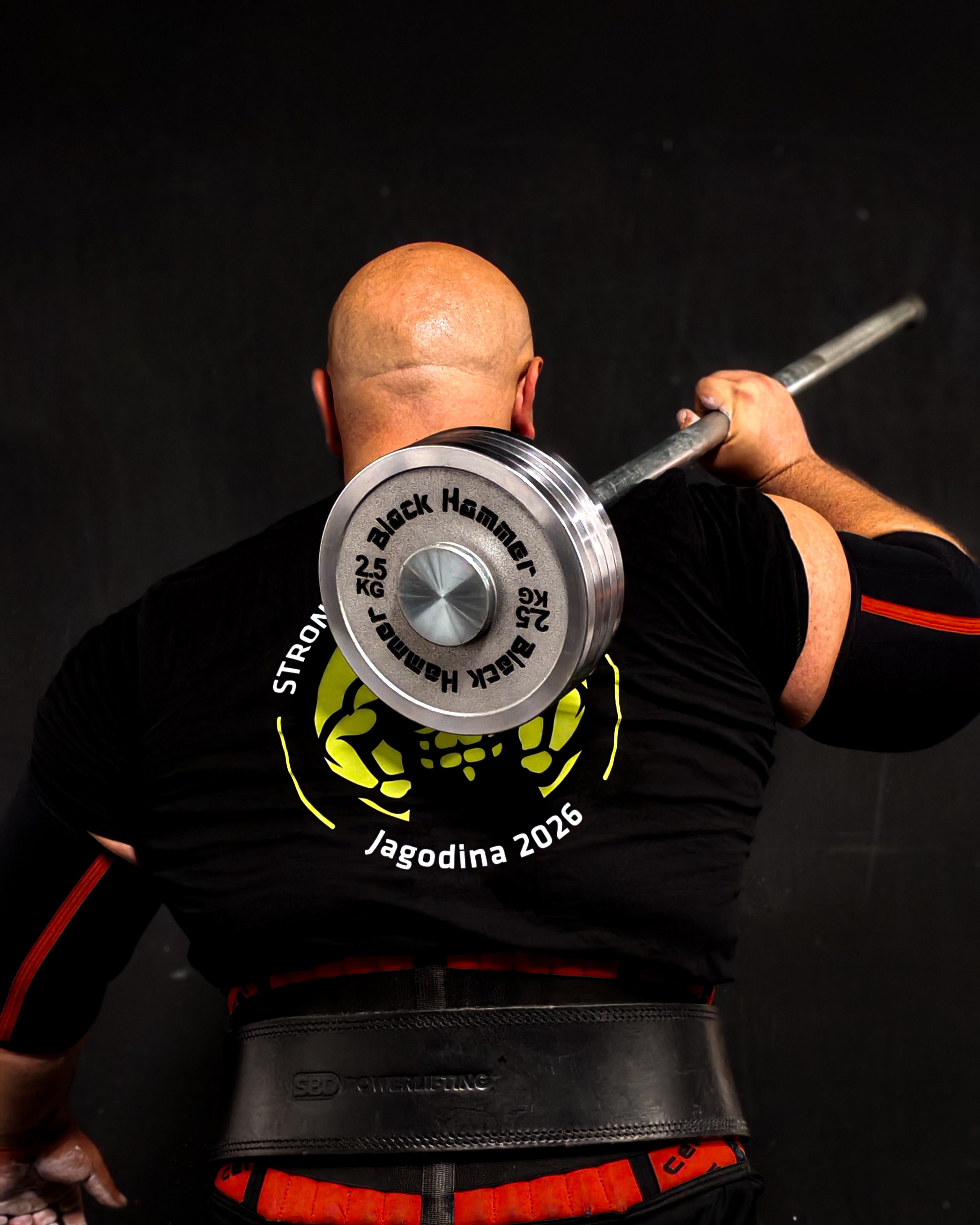
Strongman and the Limits of the Human Body - Episode V: How Big Can an Athlete Become?
There is an almost inevitable image of an elite Strongman: an enormous human being with extraordinary muscle mass, thick limbs, a massive trunk and the ability to produce forces far beyond those of the general population. But the next question is harder: how big can a human athlete actually become?
There is no single number of kilograms that defines the limit. Size emerges from the interaction of genetics, skeleton, organs, muscle mass, adipose tissue, hormones, training, nutrition, recovery and mechanics. What makes Strongman especially interesting is that bigger can sometimes mean stronger, but it does not automatically mean better performance.
Episode V follows that frontier: where does the advantage of size end, and where does its cost begin?
1. Strongman is the sport of very large athletes
Available data confirm that elite Strongman competitors are among the most massive human athletes. In a DXA study of 18 elite competitors, the mean values were 187.4 cm in height and 152.9 kg in body mass, with approximately 118 kg of lean mass. The researchers described this population as reaching, in some cases, the extreme limits of body size reported among athletes.
2. 153 kg is not the limit
A group average is not a biological ceiling. In the elite study, body mass had a standard deviation of 19.3 kg, demonstrating substantial variation. In addition, a morphology study of a World’s Strongest Man and world deadlift champion examined an athlete who was 1.90 m tall and weighed 172 kg.
3. How much of that weight is muscle?
In an elite Strongman, lean mass can reach extraordinary values. In the DXA study, mean lean mass was approximately 118 kg. Importantly, lean mass is not identical to muscle mass: it also includes water, organs, connective tissue, bone and other non-fat components.
4. Muscle is the main engine of size
Hypertrophy increases force-producing capacity through greater muscle cross-sectional area as well as neural and architectural adaptations. In Strongman, muscle mass has direct value because many events require the production and transmission of extremely high absolute forces.
5. But every kilogram of muscle has a price
Muscle is not free mass. A larger body must be fed, transported and stabilized. Energy requirements rise, as do the mechanical costs of locomotion and the cardiovascular demands of moving the body. In an event requiring only pushing or lifting, that cost may be acceptable. In fast carries, repeated efforts or events requiring speed, it becomes more important.
6. Size increases absolute strength
The relationship between muscle size and force is one of the foundations of exercise physiology. Anthropometric research in Strongman has shown meaningful relationships between body dimensions and performance. In novice Strongman athletes, system force, defined as body mass plus squat strength, showed a very strong relationship with overall Strongman performance.
7. Relative strength tells a different story
When strength is divided by body mass, the picture changes. A larger athlete may produce more absolute force without producing more force per kilogram of body mass. This is why the ideal size depends on the event.
8. Strongman rewards absolute strength
Most Strongman events are not weight-class competitions. The athlete must lift, carry or move heavy implements regardless of his or her own body mass. In this context, large amounts of muscle mass can be a major advantage.
9. Why can the body not grow forever?
Because the organism is an integrated system. Muscle cannot grow independently of the skeleton, tendons, blood vessels, heart, lungs, joints and metabolic capacity. At some point, the question is no longer whether another kilogram of tissue can be built, but whether the entire organism can support the cost of that kilogram.
10. The skeleton sets part of the ceiling
Bone size and geometry influence how much muscle can be supported and what joint moments can be produced. A more robust skeleton provides different attachment surfaces and lever arms for muscle, but there is no simple formula that converts bone circumference into an exact body-mass limit.
11. Height: advantage and disadvantage
A taller athlete may have longer limbs, greater potential body mass and advantages in certain events. But long limbs can also increase lever arms in some lifts. In Strongman, anthropometry is not simply good or bad. It is event-specific.
12. Is there an ideal height?
There is no universal optimal height for Strongman. Different events favor different configurations. A compact structure may help in some lifts, while limb length and stature may help in other contexts.
13. A 170 kg athlete is not simply a 100 kg athlete scaled up
Increasing body size is not simple multiplication. As the body becomes larger, surface-to-volume relationships change and the costs of transporting mass increase. Biology and mechanics do not allow the human body to be scaled indefinitely while preserving the same functional proportions.
14. The square-cube law
When an organism is scaled, mass and volume tend to increase faster than surface area and certain linear dimensions. This relationship helps explain why very large animals encounter physiological problems and why the human body cannot simply be enlarged without mechanical and metabolic consequences.
15. Muscle and cross-sectional area
Muscle force is strongly related to physiological cross-sectional area. Therefore, producing extreme forces requires extremely large muscles and favorable architecture. However, increasing total body mass does not guarantee a proportional increase in strength.
16. Why lean mass becomes critical
In a Strongman, lean mass represents much of the infrastructure that produces and transmits force. Elite competitor studies report lean-mass values approximately twice those reported in comparisons with untrained young men.
17. Body fat: mass without force
Adipose tissue contributes to body mass, but it does not produce mechanical force in the same way muscle does. That does not mean every gram of fat is useless in Strongman. A certain amount of total mass can contribute to stability, contact, inertia or positioning, while excessive weight loss can impair energy availability and recovery.
18. When does body fat become a disadvantage?
When additional mass increases costs more than it contributes to performance. Locomotion becomes more energetically expensive, thermoregulation can become harder, and qualities such as speed and repeatability may be affected.
19. The heart must support the body
A very large body requires a cardiovascular system capable of serving a very large amount of tissue. Strongman is a strength sport, but competitors are not organisms without cardiovascular demands. Body mass, physical conditioning and cardiovascular health have to be considered together.
20. The lungs and the cost of locomotion
Oxygen transport capacity does not simply increase in direct proportion to body mass. As mass becomes very large, the energetic cost of walking and mechanical work also increases. Therefore, an extremely large Strongman can be extraordinarily strong while still being limited in events requiring rapid movement or repeated efforts.
21. How large can muscle become?
There is no universal clinical limit expressed as kilograms of muscle. Potential is influenced by genetics, skeletal size, limb length, muscle insertions, hormonal profile, training history, nutrition and recovery. Hypertrophy also shows diminishing returns: each additional stage becomes harder to achieve.
22. When hypertrophy slows
As an athlete approaches his or her individual potential, increases in muscle mass become slower. There is no universal point at which hypertrophy stops, but there is a practical ceiling determined by biology and by the ability to sustain the training required.
23. Muscle has to be fed
An extremely large athlete has a different energy economy. Maintaining very high body mass requires consistent energy intake. As mass increases, nutrition becomes part of the performance infrastructure rather than a secondary component.
24. Digestion becomes a limit too
Supporting enormous body mass can make food intake practically difficult. Gastrointestinal capacity, tolerance to food volume, hydration and meal distribution can limit how easily body mass can be maintained.
25. Joints pay for every kilogram
Additional body mass is not suspended in space. It is carried by the joints during every step and every change of position. In a sport where external loads are already enormous, body weight becomes a permanent part of the mechanical dose.
26. Tendons must keep up
Muscle can grow relatively quickly, while tendon and other connective-tissue adaptations can progress at different rates. Rapid increases in strength or mass without enough time for whole-system adaptation can therefore create a mismatch.
27. Size changes biomechanics
A larger body changes centers of mass, lever arms and the position of implements relative to joints. These changes can help one event and hinder another. In Strongman, size is both a mechanical advantage and a geometric problem.
28. The example of a World’s Strongest Man
A 2024 study of a World’s Strongest Man and world deadlift champion reported 172 kg at 1.90 m, a gross isometric mid-thigh pull peak force of 9,171 N and countermovement-jump peak power of 9,866 W. It is a clear example that extreme size can coexist with remarkable force and power production.
29. But the biggest is not automatically the best
If two athletes have the same ability to produce absolute force, the heavier one may be disadvantaged in events requiring speed, repetitions or locomotion. Strongman performance is a compromise between strength, mass, speed, technique and conditioning.
30. There is an optimal body-mass zone
For each athlete and competition calendar, there is probably a zone where the benefits of additional mass exceed its costs. This zone is not identical for everyone. A competitor focused on maximal deadlifts and heavy moving events may benefit from a different body mass than one facing faster and more technical events.
31. When does mass become too much?
When the additional kilogram no longer produces enough force or stability to compensate for the cost it brings. This is the point where size stops being a weapon and begins to become a burden.
32. The limit is not only muscular
The real limit may appear in the heart, joints, tendons, thermoregulation, digestion, sleep, mobility or the ability to move quickly. A very large Strongman has to support the whole system, not only the muscle that moves the implement.
33. The size Failure Point
The Failure Point is not the body weight at which an athlete can no longer fit into a shirt. It is the point at which additional mass begins to reduce total performance. It may appear when speed falls, recovery deteriorates, locomotion becomes too costly or health can no longer support the size.
34. How big can a Strongman become?
Current data show that humans can reach body masses in the 150-170+ kg range under elite Strongman conditions, with more than 100 kg of lean mass and extraordinary levels of strength. But science cannot state that 180, 200 or 220 kg represents a universal human limit. Such a claim would be an unjustified extrapolation.
35. Conclusion: the body does not need to be maximal, only large enough for its task
How big can an athlete become? The correct answer is that human size has biological limits, but those limits are not represented by one number. Strongman demonstrates how far humans can push muscle mass, total body mass and absolute strength.
Yet the last kilogram is not always the most valuable kilogram. At some point, every additional kilogram has to be fed, transported, supplied with blood, stabilized and recovered from. Peak performance occurs when body mass, musculature, skeleton, mechanics and recovery capacity meet in a functional balance.
A Strongman does not need to become the biggest human possible. The goal is to become big enough that every kilogram works for the athlete.
Selected references
1. Kraemer WJ, Caldwell LK, Post EM, et al. Body Composition in Elite Strongman Competitors. Journal of Strength and Conditioning Research. 2020;34(12):3326-3330. DOI: 10.1519/JSC.0000000000003763.
2. Balshaw TG, et al. Muscle and tendon morphology of a world strongman and deadlift champion. Journal of Applied Physiology. 2024;137:789-799. DOI: 10.1152/japplphysiol.00342.2024.
3. Winwood PW, Keogh JWL, Harris NK. Interrelationships between strength, anthropometrics, and strongman performance in novice strongman athletes. Journal of Strength and Conditioning Research. 2012;26(2):513-522. DOI: 10.1519/JSC.0b013e318220db1a.
4. Keogh JWL, Winwood PW. The Biomechanics and Applications of Strongman Exercises: a Systematic Review. Sports Medicine - Open. 2019;5:38. DOI: 10.1186/s40798-019-0222-z.
5. Hindle BR, Lorimer AV, Winwood PW, Brimm D, Keogh JWL. The Biomechanical Characteristics of the Strongman Yoke Walk. Frontiers in Sports and Active Living. 2021;3:670297. DOI: 10.3389/fspor.2021.670297.
6. Åstrand PO, Rodahl K, Dahl HA, Strømme SB. Textbook of Work Physiology. Human Kinetics.
7. Schoenfeld BJ, Grgic J, Krieger J. How many times per week should a muscle be trained to maximize muscle hypertrophy? Journal of Sports Sciences. Relevant evidence on resistance training and hypertrophy.
8. McGlory C, et al. Skeletal muscle hypertrophy and adaptation to resistance exercise. Relevant contemporary literature on muscle growth and remodeling.
9. McMaster DT, Cronin J, McGuigan MR. Quantifying strength and power adaptation in athletes. Relevant literature on strength, body size and performance.
More From The Journal

Training
The Science of Strongman Training - Episode X: Competition Programming
How to build a complete Strongman competition preparation block: calendar, events, volume, intensity, specificity, simulations, autoregulation, tapering and fatigue management.
Training
The Science of Strongman Training - Episode IX: Peaking
Peaking in Strongman: how to turn months of training into maximal competition performance by reducing fatigue, preserving adaptations and managing specificity.