
Training
The Science of Strongman - Episode VI: Grip - The Hand That Holds Hundreds of Kilograms
September 1, 2026
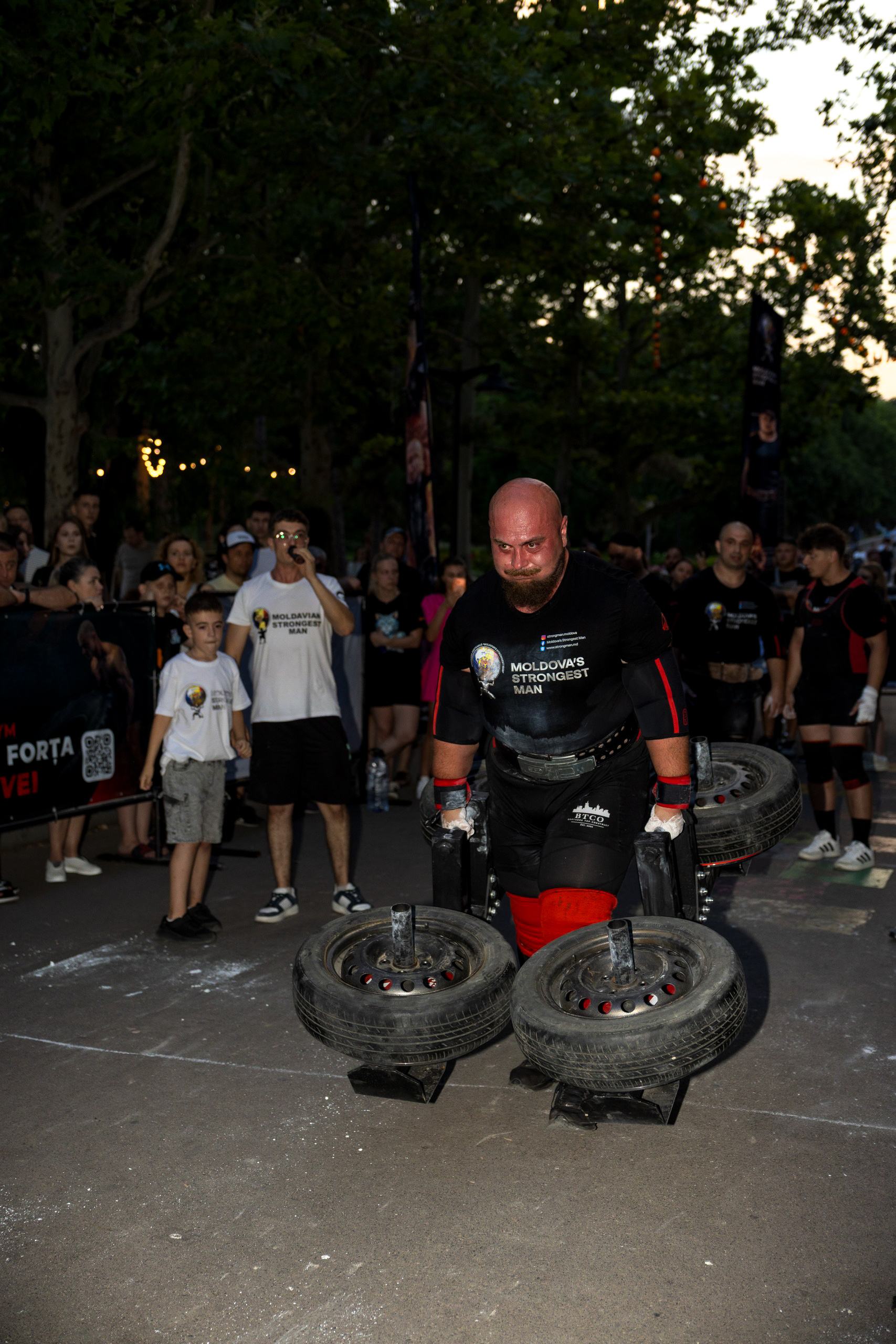
The Science of Strongman - Episode VI: Grip - The Hand That Holds Hundreds of Kilograms
In almost every Strongman event, there is a point at which the force of the entire body has to pass through a seemingly small area: the hand. Between an athlete and an implement weighing hundreds of kilograms are a few centimeters of skin, connective tissue, tendons, joints, and muscle capable of turning neural intent into pressure and traction. When the grip fails, the rest of the athlete's strength no longer matters. The bar, handle, stone, or frame leaves the athlete before the larger muscles of the body have exhausted their capacity.
Grip in Strongman should therefore be understood as a system rather than a single exercise. Crushing strength, finger endurance, thumb locking ability, wrist stability, tissue tolerance, control of unstable implements, and the ability to maintain a hold under fatigue are distinct qualities, even though they are often grouped under the simple word “grip.”
In this episode, the hand is examined as a biomechanical and physiological link in Strongman performance. It is not an accessory to the forearm and not a detail automatically solved by deadlifting. It is the interface through which the athlete's strength becomes force applied to the implement.
1. The Hand as the Interface Between Athlete and Implement
In event mechanics, the hand is where external force and muscular force meet. When an athlete pulls on a handle, the tension transmitted through the fingers and palm must be sufficient to prevent slipping. If the implement is unstable, the hand must also manage rotation, changes in pressure, and small displacements.
This explains why two implements with the same mass can place very different demands on grip. Handle diameter, texture, moisture, shape, orientation, and the ability to use the thumb alter grip mechanics. In Strongman, the implement is rarely a perfectly standardized interface. Sometimes the athlete grips two narrow handles, sometimes a thick bar, and sometimes an object with no clear gripping surface at all.
2. Grip Is Not One Quality
The term grip covers several forms of strength and control. Crushing grip primarily refers to the ability to close the hand and generate pressure. Pinch grip depends strongly on the thumb and fingers compressing an object between them. Support grip describes the ability to maintain a load in the hand for time or distance. Open-hand grip appears when implement diameter prevents complete finger closure. There are also event-specific combinations, such as those used in farmer's walks, axle deadlifts, and implement carries.
This distinction has an important practical consequence: good performance on a handgrip test does not guarantee excellent grip across Strongman events. A dynamometer measures a particular configuration. An axle, farmer's handle, or sandbag creates another set of demands. The test is useful, but it should not be confused with the entire system.
3. Fingers and Thumb - Two Forces That Must Cooperate
The fingers generate much of the force required to maintain an implement, but the thumb can radically change grip efficiency. In many configurations, the thumb creates counterpressure that allows the fingers to lock the implement more effectively. This role is obvious in pinch grip, but thumb contribution exists in many other gripping patterns.
Finger control is not uniform. Fingers differ in length and leverage, and pressure distribution can vary according to the implement. For a Strongman, these anatomical differences can become relevant when an object is thick, round, or difficult to stabilize.
4. The Forearm - The Command Center of Grip
The flexor and extensor muscles of the forearm control the fingers and wrist. When an athlete holds a heavy load, these muscle groups do not work in isolation. They must maintain the tension required while the wrist remains in a mechanically useful position.
A strong forearm does not automatically mean a strong grip, just as a strong grip is not simply a consequence of forearm circumference. Performance results from coordination among muscles, tendons, joints, and neural control. Hypertrophy can increase force-producing potential, but the nervous system must be able to use that potential in the specific configuration.
5. The Wrist - The Link Many Athletes Ignore
Finger force must be transmitted through the wrist. An unstable or mechanically unfavorable position can alter the ability to produce and maintain tension. In heavy events, the wrist must resist forces in multiple directions, not simply a single flexion load.
Grip training should therefore not be reduced to closing grippers. Finger extension, radial and ulnar deviation, wrist control, and the ability to maintain position under load can all have roles depending on the event.
6. Hook Grip, Mixed Grip, and Open-Hand Grip
In Strongman, grip selection can change the mechanics of an entire event. The hook grip secures the fingers over the thumb and can improve security under heavy loads, but it can be uncomfortable and demanding on the thumb. The mixed grip uses different palm orientations and can reduce bar rolling, but introduces asymmetry that should be understood and managed.
Open-hand grip becomes important on thick bars or handles. When the fingers cannot fully close around the object, the force requirement changes. It is no longer simply a matter of “squeeze harder,” but of hand geometry and the ability of the flexors to produce tension in a less favorable position.
7. Why Implement Diameter Matters So Much
Handle diameter changes finger joint angles and the degree to which the hand can close around the implement. As the implement becomes thicker, grip geometry changes and some closing strategies become less effective.
This is one reason axle deadlifts and other thick-bar variations can feel completely different from conventional deadlifts. The mass may be similar, but the hand-to-implement interface is not.
8. Farmer's Walk - Grip in Motion
The farmer's walk is one of the clearest demonstrations that grip is a dynamic skill. The hand must hold the load while the body moves. Every step creates small changes in acceleration and vibration, and the implement can oscillate.
In this context, grip endurance may matter more than maximal squeezing strength. An athlete can generate enormous force for a few seconds and still lose the farmer's walk if that tension cannot be maintained long enough. This is the difference between capacity and the expression of capacity over time.
9. Axle Deadlift - When Diameter Becomes the Opponent
The axle deadlift removes part of the advantage provided by a conventional bar. A thick bar reduces the ability to close the hand completely and can increase grip demand. For an athlete with a very strong posterior chain, grip may become the limiting link.
This also teaches an important lesson about specificity. If the competition problem is holding a thick bar, repeating only conventional deadlifts can develop general strength but does not fully reproduce the local hand problem.
10. Grip and the Nervous System
Strength is not only a property of muscle. The nervous system determines how many motor units are recruited, how rapidly they are activated, and how well contraction is coordinated. In highly demanding grip tasks, this neural component is important for force expression.
Training can improve not only muscle size but also the ability to produce force in specific configurations. Grip adaptation therefore includes peripheral tissue changes as well as motor learning and coordination.
11. The Tendon - The Invisible Part of Grip
Tendons transmit muscular force to bone and tolerate repeated loading. In Strongman, the tendons of the hand and forearm may be exposed to very high volumes and intensities. Their adaptation does not necessarily occur at the same rate as muscular adaptation.
This difference is critical for programming. The fact that an athlete feels capable of squeezing harder does not automatically mean the connective tissues are ready for a sudden increase in volume. Progression must account for the entire system, not only perceived strength.
12. Skin and Calluses - The Ordinary Limit of an Extraordinary Event
In grip-intensive sports, the skin can become limiting before the musculature. Repeated friction, moisture, and pressure can create superficial injuries that immediately alter the ability to hold an implement.
Calluses are useful adaptations up to a point. An excessively thick, cracked, or torn callus can become a problem. Skin management, hygiene, moisture control, and care of stressed areas are part of practical Strongman preparation, even if they do not appear in classical strength equations.
13. Grip Fatigue
As a grip effort continues, the ability to maintain force declines. Fatigue can occur locally in muscle, but also through changes in neural control and effort perception. A fatigued hand can also alter the technique of the entire body.
When grip begins to fail, the athlete may raise the shoulders, change trunk position, or accelerate steps to finish the event. A local limitation therefore becomes a global one. In a sport where implements are heavy and speed matters, the final seconds can turn a small reduction in grip into a major performance loss.
14. Grip Endurance - The Ability Not to Put the Implement Down
Grip endurance should not be confused with general endurance. It is the ability to maintain a certain level of hand force and control throughout a task. In competition, it can be the difference between completing a carry without stopping and losing seconds through a regrip or drop.
Training this quality can use holds, carries, timed sets, or repeated efforts. The central variables are the relationship between intensity, duration, and recovery. A maximal five-second hold and a submaximal 45-second hold are different physiological problems.
15. How Grip Should Be Trained
An effective grip program should start with the event. If an athlete loses a farmer's walk, determine whether the limitation is maximal strength, endurance, handle diameter, wrist stability, or walking technique. If the problem is the axle, sufficient exposure to thick bars is useful. If the problem is pinch, the thumb and finger system needs specific development.
Tools can include grippers, pinch blocks or plates, thick bars, hangs, static holds, carries, and finger extensor work. They do not all need to appear in the same session. More important is distributing the stimulus across the week and making it compatible with deadlifts, carries, and other events that already load the hand.
16. Why Grip Must Be Programmed, Not Simply Added
The hand is involved in many exercises. Deadlifts, rows, pull-ups, carries, stones, log work, and accessories can already create substantial grip volume. Adding large amounts of direct grip work on top of all of this can exceed the recovery capacity of local tissues.
Intelligent programming means accounting for indirect stress. If an athlete performs several grip-intensive events in a week, fewer direct accessories may be necessary. Near competition, specificity rises, but unnecessary volume should decrease to preserve quality and tissue integrity.
17. Recovery - The Part the Hand Cannot Negotiate
Grip recovery is influenced by total workload, sleep, nutrition, and session distribution. Small tissues are not invincible simply because the athlete is very strong. A rapid progression of hangs, thick-bar work, or static holds can irritate local structures even when the musculature appears capable of continuing.
In practice, tissue quality and load tolerance must be built progressively. Persistent pain, declining performance from one session to the next, or altered technique may indicate that the dose needs reassessment.
18. Grip as a Competition Performance Factor
In competition, grip has a special characteristic: it can be limiting in one event and heavily taxed again in the next. A heavy farmer's walk can affect the ability to perform a deadlift or loading event later. Event order and recovery can therefore change how much grip matters.
An athlete who manages resources efficiently may win not because of spectacular squeezing strength in one test, but because the grip remains functional throughout the day. This is the competition form of grip: not how hard you can squeeze once, but how well you can continue holding when the contest begins consuming resources.
19. The Hand as a Link in the Kinetic Chain
In a Strongman event, the hand is not isolated from the rest of the body. Force starts at the ground, travels through the legs and hips, is stabilized by the trunk, and reaches the implement through the arms and hands. If the final interface cannot support the transmitted force, the chain breaks.
This explains why grip can limit an athlete with an exceptionally strong back and legs. It is not a contradiction. It is a consequence of the mechanical chain. The weakest functional link can determine how much of total capacity actually reaches the implement.
20. Conclusion - The Hand That Holds Hundreds of Kilograms
Strongman grip is much more than squeezing strength. It is the combination of fingers, thumb, forearm, wrist, tendons, skin, neural control, implement position, and the ability to maintain tension under fatigue. It is a mechanical, physiological, and technical quality at the same time.
In a sport where hundreds of kilograms must be lifted, carried, pulled, or loaded, the hand becomes the critical interface between body and implement. It does not produce the force that moves the weight by itself, but it determines whether that force can be transmitted. When the grip fails, sometimes it is not only the implement that falls. The athlete's entire expression of strength falls with it.
A strong grip should therefore not be judged by forearm appearance or by one dynamometer number. It should be judged by the ability to control the real implement, in the real position, for the real duration, under the real conditions of competition. That is where the science of Strongman grip truly lives.
References
Amis, A. A. (1987). Variation of finger forces in different types of grip and with different wrist positions. Journal of Biomechanics, 20(8), 823-831.
Dias, J. A., Ovando, A. C., Külkamp, W., & Borges, N. G. (2010). Strength of the handgrip: reference values for healthy adults. Revista Brasileira de Cineantropometria & Desempenho Humano.
Frontera, W. R., et al. (1988). Strength conditioning and the physiology of skeletal muscle adaptation. Journal of Applied Physiology.
Kraemer, W. J., & Ratamess, N. A. (2004). Fundamentals of resistance training: progression and exercise prescription. Medicine & Science in Sports & Exercise, 36(4), 674-688.
McGill, S. M., McDermott, A., & Fenwick, C. M. J. (2009). Comparison of different strongman events: trunk muscle activation and lumbar spine motion, load, and stiffness. Journal of Strength and Conditioning Research, 23(4), 1148-1161.
Winwood, P. W., Keogh, J. W. L., Harris, N. K., et al. (2019). The Biomechanics and Applications of Strongman Exercises: a Systematic Review. Sports Medicine - Open, 5, 60.
Hindle, B. R., Lorimer, A., Winwood, P. W., & Keogh, J. W. L. (2019). A systematic review of the biomechanical research methods used in strongman studies. Sports Biomechanics.
More From The Journal
Training
The Science of Strongman Training - Episode X: Competition Programming
How to build a complete Strongman competition preparation block: calendar, events, volume, intensity, specificity, simulations, autoregulation, tapering and fatigue management.
Training
The Science of Strongman Training - Episode IX: Peaking
Peaking in Strongman: how to turn months of training into maximal competition performance by reducing fatigue, preserving adaptations and managing specificity.