
Training
The Science of Strongman - Episode IX: Conditioning in Strongman - When Strength Has to Last Until the End
September 1, 2026
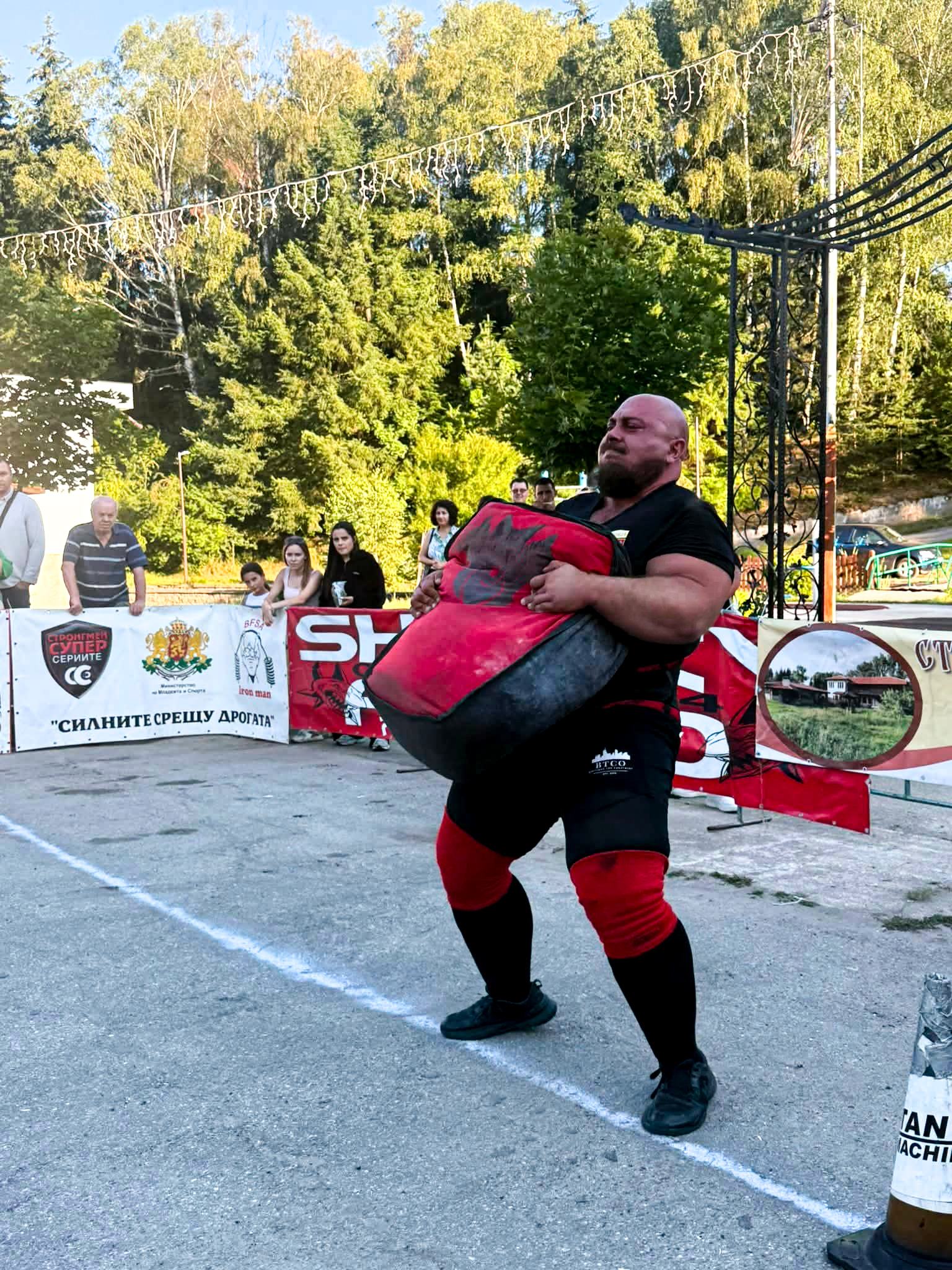
The Science of Strongman - Episode IX: Conditioning in Strongman - When Strength Has to Last Until the End
There is a persistent idea in strength sport that a strongman athlete must, above all else, be very strong. That statement is correct, but incomplete. In an actual competition, strength never appears in isolation. It has to be produced after a warm-up, after a previous event, under time pressure, with an elevated heart rate, fatigued forearms, and another event already waiting nearby.
This is where conditioning becomes important. In Strongman, conditioning can be understood as the ability to sustain repeated high or very high intensity efforts, recover sufficiently between them, and continue producing useful force without technique collapsing as fatigue accumulates. It is not an accessory to strength. In some events, it is the mechanism that makes strength usable.
Research on Strongman remains smaller than the literature available for powerlifting, weightlifting, or endurance sports. Nevertheless, available studies show that events such as the farmer's walk, sled pull, tire flip and other carrying or pulling tasks impose substantial physiological and biomechanical demands. Comparative research has shown that Strongman training can produce meaningful acute responses in heart rate, lactate and energy expenditure, while biomechanical reviews emphasize the whole-body nature of these events. The references are listed at the end of the article.
1. What Conditioning Actually Means in Strongman
In everyday gym language, conditioning is sometimes reduced to cardio. For a strongman athlete, that definition is too narrow. An athlete can have a good aerobic capacity and still be poorly conditioned for a 30-meter farmer's walk, a heavy yoke walk, or a deadlift AMRAP. Conversely, an athlete who is not exceptional at running can possess excellent event-specific conditioning.
Conditioning should be viewed as a property of the whole performance system. It includes cardiovascular and respiratory capacity, local muscular endurance, the ability to recover between sets and events, substrate utilization, and the ability to preserve efficient technique while fatigued. In other words, conditioning does not only answer the question 'how long can you work?' It also answers 'how well can you remain a strongman after fatigue has begun?'
2. Strongman Is Not a Classical Endurance Sport, but It Is Not Purely Anaerobic Either
One of the biggest programming mistakes is to place every event into one metabolic category. A heavy single log press has a different profile from a medley, while a deadlift for maximum repetitions in one minute has a different profile again. All involve aerobic and anaerobic contributions, but the proportions change according to duration, intensity, rest periods and the amount of muscle mass involved.
The phosphagen system contributes strongly to very short explosive efforts. Anaerobic glycolysis becomes increasingly important as high-intensity work continues. The oxidative system does not disappear during short events. It contributes continuously and becomes particularly important for recovery between repetitions and between events.
This overlap explains why a well-conditioned strongman can appear to have exceptional 'lungs' during an event, while simple running does not fully reproduce the demands of competition. The athlete must move and stabilize external loads, produce whole-body force and restart effort before full recovery has occurred.
3. Why Heart Rate Rises So Quickly in Strongman Events
A Strongman event can rapidly elevate heart rate because it involves a large amount of active muscle mass, high-force contractions and often movement of an external load. Farmer's walk, yoke walk, sled drag and tire flip are obvious examples. Bracing and sustained isometric contractions can also influence local blood flow and contribute to the cardiovascular strain perceived by the athlete.
An experimental study compared a Strongman session using sled drag, farmer's walk, one-arm dumbbell clean and press, and tire flip with a traditional session using squat, deadlift, bench press and power clean. Physiological responses showed that both forms of training can provide substantial stimuli, with Strongman producing meaningful increases in heart rate, lactate and energy expenditure. The important conclusion is not that Strongman 'replaces cardio', but that its events have a much more complex physiological component than maximal force production alone.
4. Lactate: Not the Enemy, but a Clue to the Problem
In conditioning discussions, lactate is often treated as the universal explanation for burning and fatigue. Physiology is more complicated. Lactate is a product of glycolytic metabolism and can itself be reused as an energy substrate. A rise in blood lactate indicates substantial glycolytic demand, but it is not the sole cause of fatigue.
In a Strongman event, the important issue is the ability to produce force again after the metabolic system has been heavily stressed. A good conditioning program therefore does not aim to create as much metabolic suffering as possible. It aims to improve the ability to work, recover and reproduce performance.
5. Specific Conditioning Starts With the Event, Not the Cardio Machine
The simplest principle is also one of the most important: if you want to be conditioned for Strongman, you need to repeat forms of effort that resemble what you will do in competition. A sled can develop capacity relevant to pushing and pulling events. Farmer's carries develop event-specific tolerance for loaded locomotion. Medleys can train transitions and incomplete recovery.
This does not mean every session should be a copy of competition. General conditioning can raise the physiological base, while specific conditioning converts that base into event performance. The two complement each other.
6. Farmer's Walk - Conditioning Under Load
The farmer's walk makes it particularly clear why Strongman conditioning cannot be reduced to running. The athlete must produce force on every step, stabilize the load, control the trunk and maintain grip while moving.
As distance increases, the demand does not simply become 'more cardio'. Grip endurance, local postural endurance, gait control and cardiovascular capacity interact. Biomechanical studies of the farmer's walk have associated performance with characteristics such as stride length, stride rate and reduced ground-contact time. Mechanical efficiency is therefore part of conditioning.
7. Yoke Walk - When Breathing Competes With Stability
The yoke walk is a special case. The athlete must move a very heavy load while the body functions as a support structure. The trunk has to remain sufficiently rigid, while the steps must be fast and controlled enough to prevent balance loss.
As fatigue rises, efficiency can fall. Step mechanics may change, breathing can become more difficult, and stabilization can cost more. Specific conditioning aims to reduce this degradation. A well-conditioned athlete is not simply able to continue. The athlete is able to continue while losing less mechanical efficiency.
8. Sled Drag and Sled Push - The Engine Without Excess Impact
Sled work is one of the most useful conditioning tools for Strongman because load, distance and speed can be manipulated without the technical complexity of events such as tire flip or stone loading. It can be used for short, intense efforts or for accumulating volume.
The direction of force is also clear. During a push, the athlete must create horizontal force; during a drag, force must be transmitted through the posterior chain and grip. This makes the sled a valuable conditioning tool without requiring every session to involve extreme axial loading.
9. Tire Flip - A Perfect Example of Metabolic Stress Plus Technique
The tire flip demonstrates the relationship between conditioning and technique. A study of the event reported very high heart rates and elevated blood lactate after repeated sets, confirming substantial physiological stress. The same study also found that the duration of the second pull was related to movement speed.
The message is important: when fatigue slows movement, performance is lost mechanically, not just subjectively. If every flip becomes slower, the same event costs more time and resources. Conditioning and technique meet at exactly this point.
10. AMRAP - The Brutal Laboratory of Conditioning
In an AMRAP event, conditioning becomes visible. An athlete may have enough strength for ten repetitions, but if the seventh repetition slows so much that continuation becomes impossible, maximal strength has not been converted into score.
Pacing becomes central. The first repetition does not necessarily need to be the fastest repetition possible. Sometimes the best strategy is a speed that can be sustained. In competition, the objective is not to prove how fast the first repetition can be completed, but to maximize valid repetitions before the clock expires.
11. Pacing - The Ability Not to Sabotage Yourself
Pacing is both a cognitive and physiological component of conditioning. The athlete has to estimate sustainable effort, interpret internal sensations and adjust speed before fatigue becomes impossible to control.
In timed events, the difference between intelligent pacing and an overly aggressive start can be enormous. Excessive early effort can rapidly increase metabolic stress and compromise technique. Excessive caution can leave repetitions unused. Effective pacing is learned through specific exposure and knowledge of one's own response to effort.
12. The Rest Between Events Is Also an Event
Competition recovery is incomplete. There may be tens of minutes between events, sometimes more, sometimes less, and the schedule itself can alter the rhythm. The athlete must use the recovery window to restore readiness without wasting energy.
This is where aerobic capacity has an indirect but important role. Recovery between efforts depends on cardiovascular and metabolic processes that cannot be reduced to muscular strength. A strong aerobic base does not turn a strongman into a distance runner, but it can support the ability to recover between repeated high-intensity efforts.
13. Aerobic or Anaerobic? That Is the Wrong Question
The useful programming question is not 'should I train aerobic or anaerobic?' It is 'which energetic demand do I need to improve, and in what competition context?'
Low-intensity aerobic work can support a recovery base and tolerance for volume. Intervals can develop the ability to repeat intense efforts. Specific events develop tolerance for the combination of strength, locomotion, grip and fatigue. None is magic. Their value depends on dose and on where they sit in the overall program.
14. Zone 2 in Strongman - Useful Without the Mythology
Low-intensity aerobic training can have a useful place in Strongman preparation, particularly when the objective is to develop general capacity and support recovery. Cycling, incline walking and other low-impact modalities can accumulate work without creating the same mechanical fatigue as another heavy event.
But Zone 2 should not be presented as a universal solution. It does not reproduce grip demands, stabilization, bracing or event-specific force production. It is one piece of the puzzle, not the entire puzzle.
15. Intervals - Building the Ability to Repeat Effort
Intervals can be useful when competition requires repeated efforts with incomplete recovery. A model may alternate work and recovery periods, but duration and intensity should be selected according to the target event.
An interval that is too long and too intense can become little more than an extreme fatigue session. One that is too short may fail to create the desired stimulus. For Strongman, the sweet spot is where the interval sufficiently resembles the energetic problem while allowing progression without damaging strength training.
16. Conditioning Must Not Destroy Strength
Poor programming can turn conditioning into an opponent of strength. If every cardiovascular session is taken to exhaustion, every medley becomes a maximal test, or carry volume is excessive, recovery from heavy strength sessions can be compromised.
This does not mean avoiding fatigue. It means managing fatigue. A strongman needs enough stress to stimulate adaptation and enough recovery to convert that stress into performance.
17. The Interaction Between Strength and Endurance
Concurrent-training research shows that developing strength and endurance simultaneously can involve interactions depending on training volume, intensity, sequence and modality. In Strongman, this matters because the athlete already performs a large amount of muscular work.
The answer is not to choose between strength and conditioning. The answer is to establish the priority of the training phase and build conditioning around competition requirements. During accumulation, general volume can be higher. Near competition, specificity and freshness become more important.
18. Conditioning in the Off-Season Versus Before Competition
In the off-season, conditioning can build the general base. Aerobic capacity, tolerance for volume and general work capacity can be developed without requiring every session to resemble competition.
As competition approaches, conditioning becomes more specific. If the event is a deadlift AMRAP, pace and recovery between repetitions should be practiced. If there is a medley, transitions should be trained. If there are long carries, distance, load and grip demands should approach the event requirements.
19. The Medley - The Ultimate Form of Specific Conditioning
A medley is interesting because it changes the problem from one effort into a sequence of problems. The athlete may move from an object to another, from pushing to carrying, or from carrying to loading, without full recovery.
This creates a form of conditioning that cannot be perfectly reproduced by machines. The body has to change movement patterns while already fatigued. Breathing, grip, posture and tactical decisions must adapt simultaneously.
20. Technique Becomes More Important as You Fatigue
One of the most valuable outcomes of conditioning is preservation of technical efficiency. If an athlete becomes fatigued and continues to perform the movement with relatively controlled energetic cost, performance can remain high. If technique deteriorates, each repetition becomes more expensive.
In this sense, conditioning is almost a form of technical protection. It does not merely allow you to continue. It helps you continue without turning every repetition into an unnecessary fight against your own mechanics.
21. Breathing and Effort Control
Breathing is obviously important in repeated events, but it should not be separated from bracing and technical demands. A heavy deadlift may require a different breathing strategy from a fast medley. During a carry, the athlete must breathe while maintaining trunk position and grip.
As conditioning improves, breathing control and perception of effort can become more efficient. The athlete learns to distinguish normal discomfort from the point at which technique begins to collapse.
22. How to Measure Conditioning Without Reducing It to One Number
Heart rate is useful, but not sufficient. Lactate can be measured in research, but it is not practical for every training session. Time, distance, repetitions and velocity are often more useful for athletes.
For a strongman, useful indicators can include repetitions at a given load in a fixed time, time over a set distance, the drop in speed from the first to the last repetition, perceived recovery time and whether technique remains stable. Good conditioning appears in performance, not only on a monitor.
23. RPE and Autoregulation
Rate of perceived exertion can be particularly useful in Strongman because the same external load can create a different internal effort depending on sleep, stress, temperature, accumulated fatigue and where the session sits in the week.
Autoregulation is not a lack of discipline. It is the use of internal information to adjust dosage. A medley planned at a particular intensity may need modification if velocity falls unusually fast or technique deteriorates early.
24. Conditioning and Body Mass
Body mass can influence the cost of locomotion. In carrying events, a very large athlete may have advantages in absolute strength but also has to move his or her own mass. This is one of Strongman's interesting tensions: becoming larger can help force production without automatically making movement more efficient.
Conditioning therefore has to be considered in relation to the athlete's profile. A heavyweight may need a different amount of locomotion volume than a lighter athlete, and the same distance may represent different internal costs.
25. Recovery Is the Invisible Part of Conditioning
An athlete does not become better conditioned simply because he or she works more. Adaptation occurs between stimuli. Sleep, energy intake, hydration and volume management are parts of the same system.
Recovery is particularly important in Strongman because many sessions combine high external loads with significant volume. A conditioning session that leaves the legs and back fatigued for several days can carry too high a cost if it interferes with the main strength session.
26. The Classic Mistake: Every Session Must Be a Test
There is a training culture in which a good session is expected to leave the athlete destroyed. Conditioning should not be programmed that way. Adaptation is not measured by how bad you feel afterward.
If every session becomes a maximal test, fatigue accumulates faster than performance capacity. Productive sessions can be controlled, technically sound, consistent in speed and leave enough reserve for the next stimulus.
27. What Well-Prepared Strongman Conditioning Looks Like
There is no single profile. One athlete may excel at short heavy efforts, another at medleys, another at long carries. But several characteristics recur: relatively rapid recovery, tolerance for repeated effort, preservation of technique and the ability to produce force again after heart rate has risen.
High-level conditioning is, in essence, a reduction in the loss of performance under fatigue.
28. A Practical Development Model
A logical structure can begin with a general work base: low-impact aerobic activity, moderate volumes and development of tolerance to work. Intervals and more muscular forms of conditioning can then be introduced to stress the energy systems used in Strongman. In the specific phase, duration, load, distance and event structure move closer to competition.
The final phase does not need to be the most exhausting. Near competition, specificity and fatigue control become more important. The goal is to arrive at the start line with developed capacity, not accumulated exhaustion.
29. Conditioning as a Tactical Advantage
In a balanced competition, differences in maximal strength can be small. Conditioning can then become a tactical advantage. An athlete who maintains speed in the final repetitions, recovers breathing more quickly and enters the next event less fatigued can gain points without being the strongest athlete in every event.
This is one of Strongman's defining qualities. Rankings are not determined by one attribute. They emerge from the interaction of strength, power, technique, conditioning, strategy and the ability to reproduce performance.
30. Conclusion - Strength That Cannot Last Is Strength Left Unused
Conditioning in Strongman should not be understood as an attempt to turn a strength athlete into an endurance athlete. The goal is different: extend the period during which strength can be expressed efficiently.
A well-conditioned strongman is not necessarily the athlete who runs the farthest or has the lowest heart rate. It is the athlete who can lift, carry, push, pull and repeat those actions when the body begins to protest. The athlete can breathe, stabilize, maintain grip, preserve technique and produce force again.
In a sport where events follow one another, conditioning is the bridge between events. In an AMRAP, it is the difference between the first and final repetition. In a medley, it is the ability to move from one problem to the next without the system collapsing. In a carry, it is the ability to keep walking when every step begins to cost more.
Strength allows you to move the weight. Conditioning allows you to keep moving it. In Strongman, the ranking is sometimes decided in the space between those two sentences.
References
Hindle, B. R., Lorimer, A., Winwood, P. W., & Keogh, J. W. L. (2019). The Biomechanics and Applications of Strongman Exercises: a Systematic Review. Sports Medicine - Open, 5, 49. doi:10.1186/s40798-019-0222-z.
Hindle, B. R., Lorimer, A., Winwood, P. W., & Keogh, J. W. L. (2020). A systematic review of the biomechanical research methods used in strongman studies. Sports Biomechanics, 19(1), 90-119. doi:10.1080/14763141.2019.1598480.
Harris, N. K., Woulfe, C. J., Wood, M. R., Dulson, D. K., Gluchowski, A. K., & Keogh, J. B. (2016). Acute Physiological Responses to Strongman Training Compared to Traditional Strength Training. Journal of Strength and Conditioning Research, 30(5), 1397-1408. doi:10.1519/JSC.0000000000001217.
Winwood, P. W., Keogh, J. W. L., & Harris, N. K. (2011). The strength and conditioning practices of strongman competitors. Journal of Strength and Conditioning Research, 25(11), 3118-3128. doi:10.1519/JSC.0b013e318212daea.
Berning, J. M., Adams, K. J., Climstein, M., & Stamford, B. A. (2007). Metabolic demands of junkyard training: pushing and pulling a motor vehicle. Journal of Strength and Conditioning Research, 21(3), 853-856.
Murlasits, Z., Kneffel, Z., & Thalib, L. (2018). The physiological effects of concurrent strength and endurance training sequence: A systematic review and meta-analysis. Journal of Sports Sciences, 36(11), 1212-1219. doi:10.1080/02640414.2017.1364405.
More From The Journal

Training
The Science of Strongman Training - Episode X: Competition Programming
How to build a complete Strongman competition preparation block: calendar, events, volume, intensity, specificity, simulations, autoregulation, tapering and fatigue management.
Training
The Science of Strongman Training - Episode IX: Peaking
Peaking in Strongman: how to turn months of training into maximal competition performance by reducing fatigue, preserving adaptations and managing specificity.