
Training
The Science of Strongman - Episode II: Why Is Strongman Different from Powerlifting?
September 1, 2026
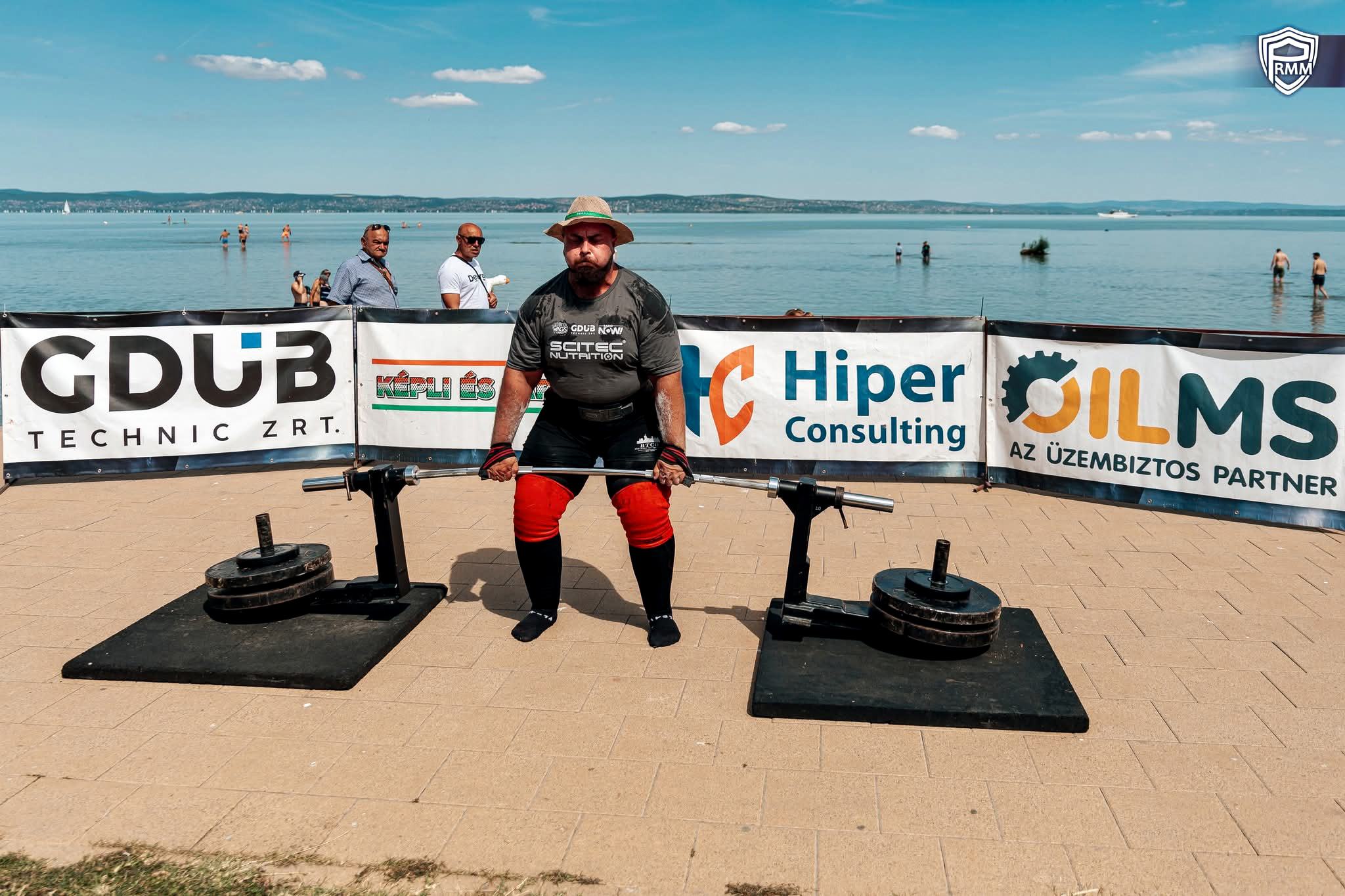
The Science of Strongman - Episode II: Why Is Strongman Different from Powerlifting?
On the surface, Strongman and powerlifting look like two dialects of the same language. Both are built around strength, heavy external loads, and the ability to produce high levels of muscular tension. The distinction appears when the question changes from “How much can you lift?” to “How well can you solve a sequence of different physical problems?” Powerlifting standardizes movement so performance can be compared. Strongman deliberately introduces variability: implements with different shapes, unusual positions, distances, time limits, repetitions, loading tasks, and static events. The sports are not opposites. They place the same fundamental quality, strength, into different experimental environments.
1. Two Strength Sports, Two Operational Definitions of Performance
In powerlifting, performance is relatively easy to define. The athlete seeks the heaviest valid load in three standardized movements: squat, bench press, and deadlift. Rules control range of motion, position, and judging criteria, allowing comparison across athletes and competitions. In Strongman, performance is defined by results across a series of events that can challenge the same underlying capacity in very different ways. A contest may combine deadlift, log press, farmer's walk, yoke, sandbag, stones, holds, or other events.
This difference changes the nature of preparation. A powerlifter can optimize a movement through highly controlled repetition of the same task. A Strongman must first build a sufficiently large general strength base and then learn to transfer that strength to tasks that are not perfectly standardized. In training science terms, the first environment permits extremely high specificity, while the second requires a combination of general physical qualities and transfer to a variety of tasks.
2. Standardization Versus Variability
Standardization is one of powerlifting's great strengths. When the bar, range of motion, and judging criteria are controlled, the result can be interpreted with greater precision. Variability, by contrast, is one of Strongman's defining characteristics. One log may have a different diameter, length, and mass distribution from another. A sandbag deforms and changes shape as it is handled. A stone does not offer the same contact surface as a barbell.
Variability does not mean a lack of structure. It means that the athlete must develop the ability to adapt quickly to a changing external structure. In powerlifting, technique can be refined through repetition of a relatively stable movement. In Strongman, technique must also contain problem-solving: how should the body be positioned relative to the object, where is the center of mass, how can balance be maintained, and how should the trajectory change if the implement behaves differently?
3. Specificity: Why Strength Does Not Transfer Automatically
One of the most persistent myths in strength sports is that an increase in one form of strength automatically transfers to all others. In reality, transfer is influenced by similarity between the training stimulus and the performance task. The more an event depends on a particular combination of joint angles, velocities, ranges of motion, grips, and activation sequences, the more relevant specific practice becomes.
Powerlifting allows an extremely high level of specificity. An athlete can repeatedly practice the competition squat with controlled variations and adjust stance, footwear, equipment, tempo, and depth to maximize performance. Strongman follows the same principle, but it must be distributed across several movement families. A strong deadlift is useful, but it does not solve a yoke walk or stone load. Specificity does not disappear in Strongman. It multiplies.
4. Why Strongman Requires a Broader Strength Profile
In powerlifting, the three competition lifts provide a relatively clear map of demands. In Strongman, the profile is broader. The athlete must produce force in different positions and planes, maintain tension while moving, accelerate implements, sustain isometric force, and repeat efforts under time pressure. Some events resemble maximal strength tests. Others move closer to power-endurance or repeated high-force work.
This diversity changes the idea of the complete athlete. A powerlifter can pursue maximal absolute strength in three movements. A Strongman must minimize weaknesses that may become costly across a multi-event contest. Sometimes the difference between first and fifth place is not who has the highest deadlift, but who loses the fewest points when the event changes.
5. The Biomechanics of Unconventional Implements
A barbell is a remarkably predictable tool. A Strongman implement can be almost the opposite. Its center of mass may be difficult to predict, contact with the body may be unstable, and its shape may prevent standard positioning. Biomechanically, the athlete is not interacting with weight alone but with a coupled system consisting of the body and the implement.
This affects joint moments and movement trajectories. A log is more voluminous than a bar and must be brought close to the body in a particular way. A stone permits a contact position that does not exist in a deadlift. A yoke places substantial mass above the trunk and changes stabilization demands during locomotion. The same external mass therefore does not necessarily create the same internal demand.
6. Maximal Strength Is Not the Whole Story
Both Strongman and powerlifting rely heavily on maximal strength, but Strongman more often requires a large fraction of maximal capacity to be expressed under a time limit or after a previous event. Rate of force development, mechanical power, and the ability to repeat high-force efforts become increasingly relevant.
In a loading event, for example, it is not enough to move the object. The athlete must generate the required force quickly, position the implement efficiently, and manage energy between repetitions. In a maximal deadlift, speed matters, but the final external load remains the primary outcome. In Strongman, time can become part of the measurement itself.
7. The Metabolic Component of Strongman
Powerlifting includes extremely intense efforts, but each attempt is brief and the pauses between attempts and events are substantial. Strongman can include longer and denser work sequences. Farmer's walk, yoke, medleys, and loading races can keep muscles under tension while imposing cardiovascular demands for durations in which oxidative metabolism becomes more relevant.
This does not make Strongman an endurance sport in the conventional sense. Strength remains dominant, but it must be expressed in a more variable energetic environment. The athlete needs both the ability to produce force and the capacity to recover sufficiently between efforts. Consequently, specific conditioning can play a larger role than in preparation focused exclusively on a powerlifting total.
8. Repeated High-Force Work and Power-Endurance
Strongman frequently requires an intermediate quality between strength and endurance: the ability to produce high levels of force repeatedly. An athlete may be capable of one maximal effort yet lose substantial efficiency when required to perform ten rapid repetitions with a heavy load or move through a medley without rest.
Powerlifting also trains fatigue tolerance, particularly during higher-volume phases, but competition does not normally require an athlete to carry a heavy load over distance or move directly from one type of task to another. Strongman does. The result is a different relationship between maximal strength, volume, and conditioning.
9. Grip as a Differentiating Factor
In powerlifting, grip is crucial, particularly in the deadlift and for bar stabilization, but the implement is standardized. In Strongman, grip can become an event in itself. Axle diameter, handle surface, object position, and duration can make grip a decisive variable.
More importantly, grip often has to be maintained while the athlete changes position or moves. Farmer's walk is a clear example: hand and forearm strength, shoulder stability, trunk control, and lower-limb mechanics must operate simultaneously. In such an event, strength cannot be meaningfully separated from stability and locomotion.
10. Locomotion Under Load
One of the most important differences is that Strongman frequently requires movement with a load. Yoke walk and farmer's walk transform a lifting problem into a transport problem. The athlete must manage implement oscillation, ground contact, step rhythm, center of mass, and trunk stability while producing force.
This component is not central to powerlifting. A deadlift ends when the bar reaches lockout, while a carry continues after the object has already left the ground. In Strongman, successfully lifting the implement does not guarantee the ability to control it while moving.
11. The Implement Becomes Part of Technique
In a standardized movement, technique can be described with relative precision. In Strongman, technique is sometimes a continuous negotiation with the implement. A soft bag may need to be compressed and brought into a specific contact position. A stone demands a particular grip and body rotation. A keg may roll or shift during the lift.
This changes the meaning of skill. Skill is not merely reproducing a perfect shape; it is producing an outcome when the implement does not behave perfectly. In motor-learning terms, Strongman values not only repeatability but adaptability.
12. Stabilization and Trunk Control
Powerlifting places substantial demands on the trunk, but Strongman adds situations in which the load is asymmetric, unstable, or moving. A yoke can oscillate laterally, a sandbag can shift its center of mass, and a carry can create repeated trunk forces with every step.
Under these conditions, rigidity alone is not the objective. The athlete needs enough stability to transmit force and enough control to permit movement. A completely rigid trunk can become inefficient in a dynamic event. Strongman therefore demands a balance between rigidity and functional mobility.
13. Recovery Between Events
Competition structure also changes the recovery problem. In powerlifting, the athlete manages energy around nine primary attempts, while movement demands remain relatively stable. In Strongman, the next event may heavily involve muscles that were just taxed or may require a completely different quality.
Recovery therefore becomes part of performance during the competition itself. Breathing, pacing, position between repetitions, execution speed, and attempt selection can preserve resources for later events. A Strongman contest should be viewed as a sequence rather than a collection of independent tests.
14. Strategy and Risk Distribution
In powerlifting, risk is concentrated mainly in load selection for squat, bench press, and deadlift. In Strongman, risk is distributed across the entire contest. An athlete may choose to push maximally in a preferred event while knowing that the decision may carry a cost into the next one.
This creates a more pronounced strategic element. The athlete is not simply pursuing the largest possible result in every event, but the best result compatible with the overall competitive objective. Sometimes a secure performance worth enough points is more valuable than a maximal attempt with a high probability of failure.
15. Anthropometry and Specialization
Both sports can reward substantial muscular mass, but the optimal profile may differ. In powerlifting, body proportions can favor particular movements and influence technical strategy. In Strongman, the same body must solve multiple problems at once.
A large trunk may help in certain loading events, but additional body mass must also be moved through a yoke. Long arms may provide a deadlift advantage while changing the demands of an overhead event. Strongman does not eliminate specialization, but its event diversity places limits on specialization.
16. Technique Is Learned Differently
In powerlifting, repetition of the same movement permits extremely precise technical refinement. The athlete can film each repetition, examine bar path, and correct small deviations. In Strongman, technical analysis must also include the interaction between athlete, implement, and environment.
Technical learning can therefore be less about one perfect geometry and more about building a repertoire of solutions. An experienced athlete does not necessarily execute the same movement in every situation. The athlete has accumulated enough patterns to rapidly modify position, rhythm, and grip when the implement or event standard changes.
17. Strongman Training Is Not Simply Powerlifting Plus Implements
It is tempting to describe Strongman as powerlifting with logs, stones, and carries added on. The formula is useful as a first orientation but inadequate as a training model. A Strongman program must manage a broader range of demands and avoid allowing development of one quality to undermine the others.
A strength base may include classic barbell movements, but preparation also needs exposure to relevant implements and movement categories. Training density, conditioning, and tolerance for repeated heavy efforts may require different emphasis from a program built solely around maximizing a powerlifting total.
18. What Strongman Can Learn from Powerlifting, and Vice Versa
The two disciplines should not be turned into an artificial rivalry. Powerlifting provides an excellent laboratory for absolute strength, controlled progression, and technical precision under load. Strongman provides a laboratory for transfer, adaptability, locomotion, and force expression in variable contexts.
Athletes can benefit from both. A Strongman can use squat, bench press, and deadlift to build a strong base. A powerlifter can learn from carries or implements that challenge body control and work capacity. Transfer is useful precisely when it is understood rather than assumed.
19. Why a Very Strong Powerlifter Is Not Automatically a Great Strongman
This is perhaps the most practical question. A huge total demonstrates an extraordinary ability to produce force in three movements. Strongman demands more than peak capacity in a limited movement set. The athlete must transform that strength into multiple actions and express it after fatigue has accumulated.
Unusual implements can also remove some of the technical advantage developed exclusively around the barbell. An athlete may possess an impressive deadlift yet lose substantial points in a yoke, loading medley, or hold. This is not contradictory. It is a consequence of specificity.
20. Why a Strongman Is Not Automatically an Excellent Powerlifter
The relationship works in the other direction as well. Being able to manipulate heavy objects in many ways does not guarantee maximal performance in the three standardized lifts. Training variability can benefit broad performance, but elite performance in a standardized movement requires specific exposure and technical refinement.
A Strongman can be extraordinarily strong and still not have invested enough time in optimizing the bench press or the details of squat judging. Again, this is not a question of sporting value. It is a difference in objective.
21. Strongman as a Sport of Transfer
If one idea had to summarize the distinction, it would be transfer. Strongman tests how effectively an athlete can carry a general capacity for force into a sequence of particular contexts. Strength built with a bar must appear in an implement, in locomotion, in awkward positions, and under fatigue.
That is why a training program cannot be judged only by how many kilograms are added to basic lifts. The correct question is whether those kilograms become better event performance. Transfer is the bridge between the gym and competition.
22. Conclusion - The Same Foundation, a Different Architecture
Strongman and powerlifting begin with the same fundamental idea: the human body must produce force against an external resistance. From there, the paths diverge. Powerlifting creates a standardized environment in which strength can be expressed and compared precisely in three movements. Strongman creates a variable environment in which the same strength must be adapted to implements, distances, time, grips, positions, and different sequences of effort.
The difference is not that one sport is more real or more difficult than the other. They are different sporting problems. Powerlifting demands deep specialization. Strongman demands specialization without losing adaptability. One refines a movement to extraordinary detail. The other asks the athlete to build a repertoire broad enough to answer problems that cannot be fully controlled. That tension between general strength and specific expression is precisely what makes Strongman one of the most complex strength sports.
References
Suchomel, T. J., Nimphius, S., & Stone, M. H. (2016). The Importance of Muscular Strength in Athletic Performance. Sports Medicine, 46, 1419-1449.
Suchomel, T. J., Nimphius, S., Bellon, C. R., & Stone, M. H. (2018). The Importance of Muscular Strength: Training Considerations. Sports Medicine, 48, 765-785.
Cormie, P., McGuigan, M. R., & Newton, R. U. (2011). Developing Maximal Neuromuscular Power. Sports Medicine, 41, 17-38.
Haff, G. G., & Nimphius, S. (2012). Training Principles for Power. Strength and Conditioning Journal, 34(6), 2-12.
Kraemer, W. J., & Ratamess, N. A. (2004). Fundamentals of Resistance Training: Progression and Exercise Prescription. Medicine & Science in Sports & Exercise, 36(4), 674-688.
Stone, M. H., Stone, M. E., & Sands, W. A. (2007). Principles and Practice of Resistance Training. Human Kinetics.
More From The Journal
Training
The Science of Strongman Training - Episode X: Competition Programming
How to build a complete Strongman competition preparation block: calendar, events, volume, intensity, specificity, simulations, autoregulation, tapering and fatigue management.
Training
The Science of Strongman Training - Episode IX: Peaking
Peaking in Strongman: how to turn months of training into maximal competition performance by reducing fatigue, preserving adaptations and managing specificity.