
Training
The Science of Strongman Training - Episode VIII: Autoregulation
October 19, 2026
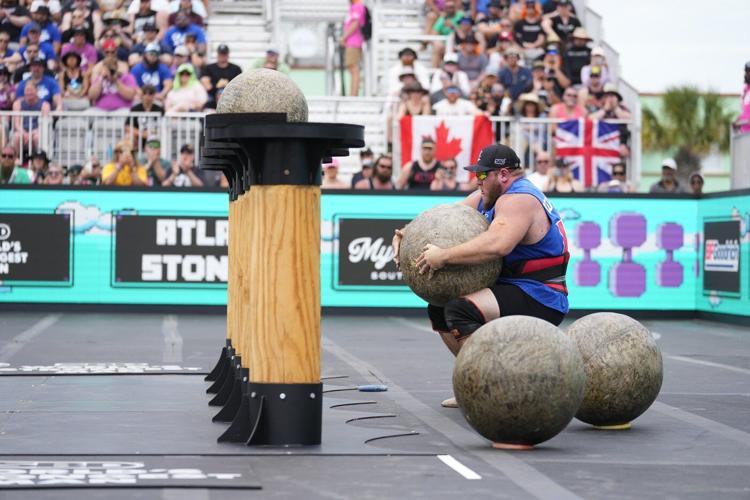
In Strongman, the program written on paper is only the working hypothesis. The real athlete enters the gym in a state that changes from day to day. Sleep, stress, travel, nutrition, recent competitions, accumulated fatigue and even the cost of the previous session can change what the athlete can produce today. Autoregulation is the mechanism that allows the program to account for that reality without abandoning structure.
Modern literature includes methods such as RPE/RIR, APRE and velocity-based training under the broad umbrella of autoregulation. A 2025 network meta-analysis including 19 studies and 27 randomized interventions, with 428 participants, found favorable results for autoregulated methods in maximal strength development, although differences among methods and versus percentage-based programming require cautious interpretation. The evidence does not say autoregulation is magic. It says adjusting training according to the athlete’s actual response can be a valid strategy.
1. What is autoregulation, actually?
Autoregulation means adjusting a component of training according to observed performance or athlete state. The program does not disappear. Instead, there is a clear target plus rules that allow the load to change if the reality of the day does not match the original estimate.
The fundamental difference is between rigid programming and adaptive programming. In a rigid model, 90% of 1RM means 90% regardless of the day. In an autoregulated model, 90% may remain the reference, but execution, RPE, velocity or the ability to complete the planned repetitions can trigger an adjustment. This is not a lack of discipline. It is controlling the variable using the information available.
2. Why percentages cannot describe a Strongman’s day by themselves
Percentages of 1RM are useful because they provide a common language. The problem begins when they are treated as an exact measurement of daily capacity. An 85% load can feel very different after an excellent night of sleep than after a competition followed by a long trip.
In Strongman, the problem is even more complex because many events do not have a stable, repeatable 1RM. Yoke Walk, Farmer’s Walk, loading, Stones and medleys depend on the implement, surface, distance, technique, speed and event order. Autoregulation allows the program to work with this variability instead of pretending it does not exist.
3. RPE: when the athlete becomes a measuring instrument
RPE, rating of perceived exertion, is one of the most accessible forms of autoregulation. In strength training, the scale is often used to estimate how close a set is to the athlete’s current limit. A practical interpretation connects RPE with repetitions in reserve: RPE 10 is roughly zero repetitions in reserve, RPE 9 about one, and RPE 8 about two, although individual variation exists.
The advantage is that RPE requires no equipment. The disadvantage is that it has to be learned. A novice may confuse discomfort with mechanical effort or may misjudge proximity to failure. RPE therefore becomes more valuable when it is compared over time with load, repetitions, velocity and actual performance.
4. RIR: how many repetitions are left in the tank?
RIR, repetitions in reserve, turns autoregulation into a simple question: how many quality repetitions could you still perform? For standard exercises, the answer can be relatively intuitive. In Strongman, however, failure must be defined. In Log Press, failure may mean that another clean repetition is impossible. In Farmer’s Walk, it may mean losing the implements, stopping, or experiencing obvious technical breakdown.
RIR is particularly useful for preventing every set from becoming a survival test. If the target is RIR 2, the athlete can stop before speed and technique collapse. The program therefore controls cost without abandoning the stimulus.
5. Velocity-based training: when the bar tells you how ready you are
Velocity-based training uses movement velocity to estimate relative intensity and monitor fatigue. The concept is attractive because velocity can reveal performance changes that are not obvious from a predetermined percentage. If a load moves quickly on one day and much more slowly on another, the athlete is not in the same functional state.
Velocity should not, however, be treated as a universal number. The velocity-load relationship depends on exercise, individual and methodology. A 2024 review emphasizes the need to interpret velocity monitoring in context. In Strongman, VBT is probably easier to apply to barbell exercises than to highly variable implements, where technique and geometry can dramatically alter the measurement.
6. APRE: autoregulation through set performance
Autoregulatory Progressive Resistance Exercise, APRE, adjusts load according to performance in a reference set. If the athlete exceeds the repetition target, load can increase. If performance falls below expectation, load can decrease.
The 2025 network meta-analysis ranked APRE highly for the probability of improving squat and bench press strength. Strongman requires caution in extrapolation. A result in the squat or bench press does not automatically demonstrate that the same scheme is optimal for Stones or Yoke. The method is a tool, not an identity.
7. Autoregulation does not mean doing whatever you feel like
This is probably the most important limitation. Autoregulation does not mean the athlete walks into the gym and intuitively chooses whatever feels appealing. If a strong day becomes an excuse to turn every session into a maximal test, that is not autoregulation. It is impulse.
Good autoregulation uses rules established before the session. For example: if warm-up work feels at least two RPE points harder than normal, reduce load; if velocity falls below the preset threshold, stop the set; if technique deteriorates, reduce difficulty; if two independent indicators are negative, modify the session. Rules turn sensation into a decision.
8. Readiness: how prepared are you today?
Readiness describes readiness to perform, not a biological diagnosis. It can be estimated through warm-up performance, RPE, sleep, mood, pain, body mass, heart rate or other data. No single marker should be treated as absolute.
In Strongman, the most useful readiness test may actually be a standardized exposure. If the same warm-up load on Log, squat or deadlift produces a very different feeling and velocity from the athlete’s personal average, that is directly relevant information for the session. General data can add context, but should not replace performance.
9. Autoregulating volume: load is not the only variable
An athlete can have a day when the planned load is achievable but the planned volume is not. In that case, reducing sets may be smarter than dramatically reducing weight. Conversely, an excellent day may allow a few additional sets if they remain within the block’s predefined boundaries.
In Strongman, volume is often hidden in distance and repetitions. Ten additional meters in Farmer’s, two extra Stone loads or one additional medley can substantially change cost. Autoregulation therefore needs to track actual work, not just the number of sets.
10. Autoregulating intensity: reducing load without reducing the goal
If the goal is strength, reducing load does not automatically mean abandoning the goal. If the athlete has a poor day, a lower relative intensity performed with good technique and sufficient reserve may be a better choice than forcing the planned weight.
Intensity in Strongman also has several dimensions. Load, speed, distance, instability, density and technical complexity can all increase difficulty. Autoregulation should therefore ask: what needs to be protected today? Maximal strength, speed, technique, volume tolerance or specific exposure?
11. Autoregulating technique: when a repetition is no longer a good repetition
In Strongman, technical quality is a performance variable, not merely an aesthetic detail. A Stone loaded with poor positioning, a Yoke Walk in which steps become chaotic, or a Farmer’s Walk in which trunk control is lost may count on paper but provide a less useful adaptation at a higher cost.
Autoregulation can therefore include a technical rule: stop or modify the set when the execution criterion is no longer met. This is especially important under fatigue, when the athlete may still possess the strength to continue but no longer has the control required to convert that strength into quality performance.
12. Does Strongman need autoregulation more than a sport with standardized exercises?
We cannot claim that Strongman demonstrably needs it more than every other sport because direct experimental evidence is limited. We can, however, see why the sport’s variability makes autoregulation logical. Implements, events, surfaces, distances, order and competition schedules frequently change the conditions.
A survey of Strongman practitioners showed widespread use of periodization, maximal-strength and power training, as well as event-specific work. In such a complex system, autoregulation can serve as the layer that adjusts daily execution without destroying long-term architecture.
13. What if you are having a very good day?
Autoregulation works in both directions. It is not only a brake for bad days. If warm-up performance is excellent, RPE is unusually low, velocity is good and technique is stable, the program can permit a controlled increase.
But this is where experienced athletes can fall into a trap: a good day does not automatically need to become a record test. A small controlled increase may be enough. If the block’s purpose is accumulation of quality work, an accidental PR can cost the next three sessions.
14. What if you are having a bad day?
A poor day is not automatically a lost day. If warm-up work shows reduced capacity, first ask how large the deviation is and what the session is supposed to accomplish. You can reduce load, cut sets, increase rest, simplify the event or turn the session into technical practice.
If several negative signals repeat, however, the issue is no longer just today’s session. The whole microcycle may need adjustment, or a deload may be appropriate. Autoregulation is valuable because it allows a bad day to be managed before it becomes a bad week.
15. Autoregulation and accumulated fatigue
Autoregulation does not replace fatigue management. It complements it. If an athlete repeatedly reduces load in every session because recovery is inadequate, the underlying problem may be the baseline program rather than today’s weight selection.
Imagine an athlete planned for 5 x 5 at a certain intensity but ends up doing 5 x 3, then 4 x 3, then 4 x 2. Autoregulation made the sessions executable, but the repeated deviations are also a signal. If this pattern becomes systematic, volume, frequency, sleep, nutrition, stress and recovery need investigation.
16. Autoregulation and overreaching
In the previous episode we discussed overreaching and overtraining. Autoregulation can reduce the risk that an unexpectedly difficult day is treated as a normal day. If the athlete is already fatigued, mechanically preserving the planned load can amplify stress precisely when recovery capacity is reduced.
Poorly used autoregulation can also hide the problem. If every week is simply adjusted downward without investigating why, the athlete may remain stuck at a lower performance level. The goal is not to permanently do less. The goal is to do the right amount at the right time.
17. Autoregulation in Strongman events
In Log Press, autoregulation can use RPE, RIR or velocity to determine load and number of sets. In Axle, technical difficulty and the lack of bar flex may justify a more conservative interpretation of effort. In Farmer’s Walk, distance, speed and grip failure become criteria. In Yoke, stability and step rhythm can be as important as load.
In Stones, the number of quality repetitions, platform height and consistency of the pickup can guide decisions. In medleys, density becomes crucial. On a poor day, you can preserve all components while reducing distance or the number of transitions. Specificity remains, while cost is controlled.
18. Autoregulation for beginners versus advanced athletes
The more experienced the athlete, the more historical information they usually have about their response to training. An advanced athlete may recognize the difference between a genuinely poor day and a day in which technique is simply not stabilized yet. They can compare RPE with load, velocity and outcome.
Beginners need more structure. If you simply tell them to do what they feel, you give them freedom they do not yet know how to use. Percentages, fixed repetitions and clear RPE boundaries may be easier to learn. Autoregulation should be introduced progressively as the athlete learns to interpret personal signals.
19. How to build a simple autoregulation system
A practical system can have five steps. First define the session goal. Then define the main target, such as an RPE range or velocity threshold. During warm-up, collect information. Apply predetermined adjustment rules. Finally, record what happened.
Example: the goal is technical strength on Log Press, the target is RPE 7-8, and if the planned load reaches RPE 9 before the work sets, load is reduced. If it reaches RPE 6 with excellent technique, a modest increase is possible. If technique deteriorates before RPE becomes high, the set stops. That is autoregulation with rules, not improvisation.
20. Which indicators are worth tracking?
The most important indicator is specific performance. Next can come RPE/RIR, velocity, repetitions, distance, time, technical quality, sleep, mood and pain. You do not need to measure everything. A good system is simple enough to be used consistently.
Data should be viewed longitudinally. One unusual day does not prove a problem. A repeated trend is much more informative. This is one of the central lessons of training monitoring: context and change over time matter more than an isolated number.
21. Autoregulation does not remove discipline
There is an irony here: the more autoregulated the program becomes, the more disciplined the athlete has to be. A flexible system works only when its rules are respected. If RPE is used to avoid all discomfort, the data become meaningless. If every good day becomes a PR, autoregulation becomes an excuse for impulsivity.
Discipline means accepting both the day when you must reduce and the day when you can increase. A mature athlete does not identify with the planned weight. The athlete identifies with the long-term objective.
22. Autoregulation and long-term programming
Autoregulation should not destroy periodization. Blocks still have objectives: hypertrophy, maximal strength, power, specificity, competition preparation or recovery. Autoregulation decides how much of that objective can be expressed on a particular day.
Think of the program as a map and autoregulation as the steering wheel. The map gives you the destination. The steering wheel lets you adjust when there is a pothole, road closure or change in conditions. Without the map you get lost. Without the steering wheel you hit the first obstacle.
23. What does current research say?
Current literature is broadly supportive of autoregulation, but it does not justify claiming that one method is superior in every situation. The 2025 network meta-analysis found favorable results for APRE, RPE and velocity-based training compared with fixed loading for selected strength outcomes, but populations, exercises and protocols varied.
A 2021 meta-analysis assessed eight studies with 166 athletes and concluded that autoregulated methods can be effective for maximal strength development. At the same time, the velocity-based training literature shows that methodology, exercise and measurement quality matter. The reasonable conclusion is that autoregulation is an evidence-supported strategy, not a training religion.
24. Autoregulation in a Strongman week
A microcycle can be built around targets and windows rather than only fixed numbers. A strength day may have an RPE 7-8 target, an event day may have a minimum number of quality exposures, and a power day may be limited by velocity. The program retains intent even when exact loading changes.
During a week involving travel or competition, the rules can become more conservative. During a week of excellent sleep and performance, the windows can allow progression. This flexibility is particularly valuable in a sport where the real calendar does not always respect the coach’s ideal training calendar.
25. When autoregulation must say STOP
Autoregulation is not a method for continuing at any cost. Severe pain, loss of function, dizziness, unusual symptoms or clear loss of control are not problems to solve by finding a lower RPE and continuing. The session should be modified or stopped, and persistent problems should be assessed appropriately.
This is the difference between training management and denial of warning signals. A good system knows not only when to reduce the load, but also when the problem is no longer negotiable.
26. Conclusion: the athlete is not the same person every day
Autoregulation begins with a simple truth: performance capacity is not constant. The program sets direction, but today’s athlete is not identical to last week’s athlete. Sometimes the difference is small. Sometimes it is enormous.
In Strongman, autoregulation can connect science with field reality. RPE, RIR, velocity, specific performance and technical criteria can adjust load, volume, frequency or complexity. Not to make training easier, but to make it more appropriate.
A mature Strongman does not ask only, “What does the program say?” The better question is, “What can my body produce today, and how can I turn this day into a step forward?” That is where true autoregulation begins.
Bibliography and sources
1. Huang Z, Sun J, Li D, Chen C, Wang D. Autoregulated resistance training for maximal strength enhancement: A systematic review and network meta-analysis. Journal of Exercise Science & Fitness. 2025;23(4):281-290. DOI: 10.1016/j.jesf.2025.07.006.
2. Luo Y, Cao YC, Zhang GZ. Auto-Regulation Method vs. Fixed-Loading Method in Maximum Strength Training for Athletes: A Systematic Review and Meta-Analysis. Frontiers in Physiology. 2021;12:651112. DOI: 10.3389/fphys.2021.651112.
3. García-Ramos A. Resistance Training Intensity Prescription Methods Based on Lifting Velocity Monitoring. International Journal of Sports Medicine. 2024;45(4):257-266. DOI: 10.1055/a-2158-3848.
4. Miras-Moreno B, García-Ramos A. Improving the Use of Lifting Velocity to Predict Repetitions to Failure: A Systematic Review. International Journal of Sports Physiology and Performance. 2024. DOI: 10.1123/ijspp.2024-0337.
5. Winwood PW, Keogh JWL, Harris NK. The strength and conditioning practices of strongman competitors. Journal of Strength and Conditioning Research. 2011;25(11):3118-3128. DOI: 10.1519/JSC.0b013e318212daea.
6. Hindle BR, Lorimer AV, Winwood PW, Keogh JWL. The biomechanics and applications of Strongman exercises: a systematic review. Sports Medicine - Open. 2019;5:49. DOI: 10.1186/s40798-019-0222-z.
7. Soligard T, Schwellnus M, Alonso JM, et al. How much is too much? International Olympic Committee consensus statement on load in sport and risk of illness. British Journal of Sports Medicine. 2016;50:1030-1041. DOI: 10.1136/bjsports-2016-096581.
8. Kellmann M, Bertollo M, Bosquet L, et al. Recovery and Performance in Sport: Consensus Statement. International Journal of Sports Physiology and Performance. 2018;13(2):240-245. PMID: 29345524.
More From The Journal

Training
The Science of Strongman Training - Episode X: Competition Programming
How to build a complete Strongman competition preparation block: calendar, events, volume, intensity, specificity, simulations, autoregulation, tapering and fatigue management.

Training
The Science of Strongman Training - Episode IX: Peaking
Peaking in Strongman: how to turn months of training into maximal competition performance by reducing fatigue, preserving adaptations and managing specificity.