
Training
The Science of Strongman Training - Episode V: Specificity
October 10, 2026
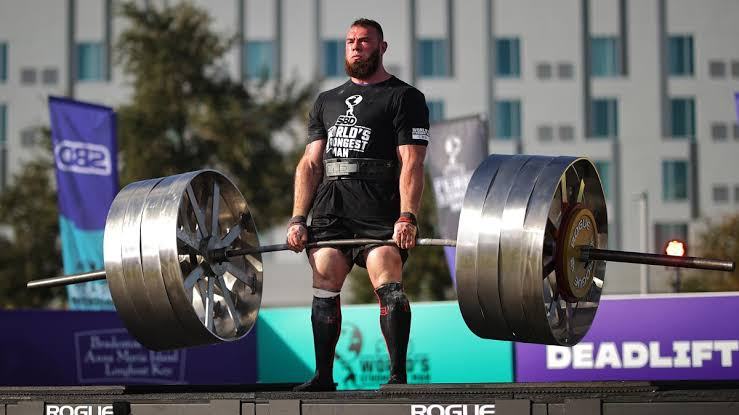
Specificity is one of the most important and, at the same time, one of the most misunderstood variables in Strongman training. In a sport where performance depends on producing and controlling force across different objects, positions, velocities and contexts, the relevant question is not simply how strong the athlete becomes, but how much of that strength can be expressed exactly where competition requires it.
Specificity does not mean repeating competition events endlessly. It means that adaptation should resemble the demand you want to improve closely enough for meaningful transfer. Movement, range of motion, velocity, contraction type, joint position, force direction, implement, stability, rhythm and fatigue can all alter transfer. Modern literature confirms that strength adaptations are larger in directly trained tasks than in non-specific tests, while Strongman research shows that individual events have distinct biomechanical demands.
1. Specificity does not simply mean “do the event”
The first mistake is reducing specificity to a simple rule: if you want to be good at the Farmer’s Walk, do the Farmer’s Walk. The principle is correct, but incomplete. A Strongman event is a system of demands, not a single movement. Farmer’s Walk combines force production, grip, trunk control, pelvic position, gait, limb stiffness and control of the center of mass. Yoke Walk adds a massive trunk-loading component and the need to maintain locomotion under compression. Atlas Stones require a technical sequence in which object contact, body position and timing of extension change the mechanical problem.
Specificity should therefore be analyzed across several levels. There is muscular, joint, neural, biomechanical, technical, metabolic and psychological specificity. An exercise may be highly similar to an event in one dimension and very different in another. A heavy deadlift can build relevant strength for many events, but it does not reproduce walking with a load. A squat can develop lower-limb extensor capacity, but it does not reproduce Yoke stabilization. A row can contribute to musculature used in Stones, but it does not reproduce object position and the loading sequence.
Specificity is therefore not a choice between “specific” and “non-specific” exercises. It is a continuum. Some exercises are general and build physical infrastructure. Others are intermediate and train shared components. At the end of the continuum is the event itself, where all components must function simultaneously. High-level programming moves the athlete along this continuum according to the goal of the phase.
2. Strength transfer: why an athlete can become stronger without becoming proportionally better at an event
Strength is not a completely abstract property of muscle. It is expressed in a context. Meta-analyses on specificity show that training produces the largest adaptations when the trained movement and the test are closely matched. A recent systematic review and meta-analysis of dynamic resistance training found a moderate effect for trained dynamic strength and considerably smaller transfer to non-trained isometric strength, illustrating how much the task itself matters.
In Strongman, this problem becomes even more important because events are complex. An athlete can increase the squat by 20 kg and deadlift by 30 kg while Yoke time remains almost unchanged. This does not mean the new strength is useless. It means transfer is not automatic. The athlete must learn to convert general capacity into a specific solution: correct position, force production at relevant joint angles, balance, step rhythm and implement control.
This is why a mature Strongman program needs two components at the same time. The first builds capacity: muscle mass, maximal strength, power, stiffness, work capacity and load tolerance. The second converts those qualities into performance-specific skill. Without the first, the athlete lacks sufficient engine. Without the second, the engine exists but does not know how to deliver its output in the event.
3. Biomechanical specificity: position, range of motion and force vector
One of the most technical components of specificity is mechanical position. Muscle does not produce identical force at every length, and joints do not experience identical external moments at every angle. Changing trunk, knee or hip position can redistribute demand across segments. In Strongman, the implement can alter this distribution even further because the load’s center of mass is not always close to the body.
Atlas Stones are an excellent example. Biomechanical research has identified distinct phases of the lift and shown that load and fatigue influence their duration and mechanics. Developing hip-extension capacity alone therefore does not reproduce the complete problem. The athlete must learn how to position the body relative to the object, create contact, accelerate at the right moment and transfer force into the platform.
Force vector is equally important. An exercise may build excellent general capacity in a vertical vector while an event requires a combination of vertical, horizontal and lateral force. Literature on force-vector specificity suggests that adaptations tend to be more useful when the direction of loading resembles the direction of performance. In Strongman this is particularly relevant to vehicle pulls, medleys, carries and events requiring force production while moving.
4. Velocity is part of specificity
Another commonly overlooked element is velocity. Producing force slowly and producing force rapidly are not identical neuromuscular problems. Adaptations are influenced by contraction velocity and by the intent to produce force. An athlete who trains very heavy may become excellent at producing force under slow conditions, while Strongman often requires that force to be applied quickly.
Tire Flip, loading and many carry or medley events demonstrate this requirement. In a timed event, it is not enough to move the object. It must be moved within a competitive time window. Therefore movement velocity, rate of force development and technical economy become components of specificity.
This does not mean every repetition should be fast or that light loads are a universal solution. It means the athlete needs exposures in the velocity zone relevant to the event. During accumulation, general capacities can be built with broader loading strategies. During intensification, specificity can increase. Near competition, enough work must occur at the velocity, rhythm and structure the athlete will actually face.
5. Technical specificity: the body must learn the solution
Strongman has a characteristic that separates it from many classical exercises: the implement is part of the problem. The Log has geometry and positioning different from a barbell. The Axle changes diameter and hand interaction. Stones have a curved surface and a different mass distribution from a barbell. The Yoke rests on the body and must be transported. Farmer’s Handles alter hand position and the center of mass. The full technique of an event cannot be inferred from a conventional exercise alone.
Technique is partly a neural adaptation. The nervous system learns activation sequences, intermuscular coordination, timing and movement control. As an athlete becomes more advanced, gains no longer come exclusively from hypertrophy. A meaningful portion can come from using existing physical capacity more efficiently. That is why well-dosed specific practice can become extremely valuable for an advanced athlete.
However, technical practice should not be confused with accumulating fatigue. If technique is practiced only after very heavy sets, the athlete may repeatedly rehearse a degraded version of the movement. For motor learning, a lighter exposure performed with intent and control may sometimes be more useful than a session in which every repetition becomes a survival effort.
6. Strongman event specificity: every event has its own equation
Farmer’s Walk requires a combination of grip, locomotion and rigidity. Yoke Walk adds substantial trunk loading and the need to control implement oscillation while walking. Log Lift involves a specific interaction between clean, rack position, leg drive and pressing. Atlas Stones require a sequence of gripping, lapping, extension and loading. Strongman deadlift can alter bar type, height, diameter or repetition strategy. There is no single form of “Strongman specificity.”
Biomechanical research has already shown that different Strongman events have different performance determinants. In Farmer’s Walk, gait characteristics and ground-contact time can differentiate performance. In Yoke, stride length and step frequency change with speed and load. In Atlas Stones, technical phases and their duration change with load and fatigue. These findings support a simple conclusion: specificity must be designed around the actual event.
An exercise can therefore be highly specific for one athlete and less specific for another. If a lifter already has excellent Stone technique, additional general work may be more useful for extension strength or work capacity. If another athlete has sufficient strength but loses time during the lap and transition to the platform, more specific practice may provide greater value than another 10 kg on a general exercise.
7. How much specificity is too much?
This is where the paradox appears. If specificity is so important, why not train the events as often as possible? Because every exposure has a cost. Heavy objects, carries, Stones and medleys can create substantial mechanical and metabolic stress. If too much of training becomes specific and heavy, less space remains for developing fundamental qualities and recovery cost can rise.
An athlete does not need to prove every week that he can compete. He needs to build the capacity to compete months from now. This is the difference between specificity and permanent simulation. Specificity should increase when proximity to the objective justifies it, not simply because the event is impressive.
A practical model can begin with more general and intermediate work, then progressively shift the proportion toward event-specific exercises. Early phases may emphasize squats, deadlifts, rows, presses, jumps and carries. Later phases introduce more competition-like variations. Before competition, specificity rises while total volume is controlled. Intensity, volume and specificity do not need to peak simultaneously.
8. Specificity and athlete level: the more advanced you are, the more valuable transfer becomes
A beginner can improve from a broad range of stimuli. Much of the adaptation is general: hypertrophy, basic coordination, strength and tolerance to training. As an athlete becomes advanced, however, the gap between physical capacity and competitive performance becomes smaller and more specific. A small improvement in a relevant quality can produce a meaningful difference, but only if that quality is expressed in the right context.
This helps explain why a novice can become better at Strongman almost entirely through general training, while an elite athlete needs much finer control of position, implement, velocity, rhythm and sequence. Meta-analytic work on the generality of strength adaptation shows that training can improve both trained and non-trained movements, but effects are larger in tests that resemble the trained task. As competitive margins shrink, this specificity advantage becomes increasingly important.
9. Specificity in periodization: from building capacity to expressing it
Specificity cannot be separated from periodization. The two are interdependent. An accumulation phase may use lower specificity and place greater emphasis on general capacity. An intensification phase can increase both loading and proximity to the events. The pre-competition phase must convert capacity into event-specific performance, while tapering should reduce fatigue without completely removing movement exposure.
A useful principle is that specificity should increase as competitive uncertainty decreases. Six months out, it may be impossible to know every detail of the event. Six weeks out, the information is usually much clearer. Training can progressively resemble reality: similar distance, height, implement, rhythm, rest periods and, in selected sessions, combinations that reproduce accumulated fatigue.
Specificity should not destroy flexibility, however. If an athlete becomes dependent on one implement, one height or one rhythm, transfer can become too narrow. A good Strongman needs a sufficiently broad physical and technical base to solve variations of the same problem. Effective specificity builds competence, not fragility.
10. Conclusion: do not train only the movement; train the problem the competition presents
Specificity is the mechanism through which strength becomes performance. It is not the opposite of general training, nor is it a justification for turning every session into a competition. It is the process through which capacities developed in training are transferred into the actual context of the event.
In Strongman, specificity should be viewed as the interaction of movement, position, implement, velocity, force vector, range of motion, technique, fatigue and strategy. The more closely these elements resemble the competitive demand, the more specific the exposure becomes. But its value depends on when it is introduced and on its recovery cost.
The elite athlete does not need to choose between strength and specificity. He needs both. General strength builds capacity. Specificity teaches the organism how to use that capacity. Performance emerges when the two meet in the same movement, at the relevant velocity, in the relevant position and under the pressure the competition actually demands.
Bibliography and sources
1. Saeterbakken AH, Stien N, Paulsen G, Behm DG, Andersen V, Solstad TEJ, Prieske O. Task Specificity of Dynamic Resistance Training and Its Transferability to Non-trained Isometric Muscle Strength: A Systematic Review with Meta-analysis. Sports Medicine. 2025;55(7):1651-1676. DOI: 10.1007/s40279-025-02225-2.
2. Spitz RW, Kataoka R, Dankel SJ, et al. Quantifying the Generality of Strength Adaptation: A Meta-Analysis. Sports Medicine. 2023;53(3):637-648. PMID: 36396899.
3. Morrissey MC, Harman EA, Johnson MJ. Resistance training modes: specificity and effectiveness. Medicine & Science in Sports & Exercise. 1995;27(5):648-660. PMID: 7674868.
4. Cormie P, McGuigan MR, Newton RU. Developing maximal neuromuscular power: Part 1. Biological basis of maximal power production. Sports Medicine. 2011.
5. Young WB. Transfer of strength and power training to sports performance. International Journal of Sports Physiology and Performance. 2006;1(2):74-83. PMID: 19114741.
6. Hindle BR, Lorimer AV, Winwood PW, Keogh JWL. The Biomechanics and Applications of Strongman Exercises: a Systematic Review. Sports Medicine - Open. 2019;5:49. DOI: 10.1186/s40798-019-0222-z.
7. Hindle BR et al. The Biomechanical Characteristics of the Strongman Yoke Walk. 2021. PMID: 33981993.
8. Hindle BR et al. The biomechanical characteristics of the strongman atlas stone lift. PeerJ. 2021;9:e12066. DOI: 10.7717/peerj.12066.
9. Keogh JWL et al. Physiological and biomechanical demands of the tire flip. Journal of Strength and Conditioning Research. 2010;24(5):1223-1228. DOI: 10.1519/JSC.0b013e3181cc61cd.
10. Winwood PW, Keogh JWL, Harris NK. The strength and conditioning practices of strongman competitors. Journal of Strength and Conditioning Research. 2011;25(11):3118-3128. DOI: 10.1519/JSC.0b013e318212daea.
11. Winwood PW et al. Strongman training and performance literature.
12. Reilly T, Morris T, Whyte G. The specificity of training prescription and physiological assessment: a review. Journal of Sports Sciences. 2009. DOI: 10.1080/02640410902729741.
More From The Journal

Training
The Science of Strongman Training - Episode X: Competition Programming
How to build a complete Strongman competition preparation block: calendar, events, volume, intensity, specificity, simulations, autoregulation, tapering and fatigue management.
Training
The Science of Strongman Training - Episode IX: Peaking
Peaking in Strongman: how to turn months of training into maximal competition performance by reducing fatigue, preserving adaptations and managing specificity.