
Pharmacology
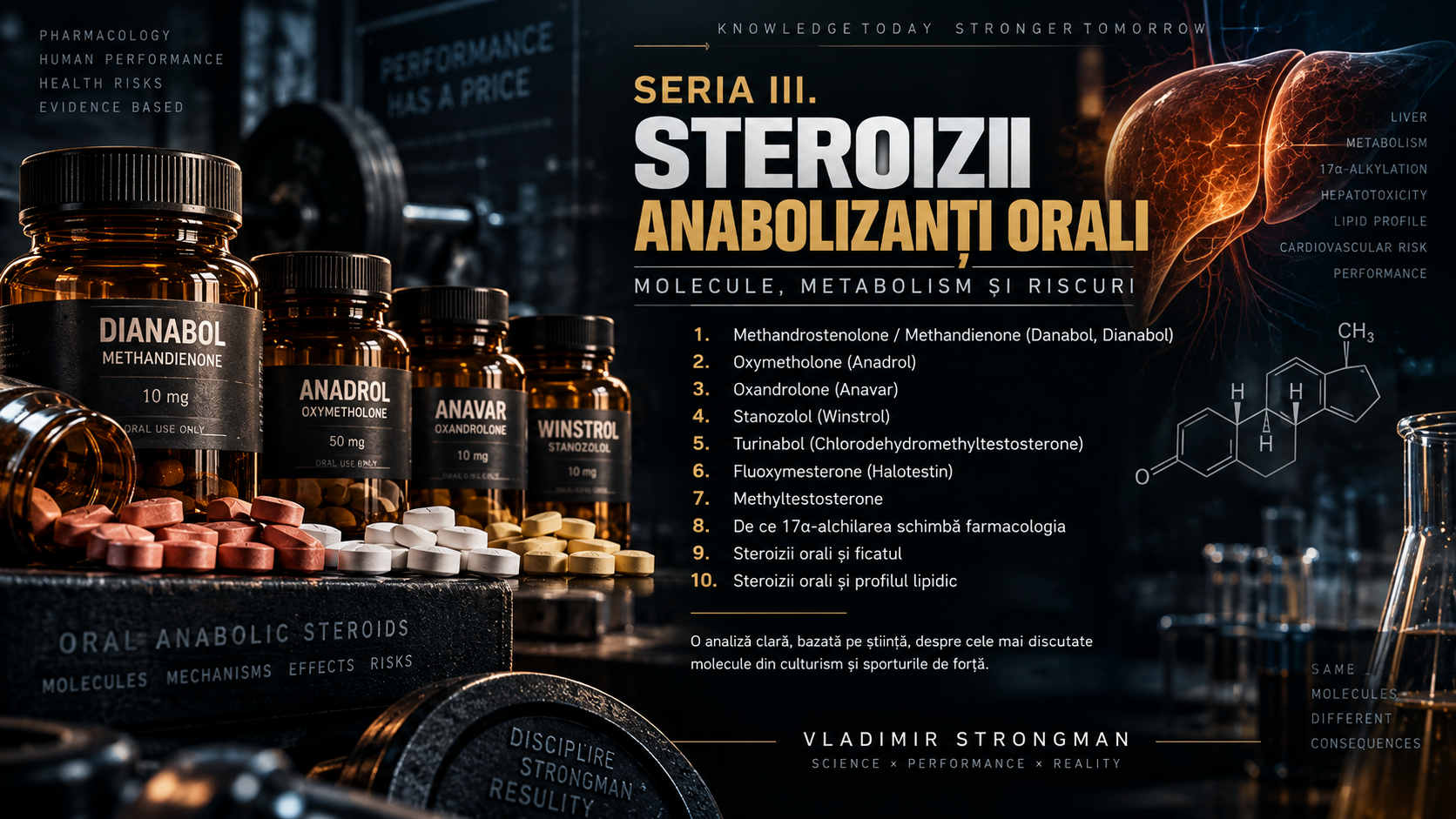
Oral Anabolic Steroids - Episode 9: Oral Steroids and the Liver
September 9, 2026
1. Why the liver is central to the story of oral steroids
The liver is one of the main organs responsible for transforming, transporting, and eliminating drug molecules. With many oral anabolic steroids, the relationship with the liver is especially important because the absorbed molecule enters the portal circulation and is exposed to hepatic metabolism before reaching much of the systemic circulation.
Structural modifications, especially 17α-alkylation, can increase resistance to first-pass metabolism and make meaningful oral activity possible for several compounds. That pharmacokinetic advantage comes with a hepatic profile that deserves to be understood on its own terms.
2. What does the liver normally do?
The liver participates in drug metabolism through reactions that alter molecules so they can be transported and eliminated. These processes include oxidation, reduction, hydrolysis, and conjugation, together with transport and biliary secretion.
The liver is therefore not simply a filter. It is an active metabolic center, and changing a steroid's structure can alter how hepatic enzymes recognize and process it.
3. First-pass hepatic metabolism
After oral administration, absorbed drug reaches the liver through the portal vein before entering much of the systemic circulation. This is known as first-pass metabolism.
For unmodified testosterone, first-pass metabolism is important enough that conventional oral administration produces low systemic bioavailability. This is one reason why certain molecules were structurally modified to better survive hepatic processing.
4. Why 17α-alkylation changes the liver relationship
17α-alkylation introduces a modification at carbon 17 of the steroid nucleus that can slow some pathways of hepatic deactivation. The result is greater metabolic resistance and increased oral bioavailability for several molecules.
Importantly, resistance to one metabolic pathway does not mean the molecule is no longer metabolized. It means that a larger fraction survives the initial processing and can contribute to systemic effects.
5. When bioavailability becomes a pharmacological trade-off
In pharmacology, a modification that improves bioavailability can also have unwanted consequences. For some 17α-alkylated androgens, the same metabolic resistance that helps oral activity is associated with more important hepatic and metabolic effects than seen with esterified injectable testosterone.
This is one of the core principles of the series: a pharmacological property should never be judged in isolation. The gain in bioavailability must be considered together with the biological cost.
6. What does hepatotoxicity mean?
Hepatotoxicity means liver injury caused by a substance. With androgenic steroids, manifestations can range from serum enzyme elevations to cholestasis, vascular injury, and, in the setting of prolonged exposure, hepatic tumors.
These manifestations do not occur in every person and do not have the same frequency. Risk depends on the compound, exposure, individual susceptibility, and other factors.
7. Cholestasis: one of the characteristic injuries
A distinctive feature of some 17α-alkylated steroids is drug-induced cholestasis, in which normal bile flow is impaired. It can produce jaundice, intense itching, dark urine, and elevated bilirubin.
In this setting, liver enzymes may be less dramatic than the clinical symptoms suggest. Cholestasis is therefore a good example of why AST and ALT should never be followed in isolation.
8. Why jaundice may matter more than AST
AST and ALT mainly reflect hepatocellular injury. Bilirubin and cholestatic markers provide different information. An athlete may have only modest transaminase elevations while having a clinically important problem if jaundice develops.
LiverTox describes an androgen-associated cholestatic syndrome that may begin gradually and can persist long after the exposure is stopped. That is why symptoms matter.
9. AST and ALT: what do they actually measure?
ALT is more closely associated with hepatocytes than AST, but both enzymes can rise for several reasons. Elevated values indicate cellular injury but do not by themselves establish the cause or describe every component of liver function.
In strength athletes, muscle-derived AST must also be considered, especially after very hard training. This is where context and additional markers become important.
10. Why GGT and alkaline phosphatase matter
GGT and alkaline phosphatase can help identify a cholestatic or biliary pattern. They are not interpreted alone, but together with bilirubin, AST, ALT, symptoms, and history.
In suspected drug-induced liver injury, the pattern of abnormalities can tell more than a single elevated number.
11. Bilirubin: the marker athletes often ignore
Bilirubin rises when its production, processing, or excretion is disturbed. In androgen-associated cholestasis, bilirubin can become especially important and may rise even when transaminases are not dramatically elevated.
Jaundice is not a cosmetic side effect. It is a clinical warning sign that changes the level of concern and deserves medical assessment.
12. What does dark urine mean?
Brown or very dark urine can occur when conjugated bilirubin enters the urine. Combined with jaundice, itching, or significant fatigue, it can point toward hepatobiliary dysfunction.
An athlete accustomed to dehydration after hard training may misread urine color. Clinical context matters.
13. Itching and cholestasis
Intense itching without an obvious dermatological explanation can be a symptom of cholestasis. In some androgen-associated drug injuries, itching may precede jaundice.
Symptoms are therefore biological data, not background noise. Laboratory findings and clinical experience need to be interpreted together.
14. How quickly can liver injury appear?
Androgen-associated liver injury does not follow a single timeline. LiverTox describes cholestasis often developing within the first months, but onset can be delayed, including after longer exposure periods.
The absence of symptoms during the first weeks is therefore not evidence that risk is absent.
15. Dose and duration of exposure
Hepatic risk is influenced by exposure, but it cannot be reduced to a simple rule such as «below X milligrams is safe». The compound, duration, combinations of substances, and individual susceptibility can substantially alter the outcome.
In medicine, risk is a distribution of probabilities, not a magic border between safe and dangerous.
16. Why two oral steroids are not identical
The word «oral» describes a route of administration, not a complete pharmacological profile. Methandrostenolone, oxymetholone, oxandrolone, stanozolol, and methyltestosterone are all synthetic androgenic steroids, but their structures and clinical profiles differ.
17α-alkylation is an important clue, but it is not a complete description of the molecule. Other substitutions can alter potency, metabolism, and tissue effects.
17. Hepatotoxicity versus elevated enzymes
An elevated AST or ALT is not synonymous with liver failure. Enzymes primarily indicate cellular injury, while overall liver function requires a broader assessment of laboratory data and clinical context.
Conversely, modest transaminase abnormalities do not exclude a clinically important cholestatic injury. This is one of the most important messages of the episode.
18. Hard training complicates laboratory interpretation
Very intense exercise can increase AST and sometimes ALT because of muscle injury. CK can help identify a muscular contribution to abnormal enzyme results.
That does not mean every ALT elevation after deadlifting is «just from training». Training history must be integrated with the other markers and the trend over time.
19. What does alkaline phosphatase tell us?
Alkaline phosphatase can rise in biliary disease but also in bone-related conditions. It therefore has to be interpreted with GGT, bilirubin, and the clinical picture.
A predominantly cholestatic profile tells a different story from an isolated enzyme increase after hard exercise.
20. What is «bland cholestasis»?
The term describes a form of cholestasis in which bile flow is impaired with relatively limited inflammation and hepatocellular necrosis. In this setting, bilirubin and symptoms may be disproportionately important compared with AST and ALT.
It is one of the features that makes liver injury from some androgenic steroids different from classic toxic hepatitis patterns.
21. Not all liver effects are acute
Besides transient enzyme elevations and cholestasis, androgen exposure has been associated in the medical literature with vascular lesions such as peliosis hepatis and with certain hepatic tumors, particularly in the setting of prolonged exposure.
This changes the perspective: «I do not have jaundice» does not mean «the liver is safe».
22. Peliosis hepatis
Peliosis hepatis is a rare vascular condition characterized by blood-filled cavities within the liver. It has been described in association with several substances and medications, including anabolic androgenic steroids.
It is much less common than ordinary enzyme elevations, but it is an important example of a hepatic effect that cannot be captured by one laboratory marker.
23. Adenomas and other hepatic tumors
Prolonged androgen exposure has been associated with hepatic tumors including adenomas and hepatocellular carcinoma. The relationship is more complex than saying «one tablet causes cancer», and individual risk cannot be predicted from one factor.
Nevertheless, these associations are one reason prolonged exposure to certain androgenic steroids deserves a long-term perspective.
24. What role might oxidative stress play?
Experimental literature has proposed oxidative stress as one mechanism that may contribute to hepatotoxicity associated with 17α-alkylated AAS. There is not one single mechanism that explains every clinical manifestation, and the details remain under study.
A plausible biological mechanism should not be confused with a complete explanation of every clinical case.
25. Why the liver does not simply «toughen up»
It is sometimes said that the body «gets used to» a steroid because enzyme values fall after a period of exposure. That interpretation can be misleading. A lower marker does not prove that all biological effects or long-term risks have disappeared.
Metabolic adaptation and normalization of a laboratory marker are not the same thing as absence of injury or absence of risk.
26. Why normal AST and ALT do not close the discussion
Liver markers are snapshots. They do not capture every structural, vascular, metabolic, or endocrine change and they cannot perfectly predict the future.
Especially during prolonged exposure, monitoring should be viewed longitudinally rather than as one «good» or «bad» blood draw.
27. What belongs in a hepatic monitoring panel?
Depending on the medical context, assessment can include AST, ALT, GGT, alkaline phosphatase, and bilirubin, with additional testing when symptoms or risk factors are present. Proper interpretation depends on the pattern and the trend.
A broader panel is useful not merely to find «high numbers», but to identify whether the pattern is hepatocellular, cholestatic, or mixed.
28. Albumin and INR
Albumin and prothrombin time or INR provide information more closely related to hepatic synthetic function than transaminases. They are not perfect and are influenced by other factors, but they become relevant when clinically significant liver dysfunction is suspected.
This is why «my liver is fine because ALT is only slightly above range» is an overly simple conclusion.
29. Why ultrasound does not replace blood tests
Imaging and laboratory testing answer different questions. Ultrasound can assess certain structural changes and the biliary system, but it does not directly measure every aspect of hepatic metabolism and function.
In a real evaluation, clinical examination, laboratory data, and imaging can be complementary.
30. Which symptoms should stop the minimization?
Jaundice, very dark urine, intense itching, persistent nausea, unusual fatigue, or abdominal pain warrant medical assessment, especially in the context of substances with hepatotoxic potential.
These symptoms should not automatically be dismissed as «just training fatigue».
31. The liver and the lipid profile
The relationship between oral steroids and the liver is not limited to transaminases. Certain androgenic steroids can alter lipoprotein metabolism, including lower HDL and unfavorable LDL changes.
This matters because the liver is a central organ in lipid metabolism. A compound can affect hepatic and cardiovascular markers at the same time without producing immediate symptoms.
32. Why «hepatotoxic» does not mean «destroyed liver»
Hepatotoxic describes the potential to cause liver injury. Severity varies. Some abnormalities are reversible, others may be prolonged or severe, and some complications are rare but important.
Used correctly, the term is neither alarmism nor minimization. It is a pharmacological category that must be interpreted according to the compound and context.
33. Why «natural» and «oral» are not synonyms
Oral simply describes the route of administration. It does not say how natural a substance is, how safe it is, or how much the liver metabolizes it.
In pharmacology, route, structure, exposure, and toxicity should be kept separate. Otherwise, simple words can hide important biological relationships.
34. What happens to an athlete after maximal training?
After very heavy deadlift, yoke, or log lift sessions, transient changes in muscle and liver-associated markers can occur. Dehydration, metabolic stress, and muscle injury can complicate interpretation.
Timing of blood collection and proximity to very hard training can therefore matter when interpreting AST, ALT, and CK.
35. Why monitoring should be longitudinal
One blood test tells you where you are on one day. A series of results tells you the direction. For substances with hepatic and metabolic effects, the trend over time may be more informative than a single mild abnormality.
In medicine, the change in a value, the pattern of values, and the appearance of symptoms are often more meaningful than an isolated snapshot.
36. What should a Strongman understand?
For a strength athlete, the central lesson is that performance does not protect the liver. The ability to pull, press, and carry enormous weights does not mean hepatic metabolism comes without biological cost.
A strong athlete can still develop jaundice, cholestasis, dyslipidemia, or hypertension. Performance physiology and toxicity physiology can coexist.
37. The pharmacology lesson
Oral steroids are one of the clearest examples of a pharmacological trade-off. A structural change that helps a molecule survive first-pass metabolism can contribute to a more concerning hepatic profile.
That relationship should not be turned into slogans such as «all orals are toxic» or «the liver always repairs itself». The reality is more nuanced, and that is precisely why it deserves study.
38. Conclusion
The liver is one of the central pieces of oral anabolic-steroid pharmacology. For 17α-alkylated molecules, the story begins with resistance to first-pass metabolism and continues through systemic bioavailability, hepatic processing, effects on bile flow, lipid metabolism, and, in some contexts, long-term risks.
The key lesson is that AST and ALT do not tell the whole story. Bilirubin, GGT, alkaline phosphatase, symptoms, training history, and longitudinal trends can completely change interpretation. In a serious discussion of oral steroids, the liver is not a footnote. It is part of the mechanism.
Selected sources
LiverTox, Androgenic Steroids, NCBI Bookshelf; Niedfeldt M.W., Anabolic Steroid Effect on the Liver, Current Sports Medicine Reports, 2018; review literature on anabolic androgenic steroid-induced hepatotoxicity and 17α-alkylated AAS; PubMed-indexed literature on cholestasis, peliosis hepatis, and hepatic tumors associated with androgenic steroids; Endotext, androgen physiology and pharmacology; World Anti-Doping Agency, 2026 Prohibited List.
More From The Journal

Training
The Science of Strongman Training - Episode X: Competition Programming
How to build a complete Strongman competition preparation block: calendar, events, volume, intensity, specificity, simulations, autoregulation, tapering and fatigue management.

Training
The Science of Strongman Training - Episode IX: Peaking
Peaking in Strongman: how to turn months of training into maximal competition performance by reducing fatigue, preserving adaptations and managing specificity.