
Pharmacology
Oral Anabolic Steroids - Episode 6: Fluoxymesterone / Halotestin
September 8, 2026
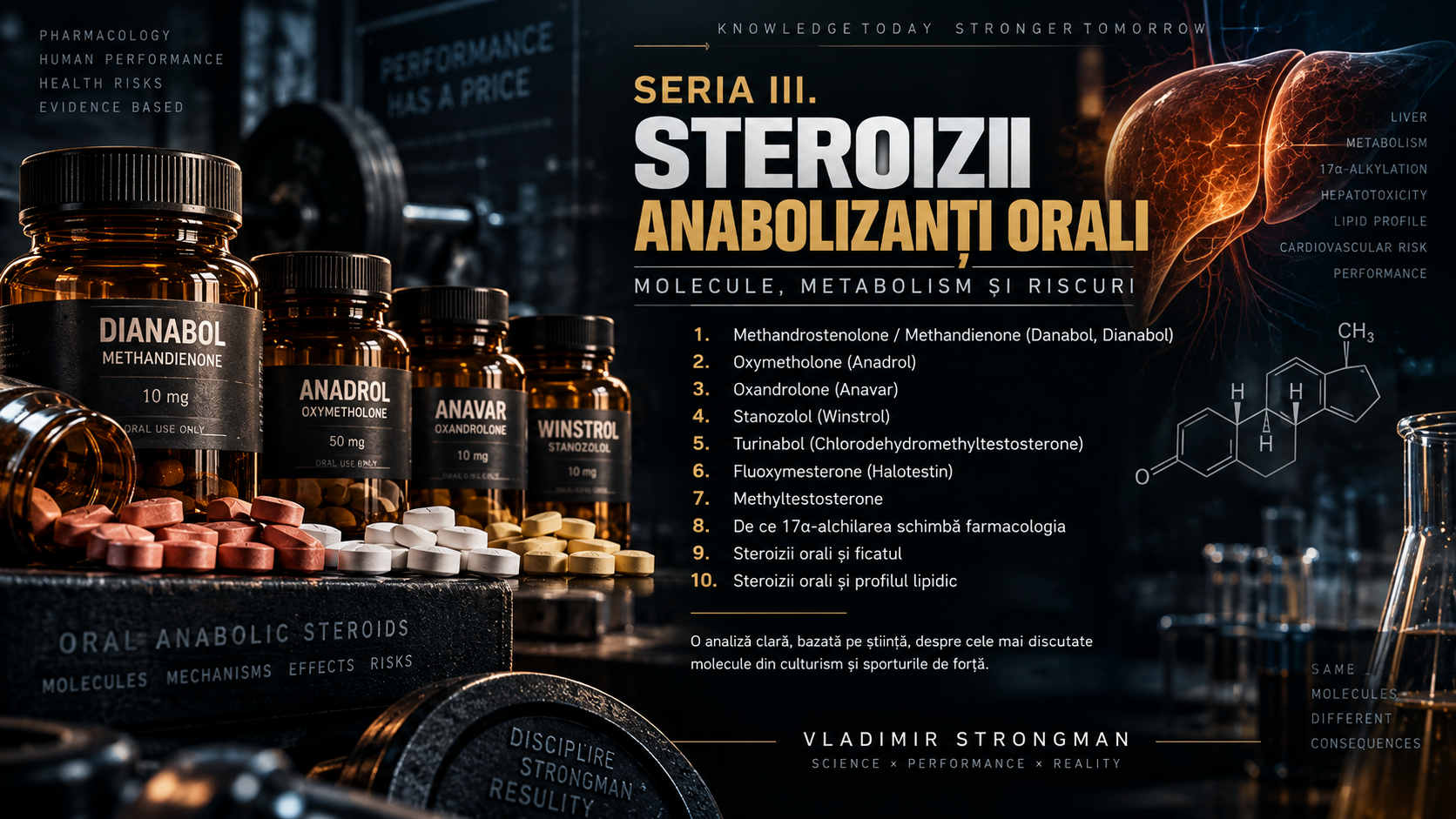
1. What is fluoxymesterone and why does it matter?
Fluoxymesterone is a synthetic anabolic androgenic steroid related structurally to testosterone and designed for oral administration. In medicine, the molecule has been used in selected androgen-dependent settings, while in strength-sport culture it has developed a reputation much larger than its current clinical role. The name Halotestin is especially associated with this compound.
To understand fluoxymesterone, it helps to separate three things that are often mixed together: chemical structure, pharmacological effects, and sporting reputation. A structural modification can change absorption, metabolic stability, receptor interactions, and adverse-effect profile. It does not, however, turn a steroid into a risk-free strength switch.
2. Are Halotestin and fluoxymesterone the same thing?
Yes. Halotestin is a trade name associated with fluoxymesterone. Medical and pharmacological sources may also use the spelling fluoxymestosterone. In sport, Halotestin is usually the most recognizable name.
The key point is that the brand name does not indicate a different active molecule. The biology should be discussed in terms of the compound itself rather than the branding surrounding it.
3. What does “fluoro” mean?
Fluoxymesterone differs from testosterone through several structural modifications. One of the most visible is the introduction of a fluorine atom into the steroid framework. In medicinal chemistry, a halogen can alter electronic distribution, molecular interactions, and metabolic behavior.
The fluorine atom does not, by itself, explain the full pharmacology. Fluoxymesterone combines this change with 17-alpha alkylation and other structural features. The final behavior of the molecule is the result of the entire structure.
4. 9-fluoro: a structural change with pharmacological consequences
In fluoxymesterone, fluorine occupies the 9-alpha position. This contributes to differences from testosterone and from other androgen derivatives. In a steroid molecule, the exact position of a substituent can influence spatial shape, reactivity, and interactions with enzymes or receptors.
That is why two compounds that look similar on paper can behave very differently in the body. Chemical structures are not interchangeable Lego pieces: exact placement matters.
5. 17-alpha alkylation and oral activity
One of the most important modifications in fluoxymesterone is 17-alpha alkylation. This change increases resistance to certain forms of hepatic metabolism and allows a relevant fraction of the molecule to remain available after oral administration.
This is one reason why oral 17-alpha-alkylated steroids should be viewed differently from injectable testosterone esters. The chemistry that improves oral bioavailability also creates distinct metabolic consequences, including greater hepatic burden.
6. “Oral” does not mean “safe”
The oral route is simply a route of entry into the body. It says nothing by itself about safety. With fluoxymesterone, the same property that supports oral activity is related to the compound being sufficiently resistant to first-pass metabolism to produce systemic effects.
The general lesson is important: pharmaceutical form and biological risk are different concepts. A tablet can be convenient and pharmacologically demanding at the same time.
7. The androgen receptor: the central target
A major part of fluoxymesterone's androgenic action occurs through the androgen receptor, an intracellular receptor that can alter gene expression when activated. The same receptor system mediates many effects of testosterone and its derivatives.
After ligand binding, the androgen receptor can influence transcription of genes involved in cellular differentiation, tissue function, and metabolic responses. The strength of an effect does not depend only on receptor affinity, but also on concentration, tissue, cofactors, and pharmacokinetics.
8. The receptor is not a strength button
It is tempting to reduce everything to “more androgen receptor activation means more strength.” Biology is more complex. Strength emerges from the interaction of muscle mass, nervous-system function, technique, muscle architecture, connective tissues, leverage, and the ability to produce force under real conditions.
A potent androgen may change the physiological environment in which these systems operate, but it does not erase the difference between a molecular mechanism and athletic performance. A molecule does not lift the weight by itself.
9. Why is it considered a strong androgen?
Fluoxymesterone's reputation comes partly from its pronounced androgenic character and from athlete reports of changes in strength, drive, and intensity. Those observations from sports culture should not be confused with a universal clinical measurement of the molecule's “power.”
Pharmacologically, androgenic activity is a biological characteristic that can be studied in models and tissues. In sport, translating that activity into performance depends on many additional variables.
10. Androgenic versus anabolic
The terms anabolic and androgenic describe two dimensions of androgen effects. Anabolic refers broadly to processes such as protein synthesis and tissue growth, while androgenic refers to effects associated with male sexual development and function.
In practice, the two dimensions cannot be separated perfectly. This is why classifications such as “100% anabolic” versus “100% androgenic” are simplified teaching tools rather than complete descriptions of human physiology.
11. Why is it associated with aggression?
Halotestin has developed a distinctive reputation in strength sports because of reports of increased aggression, irritability, or a heightened sense of intensity. It is important not to turn a sporting reputation into a universal biological rule.
Behavior is influenced by hormones, psychological context, sleep, stress, personality, environment, and expectations. An effect reported by one athlete is not enough to predict how another individual will respond.
12. Neural strength and performance
A more rigorous explanation of strength changes has to include the nervous system. Motor-unit recruitment, rate of force development, intermuscular coordination, and tolerance to effort all contribute to the final result.
This does not mean fluoxymesterone is a “neural steroid.” It means that strength performance cannot be reduced to muscle size. Any substance that changes training capacity, recovery, or neuropsychological state may affect performance indirectly.
13. Aromatization
Fluoxymesterone is not considered a classic substrate for aromatase in the same way testosterone is. This means the compound does not directly reproduce the testosterone-to-estradiol pathway through aromatization.
Lack of aromatization does not mean absence of endocrine effects. An exogenous androgen can reduce endogenous testosterone production through negative feedback on the hypothalamic-pituitary-gonadal axis.
14. Aromatization and suppression are different things
A persistent myth is that a non-aromatizing steroid does not “affect hormones.” That is incorrect. Aromatization describes conversion into an estrogenic hormone, while suppression describes feedback on the endocrine axis.
Fluoxymesterone can be non-aromatizing and still suppress endogenous testosterone production. These processes can occur together without contradiction.
15. The liver is one of the central concerns
For fluoxymesterone, the liver is a major part of the safety discussion. The compound is a 17-alpha-alkylated androgen, and this family of oral steroids is well known for drug-induced liver injury, including cholestatic patterns.
This does not mean every exposed person will develop a severe complication. It means hepatic risk is a relevant pharmacological characteristic that justifies medical caution and appropriate monitoring.
16. Cholestasis
Cholestasis occurs when bile flow is impaired. Liver injury from 17-alpha-alkylated androgenic steroids can produce jaundice, itching, and substantial bilirubin elevations, sometimes with liver-enzyme changes that look less dramatic than the clinical severity.
That creates an important trap: someone may look only at AST and ALT and assume everything is fine. The liver is not a dashboard with only two warning lights.
17. AST and ALT do not tell the whole story
AST and ALT are useful markers of hepatocellular injury, but they do not describe the entire hepatic picture. In a cholestatic pattern, bilirubin, alkaline phosphatase, GGT, and the clinical context may also be important.
In athletes, interpretation requires care because intense exercise can raise AST and sometimes ALT. Results therefore need to be considered alongside CK, symptoms, and recent training load.
18. Lipids: the risk that does not hurt
One of the more insidious effects of androgens is an unfavorable lipid profile without obvious symptoms. Androgenic steroids can lower HDL cholesterol and raise LDL cholesterol or otherwise alter lipid metabolism.
This matters to athletes because being physically fit does not guarantee a healthy cardiovascular profile. You can look excellent in the mirror while the laboratory is telling a less comfortable story.
19. HDL and LDL
HDL is often called “good cholesterol” and LDL “bad cholesterol,” but this is a simplification. Cardiovascular risk depends on the overall lipoprotein pattern, personal history, and other risk factors.
For a strength athlete, an altered HDL/LDL profile can go unnoticed if attention is focused only on body weight, arm circumference, or performance. Laboratory testing can reveal what the mirror cannot.
20. Blood pressure
Androgens may be associated with increased blood pressure through mechanisms that can involve fluid balance, vascular effects, and changes in hormonal systems regulating volume and vascular tone.
In strength sports, resting blood pressure is not the only issue. Maximal lifting already produces very large, transient pressure surges, so an unfavorable cardiovascular environment can add to the overall strain.
21. The hormonal axis
When the body receives an exogenous androgen, the hypothalamus and pituitary receive negative feedback signals. GnRH output can fall, followed by reduced LH and FSH, and testicular testosterone production and spermatogenesis may decline.
Lack of aromatization does not change this principle. The endocrine system responds to androgenic signaling, not only to estradiol levels.
22. Skin and hair
Androgenic effects can be visible in the skin and hair follicles. In susceptible individuals, androgens may contribute to acne and accelerate follicular miniaturization, especially when there is a genetic predisposition.
The response varies greatly between people. Follicular genetics, androgen receptors, and local metabolism matter more than a simple label such as “more androgenic.”
23. Why did it attract attention in strength sports?
Halotestin became prominent in environments where maximal or explosive strength, intensity, and high output over short periods are valued. Its reputation comes not only from pharmacology but also from stories passed through strength-sport culture.
A distinction between evidence and gym folklore is essential. The fact that a compound has a legendary reputation is not, by itself, proof of clinical superiority or predictable performance enhancement.
24. Fluoxymesterone and Strongman
Strongman demands unusual combinations of maximal strength, repeated-force capacity, speed, coordination, and fatigue tolerance. That is why any substance believed to alter intensity or training output can become part of the sport's culture.
Yet Strongman is not one test. A maximal deadlift has different demands from a farmer's walk, yoke, or overhead event. There is no simple relationship between a “strong androgen” and the best performance in every event.
25. Yoke and farmer's walk
Yoke and farmer's walk combine strength with stability, force transfer, and trunk control. Performance depends on the legs, hips, trunk musculature, grip, and the ability to maintain an efficient trajectory under load.
Any change that affects muscle mass, recovery, or perceived training intensity could have indirect consequences, but a single compound cannot be credited with the entire result of an event.
26. Log lift and overhead movements
In the log lift and other overhead movements, shoulder-girdle muscle mass matters, but so do timing, stability, mobility, and force transfer from the floor to the hands.
That is why the story “powerful substance equals stronger overhead performance” is incomplete. Performance is a property of the whole system, and technique can amplify or erase physiological differences.
27. “Aggressive” is not a medical explanation
In sports culture, a compound may be described as “aggressive” or “hardcore.” In medicine, more useful terms are concrete: androgenicity, neuropsychological effects, changes in sleep, blood pressure, lipids, and liver function.
Colorful language may communicate a subjective experience, but it should not be mistaken for a scientific characterization.
28. What lack of aromatization does NOT do
Lack of aromatization does not automatically protect the heart, liver, or endocrine axis. It does not mean androgenic effects are absent, nor does it guarantee a normal lipid profile.
Likewise, “dry” is a term from sports culture rather than a pharmacological category. Less visible water retention says nothing by itself about metabolic or hepatic risk.
29. Why the liver must be taken seriously
With oral 17-alpha-alkylated steroids, hepatic monitoring matters because some problems may progress quietly before symptoms appear. Drug-induced cholestasis can produce jaundice and itching and may require stopping exposure and medical assessment.
Other medications, alcohol use, liver disease, or supplements can also modify overall risk. The liver sees the whole bill, not only the most recently added molecule.
30. What monitoring matters?
A relevant medical assessment may include blood pressure, complete blood count, lipid profile, liver enzymes, bilirubin, and other liver markers depending on context. Hormonal evaluation may include testosterone, LH, and FSH when clinically appropriate.
Interpretation should be done by a clinician and linked to symptoms, medical history, and other medications. A laboratory panel is not a biological license.
31. Anti-doping status
Fluoxymesterone is an anabolic androgenic agent and falls under prohibited anabolic substances in the anti-doping rules that apply to elite sport. Athletes should always verify the official list in force for the relevant competition year.
Anti-doping lists can be updated, so current status should be checked against the official source rather than an old forum post or archived list.
32. Why this article does not provide a use protocol
An educational pharmacology article can explain mechanism, risks, and sporting context without providing doses, cycles, combinations, or optimization strategies. Such instructions would turn a medical explanation into a practical guide for using a compound with meaningful risks.
The purpose here is to understand what the molecule does and why. Mechanistic knowledge is more valuable than the mythology surrounding the compound.
33. What does strength actually mean in Strongman?
In Strongman, strength is not a single quality. You need maximal strength, repeated-force capacity, grip strength, stability, rate of force development, and tolerance to fatigue under unusual loads.
Therefore, claims about a compound have to be placed in the context of the event. A change that might matter to a deadlift does not automatically create the same value in a carry or technical movement.
34. Why reputation can exceed evidence
Compounds with powerful reputations often develop mythology of their own. Personal experiences are retold more often than neutral outcomes, and selective storytelling can make extreme results seem typical.
Research asks a different set of questions: what effect can be measured, in which population, under what conditions, and at what biological cost? That distinction between anecdotes and data is fundamental to pharmacology.
35. What the molecule teaches us about chemistry
Fluoxymesterone shows how much a molecule's behavior can change when its structure is modified. Fluorine, 17-alpha alkylation, and the other changes are not decorative; they alter the way the body interacts with the compound.
This is a foundational idea in medicinal chemistry. A structural change can improve one property while making another worse. There is usually no molecular modification that wins every trade-off at once.
36. What it teaches us about pharmacology
Fluoxymesterone is a useful example of the difference between pharmacodynamics and pharmacokinetics. Pharmacodynamics asks “what does the molecule do to the body?” while pharmacokinetics asks “what does the body do to the molecule?”
17-alpha alkylation strongly affects the pharmacokinetic side by enabling oral activity, while androgen receptor interaction and downstream effects belong to pharmacodynamics. The two meet in one clinical profile.
37. What an athlete should remember
Fluoxymesterone is an oral anabolic androgenic steroid, 17-alpha alkylated, with pronounced androgenic activity and no classic aromatization to estrogen. Its profile is associated with hepatic and metabolic risks that are not erased by its reputation in strength sports.
In a sport such as Strongman, performance should be viewed as the output of an entire system: training, sleep, nutrition, technique, recovery, cardiovascular health, and endocrine health. A single molecule cannot be isolated from that system without losing the real picture.
38. Conclusion
Fluoxymesterone, known as Halotestin, is a clear example of how steroid chemistry can produce a pharmacological profile very different from baseline testosterone. The structural changes that support oral activity and strong androgenic characteristics come with real biological costs.
Understanding it is valuable precisely because it forces us beyond the myth of the “strength steroid.” The androgen receptor, pharmacokinetics, liver, lipids, blood pressure, and endocrine suppression all belong to the same story. In pharmacology, performance and biological cost have to be read together.
Selected sources
PubChem, Fluoxymesterone Compound Summary; LiverTox, Androgenic Steroids; Endotext, Androgen Physiology, Pharmacology, Use and Misuse; World Anti-Doping Agency, Prohibited List; medical and pharmacological references on 17-alpha-alkylated androgenic steroids and drug-induced liver injury.
More From The Journal

Training
The Science of Strongman Training - Episode X: Competition Programming
How to build a complete Strongman competition preparation block: calendar, events, volume, intensity, specificity, simulations, autoregulation, tapering and fatigue management.

Training
The Science of Strongman Training - Episode IX: Peaking
Peaking in Strongman: how to turn months of training into maximal competition performance by reducing fatigue, preserving adaptations and managing specificity.