
Pharmacology
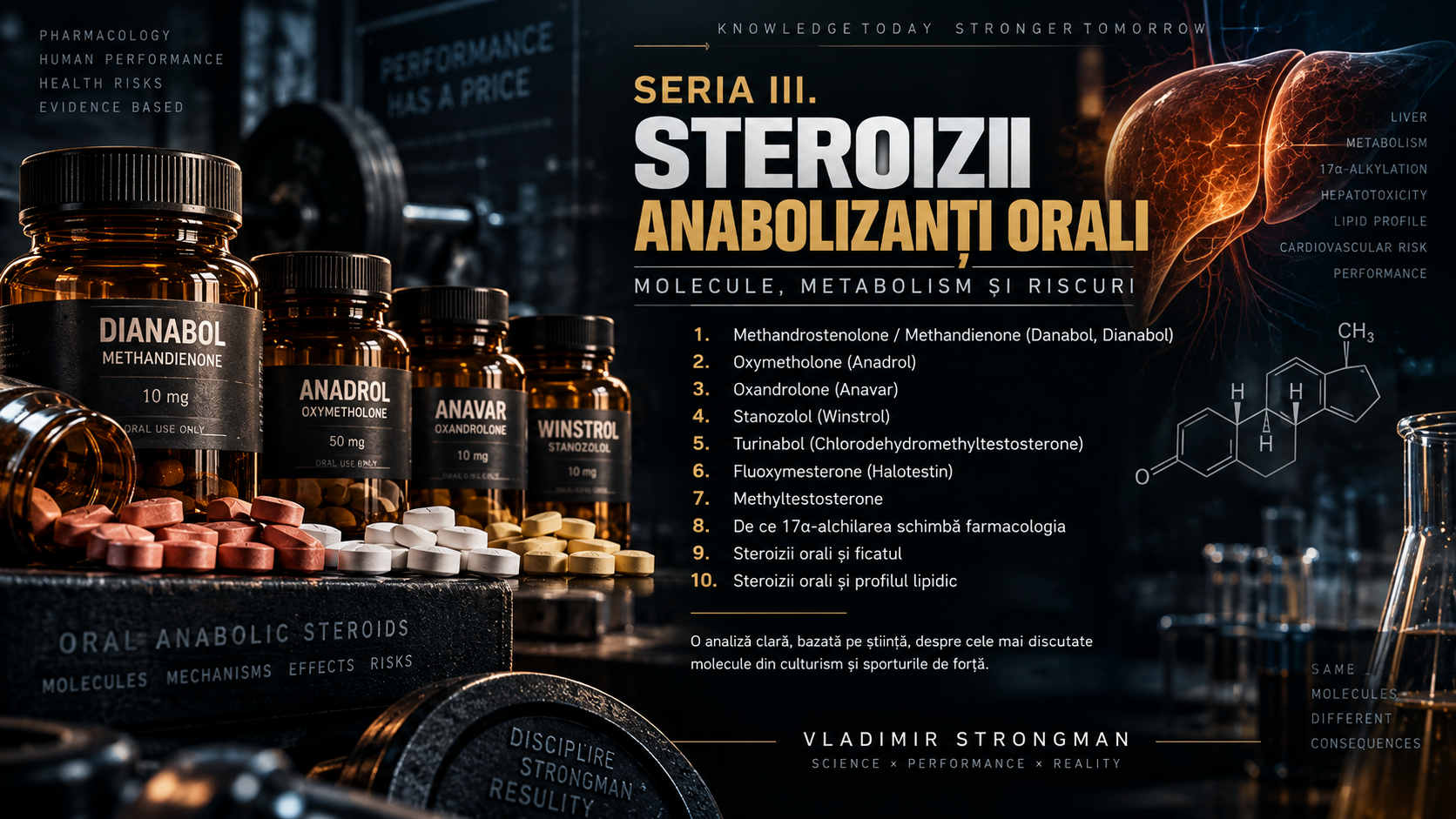
Oral Anabolic Steroids - Episode 3: Oxandrolone / Anavar
September 8, 2026
1. Why is oxandrolone important in a series about oral steroids?
Oxandrolone, best known by the trade name Anavar, occupies a special place in the history of oral anabolic steroids. It has a reputation for being a 'milder' compound, but that label is far too simple to describe its pharmacology.
Oxandrolone is interesting because it shows how much a structural change can alter a molecule's profile. Instead of discussing only its fitness reputation, we will follow its structure, androgen receptor activity, metabolism, liver effects, lipids, and endocrine consequences.
2. What actually is oxandrolone?
Oxandrolone is a synthetic anabolic-androgenic steroid. PubChem lists the molecular formula as C19H30O3 and the molecular weight as about 306.4 g/mol. PubChem describes it as a 17-beta-hydroxy steroid, a 3-oxo steroid, and an oxa-steroid.
For a reader without a chemistry background, the important point is this: oxandrolone resembles classical steroid androgens but contains a special structural modification that changes its behavior.
3. Are Anavar and oxandrolone the same thing?
For this series, yes. Anavar is the trade name associated with the active substance oxandrolone. The trade name tells you what product is being discussed, while oxandrolone is the name of the molecule.
That is why oxandrolone is the more precise term when we discuss mechanism and structure.
4. Why is it called '2-oxa'?
The name oxandrolone contains an important structural clue. In the molecule, an oxygen atom replaces the carbon at position 2 of the steroid skeleton. That is where the 'oxa' characteristic comes from.
It may look like a small change, but in pharmacology replacing one atom can alter molecular shape, enzyme interactions, and the way the body processes the compound.
5. Why does structure matter so much?
Receptors and enzymes do not recognize only a chemical formula. They recognize a three-dimensional shape. Two molecules that look very similar on paper can behave differently if the position of one atom changes shape or electronic distribution.
Oxandrolone is an excellent example of the principle followed throughout this series: different structure means different pharmacology.
6. 17-alpha methylation and oral activity
Oxandrolone contains a 17-alpha methyl group that helps it resist hepatic first-pass metabolism and remain active after oral administration.
The same strategy appears in other oral steroids. The important lesson is that oral activity is not an accident but the result of chemical changes that alter the molecule's route through the body.
7. Oral does not automatically mean safer
The fact that a steroid is taken as a tablet does not mean that it has a safer profile than an injectable steroid. Route of administration and toxicity are separate questions.
With oxandrolone, oral activity is obtained through a structure that changes its relationship with the liver. That is why liver and metabolic effects still matter.
8. The androgen receptor: the center of the signal
Oxandrolone is an androgen that can activate the androgen receptor. This receptor functions inside the cell and can influence gene expression after an androgen binds to it.
That starts a chain of biological processes that can affect protein synthesis and the function of several tissues.
9. 'Anabolic' does not mean 'muscle only'
The term anabolic describes tissue-building and tissue-maintaining processes. It does not mean that the molecule acts only on muscle.
The same androgenic signaling can affect skin, reproductive tissues, metabolism, and hormonal regulation.
10. Why does oxandrolone have a 'mild' reputation?
Oxandrolone gained that reputation partly because it is considered less androgenic than some other anabolic steroids and because it is not classically associated with dramatic water-weight gain.
But 'mild' is relative and is a poor medical category. A compound can be less problematic in one domain and still create important effects in another.
11. Less retention does not mean zero risk
Compared with oxymetholone, oxandrolone is known for a profile less associated with dramatic increases in visible water retention. In sport, that can be perceived as an aesthetic advantage.
But the absence of a dramatic scale change says nothing complete about liver health, lipids, or the endocrine axis.
12. What does this mean for appearance?
In fitness culture, oxandrolone is often associated with a 'cleaner' increase in body mass and less obvious water retention. Those descriptions are sports language rather than medical categories.
Actual body composition is influenced by training, nutrition, glycogen, water, and muscle tissue. Appearance cannot perfectly separate all of those components.
13. The liver: why it still matters here
Oxandrolone is an oral 17-alkylated androgen. This class is known for the potential for liver injury and changes in liver tests.
We should not simply ask which steroid 'looks more toxic' than another. Risk depends on the compound, exposure, context, and the person's health.
14. Cholestasis, explained simply
Cholestasis occurs when bile formation, secretion, or flow is impaired. Bile has to move properly for normal liver and digestive function.
When bile flow is disturbed, bilirubin can rise and the skin and whites of the eyes can become yellow. Itching and other symptoms may also occur.
15. Why transaminases are not the whole story
ALT and AST are useful markers, but they do not measure every form of liver injury. A cholestatic pattern can look different from classic hepatocellular injury.
That is why liver assessment needs several tests and clinical interpretation. One 'good' laboratory value does not automatically make an oral steroid safe.
16. Lipids: the less visible part of the profile
Oxandrolone can alter the lipid profile. For an athlete, the problem is that these changes may be completely silent.
You can look better in the mirror while simultaneously having a less favorable cardiovascular profile. That is why appearance is not a health test.
17. HDL and LDL cannot be seen in the mirror
HDL and LDL are part of cholesterol metabolism. In cardiovascular assessment, their values provide information that cannot be inferred from strength, body weight, or appearance.
This is one reason biological monitoring has to complement sports assessment.
18. The hormonal axis
Any exogenous androgen can influence endocrine feedback. When androgenic signaling rises, the hypothalamus and pituitary can reduce GnRH, LH, and FSH.
Consequences can include reduced endogenous testosterone production and impaired spermatogenesis.
19. Why does oxandrolone not 'trick' the hormonal system?
The body responds to the androgenic signal that is present, not to the marketing story around the product. For the endocrine axis, an exogenous androgen remains an exogenous androgen.
That is why calling a steroid 'mild' should be separated from the question of whether it can suppress endogenous production.
20. Skin, hair, and other tissues
Androgenic signaling can affect sebaceous glands and hair follicles. Acne and hair changes depend on biological exposure, tissue sensitivity, and individual predisposition, not just the steroid's name.
These effects remind us that the androgen receptor exists in many tissues, not only muscle fibers.
21. Why is oxandrolone different from methandrostenolone?
Methandrostenolone and oxandrolone are both oral and 17-alkylated, but their structures differ in important ways. Methandrostenolone has a 1,4-diene modification and a different estrogen-related profile, while oxandrolone is a 2-oxa steroid.
These differences help explain why two molecules given by the same route can look very different in the body.
22. What does the oxygen atom at position 2 change?
Replacing carbon with oxygen changes local electronic properties and the shape of the steroid framework. That can influence how the molecule is recognized by enzymes and receptors.
We should not imagine that one atom explains everything. The final profile comes from the complete three-dimensional structure.
23. Why is oxandrolone not a 'light' version of testosterone?
Oxandrolone belongs to the same steroid family, but its modifications make it a distinct molecule. It is not simply testosterone with a different label.
In pharmacology, a molecule that is 'milder' in one domain does not automatically become equivalent to a smaller amount of another compound.
24. The 'dry steroid' reputation
In sports jargon, oxandrolone is often called 'dry' because it is not associated with the same visible water retention as some other oral compounds. This is sports culture language, not an official pharmacological category.
A less swollen appearance is not a measure of liver or cardiovascular health.
25. Why did women appear in oxandrolone's medical history?
Oxandrolone has had legitimate medical uses, including situations in which clinicians aimed to support recovery from catabolic states and unwanted weight loss. Its comparatively different androgenic profile made it interesting in clinical settings where virilization was a concern.
However, 'less androgenic' does not mean risk-free for women. Signs of virilization can occur and some can be irreversible.
26. Virilization, explained simply
Virilization means the development of unwanted androgenic traits, such as voice deepening, increased body hair, or changes in the clitoris.
Some of these changes can persist after exposure stops. That is why oxandrolone's relatively moderate androgenic reputation should not be confused with absence of androgenic effects.
27. Oxandrolone and muscle mass
Oxandrolone can support anabolic effects through androgenic signaling. In medical contexts, these properties can be useful for limiting loss of lean tissue in selected conditions.
In sport, the same biology is reinterpreted as a performance tool. The biological mechanism and the clinical context, however, are not the same thing.
28. Why is it not famous for 'bulking'?
Oxandrolone does not have the same reputation for rapid, dramatic body-mass gain as oxymetholone. In fitness culture it is therefore often associated with body recomposition or periods in which an athlete does not want obvious water-weight changes.
That reputation should not be turned into a promise. Real outcomes depend on training, energy intake, body composition, and individual physiology.
29. Yet Strongman is a different game
Strongman is not primarily an aesthetics contest. Absolute strength, body mass, acceleration of heavy implements, and the ability to repeat intense efforts matter.
That changes how oxandrolone is perceived. Its less pronounced weight-gain profile may seem less directly aligned with a sport in which body mass often has mechanical value.
30. Has oxandrolone been used in Strongman?
Oxandrolone has existed within the broader culture of strength sports and anabolic doping, but it does not have the same strong historical association with Strongman as some compounds known for rapid increases in body mass and strength.
We should distinguish between evidence that some athletes have used a substance and the claim that it was a standard or universal choice. Public information about individual athletes' practices is often incomplete.
31. Why might it still make sense in an open-weight strength sport?
In an open class, more body mass can be advantageous, but it is not the only goal. In some situations, controlling body composition and maintaining functional body weight can matter more than simply moving the scale upward.
Oxandrolone fits that logic more readily than a steroid associated with massive water retention, but this is an observation about profile, not a recommendation to use it.
32. Why is the discussion different for women and strength sports?
In strength sports, oxandrolone has sometimes been discussed as a compound with a comparatively favorable perceived anabolic-to-androgenic balance for women. That does not remove the risk of virilization or mean that effects can be controlled perfectly.
Individual biology varies widely, and androgenic responses cannot be reduced to one label.
33. A 'clean' steroid is not a cost-free steroid
Words such as 'clean,' 'dry,' or 'mild' are useful for describing sports-community language, but they do not replace medical assessment.
Oxandrolone remains an exogenous anabolic androgen with effects on the liver, lipids, and endocrine system. There is no magic version in which the performance effects remain while the physiological costs disappear.
34. What does oxandrolone teach us about metabolism?
The molecule demonstrates that steroid metabolism depends on very fine structural details. The 17-alpha methyl group supports oral activity, while the 2-oxa modification separates oxandrolone from related compounds.
Pharmacology becomes easier to understand when you follow the molecule's path: structure, absorption, metabolism, receptors, tissues, and consequences.
35. What does it teach us about sport?
The same molecule can be viewed differently depending on the sport. In bodybuilding, weight and appearance may receive more attention. In Strongman, body mass and absolute strength have special mechanical value.
That is why 'the best steroid' is not a scientific category. It is an objective-dependent phrase that ignores biological cost.
36. What does it teach us about sports medicine?
Sports medicine has to track what cannot be seen. Strength, body weight, and physique are only part of the picture.
For an oral androgen, liver health, lipid profile, blood pressure, and endocrine function can tell us more about physiological cost than the mirror.
37. What should you remember about Anavar?
Oxandrolone is an oral anabolic steroid with a distinctive structure: it is 2-oxa and 17-alpha-methylated. Those changes explain much of its pharmacological profile.
The reputation of being 'mild,' 'dry,' or 'clean' should be understood as sports language, not a medical certificate. The molecule can alter lipids, affect the liver, and suppress the endocrine axis.
38. Conclusion
Oxandrolone, known as Anavar, once again demonstrates that steroid pharmacology is a story about structure. An oxygen atom in the steroid framework and a modification at carbon 17 change the way the molecule behaves in the body.
In sport, oxandrolone built a reputation for less visible water retention and a comparatively moderate androgenic profile. In Strongman, that reputation is less central than it is for compounds known for rapid increases in body mass, but oxandrolone still belongs to the wider world of strength sports and anabolic drug use.
The important lesson is simple: 'milder' does not mean 'without adverse effects.' A steroid may look more discreet in the mirror and still leave important effects on the liver, lipids, and hormonal system.
Selected sources
PubChem. Oxandrolone, molecular structure, synonyms, and properties.
FDA. Oxandrolone labeling and prescribing information.
LiverTox, NCBI Bookshelf. Androgenic Steroids: liver injury, cholestasis, and metabolic effects.
Handelsman DJ. Androgen Physiology, Pharmacology, Use and Misuse. Endotext, NCBI Bookshelf.
More From The Journal

Training
The Science of Strongman Training - Episode X: Competition Programming
How to build a complete Strongman competition preparation block: calendar, events, volume, intensity, specificity, simulations, autoregulation, tapering and fatigue management.

Training
The Science of Strongman Training - Episode IX: Peaking
Peaking in Strongman: how to turn months of training into maximal competition performance by reducing fatigue, preserving adaptations and managing specificity.