
Pharmacology
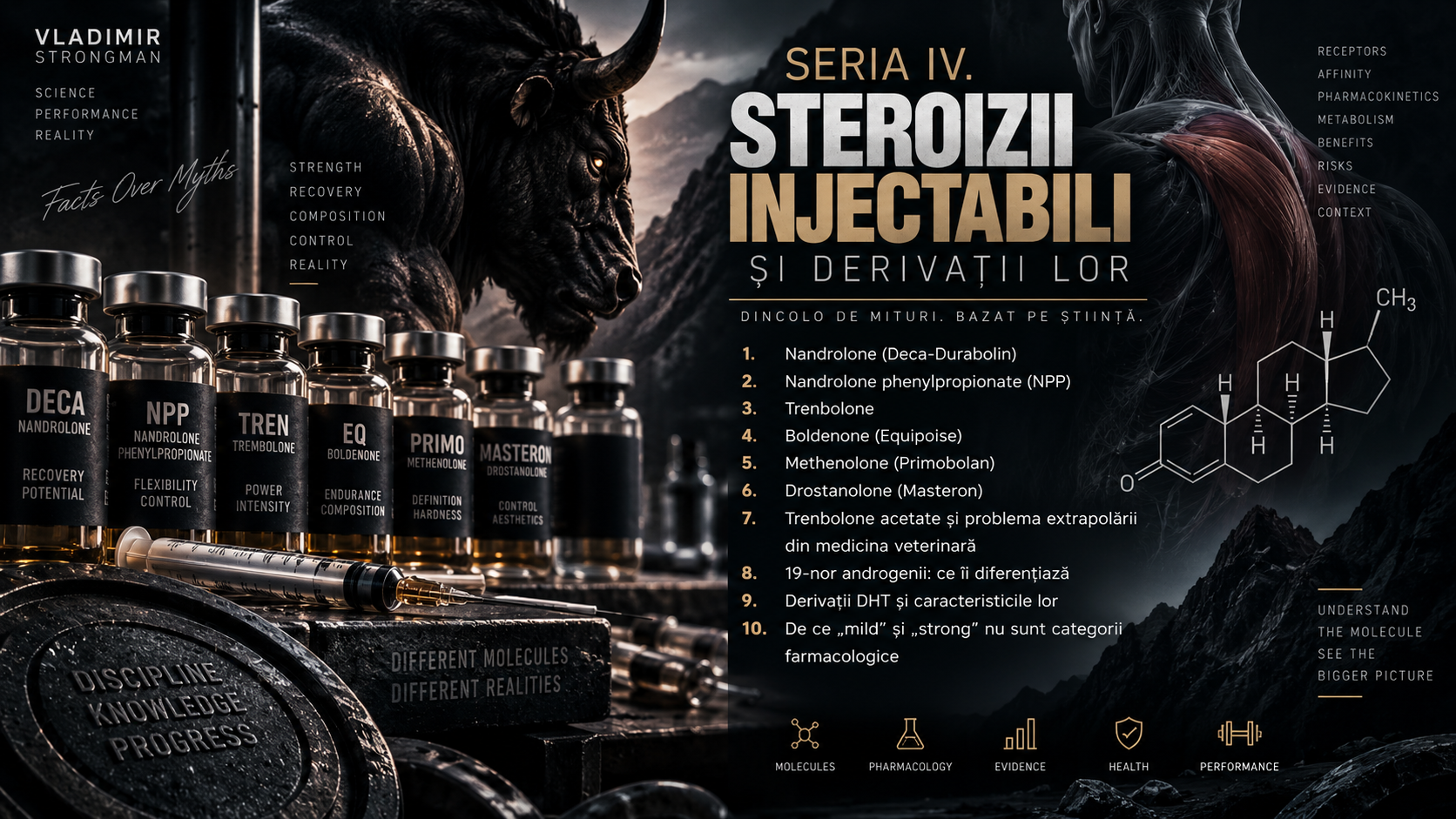
Series: Injectable Steroids and Their Derivatives - Episode 9: DHT Derivatives and Their Characteristics
September 17, 2026
What is DHT?
DHT means dihydrotestosterone, a hormone formed when testosterone is reduced by the enzyme 5α-reductase. It is a potent androgen in certain tissues and became an important starting point for the development of many synthetic steroids.
What does “DHT derivative” mean?
A DHT derivative is broadly a steroid built from the DHT scaffold and chemically modified to change properties such as androgen-receptor activity, metabolic stability, route of administration, or other pharmacologic features. There is no single personality shared by every DHT derivative.
First characteristic: it does not aromatize like testosterone
DHT cannot be converted by aromatase into estradiol in the same way as testosterone. That is why DHT-derived steroids that retain this characteristic are known in sport for little or no aromatization. But “does not aromatize” does not mean “has no endocrine effects.”
Why can structure change pharmacology so much?
Small changes in the steroid nucleus can change molecular conformation, receptor binding, enzyme interactions, and metabolic stability. Modern reviews emphasize that structure, substitutions, and receptor conformation contribute to differences in anabolic, androgenic, and cardiovascular effects.
Methenolone: a classic example
Methenolone is a DHT derivative and became known through Primobolan. Compared with testosterone, it has a different aromatization and androgenic profile. This helps explain its reputation as a “milder” steroid, but it does not remove hormonal suppression or effects on lipids and the cardiovascular system.
Drostanolone: Masteron
Drostanolone is another DHT derivative, known as Masteron. It does not aromatize significantly and is associated in bodybuilding with conditioning phases and a visual appearance less influenced by water retention. Visual appearance is not, however, a measure of safety or a direct measure of fat loss.
Oxandrolone and other derivatives
Oxandrolone is also a DHT derivative, with additional structural changes that modify its properties. The example shows why the label “DHT derivative” alone does not tell you how potent, androgenic, orally active, or safe a compound is. The full structure matters.
Androgenic activity: DHT does not mean the same effect in every tissue
Tissues express different enzymes and cofactors, and androgenic response is context-dependent. Local metabolism can therefore change the final effect, and differences between muscle, skin, prostate, and other tissues cannot be reduced to a single measure of “potency.”
Skin and hair: the less popular side of the story
Androgenic activity in skin can increase sebum, acne, and, in genetically predisposed people, accelerate androgenetic hair loss. Lack of aromatization does not protect the scalp from androgenic effects.
Why is there less water retention?
Testosterone can be aromatized to estradiol, and estrogens contribute to fluid balance and other physiologic processes. A non-aromatizing DHT derivative does not create the same estrogenic pattern. Fluid retention, however, depends on multiple factors, not one hormone.
Why does “dry” not automatically mean healthier?
A compound can produce less water retention while still adversely affecting lipids, blood pressure, hematocrit, or the endocrine axis. A steroid’s aesthetic reputation and its medical risk profile are two different things.
What happens to natural testosterone?
Exogenous androgen exposure can reduce hypothalamic-pituitary signaling. LH and FSH may fall, reducing testicular testosterone production and potentially impairing spermatogenesis. The degree of suppression varies by androgen, exposure, and individual.
Why can oral forms be different?
Some DHT derivatives were modified at carbon 17 to resist hepatic metabolism and allow oral administration. The same structural changes that increase oral bioavailability can also alter hepatic and metabolic safety profiles.
17α-alkylation: the piece that will return later in the series
17α-alkylation is an important structural modification that can increase resistance to first-pass metabolism and oral bioavailability. At the same time, this modification is associated with more relevant hepatic and metabolic problems for many oral AAS.
Cholesterol and the heart
DHT derivatives are not free from cardiovascular effects. AAS exposure can alter HDL and LDL, raise blood pressure, and contribute to structural and functional cardiac changes. An injectable route does not automatically make the cardiovascular profile “clean.”
Hematocrit and hemoglobin
Androgens can stimulate erythropoiesis. Increases in hemoglobin and hematocrit are important monitoring parameters in androgen exposure and should be interpreted together with blood pressure and other risk factors.
The myth that “DHT = no negative effects”
That is exactly the opposite of the pharmacology lesson. DHT is a potent androgen, and its derivatives were designed to modify specific properties of the molecule. Removing aromatization may reduce one type of effect, but it does not eliminate endocrine suppression, lipid changes, or cardiovascular risk.
Why does it matter in Strongman?
Strongman depends on body mass, strength, and repeated performance. From that perspective, less visible water retention may look attractive, but competition does not change basic physiology. Endocrine and cardiovascular risks remain relevant.
Anti-doping
The 2026 WADA Prohibited List includes numerous anabolic-androgenic agents, including drostanolone and methenolone, in category S1, prohibited at all times both in and out of competition.
What should you remember?
“DHT derivative” is a structural description, not a guarantee of effect, safety, or appearance. Methenolone, drostanolone, and oxandrolone show how different compounds built on a DHT scaffold can become. Once you understand structure, pharmacology starts to make sense.
Main sources
PubMed and reviews on 5α-reductase biology, AAS pharmacology, and structure-activity relationships; literature on DHT derivatives and androgen metabolism; WADA 2026 Prohibited List.
More From The Journal

Training
The Science of Strongman Training - Episode X: Competition Programming
How to build a complete Strongman competition preparation block: calendar, events, volume, intensity, specificity, simulations, autoregulation, tapering and fatigue management.

Training
The Science of Strongman Training - Episode IX: Peaking
Peaking in Strongman: how to turn months of training into maximal competition performance by reducing fatigue, preserving adaptations and managing specificity.