
Pharmacology
Series: Injectable Steroids and Their Derivatives - Episode 5: Methenolone / Primobolan
September 13, 2026
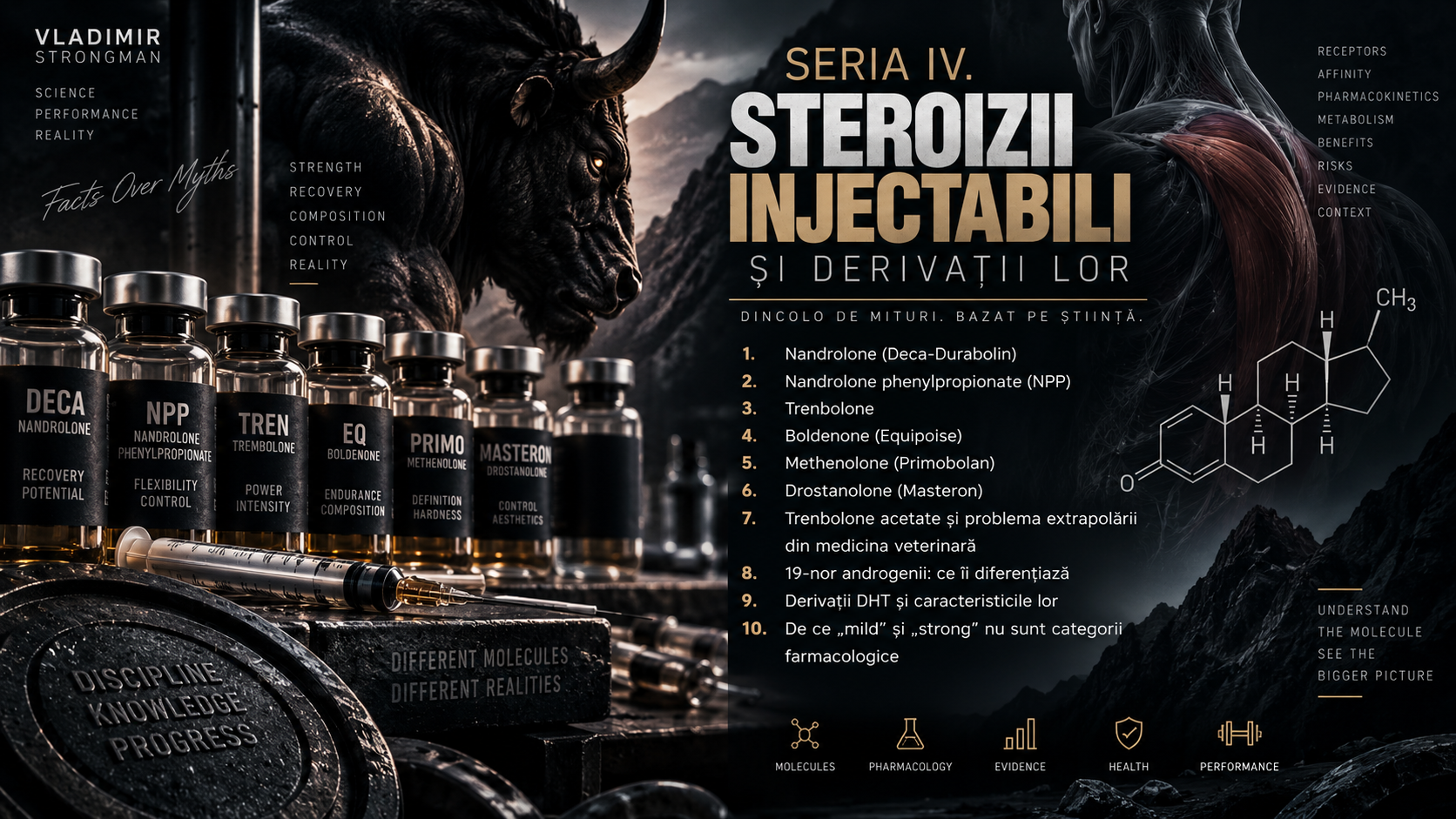
What is methenolone?
Methenolone is a synthetic anabolic-androgenic steroid derived from dihydrotestosterone (DHT). The name Primobolan is associated with methenolone preparations, while the injectable form is methenolone enanthate. The active molecule is methenolone; the enanthate ester mainly changes its pharmacokinetics.
Primobolan: what does the name actually mean?
In gym conversations, “Primobolan” is used for the product, while “methenolone” refers to the active steroid. There are oral methenolone acetate preparations and injectable methenolone enanthate preparations. They belong to the same molecular family, but the route of administration and ester affect how the drug reaches systemic circulation.
What does the enanthate ester do?
Enanthate makes the molecule more lipophilic and allows slower release from an intramuscular depot. It does not turn methenolone into a different steroid; it changes how quickly the active compound becomes available.
How does it work?
Like other androgens, methenolone can activate the androgen receptor and alter gene expression in target tissues. These signals can support anabolic processes, including protein synthesis and maintenance of muscle tissue. The final effect still depends on exposure, training, nutrition, and individual physiology.
Why is it considered a “mild steroid”?
Methenolone has a reputation for being less aggressive than some other AAS, partly because of its moderate androgenic activity and lack of significant estrogen aromatization. But “milder” does not mean “side-effect free.” An exogenous androgen can still suppress natural testosterone production and affect cardiovascular and lipid health.
Does it aromatize?
Methenolone is not considered a steroid that aromatizes significantly to estrogen. This helps explain why it is not associated with the same reputation for water retention or estrogen-driven gynecomastia as testosterone. However, lack of aromatization does not protect against all endocrine problems.
What happens to natural testosterone?
Even a steroid considered “mild” can signal to the body that sufficient androgen is already present. Through negative feedback, LH and FSH can fall, and endogenous testosterone production and spermatogenesis can be impaired. Recovery after discontinuation varies between individuals.
Skin and hair
As a DHT-derived androgen, methenolone may contribute to acne, oilier skin, and accelerated hair loss in genetically predisposed people. Individual sensitivity varies considerably.
The liver: oral versus injectable
Oral methenolone acetate differs from a 17α-alkylated oral anabolic steroid such as many other products. Injectable methenolone enanthate avoids oral administration and has a different hepatic profile. That does not mean liver health can be ignored in every clinical context.
Cholesterol and the cardiovascular system
AAS can alter HDL, LDL, and other atherogenic markers, and cardiovascular effects cannot be judged only by how “clean” a compound feels. Androgen exposure can also contribute to higher blood pressure and cardiac remodeling. Modern data show that AAS use is associated with increased cardiovascular risk at the population level.
Hematocrit and hemoglobin
Androgens can stimulate erythropoiesis. Increases in hemoglobin and hematocrit can become clinically relevant, which is why a complete blood count is an important component of medical monitoring when there is androgen exposure.
Muscle gain and the “hard” look
Methenolone is known in sport for its association with lean-mass retention and for not aromatizing. This helped create a reputation for a harder visual appearance. But appearance is not a direct measure of safety and does not by itself determine how much of a body-composition change is contractile muscle tissue.
Why is it popular during a calorie deficit?
In bodybuilding, methenolone is associated with preserving lean mass during energy restriction. Physiologically, however, the outcome still depends heavily on protein intake, resistance training, sleep, and the size of the calorie deficit. No steroid can turn a poorly designed deficit into a good plan.
The myth that Primobolan is “risk-free”
This is probably the most important myth to correct. Methenolone does not significantly aromatize, is not known for high water retention, and is perceived as relatively mild. It is nevertheless an exogenous AAS with potential endocrine, hematologic, lipid, and cardiovascular effects.
Joints and tendons
Methenolone should not be presented as a treatment for joints, tendons, or ligaments. Someone may feel different during training without the injured tissue being healed. Pain and structural integrity are not the same thing.
Why does it matter in Strongman?
Strongman combines body mass, maximal strength, high training volumes, and repeated mechanical stress. In that setting, methenolone has gained a reputation for preserving lean mass and producing less visible water retention. Sporting reputation should not be confused with the complete medical profile.
Risks of injectable administration
The injectable form adds risks independent of pharmacology: infection, abscess, tissue injury, and product contamination. Products from unreliable sources can introduce a second set of problems separate from the molecule’s effects.
Anti-doping
Methenolone is included in category S1 of the 2026 WADA Prohibited List, and anabolic agents in this category are prohibited at all times, both in and out of competition.
What should be medically monitored?
Depending on clinical context, relevant monitoring may include blood pressure, complete blood count with hemoglobin and hematocrit, lipid profile, liver and kidney markers, and hormonal assessment. For fertility or sexual symptoms, endocrine evaluation and, when appropriate, semen analysis can be more informative than symptom interpretation alone.
Conclusion
Methenolone, known by the name Primobolan, is a DHT-derived steroid with a profile different from testosterone, nandrolone, or trenbolone. Its reputation as a “mild steroid” contains a kernel of truth when specific effects are compared, but it becomes dangerous when interpreted as “risk-free.” Understanding it properly means separating what the molecule does from what bodybuilding culture says about it.
Main sources
PubMed literature and reviews on AAS pharmacology and adverse effects; drug and historical references concerning methenolone; contemporary evidence on cardiovascular risk from AAS; WADA 2026 Prohibited List.
More From The Journal

Training
The Science of Strongman Training - Episode X: Competition Programming
How to build a complete Strongman competition preparation block: calendar, events, volume, intensity, specificity, simulations, autoregulation, tapering and fatigue management.

Training
The Science of Strongman Training - Episode IX: Peaking
Peaking in Strongman: how to turn months of training into maximal competition performance by reducing fatigue, preserving adaptations and managing specificity.