
Pharmacology
Series: Injectable Steroids and Their Derivatives - Episode 4: Boldenone / Equipoise
September 12, 2026
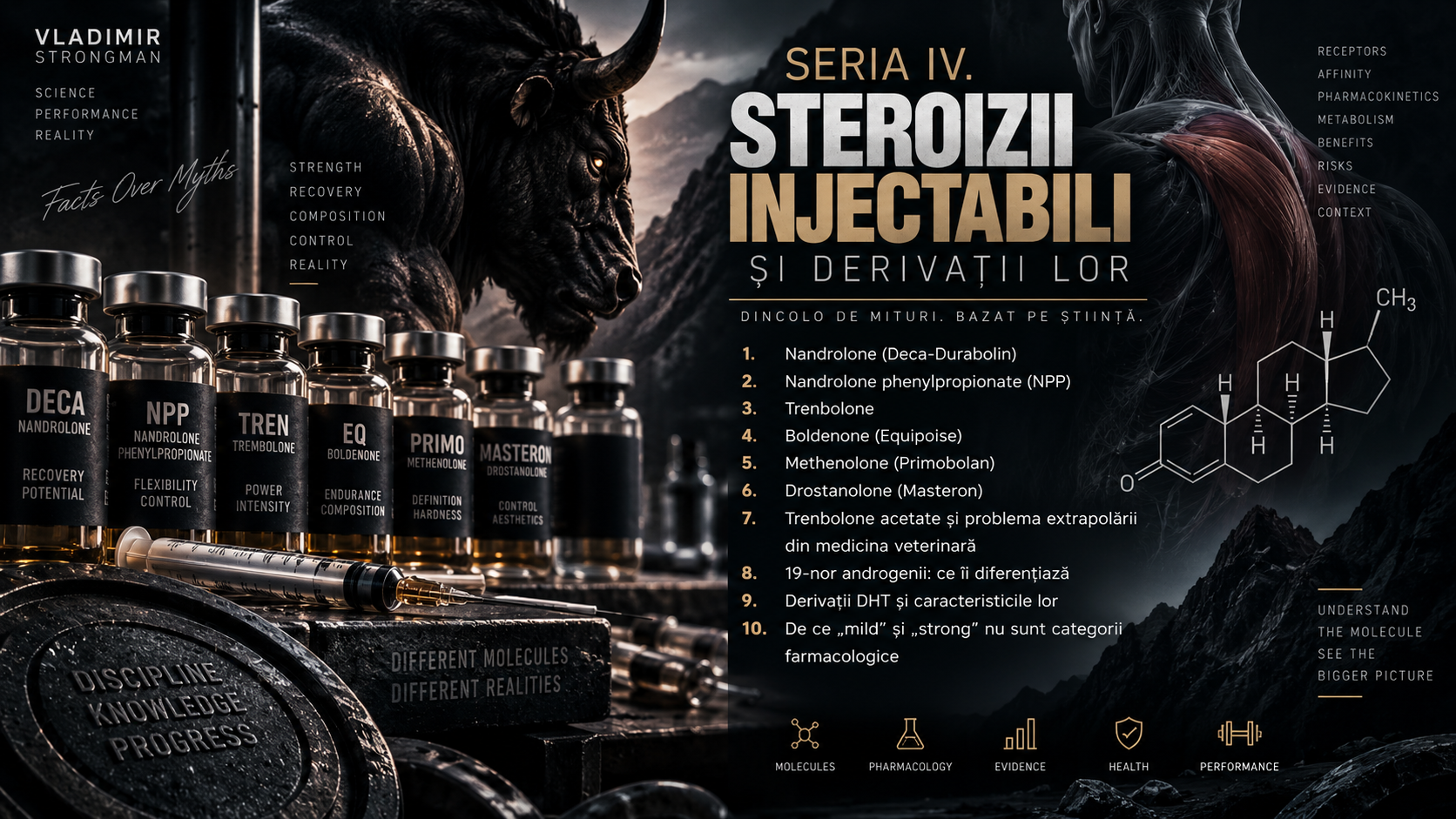
What is boldenone?
Boldenone is a synthetic anabolic-androgenic steroid structurally related to testosterone. Boldenone undecylenate, known by the trade name Equipoise, is an injectable formulation with an ester that prolongs release. Equipoise is not a different substance; it is a preparation based on boldenone undecylenate.
Why does the structure matter?
Boldenone is also known as 1-dehydrotestosterone, meaning testosterone with an important structural modification. A single chemical change can alter how a steroid interacts with receptors and is metabolized. This helps explain the differences between boldenone, testosterone, and nandrolone.
What does the undecylenate ester do?
The ester mainly controls how quickly the compound is released from the intramuscular depot. In other words, the ester changes pharmacokinetics, not the identity of the anabolic molecule. This is why formulations with different esters can have different release profiles.
How does it work?
Boldenone binds to the androgen receptor. This complex can alter gene expression and cellular processes, including those involved in protein synthesis and muscular adaptation. The final effect depends not only on the molecule, but also on exposure, duration, physiology, training, and health factors.
Boldenone compared with testosterone
Boldenone resembles testosterone closely, but it is not testosterone. Its metabolic and estrogenic profile is different, which is part of the reason it has a reputation for producing less water retention. However, “less” does not mean “zero,” and endocrine effects do not disappear.
Boldenone compared with nandrolone
Nandrolone is a 19-nortestosterone, while boldenone is a testosterone derivative. Both appear in conversations about strength sports, but they are not pharmacologically interchangeable. Structural differences influence metabolism, receptor interactions, and hormonal effects.
Why is it associated with muscle gain?
As an androgen-receptor agonist, boldenone can support anabolic processes. In sport, this has created a reputation for increased lean mass and strength. Gym reputation should not be confused with clinical safety evidence or a recommendation for use.
Appetite: what do we know?
Increased appetite is frequently attributed to boldenone in bodybuilding and strength communities. Controlled human evidence is limited, however, and a user-reported effect is not automatically a clinically established effect. Diet, body weight, and training volume can explain part of the observed change.
Hematocrit and hemoglobin
One of the most important issues to follow with androgen exposure is erythropoiesis. Androgens can stimulate red blood cell production, and increases in hemoglobin and hematocrit can become clinically relevant. A higher hematocrit can contribute to increased blood viscosity and, in some contexts, greater cardiovascular concern. That is why a complete blood count matters.
Is boldenone “safer” for the heart?
There is no strong basis for that conclusion. Anabolic steroids can affect blood pressure, lipids, cardiac structure and function, and overall cardiovascular risk. A different water-retention profile does not cancel those issues.
Cholesterol and the lipid profile
AAS exposure can lower HDL and alter LDL and other atherogenic markers. The magnitude varies by compound, exposure, and individual. Being injectable does not mean a steroid will automatically leave the lipid profile intact.
What happens to natural testosterone?
Boldenone, as an exogenous androgen, can suppress the hypothalamic-pituitary-gonadal axis. Lower LH and FSH can reduce endogenous testosterone production and impair spermatogenesis. Recovery after stopping varies between people and cannot be predicted reliably from symptoms alone.
Aromatization and estrogen
Boldenone can produce estrogenic metabolites through aromatization, but it is generally considered less estrogenic than testosterone. This creates a common gym misconception: “it does not aromatize.” The more accurate statement is that it aromatizes less, not that aromatization is impossible.
The liver
Boldenone undecylenate is injectable and is not a 17α-alkylated oral steroid. Its hepatic profile therefore differs from that of many oral steroids, but this does not mean the liver can be ignored when overall health is assessed.
Blood pressure and kidneys
Higher blood pressure, hematocrit changes, body-mass changes, and other metabolic effects can add cardiovascular and renal stress. Rapid weight gain should not automatically be interpreted as useful muscle gain.
Skin and hair
As an androgen, boldenone can contribute to acne, oilier skin, and accelerated hair loss in genetically predisposed people. Individual sensitivity varies widely.
The joint myth
Boldenone should not be presented as a treatment for tendons, ligaments, or joints. A different training sensation or reduced pain does not demonstrate that an injured structure has healed.
Why does it appear in Strongman discussions?
Strongman demands body mass, maximal strength, high training volume, and substantial recovery capacity. Those demands help explain why boldenone became known in strength sports. Still, sporting reputation is not the same as medical safety evidence.
Risks of injectable administration
Beyond pharmacologic effects, injection introduces risks such as infection, abscess, tissue injury, and contamination. Products from uncertain sources may have sterility or concentration problems. These risks are separate from the molecule’s pharmacologic action.
Anti-doping
Boldenone is included in the anabolic-agent category prohibited by the 2026 WADA Prohibited List. Tested athletes should verify status against the current list and the rules of the relevant federation.
What should be medically monitored?
Depending on the clinical context, relevant monitoring may include blood pressure, a complete blood count with hemoglobin and hematocrit, lipid profile, liver and kidney markers, and hormonal assessment. When cardiovascular symptoms or other risk factors are present, a clinician may consider additional testing.
Conclusion
Boldenone is a testosterone derivative, while Equipoise is the name associated with the boldenone undecylenate preparation. The differences from testosterone and nandrolone come from molecular structure and pharmacokinetics. The “clean steroid” image is simpler than reality: hormonal suppression, hematocrit changes, lipids, blood pressure, and cardiovascular risk remain important issues to understand before discussing performance.
Main sources
PubMed literature on anabolic-steroid pharmacology, erythropoiesis, cardiovascular effects, and endocrine suppression; medication and veterinary references concerning boldenone undecylenate; WADA 2026 Prohibited List.
More From The Journal

Training
The Science of Strongman Training - Episode X: Competition Programming
How to build a complete Strongman competition preparation block: calendar, events, volume, intensity, specificity, simulations, autoregulation, tapering and fatigue management.

Training
The Science of Strongman Training - Episode IX: Peaking
Peaking in Strongman: how to turn months of training into maximal competition performance by reducing fatigue, preserving adaptations and managing specificity.