
Pharmacology
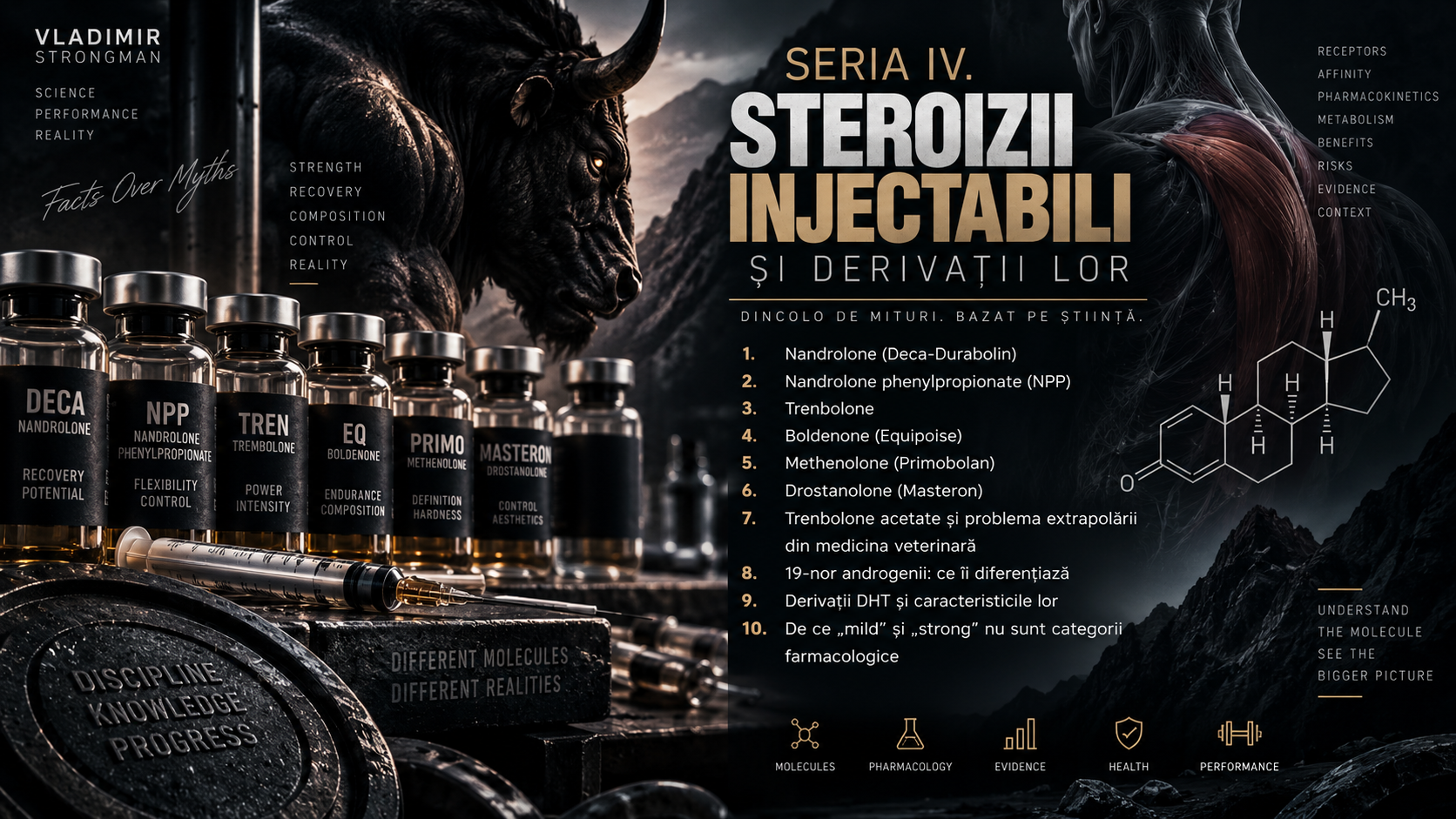
Series: Injectable Steroids and Their Derivatives - Episode 3: Trenbolone
September 11, 2026
What is trenbolone?
Trenbolone is a synthetic anabolic-androgenic steroid structurally related to the 19-nortestosterone family. It is best known in acetate form in veterinary medicine and is widely discussed in sports pharmacology as a highly potent compound. Its potency should never be confused with safety.
How does it work?
Trenbolone binds to the androgen receptor inside cells. This receptor acts like a molecular switch that changes gene expression. The result can favor anabolic processes, including protein synthesis and maintenance of muscle tissue. Experimental work shows high androgen-receptor affinity.
Why is it considered so potent?
Its chemical structure gives trenbolone substantial anabolic and androgenic activity. In experimental models, it binds the androgen receptor with roughly three times the affinity of testosterone, but that comparison must not be converted directly into human dose equivalence.
Trenbolone is not the same as testosterone
Testosterone is a physiological hormone with many roles and can be converted to DHT and estradiol. Trenbolone follows a different metabolic pathway and does not aromatize through the classic aromatase route. That does not mean it cannot cause major endocrine disturbances.
Trenbolone and nandrolone: why are they confused?
Both are structurally related to 19-nortestosterone, but trenbolone contains two additional double bonds in the steroid nucleus, changing its biological activity. Nandrolone is commonly encountered as decanoate or phenylpropionate esters, while trenbolone has its own pharmacological profile.
Why do different esters exist?
The ester mainly changes pharmacokinetics, meaning how quickly the substance is released and how long it remains available after administration. The active base remains trenbolone; the ester mainly acts as a release-control form. This is one of the central lessons of the series: the same steroid base can have different release profiles when attached to different esters.
What happens to natural testosterone?
Like other exogenous androgens, trenbolone can suppress the hypothalamic-pituitary-gonadal axis. When the brain senses elevated androgen exposure, LH and FSH signaling can fall, reducing testicular testosterone production and spermatogenesis.
Libido and sexual function
Hormonal suppression does not produce one universal sexual response. Some people report increased libido during exposure, while others experience lower libido or erectile dysfunction later. AAS clinics have reported sexual problems commonly after periods of use.
Sleep, mood, and the nervous system
AAS can affect mood, behavior, and sleep, and reviews of trenbolone describe adverse effects involving the nervous and reproductive systems as well as the cardiovascular system. Not every effect occurs in every person, and mechanisms remain under study.
“Tren cough”, sweating, and gym folklore
Bodybuilding communities often attribute symptoms such as coughing immediately after injection, night sweats, or major sleep changes to trenbolone. Some experiences are reported by users, but the clinical literature does not justify treating every such symptom as inevitable or as a test of product authenticity.
The heart and blood pressure
AAS are associated with changes in blood pressure, lipid profiles, and cardiac structure or function. A recent review focused on trenbolone describes hypertension and arrhythmias among reported adverse effect.
Cholesterol
Changes in HDL and LDL are important concerns with AAS exposure. When HDL falls and atherogenic markers move in the wrong direction, cardiovascular risk can increase. Being injectable does not make a steroid cardiovascularly harmless.
The liver: injectable does not mean risk-free
Trenbolone is not a classic oral 17α-alkylated steroid, yet cases of cholestatic liver injury have been reported with injectable trenbolone preparations, including jaundice and pruritus. Its hepatic profile may differ from many oral steroids, but the risk is not zero.
Why does it matter in strength sports?
In Strongman and other strength sports, body mass, maximal strength, and work capacity can be influenced by anabolic effects. But sporting benefit and biological cost are different questions. An athlete can become stronger while blood pressure, lipids, fertility, or cardiovascular health worsen.
Injection adds its own risks
Beyond the molecule itself, any injectable preparation adds risks related to sterility, contamination, infection, abscesses, and tissue injury. These problems depend on the product and administration conditions and can become medical emergencies.
What do we know, and what remains uncertain?
A large part of the trenbolone evidence base comes from animal models, experimental pharmacology, and clinical observations or case reports in AAS users. This gives us plausible biological mechanisms and safety signals, but not every long-term outcome has the same quality of evidence as a controlled human medical study.
Anti-doping
Trenbolone is included by WADA in category S1, anabolic agents, and is prohibited both in-competition and out-of-competition.
What should be medically monitored?
In the context of AAS exposure, medical evaluation may include blood pressure, CBC, lipid profile, liver and kidney markers, and hormonal assessment. For sexual symptoms or fertility concerns, testosterone, LH, FSH, estradiol, prolactin and, where appropriate, semen analysis may be relevant.
Conclusion
Trenbolone is a potent anabolic-androgenic steroid acting strongly at the androgen receptor, with a pharmacological profile distinct from testosterone and nandrolone. Its reputation in strength sports comes from anabolic effects and user experience, but the literature also describes hormonal, cardiovascular, metabolic, hepatic, and neurobehavioral risks. The most useful way to understand it is to separate the molecule, the ester, the biological effects, and the risks, without gym myths and without turning pharmacology into a how-to guide.
Main sources
PubMed: Pharmacological and endocrinological studies on anabolic agents; Tissue selectivity and potential clinical applications of trenbolone; Impact of trenbolone on selected organs; The Trenbolo(g)ne Sandwich; LiverTox: Androgenic Steroids; WADA 2026 Prohibited List.
More From The Journal

Training
The Science of Strongman Training - Episode X: Competition Programming
How to build a complete Strongman competition preparation block: calendar, events, volume, intensity, specificity, simulations, autoregulation, tapering and fatigue management.

Training
The Science of Strongman Training - Episode IX: Peaking
Peaking in Strongman: how to turn months of training into maximal competition performance by reducing fatigue, preserving adaptations and managing specificity.