
Pharmacology
Series: Injectable Steroids and Their Derivatives - Episode 2: Nandrolone Phenylpropionate / NPP
September 10, 2026
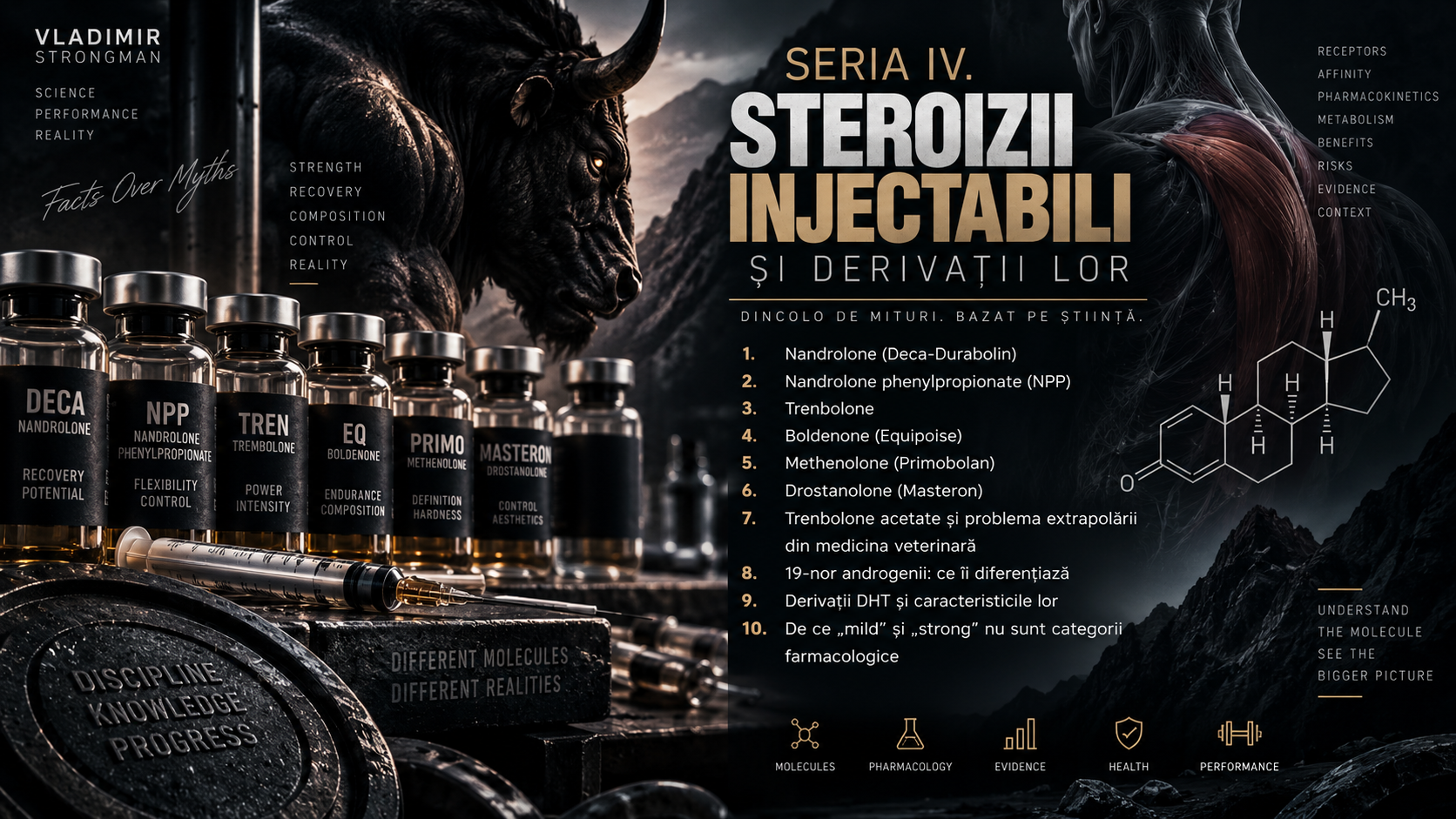
What is NPP?
NPP stands for nandrolone phenylpropionate, meaning nandrolone attached to the phenylpropionate ester. The active molecule is nandrolone, while the ester influences how quickly the drug is released from the injection depot. In other words, NPP and Deca-Durabolin are not completely different steroids: the key difference is the nandrolone ester.
NPP and Deca-Durabolin: same nandrolone, different speed
Deca-Durabolin contains nandrolone decanoate, a longer ester. NPP uses phenylpropionate, a shorter ester. In a pharmacokinetic study in healthy men, nandrolone phenylpropionate produced an earlier and higher plasma peak than decanoate. This changes the time profile, not the identity of the active steroid.
Why does the ester matter?
Think of nandrolone as the same passenger traveling on a different train schedule. The ester does not redefine the molecule; it changes how the molecule leaves the injection depot and enters circulation. In general, longer ester chains are associated with slower absorption from the depot and a more prolonged action.
What does nandrolone do in the body?
Nandrolone is an anabolic-androgenic steroid. It can enter cells, bind the androgen receptor, and alter gene expression involved in processes such as protein synthesis. This is why compounds in this family can influence muscle mass and performance.
Is NPP «stronger» than Deca?
It is not accurate to simply call NPP a stronger form of nandrolone. It is the same active molecule with a different ester. What mainly differs is pharmacokinetics: the rise and fall in nandrolone exposure are faster with phenylpropionate than with decanoate. Biological effects then depend on exposure, the individual, and the broader context.
Natural testosterone can fall
Like other exogenous androgens, nandrolone can suppress the hypothalamic-pituitary-gonadal axis. When the brain senses androgenic hormones from outside the body, LH and FSH signaling can decline, reducing endogenous testosterone production and potentially affecting spermatogenesis.
Libido, erections, and fertility
Hormonal suppression is more than a lower number on a lab report. It can be associated with changes in libido, erectile function, and fertility. Recovery after stopping varies widely, and reproductive function may normalize more slowly than some hormone measurements.
The «NPP does not cause water retention» myth
Changing the ester does not remove nandrolone’s biological properties. Perceived changes in water retention, body weight, or appearance are influenced by multiple factors, including hormones, diet, sodium, and body composition. There is no simple rule in which the phenylpropionate ester turns nandrolone into a systemic side-effect-free compound.
What about the joints?
NPP and nandrolone are widely described in gyms as «joint steroids». But less pain does not prove that an injury has healed. Clinical evidence for nandrolone treatment of connective tissues is more limited than gym lore suggests. The literature instead supports viewing nandrolone as a compound with a complex profile affecting multiple systems.
Heart and lipid profile
AAS can alter lipid profiles and cardiovascular risk. The AAS literature describes dyslipidemia, hypertension, cardiovascular remodeling, and cardiomyopathy. The fact that NPP is injectable and not a 17α-alkylated oral steroid does not make it cardiovascular-neutral.
The liver: an important difference from many oral steroids
NPP is an injectable nandrolone ester, not a 17α-alkylated oral steroid. That means its hepatic profile is not identical to that of many 17α-alkylated oral AAS. However, «not oral» does not mean «risk-free» for the rest of the body.
What risks come with injection?
Beyond the hormonal and cardiovascular effects of AAS, injection introduces additional risks: infection, abscess, local inflammation, tissue injury, and exposure to contaminated products when the source or technique is unsafe.
NPP in Strongman and strength sports
In strength sports, nandrolone has a long-standing reputation for supporting muscle mass and demanding training. But reputation within a sport should not be confused with medical safety. For an athlete, pharmacology and medical monitoring are more useful than stories about «what works best».
Anti-doping
Nandrolone is a WADA-prohibited anabolic agent. The 2026 Prohibited List places anabolic agents in category S1, prohibited both in and out of competition.
What should be medically monitored?
Medical assessment may include blood pressure, complete blood count, lipid profile, liver and kidney markers, and hormonal evaluation. When fertility is a concern, additional reproductive hormone testing and semen analysis may be appropriate. Monitoring does not make use safe, but it can help identify problems.
Conclusion
NPP is not a «different nandrolone» from Deca. It is nandrolone with the phenylpropionate ester, and that difference mainly changes release speed and pharmacokinetics. Nandrolone can influence muscle mass and performance while also affecting the hormonal axis, fertility, lipid profile, and cardiovascular system. Once you understand the ester, it becomes clear why two products containing the same active molecule can behave differently over time.
Main sources
PubMed: Pharmacokinetics and pharmacodynamics of nandrolone esters in oil vehicle; Pharmacokinetics of anabolic steroids. PMC: Anabolic–androgenic steroids: How do they work and what are the risks? Nandrolone Decanoate: Use, Abuse and Side Effects. Endocrine Society Scientific Statement: Adverse Health Consequences of Performance-Enhancing Drugs. WADA: 2026 Prohibited List.
More From The Journal

Training
The Science of Strongman Training - Episode X: Competition Programming
How to build a complete Strongman competition preparation block: calendar, events, volume, intensity, specificity, simulations, autoregulation, tapering and fatigue management.

Training
The Science of Strongman Training - Episode IX: Peaking
Peaking in Strongman: how to turn months of training into maximal competition performance by reducing fatigue, preserving adaptations and managing specificity.