
Pharmacology
Oral Anabolic Steroids - Episode 10: Oral Steroids and the Lipid Profile
September 9, 2026
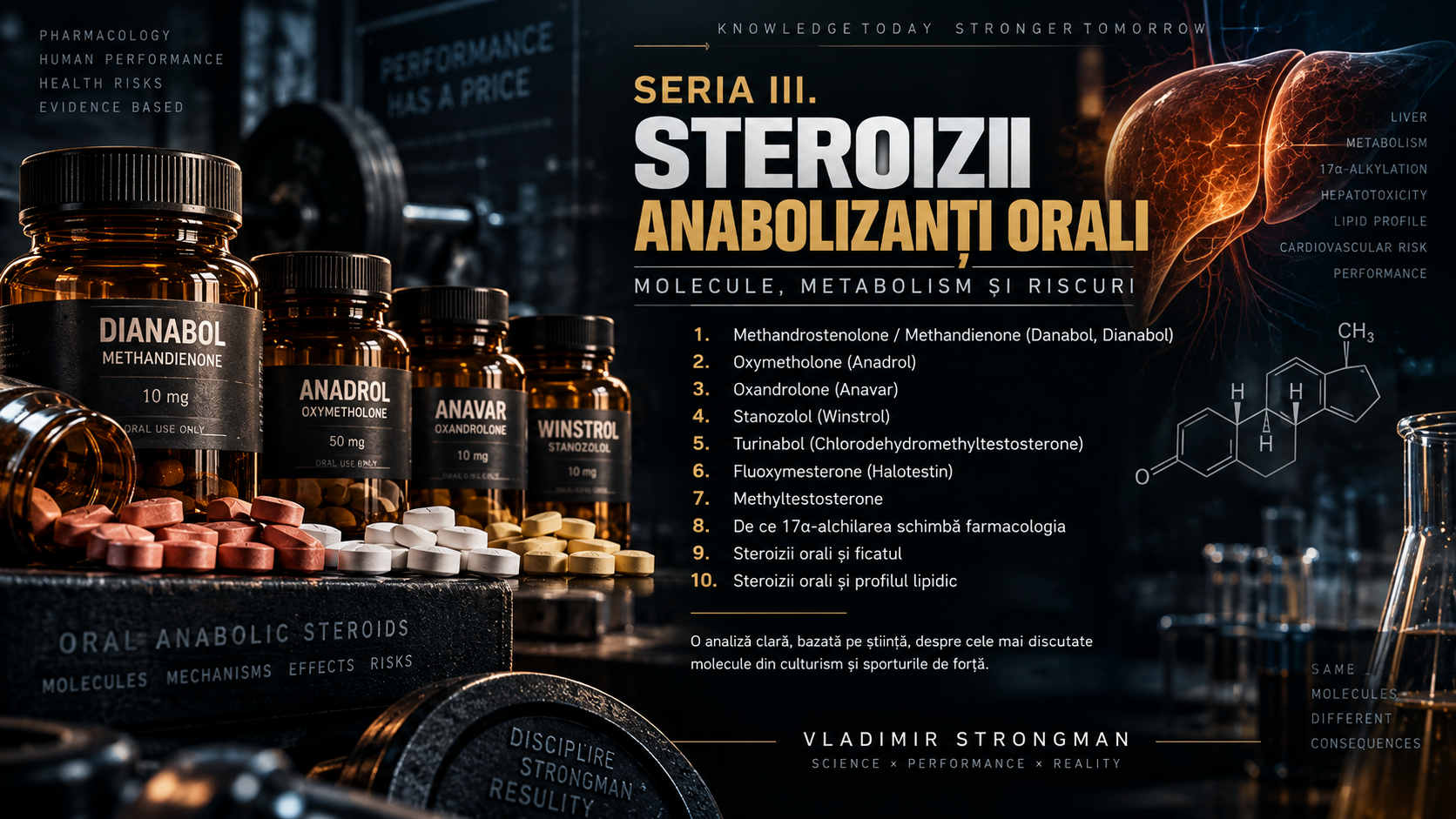
Oral Steroids and the Lipid Profile
The previous episode followed the relationship between oral steroids and the liver. The logical next step is to understand what happens to blood lipids. An altered lipid profile does not hurt, does not show in the mirror, and does not necessarily reduce performance immediately. That is precisely why it can be one of the easiest metabolic consequences of androgen exposure to ignore.
1. Why the Lipid Profile Matters
Cholesterol and triglycerides are not just numbers on a laboratory report. Lipoproteins transport lipids through the body, and persistent changes in this system can favor atherosclerosis. Medical literature consistently associates AAS use with lower HDL and higher LDL, an atherogenic pattern. citeturn911183search1turn911183search3
2. HDL: „Good Cholesterol” Is an Oversimplification
HDL participates in reverse cholesterol transport, moving cholesterol from tissues toward the liver. Its reduction is therefore relevant. However, the phrase “good cholesterol” is too simple: HDL particle function is not fully described by concentration alone.
3. LDL: The Particles That Deserve Attention
LDL carries cholesterol to tissues, and elevated LDL-cholesterol is an important factor in atherosclerosis. In the setting of AAS use, higher LDL together with lower HDL can move the lipid profile in a less favorable cardiovascular direction. citeturn911183search1turn911183search4
4. Why Oral Steroids Can Be Particularly Problematic
Lipid effects differ between compounds and routes of administration. Reviews emphasize that orally administered AAS, particularly 17α-alkylated derivatives, can produce more pronounced HDL and LDL changes than some injectable forms. citeturn911183search1turn911183search9
5. The Liver’s Role in Lipoprotein Metabolism
The liver produces, modifies, and clears lipoproteins and participates in cholesterol and triglyceride regulation. An androgen’s effect on the lipid profile therefore cannot be separated from its hepatic effects and from changes in proteins involved in lipid transport.
6. Hepatic Lipase and the HDL-LDL Shift
One mechanism described in experimental and clinical literature involves hepatic lipase activity, which participates in HDL remodeling. Some AAS, especially oral compounds, can increase hepatic lipase activity and accelerate HDL catabolism, contributing to lower HDL-cholesterol. citeturn911183search9
7. ApoA-I and HDL
Apolipoprotein A-I is one of the major protein components of HDL. Changes in ApoA-I synthesis and metabolism can reduce HDL particle formation and function. This is one reason the androgen-lipid relationship is more complex than a single laboratory value.
8. ApoB: What It Adds Beyond LDL-C
ApoB reflects the number of atherogenic particles carrying this apolipoprotein, not simply the amount of cholesterol they transport. Clinically, ApoB can provide additional information when LDL-C does not fully describe the atherogenic particle burden.
9. Non-HDL Cholesterol
Non-HDL cholesterol represents cholesterol contained in all atherogenic lipoproteins and is calculated by subtracting HDL-C from total cholesterol. It is particularly useful when triglycerides are elevated because it includes cholesterol carried in VLDL and other particles.
10. Triglycerides: Not the Whole Story
Triglycerides can be normal while LDL and HDL are substantially altered. An athlete should therefore not consider the lipid profile “good” simply because triglycerides are within range. The entire lipid set needs interpretation.
11. What Studies Show About the Magnitude of Change
A classic literature review reported substantial HDL reductions and LDL increases during anabolic steroid use. Exact estimates vary between studies and compounds, so percentages should not be treated as universal rules for every substance. citeturn911183search0
12. Why the Route of Administration Matters
Route alone is not the complete explanation. Molecular structure, resistance to hepatic metabolism, systemic exposure, and effects on enzymes and receptors involved in lipid homeostasis all matter. That is why “oral” is not sufficiently precise as a pharmacological category.
13. Hepatic Cholesterol Metabolism
The liver coordinates much of cholesterol synthesis, conversion, and clearance. When an androgen changes hepatic enzyme expression or cholesterol transport, effects can appear quickly in the lipid profile before an athlete feels anything.
14. Why HDL Can Fall Surprisingly Quickly
Some lipid changes can develop within weeks. Clinical literature describes rapid HDL and LDL changes during AAS exposure, including in athletes without symptoms. citeturn911183search2turn911183search9
15. Why You Do Not Feel Dyslipidemia
Dyslipidemia is largely asymptomatic. There is no muscle signal, pain, or obligatory loss of strength that announces a rise in LDL or a fall in HDL. Blood testing is what makes the problem visible.
16. Strength Is Not a Cardiovascular Biomarker
You can become stronger while your lipid profile becomes worse. Mechanical performance measures the capacity to produce force, not arterial health. The two can move in opposite directions.
17. Why a Lean Athlete Can Still Have Lipid Risk
A low body-fat percentage does not guarantee normal LDL and does not prevent the pharmacological effects of AAS on lipoproteins. Body composition and lipid status are distinct variables.
18. Very Low HDL: A Warning Signal
Severely low HDL is clinically relevant, especially when it occurs with AAS use. Clinical guidance for patients using AAS recommends repeat lipid testing after stopping AAS and additional evaluation when extreme values or other abnormalities are present. citeturn911183search10
19. High LDL and Context
An elevated LDL should be interpreted in the context of age, family history, blood pressure, smoking, diabetes, inflammation, other medications, and duration of androgen exposure. LDL matters, but cardiovascular risk is multidimensional.
20. Total Cholesterol: Useful but Insufficient
Total cholesterol alone can hide a combination of very low HDL and elevated LDL. Two people with the same total cholesterol can have different risk profiles if the lipoprotein distribution differs.
21. Why Ratios Should Not Be Worshipped
Ratios such as total cholesterol/HDL can be useful for orientation, but they do not replace LDL-C, non-HDL-C, ApoB, and overall risk assessment when those measurements are available and clinically relevant.
22. Diet Can Change the Picture
Dietary fat intake, fiber, alcohol, body weight, and energy intake can modify lipids. However, a good diet does not automatically cancel the pharmacological effect of an AAS on the lipid profile.
23. Why Cardio Is Not Armor
Aerobic activity is beneficial for cardiovascular health, but it should not be used as an argument that severely altered lipids are unimportant. Exercise and pharmacology act on different mechanisms.
24. Blood Pressure and Lipids Can Combine
An atherogenic lipid profile becomes more concerning when it coexists with hypertension, smoking, diabetes, visceral obesity, or other cardiovascular risks. In AAS users, several of these factors may occur together. citeturn911183search2turn911183search4
25. Atherosclerosis Is a Long-Term Story
An athlete may have an altered lipid profile without immediate symptoms. The concern is cumulative exposure over time and the fact that atherosclerosis can progress without obvious early clinical signals.
26. What Happens After AAS Discontinuation
Some studies and clinical series suggest that lipid abnormalities can improve after AAS discontinuation, sometimes over weeks or months. Recovery is not identical in every person, and improvement does not mean that any accumulated risk disappears instantly. citeturn911183search9
27. Which Tests Are Worth Discussing
Depending on clinical context, assessment may include total cholesterol, HDL-C, LDL-C, triglycerides, and non-HDL-C. ApoB and, in selected situations, lipoprotein(a) can add important information for cardiovascular risk assessment.
28. When an Abnormal Lipid Profile Should Be Rechecked
An abnormal profile should be viewed over time and interpreted alongside exposure, diet, training, and other risk factors. Clinical guidance for AAS users recommends repeat testing after AAS discontinuation when dyslipidemia is present. citeturn911183search10
29. Why Laboratories Are Not All Identical
Methods, reference ranges, and collection conditions can affect results. For monitoring, comparing tests obtained under similar conditions can help identify the real trend.
30. Fasting and Blood Collection
Triglycerides are more obviously influenced by recent food intake than many other lipid values. Following the laboratory’s instructions and keeping collection conditions consistent can improve comparability.
31. What One Lipid Profile Cannot Tell You
A single set of tests cannot by itself estimate the amount of atherosclerosis present or perfectly predict a cardiovascular event. It does, however, provide important information about one major pathway through which risk can change.
32. Dyslipidemia Versus Cardiovascular Disease
Having elevated LDL is not the same as already having coronary disease. It is a risk factor and a signal to address overall cardiovascular risk, particularly when other risk factors are present.
33. Why Being an Athlete Does Not Change Basic Physiology
Training, muscle mass, and fitness are beneficial, but they do not cancel pharmacological effects on lipoproteins. An athlete can simultaneously have good fitness and an atherogenic lipid profile.
34. Why Oral and Injectable Steroids Should Not Be Put in the Same Box
Different compounds and routes of administration produce different metabolic profiles. Some data indicate stronger lipid effects for oral AAS, particularly 17α-alkylated compounds, but comparisons should be made between specific molecules rather than turned into absolute rules. citeturn911183search1turn911183search9
35. The Connection to the Liver Episode
Episodes 9 and 10 are essentially two sides of the same coin. The liver processes these molecules and coordinates lipid metabolism, so the same pharmacological changes can produce both hepatic signals and dyslipidemia.
36. What a Strongman Should Understand
For a Strongman, the lesson is simple: a competition day measures strength. A lipid profile measures a different part of biological cost. You can lift a monstrous weight and, during the same period, have very low HDL and elevated LDL.
37. The Pharmacology Lesson
Oral steroids show clearly how a molecule can produce performance benefits while simultaneously altering a metabolic network without immediate symptoms. The lipid profile is one place where biological cost can remain quiet for a long time.
38. Conclusion
When discussing oral steroids, the lipid profile is not a secondary detail. Lower HDL and higher LDL are among the most consistent cardiovascular effects reported with AAS, and the effects can be particularly important with some oral 17α-alkylated preparations. citeturn911183search1turn911183search4
A serious check therefore means more than AST and ALT. It means considering total cholesterol, HDL-C, LDL-C, triglycerides, non-HDL-C and, when clinically appropriate, ApoB and other markers alongside blood pressure and the rest of the cardiovascular profile. Performance can be visible. Lipid risk often is not.
Selected Sources
Endocrine Society Scientific Statement on adverse health consequences of performance-enhancing drugs; literature review on atherogenic effects of anabolic steroids on serum lipids; reviews on AAS and cardiovascular outcomes; clinical practice guidance for blood testing in patients using androgenic anabolic steroids; 2026 WADA Prohibited List.
More From The Journal

Training
The Science of Strongman Training - Episode X: Competition Programming
How to build a complete Strongman competition preparation block: calendar, events, volume, intensity, specificity, simulations, autoregulation, tapering and fatigue management.

Training
The Science of Strongman Training - Episode IX: Peaking
Peaking in Strongman: how to turn months of training into maximal competition performance by reducing fatigue, preserving adaptations and managing specificity.