
Recovery
Series: SPORTS RECOVERY: SCIENCE, METHODS AND MYTHS - Episode 9: Monitoring Fatigue and Recovery
October 14, 2026
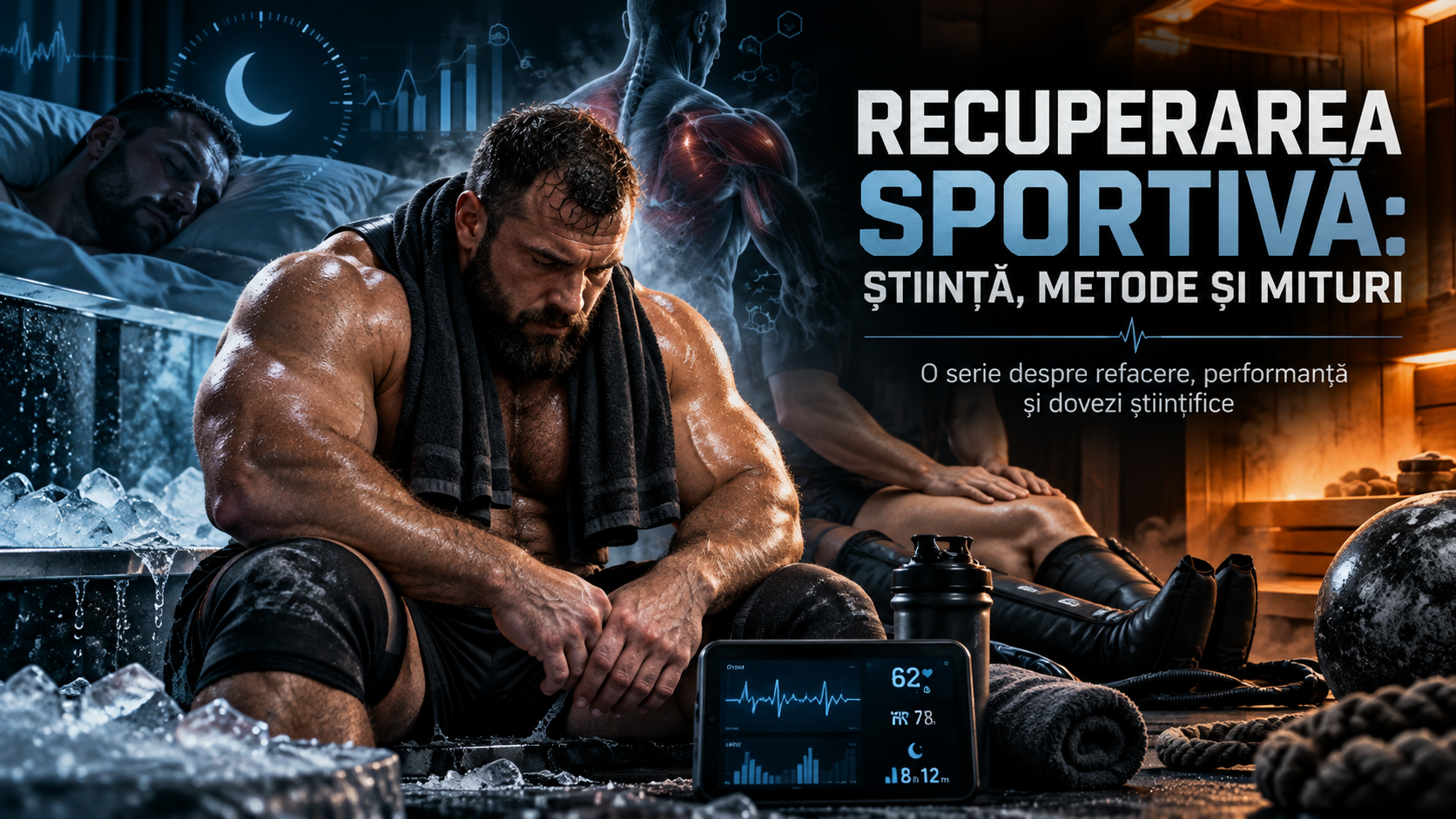
Monitoring fatigue and recovery: when numbers help and when they start to mislead
A strongman arrives at the gym after a full day at work. The program calls for five demanding squat sets, Romanian deadlifts and several accessory exercises. A smartwatch displays a recovery score of 92 out of 100. Yet the warm-up bar feels unusually heavy, last night's sleep was fragmented, and a localized lower-back pain appears with every repetition. Another competitor sees a score of 43 on a similar device but feels energetic, executes stable warm-ups and moves confidently. Which one is prepared to train? No single number can settle the question. Every measurement captures only part of a complicated organism, and context changes the meaning of an observation. Effective monitoring starts by identifying what each indicator can and cannot reveal.
This ninth episode of “SPORTS RECOVERY: SCIENCE, METHODS AND MYTHS” investigates practical ways to track training load, fatigue and the restoration of performance capacity. We will examine external and internal load, RPE and RIR, training logs, wellness questionnaires, sleep, resting heart rate, heart-rate variability, neuromuscular tests, barbell velocity, laboratory biomarkers and symptoms requiring medical assessment. The intention is not to prescribe a complex monitoring system to every athlete. A method has value when it supports a justified decision: maintaining the scheduled session, reducing volume, delaying maximal testing or investigating a health concern. Collecting data without using them intelligently does not automatically improve recovery.
In 2014, Shona Halson [1] described numerous approaches for monitoring training response but emphasized that there was no single, universally accepted fatigue marker. That warning remains highly relevant in an era when phones produce daily percentages labeled readiness or recovery. A systematic review published by Saw, Main and Gastin in 2016 [2] highlighted the substantial usefulness of subjective measures, including perceived fatigue and wellness, compared with several commonly used objective metrics. This does not make physiological measurements worthless. It means that a consistent account of personal sensations can reveal important changes a sensor may miss. Monitoring is strongest when different kinds of information support one another.
Strongman adds unusual challenges. A single event session might combine heavy deadlifts, several yoke carries, farmers walks and Atlas stones. Some demands are metabolic, others mechanical or technical, while grip and trunk stability can become the limiting factors. Heart-rate data may characterize cardiovascular strain without describing tendon loading or grip fatigue adequately. It is therefore misleading to imply that one composite number represents every relevant stressor. A better approach selects a small number of reliable observations that correspond to the athlete's actual training goals. Different events may need different measures.
The article also addresses athletes without expensive equipment. A simple notebook can document weights, difficulty, sleep, discomfort and performance over time. Meanwhile, a sophisticated wearable may add little if measurements are inconsistent or never influence decisions. Monitoring does not need to be expensive, but it does require clear thinking. A number shown by a device is not the complete truth about an athlete's body. The objective is to understand changes within the context of training history, current health and individual response, without transforming every morning into an examination the athlete feels pressured to pass.
Fatigue is not one phenomenon: mechanisms, definitions and timescales
In everyday language, fatigue often means having little energy. In exercise physiology, the concept is more complex. It can refer to a temporary reduction in force production, increased effort required for the same task or inability to maintain expected performance. Some components appear during a set and resolve relatively quickly; others persist for hours or days. Energy availability, neuromuscular function, soreness, cardiovascular demands, sleep and motivation can contribute differently. Two workouts may feel equally exhausting while producing different effects on the next session. Fatigue is not a single substance collecting in a reservoir that can be measured with a universal gauge.
During a maximal lift, performance depends on neural recruitment, muscular properties, postural stability and precise movement coordination. Repeated heavy attempts may change both peripheral and central components of force production. Yet expressions such as central fatigue and peripheral fatigue are not diagnoses that can be assigned casually because an athlete has a disappointing workout. Identifying mechanisms requires specific laboratory methods, sometimes including electrical stimulation. In practical coaching, it is more accurate to describe what was observed, such as reduced bar speed or failed planned repetitions, than to claim that the central nervous system has been directly measured through intuition alone.
Immediate fatigue, residual fatigue and long-term training adaptation operate on different timelines. A few minutes of rest between heavy sets may restore enough capacity for subsequent attempts. Following a full strongman competition, some functions may need days to recover, while soreness can persist even as strength begins returning. Training can simultaneously initiate adaptations that become evident weeks later. A competitor may be temporarily weaker after a productive training block and then perform better when workload decreases. Monitoring therefore needs to evaluate trends and training phases rather than interpreting each morning in isolation. The meaning of a decline changes when the broader program is considered.
Soreness, fatigue and injury should not be treated as synonyms. Delayed-onset muscle soreness can follow unfamiliar movements and may affect mobility, but its intensity is not a direct measure of force loss. Equally, the absence of soreness does not guarantee that all functions have recovered. Sharp pain, unexpected weakness and unusual swelling raise different concerns and can warrant clinical attention. Treating every symptom as proof of a good workout is potentially dangerous. Responsible monitoring separates expected discomfort, functional limitations and medical warning signs instead of collapsing them into one broad fatigue category.
Psychological fatigue and stress outside the gym can also influence effort perception and attention. A demanding workday, an upsetting personal event or fragmented sleep adds no kilograms to the bar, but may make a standard set feel harder. This does not necessarily mean the athlete has permanently lost muscular capacity. It helps explain why identical training programs can feel different from week to week. The recovery-and-performance consensus led by Kellmann and colleagues [3] emphasizes the interaction between sporting stress, broader life demands and recovery opportunities. Useful monitoring should recognize that training is only one part of the athlete's day.
External and internal load: the same barbell can produce different stress
External load describes what an athlete does: weight, sets, repetitions, distance carried, work duration and movement velocity. Internal load describes the organism's response: perceived exertion, heart rate and other physiological or psychological reactions. This distinction is central to the athlete-load monitoring consensus [4]. Two competitors may carry the same yoke for twenty meters while one performs near personal capacity and the other considers the effort moderate. The same athlete may also experience identical weights differently after good sleep and after a night of illness or inadequate hydration. External exposure and internal response are related, but they are not interchangeable.
In resistance training, volume is sometimes summarized as sets multiplied by repetitions and kilograms. The calculation can be useful for specific comparisons but ignores movement range, relative difficulty and differences between exercises. Ten repetitions at 100 kilograms in strict pressing cannot simply be equated to ten repetitions with the same weight in a completely different movement. Strongman adds another level of complexity: twenty meters with a heavy yoke cannot be converted neatly into a number of deadlift repetitions. The monitoring method must reflect the event. Carries may require load, distance, completion time and stops; overhead lifts may require repetitions, technique quality and the difficulty of each attempt.
Internal load supplies missing context. RPE can reveal whether a session felt unusually demanding. Heart rate may describe the cardiovascular component, but it does not reflect all mechanical loading. A maximal deadlift can last only seconds and still be extremely demanding, even if average heart rate across the session is moderate. Conversely, a long walk can maintain an elevated pulse without imposing the same muscular and connective-tissue forces. These measures should not be substituted for each other. Their usefulness depends on the question being asked and the nature of the activity being evaluated.
A mismatch between external stimulus and internal response can be particularly informative. Suppose an athlete normally performs five working sets at a familiar load with an RPE around seven, but the same workout suddenly feels like an RPE of nine or ten. Something may have changed. Accumulated fatigue, sleep, nutrition, psychological stress, early illness, measurement error or technical factors could contribute. The observation does not establish the cause. It indicates that the situation deserves attention. Conversely, a load that moves more smoothly and feels progressively easier over several weeks can provide a favorable sign of adaptation.
A balanced strongman monitoring system might record essential external variables for each event and a short description of how the effort felt. There is no need for an algorithm that artificially reduces Atlas stones, farmers carries, deadlifts and sleep to one biological unit. Separate categories may be more honest and informative. An athlete could track heavy axial loading, carrying distance, near-maximal attempts and overall perceived session difficulty. Such categories do not predict injuries with certainty, but they can help identify unexpected increases and recurring associations that warrant discussion. Intelligent simplicity often provides more usable information than poorly calibrated complexity.
RPE, RIR and the training diary: accessible tools, not final verdicts
RPE expresses the subjective difficulty of an effort. In resistance training, a ten-point scale is often used alongside repetitions in reserve, or RIR, an estimate of how many additional repetitions could have been completed with acceptable technique. A set rated RPE eight may correspond roughly to two repetitions remaining, although the relationship is not perfect. Some athletes overestimate their reserve, others underestimate it, and precision may differ between repeated sets and maximal singles. The method becomes more useful with experience, stable definitions and honest reporting. It should not be presented as a laboratory measurement disguised as a simple scale.
Session-RPE describes the overall difficulty of a complete training session rather than one set. The approach associated with Foster and colleagues [5] combines a global effort rating with duration to produce a simple relative training-load index. For example, a two-hour workout rated seven gives an arbitrary numerical total that can be compared with the athlete's own history. But this value does not describe mechanical loading precisely. Two hours of mobility and two hours of heavy deadlifts can create very different stress profiles even if a calculation occasionally produces similar numbers. Session-RPE is a useful complementary description, not an all-purpose biological conversion formula.
For strongman, rating systems need to account for events that do not resemble conventional barbell sets. During farmers walks, repetitions in reserve have little meaning when the task is a fixed distance. Athletes can instead document event-specific RPE, load, time, distance and number of stops. Yoke carries may require notes on stability, oscillation and gait. Log pressing can include the quality of the clean, the transition into pressing and perceived repetition reserve. A training log should preserve information relevant to each event instead of forcing every movement into an inappropriate template.
Subjectivity is sometimes treated as a flaw that makes RPE worthless. Yet integrating bodily sensations and perceived difficulty is exactly what can make the measure valuable. Problems arise when the scale is applied inconsistently, pain is confused with effort or athletes underreport difficulty to appear stronger. Team culture matters. An honest log offers more useful feedback than one in which every hard set is marked as easy to impress a coach. Monitoring works only when the information reflects experience rather than the image an athlete wants others to see.
A practical diary can answer a few questions after each session: What was performed? How hard did it feel? What differed from the plan? Were unusual symptoms present? Over months, these notes can reveal patterns that memory tends to distort. Athletes remember personal records more readily than nights of poor sleep followed by unstable lifting. The log reduces that selective memory. It cannot diagnose overtraining syndrome, but it can show when volume, stress and perceived difficulty increase together without the intended progress. That observation is a starting point for informed adjustment.
Daily wellness questionnaires: when five questions can outperform ten sensors
A wellness questionnaire can be very short. The athlete rates sleep, fatigue, soreness, stress and willingness to train using the same scale each day. There is no need to make every morning an hour-long psychological assessment. Its value comes from consistent wording, honest answers and the ability to identify changes from the individual's normal pattern. An energy rating of three out of five may be typical for one athlete and unusually poor for another. Comparing people through an absolute score is often less useful than observing a meaningful, persistent change within the same person. Questionnaires are tools for conversation and decisions, not examinations that assign moral grades to athletes.
The systematic review by Saw, Main and Gastin [2] found that subjective measures can be sensitive to changes in training load and training response. This does not mean every feeling predicts performance accurately. It means that structured questions may reveal information objective measures miss. A wearable can estimate heart-rate variability without knowing the athlete traveled overnight, is worrying about a family problem or has experienced elbow pain for three consecutive days. A questionnaire can make those circumstances visible. The information should then be discussed and compared with functional observations rather than treated as an automatic excuse to avoid all difficult work.
One challenge is habitual, mechanical reporting. If an athlete selects the same values every day without considering the questions, the data lose meaning. Scales need clear descriptions, and athletes should receive an appropriate response when they report a genuine problem. Repeatedly documenting increasing pain is pointless if no one reviews the training plan or considers assessment. Monitoring without an opportunity to change anything becomes a hollow ritual. The objective is not to archive every sensation forever but to notice factors that influence readiness. A simple system that invites action is more valuable than an elaborate survey that generates no feedback.
In strongman, questions can include the location and character of discomfort. Diffuse soreness in both thighs after squats is different from localized pain near the distal biceps following awkward loading movements. A questionnaire does not diagnose either condition, but it can reveal why a global recovery score is insufficient. Allowing a short comment such as “front of shoulder hurts during log lockout” may be more useful than requiring dozens of numerical entries. Specificity helps the coach recognize whether the problem belongs to ordinary training fatigue or deserves a different response.
Trust also affects reporting. If an athlete fears honest answers will automatically exclude them from a competition, they may conceal fatigue or pain. If the system is presented as a way to adjust training intelligently, communication is more likely to be useful. Information about mood, health and sleep is personal and should be treated respectfully. It does not all need to be shared with teammates or sponsors. Effective monitoring should increase the athlete's control over preparation rather than become constant surveillance. A supportive training environment recognizes that accurate data depend partly on the willingness to report uncomfortable truths.
Sleep: an important indicator that cannot deliver an instant verdict
Sleep influences recovery, attention, emotional regulation and the capacity to tolerate demanding workouts. Recording its duration and regularity can reveal when a schedule provides insufficient opportunity for rest. However, one shorter night does not automatically mean a moderate session is impossible, just as eight hours in bed do not guarantee complete physiological recovery. Continuity, fragmentation, bedtime and daytime sleepiness offer additional context. Strongman competitors may combine employment, late training and travel, making consistent sleep more challenging than any recovery procedure performed in the gym.
Wearable devices estimate sleep duration and stages through algorithms using movement, pulse, temperature and other signals. These estimates can help identify broad trends, but they are not equivalent to polysomnography and should not be interpreted as perfectly accurate descriptions of each minute. A smartwatch may report less deep sleep after a heavy deadlift session, yet that number does not directly quantify muscle regeneration. Commercial algorithms can change, and devices may disagree even when measuring the same night. Sleep should be understood through behavior, symptoms and, where indicated, proper medical assessment.
For very large athletes, insufficient sleep opportunity must also be distinguished from sleep-disordered breathing. Loud snoring, witnessed breathing interruptions, significant daytime sleepiness and high blood pressure can raise concern about sleep apnea, which warrants appropriate evaluation. It would be wrong to assume every heavyweight athlete has the condition, but equally wrong to explain all persistent fatigue as productive training stress. Sleep apnea, anemia, endocrine disorders and other medical problems can imitate or amplify perceived training fatigue. A consumer recovery score cannot diagnose or exclude them.
Caffeine use, evening light, room temperature, psychological stress and workout timing may affect sleep. Instead of obsessing over a deep-sleep percentage, an athlete can begin by protecting a reasonably consistent sleep opportunity and identifying habits that shorten the night. Recovery treatments should be evaluated if they extend gym time and delay bedtime. Spending an extra hour on a procedure with uncertain benefit before complaining that recovery scores are poor may be counterproductive. For many athletes, sufficient sleep opportunity has clearer practical importance than another expensive accessory.
One bad night should be interpreted differently from a sustained series of short nights. Natural variation exists, and athletes do not perform identically after seemingly similar sleep periods. Monitoring becomes more informative when it shows a trend: for example, two weeks of reduced sleep accompanied by higher RPE at familiar loads and unusually difficult warm-ups. The association does not establish a cause, but it justifies examining the schedule. A single low score should not automatically cancel training, and a high score should not eliminate caution when pain, illness or other warning signs are present.
Resting heart rate: an accessible signal with many possible explanations
Resting heart rate can be recorded in the morning under similar conditions to establish an individual reference. Some athletes have lower values because of endurance adaptations, while others have higher values without that difference explaining their maximal lifting ability. An increase from personal baseline may reflect inadequate sleep, dehydration, infection, psychological stress, heat exposure, stimulant use or numerous other influences. The change deserves context rather than an immediate diagnosis. In particular, athletes using stimulant-containing products should consider recent intake and symptoms when interpreting unusual heart-rate readings.
Consistency of measurement matters. A heart rate recorded while lying quietly after awakening cannot be compared directly with a reading taken after climbing stairs or consuming coffee. Time of day, posture and recent activity influence the result. Optical sensors are convenient, but movement and contact quality may affect accuracy. If a reading is unexpected, it can be useful to check the device and repeat under comparable conditions. Displaying an exact integer does not make a physiological measurement perfectly precise. The method and circumstances determine how much confidence to place in small differences.
Buchheit's discussion of heart-rate measures [6] emphasizes individual history and measurement error. Much of the evidence concerns aerobic-oriented sports, limiting direct transfer to strongman. A maximal deadlift can involve intense transient cardiovascular responses and high mechanical forces, yet morning pulse does not describe recovery of grip strength or tissue tolerance. It is an additional clue, not a complete map of preparedness. A competitor with an apparently normal pulse may still have major local discomfort or poor functional performance.
Resting pulse sometimes increases during a period in which an athlete feels well and progresses. On other occasions, it stays stable while performance declines. Such disagreement demonstrates why rules such as “five beats above normal means automatic rest” are too rigid. A personal threshold can attract attention to a change, but it is not universally diagnostic. It becomes more informative when an altered pulse persists alongside poor sleep, illness symptoms, higher perceived effort or reduced function. No single morning measurement should control the entire day's training without further assessment.
Resting heart rate also relates to general health, but sports monitoring must not replace medical judgment. Chest pain, fainting, significant palpitations, unusual breathlessness or an irregular rhythm cannot safely be dismissed as normal gym fatigue. Such symptoms may require professional assessment, urgently when severe. Being exceptionally strong does not provide immunity from cardiovascular problems. The role of data is not always to find a convenient sporting explanation. Sometimes measurements and symptoms indicate a question that belongs in healthcare rather than training programming.
Heart-rate variability: what HRV measures and what it cannot predict
Heart-rate variability, or HRV, describes variations in the intervals between successive normal heartbeats, not merely changes in beats per minute. Even when the average heart rate remains stable, beat-to-beat timing is not perfectly uniform because autonomic cardiovascular regulation is dynamic. One commonly studied index is RMSSD; some applications present its logarithmic transformation, lnRMSSD. The terminology may appear complicated, but the basic idea is that nervous-system regulation creates measurable variations in cardiac timing. HRV is not, however, a direct thermometer of the entire nervous system or a counter displaying how much muscle tissue has regenerated.
Measurement requires attention to artifacts, irregular beats, posture, breathing, recording time and sensor quality. Some optical devices can provide useful resting estimates, but accuracy varies with technology and conditions. A short reading after waking may be more comparable than values collected at changing times and in different positions. Even under standardized conditions, daily variability can be substantial. Trends and personal distributions are generally more useful than reacting to each increase or decrease. The more a decision depends on tiny changes, the more important it becomes to understand measurement reliability.
Buchheit [6] discussed how heart-rate-derived measures can contribute to athlete monitoring when contextualized carefully and combined with other information. Findings from endurance athletes do not automatically validate identical algorithms for maximal strength sports. Higher HRV can sometimes coexist with fatigue or different patterns of autonomic regulation, while lower HRV can reflect influences unrelated to muscle performance. The relationship is not universally linear. Treating more HRV as always better oversimplifies a complex biological system. It is a potentially informative physiological measurement, not a universal recovery grade.
For strongman athletes, HRV may help describe general autonomic responses without showing whether a tendon is ready for Atlas stones or a painful shoulder should be loaded. An athlete might have favorable HRV while a mechanical limitation remains important. Another might record a value below personal baseline and still complete a moderate technical session successfully. A wearable's traffic-light score should not make all training decisions automatically. Sleep, symptoms, loading history and functional tests must be considered alongside the cardiac measurement. The goal is synthesis rather than obedience to one indicator.
Over-monitoring can also create anxiety. If an athlete repeatedly checks HRV and assumes the day is lost whenever an application shows a low value, the measurement process may affect behavior and stress. A healthier relationship with data uses them to examine patterns rather than to validate each morning emotionally. The number of measurements should be proportional to the quality of decisions they support. A coherent training log and a few wellness observations may sometimes offer more practical insight than a digital ecosystem that converts ordinary biological variation into continuous alerts.
Submaximal strength tests: why athletes should not chase a record every morning
If the goal is to assess how much force someone can produce, the temptation is to attempt a maximal lift. That provides a directly relevant result but carries an important cost. A near-limit deadlift can generate more fatigue, disrupt the training plan and expose already stressed tissues to unnecessary load. Halson [1] discussed the difficulties of repeated maximal performance testing for monitoring athletes. In everyday practice, a standardized submaximal test may be more useful, using a familiar load, consistent technique and sufficiently low effort that the measurement does not compromise later training. The purpose of the test is to provide information, not to become the most demanding workout of the week.
A practical example is observing a familiar warm-up weight under comparable conditions. If 140 kilograms in the squat is normally moderate for an athlete and moves smoothly, an unexpectedly difficult repetition may deserve attention. Yet perceived difficulty can change with gym temperature, preparation, footwear, technical choices or emotion. One slower warm-up does not necessarily justify abandoning a session. Comparable range of motion, similar rest periods and consistent execution make the observation more informative. The more standardized the procedure, the easier it becomes to distinguish meaningful change from ordinary variability and measurement noise.
Another possibility is a light, sport-relevant movement that challenges a particular function without requiring maximal exertion. Log press monitoring could include the quality of a familiar clean or press, while deadlift monitoring might examine the smoothness of early warm-up repetitions. Technical learning must be considered because a new movement style changes the meaning of the result. Observations gain value only after the task becomes reasonably repeatable. An athlete who alters stance or equipment between sessions cannot interpret the resulting change as fatigue alone. Testing should be simple enough that its own complexity does not obscure the answer.
Actual capacity and predicted maximal capacity also need to be distinguished. Equations estimating one-repetition maximum from submaximal sets can be useful in particular circumstances, but accuracy depends on exercise, technique, repetitions in reserve and individual characteristics. An estimated maximum is not the same as a successful competitive attempt. Strongman implements introduce even greater uncertainty through awkward shapes and specialized movement skills. A small decrease in an estimated number does not automatically require a week of total rest. The result should be interpreted alongside standardized function, perceived effort and relevant symptoms.
Across months, performance measures help show whether training creates the intended adaptation. Increasing work capacity at comparable effort and stable technique supports the interpretation that preparation is productive. If performance stagnates for months while workload and perceived fatigue continue rising, a program review may be warranted. Yet stagnation alone does not diagnose overtraining syndrome. Strength improvement may be slow and influenced by many factors. Monitoring helps generate better questions rather than automatically explaining every period without personal records.
Barbell velocity and neuromuscular monitoring: useful technology with limits
Devices measuring barbell velocity can track movement during resistance exercise. In velocity-based training, the speed of a familiar load can be compared with the athlete's usual performance. If that load moves substantially more slowly under similar conditions, it may suggest altered current capacity. Yet velocity also depends on intent, movement range, technique and device accuracy. A repetition deliberately performed slowly cannot be interpreted in the same manner as one executed with maximal acceleration intent. Without standardized instructions, numbers may describe different tasks rather than changes in the athlete.
Bar speed can also inform the assessment of fatigue within a set. As repetitions accumulate, velocity may decrease while the athlete approaches the limit. However, the relationship differs between exercises and individuals, so one universal velocity-loss threshold is not appropriate for every goal. Programs emphasizing technique, hypertrophy or explosive power may tolerate different levels of slowing. In strongman, awkward implements create additional challenges: devices designed for barbell trajectories cannot necessarily measure meaningful variables during sandbag loading or Atlas stone lifts. A sophisticated sensor should be used only for tasks it can measure reliably.
Countermovement jump testing, commonly abbreviated CMJ, offers another approach to neuromuscular monitoring. Claudino and colleagues [7] published a meta-analysis examining how jump variables could reflect changes in neuromuscular status. The research supports potential usefulness under standardized conditions, but it does not prove that every reduction in jump height is a certain sign of overtraining. Jump technique, warm-up and device error affect measurement. Local discomfort can also reduce performance without systemic fatigue. The test offers another piece of information rather than an all-purpose diagnosis.
For very heavy strongman competitors, frequent maximal jumping may be impractical. Landing impact, joint history and limited specificity for some events may outweigh the convenience of the measurement. A moderate-load bar-speed test could be more suitable for some athletes, but even that should not be forced through pain. Selecting a test involves relevance, safety and repeatability. A method popular in field-sport research should not automatically become a requirement for every heavyweight strength athlete. Before buying sensors, coaches should ask whether the data answer a question that matters within their existing program.
Coaching observation can complement numerical measurements. Changes in lifting rhythm, difficulty stabilizing, hesitation in familiar positions or repeated alterations to bar path may be informative. However, observations are also vulnerable to expectations and bias. Filming a familiar exercise from a consistent angle can help comparisons, without becoming a substitute for more precise measurements when those are necessary. Ideally, technology and practical observation reinforce one another. Neither should be presented as a perfect verdict on readiness.
Grip, carries and unconventional events: strongman-specific monitoring
Many strongman events cannot be captured through repetitions and kilograms alone. Farmers walks depend on load per hand, distance, speed, turns, surface conditions and the number of stops. A faster time at the same load may indicate improvement, but only if the implements and conditions are reasonably comparable. Thicker handles, different grip surfaces or changes in chalk can substantially alter difficulty. Comparing times across unrelated competitions may attribute to fatigue what actually resulted from equipment differences. Standardization often matters more than the apparent precision of a stopwatch.
Yoke carries can be evaluated through completion time, gait stability, load oscillation and technical control. Yet the same speed does not guarantee identical stress on the back or knees. Better technique might shorten the time while a heavier load increases tissue demands. Monitoring needs to connect performance with loading progression and the athlete's response afterward. New pain or an altered walking pattern deserves attention even when the stopwatch shows a satisfactory result. Sport-specific function is important, but safety and tissue tolerance remain part of the interpretation.
Grip strength can be tested with a hand dynamometer, though its transfer to strongman events is incomplete. A brief static squeeze does not fully reproduce holding exceptionally heavy implements with thick handles while walking. Nevertheless, a carefully standardized grip measurement may supply another reference point. If grip force appears substantially reduced over several days, the athlete can examine forearm fatigue, sleep, general wellness or pain. The result does not identify the cause by itself. A measurement is a clue that becomes more useful when it is repeated and linked to training context.
Atlas stones, sandbag loading and log pressing add considerable technical complexity. The same weight may feel different depending on starting position, movement rhythm, equipment and confidence. A diary can include movement quality and failed attempts rather than recording only the day's heaviest successful lift. An athlete who loads the same stone after several missed attempts has not necessarily completed an equivalent session to one who performed a clean first attempt. The method should preserve such distinctions. When movements are technically demanding, the quality and number of attempts can matter alongside total weight.
A weekend with many events can generate mechanical loading that resists expression in one convenient unit. Separate records for carries, axial loading, explosive lifting and grip work may be more informative. These are practical organizational categories, not validated injury-prediction algorithms. An athlete might observe that lower-back discomfort repeatedly occurs during weeks combining heavy deadlift and Zercher carries. This association deserves investigation of volume, technique and possibly medical assessment, not an assumption of proven causality. Monitoring helps identify patterns that coaching experience alone might otherwise miss.
Blood markers: CK, urea, cortisol and the promise of a complete recovery test
Laboratory tests can be important for health and evaluating persistent symptoms, but their use as daily training-readiness markers is difficult. Creatine kinase, or CK, may rise after intense exercise, especially unfamiliar eccentric movements. Values vary widely between individuals and sampling times. A large athlete can show different values from a sedentary person without a single comparison proving the exact degree of muscle damage. CK does not directly measure restored maximal force and cannot be converted into a guaranteed recovery period before the next heavy attempt.
Urea, creatinine and other metabolic markers require similar caution. They are influenced by food intake, hydration, muscularity, kidney function and sampling conditions. Athletes using creatine or consuming substantial protein may need results interpreted with appropriate context. It is inaccurate to call every deviation overtraining, but equally inappropriate to attribute a persistent concerning abnormality automatically to lifting. Clinical interpretation should consider symptoms, medical history and relevant investigations. The goal is neither to dismiss laboratory values nor to invent a diagnosis from one number.
Cortisol and testosterone are often marketed as indicators of anabolic and catabolic balance. Their concentrations vary with timing, sleep, stress, food intake, circadian rhythm, medication and other factors. The testosterone-to-cortisol ratio is not a universal detector of overtraining. The consensus on overtraining syndrome [8] emphasizes that no single hormonal measure meets the requirements for a definitive diagnosis. Interpretation becomes even more complicated when exogenous hormones or other substances are present. Laboratory results should not be used to justify unsupervised changes to medications or performance-related substances.
Blood counts, ferritin, thyroid markers, glucose and other measurements may be appropriate when persistent fatigue or specific symptoms require investigation. The choice of tests should be individualized rather than repeated indiscriminately after every difficult session. Unnecessary testing can create costs, incidental findings and anxiety. On the other hand, prolonged severe fatigue should not automatically be managed through another deload if a medical cause may be present. Professional evaluation becomes important when symptoms are persistent, progressive or disproportionate. Sports monitoring and medicine can complement one another without having identical purposes.
A laboratory result is an observation from a specific situation, not a permanent label attached to an athlete. Sampling time, recent exercise, hydration and symptoms influence interpretation. Strongman creates additional complexity because intense training can alter several markers temporarily. Accurate context helps clinicians understand results and avoid false reassurance or unnecessary alarm. Evidence-based practice does not mean testing every possible molecule daily. It means choosing investigations that answer a meaningful medical question and resisting the promise that one blood panel provides a total biological recovery score.
Functional overreaching, nonfunctional overreaching and overtraining syndrome
The word overtraining is often applied to any unpleasantly difficult day, but sports medicine distinguishes several phenomena. A deliberately demanding training period can cause a temporary decline in performance followed by recovery and improved adaptation. This process is associated with functional overreaching. Nonfunctional overreaching describes a more persistent decline without the desired benefit after recovery. Overtraining syndrome is a more serious, prolonged and complex condition whose diagnosis requires excluding other explanations. The joint consensus by Meeusen and colleagues [8] describes the challenges involved in distinguishing these states and the limitations of available markers. Their definitions involve time, outcomes and medical context, not simply how exhausted someone feels after a workout.
One heavy deadlift session does not automatically produce overtraining syndrome, and several tired days after competition are not enough to establish that diagnosis. At the same time, ignoring persistent deterioration in performance and general well-being for months can create significant problems. Interpretation depends on the course over time, the response to reducing workload and assessment of possible medical causes. No quick questionnaire or wearable reading can establish the condition with certainty. Symptoms may overlap with sleep disorders, infections, inadequate energy intake, anemia, mental-health conditions and other illnesses. A clinical investigation can be essential when the pattern is persistent or concerning.
Planned overload makes sense only when accompanied by a realistic recovery strategy and a clearly defined training objective. Extremely high volume is not automatically advanced programming. In strongman, mechanical load is difficult to summarize and local tissues may recover differently. An athlete might improve strict press while repeatedly overloading the lower back through deadlifts, yoke carries and Zercher work. Monitoring should help identify such overlap rather than presenting the entire week as one average number. A positive trend in one lift does not prove that every other system is tolerating the program well.
Discussions of overtraining often mention mood changes, sleep disturbances, reduced performance and poor exercise tolerance. These symptoms are nonspecific. Irritability after two difficult nights does not necessarily represent a training disorder. Yet repeated deterioration in performance combined with fragmented sleep, altered appetite and fatigue disproportionate to usual work deserves attention. Using overtraining as the default explanation for everything is also dangerous because it can conceal treatable health problems. Coaches should review workload, while healthcare professionals may need to investigate other causes. The appropriate response depends on the actual situation rather than a preferred label.
Managing a possible overtraining syndrome involves much more than buying a better smartwatch. Training, recovery, nutrition and health may need coordinated reassessment. HRV, hormonal tests and subjective questionnaires cannot make the diagnosis individually. Attempting to override persistent fatigue with additional stimulants or escalating loads can further complicate matters. In a sport that celebrates endurance under extreme weight, choosing to reduce load temporarily can reflect sound professional judgment. Mental toughness should not be defined as ignoring persistent functional decline or concerning symptoms.
Acute and chronic workload: useful trends and unreliable promises of prediction
Athletes sometimes compare the amount or intensity of training performed over the last week with an average from preceding weeks. Such comparisons can help identify meaningful changes in planning. For example, suddenly moving from one event day to three sessions of heavy loaded carries deserves attention. However, formulas dividing acute by chronic load to produce a ratio are not universal injury-prediction devices. Impellizzeri and colleagues [9] described important mathematical, conceptual and causal pitfalls associated with this approach. Treating one numerical interval as a guaranteed safe zone is not justified by the evidence.
A sudden change in workload can have different consequences according to the athlete's history, capacity and the precise type of demand. Someone accustomed to substantial volume may tolerate what another competitor finds overwhelming. Injury risk is not determined solely by the total kilograms lifted or session duration. Technique, previous exposure, fatigue, environment and unpredictable events may all matter. Monitoring provides useful planning context but cannot eliminate uncertainty about an individual's future. A threshold developed from football populations should not be applied mechanically to heavyweight strongman competitors.
Systems based entirely on resistance-training tonnage have similar limitations. A week containing many moderate repetitions differs from one with a small number of maximal attempts, even when total kilograms lifted are comparable. Atlas stones and farmers walks cannot be characterized fully through ordinary barbell tonnage. It may be more useful to track near-maximal attempts, very heavy carrying distance, grip exposure and overlap between exercises that challenge similar tissues. These are descriptive categories, not validated formulas guaranteeing safety. Their value comes from making the structure of the workload visible.
Correlation and causation must also be distinguished. If injured athletes in one sample experienced higher load changes on average, it does not follow that manipulating a particular ratio would have prevented each injury. Unmeasured factors, measurement errors and changes in training caused by early symptoms can complicate the association. A statistical predictor is not always a causal lever. Coaches should avoid sacrificing reasonable progression merely to maintain a colored score within a supposedly safe range that has not been validated for the sport. Useful monitoring supports judgment instead of promising perfect control of risk.
In strongman, workload trends are most valuable when they provoke concrete questions. Why were three very heavy axial-loading sessions scheduled close together? Why did deadlift volume and yoke distance rise simultaneously? How did warm-ups feel afterward? Did new symptoms emerge? These questions can lead to practical program adjustments without pretending injuries can be predicted exactly. Good load analysis provides context for decisions, while poor analysis provides false reassurance through an attractive graphic. Monitoring deserves a place when it improves understanding rather than claiming certainty that sport science does not possess.
Individual variability and measurement error: why every fluctuation is not a warning
No measurement is completely free of error. Resting pulse, HRV, bar speed, grip strength and wellness ratings vary for biological and technical reasons. Before treating a deviation as a fatigue signal, we need to understand how much the indicator fluctuates under ordinary conditions. Some athletes show relatively stable repeated measurements, while others vary considerably. Applying one threshold to everyone may create false alarms or overlook meaningful change. Individual reference data, gathered with a consistent method, are more informative than a universal cutoff copied from an article or application.
Measurements should be interpreted within personal history. Slower bar velocity might follow poor sleep, the beginning of an infection or a technical adjustment. If it returns to usual levels at the next session, interpretation differs from a decline persisting for two weeks. Duration alone does not establish a diagnosis either. New exercises and demanding training blocks can temporarily affect several indicators without representing pathology. A sensible evaluation combines trend, context and function rather than searching for a single explanation for every point on a graph.
Moving averages may reduce the influence of day-to-day fluctuations, but they do not solve all problems. A reference window that is too short may remain dominated by random variation; one that is too long may obscure meaningful changes. There is no universally optimal period for every athlete and metric. Comparisons should also account for training phase. A competition week and a high-volume accumulation phase may produce different fatigue patterns. Algorithms that ignore the calendar can misinterpret expected responses as warning signs. The purpose of monitoring is to support the training plan, not make the plan disappear beneath the data.
Changing devices or software creates additional difficulties. Two sensors can calculate HRV differently, while commercial recovery algorithms may weigh variables in undisclosed ways. A score of 78 in one application is not necessarily equivalent to 78 in another. If an athlete switches technology, a discontinuity in measurements should not automatically be called physiological adaptation. Comparability is central to scientific measurement. In practice, a simple, consistently used system may provide more insight than repeatedly replacing equipment in pursuit of increasingly elaborate dashboards.
Uncertainty should not be regarded as a failure of monitoring. It is a normal property of biological measurement. A small isolated change without other concerns may simply deserve observation. A consistent decline in performance combined with poor sleep, new pain and worsening general well-being deserves closer examination. This does not mean that a fixed number of warning signs makes a diagnosis. It means that multidimensional assessment is more defensible than dependence on one measurement. The athlete benefits when data encourage appropriate caution without making normal biological fluctuation frightening.
Deloads, tapering and autoregulation: when monitoring changes the workout
A deload involves a planned reduction in some component of training load, often volume, intensity or frequency, to manage fatigue and support preparation. Tapering specifically aims to reduce fatigue before competition while retaining enough stimulus to preserve sport capacity. The concepts are related but not identical. No universal percentage of workload reduction suits every athlete and event. A competitor who has completed several contests in rapid succession may need something different from an athlete in an ordinary hypertrophy block. Monitoring should help individualize these decisions rather than impose one rigid calendar.
Autoregulation means adjusting training to the athlete's current response while respecting long-term objectives. If a planned five-repetition weight feels unexpectedly heavy, a coach may change the load, number of sets or accessory work. The adjustment should be proportionate. One disappointing day does not necessarily justify canceling an entire week, and an excellent day does not automatically justify an unplanned maximal record. Data are useful when they help preserve the intended training stimulus within current capacity. Autoregulation should not dissolve structured progression into random daily choices.
For strongman, autoregulation can be especially relevant to physically demanding implements. Following excessive yoke and deadlift fatigue, limiting near-maximal attempts while preserving lighter technical practice may be reasonable. When log-press warm-ups are smooth and no concerning symptoms are present, a session might continue according to plan despite one lower wearable HRV value. These are examples of contextual decisions, not universal prescriptions. Sport-specific function can carry more practical weight than an isolated metric. Safety and medical symptoms remain separate considerations that may override the training plan.
Tapering also requires predictability. Introducing extra maximal tests to confirm readiness can create the very fatigue the athlete is trying to reduce. Low-cost observations such as sleep, wellness and standardized warm-ups may be preferable near an important contest. Emotional and logistical stress can generate expected fluctuations. Every metric need not reach a personal record before competition. The objective is an athlete prepared to perform, not a collection of perfect graphs. Planning should protect performance rather than encourage last-minute attempts to optimize numbers on a screen.
A monitoring system becomes weak when it produces many contradictory instructions. One score says rest, another suggests increasing intensity and a third remains unchanged. A hierarchy of information is necessary. Safety and concerning symptoms take priority, followed by relevant function and the purpose of the session. Complementary metrics can enrich the discussion. An intelligent program remains stable enough to produce adaptation and flexible enough to respond when meaningful evidence suggests the original plan is unsuitable. Monitoring matters when it converts information into proportionate action.
A practical monitoring system without a laboratory, tailored to strength sport
For a strongman balancing work, travel and frequent training, a realistic system should require very little daily time. In the morning, the athlete can record approximate sleep duration, perceived quality, energy, soreness and any new symptoms. Before training, the difficulty of a familiar standardized warm-up can be observed. After the session, loads, events, repetitions, distances, RPE and changes from the original plan are documented. Once a week, trends can be reviewed without reacting impulsively to each number. This is a practical organizational suggestion, not a validated diagnostic system. Its usefulness depends on consistency and the extent to which the observations inform sensible coaching decisions.
Such a system benefits from an initial period of learning the athlete's normal variability. If monitoring begins during the most demanding competition week of the year, those values may not represent the person's usual state. Several weeks containing ordinary sessions and rest days provide more useful context. The goal is not perfect graphs but repeatable measurement. Using the same questionnaire, similar measurement timing and stable definitions of training events reduces confusion. Without these principles, a large database may become less interpretable than a modest diary. Reliability begins with how observations are collected, not with how attractively the results are displayed.
When deviations appear, the response should reflect their seriousness. One short night without other concerns may simply justify managing expectations and observing the session. Repeated performance decline alongside higher RPE and new local symptoms deserves closer examination of training load and health. Signs of illness, severe pain, fainting, chest discomfort or concerning neurological changes should not be managed as ordinary low readiness. Medical assessment may take priority. What matters is the convergence of relevant information and the severity of symptoms, not obtaining a predetermined score.
The athlete and coach should also decide beforehand how information will be used. A monitoring system that simply collects data can become exhausting and eventually be abandoned. A persistent increase in warm-up difficulty might trigger review of sleep, technique and volume rather than automatic cancellation. New pain in a vulnerable region might lead to modification of the event and appropriate evaluation. Rules should remain flexible because fatigue can have multiple causes. Rigid decision thresholds without proper validation may create both unnecessary restrictions and false reassurance.
The output must remain understandable. A graph with ten colored lines may look sophisticated, but the coach needs to know what actionable conclusion it supports. It may be enough to observe that sleep has declined, familiar sets have become harder and the last event session contained unexpected extra workload. A good system should work during travel, when internet access, device batteries and normal routines are less reliable. Continuity and relevance matter more than visual complexity. Monitoring succeeds when it improves the next decision rather than merely documenting the previous workout.
Four strongman scenarios: similar data, different explanations
The first scenario involves a competitor preparing for an event after ten days of heavy deadlift and yoke work. Morning heart rate is slightly elevated, warm-ups feel harder, sleep has been reduced and RPE at familiar loads has increased. There are no immediate medical warning signs. Together, the observations suggest that accumulated stress deserves consideration. A temporary reduction in volume may be reasonable without calling the situation overtraining syndrome. The important feature is the context: training load increased while sleep opportunity fell and perceived difficulty rose. A smartwatch score cannot explain that entire pattern on its own.
In the second scenario, an athlete records HRV below personal baseline but sleeps well, has a stable resting pulse and executes warm-ups easily. One cardiac measurement does not necessarily justify canceling the planned session. Measurement conditions can be checked, and the trend can be observed. In the absence of pain or illness symptoms, relevant functional information may support continuing as intended. This is not a medical clearance or a claim that HRV never matters. It illustrates that an isolated number can have multiple explanations and should be interpreted with the rest of the available evidence.
The third scenario concerns a competitor whose device gives an excellent recovery score. During log-press warm-ups, however, pain develops at the front of the shoulder and worsens with repeated attempts. That symptom is not canceled by favorable HRV, sleep or resting heart rate. The problem is local and functional, and continuing heavy loading without further assessment may be inappropriate. Effective monitoring gives symptoms and safe execution priority over a global algorithm. A wearable cannot determine the structural condition of a tendon or joint. The session may need modification and professional evaluation may be appropriate.
The fourth scenario involves an athlete whose deadlift has failed to improve for several months. The athlete assumes the cause must be overtraining. Yet the diary shows relatively stable sleep and RPE, while technique at the start of the lift has changed and training has become less specific. Stagnation may reflect programming or execution rather than inadequate recovery. Monitoring helps by encouraging alternative explanations. If every plateau is called systemic fatigue, an athlete may overlook technical problems or inadequate exercise selection. The purpose is not to defend one theory but to identify which explanation best fits the evidence.
These scenarios demonstrate that a measurement is not the same as a decision. Data become useful when integrated with history, exercise demands and actual health status. A favorable score can coexist with local injury symptoms, an unfavorable score with a productive technical session, and stagnation with a program that lacks specificity. Commercial readiness systems that reduce complex states to a single color should therefore be treated as orientation tools. Athletes who understand their limitations are less likely to be misled by dramatic percentages.
Data ethics and the risk of turning the athlete into a surveillance project
Monitoring can generate substantial information about sleep, health, emotional state and daily behavior. These are personal data and may be sensitive when collected by coaches, clubs or commercial platforms. Athletes should know what is being recorded, who can see it and how it will be used. A questionnaire completed before competition may contain personal information that does not belong in a public group chat. The purpose should be supporting preparation decisions, not controlling an athlete's private life. Trust is necessary for accurate subjective reporting, especially when the information reveals vulnerability.
Commercial devices and applications may calculate readiness through proprietary algorithms. Users see the final score but may not know the weight assigned to different variables or how missing data are treated. A software update can alter results without a corresponding biological change. This is another reason to preserve basic observations independently of the application. A diary containing loads, sleep and symptoms can remain interpretable even if one provider changes its product. Technology should serve the athlete instead of acquiring a monopoly over how the athlete understands personal readiness.
Excessive monitoring can also produce psychological effects. Someone may become anxious when scores are imperfect, compulsively check HRV or avoid reasonable exercise for fear of damaging a recovery metric. In some cases, reliance on algorithms weakens confidence in personal experience. Monitoring should increase autonomy rather than replace it. Deliberately limiting compulsive score checking may be helpful if the technology creates more stress than useful information. Not everything that can be measured needs to be monitored continuously. The volume of data should be justified by the decisions it makes possible.
In competitive sport, monitoring data may affect team selection and relationships with coaches. Such decisions should be based on proportionate assessment rather than one isolated score. An athlete should not be punished for honestly reporting pain or insufficient sleep. A responsible training culture allows problems to be addressed before they worsen. When a system encourages people to conceal symptoms, it has failed regardless of technological sophistication. Confidentiality, communication and practical usefulness are part of measurement quality, not optional ethical extras.
Ultimately, the quality of a method can be judged by the decisions it supports and their consequences. If an application produces countless notifications without improving discussions between athlete and coach, its value is questionable. If a simple diary reveals a sudden increase in workload and helps guide a sensible adjustment, it may be more valuable. Technology need not be rejected; it should be assessed through relevance, accuracy, costs, risks and useful outcomes. Good monitoring creates clarity rather than the illusion that human physiology can be controlled perfectly.
When to seek medical assessment instead of another dashboard
Exercise-related fatigue is common, but not every symptom belongs to ordinary sporting recovery. Chest pain, disproportionate breathlessness, fainting, confusion, new neurological deficits, significant palpitations or sudden severe illness require appropriate medical evaluation, urgently when symptoms are severe. Favorable HRV does not exclude a medical problem, and a normal resting pulse cannot guarantee cardiovascular health. Interpreting sports data should never delay necessary care. Safety takes precedence over completion of any monitoring protocol, however carefully designed.
Persistent fatigue, unexplained performance decline, fever, unintended weight loss, major sleep disturbance and progressively worsening pain also deserve assessment, even when no immediate emergency is apparent. Many medical and psychological conditions may produce similar symptoms. Overtraining syndrome is a diagnosis of exclusion rather than a label automatically attached to every athlete who stops progressing. The clinical consensus [8] emphasizes consideration of inadequate nutrition, deficiencies and illness. A responsible approach avoids both dramatizing every difficult workout and trivializing persistent problems.
In strongman, substantial muscularity and strenuous exertion can complicate interpretation of some laboratory results, but that does not justify ignoring abnormal values or symptoms. Repeatedly elevated blood pressure, possible sleep-related breathing problems and signs of disease require their own evaluation. A coach can identify performance deterioration but cannot replace medical diagnosis. Cooperation between athlete, coach and qualified health professionals is valuable because their roles and expertise differ. Training records can inform healthcare decisions without becoming a substitute for examination.
Self-medication based on recovery scores should also be discouraged. A low readiness percentage does not justify unsupervised use of hormones, stimulants, diuretics or unusually high supplement doses. A single change in pulse does not determine the need for medical treatment. Interventions affecting cardiovascular or endocrine function require appropriate professional evaluation. In strength sports, the temptation to solve every problem through an immediate pharmacological change can conceal more important causes. Monitoring should improve judgment, not authorize hazardous experimentation.
A useful system should explicitly allow the answer “We do not know; this requires assessment.” That is not a weakness but recognition of genuine uncertainty. When symptoms remain unexplained or fail to improve after reasonable changes, personal experimentation should not continue indefinitely. A clinician can determine which investigations are appropriate, while the coach can adapt preparation within those recommendations. Respecting this boundary protects health and the ability to participate in sport for many years.
Why comparing recovery scores across athletes can be misleading
Performance and recovery vary considerably between individuals. Two competitors completing the same deadlift weight may have different training histories, body masses, techniques and capacities to tolerate loading. One may describe the set as RPE six and the other as RPE nine. That difference does not demonstrate poorer discipline in the second athlete. It may reflect proximity to personal maximum, sleep, preparation or a health concern. Comparisons are useful only when the measures and circumstances are genuinely comparable. Strongman performance also depends on implement design, event rules and experience with specific tasks. Monitoring should begin with the individual's reality rather than numbers posted online by a champion.
HRV comparisons between teammates illustrate the problem. A higher absolute value does not prove that one athlete is better prepared for maximal lifting. Devices may calculate the measure differently, and normal variability differs between individuals. Even when both people use the same application, comparing raw values may offer little insight. It may be more informative to examine whether each athlete remains close to a personal reference and whether relevant performance is stable. Team rankings based on recovery scores can create unnecessary competition and conceal situations in which an individual genuinely needs support.
Weekly tonnage presents a similar issue. A heavyweight athlete may lift greater total tonnage than a lighter competitor without necessarily receiving a more productive stimulus or facing greater risk. Relative intensity, repetitions close to failure, movement specificity and prior adaptation all matter. No universal formula proves that lifting twenty thousand kilograms of total session tonnage is safe for everyone while a higher number is excessive. Analysis needs to consider personal progression and observed consequences. A number becomes meaningful only through the method by which it was produced and the context in which it will be used.
Competition schedules also affect comparability. One competitor may enter only a few contests annually, while another travels internationally for many events. Travel fatigue, logistical stress and event frequency can vary dramatically. An identical recovery protocol may therefore fit the two athletes differently. A routine copied from an elite professional may be unrealistic for someone combining military work or another demanding occupation with evening training. The valuable question is not whether a score is impressive compared with the internet, but whether monitoring supports the health and progress of the person collecting the data.
Individualized monitoring does not prevent productive cooperation. Athletes can learn from one another's log formats, warm-up strategies and approaches to managing demanding weeks without copying the actual numerical values. A team can exchange methods while respecting personal variation. Trust and honest reporting are more useful than competition for the highest recovery score. Information becomes more meaningful when it supports adaptation rather than social ranking. A training culture should reward clear communication instead of treating every biological measurement as an assessment of status.
Biological variation and device error must also be separated. Two people using different wearables may receive different sleep and recovery estimates because their algorithms differ. Even one device may change after a software update. A ranking based on such scores does not have the reliability of a standardized sporting event. This does not mean wearables provide no useful information. It means they should be used for purposes supported by their measurement methods, with an emphasis on longitudinal personal trends rather than simple comparisons across people.
The ultimate goal is actual sporting progress, not obtaining the most flattering numbers on an application. A competitor with a higher resting pulse than a teammate may make excellent strength gains, while someone with impressive HRV may struggle with deadlift progression. These observations are not paradoxical. Cardiovascular, neuromuscular and psychological measurements describe connected but distinct systems. Effective monitoring respects individual differences, limited comparability and the fact that strength is developed through training and recovery rather than by optimizing an abstract score.
Coaches also need to communicate these findings carefully. Athletes are not machines equipped with perfectly calibrated dashboard indicators, and a biological deviation should not automatically be interpreted as a lack of willpower. When records suggest persistent fatigue, the appropriate response is examining the circumstances and discussing sensible changes rather than assigning blame. Conversely, an athlete with favorable scores should not be encouraged to ignore injury symptoms. Monitoring works when information can be reported safely and used to support long-term preparation.
Ten myths about monitoring athletic recovery
The first myth claims a recovery score of one hundred guarantees a great training day. A commercial score combines selected variables through an algorithm; it does not directly assess every system involved in performance. It may not reflect tendon health, technique or localized pain. An athlete can receive a favorable score while being unsuitable for a maximal attempt because of an injury. Likewise, a lower score does not automatically rule out a productive technical session. Such outputs are indicators rather than universal permission slips.
The second myth says higher HRV always means better recovery. HRV reflects aspects of autonomic cardiac regulation, but its relationship with fatigue is contextual and not always linear. Some changes occur without direct links to muscle performance. Comparisons are more useful when methods and recording conditions remain consistent and when the athlete has established a personal reference. One isolated HRV value cannot diagnose overtraining or prescribe the number of kilograms to lift in a session.
The third myth argues that resting heart rate should always be as low as possible. The value depends on cardiovascular training, individual characteristics and numerous external influences. A lower number is not necessarily beneficial, and an increase does not automatically establish excessive training stress. Illness, dehydration, medication and rhythm problems may influence measurements. The athlete's baseline can be informative, but medical symptoms should not be ignored to protect a favorable sporting score.
The fourth myth treats soreness as a perfect measurement of training quality. Delayed-onset soreness can be influenced by unfamiliar movements, eccentric loading and individual pain sensitivity. Its absence does not mean there was no useful training stimulus, while its presence does not prove an effective session. Pain is not a direct hypertrophy counter. Localized or worsening pain may also represent something different from ordinary muscle soreness. Neither a painful nor a painless session provides a complete verdict about readiness.
The fifth myth holds that creatine kinase determines exactly how long an athlete must rest. CK is influenced by exercise type, muscularity, sampling time and individual variation. No universal conversion exists between a laboratory value and the number of hours required to restore maximal force. A result requires medical context when clinically relevant. A modest value should not automatically reassure someone with severe symptoms, and a high result does not define the entire condition by itself.
The sixth myth says all high-RPE sessions are programming errors. Effective training may include deliberately difficult sessions, and planned overload can have a role. Problems arise when demands repeatedly exceed tolerance without the intended improvement. RPE describes perceived difficulty; it is not a moral warning. A hard set may be justified within a coherent plan, while continuously training to the limit without managing fatigue may be inappropriate. Interpretation depends on objectives and longer-term response.
The seventh myth claims every performance decline proves overtraining syndrome. Performance fluctuates with sleep, nutrition, technical execution, stress and illness. Overtraining syndrome is much harder to establish and requires consideration of alternative causes. One poor workout cannot demonstrate the condition. Persistent deterioration, however, should not be dismissed. The label must be used carefully so that it does not conceal medical problems or deficiencies in training design.
The eighth myth says a workload ratio can predict injuries with certainty. Such formulas may describe changes in load but have methodological limitations and do not establish universal zones of safety. An athlete may become injured while a ratio appears favorable, while another may tolerate larger variations. Injury risk is multifactorial. Training-load records are useful for identifying unexpected changes, not for claiming an infallible prevention system.
The ninth myth assumes expensive monitoring technology is always more accurate and valuable. A sophisticated sensor can be unhelpful if used inconsistently or if the data are poorly interpreted. A simple training diary can support valuable decisions when it records load, sleep and wellness honestly. The price of a device does not establish relevance to strongman. Equipment designed primarily for runners is not automatically validated for recovery after Atlas stones.
The tenth myth argues that monitoring should eliminate every bad day. Biological variation is normal, and training aims to produce adaptation to stress rather than avoid every difficult stimulus. A rigid system may disrupt progress and generate unnecessary anxiety. The goal is to identify meaningful trends, protect health and adjust preparation when there are sound reasons. Sometimes the best decision is to continue, sometimes to reduce load and sometimes to seek medical evaluation. No application can make all of those decisions alone.
Monitoring throughout an entire season: how the meaning of data changes
A competitive season is not simply a repetition of identical training weeks. During general preparation, an athlete may prioritize muscle growth, technical practice and gradual increases in work capacity. During event-specific blocks, the most important demands become heavier carries, awkward implements and attempts approaching competition weight. Close to competition, reducing accumulated fatigue may take priority over adding new training stimulus. Data collected in these different phases should not be interpreted through one unchanging expectation. Higher perceived fatigue during a deliberately demanding block may be understandable; the same pattern immediately before competition could require closer attention. The question is always whether the response fits the objectives and timing of the plan.
A season with numerous competitions creates additional complexity. Travel, changes of climate, unfamiliar equipment, event scheduling and disrupted meals may all influence recovery. A pulse or wellness score recorded at home after a normal night's sleep is not directly comparable with one recorded in a hotel after hours of travel. The athlete can still document both, but the circumstances need to be visible. Monitoring becomes especially useful when it reveals a recurring pattern, such as difficult warm-ups following overnight travel or persistent lower-back symptoms after weeks containing multiple heavy carries. Such patterns generate hypotheses for improving preparation without claiming certainty about causation.
Athletes should also review what they have learned, not merely accumulate measurements. At the end of a training block, a simple conversation may address whether planned loads were completed, which weeks felt unexpectedly difficult, how sleep varied and whether symptoms emerged. If a marker consistently failed to provide relevant information, it can be removed. If another helped identify an issue early, its continued use may be justified. Monitoring systems should evolve in response to practical usefulness rather than adding sensors indefinitely. The objective is a coherent feedback loop from training plan to observation, interpretation and adjustment.
A strongman with excellent numbers on a wearable but declining event performance should investigate the training plan instead of relying on the device's reassuring color. An athlete with unfavorable readiness scores but improving technique and stable general health may need to question the interpretation of the algorithm. Neither example proves wearables are useless. It shows that a proxy measurement and the real sporting outcome are not identical. Performance testing is not always practical, but consistent submaximal observations and honest logs can help bridge the gap. Data should support the athlete's understanding of performance, not redefine performance as a screen score.
Seasonal monitoring must leave space for recovery from injuries and medical conditions, which may require individualized clinical guidance. Returning to training after a tendon injury involves more than improving sleep or HRV. Tissue tolerance, symptoms, movement quality and the advice of appropriate professionals may determine progression. A favorable general wellness rating cannot override local limitations. In this sense, the meaning of recovery changes according to the athlete's situation. The same measurement system should not pretend to answer all questions equally well throughout every phase of the year.
Finally, data should be recorded with sufficient simplicity that athletes can sustain the practice for months. Consistency is more valuable than collecting dozens of variables for two weeks and then abandoning the process. One useful training log, a short morning check-in and occasional relevant function tests can provide a practical foundation. Additional technology may be introduced when it answers a new question reliably. The scientific approach is not to measure everything; it is to know why something is being measured and what decision follows from the result.
A final practical consideration is that monitoring can alter the relationship between confidence and performance. An athlete who checks several dashboards immediately before competition may interpret harmless fluctuations as evidence of poor preparation, even when event-specific training has progressed well. This can create avoidable uncertainty. A deliberate review of a few meaningful trends, followed by attention to warm-up quality and the competition plan, may be more constructive than repeated score checking. In contrast, consistently reporting pain or unusually poor function should not be suppressed merely to preserve confidence. The useful balance is to trust established preparation while remaining responsive to clear new information. Coaches can support this balance by communicating uncertainty openly, avoiding exaggerated claims about predictive models and explaining how measurements will affect real decisions. A productive monitoring system gives the athlete a vocabulary for discussing fatigue, not an additional standard of perfection. Its success should be judged over months through training continuity, sensible adjustments, health and actual event performance rather than whether each morning's chart looks ideal.
Conclusion: good monitoring does not predict the future, but improves today's decision
Fatigue and recovery are multidimensional processes involving neuromuscular, metabolic, cardiovascular and psychological systems. No single variable describes them completely. RPE, sleep, wellness questionnaires, resting heart rate, HRV and functional tests can provide valuable information, but each has limitations. Blood biomarkers and commercial devices should not be turned into automatic diagnoses. In strongman, where loads are high and events vary greatly, interpretation must remain specific to the task and the individual's history. A global score cannot replace the observation of new pain or a persistent deterioration in relevant performance.
The most valuable system is not necessarily the one with the largest number of graphs. It is the one an athlete can use consistently and that supports proportionate decisions: maintaining the plan, adjusting workload, protecting sleep, reviewing technique or seeking medical advice. Monitoring should increase clarity rather than fear. A favorable number does not guarantee safety, while an unfavorable number does not automatically prove inadequate recovery. The user needs to understand what has been measured, how much it varies normally and what can reasonably be concluded from several observations together.
For strongman, a clear training log can provide the starting point: weights, repetitions, distances, times, RPE, sleep and symptoms. Additional variables can be included when they answer a specific question and can be interpreted usefully. Preparation then becomes more intelligent without turning into constant surveillance. In the final episode of the series, we will compare evidence-based recovery with the claims of the supplement and device industries. The principle connecting all ten episodes remains the same: athletes do not recover better simply because they collect more data. Recovery improves when relevant information supports better decisions.
References and scientific bibliography
[1] Halson, S. L. (2014). Monitoring Training Load to Understand Fatigue in Athletes. Sports Medicine, 44(Suppl. 2), 139–147. DOI: 10.1007/s40279-014-0253-z. https://doi.org/10.1007/s40279-014-0253-z
[2] Saw, A. E., Main, L. C., Gastin, P. B. (2016). Monitoring the athlete training response: subjective self-reported measures trump commonly used objective measures: a systematic review. British Journal of Sports Medicine, 50(5), 281–291. DOI: 10.1136/bjsports-2015-094758. https://doi.org/10.1136/bjsports-2015-094758
[3] Kellmann, M., Bertollo, M., Bosquet, L., et al. (2018). Recovery and Performance in Sport: Consensus Statement. International Journal of Sports Physiology and Performance, 13(2), 240–245. DOI: 10.1123/ijspp.2017-0759. https://doi.org/10.1123/ijspp.2017-0759
[4] Bourdon, P. C., Cardinale, M., Murray, A., et al. (2017). Monitoring Athlete Training Loads: Consensus Statement. International Journal of Sports Physiology and Performance, 12(Suppl. 2), S2-161–S2-170. DOI: 10.1123/IJSPP.2017-0208. https://doi.org/10.1123/IJSPP.2017-0208
[5] Foster, C., Florhaug, J. A., Franklin, J., et al. (2001). A New Approach to Monitoring Exercise Training. Journal of Strength and Conditioning Research, 15(1), 109–115. https://pubmed.ncbi.nlm.nih.gov/11708692/
[6] Buchheit, M. (2014). Monitoring training status with HR measures: do all roads lead to Rome? Frontiers in Physiology, 5, 73. DOI: 10.3389/fphys.2014.00073. https://doi.org/10.3389/fphys.2014.00073
[7] Claudino, J. G., Cronin, J., Mezêncio, B., et al. (2017). The countermovement jump to monitor neuromuscular status: A meta-analysis. Journal of Science and Medicine in Sport, 20(4), 397–402. DOI: 10.1016/j.jsams.2016.08.011. https://doi.org/10.1016/j.jsams.2016.08.011
[8] Meeusen, R., Duclos, M., Foster, C., et al. (2013). Prevention, diagnosis, and treatment of the overtraining syndrome: joint consensus statement of the European College of Sport Science and the American College of Sports Medicine. Medicine & Science in Sports & Exercise, 45(1), 186–205. DOI: 10.1249/MSS.0b013e318279a10a. https://doi.org/10.1249/MSS.0b013e318279a10a
[9] Impellizzeri, F. M., Tenan, M. S., Kempton, T., Novak, A., Coutts, A. J. (2020). Acute:Chronic Workload Ratio: Conceptual Issues and Fundamental Pitfalls. International Journal of Sports Physiology and Performance, 15(6), 907–913. DOI: 10.1123/ijspp.2019-0864. https://doi.org/10.1123/ijspp.2019-0864
More From The Journal

Training
The Science of Strongman Training - Episode X: Competition Programming
How to build a complete Strongman competition preparation block: calendar, events, volume, intensity, specificity, simulations, autoregulation, tapering and fatigue management.

Training
The Science of Strongman Training - Episode IX: Peaking
Peaking in Strongman: how to turn months of training into maximal competition performance by reducing fatigue, preserving adaptations and managing specificity.