
Recovery
Series: SPORTS RECOVERY: SCIENCE, METHODS AND MYTHS - Episode 5: Sports Massage and Manual Therapy
October 14, 2026
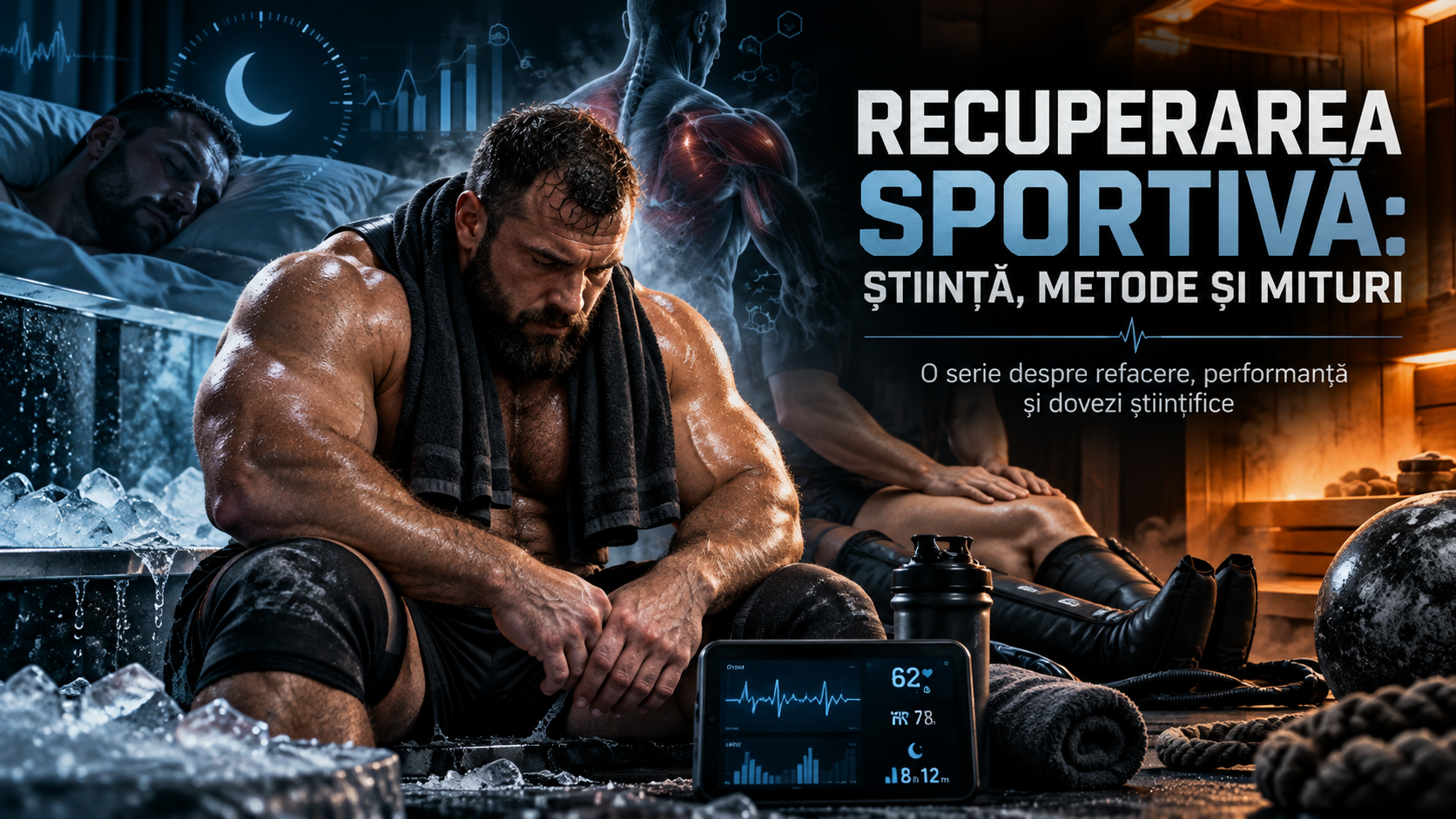
Sports massage and manual therapy: between comfort, physiology and mythology
A strongman finishes a day of deadlifting, yoke carries and Atlas stones. The back feels stiff, forearms are tender, the neck muscles feel pressured and the next two days promise to be difficult. Someone recommends a “deep” massage to eliminate toxins, break adhesions and accelerate healing of muscle fibers. Another person dismisses massage entirely because it does not add kilograms to a personal record. Both positions are too categorical. An intervention may be useful for comfort without measurably improving maximal strength, while a plausible biological mechanism does not automatically justify promises of faster structural repair. Understanding the difference matters to athletes spending time and money on recovery treatments.
This fifth episode of “SPORTS RECOVERY: SCIENCE, METHODS AND MYTHS” examines sports massage, manual therapy and self-massage tools. We will discuss the mechanical effects of pressure, changes in pain perception and evidence relating to delayed soreness, range of motion, strength performance and cellular responses. Professional manual massage will be distinguished from foam rolling, percussion devices and treatments used in injury rehabilitation. Examples will come from yoke carries, farmer's walks, log lifts, stones, sandbags and deadlifts, tasks seldom reproduced completely in laboratory research. The objective is not to declare that massage “works” or “does not work” without first identifying an outcome. The essential question is: works for what, compared with what, in whom and for how long?
A central source is the 2020 meta-analysis by Davis, Alabed and Chico [1], synthesizing 29 studies involving 1,012 participants. It found no convincing evidence for meaningful improvements in strength, sprinting, jumping or endurance after massage, but identified small benefits for perceived delayed soreness and flexibility. Another meta-analysis by Poppendieck and colleagues in 2016 [2] described generally modest and inconsistent effects on performance recovery, varying by protocol and the time until subsequent testing. These findings neither exclude every possible benefit nor make massage a compulsory pillar of preparation. They teach us to distinguish objective performance from subjective state and to avoid promising results that research has not demonstrated.
What sports massage means and why definitions matter
Sports massage describes a family of manual procedures applying pressure, gliding strokes, kneading, compression and other mechanical stimulation to superficial tissues. Different techniques performed by different practitioners can create very different experiences. Some emphasize relaxation, others focus on areas perceived as stiff, while others aim to improve immediate mobility before exercise. This variety complicates research interpretation. An experiment involving ten minutes of manual quadriceps massage after cycling cannot automatically establish the results of forty minutes of deep pressure applied to the back of a 150-kilogram competitor immediately after maximal yoke carries.
“Manual therapy” is an even broader category. Depending on professional training and the assessed problem, it can involve joint mobilization, soft-tissue procedures, manipulation and other techniques. These should not be treated as identical to sports massage, and they do not all share the same indications. Treating persistent back pain or post-traumatic restriction raises clinical questions different from easing ordinary soreness after training. Manual therapy may be one component of a larger plan including exercise, education, load modification and functional assessment. Any benefit from that complete program cannot automatically be attributed to the practitioner's hands.
When comparing treatments, the control condition matters. Complete rest, light exercise, conversation with a therapist and a credible sham procedure create different situations. Massage involves touch, dedicated time, expectations and professional contact. These features may influence pain and relaxation without demonstrating permanent alteration of a fascial structure. Likewise, studies recruiting untrained participants do not necessarily describe the response of a strongman with several competitive seasons. A perceived effect may be real even when the popular mechanical explanation is mistaken. This is precisely what makes research into massage interesting.
What recovery means in massage studies
One outcome is muscle discomfort, rated by the participant on a scale. Another is joint range of motion measured in a standardized test. A third is function: repetitions, jump height, sprint velocity or force measured using a device. A fourth is a biological marker, such as creatine kinase, inflammatory signaling or circulatory parameters. Experiments may assess only one or two outcomes, while advertisements combine them under the vague word “recovery.” An improvement in reported pain does not establish that all other parameters improved. Someone may feel better without lifting more, just as meaningful function may return before every sensation of stiffness disappears.
For strongman athletes, this distinction is practical. If a therapist reduces forearm tenderness after farmer's walks, that can be pleasant. It does not directly predict additional seconds in a Hercules hold or whether damaged skin can tolerate another event. If the shoulder feels freer after massage, warm-up may become more comfortable, but manual pressure does not prove that an injured tendon has healed. If an athlete sleeps more easily after treatment, that result matters, yet it should not automatically be attributed to structural muscle repair. Rigorous assessment respects each benefit within its actual category.
Massage also involves an economic decision. Athletes may pay for a session, spend time traveling and delay food or sleep after training. When relaxation is the objective, the experience may justify the expense. When the objective is a direct increase in competition strength, evidence is less persuasive. Neither conclusion should be dictated by a salon's slogan or contempt for methods that do not appear on a weightlifting scoreboard. The following sections connect mechanisms, experiments and practical applications to one simple question: what is the athlete actually paying for?
Tissue pressure and the nervous system's response
Massage creates local mechanical stimulation, but living tissues are not inert materials that deform permanently whenever pressure is applied. Skin, fascia, muscle, blood vessels and sensory receptors have different properties, and their responses depend on force, duration and direction. When a practitioner presses the back muscles, local tensions, sensations and signals reaching the nervous system can change. This does not mean every palpable nodule represents a permanent anatomical contracture or that fingers can precisely locate all microscopic damage. Palpation can provide useful information about tenderness and movement, but detailed structural claims require evidence that touch alone cannot provide.
One plausible mechanism involves modulation of nociception, the processing of signals associated with potentially harmful stimuli. Tolerable pressure can influence sensory input reaching the spinal cord and brain, as well as expectations about pain. This does not make pain imaginary. Pain is a genuine experience constructed from multiple sources, and its severity does not always correspond directly to the extent of a tissue disturbance. If an athlete feels less tenderness after massage, neurophysiological and psychological mechanisms may operate together. Recognizing psychological components does not dismiss the benefit. It means that breaking adhesions is not a necessary explanation for what the athlete experienced.
In a sport involving enormous pressure on the trunk, interpretations of massage responses require care. Feeling less lumbar tension after yoke work does not prove that spinal vertebrae or discs were repositioned. Radiating pain, new weakness, progressive numbness or neurological warning signs warrant medical assessment rather than relying on massage to postpone investigation. Without such warning signs, a gentle procedure can provide comfort and temporarily change perceived stiffness. Its value should be judged on those outcomes without attributing extraordinary anatomical effects.
Mechanotransduction: what Crane's experiment tells us and what it cannot tell us
In 2012, Crane and colleagues [3] published a widely discussed experiment on massage following exercise-induced muscle disturbance. Eleven young men participated, with researchers comparing massaged and untreated muscle using biopsies to examine signaling pathways. Changes were reported in mechanisms associated with mechanotransduction and inflammatory signaling, including components of FAK and ERK pathways and signals linked to mitochondrial regulation. The experiment is evidence against the idea that massage is purely a subjective experience without any biological response. Mechanical pressure can be reflected in cellular signaling.
Demonstrating a molecular signal, however, is not equivalent to demonstrating hypertrophy, healing of a tear or improved competition performance. The sample was small, the protocol specific and the measured outcomes were biomarkers assessed relatively soon after intervention. The study did not follow months of deadlift progress or compare treatment after carrying several hundred kilograms. Changes in inflammatory signaling can also have different meanings depending on time and context. A lower marker is not automatically greater adaptation. The study establishes biological plausibility, not a universal recipe for recovery.
This distinction illustrates a common mistake in popularizing science. Advertisements begin with a biopsy experiment identifying a cellular response and then claim that a commercial session “regenerates mitochondria” and “repairs muscle” in every client. Missing from that leap are studies verifying dosage, reproducibility, relevant populations and post-treatment function. One investigation can motivate future research without certifying a therapist's entire catalogue. For strongman athletes, the question remains whether a method improves an outcome that matters and justifies its place in an already demanding schedule.
Fascia and the myth of unsticking tissues
Fascia is a complex connective-tissue network involved in organization and transmission of forces. Fascial structures have mechanical properties and participate in sensation and movement, but they should not be reduced to the image of glued sheets that can be pulled apart with fingers. Some treatments are described as “myofascial release,” although the label does not demonstrate permanent structural separation. Freer movement after a session can follow changes in stretch tolerance, discomfort perception or muscle activity. Without appropriate measurements, we cannot know precisely which tissue changed or how long an effect lasts.
Large athletes with substantial musculature may experience distinctive tenderness in areas exposed to pressure: shoulders beneath a yoke, forearms after farmer's carries, the chest after log work or sites of contact with stones. Not every tender area is an adhesion. Tenderness can arise from exertion, compression, rubbing, irritation or a medical problem. Applying extreme pressure to break an assumed knot may create additional pain without proven benefit. More defensible goals are observable: comfort, movement tolerance and perhaps modest improvements in range of motion rather than unverifiable claims of immediate remodeling.
The language used by practitioners can also shape experience. Telling an athlete that their back is “stuck,” “out of place” or “full of toxins” without evidence may create concern and dependence on treatment. A more accurate explanation is simpler: the area is sensitive after exertion; we can try a tolerable procedure; we will assess whether movement becomes more comfortable; unusual signs should be investigated. This communication does not diminish professional therapy. It creates a relationship in which the athlete understands the objective and the limits of what can be guaranteed.
Delayed muscle soreness: what a small but genuine improvement means
DOMS, or delayed-onset muscle soreness, often becomes more noticeable in the hours following unfamiliar exercise and may persist for one or more days. Severity is influenced by contraction type, training history, movement range and individual characteristics. It is not caused by lactate remaining trapped in muscle. Lactate is continually transported and used as a metabolic intermediate, while the processes contributing to delayed soreness evolve on a different time scale. For a competitor, soreness can complicate warm-up and make ordinary movement uncomfortable without necessarily indicating a major injury.
The meta-analysis by Davis and colleagues [1] identified a small improvement in DOMS following massage, yet an average effect does not predict any particular athlete's response. The studies used different exercises, assessment times and procedures. A statistically significant result may be noticeable to some people and nearly irrelevant to others. The reduction in pain can also follow a time course different from functional recovery. If an athlete rates pain at six before a session and four afterward, this is useful information but does not establish that microscopic structures are now one-third more healed. Pain scales do not measure the amount of regenerated tissue.
For a strongman who has completed an unfamiliar high-volume stone session, stiffness in the chest, elbow flexors and back may be unusual. Gentle massage, where injury warning signs are absent, may provide comfort. The following workout still requires attention to movement, warm-up quality and tolerance of loading. Feeling better after treatment can tempt athletes to resume a movement too early even when it continues to provoke symptoms under load. This is why pain modulation must be distinguished from healing. A painkiller can reduce discomfort without immediately repairing tissue; it is equally plausible that massage changes perception without reversing every consequence of training.
This does not make symptomatic relief worthless. Quality of life, ability to work and comfort after competition are legitimate goals. An athlete may be pleased that sleep or movement feels easier the next day even without gaining a kilogram on the log lift. But reporting should remain accurate: “I feel less stiff and more comfortable” is a personal observation; “my muscle fibers healed more quickly” is a mechanistic conclusion requiring further evidence. Clear communication does not diminish lived benefit. It prevents that benefit being advertised as a guarantee for everyone.
Creatine kinase, inflammation and biomarkers: the trap of numbers
Recovery research often measures creatine kinase, C-reactive protein, cytokines and other indicators of physiological responses to exercise. These may supply useful research information, but they are not direct meters of sporting recovery. Creatine kinase can vary widely among individuals and according to previous workload. Inflammation has multiple components, including mechanisms involved in adaptation and those relevant to pathology. A lower biomarker after massage does not automatically mean a tendon has become stronger, all fibers have repaired or the next deadlift will be heavier.
The review by Dupuy and colleagues [7] compared multiple recovery interventions and outcomes involving soreness, fatigue and biological markers. Differences among methods and measured endpoints help explain why no single technique dominates every category. One device may change discomfort without affecting CK, while another intervention may change a marker without improving sporting performance. Biomarkers also peak at different times, so the hour of blood sampling influences interpretation. Selecting only a favorable blood measurement while ignoring performance is a form of selective reporting.
For athletes lifting extremely heavy loads, results must be interpreted in their overall medical context. Severe unusual muscle pain, major swelling, pronounced weakness or very dark urine after exertion can indicate a serious problem, including rhabdomyolysis. Continuing deep massage to “drain” the tissue in this situation is not justified; prompt medical evaluation is required. Likewise, persistent tendon pain, impaired function or neurological symptoms cannot simply be classified as ordinary muscle soreness. Comfort interventions belong within an assessed context and should never hide warning signs needing attention.
Why pain during massage does not prove effectiveness
It is sometimes claimed that effective massage must hurt intensely to “break up” contracted areas. This rule does not follow from studies examining effects on soreness and range of motion. Pressure can be matched to tolerance without creating another source of trauma, while excessively aggressive treatment can add bruising and tenderness. Strongman athletes already have many sites subjected to equipment pressure; excessive stimulation of an irritated region may worsen comfort. New pain, swelling or altered function after treatment are reasons to stop and reassess, not proof that the technique “worked.”
Communication between therapist and athlete is equally important. Lifters accustomed to tolerating pain during training may accept too much pressure because they assume effectiveness requires suffering. Practitioners should ask about sensations and injury history, while athletes should be able to request a lower intensity. Consent to treatment does not mean consenting to arbitrary pain. A reasonable objective is comfort that remains stable or improves, not an endurance contest on the massage table. Strongman already provides plenty of occasions to prove an ability to withstand difficult physical tasks.
Massage before an event: useful relaxation or loss of readiness?
Before a maximal log lift, an athlete needs coordination, readiness for explosive effort and a warm-up preparing joints for heavy loads. Massage is sometimes introduced immediately before an event on the assumption that muscles must be “released” to produce greater force. The meta-analysis by Davis and colleagues [1] did not find clear strength improvements from sports massage, whereas flexibility outcomes were somewhat more favorable. Claims that manual massage is required for performance are therefore not supported. If a very brief procedure helps an individual relax, that comfort may have value without being confused with an automatic increase in maximal force.
Timing is also a practical issue. During a contest, warm-up, equipment checks and knowing the lifting order take priority. If massage consumes ten minutes at the very moment preparatory sets should be performed, it may undermine practical readiness. A long or uncomfortable treatment can create unfamiliar sensations that the competitor has not experienced in training. No new recovery technique should make its debut at an important final. Potential benefits must be weighed against opportunities sacrificed, including fueling, hydration, technique and mental preparation.
An athlete feeling shoulder-girdle stiffness before a log press should first ask whether appropriate preparatory movement is possible. Dynamic mobility, adjustments to warm-up or evaluation of pain may be more appropriate than manual pressure. If range of motion improves after several minutes of massage, the relevant test is whether that change transfers to the actual rack position and overhead movement. The sporting movement matters more than how high the arm reaches in a static measurement. Increased range also does not prove stability or the capacity of tissues to tolerate maximal loading.
For some competitors, pre-event massage is an established psychological ritual. Familiar routines can reduce uncertainty and support concentration, but such benefits should not be mistaken for proven biomechanical changes. If an athlete feels unable to begin warming up without a therapist, developing independent alternatives may be useful. Gentle mobility and a repeatable warm-up offer a backup when professional treatment is unavailable. Sustainable performance depends partly on habits that survive the unpredictable conditions of competition.
Immediately after exercise: there is no magical treatment window
Another commercial promise is that massage must occur within thirty minutes of training to prevent inflammation or stop lactic acid from becoming trapped. No evidence establishes a precise universal window determining success for every procedure. Studies use different treatment times, and outcomes should be interpreted in relation to their objectives. Immediate massage may feel comfortable for some athletes; others prefer to wait until breathing, temperature and exertional strain return toward usual levels. Firm contact with recently irritated tissues may sometimes be uncomfortable or unnecessary.
At the end of farmer's walk and yoke training, the athlete has straightforward priorities that should not be indefinitely delayed: moving to a comfortable environment, obtaining appropriate fluids and food, and protecting realistic sleep time. When a workout finishes at eleven at night, a forty-five-minute massage may reduce sleep opportunity. That creates a genuine trade-off. There is no strong basis for claiming that immediate massage necessarily offsets losing an hour of sleep. For competitors with early professional duties, time may be one of the most precious recovery resources, and any additional procedure must respect it.
After a contest with a rest day ahead and plenty of time available, pleasant massage may have value as a relaxing experience. An athlete may feel that the day is psychologically complete, discomfort is more manageable and sleep becomes easier. There is no need to describe this through claims about instant regeneration of muscle fibers. Recovery programs can account for individual preferences as long as limitations of evidence remain clear. Effectiveness should be judged against the intended outcome rather than the impressive vocabulary used to advertise treatment.
Massage between events of one competition
In strongman, intervals between events can be extremely short or very long. A competitor might have only a few minutes until the next attempt or two hours before another event. Massage can therefore have different logistical and psychological costs. A brief treatment to a slightly stiff area may be acceptable if it does not interfere with preparation. A lengthy procedure requiring undressing, lying down and moving to another location may be inconvenient. The availability of a therapist does not establish that treatment should automatically take place.
The condition of tissues stressed during previous events also matters. After a Hercules hold, palm skin and forearm flexors may be tender, sometimes with superficial injuries. Aggressive pressure cannot repair torn calluses and may increase discomfort. After Atlas stones, the chest and arms may have abrasions or bruises, which should not be treated as simple muscle knots. After log lifting, new shoulder pain associated with altered function is not safely evaluated by seeing whether massage temporarily feels pleasant. During competition, identifying a genuine problem matters more than following a recovery ritual.
Breaks can be used for tolerable food intake, steadying breathing, checking lifting order and deciding tactics. In the absence of evidence that massage directly increases force or speed, these priorities should not be sacrificed for treatment. Competitors who prefer brief massage and find it comfortable may integrate it, but the effects should be observed. A choice is not scientific merely because a practitioner recommends it. It becomes better supported when it addresses a clear objective, carries acceptable costs and does not interfere with better-established needs.
Foam rolling: what studies say about cylindrical self-massage
Foam rolling uses body weight to apply pressure to muscular regions through a cylinder, often with slow movement. Its popularity reflects relatively low cost, independence from therapists and the ability to control the intensity personally. That autonomy can be useful without making it a universal treatment. Effects depend on the area treated, pressure, experience and timing relative to exercise. Rolling the quadriceps before squatting is not the same intervention as pressing on the back after heavy yoke carries. Study protocols therefore matter.
Wiewelhove and colleagues [4] published a 2019 meta-analysis examining foam rolling and related rolling tools for performance and recovery. The researchers identified some small effects on flexibility, sprint performance and perceived soreness, whereas many strength and jump outcomes were small or inconsistent. The authors concluded that benefits may be relevant in selected circumstances but were generally modest. Using foam rolling before training to support mobility appears better supported than promising that post-exercise rolling substantially accelerates every aspect of recovery. That does not prohibit using it after training; it limits what can responsibly be claimed about its effects.
Another systematic review evaluated foam rolling and reported changes in range of motion, tenderness and delayed soreness [8]. The findings suggest some people obtain acute mobility benefits, while study duration and methods differ. A protocol advertised online as the only correct dose should not automatically be applied to every joint and athlete. Once a competitor has enough movement for the intended technical position, the immediate purpose may already have been achieved. Continuing until exhaustion or severe pain is not justified by assuming that more pressure releases more fascia.
Body mass presents a special strongman consideration. A very heavy athlete can transmit substantial pressure through a roller even when the task looks simple. Supporting the body on the arms may also load shoulders and wrists already stressed by farmer's carries or log lifting. Direct force over bony structures or awkward positions around the lower back can be problematic. There is no need to press a cylinder over every part of the back to feel relief. Tolerable positions, accessible muscles and controlled intensity are more sensible than turning self-massage into another strength challenge.
Acute mobility versus long-term adaptation
An immediate improvement in range of motion after foam rolling does not automatically mean tissue length has changed permanently. Acute effects may involve altered stretch tolerance and perception, while sustained changes require repeated intervention and assessment independent of treatment timing. Konrad and colleagues [5] analyzed foam rolling programs lasting several weeks and reported favorable effects on joint range compared with certain controls. The number of studies was still limited, participants were mostly young and variability between results was substantial. It would be incorrect to promise the same improvement to every strongman.
For the log lift, additional range can matter if an athlete has a relevant limitation affecting technical positioning. But mobility is only one component. Stability, scapular control, strength and coordination are also important. Raising the arm farther in a test does not prove that a maximal overhead press is safer or stronger. Likewise, temporary relief of hip stiffness after stones does not demonstrate complete restoration of tissues stressed by loaded flexion. The benefit should be connected to a particular functional goal and checked in the relevant movement.
Research on foam rolling also faces challenges of blinding. Participants usually know whether they used a roller, and expectations may influence self-reported soreness. A completely inactive control group does not receive the same sensory stimulation or attention. These issues do not invalidate every finding, but they warrant caution when interpreting subjective outcomes. Objective measures such as sprint times sometimes change much less than enthusiastic reports suggest. Athletes can enjoy and retain the practice without needing exaggerated claims.
Self-massage with balls and smaller rollers
Firm balls and localized pressure tools can reach areas where large rollers are harder to control. They may allow moderate pressure on selected muscles, but concentrating force over a small surface increases local discomfort risk. A tender area should not be attacked until pain becomes unbearable. Not every painful spot represents a precisely identifiable trigger point that can be eliminated structurally by pushing hard. Areas containing superficial nerves, important vessels, skin injury or bruising are particularly unsuitable for aggressive experimentation.
In practice, self-massage is most useful when athletes can regulate pressure, observe comfort and stop immediately if unusual symptoms develop. It is an option, not a compulsory box on every training checklist. Someone who prefers walking, eating and resting over thirty minutes of rollers and balls is not abandoning performance. Simple equipment should not be confused with medicine or with automatic adaptation to strongman's heavy workloads.
Percussion devices: what massage guns do and what remains unproven
Massage guns have become highly visible in gyms and athletic preparation areas. A motor delivers repeated impulses through a contact head, and users can adjust speed and sometimes stroke amplitude. Advertisements frequently promise “deep therapy,” “instant recovery,” “maximum circulation” or “myofascial release.” Scientifically, the device produces an oscillating mechanical stimulus, but commercial language does not establish a clinical effect. Actual pressure depends on the model, user, contact-head shape and treated region. Two devices advertising the same frequency do not necessarily produce the same tissue exposure.
A systematic review published in 2023 included eleven studies of percussion massage devices [6]. The authors reported certain short-term benefits for range of motion and flexibility, while findings concerning strength, balance, acceleration and explosive activities were mixed or sometimes unfavorable. Most included studies had moderate risk of bias and one had high risk, limiting certainty. Stating that a device may provide comfort or temporarily change mobility is not equivalent to claiming that it accelerates recovery after every strongman event. Existing studies have not standardized all protocols sufficiently to justify universal promises.
A strongman may be tempted to use a device immediately before heavy deadlifting on the assumption that it activates the muscles. Percussion or vibration is not a substitute for progressive warm-up sets that prepare technique, grip and coordination under load. Before log lifting, percussion on the shoulders may change local sensation without preparing the trunk and pressing pattern. If a competitor has repeatedly observed that a brief treatment feels comfortable and does not hinder performance, it can remain a personal choice. Evidence does not support aggressive or prolonged use immediately before maximal effort.
Safety around vulnerable structures deserves greater attention. Devices should not be applied directly over wounds, substantial bruising, suspected fractures, regions with impaired sensation or superficial vessels and nerves. The neck, spinal column, head and other sensitive structures pose particular risks. People with suspected thrombosis, clotting disorders or other health conditions may have contraindications and need professional assessment. There is no reason to test tissue tolerance through maximum pressure and exceptionally long sessions. New symptoms are reasons to stop and seek appropriate evaluation.
Why device frequency is not a universal clinical dose
Manufacturers commonly advertise impacts per minute, amplitude and power levels, but these technical values do not independently determine an optimal dose for an athletic problem. Force applied by the user, duration on one area and contact-head shape change the actual stimulus. Tolerance also varies between muscle groups and anatomical regions. A very muscular athlete may assume that maximum intensity is needed, but muscle size does not ensure skin, vessels, nerves and previously traumatized sites can withstand pressure safely. Dosing should be guided by tolerance and safety rather than the assumption that stronger is always better.
In one research protocol, a particular frequency and duration may produce modest improvements in mobility. That finding does not prove the same combination is optimal for every muscle or for recovery over several days. Immediate outcomes must also be distinguished from sustained adaptation. If range of motion improves briefly and then returns to baseline, the intervention may be useful only within a narrow practical window. Developing long-term technique requires progressive exercise and the ability to control loaded positions, which are separate objectives. A device cannot replace the development of strength and motor skill.
Economic value is another practical consideration. A massage gun may be convenient for frequent travelers, but it may offer no special advantage over simple movement and rest. Consumer reviews are shaped by individual experiences and marketing. The presence of a device in a champion's bag does not demonstrate its particular effectiveness. Athletes can use technology without accepting all manufacturer claims. The relevant criterion is the outcome important to the actual training plan: comfort, movement or measurable performance, not how powerful the motor sounds.
Vibration, manual massage and foam rolling are not interchangeable
Research should not be transferred across technologies merely because all are called “massage.” Slow hand pressure, body weight moving across a roller and rapid percussion involve different mechanical stimuli. They share touch and possible sensory effects but need not have identical impacts on the nervous system, mobility or symptoms. When a meta-analysis examines manual massage, its results cannot be presented as direct proof for every massage gun. Similarly, foam-rolling studies do not automatically confirm an intense manual-pressure technique.
Strongman examples illustrate the distinction. Forearms may be sensitive to friction after farmer's carries, arms may have abrasions after stones, and trapezius tissues may be irritated by yoke pressure. An aggressive stimulus can be inappropriate in any of these contexts even if another athlete tolerates it well. Individual response should not be turned into universal rules. Research supplies a framework for probable benefits and safety, while practice still requires contextual assessment and willingness to omit treatments that add no value.
Manual therapy in rehabilitation: when diagnosis changes the discussion
So far, the focus has largely been healthy athletes experiencing ordinary post-training discomfort and hoping to feel better for the next session. The situation changes when a clinical problem exists: persistent back pain, restriction after trauma, tenderness interfering with ordinary function or progressively worsening symptoms. In these circumstances, manual therapy may be one tool within rehabilitation, but selection must follow examination and an appropriate differential diagnosis. Massage cannot be treated as the sole explanation and universal remedy for every painful condition. Many musculoskeletal problems require load modification, progressive exercise, education, functional reassessment and sometimes further investigation or medical care.
NICE guidance on low back pain and sciatica in adults [9] recommends considering manual therapy as part of a package that includes exercise rather than assuming it is an isolated universal treatment. This clinical recommendation cannot simply be converted into a strongman protocol, but it illustrates an essential distinction. A technique may temporarily influence symptoms while restoring the ability to lift and tolerate high loads requires progressive exposure to movement. Massage cannot replace tendon rehabilitation, motor control or appropriate loading after injury. When relief disappears within an hour and function does not improve, the strategy deserves reconsideration.
Back pain in large strength athletes also requires careful assessment. Not every episode of stiffness after deadlifting indicates major structural damage, but persistent pain should not automatically be dismissed as a simple contracture. Fever, major trauma, progressive neurological signs, new bladder or bowel dysfunction and other warning signs may require urgent medical evaluation. Deep massage is not a method for excluding such conditions. Responsible practice distinguishes expected exertional responses from new changes warranting clinical examination.
An athlete may feel better immediately after manual therapy and conclude that the problem is fully resolved. Yet an intervention can temporarily change pain perception and mobility without correspondingly increasing the tissue's tolerance to extreme loading. Returning directly to maximal attempts because the area no longer hurts may ignore the original limitation. Good return-to-training planning uses function, progressive loading and responses after exercise, not only feelings while on the treatment table. This is especially relevant to highly experienced athletes who sometimes interpret pain relief as permission to lift anything again.
Shoulder, biceps and elbow pain in strongman
Overhead pressing and log lifting place high demands on the shoulder complex, while Atlas stones and farmer's carries challenge the forearms and elbow flexors. Pain can arise from multiple sources, and massage alone does not determine whether tendons, joints, nerves or superficial tissues are involved. A competitor with ordinary post-workout tenderness may tolerate gentle treatment. Sudden biceps pain during a lift accompanied by weakness or deformity, however, warrants assessment for possible injury rather than applying pressure to “release” the muscle. Such treatment may aggravate a problem or delay appropriate care.
The shoulder presents similar concerns. Massage around the trapezius may make raising the arm feel more comfortable, but it does not prove structures controlling the shoulder are ready for a maximal log. Persistent restriction, pain during lifting, instability or loss of force makes clinical examination and rehabilitation more important than searching for the most tender point. When massage is included in a plan, its role may be to ease discomfort so that meaningful exercise can be performed, not to replace exercise.
Good management requires communication between coaches and healthcare professionals, consistent with the athlete's consent. New symptoms noticed during treatment should inform decisions about the following session. Coaches who know that intensive manual treatment occurred can avoid interpreting temporary changes in tenderness as definitive measures of capacity. The shared objective is safe restoration of function rather than proving that one technique wins a theoretical argument. Clear communication among professionals may matter more than selecting a treatment with an impressive name.
When massage should be delayed or avoided
Contraindications or reasons for caution include acute illness with fever, skin infection, open wounds, extensive bruising, recent trauma, suspected fracture, vascular symptoms and important clotting disorders. Suspected deep-vein thrombosis is a reason for medical evaluation rather than aggressive massage of the limb. People with reduced sensation may not perceive harmful pressure reliably. Medication affecting clotting and certain chronic illnesses may also change treatment tolerance. The principle is straightforward even without an exhaustive list: mechanical pressure must be adapted to the person's actual health.
Athletes may be tempted to conceal a medical problem to obtain quick treatment before competition. That undermines the practitioner's ability to choose safely. Reporting symptoms, relevant medication and recent injuries helps support an appropriate decision. If treatment is postponed or medical evaluation recommended, this is risk prevention rather than failed recovery. Any procedure should also stop if it produces sharp pain, new numbness or unexpected symptoms. Massage should never be used as a test of how much pain a strongman can endure.
Strongman applications: deadlifting, yokes and trunk demands
Very heavy deadlifting can fatigue spinal erectors, hip musculature, lower limbs and systems maintaining lifting position. After a high-volume session, the back may feel rigid and ordinary bending may demand more effort. Gentle muscular massage may temporarily change tenderness, but it does not automatically repair every stressed structure. In particular, relaxation is not proof that all spinal segments are ready for maximal loading. Tolerance during warm-up and training history are more relevant to deciding when to lift heavy again than the immediate response to manual pressure.
Under a yoke, the trunk supports mechanical compression and oscillations of a very heavy structure while the legs coordinate movement and stabilization. Implement contact points may be tender independently of ordinary muscular fatigue. An athlete with substantial trapezius bruising may interpret the pain as a contracture, but deep pressure on a contusion can worsen discomfort. Massage elsewhere may provide relaxation if tolerated, yet cannot instantly erase the effects of axial loading. Decisions about returning to heavy yokes should include lower-limb function, balance and trunk control under progressive loads.
Some treatments claim that pressure over lumbar muscles “releases” intervertebral discs after exertion. There is no convincing evidence that this accurately describes a structural event. Discs, ligaments and other tissues have distinct mechanical and biological properties, while superficial manipulation does not directly measure their positions or healing. When stiffness is ordinary, comfort-focused treatment may be acceptable. Radiating pain, weakness or warning signs call for assessment rather than escalating pressure in the hope of fixing the problem. In a sport involving extreme loads, appropriate caution and ambition are compatible.
Farmer's walks, Hercules holds and overloaded forearms
Farmer's carries and Hercules holds place major demands on grip, finger flexors, forearms and structures controlling hand position. Following heavy events, local tenderness, stiffness or difficulty opening the fingers may be noticed. Gentle self-massage may feel pleasant, but deep pressure over a region with tendon irritation is not equivalent to rehabilitation. Persistent pain during gripping or unusual weakness calls for evaluation. Pressure over tendons and superficial nerves warrants care, while damaged skin should be protected.
Skin and calluses may be limitations distinct from muscular capacity in these events. Forearm massage does not repair torn palm surfaces, replace wound care or compensate for a poor grip decision. If a competitor has another carrying event later that day, an oily massage product can reduce practical grip friction even without any biological effect. Rules and safety conditions therefore matter when choosing a treatment. A seemingly harmless procedure can be inconvenient if it interferes with the connection between hand and implement.
A standardized grip test may appear useful for assessing treatment, but results are influenced by fatigue, hand temperature, handle surface and measurement technique. If a lifter feels better after massage while Hercules-hold time stays unchanged, there is no demonstrated competition advantage. A one-day improvement can have numerous alternative explanations. Repeated comparisons under similar conditions may be informative, but no athlete needs extra maximal attempts creating fatigue just to validate a comfort procedure.
Stones and sandbags: mechanical contact, abrasions and mobility
Atlas stones and heavy bags challenge the body differently from a conventional bar. Implements are bulky, contact with chest and arms can cause friction, and technique requires adapting movement to awkward objects. After long sessions, skin irritation, minor bruises and elbow-flexor tenderness may occur. These reactions should not automatically be treated with manual pressure. Aggressive massage over abrasions and contusions may be inappropriate; skin care, rest and evaluation of possible injury symptoms take priority. Treatment of unaffected muscular regions may be chosen for comfort without promising instant repair.
Stone lifting generates mixed fatigue involving extension strength, loaded trunk flexion, coordination and tolerance of awkward manipulation. Massage to the back may make motion feel temporarily easier but does not establish readiness to repeat a 150-kilogram stone. Pain during flexion deserves attention when planning warm-up and the next load. Adhesive products applied to arms or chest introduce skin-cleaning issues as well. Local irritation caused by such substances should not automatically be classified as delayed muscle soreness.
Loading medleys introduce repeated efforts under substantial metabolic strain. An athlete may finish globally exhausted, breathing hard and nauseated. Deep massage is rarely the obvious immediate priority. Moving to a comfortable environment, appropriate fluids, time and observation of symptoms matter more. If relaxation treatment is desired later, it can be planned after the athlete's general state stabilizes. Interventions should address the actual problem rather than being applied automatically because an event has ended.
Relaxation and stress: benefits that deserve accurate descriptions
Recovery after a strongman competition is not exclusively about muscle fibers. Athletes may spend hours in noisy environments, wait through disputed judging, travel extensively and experience psychological strain after results. A procedure involving quiet surroundings, tolerable physical contact and attention to the body can create conditions favorable to relaxation. That does not mean massage automatically “resets” the autonomic nervous system or eliminates stress hormones. Neural regulation involves numerous functions and responds to the social environment, sleep and expectations. Reduced perceived tension is a meaningful outcome without demonstrating restoration of every neurological function.
Some massage studies have examined mood, anxiety, heart rate or markers of autonomic regulation, but results depend on the protocol and comparison condition. A person resting quietly for twenty minutes may relax without massage. To identify the specific contribution of manual contact, experiments need suitable controls rather than comparing treatment with remaining in a noisy gym. This methodological concern does not invalidate a pleasant experience; it supplies proper context. Some benefit may arise simply from stopping activity and obtaining a period of rest.
For a working strongman who trains after professional duties, this ritual effect may matter. If brief massage allows the athlete to disengage from a demanding day, that is a genuine personal value. But if obtaining treatment requires two hours of travel and produces a midnight bedtime before an early shift, the trade-off may be unfavorable. Assessment should examine the entire schedule. A relaxing experience is useful to the extent that it fits reasonably with sleep, food and responsibilities. Not every procedure that feels good for half an hour produces a net benefit across the week.
Expectations, the therapeutic relationship and contextual effects
Pain perception can be influenced by what athletes expect, by explanations received and by the relationship with a practitioner. This does not mean that effects are invented or that all massage works only through suggestion. An intervention combines several components: mechanical pressure, social contact, relaxation, attention, interpretation of symptoms and the feeling of receiving care. A study unable to separate these factors should not be presented as proof for one structural mechanism. Contextual benefits may still matter to quality of life as long as they are not supported by false claims of healing.
Practitioner communication is especially important. Telling an athlete that muscles are “blocked” and that weekly appointments are necessary to prevent injury can create anxiety and dependence when those claims are not supported. A more accurate explanation is that treatment may temporarily reduce perceived tension, results differ between people, and exercise and load management remain important. Athletes should understand that choosing not to receive massage does not automatically sabotage preparation. Evidence-informed communication supports autonomy and confidence rather than dependence on recurring sessions.
Control is another relevant psychological dimension. In strength sports, athletes may organize technique and loads but cannot control every aspect of competition. Treatment can become a ritual that creates a feeling of actively managing recovery. That function is understandable, but proportion matters. When the absence of massage before a contest creates panic, the routine may have become too rigid. Mature preparation includes alternatives: light mobility, a quiet space, fluids, food and rest. None needs to be portrayed as magic. They are accessible options that keep a plan functioning when conditions change.
Sleep and other fundamentals take priority
When building a recovery plan, massage should be considered alongside better-established resources. An athlete who sleeps too little, eats inconsistently and schedules excessive maximal attempts cannot solve every problem through frequent massage. Treatment may temporarily ease discomfort without replacing energy intake, rehydration or time needed for adaptation. Similarly, demanding training blocks require appropriate workload and easier sessions. If massage helps someone tolerate excessive loading without correcting the underlying plan, it may conceal a programming problem.
A practical hierarchy begins with a realistic training dose and sound technique, followed by adequate sleep, nutrition and opportunity for restoration. Comfort procedures can then be selected according to preference and budget. This does not exclude massage from professional preparation. It assigns a role proportionate to the evidence. A particularly pleasant session can remain in the program because the athlete feels better, without becoming a supposedly necessary condition for performance. Personal value and scientific obligation are different concepts.
For athletes traveling frequently, time and money become substantial constraints. A massage gun, a manual-treatment appointment and an additional hotel night sometimes compete for the same budget. If arriving earlier permits a good night before competition, that benefit may be easier to justify than a procedure with uncertain effects on force production. This is a priority decision, not a claim that every comfort treatment is worthless. Intelligent recovery needs to be feasible rather than merely impressive in photographs.
The same principle applies to treatment frequency. A weekly appointment can be reasonable for someone who values it and can easily afford the time. It should not be sold as a biological requirement that every competitor must meet. If sessions are skipped during travel and performance remains stable, the athlete may discover that the treatment was optional. If relaxation deteriorates without them, alternatives can be considered without assuming structural damage has occurred.
Reading a massage meta-analysis correctly
Meta-analyses are useful because they synthesize multiple experiments, but they cannot erase limitations of the included studies. If samples are small, protocols differ widely and controls are weak, the combined answer remains limited. The Davis analysis [1] included 29 studies and more than a thousand participants, a stronger foundation than one locker-room anecdote. Yet the participants were not exclusively professional strongmen and the tests did not reproduce a five-event competition with extreme loading. A large pooled sample does not mean every sport has been tested directly. The finding of no significant average strength benefit should be understood within those study conditions, not interpreted as proof that no individual can ever respond favorably.
A meta-analysis may also identify small statistically significant effects with different practical relevance. A modest improvement in DOMS may matter to someone who must work the following day or be too small to justify an expensive treatment. Likewise, a change in passive range of motion may not improve an actual technical lift. Athletes need to ask what was measured and whether the effect exceeds ordinary variation or the cost of the procedure. An impressive percentage in an advertisement can conceal a small absolute change. Full interpretation includes effect magnitude, uncertainty and comparison with available alternatives.
Poppendieck and colleagues [2] examined performance recovery across 22 studies, discussing variations by massage duration, preceding exercise and time until retesting. Results were modestly favorable under certain circumstances but did not establish universal benefit. Some studies involved automated procedures while others used manual techniques, complicating extrapolation to one specific treatment. When different methods and sports are combined, the pooled result offers orientation rather than a clinic protocol. Before recommending an exact duration, we need evidence directly comparing that duration in the relevant population for the actual objective.
Specific treatment effects versus attention and context
In pain research, placebo controls can be difficult to construct. Participants may know whether they are being touched, feel differences in pressure or recognize that the therapist strongly believes in one method. Creating a credible sham massage is more difficult than administering identical-looking pills. Subjective outcomes can therefore be influenced by expectations without becoming meaningless. An athlete may genuinely experience less pain, and the relationship with the practitioner can contribute. What cannot be assumed is that a particular tissue structure has been mechanically remodeled.
Investigators can use rest, superficial touch or other control conditions, but each comparison answers a different question. When massage beats resting alone, both pressure and social contact or relaxation may contribute. When it produces results similar to a credible sham, specific effects become harder to distinguish. For athletes, the nuance matters when deciding whether an expensive specialist technique is necessary or whether a simpler relaxing practice provides comparable satisfaction. Positive experiences need not be denied in order to question mechanisms and cost.
Negative-result reporting is another concern. Studies where massage does not produce a spectacular improvement may attract less attention than favorable findings. This makes systematic reviews and preregistered study designs important, helping reduce selective reporting of convenient outcomes. A recovery business presenting only photographs of famous athletes or testimonials is not providing controlled comparisons. Evidence-informed recommendations need not reject personal experience, but must recognize that testimonials alone cannot establish general effectiveness.
Translating evidence to a sport with very different events
Strongman combines brief maximal lifts with prolonged loaded carries, repeated lifting and intense mechanical contact. An experiment involving massage after cycling does not replicate combined grip, trunk and skin stress during competition. This does not make the research irrelevant. It means extrapolation requires caution. Sensory mechanisms can matter to humans across sports, while competitive advantage depends on the actual task. Reduced thigh tenderness may have one implication before squatting and a different one before a Hercules hold where grip is limiting.
Another distinction concerns recreational participants and athletes who compete frequently. Well-trained individuals may adapt to repeated demands, have different expectations and experience different soreness after exertion. A treatment producing notable comfort after someone's first gym session may have a different effect after ten years of heavy lifting. Large muscle mass also does not guarantee a special response to deep pressure. Without direct trials, athletes and clinicians should use known mechanisms, monitor realistic outcomes and acknowledge uncertainty.
Transferability matters across body regions as well. A change in hamstring range of motion after rolling cannot automatically be applied to the shoulder during overhead pressing. Joint anatomy, movement demands and baseline limitations differ. A high-quality training decision combines the general evidence with observation of a specific athlete performing a specific task. This approach is more demanding than repeating a slogan, but it is also less likely to waste scarce recovery time.
Case study: a five-event competition with massage available between events
Imagine a contest opening with deadlift repetitions, followed by log lifting, farmer's walks, a yoke and a loading event. A therapist is stationed near the warm-up area and offers competitors brief massage between events. One athlete accepts because the treatment feels relaxing. Another declines and prefers quiet rest. If their results are similar, this does not prove massage is universally useless, but neither does it show that the first athlete gained a measurable advantage. The events have different limiting factors and variable rest intervals make comparisons difficult. Evaluation should begin by asking whether each competitor used the available time in a way compatible with preparation for the next event.
Following deadlifting, brief forearm massage might feel pleasant, but the athlete now needs to prepare trunk and shoulders for the log. If treatment delays warm-up, the cost becomes visible. After farmer's walks, strong pressure on already tender palms might reduce comfort before the yoke. Following a yoke, contact points on the shoulders may be irritated and unsuited to deep pressure. A sensible plan therefore changes according to the event sequence and condition of tissues rather than applying one identical procedure after each task.
Organizers can also move start times or shorten breaks. A competitor relying on a long massage before every event becomes dependent on conditions outside their control. A robust routine emphasizes food, fluids, technical preparation and rest, leaving massage as an option when time and a clear purpose permit. Pleasant treatment need not be rejected, but it should not become a requirement for success. Good preparation allows the athlete to compete even when no therapist is available.
Case study: shoulder stiffness after log lifting
A competitor performs progressively heavy log presses and ends with pronounced tenderness around the front of the shoulder. A friend recommends deep massage, convinced that a muscular knot must be broken apart. Before treatment, the important distinction concerns ordinary diffuse post-exercise tenderness versus a new localized symptom accompanied by weakness, major restriction or pain during movement. In the first situation, gentle treatment may offer comfort if well tolerated. In the second, clinical evaluation matters more than massage intensity. Pain caused by a deep technique is not evidence that the underlying issue is disappearing.
If symptoms are minor and improve, the next training session can involve appropriate warm-up and modified loading. The athlete can assess ordinary movement, submaximal lifts and the specific log position. When massage has occurred, immediate relief supplies information without replacing monitoring over subsequent days. A tendon does not automatically become stronger when pain is temporarily reduced. Persistent problems call for diagnosis and appropriate rehabilitation rather than simply increasing treatment frequency without reassessment.
The example illustrates why communication matters as much as technique. A practitioner can explain that comfort and movement tolerance are the objectives, while a coach adjusts loading based on function. If both declare that the shoulder was “healed” merely because the athlete feels better for a few minutes, they create false certainty. Strength events can challenge structures close to their current tolerance, so interpretation errors can be expensive. Comfort relief should not become a certificate of readiness for a personal record.
Case study: treatment after an international competition
A strongman spends eight hours in a car, arrives at accommodation late and competes the next day. After the contest the athlete is exhausted, has eaten little and faces another long journey home. Someone offers a one-hour sports massage. The experience could be pleasant, but would treatment take more time away from sleep, food or recovery from travel? If the following day is free and the procedure is easily accessible, it may have little practical cost. If bedtime is already very late, a modest possible reduction in soreness must be weighed against lost rest opportunity.
There is no universal rule because priorities differ. An athlete experiencing high psychological tension may find massage relaxing. Another may prefer food and sleep. Research cannot guarantee that the first will lift more at the next contest. Mature strategy respects physiology and logistics together. Recovery does not take place in a laboratory without transportation, budgets or jobs. It has to be built into the life the athlete actually leads.
A further example concerns competitors who feel obliged to book treatments because everyone around them appears to do so. Social pressure can make an optional intervention feel necessary. If the athlete would rather spend the same money on suitable food or an extra night of accommodation, the choice deserves respect. Professional practice is not defined by purchasing every service used by famous athletes. A coherent program has clear goals and allows optional methods to remain optional.
Massage myths: toxins, knots and instant recovery
The claim that massage clears lactic acid trapped in muscle is based on a misunderstanding of metabolism. Lactate is produced, transported and used as an energy substrate. It is not the direct cause of soreness persisting for days. A comfortable treatment does not need a false mechanism to justify its value. Closely related is the claim that strong pressure removes “toxins.” Without identifying a substance, a measurement technique and a demonstrable change after treatment, the word functions more as advertising than as a testable physiological explanation.
Another myth claims that practitioners can precisely identify and eliminate every muscular “knot” through touch, as though locating defects inside an inert material. Areas of tenderness and stiffness are real, but their interpretation may involve multiple structures and mechanisms. There is no evidence that every painful point is a permanent anatomical knot requiring destruction. When movement feels freer after treatment, changes in sensitivity, tolerance and motor control may be involved. Permanent structural transformation does not have to be assumed. Professional practitioners can provide relief without promising to repair anatomy by brute mechanical force.
The notion that effective massage must be extremely painful is another unjustified extrapolation. Intense pressure can create bruising, aggravate irritation or turn a tender region into an additional source of discomfort. A strongman capable of handling enormous implements has no physiological obligation to endure unlimited pain on a treatment table. Treatment effectiveness is not measured by how much suffering an athlete can tolerate. If comfort is the objective, worsening discomfort is a reason to reconsider the procedure rather than celebrating its alleged intensity.
A further myth promises guaranteed injury prevention. Injury prevention depends on numerous factors, including progressive preparation, technique, previous injury, contest conditions and management of loading. Massage meta-analyses do not establish that a weekly appointment predictably reduces tendon ruptures in strongman. An athlete can sustain an injury despite regular treatment, while another may compete for years without it. Individual anecdotes cannot establish a causal rule. It is more responsible to describe massage as an optional comfort intervention than as insurance against every injury.
The opposite myth declares massage completely worthless because it does not directly improve maximal strength. That overlooks the potential value of modest pain relief and comfort in an athlete's daily life. A treatment need not add kilograms to a deadlift to have personal value. Problems arise when subjective benefit is sold as guaranteed performance improvement or structural healing. A mature conclusion can recognize weak evidence for strength gains while accepting that some athletes enjoy a useful experience within reasonable limits of time, cost and safety.
Use by champions is not proof of necessity either. Elite athletes employ many methods simultaneously, and success cannot automatically be assigned to each one. A treatment may offer comfort, may be a ritual with little competitive influence, or may fit a champion's resources in ways unavailable to a semi-professional athlete. Instead of copying every intervention, competitors should evaluate purpose, evidence and cost. Science-based recovery requires informed selection, not imitation.
A further misconception is that an athlete must feel an immediate dramatic change for treatment to have been worthwhile. Some forms of relief are subtle or primarily relaxing, and subjective responses vary. Conversely, an impressive immediate difference may be brief and unrelated to long-term adaptation. A therapist may demonstrate that one movement feels easier after treatment, but this does not establish that months of training will become more productive. Timing and durability of the result matter as much as the initial sensation.
Finally, it is misleading to assume that every manual procedure has the same evidence because all involve pressure. A systematic review of manual massage cannot be copied directly into an advertisement for percussion devices, and a foam-rolling result cannot validate aggressive treatment of injured tendons. Scientific terms are not interchangeable marketing tags. The exact intervention, comparator, population and outcome determine the strength of the conclusion.
Practical assessment: does massage deserve a place in the program?
An athlete wishing to determine whether massage helps can begin with one limited, observable objective. If the problem is forearm discomfort after farmer's carries, they can track perceived tenderness and ease of using their hands in ordinary activities. If mobility before log lifting is the concern, they can record comfortable movement range and quality during a standardized warm-up. If the goal is sporting performance, an event-relevant functional measure is needed, not merely relaxation. In every case, training load and recent sleep should be recorded because they influence results independently of treatment.
A personal assessment may compare periods with massage and comparable periods without it, without performing unnecessary maximal tests merely to collect data. Avoid changing training structure, supplements, diet and sleep schedules simultaneously, since any observed difference would become difficult to interpret. Even under sensible conditions, such observations remain imperfect. Athletes know whether they received treatment, and expectations may influence reported pain. A log does not become a randomized clinical trial, but it can reduce dependence on isolated impressions. If treatment supplies no meaningful benefit over several weeks, removing it is reasonable.
Potential adverse effects are also relevant. An athlete can record next-day tenderness, bruising, symptom aggravation or lost sleep caused by treatment timing. A procedure that feels pleasant during application but creates discomfort for two following days may not have a favorable balance. If the effect is positive and lasts without meaningful costs, personal reasons for retaining it remain even when research does not show strength gains. The purpose of individual observation is not to establish a universal law but to make a decision proportionate to the results obtained.
One further consideration is the chosen comparison. If massage takes place in a quiet room while the alternative is remaining amid loud music and competition stress, any perceived relaxation could be due partly to the environment. A more informative personal comparison might include an equally quiet period of rest. That does not invalidate a favorable result, but helps identify which components are actually needed. If relaxation is the main benefit, a quiet break may sometimes achieve the same objective with less travel and expense.
It can also be useful to define a minimum meaningful change in advance. For example, the athlete might decide that a tiny difference in soreness is not worth sacrificing an hour of sleep or paying for travel, while a clear improvement in daily comfort would be worthwhile. This is a personal value judgment rather than a medical cutoff. Setting expectations beforehand reduces the tendency to reinterpret every small fluctuation as proof of success. Treatment should earn its place in the schedule rather than relying solely on enthusiasm immediately afterward.
Choosing a practitioner and communicating objectives
A professional working with strength athletes should ask about injury history, current symptoms, relevant treatments and competition goals. They should explain what the procedure aims to accomplish and when medical evaluation is needed. Promising to eliminate every contracture or “put bones back in place” without appropriate diagnosis is insufficient. Professional quality includes the ability to say that massage is unsuitable on a particular day. A practitioner who adapts pressure, respects consent and monitors responses provides a safer environment than one who treats pain tolerance as a competition.
An athlete might explain that they want to feel less uncomfortable after yoke practice, have a contest in three days and do not want an unfamiliar intensive procedure. New shoulder pain should be described accurately rather than hidden to obtain the scheduled treatment. A practitioner may decide not to apply pressure to the region and recommend assessment when warning signs are present. When the objective is simply relaxation, the session should not be presented as treatment for an undiagnosed disease. Professional boundaries support safety and respect.
During international competitions, access to qualified practitioners and professional standards may vary. A treatment offered at the venue might be convenient, but competitors should know who is providing it, which technique will be used and whether it interferes with the next event. If sufficient information is unavailable or the proposed method is excessively aggressive, declining does not compromise sporting discipline. Optional treatment needs to remain optional. Evidence-informed recovery depends on good questions and responsible decisions rather than automatic acceptance of every available procedure.
A good practitioner should also be willing to coordinate with coaches, within the athlete's permission, when treatment might affect the next training session. If substantial tenderness follows an unexpectedly intense massage, the coach should know that the athlete's sensations may differ from ordinary training fatigue. When improvement occurs, treatment and training changes should not both be credited automatically. Clear communication is especially important when the athlete is preparing for competition and the costs of a poorly timed intervention can be significant.
Conclusion: massage can help the person without automatically changing performance
After examining the research, a more useful conclusion emerges than either “massage works” or “massage is useless.” Evidence suggests that sports massage can produce small improvements in delayed soreness and certain flexibility measures, while available syntheses do not demonstrate consistent improvements in strength, sprinting, jumping or endurance. Experiments also show cellular responses to mechanical stimulation, but those findings do not directly establish that one session accelerates healing after injury or produces additional hypertrophy. Self-massage methods yield results depending on tools and protocols, while percussion devices still require stronger evidence for their use in heavy strength sports.
For a strongman, the appropriate decision depends on the objective. If comfort and relaxation are the goals, a tolerable session can be an option. If temporary mobility before an event is needed, a gentle method can be tested during training, with attention to the relevant movement. If the athlete is recovering from an injury, diagnosis and progressive loading remain essential. If maximal performance is the goal, massage should not be considered mandatory without repeated evidence of individual benefit. These situations have different criteria, and one athlete's response should not become a prescription for everyone.
Massage does not eliminate undefined toxins, instantly repair muscle fibers or replace sleep. It cannot compensate for excessive training volume, insufficient food or unsafe technique. Yet there is no reason to dismiss it merely because its main benefit may concern comfort. An athlete sleeping more comfortably or perceiving less stiffness can value those outcomes without claiming proof of a special molecular mechanism. Science does not require every useful experience to become a personal record. It requires claims to remain proportionate to the evidence.
A professional recovery culture should avoid two extremes. The first assumes every new treatment is indispensable and that athletes without access will inevitably recover poorly. The second treats every intervention with only modest positive results as worthless. In reality, comfort treatments can be integrated according to preferences without displacing the major foundations of preparation. When money and time are limited, priorities need to be chosen carefully. A pleasant massage session may have value, but adequate food or another good night of sleep may be a more important investment.
Practical choices should also reflect the season. During the off-season, the athlete may have more time to try optional procedures and observe whether they help comfort. During a week with several competitions, treatment time may compete directly with transport, rest and preparation. After an injury, assessment and rehabilitation create a different decision framework altogether. The same procedure can therefore be reasonable in one period and poorly timed in another. Consistency does not mean repeating a ritual regardless of changing needs; it means applying clear principles to different situations.
A responsible practitioner can describe expected effects in ordinary language, identify when treatment is inappropriate and recognize when another professional should assess the problem. A responsible coach can watch whether movement quality and training tolerance improve rather than treating short-term pain relief as the final objective. The athlete can remain involved in decisions and report both comfort and unwanted effects. This approach respects professional expertise without turning therapy into an authority immune to questioning.
For large competitors, safety deserves particular emphasis. Great muscular strength does not protect every superficial nerve, vessel, tendon or bruised area from inappropriate pressure. Pain tolerance developed through lifting does not create an obligation to withstand harsh treatment. The safest intensity is not always the strongest intensity, and an intervention that adds bruising before competition can undermine its own stated objective. When unusual pain, weakness, swelling, neurological changes or systemic symptoms appear, comfort techniques should give way to evaluation of the underlying problem.
The episode's central message is that **recovery is not measured by how much pressure the muscle can withstand, but by the athlete's ability to function, train and make sustainable progress safely**. Massage may be one component of that strategy, but it is not synonymous with the strategy itself. A responsible therapist explains limitations, a competent coach monitors performance over time and an informed competitor retains the freedom to accept or decline a procedure. Neither devotion to a treatment nor rejection of it is a substitute for understanding the evidence.
In the next episode, we will investigate cold and heat therapies. These provide another example of why an intervention that feels powerful or provides immediate relief does not necessarily improve long-term strength adaptation. We will distinguish cooling for heat safety, temporary changes in soreness, the physiology of thermoregulation and the potential effects of repeated cold exposure after resistance training. The same principle will continue to guide the series: describe what has actually been measured, avoid unsupported promises and make every recommendation compatible with an athlete's real training schedule.
Methodological note on evidence and limits of recommendations
This article draws on systematic reviews, meta-analyses, physiological experiments and clinical guidance to distinguish well-supported findings from appealing but insufficiently tested hypotheses. Much of the massage evidence comes from populations and exercise protocols that do not fully reproduce strongman. Sport-specific advice is therefore cautious interpretation rather than a directly validated treatment protocol for every event. Phrases such as “may help” and “has not been demonstrated” are not decorative qualifications. They describe different levels of scientific confidence.
The bibliography allows readers to consult original research. No group average guarantees an individual's response, and clinical assessment cannot be replaced by an educational article. When unusual pain, suspected injury or important systemic symptoms exist, identifying the cause and developing an individualized plan takes precedence. Athletes can use the information to ask better questions of coaches and clinicians rather than attempting risky self-treatment. Effective recovery begins by distinguishing immediate comfort, measurable function and long-term health.
The studies also differ in follow-up duration. An immediate change after ten minutes says little about what happens after twenty-four hours, a week or several months. Some experiments examine passive flexibility, others maximal force, and others subjective soreness. These endpoints cannot be treated as interchangeable. It is possible for one parameter to improve while another remains unchanged, or for a treatment to be helpful only within a brief window. The appropriate conclusion must retain these distinctions even when that makes the message less dramatic.
Research quality will continue to improve if studies include well-described doses, meaningful control groups, preregistered outcomes, adequate samples and athletes whose sports actually match the intended application. Strongman in particular would benefit from trials considering heavy axial loading, carrying tasks, forearm fatigue and competition schedules. Until that evidence exists, physiology and general recovery research can guide reasonable choices, while the limits of extrapolation should remain visible. This is not an argument against innovation. It is a way to test innovations without turning unverified claims into requirements for every competitor.
Scientific bibliography and clinical guidance
[1] Davis, H. L., Alabed, S., Chico, T. J. A. (2020). Effect of sports massage on performance and recovery: a systematic review and meta-analysis. BMJ Open Sport & Exercise Medicine, 6(1), e000614. DOI: 10.1136/bmjsem-2019-000614. https://doi.org/10.1136/bmjsem-2019-000614
[2] Poppendieck, W., Wegmann, M., Ferrauti, A., Kellmann, M., Pfeiffer, M., Meyer, T. (2016). Massage and Performance Recovery: A Meta-Analytical Review. Sports Medicine, 46(2), 183–204. DOI: 10.1007/s40279-015-0420-x. https://doi.org/10.1007/s40279-015-0420-x
[3] Crane, J. D., Ogborn, D. I., Cupido, C., Melov, S., Hubbard, A., Bourgeois, J. M., Tarnopolsky, M. A. (2012). Massage Therapy Attenuates Inflammatory Signaling After Exercise-Induced Muscle Damage. Science Translational Medicine, 4(119), 119ra13. DOI: 10.1126/scitranslmed.3002882. https://doi.org/10.1126/scitranslmed.3002882
[4] Wiewelhove, T., Döweling, A., Schneider, C., et al. (2019). A Meta-Analysis of the Effects of Foam Rolling on Performance and Recovery. Frontiers in Physiology, 10, 376. DOI: 10.3389/fphys.2019.00376. https://doi.org/10.3389/fphys.2019.00376
[5] Konrad, A., Nakamura, M., Tilp, M., Donti, O., Behm, D. G. (2022). Foam Rolling Training Effects on Range of Motion: A Systematic Review and Meta-Analysis. Sports Medicine, 52, 2523–2535. DOI: 10.1007/s40279-022-01699-8. https://doi.org/10.1007/s40279-022-01699-8
[6] Ferreira, R. M., Silva, R., Vigário, P., Martins, P. N., Casanova, F., Fernandes, R. J., Sampaio, A. R. (2023). The Effects of Massage Guns on Performance and Recovery: A Systematic Review. Journal of Functional Morphology and Kinesiology, 8(3), 138. DOI: 10.3390/jfmk8030138. https://doi.org/10.3390/jfmk8030138
[7] Dupuy, O., Douzi, W., Theurot, D., Bosquet, L., Dugué, B. (2018). An Evidence-Based Approach for Choosing Post-exercise Recovery Techniques to Reduce Markers of Muscle Damage, Soreness, Fatigue, and Inflammation: A Systematic Review With Meta-Analysis. Frontiers in Physiology, 9, 403. DOI: 10.3389/fphys.2018.00403. https://doi.org/10.3389/fphys.2018.00403
[8] Hendricks, S., Hill, H., den Hollander, S., Lombard, W., Parker, R. (2020). Effects of foam rolling on performance and recovery: A systematic review of the literature to guide practitioners on the use of foam rolling. Journal of Bodywork and Movement Therapies, 24(2), 151–174. DOI: 10.1016/j.jbmt.2019.10.019. https://doi.org/10.1016/j.jbmt.2019.10.019
[9] National Institute for Health and Care Excellence (NICE). Low back pain and sciatica in over 16s: assessment and management. Clinical guideline NG59, recommendations on non-invasive treatments and manual therapy, 2016, updated where applicable. https://www.nice.org.uk/guidance/ng59/chapter/recommendations
[10] Qaseem, A., Wilt, T. J., McLean, R. M., Forciea, M. A. (2017). Noninvasive Treatments for Acute, Subacute, and Chronic Low Back Pain: A Clinical Practice Guideline From the American College of Physicians. Annals of Internal Medicine, 166(7), 514–530. DOI: 10.7326/M16-2367. https://doi.org/10.7326/M16-2367
[11] Peake, J. M., Neubauer, O., Della Gatta, P. A., Nosaka, K. (2017). Muscle damage and inflammation during recovery from exercise. Journal of Applied Physiology, 122(3), 559–570. DOI: 10.1152/japplphysiol.00971.2016. https://doi.org/10.1152/japplphysiol.00971.2016
More From The Journal

Training
The Science of Strongman Training - Episode X: Competition Programming
How to build a complete Strongman competition preparation block: calendar, events, volume, intensity, specificity, simulations, autoregulation, tapering and fatigue management.

Training
The Science of Strongman Training - Episode IX: Peaking
Peaking in Strongman: how to turn months of training into maximal competition performance by reducing fatigue, preserving adaptations and managing specificity.