
Recovery
Series: SPORTS RECOVERY: SCIENCE, METHODS AND MYTHS - Episode 10: Evidence-Based Recovery Versus the Supplement and Device Industry
October 14, 2026
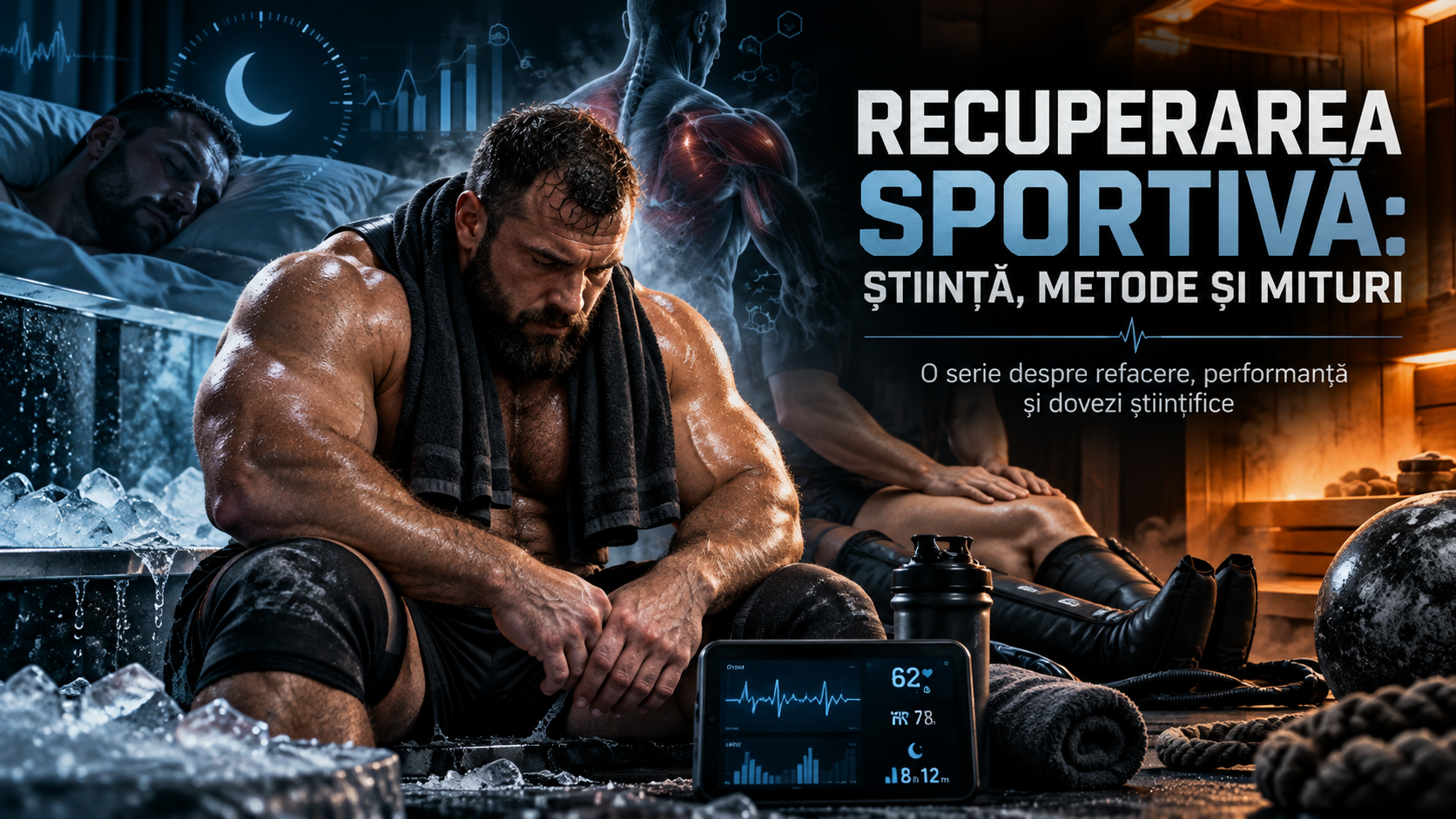
Evidence-based recovery versus the supplement and device industry: who benefits when the athlete is exhausted?
A strongman finishes the final deadlift sets and opens a phone. The algorithm suggests a powder promising accelerated regeneration, pneumatic boots, red-light equipment, magnesium spray and a portable sauna. Each advertisement implies that tomorrow the athlete will be stronger, more relaxed or less sore. None asks how long the athlete slept, whether enough food was consumed, how much training volume increased or whether the same lower-back discomfort has persisted for three weeks. This contrast reveals a central problem in modern recovery culture: products are presented as answers before the actual question has been defined. When fatigue is uncomfortable, a polished promise can easily look more attractive than an honest evaluation of what the body needs.
This final episode of “SPORTS RECOVERY: SCIENCE, METHODS AND MYTHS” connects the previous nine chapters. We have explored the physiology of restoration, sleep, circadian timing, active recovery, massage, cold and heat exposure, compression and fatigue monitoring. Now we ask which approaches have sufficiently strong evidence for their intended purpose and which rely mostly on plausible mechanisms, personal experiences or persuasive marketing. The goal is not to divide every product into permanently good and bad categories. The same method can help one outcome while offering little for another. Decisions should depend on clear definitions, reliable measurements, individual risk and the size of the claimed advantage.
The recovery marketplace appeals to a very human desire: after demanding exertion, people want fatigue to disappear quickly. When the sport repeatedly involves enormous loads, the promise of a passive treatment that can do the biological work on the athlete's behalf is particularly tempting. But recovery is not a program waiting to be activated by pressing a button. It involves restoring selected functions and adapting to stress through time, adequate energy, sleep, load distribution and general health. A device might influence one component without becoming essential to everything. In strongman, feeling comfortable is not the same as being able to execute the next difficult event safely and effectively.
The International Olympic Committee consensus on supplements in high-performance sport [1] recognizes that selected products can serve useful purposes, but warns that many claims lack adequate support. The Australian Institute of Sport [2] classifies supplements according to scientific evidence, practical application and relevant risks. These frameworks are not absolute lists detached from individual circumstances. They encourage asking whether a product is effective, safe and permitted before purchasing it. For a tested competitor, a product that provides a modest theoretical advantage but creates a serious doping or medical problem may be among the worst investments imaginable.
The main conclusion of this final chapter is not that modern recovery methods are pointless. Certain products have legitimate roles, and other devices can provide comfort in specific situations. What matters is establishing an appropriate hierarchy. Sleep, adequate nutrition, intelligent training and health come first. Supplements may correct deficits, provide convenient nutrients or improve particular aspects of performance when properly indicated. Accessories must be evaluated through measured outcomes rather than technological spectacle. Science does not prohibit enjoying a relaxing session, but it protects athletes from confusing feeling better with proof that their tissues have regenerated faster.
What does “scientifically proven” really mean in an industry that uses the phrase constantly?
A scientific claim begins with a precise question. Does a product reduce perceived soreness after downhill running? Does it improve the number of repetitions performed in a resistance exercise the following day? Does it shorten recovery from a diagnosed injury? These are three different claims, and a positive answer to one cannot confirm the others. Advertising frequently uses the broad word recovery without defining it, so a favorable change in almost any variable can be presented as proof of healing. Responsible interpretation requires knowing who participated, what treatment they received, what the comparison group did and which outcome was actually measured.
Randomized studies with appropriate controls can estimate causal effects more credibly than simple before-and-after testimonials. Yet the word randomized does not automatically guarantee high-quality evidence. Sample size, outcome selection, transparency, missing data, blinding where feasible and independent replication all matter. A trial with a dozen participants may identify an interesting hypothesis without establishing that every athlete will benefit. If all participants are untrained men, results cannot be transferred automatically to trained women, heavyweight strongmen or people with medical conditions. A respected journal and an attractive chart do not eliminate the need for critical reading.
Meta-analyses combine multiple studies, but pooling poor or highly heterogeneous experiments does not transform uncertainty into certainty. If interventions, populations and performance tests differ greatly, one average effect can hide important distinctions. Different reviews may reach different conclusions because of eligibility criteria or statistical choices. Even a statistically significant effect may be too small to matter practically. Strongmen do not buy recovery equipment primarily to achieve an interesting change in a blood marker; they hope to train better, compete effectively or reduce meaningful discomfort. Evidence should be evaluated against that objective, not against the number of laboratory variables that can be measured.
Extrapolating from a mechanism to a performance promise is another recurring problem. If light affects certain cellular pathways, that does not prove a commercial panel increases maximal strength. If massage changes pain perception, it does not establish tendon repair. If a supplement temporarily changes a hormone, it does not demonstrate improved hypertrophy. Mechanisms help researchers develop hypotheses, but promised outcomes still require direct testing. Biology can provide sophisticated explanations for interventions whose practical effects are small, inconsistent or unknown. Complexity should never be mistaken for demonstrated benefit.
Conflicts of interest also deserve attention. Industry funding does not automatically invalidate research, and university research is not guaranteed to be flawless. Nevertheless, financial relationships, patents, selective publication and the manufacturer's role in analysis can influence confidence. A trial that advertises only favorable results while withholding prespecified outcomes deserves scrutiny. Readers should distinguish experimental evidence, plausible hypotheses and marketing, even when all three use words such as clinical, optimized, tested or validated. Learning to make these distinctions is itself one of the most useful tools available to the modern athlete.
Perceived recovery, restored function and long-term adaptation are different outcomes
Perceived recovery describes how an athlete feels after an intervention. Stiffness may be reduced, movement may become more comfortable or relaxation may improve. These experiences are not imaginary merely because they are subjective. Comfort can improve a training day and quality of life. The problem begins when “my legs feel lighter” becomes “my muscles regenerated within twenty minutes.” Functional recovery concerns force, power, coordination and the ability to tolerate another demanding task. Feeling better and performing better are related but not equivalent. A product should be evaluated according to the specific result it was purchased to provide.
Long-term adaptation is a third category. Strength and muscle mass are developed through repeated mechanical loading combined with adequate recovery over weeks and months. A treatment that reduces immediate discomfort does not necessarily accelerate those adaptations. In some cases, rapidly reducing aspects of the response to training might interfere with processes related to growth. The 2024 systematic review and meta-analysis by Piñero and colleagues [7] suggested that repeatedly using cold-water immersion immediately after resistance training may attenuate hypertrophy, while acknowledging important limitations in evidence quality. Acute comfort and chronic development should therefore be considered separately.
In strongman, different periods create different objectives. Between two competition days, reducing discomfort and preserving immediate function may be important. During an off-season hypertrophy block, maximizing long-term adaptation can be the priority. Following a diagnosed injury, safe rehabilitation requires another set of clinical and functional criteria. One commercial premium recovery package cannot automatically optimize all three. The intervention must be selected for the goal, not because its label makes promises across every part of athletic physiology. A method can be useful one week and unnecessary during another phase of preparation.
The review by Dupuy and colleagues [6] synthesized ninety-nine studies of recovery methods and found favorable effects for selected approaches on perceived soreness and fatigue. This is useful evidence, but not a universal ranking of which method best restores maximal strength. Studies differed in participants, procedures and assessment intervals. A modality placed high in a ranking for soreness should not automatically be described as best for hypertrophy, injury prevention or another outcome. The result being measured must remain visible. Recovery science becomes misleading when every improvement is translated into the same vague claim that the athlete is more recovered.
Before selecting a procedure, athletes can ask three separate questions. Do I want to feel more comfortable tonight? Do I want to perform better tomorrow? Do I want to build a physiological capacity over the coming months? Recreational comfort may justify an optional method when safety and cost are acceptable. Objective performance claims require relevant studies. Medical healing claims demand even more rigorous evidence. Marketing often combines these goals so one product appears indispensable for everything. Informed athletes benefit when they keep them separate and ask exactly which promise has been tested.
The recovery hierarchy: foundations before accessories
Before buying equipment, athletes should check whether their bodies have the conditions required for adaptation. Someone who consistently sleeps only a few hours, eats insufficiently and increases training load without appropriate recovery opportunities does not primarily have a device problem. The more fundamental issue concerns the balance between stress and available resources. Accessory treatments cannot indefinitely erase the consequences of inadequate recovery. A sensible strategy begins with reviewing workload, nutrition, sleep opportunity and health. These factors may be less photogenic than recovery machines, but they remain central to sustainable performance.
Sleep should not be romanticized as an intervention that instantly repairs every injury, but persistent disruption can influence many aspects of functioning. The 2022 review by Gwyther and colleagues [5] found potentially favorable effects for selected sleep interventions, while noting that many underlying studies were small or methodologically limited. Even here, scientific conclusions need qualification. Nevertheless, protecting sufficient and reasonably consistent sleep is a sensible priority before investing in methods whose benefits remain uncertain. An accessory should not consume the very hours required for the rest it claims to support.
Nutrition is equally important. When available energy does not match physiological demands, recovery and adaptation may suffer. The IOC consensus concerning Relative Energy Deficiency in Sport, or REDs [12], discusses potential consequences for health and performance when energy availability becomes problematic, including in men. A heavyweight strongman is not automatically nutritionally well supported merely because body mass is high. Diet quality, timing, digestion and adequate energy remain relevant. Supplements may provide convenience but cannot guarantee compensation for an inadequate overall eating pattern. The athlete should identify actual nutritional needs rather than simply accumulate powders and capsules.
Training programming forms another essential foundation. If heavy deadlifts, yoke carries, Zercher work and loading events repeatedly stress overlapping tissues without adequate planning, the mechanical demand may exceed the athlete's ability to adapt. A massage session does not rewrite that history of loading. Adjusting volume, choosing events appropriately, organizing lighter periods and monitoring performance can matter more than another passive treatment. There is no universally safe amount of work for every athlete, but the principle of matching stress with individual capacity applies at all levels. Recovery tools should support good programming, not disguise the consequences of poor decisions.
Health must also be part of preparation rather than an obstacle to it. Elevated blood pressure, cardiovascular symptoms, sleep disorders, injuries and other medical concerns cannot be solved through recovery powders or extreme thermal exposure. A competitor can tolerate enormous weights and still require medical assessment. An evidence-based hierarchy places safety first, then the basic conditions required for training and only afterward optional technologies. This order is not an attack on innovation. It is a way to protect the athlete's resources, career and long-term ability to participate in sport.
Protein, amino acids and the anabolic window: when convenience becomes marketing
Dietary proteins supply amino acids needed for tissue maintenance and training adaptation, and sufficient intake matters in strength sports. The International Society of Sports Nutrition position stand on protein and exercise [4] discusses total daily intake, quality and distribution. None of this means every athlete needs an expensive product labeled rapid muscle recovery within minutes of the final repetition. Protein powder is primarily a convenient way to consume protein. It can help when travel or work prevents an ordinary meal, or when habitual food intake falls short. Its usefulness comes from nutrient delivery, not the design of a container or a sophisticated product name.
Advertising sometimes presents the immediate postexercise period as a tiny window that closes within minutes, permanently wasting the training session unless a shake is consumed. Muscle protein synthesis and adaptation are more complex, influenced by overall intake, protein distribution, dietary quality and mechanical loading. Meal timing can matter in specific contexts, particularly when training sessions are close together, but it does not justify panic after every workout. For a strongman training late, a practical meal and appropriate sleep may have greater value than obedience to a commercial thirty-minute countdown. The athlete's whole day matters more than an isolated marketing deadline.
Protein quality involves digestibility and amino-acid composition, but claims that only premium recovery powder provides biologically active amino acids are misleading. Meat, fish, eggs, dairy and appropriately combined plant-based foods can all contribute to total intake. A shake may be useful between competition events when normal meals are logistically difficult. The important outcome is meeting the athlete's needs in the actual circumstances. Protein requirements should also be interpreted in relation to body size, goals, energy intake, health and individual composition. Simply multiplying total body weight by an arbitrary formula in an exceptionally large athlete may produce unrealistic recommendations without further context.
Branched-chain amino acids, or BCAAs, are frequently sold as essential recovery ingredients. They participate in protein metabolism, and leucine is involved in signaling pathways relevant to muscle protein synthesis. Yet signaling alone does not provide all essential amino acids required to build muscle proteins. When sufficient complete protein is already consumed, the additional case for isolated BCAA supplementation becomes weaker. The AIS framework [2] places various amino-acid products among those without convincing support for an additional performance advantage in their marketed uses. This does not mean amino acids are unimportant. It means a separate supplement is not automatically necessary on top of an adequate diet.
Collagen products are commonly marketed for tendons, ligaments and joints, tissues that experience extraordinary loading in strongman. Plausible mechanisms and emerging research do not justify guaranteeing that a flavored powder repairs tendinopathy or prevents tendon rupture during a maximal lift. Evidence depends on the intervention, the presence of appropriate rehabilitation loading and the outcome assessed. Persistent pain needs evaluation and intelligent management, not merely a commercially attractive blend. Collagen supplementation may be discussed in specific contexts with realistic uncertainty, but it cannot replace diagnosis, progressive rehabilitation or established principles of training.
Creatine: a well-studied supplement that is frequently misrepresented
Creatine monohydrate is among the supplements with stronger evidence for improving aspects of repeated high-intensity exercise and training capacity when used appropriately. The ISSN position stand led by Kreider and colleagues [3] reviewed its effectiveness and safety across several applications. This does not guarantee the same benefit for every athlete, nor does it establish that creatine heals all injuries. Creatine participates in energy systems supporting rapid ATP regeneration during particular types of effort, potentially contributing to training quality and adaptation over time. This ergogenic role should remain separate from claims about immediate repair of every tissue after exercise.
Strongman includes high-intensity efforts and, in training, repeated bouts with limited rest. That creates a reasonable rationale for considering creatine in some athletes. Yet long carries, grip limitations and technical difficulties at log pressing are not determined solely by the phosphocreatine system. A supplement cannot replace movement skill, stability, experience or event-specific conditioning. Increased capacity for particular training efforts may support long-term performance, but no responsible researcher can promise that a fixed intake automatically adds a specified number of kilograms to a personal record. The observed response depends on the individual and training context.
Creatine can also affect body mass. Some users experience increased water content within muscle, which should not be described as immediate creation of new contractile tissue. For weight-category athletes, changes in scale weight may have practical implications. Open-category strongmen may view the issue differently, but health and individual responses remain relevant. Standard creatine monohydrate has much more substantial evidence than many newer forms promising exceptional absorption or dramatic superiority. A higher price for an exotic compound does not establish that it will outperform the well-studied conventional form.
Safety must be interpreted in context. Research in generally healthy populations using appropriate protocols is largely reassuring, but this does not mean underlying kidney disease or other clinically relevant conditions should be ignored. Creatine use can also influence interpretation of some laboratory measures, including creatinine-related results, without making abnormal findings automatically harmless. Athletes with medical concerns, significant symptoms or relevant medications should seek individualized professional advice. A product with a relatively strong evidence base is not necessarily suitable for every person in every circumstance.
Creatine illustrates a principle that should apply to the entire industry: a real, established benefit does not need to be expanded into a universal promise. It can support particular aspects of performance without replacing dietary protein, sleep or injury rehabilitation. Product quality and contamination risk still matter for athletes subject to testing. If evidence is strong for one purpose, there is no need to describe magical cellular detoxification or miraculous repair. Precise claims are entirely compatible with appreciating the genuine value of an effective intervention.
Carbohydrates, electrolytes and recovery drinks: identify the problem first
Carbohydrates contribute to glycogen availability and the ability to sustain repeated exercise, but requirements depend on duration, intensity and the structure of training. A short session of maximal singles differs from a long strongman contest involving repeated carries, loading events and extensive waiting periods. Carbohydrate-containing drinks can be logistically useful when food is difficult to consume or another demanding effort follows soon. They are not mandatory after every small accessory exercise. Their value should be assessed as a way of maintaining or restoring appropriate energy availability, rather than a universal substance that regenerates damaged muscles more quickly.
Commercial recovery drinks may combine sugars, electrolytes, vitamins, amino acids and botanical extracts, implying that every ingredient adds a separate benefit. Sometimes the product conveniently supplies needed nutrients. In other cases, ordinary food and water could meet the same need at lower cost. A fair comparison considers composition, price, digestive tolerance and available time. If an athlete cannot eat enough during a long competition day, a liquid option may be particularly practical. If total intake is already adequate, adding another drink does not automatically improve recovery. The relevant question is whether there is a meaningful nutritional gap.
Electrolytes, especially sodium, contribute to fluid balance and normal neuromuscular function. Sweat losses vary substantially between people and environmental conditions. A heavyweight athlete competing for hours during summer may have different rehydration needs from someone training indoors in cool conditions. However, neither excessive plain-water intake nor unmeasured large salt doses are universally appropriate. Fluid strategies should reflect the individual, the expected losses, food intake and medical situation. Athletes with hypertension or kidney disease should not copy extreme protocols advertised online as mandatory performance hacks.
Terms such as advanced electrolyte recovery and isotonic performance formula do not automatically establish superiority. One beverage may contain little of the electrolyte being advertised and substantial amounts of sugar; another may fit a particular rehydration need but be difficult to tolerate during exercise. The actual ingredients and quantities matter more than the number of words on the label. A complex formulation is not necessarily a better formulation. Products should be compared with the practical nutritional need, not with the assumption that more ingredients produce more recovery.
Marketing often confuses correcting a deficiency with creating an additional performance advantage. If an athlete is dehydrated, appropriate rehydration matters. If carbohydrate intake is insufficient for the workload, improving it may support subsequent performance. But an athlete who is already well hydrated and adequately fueled does not necessarily gain more by continually adding recovery drinks. Nutritional interventions should address actual needs rather than encourage consumption for its own sake. A simple product used appropriately can be more valuable than an elaborate formula taken without a clear purpose.
Vitamins, minerals and antioxidants: why more is not always better
Micronutrients are essential for many biological processes, but their importance does not mean high-dose supplementation improves recovery in every athlete. If a person has iron deficiency, low vitamin D or another clinically relevant nutritional problem, assessment and correction may have important health benefits. When nutritional status and intake are already adequate, additional doses do not automatically create better performance. The AIS framework [2] distinguishes medically justified uses from products marketed as ergogenic aids without convincing evidence. A mineral required for life does not become a universal recovery booster simply because it participates in muscle function.
Magnesium provides a useful example. It is involved in muscular function and numerous metabolic reactions, but this does not demonstrate that a spray applied to the skin repairs muscle fibers after deadlifts. Correcting a documented deficiency, oral supplementation in selected situations and topical application of a commercial product are different interventions. Evidence for one cannot automatically validate another. Claims about instantly relaxing every muscle or curing all cramps regardless of cause are excessive. Cramps and spasms can arise through different mechanisms, sometimes requiring clinical evaluation rather than an additional product.
Antioxidants are promoted because strenuous exercise involves oxidative and inflammatory signaling. However, oxidative stress is not simply a toxin that must be eliminated completely after every workout. Some exercise-related signals are involved in adaptation. Large doses of certain antioxidants are not necessarily beneficial and may alter training responses in particular contexts. Results differ by substance, dose and population. A product labeled antioxidant recovery cannot be recommended universally solely from its proposed mechanism. A varied diet and correction of genuine nutritional needs provide a more defensible starting point than a large stack of capsules.
Tart cherries, berries, curcumin, fish oils and numerous other ingredients have been investigated for possible effects on soreness and recovery. Some findings are promising under selected conditions, but evidence remains heterogeneous and does not establish uniform benefits in strongman. The AIS framework considers several such ingredients to have emerging or context-dependent evidence requiring further research. A protocol tested in endurance runners does not automatically justify indefinite daily supplementation by a heavyweight athlete. Medication interactions and contamination risk should also be considered when choosing products.
The most important distinction is between necessity and the assumption that abundance guarantees success. Many athletes believe that recovery requires taking a substantial number of capsules every day. The body does not award performance points for the length of a supplement list. Unnecessary use can create expense, side effects and confusion about symptoms. A rational nutrition strategy identifies specific needs, checks evidence and evaluates relevant outcomes. Paying more attention to the overall diet and less to fashionable combinations may be the difference between a coherent plan and an expensive collection of promises.
Cryotherapy, ice baths and the assumption that pain reduction means complete repair
Cold exposure can change pain perception, tissue temperature and selected circulatory responses. This helps explain why many athletes enjoy cold-water immersion after competition. But controlled immersion, whole-body cryotherapy chambers, ice packs and local cooling devices deliver different stimuli. A favorable result from water immersion does not automatically validate an expensive cryogenic cabin. More importantly, reduced perceived soreness does not demonstrate proportionate recovery of muscle fibers, tendons and neuromuscular control. An athlete might feel more comfortable while objective force production remains impaired. The purpose of a treatment must be defined before its physiological value can be judged.
The meta-analysis by Dupuy and colleagues [6] identified benefits for selected recovery methods on measures including soreness, but comparisons require attention to the specific outcome and protocol. A participant reporting less discomfort after cold exposure does not necessarily show how many repetitions could be completed during the next event. Comfort may be valuable between competition days, whereas off-season hypertrophy creates different priorities. A method that appears useful for immediate feelings is not automatically optimal for long-term muscular development. Science becomes less reliable when these distinct outcomes are grouped under the vague label of accelerated recovery.
Piñero and colleagues [7] reported that repeatedly applying cold-water immersion immediately after resistance training might attenuate hypertrophic adaptations. The authors also noted important limitations in the quality of evidence, so this is not grounds for an absolute ban on every cold shower. The findings concern the studied protocols and do not establish that occasional cold exposure will negate muscle growth. They do, however, challenge the assumption that suppressing every response to exercise must improve adaptation. Some signaling processes associated with training have useful roles in physiological development. Athletes should specify whether they seek immediate comfort or long-term growth before choosing an intervention.
Whole-body cryotherapy is sometimes marketed as a sophisticated replacement for conventional cold-water treatments. Yet air and water differ substantially in heat transfer, duration and tissue exposure. An advertisement featuring an extremely low air temperature does not prove that the body receives a superior cooling dose or functional benefit. A dramatically lower temperature is not itself an athletic outcome. Comparable research would need to measure physiological exposure and meaningful performance variables rather than compare the apparent intensity of devices. The most visually impressive method is not necessarily the most effective.
Safety also matters. People with certain cardiovascular or vascular conditions, impaired sensation or other medical concerns may require individualized advice, and extreme exposure without suitable supervision can create risks. Copying dramatic elite-athlete protocols without knowing their limitations is not a sound strategy. A strongman with persistent symptoms or a possible injury needs appropriate evaluation rather than using cold exposure to mask the problem. Enjoyment may justify cautious recreational use for a suitable individual, but universal promises about rapidly healing all tissues remain unsupported.
Sports massage, percussive devices and the story of breaking muscle knots
Massage has a long history in sport and a strong interpersonal component. Athletes may report relaxation, less stiffness and a calmer transition after training. The review by Dupuy and colleagues [6] found favorable results for some aspects of perceived soreness and fatigue. This is relevant, but it does not demonstrate that massage reconstructs muscle fibers, removes stored lactate or repairs a tendon tear. Comfort and functional performance are different outcomes. An enjoyable session can have value even when the biological explanation offered in advertising is exaggerated or incomplete.
Marketing frequently describes muscles as containing knots, adhesions or blocked fascia that must be mechanically broken apart with intense pressure. Localized tenderness and changes in sensation are real, but they do not prove that every painful region contains a structural obstruction. A more painful massage is not necessarily more effective. Athletes already tolerate substantial physical discomfort during maximal lifting; there is no need to transform recovery into another contest of endurance. Pressure should be matched to the person's objective and tolerance. Pain intensity should not be used as proof that a treatment is repairing damaged tissue.
Massage guns have become popular because they deliver rapid percussive stimulation in portable devices. The 2023 systematic review by Ferreira and colleagues [8] included a limited number of studies, many with methodological concerns, and identified potential benefits for mobility and certain measures of stiffness. Effects on strength, speed and explosive performance were not consistently favorable. It would therefore be inappropriate to promise that a few minutes of percussion will guarantee a heavier log press the following day. A massage gun may feel convenient or pleasant without offering measurable superiority for every recovery outcome.
Different anatomical regions require different precautions. Aggressive percussion near vulnerable structures, acute injuries or unexplained painful areas may be inappropriate. An athlete should not assume that every tight-feeling region needs to be broken apart. Radiating pain, numbness, unexpected weakness or severe inflammation deserves a different response from normal muscular stiffness. Strongman places heavy demands on forearms, shoulders and the lower back, making this distinction particularly important. Temporary changes in pain perception should not be used to justify ignoring symptoms that require assessment.
The economic question remains separate from the experience. One athlete may prefer manual massage, another a brief walk and shower, and another a portable percussive device. Personal comfort does not need a miraculous molecular explanation. Yet selling a treatment as complete nervous-system recovery or deep cellular regeneration requires a higher standard of evidence. The industry could legitimately offer relaxation without promising universal healing. Informed athletes can pay for an experience while understanding exactly what has been demonstrated and what remains a hypothesis.
Pneumatic compression, elastic clothing and the distinction between circulation and strength
Compression provides another example of a plausible mechanism being used to support broader claims. Elastic garments and pneumatic sleeves can change external pressure and aspects of fluid movement, but such changes do not guarantee rapid restoration of maximal force. The 2022 meta-analysis by Négyesi and colleagues [9] did not identify a convincing general advantage in muscle-strength recovery from compression garments within the included studies. Other reviews have reported modest benefits under selected conditions. This mixed evidence does not establish that every compression product is useless, nor does it justify saying every serious strongman must wear recovery tights after training.
Pneumatic compression has been marketed heavily through images of elite athletes reclining inside electronically controlled sleeves. The 2025 review and meta-analysis by Cañez and colleagues [10] examined several modern interventions and reported that pneumatic compression did not show convincing advantages over control for selected pain outcomes. This does not rule out subjective comfort in individual users, but it limits claims about consistent objective recovery. An attractive interface can be a genuine engineering achievement without turning the equipment into an essential sporting intervention. Effectiveness requires comparative evidence rather than social-media popularity.
Compression also has distinct clinical uses for selected venous and lymphatic conditions under appropriate professional assessment. These medical applications are sometimes invoked in advertisements to imply that a wellness product must accelerate recovery for healthy athletes. But treating pathological swelling is not the same as restoring strength after heavy squats. Altering venous return does not automatically improve a maximal deadlift. Each statement needs evidence from the relevant population and outcome. Terms such as deep drainage and toxin flushing are easy to visualize, but visualization is not proof of muscle regeneration.
Contraindications must not be overlooked. Unexpected painful swelling in one leg, symptoms suggesting thrombosis, certain vascular diseases and significant sensory problems warrant caution and possible medical assessment. Athletes should not assume a recreational pressure device can treat a medical condition at home. Marked pain, numbness or unusual skin-color changes during compression are reasons to stop and seek appropriate advice. A recovery accessory is optional, so its potential benefits should never be used to justify ignoring significant warning signs. Safety is part of the intervention's real value.
For generally healthy strongmen, compression can remain a possible comfort strategy rather than the center of preparation. A competitor may enjoy it after a long contest or journey when it fits appropriately and is well tolerated. Cost and time should still be judged against observable benefit. Someone who can comfortably afford a device may continue using it without believing it guarantees progress. Another athlete may omit it without losing an indispensable recovery method. Distinguishing optional enjoyment from demonstrated necessity protects consumers from exaggerated claims.
Red light, photobiomodulation and the marketing of cellular energy
Photobiomodulation uses selected wavelengths of red or near-infrared light to influence biological processes. Research has examined local and larger-area applications in relation to exercise and recovery. Some proposed mechanisms concern mitochondrial and cellular responses, but a plausible mechanism does not determine what a particular commercial lamp will achieve. The delivered stimulus depends on wavelength, energy density, distance, tissue characteristics and exposure duration. Devices using similar colors may not provide the same physical dose. Results from controlled laboratory equipment cannot automatically be transferred to every LED panel advertised for muscle recovery.
The 2025 review by Álvarez-Martínez and Borden [11] examined whole-body photobiomodulation and highlighted the need for careful interpretation. Another 2025 synthesis by Cañez and colleagues [10] identified favorable signals for selected outcomes when photobiomodulation was used before exercise, but certainty for some results was limited. These findings justify interest without establishing that arbitrary commercial panels accelerate hypertrophy or heal strongman tendons. Treatment timing, anatomical site and protocol matter. An observation from one setting is not proof of superiority during a competition. Emerging evidence should be described as emerging, not as a universal breakthrough.
A common marketing strategy invokes ATP as though mentioning cellular energy automatically proves better strength. Mitochondria participate in energy metabolism, but changing a cellular parameter does not necessarily add kilograms to a squat. Direct performance tests are needed for performance claims, and clinically relevant measures are needed for injury-healing claims. If a trial measures only perceived pain or a biomarker, its conclusion should remain at that level. Cellular biology is not a shortcut around randomized comparisons. A complicated mechanism cannot compensate for the absence of convincing results in the outcome being advertised.
Device specifications raise additional questions. Advertisements may list impressive wavelengths and output figures without specifying how much usable energy reaches the relevant tissue. Body position, distance, geometry and skin properties influence exposure. Without standardized measurement, comparisons between products become difficult. A larger, brighter or more expensive panel is not automatically more effective. Manufacturers should provide verifiable technical information and direct evidence for meaningful outcomes rather than relying solely on photographs of muscular people standing near red LEDs.
For a strongman with limited resources, purchasing a complex light system must be considered against more immediate needs. If sleep or nutrition is inadequate, the practical contribution of a light device may be small. If the treatment is accessible, pleasant and well tolerated, personal recreational use is a different decision. However, there is no justification for presenting photobiomodulation as a universal treatment. Persistent pain and injuries require assessment rather than blind faith in an accessory. Technology deserves research, but honest science preserves the possibility that some commercial promises will not be confirmed.
Electrical stimulation, vibration and recovery that attempts to imitate exercise
Neuromuscular electrical stimulation, or NMES, uses electrical impulses to produce muscular contractions under selected conditions. It has particular clinical and rehabilitation applications, but commercial recovery after sport is a separate question. Products may claim that electrically induced movement can replace ordinary activity and improve circulation. Such contractions can have real physiological effects, yet they do not automatically demonstrate restored force after competition. Dose, purpose, participant characteristics and timing are essential. A treatment used for a patient with limited function cannot simply become a universal recovery prescription for healthy strength athletes.
The 2025 meta-analysis by Cañez and colleagues [10] also evaluated NMES and did not identify firm benefits for selected postexercise recovery outcomes. This does not invalidate clinical uses of electrical stimulation. It demonstrates why different contexts must be kept separate. A procedure may help within a supervised rehabilitation program while offering little additional value as a consumer wellness accessory. Advertisements can borrow the medical credibility of equipment used by physiotherapists to imply that all customers receive similar benefits. The scientific result needs to be evaluated for the precise purpose studied.
Vibration platforms, motorized rollers and other mechanical devices deliver diverse stimuli that should not all be grouped under the expression improved circulation. Some may temporarily change stiffness perception or range of motion, but evidence of sustained faster strength recovery requires direct testing. Being able to move a joint slightly further after a treatment does not demonstrate a stronger tendon or a heavier loaded carry. Conclusions should reflect the measured outcome. Pleasant sensory experiences are not the same as structural healing.
Time is another cost. A routine combining electrical stimulation, vibration, pneumatic compression and light treatment may occupy hours after training. If it shortens sleep or delays meals, modest possible benefits could be outweighed by opportunity costs. Recovery does not become more professional as the number of procedures increases. A sensible plan selects an optional method only when it answers a real need, has an acceptable risk profile and can be evaluated practically. Accumulating treatments can become another source of stress rather than a solution.
For strongman, adaptation to event-specific loading remains indispensable. A vibration platform does not teach Atlas stone technique, an electrical device cannot substitute for progressive log pressing and a motorized roller does not repair a poorly designed deadlift program. These products may have limited recreational or clinical uses, but should not be confused with preparation itself. When one intervention promises improved strength, injury prevention, faster healing and toxin elimination simultaneously, the breadth of the promises should trigger questions. One real mechanism is not a universal solution.
Contaminated supplements and anti-doping responsibility: risks missing from the advertisement
For competitive athletes, supplement safety is not only about whether a product works or how much it costs. Supplements may contain undeclared prohibited substances or become contaminated during manufacturing. The IOC consensus [1] discusses this risk, and Sport Integrity Australia [13] emphasizes that no supplement can be regarded as completely free of anti-doping risk. A compound may be present without appearing on the label, potentially exposing an athlete to consequences even when the substance was not intentionally consumed. This is why reading the ingredient list is necessary but sometimes insufficient. Manufacturing controls, product history, independent assessment and batch-specific evidence are all relevant to the decision.
Strict liability under anti-doping systems means that an athlete cannot automatically avoid consequences by saying the presence of a substance was unknown. The exact procedures and consequences depend on applicable rules, but the underlying responsibility requires considerable care. A product being legally sold does not automatically make it suitable for tested sport. Labels such as natural, vegan, hormone-free or laboratory-tested do not demonstrate that a particular batch has been independently screened for prohibited substances. Athletes should keep relevant documentation, check exact batches and obtain competent anti-doping advice when uncertain. Professional packaging is not proof of compliance.
Independent batch testing can reduce risk without eliminating it completely. Programs such as Informed Sport and other recognized screening arrangements can provide information about certain products and batches, while sport-integrity authorities recommend consulting reliable sources [13]. The actual batch number and current status matter more than an unverified logo reproduced in advertising. Screening for some contaminants does not demonstrate athletic effectiveness either. A supplement can be relatively well controlled for anti-doping risk and still provide no useful recovery benefit. Safety, efficacy and sporting permission are separate questions that each require a distinct answer.
Certain commercial categories warrant additional caution: muscle-building blends, aggressive weight-loss formulas, hormone boosters, stimulant-rich pre-workouts and products with unclear ingredients. Sport Integrity Australia has reported meaningful contamination risks in samples of commercially available supplements [13]. Results from a tested sample should not be generalized automatically to every product worldwide, but they challenge the idea that free-market availability guarantees clean composition. Ingredient names may also be unfamiliar, inconsistent or hidden within proprietary mixtures. Brand recognition cannot replace verification, particularly when the consequences of a positive test may be severe.
For strongman athletes competing under testing rules, possible costs include disqualification, suspension, reputational damage and lost opportunities. In untested competitions, health risks from adulterated products remain important. Extreme hormonal marketing should not become normal merely because a product circulates widely online. If the necessity is unclear and risk cannot be assessed, declining the product may be the most rational option. No modest reduction in soreness justifies exposing an athlete to disproportionate consequences. The recovery industry should be evaluated through the lens of long-term sporting participation rather than only the promise of tomorrow's workout.
Wearables, rings, apps and readiness scores: when monitoring itself becomes the product
Wearable devices can measure or estimate heart rate, activity, sleep duration and heart-rate variability. They may be useful for comparing trends and making reasonable choices, but a recovery score is an algorithmic output, not a comprehensive assessment of every tissue. An application cannot determine whether a tendon is ready for maximal lifting, and an excellent score does not negate localized pain or medical symptoms. Marketing often implies that uncertainty can be eliminated through uninterrupted data collection. In reality, sensors offer imperfect proxy measurements, and interpretation remains dependent on context, personal history and the actual question the athlete wants answered.
Commercial algorithms are not always transparent. Two applications may convert similar measurements into different scores because of separate weightings and thresholds. Software updates may change results without equivalent biological changes. Comparing products or athletes through raw scores therefore requires caution. One athlete may have higher HRV than another without being stronger or better recovered for a deadlift. Longitudinal individual trends and relationships with functional performance are more informative. An attractive dashboard is not a medical diagnosis, and its percentage should not be treated as an objective measurement of every aspect of readiness.
Monitoring itself can generate stress. An athlete who checks recovery scores obsessively may assume the workout is ruined before the warm-up even begins. A low number may create unnecessary anxiety, while a high one may encourage overlooking important local symptoms. Useful monitoring should increase autonomy instead of creating psychological dependence on a daily notification. Data about sleep, pulse and behavior are personal, and users deserve to understand how they are stored and shared. Recovery should not become constant surveillance of ordinary life. Collecting more information is worthwhile only when it helps make better decisions.
A written training diary can answer many practical questions without expensive sensors. It may document sleep, weights, perceived difficulty and new symptoms. An application can make recording more convenient, but its value is not automatic. If a product changes no decision and merely adds decorative numbers, its sporting usefulness is questionable. If it reliably helps identify persistently deteriorating sleep, it may support sensible intervention. The same standard applies: which real outcome does the device measure, how accurately and at what cost? There is no obligation to monitor everything that modern technology can estimate.
For strongman, event-specific indicators may sometimes matter more than generalized scores. Farmers-walk times, log-press warm-up quality, yoke stability and perceived exertion directly concern sport performance. These observations have limitations and are not diagnostic, but they relate to the actual tasks. A watch suggesting rest may coexist with comfortable, technically stable warm-ups; a reassuring watch may coexist with worsening shoulder pain. The decision should combine relevant information rather than obey whichever color dominates the screen. Technology works best as an assistant to judgment rather than its replacement.
The price of a small benefit: money, time and the opportunities being sacrificed
A product can deliver a small positive effect and still be a poor investment for many athletes. Pneumatic boots, cryotherapy sessions and extensive red-light systems can be expensive while evidence for meaningful functional gains remains uncertain. The same resources might support food, competition travel, appropriate equipment or clinically justified assessment. Personal circumstances shape the decision, but opportunity costs cannot be ignored. Competitive strength athletes often have finite budgets, and every purchase competes with other needs that may contribute more directly to health and performance.
Economic evaluation begins by specifying the outcome. If the goal is comfort, value is partly subjective. If the goal is faster restoration of strength, evidence should demonstrate a functional difference large enough to matter. If the goal is injury prevention, longer-term studies with appropriate injury outcomes are needed. A higher price does not transform a small effect into an important one, while a cheaper product is not automatically effective either. Cost should be considered alongside evidence, frequency of use and actual necessity. A strongman should be able to explain the purpose of a purchase without relying on the prestige of the brand.
Time carries its own cost. Someone finishing gym work near midnight might sacrifice an hour of sleep for a treatment with uncertain benefit. Repeatedly doing so could outweigh any immediate comfort. Another athlete may use the same device at home while already resting and face a much smaller time burden. Practical value therefore depends on schedule and lifestyle, not only physiology. Many strongman competitors have full-time jobs and demanding travel arrangements. Logistics are part of recovery, not an insignificant detail outside the science.
Sponsorship can distort perceptions of cost. An elite athlete who receives free equipment faces a different economic calculation from an amateur spending personal savings. Public promotion may also be influenced by commercial relationships. This does not mean every sponsored recommendation is false. It means that the context should be visible. For consumers, the relevant question is whether the expected benefit justifies their own expense. A famous athlete's access to free technology is not evidence that buying the same device will meaningfully improve competition performance.
A mature decision can be framed simply: Is there a clear need, a plausible benefit, acceptable risk and no significant sacrifice of more important priorities? If not, declining the purchase is rational. If so, the intervention may be worth trying with realistic expectations. There is no shame in preferring ordinary rest, just as there is no reason to mock someone who purchases equipment for enjoyment. The important distinction is between an informed personal choice and an investment built on claims the producer cannot substantiate.
Advertising language: how to recognize promises designed to escape testing
An advertisement claims a device optimizes cellular recovery, releases natural energy or activates deep regenerative pathways. These phrases may sound scientific while remaining too vague to verify. Which tissue was measured? Which marker changed? How long did the effect last? Did performance improve, soreness decrease or a diagnosed injury heal? If these questions cannot be answered, technical vocabulary may be functioning as decoration. Readers should request observable outcomes instead of treating sophisticated terminology as proof. Genuine science becomes clearer when an intervention is defined precisely enough to test.
Selective presentation of favorable results is another common strategy. If a study measures ten variables and only one changes substantially, marketing may display that variable as proof of global success. Without the full analysis and original protocol, it is difficult to judge robustness. Small samples are especially vulnerable to chance variation and unstable estimates. A manufacturer might advertise an impressive percentage change in a biochemical marker without reporting the baseline or practical significance. A large percentage of a tiny quantity can mean little to an athlete attempting to improve yoke speed or restore maximal strength.
Elite testimonials are effective because they imply a simple story: a champion uses the product, therefore the product creates champions. In reality, elite performance reflects training history, genetics, technical competence, resources and many other factors. A device may be pleasant, neutral or useful in a narrow circumstance without explaining sporting success. Sponsorship adds another reason to examine context. None of this means an athlete promoting a product is necessarily dishonest. It means personal experience, even sincere experience, cannot establish a general causal effect. Research must address the promised outcome directly.
Claims such as professionally recommended, used in laboratories, clinically tested or expert approved deserve clarification. These statements do not necessarily specify what was tested or whether evaluation was independent. Equipment may be checked for electrical safety without being proven to improve recovery. A laboratory may verify ingredient purity without establishing an ergogenic effect. Anti-doping certification is not a guarantee of medical benefit, and a patent does not prove clinical efficacy. The precise meaning of each claim matters. Borrowing scientific authority is not equivalent to presenting scientific evidence.
Advertising may also create artificial urgency: use the product immediately after training or lose a critical recovery window forever. A valid claim would need to specify the outcome, timing and supporting research. Recovery involves processes operating over many hours and days, and not every intervention has a magical universal deadline. When marketers turn every minute into a threat, the language may be designed to accelerate purchasing decisions rather than explain physiology. Athletes can make better choices by considering goals across weeks instead of reacting to a commercial countdown.
Influencers and the confusion between demonstrations, experiences and sponsorship
Social platforms reward dramatic images. An athlete enters an extremely cold chamber, wears multiple devices or drinks a fluorescent liquid after an impressive workout. The implied message is that the ritual contributes directly to performance. But a camera records the ritual, not causality. We do not see a comparison group, the complete training plan, hours slept or next-day functional differences. A compelling visual story is not an experiment. Athletes can enjoy content without confusing its entertainment value with scientific proof.
The influence of successful competitors can be particularly strong in relatively small communities such as strongman. When a champion promotes a product, followers may assume serious competition requires it. Yet elite success often precedes the commercial relationship, and the visible device may not have been a determining factor. A recommendation might reflect genuine satisfaction while remaining irrelevant to an amateur with a different budget and schedule. Personal opinions should be identified as personal opinions, not universal rules. The work of establishing general effectiveness still belongs to well-designed research.
Commercial involvement does not automatically make a product ineffective. Industry-funded researchers can produce rigorous work, and a sponsored athlete can genuinely enjoy a treatment. Transparency allows readers to judge the claim in context. It is reasonable to ask whether the results have been independently replicated, whether unfavorable findings have been reported and whether the claimed benefits occur during relevant strongman tasks. Critical discussion should focus on evidence rather than personal attacks. The target is the quality of the claim, not the character of the person appearing in advertising.
Athletes can also confuse sequence with cause. If someone begins using a device and then sets a personal record, the record may reflect months of training rather than the new product. If performance deteriorates after abandoning a ritual, changes in routine and expectations may contribute. Individual observations can generate hypotheses, but they do not automatically supply robust evidence. A fair description might be “I enjoyed it” or “I noticed a difference,” without promising the same result for everyone. Honesty about uncertainty does not make the experience less meaningful.
A mature sporting community can support sponsorship while preserving good information standards. An ambassador can say a device provides comfort without claiming universal muscle repair. A manufacturer can publish available data and limitations rather than invent certainty. A strongman website can critically examine products without opposing innovation. Trust is built by distinguishing experience, mechanism, controlled experiment and advertising. Not every enjoyable practice needs to become spectacular science, and not every scientific possibility needs to be sold as an established fact.
Ten myths about commercial recovery: attractive stories and missing evidence
The first myth is that natural automatically means safe and effective. A substance can come from a plant and still produce adverse effects, drug interactions or anti-doping problems. Natural origin is not a clinical trial. If a product promises an effect, it needs evidence for the conditions in which people are advised to use it. Supplements may also contain undeclared ingredients or contaminants, and a herbal label does not remove that risk. Evaluation should include effectiveness, actual composition, dose, health context and sporting legality.
The second myth says a formula with twenty ingredients must be better than a simple one. The number of components does not guarantee that each provides a relevant dose or that combinations are beneficial. Some commercial blends contain poorly studied ingredients in undisclosed quantities. Ordinary protein used to meet a nutritional need may be better justified than a mixture with a dramatic name. Commercial complexity should not replace transparency. More ingredients are not automatically more recovery.
The third myth claims that any supplement changing a hormone must accelerate hypertrophy. Hormones fluctuate with time, exercise and individual circumstances. An acute rise does not prove that muscular adaptation increases in proportion. Claims about hypertrophy require structural and functional measurements over an appropriate period. Products promising instant natural testosterone boosts or profound hormonal activation deserve additional caution, including consideration of contamination risk. A biochemical mechanism is not evidence of long-term muscle growth.
The fourth myth says soreness must be eliminated completely after every session. Delayed-onset soreness can follow unfamiliar loading but is not the only marker of recovery. An athlete can feel better without fully restoring force production and can make excellent progress without intense soreness. A method that improves comfort may be worthwhile, but this should not be described automatically as biological healing. Managing discomfort and maximizing adaptation are related but different objectives.
The fifth myth argues that a certificate or patent guarantees clinical benefit. Certification may concern production quality, electrical safety or particular checks without demonstrating improved athletic recovery. A patent recognizes a technical invention, not necessarily a clinically effective intervention. Readers should establish precisely what has been evaluated. If a product promises quicker strength recovery, the supporting research should include relevant strength outcomes and appropriate comparisons.
The sixth myth says more cold, more heat or more pressure always creates greater recovery. Biological dose-response relationships are not always linear. Extreme exposure can add strain, discomfort and sometimes dehydration, while selected procedures may interfere with training goals. No universal temperature, duration or pressure optimizes long-term health, hypertrophy and next-day performance simultaneously. The most extreme intervention is not necessarily the most intelligent one.
The seventh myth assumes results from endurance sports transfer directly to strongman. A heart-rate change during cycling does not prove a heavier deadlift, and reduced soreness after running does not demonstrate restored tendon function for Atlas stones. Some mechanisms may overlap, but limitations and movement demands differ. Where direct strongman evidence is absent, claims about specific event performance should remain uncertain rather than being presented as established.
The eighth myth says a champion's use proves the product caused success. Elite achievements emerge through long training histories, experience, selection and multiple other factors. Sponsorship and personal preference can explain the presence of certain products. A sincere testimonial does not substitute for controlled evidence. Effectiveness should be judged through the actual promised outcome, not the reputation of the athlete pictured next to a device.
The ninth myth treats the absence of modern treatments as unprofessional recovery. Sleep, food, rest and training design remain important even though they are not packaged in dramatic advertising. Athletes can benefit from technology without needing to own every product on the market. Intelligent recovery means selecting interventions according to need, evidence and risk. Declining an unjustified expense does not indicate lack of commitment.
The tenth myth claims that an enjoyable method no longer requires research. Personal experience should be respected, but it cannot establish causality or guarantee identical effects for everyone. An athlete can describe massage as relaxing without claiming ligament repair. Compression boots may provide comfort without being medically or athletically indispensable. Precise claims allow innovation while protecting consumers from mistaking preference for scientific certainty.
A practical selection model: need, evidence, safety and meaningful results
The first step before any purchase is to define the problem. Does the athlete struggle to consume enough energy on competition day? Is ordinary muscular stiffness uncomfortable? Has performance declined while sleep time has fallen? Or is persistent pain raising a medical question? Each issue points toward a different type of intervention. A protein shake may solve a logistical food problem but cannot treat lower-back pain. Pneumatic compression may feel pleasant but cannot correct a chronically inadequate diet. When the problem is not defined, almost any product can appear useful because it promises general improvement.
The second step is examining the precise evidence. Look for research in humans, suitable comparisons and reviews that evaluate related protocols. When a study is available, identify both the actual outcome and the size of the effect. A modest improvement in perceived soreness does not establish a major improvement in strength. If participants or procedures are different from the intended use, this limitation should be acknowledged. If evidence is absent, an athlete may still choose an intervention for recreation, but should not pay for a certainty that does not exist. Optional enjoyment and evidence-based performance recommendations are different categories.
The third step is risk assessment. Could the supplement interact with medication, influence cardiovascular function or contain prohibited substances? Does a pressure device have vascular or neurological contraindications? Is the method appropriate for the athlete's health? For tested competitors, verifying batch-specific supplement information is particularly important. If risk cannot be reasonably clarified, declining the product may be more defensible than experimenting. A potentially small benefit should not outweigh a serious preventable hazard. Safety is not separate from effectiveness when the intervention is being used to support long-term training.
The fourth step concerns money, time, logistics and interference with important priorities. A method may be inexpensive to purchase but costly if daily use delays sleep. Another may be expensive but convenient for someone who uses it at home without altering routine. Alternatives should be considered, including the possibility that better meal organization or training adjustments solve the problem more directly. A product should justify the resources it consumes. Convenience has legitimate value, but it should be recognized as convenience rather than automatically described as improved physiological recovery.
The fifth step is checking whether the intended result appears over a realistic period. Does the athlete actually feel more comfortable? Is training quality maintained? Are concerning symptoms improving or do they require medical evaluation? Progress should not automatically be attributed to the product, because many other factors change over time. Still, consistent observations can reveal whether a method deserves a continued place in the routine. If there is no observable benefit and substantial cost, removing the accessory is a reasonable decision. The aim is sustainable preparation rather than loyalty to a particular brand.
Four scenarios: the same recovery marketplace, four different decisions
The first scenario concerns a strongman who travels frequently and struggles to eat an ordinary meal between events. A simple protein product or carbohydrate drink may offer a practical solution when it meets actual nutritional needs and has been considered for anti-doping safety. Its value comes from delivering nutrients under difficult logistical conditions, not from a miraculous formula. A commercial product can be useful without being biologically superior to conventional food.
The second scenario involves an off-season athlete focusing on hypertrophy who takes an extreme ice bath immediately after every heavy resistance session because it supposedly eliminates inflammation. The practice may feel pleasant, but evidence raises questions about possible trade-offs when cold-water immersion is applied systematically after resistance training. This does not demand an absolute prohibition. It does require considering the long-term goal. A comfort method may have different value between competition days and during a phase focused on muscular development.
The third scenario describes a competitor considering an expensive recovery machine solely because a champion uses it. The athlete has adequate sleep and little soreness but limited money for travel to competitions. Here, the investment argument is weak if the device promises uncertain benefits while those resources could support competition experience. Professionalism does not have to be demonstrated through purchasing. If the device were freely available and enjoyable, the decision might be different. Economic context changes the relationship between benefit and cost.
The fourth scenario involves an athlete considering an online hormone booster with unclear ingredients and aggressive promises of rapid strength improvement. Even when promoted by a famous competitor, the lack of transparency and possibility of contamination justify major caution. In tested competition, anti-doping consequences can greatly exceed any speculative benefit. Health risks remain relevant regardless of testing rules. Rejecting a poorly characterized product is not rejecting recovery. It is avoiding unnecessary risk.
These examples show why products cannot be judged entirely apart from goals, health, budget and competition timing. There is no obligation to purchase every intervention with a promising study, just as there is no scientific reason to reject all commercial products automatically. Good decisions identify the outcome sought, the certainty of benefit and realistic alternatives. For strongman, the central measure of success remains the ability to train consistently, protect health and perform when it matters.
Why recovery cannot be separated from metabolic and cardiovascular health
Sports recovery is often presented as an isolated problem of muscular comfort. Yet an athlete may have relatively little soreness while facing high blood pressure, disturbed nighttime breathing, impaired metabolic health or another condition that affects training capacity. A machine that reduces stiffness does not correct those problems. Monitoring should include attention to persistent symptoms and willingness to seek medical evaluation when appropriate. Strongman imposes substantial cardiovascular and mechanical demands, and large muscularity does not provide universal clinical protection. The ability to tolerate extreme weights cannot safely be interpreted as proof that every organ system is functioning well.
Apparently harmless recovery interventions can become problematic when combined with relevant medical conditions. Intense sauna bathing can affect pulse, blood pressure and hydration, while extreme cold challenges cardiovascular responses. Compression may be inappropriate in certain vascular circumstances. Stimulant-containing products may disturb sleep or affect heart rate, and poorly characterized supplement formulas introduce additional uncertainty. This does not mean every intervention is dangerous for everyone. It means suitability and safety are individual questions. An optional procedure that produces concerning symptoms cannot be justified simply by invoking a theoretical recovery benefit.
Persistent fatigue provides an important example. If a competitor wakes exhausted for weeks, struggles to improve and experiences significant daytime sleepiness, a recovery powder should not be the automatic answer. Sleep disorders, inadequate nutrition, psychological stress or medical illness may be involved. Supplementing without proper assessment can delay more appropriate care. Similarly, chest pain or unusual breathlessness after training should not be managed through commercial hydration drinks or cold baths. Severe symptoms require urgent medical attention, while persistent unexplained problems deserve proportionate clinical investigation.
Metabolic health also influences the way nutritional products should be interpreted. A calorie-rich drink may be useful for someone who struggles to fuel a long competition, but not necessarily appropriate every day for every athlete. Energy intake should reflect goals, activity and health. A diet dominated by nutritionally inadequate choices does not become balanced through adding multivitamins. At the same time, ordinary meals should not be idealized dogmatically, because sports foods can solve genuine logistical problems. The issue is matching intake to individual needs, not displaying loyalty to one category of food.
Athletes should be particularly cautious about unsupervised changes to medication or use of substances affecting endocrine and cardiovascular systems based on commercial readiness scores. An application cannot diagnose a hormone deficiency or prescribe treatment. Large stimulant doses and blends with uncertain composition are not safe default solutions for accumulated fatigue. In a discipline that values exceptional strength, decisions involving health deserve equally serious attention. Good recovery is not only about setting another personal record; it is about preserving the ability to train and live well over many years.
A simple strategy for an entire strongman season
A season involving travel, repeated competition and intensive training should include recovery planning alongside event preparation. A useful starting point is documenting competition dates, intervals between them and the overlapping demands of specific events. Deadlifts, yoke carries and Zercher carries can place substantial load on the trunk, while farmers walks and Atlas stones may challenge grip and forearms. Instead of automatically adding devices whenever discomfort increases, coaches can distribute workload more intelligently. Altering the exposure that creates a problem may be more effective than treating only the sensations appearing afterward.
On competition days, food and fluids need to match the duration and environmental conditions. Athletes may have little time between events, making simple sports foods practical when ordinary meals are difficult to consume. Conversely, introducing a completely new multi-ingredient supplement on competition morning can create unwanted digestive or other surprises. Testing tolerance beforehand and maintaining a predictable routine are more sensible. The day of a contest should not become a laboratory for aggressive self-experimentation. Performance and health are too important to gamble on an unfamiliar product.
After a contest, priorities depend on the calendar. If another event occurs very soon, short-term comfort and preservation of function may matter most. If several weeks of general preparation follow, the goal may shift toward supporting progressive training and adaptation. This distinction can influence how athletes view cold exposure, massage or compression. No recovery protocol is equally suited to every phase of the year. A method can be used voluntarily on one occasion and omitted on another without inconsistency. The purpose of the intervention is what determines its relevance.
A simple diary can support the strategy. Event results, loads, distances, session RPE, sleep and new symptoms provide useful context without requiring every variable to be converted into one recovery percentage. The athlete can notice whether fatigue increases as training quality falls or whether localized discomfort repeatedly follows particular combinations of events. These observations can guide discussion with coaches and, when appropriate, healthcare professionals. Monitoring should not replace clinical evaluation or claim certainty about future injuries. Consistency of record keeping is more valuable than a dazzling interface.
A mature plan may include optional procedures. If sauna is pleasant and does not interfere with hydration or sleep, it may have a recreational role. If massage reduces discomfort, it may be included during demanding periods. If a well-supported supplement meets a clear nutritional need, it may be considered with appropriate safety checks. None of these choices should become a psychological prerequisite for performance. An athlete must be able to compete even when favored rituals are unavailable. That flexibility matters in a sport where travel and event organization are frequently unpredictable.
Looking back across the series: ten episodes and one consistent standard of evidence
The first episode examined recovery physiology after maximal exertion and explained why different systems return toward baseline at different rates. The second addressed deep sleep and restoration, while the third explored circadian timing and sporting performance. Together they established the foundation: the body responds to time, energy and accumulated stress rather than commercial promises. The fourth episode examined active recovery, including the distinction between pleasant low-intensity movement and unnecessary extra training load. The relevant strategy depends on the athlete's actual needs rather than the assumption that doing more is always better.
The fifth episode evaluated sports massage and manual therapy, distinguishing comfort from sweeping promises of tissue repair. The sixth addressed cryotherapy and cold-water immersion, and the seventh analyzed sauna and heat adaptation. These chapters demonstrated that temperature and pressure can produce real physiological responses without guaranteeing the same effects on hypertrophy, next-day force or long-term health. A stimulus may be valuable in one context and costly in another. There is no single ideal thermal ritual for every athlete and training phase. Purpose and dose are essential to interpretation.
The eighth episode examined compression and passive recovery, emphasizing the distinction between circulation, reduced discomfort and restored strength. The ninth discussed fatigue monitoring, including RPE, sleep, pulse and neuromuscular indicators. Their combined lesson is that recovery cannot be reduced to either pressure sleeves or a digital score. Measurements matter when they guide decisions, and procedures matter when they address real needs. Without that connection, technology may add expense and the illusion of control. More equipment and more data do not automatically produce greater biological recovery.
The tenth episode connects these themes to the commercial market. Supplements and devices should not be rejected automatically, but they should not be accepted without examining evidence. For each intervention, ask which outcome is targeted, how large the demonstrated benefit is, what risks exist and whether practical alternatives are available. If a product mainly provides comfort, that can be stated without calling it medical treatment. If a supplement supports a particular type of exercise, its benefit should not be expanded to every form of fatigue. If research remains experimental, the honest conclusion is that uncertainty still exists.
Together, the ten chapters propose a recovery culture in which the athlete is not a passive consumer of promises but an informed participant in preparation. For strongman, this matters because mistakes can be costly: injuries, prolonged periods without progress, health problems or unnecessary expense. Strength is measured through kilograms lifted, but a sustainable sporting career also depends on decisions made away from the platform. Repeated sound judgment can contribute more than a spectacular but poorly justified procedure. That is the purpose of an evidence-oriented approach to recovery.
Conclusion: recovery is a strategy, not a shopping basket
Across all ten episodes, a central lesson emerges: recovery is not the complete absence of fatigue but intelligent management of stress so that function and adaptation can continue. Sleep, nutrition, training distribution and health are foundational. Supplements and devices may play selected roles, but their effectiveness depends on the precise intervention, the outcome and the available evidence. A method that reduces perceived soreness can be useful without accelerating tissue healing. A supplement that improves one aspect of performance does not become necessary for every competitor or training situation.
The recovery industry offers innovation, comfort and sometimes valuable tools, but also creates promises that exceed research findings. One small experiment, a cellular marker or a champion's testimonial cannot justify universal claims. Athletes should request clarity about doses, outcomes and risks. Supplement safety and anti-doping compliance are particularly important. Device contraindications and opportunity costs also matter. In all cases, any additional benefit should be compared with what ordinary rest and well-organized training would provide. A legitimate product should withstand careful questions.
In strongman, where competitors repeatedly lift and carry extraordinary weights, the temptation to seek equally extraordinary recovery methods is understandable. Yet strength is built across months and years, not inside one capsule or a twenty-minute electronic program. An athlete can enjoy sauna, massage or compression without turning them into indispensable rituals. Creatine or a protein drink may serve a clear purpose without requiring another ten products. Recovery data can be useful without becoming an obsession over one score. The most sustainable approach combines sound evidence with practical judgment.
The series ends with a simple rule: identify the problem, examine the evidence, assess the risk and choose the intervention that genuinely serves the objective. If a method cannot demonstrate its promised effect, do not assign it powers it has not earned. If a safe procedure provides personal comfort, acknowledge that value without exaggeration. If concerning symptoms appear, seek appropriate evaluation. Evidence-based recovery does not promise miracles. It offers something more useful for a long strongman career: the ability to make consistent, verifiable decisions that support performance and long-term health.
References and scientific bibliography
[1] Maughan, R. J., Burke, L. M., Dvorak, J., et al. (2018). IOC consensus statement: dietary supplements and the high-performance athlete. British Journal of Sports Medicine, 52, 439–455. DOI: 10.1136/bjsports-2018-099027. https://doi.org/10.1136/bjsports-2018-099027
[2] Australian Institute of Sport (AIS). Sports Supplement Framework: ABCD Classification System and Athlete Resources. Australian Sports Commission. https://www.ais.gov.au/nutrition/supplements/athlete-resources
[3] Kreider, R. B., Kalman, D. S., Antonio, J., et al. (2017). International Society of Sports Nutrition position stand: safety and efficacy of creatine supplementation in exercise, sport, and medicine. Journal of the International Society of Sports Nutrition, 14, 18. DOI: 10.1186/s12970-017-0173-z. https://doi.org/10.1186/s12970-017-0173-z
[4] Jäger, R., Kerksick, C. M., Campbell, B. I., et al. (2017). International Society of Sports Nutrition Position Stand: protein and exercise. Journal of the International Society of Sports Nutrition, 14, 20. DOI: 10.1186/s12970-017-0177-8. https://doi.org/10.1186/s12970-017-0177-8
[5] Gwyther, K., Rice, S., Purcell, R., et al. (2022). Sleep interventions for performance, mood and sleep outcomes in athletes: A systematic review and meta-analysis. Psychology of Sport and Exercise, 58, 102094. DOI: 10.1016/j.psychsport.2021.102094. https://doi.org/10.1016/j.psychsport.2021.102094
[6] Dupuy, O., Douzi, W., Theurot, D., Bosquet, L., Dugué, B. (2018). An Evidence-Based Approach for Choosing Post-exercise Recovery Techniques to Reduce Markers of Muscle Damage, Soreness, Fatigue, and Inflammation: A Systematic Review With Meta-Analysis. Frontiers in Physiology, 9, 403. DOI: 10.3389/fphys.2018.00403. https://doi.org/10.3389/fphys.2018.00403
[7] Piñero, A., Burke, R., Augustin, F., et al. (2024). Throwing cold water on muscle growth: A systematic review with meta-analysis of the effects of postexercise cold water immersion on resistance training-induced hypertrophy. European Journal of Sport Science, 24(2), 177–189. DOI: 10.1002/ejsc.12074. https://doi.org/10.1002/ejsc.12074
[8] Ferreira, R. M., Silva, R., Vigário, P., et al. (2023). The Effects of Massage Guns on Performance and Recovery: A Systematic Review. Journal of Functional Morphology and Kinesiology, 8(3), 138. DOI: 10.3390/jfmk8030138. https://doi.org/10.3390/jfmk8030138
[9] Négyesi, J., Hortobágyi, T., Hill, J., Granacher, U., Nagatomi, R. (2022). Can Compression Garments Reduce the Deleterious Effects of Physical Exercise on Muscle Strength? A Systematic Review and Meta-Analyses. Sports Medicine, 52, 2159–2175. DOI: 10.1007/s40279-022-01681-4. https://doi.org/10.1007/s40279-022-01681-4
[10] Cañez, M. S., da Silva, L. I., Ferreira, G. D., de Araújo, F. X., Luza, L. P. (2025). Effects of photobiomodulation, intermittent pneumatic compression and neuromuscular electrical stimulation on muscle recovery: Systematic review with meta-analysis. Journal of Bodywork and Movement Therapies, 44, 570–584. DOI: 10.1016/j.jbmt.2025.06.021. https://doi.org/10.1016/j.jbmt.2025.06.021
[11] Álvarez-Martínez, M., Borden, G. (2025). A systematic review on whole-body photobiomodulation for exercise performance and recovery. Lasers in Medical Science, 40, 55. DOI: 10.1007/s10103-025-04318-w. https://doi.org/10.1007/s10103-025-04318-w
[12] Mountjoy, M., Ackerman, K. E., Bailey, D. M., et al. (2023). 2023 International Olympic Committee’s (IOC) consensus statement on Relative Energy Deficiency in Sport (REDs). British Journal of Sports Medicine, 57, 1073–1098. DOI: 10.1136/bjsports-2023-106994. https://doi.org/10.1136/bjsports-2023-106994
[13] Sport Integrity Australia. Supplements in Sport: Athlete Advice; Supplement Risk Analysis; Batch-Tested Supplements. Institutional resources on supplement safety and anti-doping risk. https://www.sportintegrity.gov.au/what-we-do/anti-doping/substances/supplements-sport
More From The Journal

Training
The Science of Strongman Training - Episode X: Competition Programming
How to build a complete Strongman competition preparation block: calendar, events, volume, intensity, specificity, simulations, autoregulation, tapering and fatigue management.

Training
The Science of Strongman Training - Episode IX: Peaking
Peaking in Strongman: how to turn months of training into maximal competition performance by reducing fatigue, preserving adaptations and managing specificity.