
Nutrition
Series: Proteins, the Building Material - Episode 9: Milk, Yogurt, Cheese and Dairy Proteins
September 10, 2026
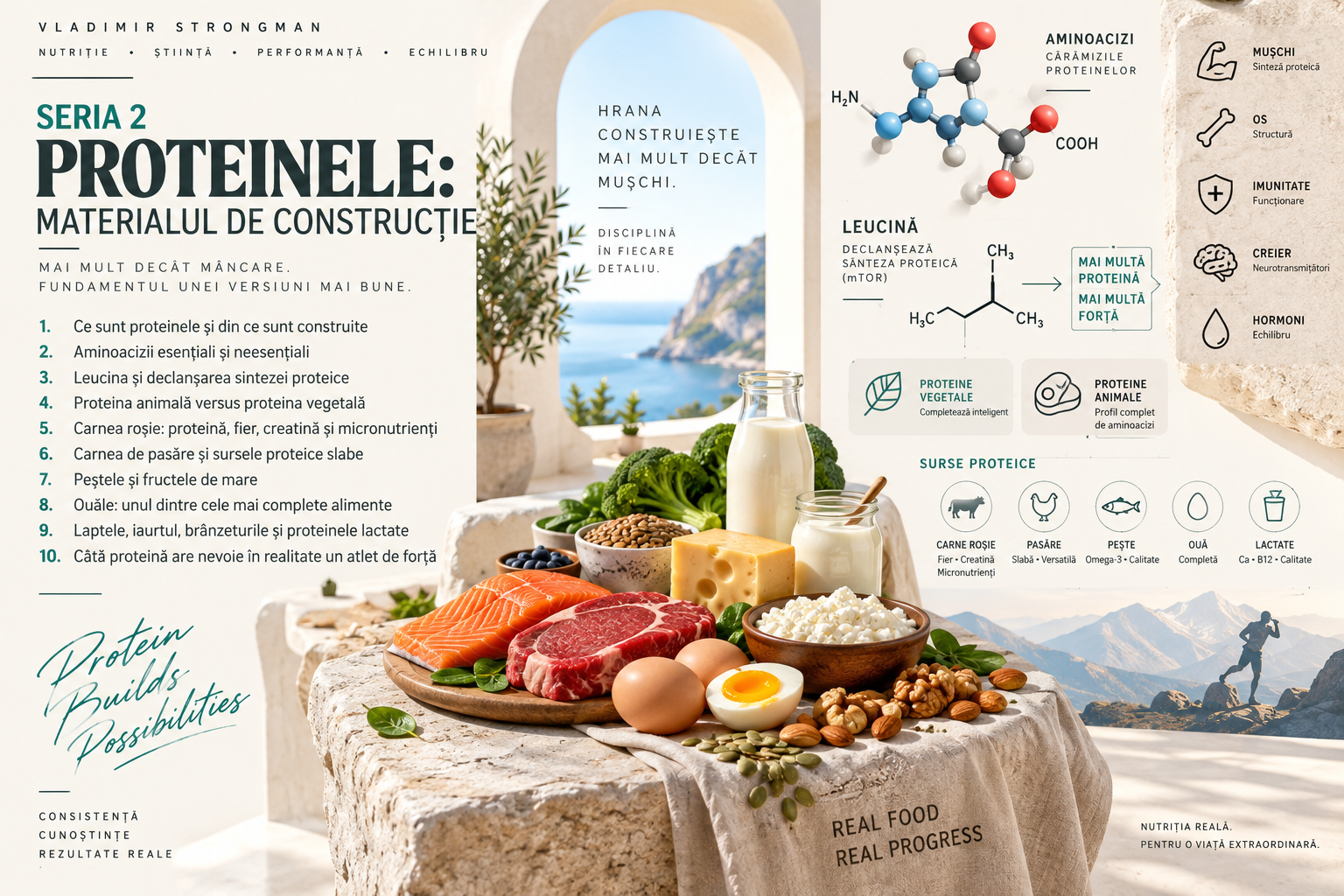
Milk and dairy products form one of the most versatile food families for athletes. From the same raw material come very different products: whole or skim milk, yogurt, kefir, fresh and aged cheeses, whey concentrate, protein isolate and casein. Changes in water, fat, fermentation and processing profoundly alter the practical value of each product.
For strongman athletes, dairy is interesting because it combines complete protein, leucine, calcium, phosphorus and, depending on the product, carbohydrate or fat. Whey supplies amino acids quickly, casein digests more slowly, while yogurt and cheese cover a wide range of textures and calorie densities.
This episode follows milk, yogurt, cheese and dairy proteins from basic structure to use around training. It separates whey from casein, lactose intolerance from milk-protein allergy, fermentation from probiotic marketing, and nutrient density from the vague label dairy.
1. Dairy is a family, not a single food
A glass of milk, Greek yogurt, aged cheese and a scoop of whey all come from the same general source, yet their composition differs greatly. Water, fat, lactose, sodium and protein concentration can vary enormously, so each dairy food should be assessed on its own.
2. Milk combines water, protein, carbohydrate and fat
Milk is mostly water, but it also contains protein, lactose, minerals and variable amounts of fat. This makes it both a food and a fluid. Depending on the type, milk can function as a moderate energy source or as a relatively lean protein base.
3. Milk protein is mainly casein and whey
Milk protein is dominated by caseins, while a smaller fraction consists of whey proteins. Both are complete proteins, but they have different digestive and technological properties. This helps explain why milk can become both dense cheese and highly soluble protein powder.
4. Dairy proteins are complete
Both whey and casein provide all essential amino acids required for human protein synthesis. Their amino-acid profiles and high digestibility make them effective for maintaining and building muscle when total protein and energy intake are adequate.
5. Leucine is one of dairy protein's major strengths
Dairy proteins, especially whey, are rich in leucine. A sufficient serving can provide a strong signal for initiating muscle protein synthesis. Leucine is the trigger rather than the entire construction site, so the remaining essential amino acids are also required.
6. Whey is a rapidly digested protein
Whey proteins move through digestion relatively quickly and produce a rapid rise in circulating amino acids. This kinetic profile explains their popularity after training. Speed does not make whey universally superior, but it does make it highly convenient when time and digestion matter.
7. Casein digests more slowly
Casein forms a structure in the stomach that slows gastric emptying and amino-acid release. The result is more prolonged availability. This characteristic is why casein is often used between meals or before sleep.
8. Fast versus slow does not mean good versus bad
Whey and casein are not rivals. One produces a rapid amino-acid rise, while the other provides a more prolonged release. In real diets they can complement each other, and milk naturally contains both fractions.
9. Milk can effectively stimulate muscle protein synthesis
Milk supplies complete protein and leucine within a food matrix that also contains carbohydrate and minerals. Sports-nutrition research shows that it can support the anabolic response to resistance exercise, although athletes do not need milk specifically if other quality proteins are preferred.
10. Whole and skim milk contain the same protein families
The major difference between whole and skim milk is fat and therefore calorie density. The protein families remain the same. Whole milk can be useful in a calorie surplus, while lower-fat milk can provide similar protein with less energy during a deficit.
11. Lactose is the main carbohydrate in milk
Lactose is a disaccharide made of glucose and galactose. Efficient absorption requires the intestinal enzyme lactase to split it. Lactose content varies widely across dairy products, with milk containing more and many aged cheeses containing very little.
12. Lactose intolerance appears when lactose digestion is insufficient
When lactase activity is low, some lactose reaches the colon and is fermented by bacteria. Bloating, gas, cramps or diarrhea may occur. Severity depends on dose and individual tolerance, so intolerance does not necessarily mean every trace of lactose causes symptoms.
13. Lactose intolerance is not the same as milk allergy
Intolerance is a digestive problem involving a sugar, whereas allergy is an immune response to milk proteins. The mechanisms and risks are entirely different. Someone with milk-protein allergy can react even to lactose-free dairy products.
14. Yogurt is milk transformed by fermentation
In yogurt, lactic-acid bacteria convert part of the lactose into lactic acid. Fermentation changes flavor, texture and sometimes digestive tolerance. Protein remains valuable, while fat content, added sugar and concentration create major differences between products.
15. Yogurt may be better tolerated than milk
Some people with limited lactose digestion tolerate yogurt better than milk. Fermentation reduces part of the lactose and live cultures may assist digestion. Practical individual tolerance matters more than the label alone.
16. Greek yogurt concentrates protein
Straining removes some liquid and produces a denser food with more protein per unit of volume. Low-fat versions provide substantial protein for relatively few calories, while full-fat versions supply more energy. Both can serve different athletic goals.
17. Skyr is protein-dense and often low in fat
Skyr is a concentrated fermented dairy product known for high protein and low fat in many commercial versions. It works well as a snack, breakfast or quick meal base. Exact composition depends on the brand and added ingredients.
18. Kefir involves more complex fermentation
Kefir is produced by communities of bacteria and yeasts that modify lactose and generate organic acids and other metabolites. It can be well tolerated by some people and provides protein, calcium and fluid. Microbial composition varies substantially among products.
19. Probiotic does not automatically mean guaranteed benefit
Probiotic effects are strain-, dose- and context-dependent. A fermented food or a product with live cultures does not guarantee a specific clinical benefit. For most athletes, the basic value of yogurt and kefir remains protein, calcium, fluid and tolerability.
20. Cheese is concentrated milk
Cheesemaking removes much of the water and whey, concentrating casein, fat and minerals. Cheese can therefore provide substantial protein in a small volume, but also significant calories and sodium. Concentration is both its advantage and the reason portion size matters.
21. Cottage cheese is a practical slow protein
Cottage cheese provides mainly casein along with calcium and phosphorus. Lower-fat versions can have an excellent protein-to-calorie ratio and combine easily with fruit, vegetables or cereals. Sodium varies substantially between products.
22. Quark and fresh cheeses can concentrate protein without much fat
Quark and other low-fat fresh cheeses can provide large amounts of protein in a moderate volume. They are useful between meals or in the evening when a slower protein source is convenient. Labels still matter because fat and added sugar vary by product.
23. Aged cheeses are dense in protein, calories and sodium
Parmesan, cheddar and other aged cheeses can contain substantial protein per 100 grams, but reduced water also concentrates fat and sodium. For a strongman in a calorie surplus, this density can be useful. During a deficit, portion size becomes especially important.
24. Mozzarella occupies a middle ground
Mozzarella contains more water than many hard cheeses and can have a more moderate calorie density, especially in lower-fat versions. It provides protein and calcium and is easy to combine with carbohydrate and vegetables. The specific product still matters.
25. Ricotta has a history tied to whey
Traditional ricotta is made by recovering proteins left in whey after cheesemaking. Modern formulations vary, but the example shows that whey is not merely a sports supplement powder. It is a natural milk fraction with distinct protein properties.
26. Calcium is one of dairy's major micronutrient strengths
Milk, yogurt and many cheeses provide calcium in a form that is well utilized by the body. Calcium is important for bone structure, cellular signaling and muscle contraction. For athletes, skeletal health and neuromuscular function are components of performance rather than separate issues.
27. Phosphorus works alongside calcium
Dairy foods are also important phosphorus sources. Phosphorus contributes to bone structure, phospholipids and energy molecules such as ATP. Deficiency is uncommon in mixed diets, but the calcium-phosphorus combination contributes to dairy's mineral density.
28. Vitamin B12 is well represented in many dairy foods
Milk, yogurt and cheese can contribute meaningfully to vitamin B12 intake, which is required for normal blood-cell formation and nervous-system function. Content varies among products, and total dietary intake remains the relevant measure.
29. Riboflavin supports energy metabolism
Dairy provides riboflavin, or vitamin B2, which is used in coenzymes involved in energy metabolism. These micronutrients form part of the body's biochemical infrastructure, but consuming more than required does not create extra energy in the absence of deficiency.
30. Dairy iodine can be meaningful, but it varies
In many countries, milk and dairy contribute to iodine intake, although levels depend on animal feed and production practices. Iodine is essential for thyroid hormones and metabolism. It is not correct to assume the same concentration across all products and regions.
31. Potassium contributes to neuromuscular function
Milk and yogurt contribute potassium, which is important for membrane potential and muscle contraction. They are not the only major sources, and fruit, vegetables and potatoes remain essential. Dairy can nevertheless add potassium to an already protein-rich meal.
32. Sodium differs enormously among milk, yogurt and cheese
Plain milk contains relatively little sodium compared with many aged cheeses. Salt is often used in cheesemaking for flavor, preservation and texture. Athletes should interpret sodium in the context of hydration, sweat losses, blood pressure and total daily intake.
33. Vitamin D in dairy often depends on fortification
In some countries milk is routinely fortified with vitamin D, while in others it is not. Two apparently similar products may therefore differ greatly. The nutrition label is more informative than assuming all milk is naturally rich in vitamin D.
34. Dairy fat contains a substantial saturated-fat fraction
Full-fat dairy and fatty cheeses can provide meaningful amounts of saturated fat. Effects on blood lipids should be interpreted within the context of the total diet, body composition and individual predisposition. A nutritious food can still be consumed in excessive quantities.
35. The dairy matrix matters, not just grams of fat
Cheese, yogurt and butter do not necessarily produce identical metabolic effects simply because all contain dairy fat. Food structure, fermentation, calcium and nutrient distribution can modify physiological responses. Real nutrition is more complex than isolating one macronutrient.
36. Milk contributes to hydration
Milk contains substantial water, carbohydrate, protein and electrolytes, so it can contribute to rehydration after training. It does not automatically replace water or purpose-built electrolyte drinks in every situation, especially when fluid requirements are very high.
37. Chocolate milk can combine protein and carbohydrate for recovery
Chocolate milk and similar carbohydrate-containing dairy drinks can provide both protein and carbohydrate for recovery. The advantage is simplicity and palatability. The drawback can be unnecessary added sugar when additional energy is not required.
38. Lactose contributes carbohydrate and energy
Milk carbohydrate can contribute to energy intake and glycogen restoration, especially when combined with other carbohydrate sources. For a strongman with high training volume, lactose is not simply a sugar to avoid but an energy source to account for.
39. Before training, dairy should be chosen according to tolerance
Low-fat yogurt or a whey shake may be easy to tolerate before exercise, whereas a large amount of whole milk or fatty cheese can feel heavy for some people. Fat, lactose, food volume and time before training should be individualized.
40. After training, dairy offers an unusually practical protein combination
Milk, yogurt, whey and combinations of them supply essential amino acids and pair easily with carbohydrate. Convenience matters for recovery, but athletes do not have to consume dairy immediately after training if total daily protein is well structured.
41. Casein before sleep can support overnight amino-acid availability
Casein or casein-rich foods such as cottage cheese and some yogurts are often used in the evening. Their slower digestion can prolong amino-acid availability overnight. This benefit should be integrated into total daily protein intake rather than treated as a magical anabolic window.
42. Whey is processed, but processing does not make it inferior
Whey protein is separated and concentrated from milk through technological processing. The resulting product can have very high protein purity. Being powdered and processed does not erase its nutritional value; composition matters more than how natural the packaging looks.
43. Whey concentrate and whey isolate are not the same product
Whey concentrate usually retains somewhat more lactose and fat, while isolate contains a higher proportion of protein and fewer non-protein components. For people who tolerate concentrate well, the practical difference may be small. Isolate is useful when lower lactose and tighter calorie control are priorities.
44. Whey hydrolysate is partially pre-digested, but not automatically superior
In hydrolysates, some protein bonds have already been broken into smaller peptides. This can alter digestion speed and tolerance, but for most athletes a standard high-quality whey product is sufficient. A higher price does not guarantee better muscle gain.
45. Milk powder retains much of milk's nutritional value
Removing water turns milk into a concentrated and shelf-stable ingredient. Protein, lactose and minerals largely remain. For athletes with very high energy requirements, milk powder can increase the calorie and protein density of drinks or foods without adding much volume.
46. Pasteurization improves safety without making milk nutritionally dead
Pasteurization reduces pathogenic microorganisms through controlled heat treatment. Protein, calcium and most major nutrients remain available. The idea that pasteurized milk has lost its nutritional value is not supported by its composition.
47. Raw milk carries real microbiological risk
Unpasteurized milk can transmit pathogenic microorganisms. For an athlete, gastrointestinal infection is not a minor inconvenience, particularly before competition. The nutritional benefits of milk can be obtained without taking this avoidable risk.
48. Lactose-free milk still contains dairy protein
In lactose-free milk, lactose is usually split into glucose and galactose. The proteins, calcium and much of the remaining nutrient profile stay similar. For people with lactose intolerance, this can preserve the advantages of dairy while reducing symptoms.
49. Plant drinks are not automatically nutritionally equivalent to milk
Soy, oat, almond and rice drinks can be useful, but their protein, calcium and micronutrient profiles differ substantially. Some are well fortified and protein-rich, while others contain very little protein. Comparison should be based on the label rather than appearance.
50. Fermentation can influence the relationship between dairy and the microbiome
Yogurt and kefir provide microorganisms and fermentation metabolites. Microbiome research is active, but responses are complex and individual. Not every yogurt produces the same effect, and benefits should not be reduced to the generic slogan good for the gut.
51. High-protein dairy can contribute to satiety
Greek yogurt, skyr, cottage cheese and other protein-dense dairy foods can support satiety. This is useful during a calorie deficit when hunger may threaten adherence. The effect still depends on portion size, fat, added sugar and the rest of the meal.
52. During a calorie deficit, low-fat dairy becomes a precision tool
Skim milk, low-fat Greek yogurt, skyr and lower-fat cheeses allow high protein intake with fewer calories. For athletes reducing body mass while trying to preserve muscle, this protein-to-calorie ratio can be extremely useful.
53. During a surplus, full-fat dairy and cheese raise energy density
Whole milk, full-fat yogurt and aged cheeses can provide substantial calories in moderate volume. For a strongman with very high energy needs, this can be practical. Energy density still needs to be controlled so the surplus does not become unnecessarily large.
54. For a very large body, liquid dairy can make calorie targets easier
When solid-food volume becomes difficult to tolerate, milk and whey-based shakes can add protein and energy without additional chewing. This logistical strategy can matter for very heavy athletes. Caloric liquids should still be used deliberately because they are easy to overconsume.
55. Digestive tolerance may matter more than theory
A food can look perfect on paper but be practically useless if it repeatedly causes bloating or discomfort. Athletes can adjust the type of dairy, lactose load, fat content and timing. Nutrition has to work in the real body rather than only in a spreadsheet.
56. Dairy is useful during travel, but the cold chain matters
Whey powder is easy to transport, and some UHT dairy products are shelf-stable before opening. Yogurt and cheese require appropriate refrigeration. For athletes traveling to competitions, food logistics can determine whether a nutrition plan is actually executable.
57. Cost per gram of protein varies enormously across dairy foods
Milk, plain yogurt, skyr, premium cheeses and protein powders can have very different costs. For athletes consuming large amounts of protein, budget matters. The most sustainable approach is often a mix of inexpensive staple foods and convenient specialty products.
58. Claims about mucus, inflammation and dairy need context
The claim that dairy universally causes inflammation or excessive mucus is overly simplistic. Some people have allergies, intolerances or specific digestive responses, but these should not be generalized to everyone. Individual assessment and clinical evidence are more useful than slogans.
59. For strongman, dairy covers nearly the entire energy-density spectrum
From whey isolate and fat-free yogurt to whole milk and dense cheese, the same food family can serve opposite nutritional goals. This flexibility allows protein, carbohydrate and fat intake to be adjusted without sacrificing variety.
60. Conclusion: dairy is a protein platform, not a single food
Milk, yogurt, cheese, whey and casein provide complete proteins, calcium and a broad range of energy densities and digestive speeds. For strength athletes, the real value comes from selecting the right product for the right goal, respecting individual tolerance and integrating dairy into a varied diet.
The first key point is that dairy proteins are complete, highly digestible and rich in essential amino acids, while whey and casein have different but complementary digestive speeds.
The second point is that milk, yogurt and cheese are not nutritionally identical: water, fat, lactose, sodium and protein concentration change dramatically between products.
The third point is that lactose intolerance and milk-protein allergy are entirely different problems, and lactose-free dairy still contains dairy proteins.
The fourth point is that fermentation can alter digestibility and microbial characteristics, but the word probiotic does not guarantee a specific benefit.
Finally, for strongman athletes, dairy offers a full spectrum of options: very lean proteins for cutting, calorie-dense foods for mass gain, and fast or slow proteins depending on timing.
Sources and recommended reading
1. Jäger R et al. International Society of Sports Nutrition Position Stand: Protein and Exercise. Principles of protein intake, distribution and adaptation to training.
2. Morton RW et al. Meta-analyses on protein supplementation, resistance training and skeletal-muscle hypertrophy.
3. Boirie Y et al. Classic research on fast and slow proteins, whey, casein and amino-acid kinetics.
4. USDA FoodData Central. Composition data for milk, yogurt, cheeses and dairy-protein products.
5. FAO. Dietary protein-quality assessment, indispensable amino acids and digestibility.
6. Literature on lactose digestion, lactase deficiency and tolerance of fermented dairy foods.
7. Literature on calcium, phosphorus, vitamin B12 and the role of dairy in bone health.
8. Sports-nutrition literature on milk, whey, casein, recovery and muscle protein synthesis.
9. Food-safety literature on pasteurization, raw milk and microbiological control of dairy products.
10. Hall JE. Guyton and Hall Textbook of Medical Physiology; Nelson DL, Cox MM. Lehninger Principles of Biochemistry. Foundations of digestion, metabolism and physiology.
Editorial note: this article is educational. People with milk-protein allergy, severe lactose intolerance, gastrointestinal disease or specific medical recommendations should individualize dairy intake according to clinical context.
More From The Journal

Training
The Science of Strongman Training - Episode X: Competition Programming
How to build a complete Strongman competition preparation block: calendar, events, volume, intensity, specificity, simulations, autoregulation, tapering and fatigue management.

Training
The Science of Strongman Training - Episode IX: Peaking
Peaking in Strongman: how to turn months of training into maximal competition performance by reducing fatigue, preserving adaptations and managing specificity.