
Nutrition
Series: Proteins, the Building Material - Episode 8: Eggs: One of the Most Complete Foods
September 10, 2026
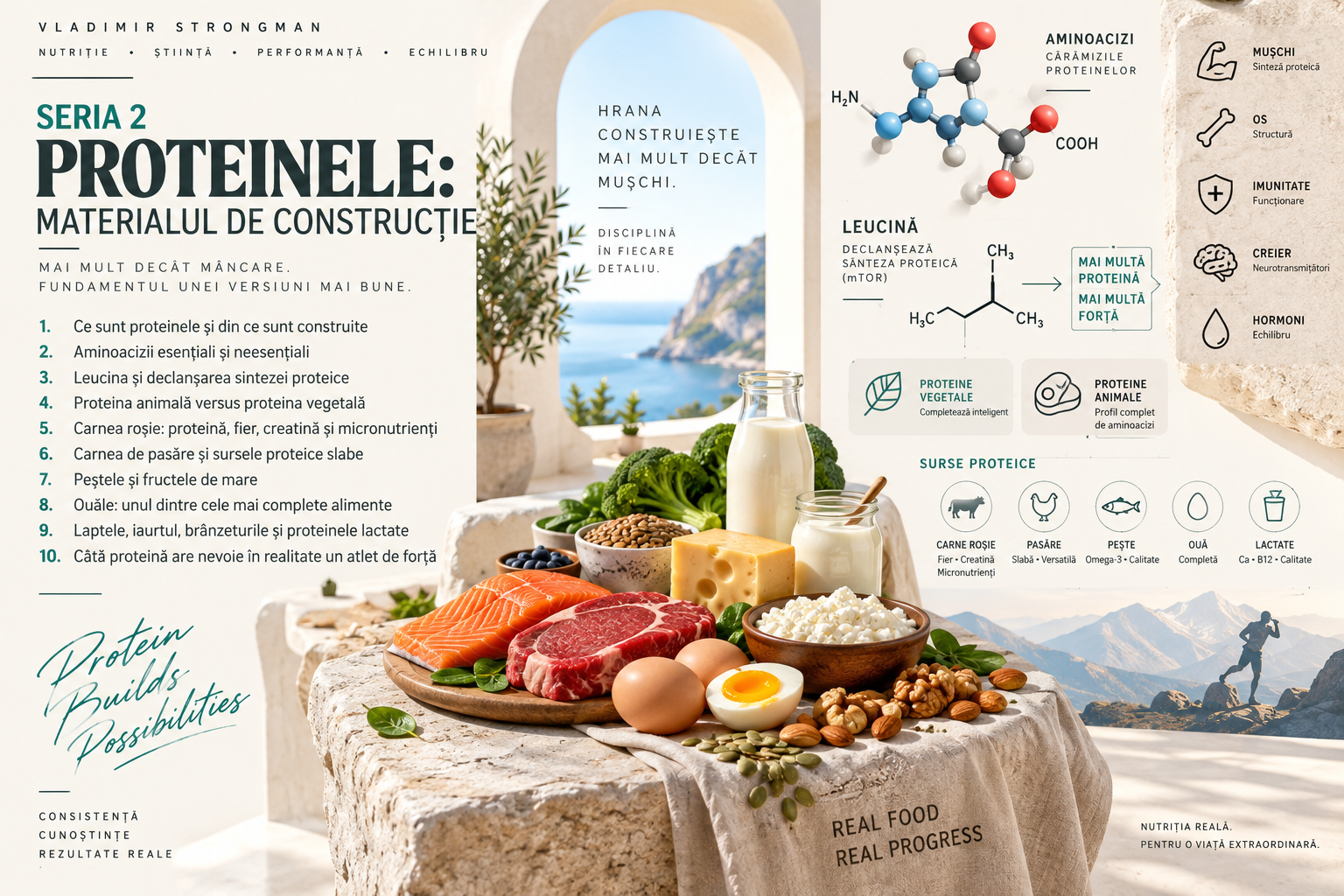
Few foods are simultaneously as ordinary, as versatile and as heavily debated as the egg. Nutritionally, an egg concentrates high-quality protein, fats, vitamins, minerals, choline and other bioactive compounds into a small volume. This nutrient density is why eggs are often described as one of the most complete foods.
For strength athletes, eggs offer two major advantages: they provide complete protein and allow calorie intake to be adjusted easily through the ratio of whole eggs to egg whites. An egg-based breakfast can be highly energy-dense or relatively lean depending on the number of yolks, cooking method and accompanying foods.
This episode separates mythology from physiology: what the white provides, what the yolk provides, how egg protein is digested, the roles of leucine and essential amino acids, what dietary cholesterol means, how cooking changes the egg and why the term complete food should be understood carefully rather than literally.
1. The egg is a complete biological system built for development
An egg contains the nutrients required to support early embryonic development. That is why it combines proteins, lipids, phospholipids, vitamins and minerals in a compact structure. For humans, this translates into nutrient density, not into the claim that an egg literally contains every nutrient we need.
2. Egg protein is complete
Egg proteins provide all essential amino acids required for human protein synthesis. Their amino-acid profile is balanced and digestibility is high when eggs are prepared appropriately. This is why egg protein is frequently used as a reference point in discussions of dietary protein quality.
3. The white is not the only part that contains protein
A large share of the egg's protein is found in the white, but the yolk also contributes protein. Removing the yolk reduces fat and calories, but simultaneously removes much of the vitamins, minerals, phospholipids and choline. A whole egg is nutritionally different from isolated egg white.
4. Egg white is a very lean protein source
Egg white consists mainly of water and protein and contains very little fat. For athletes who want high protein intake with relatively few calories, egg whites can be extremely useful. They allow the protein content of a meal to rise without total energy increasing proportionally.
5. The yolk is the micronutrient center of the egg
Most of the egg's lipids, choline and fat-soluble vitamins are found in the yolk. Carotenoids, phospholipids and a substantial share of the minerals are located there as well. A diet that relies only on egg whites therefore loses many of the characteristics that make the whole egg nutritionally interesting.
6. Leucine contributes to muscle-protein-synthesis signaling
Egg protein contains meaningful amounts of leucine. A sufficient serving can contribute to reaching the essential-amino-acid threshold that stimulates muscle protein synthesis. Leucine does not work alone, however; building new protein requires the complete set of indispensable amino acids.
7. Digestibility increases substantially with cooking
Proteins in raw eggs are less accessible to digestive enzymes than proteins in cooked eggs. Heat denatures protein structures and generally makes them easier to digest. In practical terms, cooked eggs provide more efficient protein utilization than regularly consuming raw eggs.
8. Raw eggs are not more anabolic
The image of the athlete drinking raw eggs is more cultural than physiological. Raw protein is not absorbed better, and microbiological risk is higher. Raw egg white also contains avidin, a protein that can bind biotin; cooking greatly reduces this issue.
9. Whole eggs may produce a different anabolic response than isolated egg white
Some studies have observed a greater muscle-protein-synthesis response after whole eggs than after an equivalent amount of protein from egg whites under specific experimental conditions. The explanation is not fully resolved and may involve the food matrix, lipids, phospholipids and micronutrients in the yolk. This does not make egg whites ineffective.
10. Choline is one of the signature nutrients of the yolk
Egg yolk is an important source of choline, a nutrient involved in membrane structure, lipid transport and acetylcholine synthesis. Acetylcholine is an essential neurotransmitter for neuromuscular function, but dietary choline does not translate directly into an immediate increase in strength.
11. The yolk provides phospholipids
Phospholipids are essential components of cell membranes, and egg yolk contains phosphatidylcholine and other molecules from this family. They contribute to the biological structure of the food and to choline intake. The egg is therefore more than a simple combination of protein and fat.
12. Vitamin A is concentrated in the yolk
Egg yolk contributes vitamin A, which is important for vision, cellular differentiation and immune function. Content varies according to the hen's diet and production system. As with other fat-soluble vitamins, adequacy is the goal rather than unlimited accumulation.
13. Vitamin D is present in eggs, but the amount varies
Eggs can contribute to vitamin D intake, and the yolk is the relevant part. The amount depends on the hen's feed and exposure, and some eggs are enriched through feeding strategies. Eggs can help, but they should not be treated as the only solution to vitamin D deficiency.
14. Vitamin E contributes to oxidative protection
The yolk contains vitamin E, a fat-soluble antioxidant that helps protect membrane components from oxidation. Levels can vary with the bird's diet. For athletes, adequate dietary antioxidants matter, but extreme intakes are not synonymous with better recovery.
15. Riboflavin is well represented
Eggs provide riboflavin, or vitamin B2, used in coenzymes involved in energy metabolism. A high-energy sports diet constantly engages these biochemical pathways, but consuming more than required does not create extra energy in the absence of deficiency.
16. Vitamin B12 is present in the yolk
Eggs contribute to vitamin B12 intake, which is required for normal blood-cell formation and nervous-system function. The amount per egg is moderate, so the total diet remains important. Eggs can complement other animal sources but do not have to serve as the sole source.
17. Selenium is one of the important minerals in eggs
Eggs can provide selenium, a mineral incorporated into selenoproteins involved in oxidative control and thyroid-hormone metabolism. Content depends on poultry feed. Adequate intake matters, but selenium has a relatively narrow range between adequacy and excessive intake.
18. Iodine can vary widely between eggs
Iodine content depends greatly on the hen's feed. In some regions, eggs can contribute meaningfully to iodine intake, which is essential for thyroid-hormone synthesis. Production differences make it difficult to assign one universal iodine value to every egg.
19. Phosphorus is present in useful amounts
Phosphorus in eggs contributes to total intake required for bone, membranes and energy metabolism. It is abundant in mixed diets and deficiency is uncommon. Its presence nevertheless reinforces the idea that an egg is a nutrient matrix rather than simply a protein number.
20. Iron is found mainly in the yolk
The yolk contains iron, although its absorption is not identical to heme iron from meat. Eggs can contribute to intake, but an athlete with iron deficiency should not rely on them alone. Diagnosis and correction of deficiency require laboratory testing and clinical context.
21. Zinc is present, but not at the levels found in oysters or some meats
Eggs contribute zinc to the daily diet, but they are not among the most concentrated sources. Zinc participates in many enzymes, immunity and synthesis processes. The egg's strength is the combination of many nutrients in an accessible food, not dominance in every micronutrient.
22. Lutein and zeaxanthin are found in the yolk
These carotenoids accumulate in ocular tissues and are studied for their role in visual health. Egg yolk provides lutein and zeaxanthin in a lipid matrix that can facilitate absorption. A deeply colored yolk may reflect carotenoids in the feed, but it is not a perfect measure of total nutritional quality.
23. The yolk contains fat, but not only saturated fat
Yolk lipids include monounsaturated, polyunsaturated and saturated fats. Their proportions depend partly on feeding. Describing eggs simply as a fatty food therefore says very little. Total amount, fatty-acid profile and the context of the whole diet matter.
24. Dietary cholesterol is concentrated in the yolk
Eggs became famous in cholesterol debates because the yolk contains a meaningful amount. Dietary cholesterol is not identical to blood cholesterol, however. The body regulates its own synthesis, and individual responses to dietary intake differ substantially.
25. Blood cholesterol cannot be predicted from egg count alone
The lipid profile is influenced by genetics, body weight, insulin sensitivity, saturated-fat intake, fiber, total energy and other variables. Two people eating the same number of eggs may respond differently. Actual laboratory measurements are more informative than universal rules.
26. There is no magical number of eggs that fits everyone
The question “how many eggs can I eat per day?” has no single answer without context. A healthy adult, a strength athlete with very high energy intake and a person with dyslipidemia or diabetes may require different approaches. The total diet and individual biological markers matter more than a rigid number.
27. Combining whole eggs and egg whites gives athletes flexibility
An athlete can use two or three whole eggs for micronutrients and flavor, then add egg whites to raise protein without many additional calories. This strategy preserves the value of the yolk while allowing control over energy density. It is not mandatory, but it is highly practical.
28. Eggs can be very satiating for their volume
The protein and fat in eggs can contribute to satiety, especially when the meal also includes vegetables or other fiber-rich foods. During a calorie deficit, an egg-based breakfast may be easier for some people to sustain than a meal dominated by refined foods.
29. In a calorie surplus, whole eggs raise energy density efficiently
For a strongman with high energy requirements, whole eggs provide protein and energy in a relatively small volume. They combine easily with bread, rice, potatoes or other carbohydrate sources to build denser meals. Total surplus still needs monitoring regardless of how nutritious the food is.
30. During a calorie deficit, egg whites become highly efficient
Adding egg whites increases volume and protein without adding much fat. For someone who needs to maintain high protein intake while reducing calories, this is one of the simplest culinary strategies. Yolks can remain in the diet in an amount that fits the energy budget.
31. Eggs contain no dietary fiber
This is where the limits of the phrase complete food become obvious. Eggs do not provide dietary fiber, and their vitamin C content is negligible. That is why an egg-based meal benefits from vegetables, fruit, whole grains or other plant foods. Dietary completeness comes from combination.
32. Eggs contain very little carbohydrate
Eggs are primarily protein and fat foods rather than carbohydrate sources. For athletes who need glycogen and high training volume, the meal should be completed with carbohydrate. Eggs with bread, oats, rice or potatoes can build a much more performance-oriented meal.
33. Eggs before training depend on the amount of fat
A meal containing many yolks and additional fats can slow gastric emptying and may feel heavy close to exercise. A combination of more egg whites, a few whole eggs and carbohydrates may be easier to manage. Individual tolerance and the time remaining before training are decisive.
34. Eggs after training can provide essential amino acids
After exercise, eggs can serve as an effective protein source for recovery and muscle remodeling. If the session has depleted substantial glycogen, pairing them with carbohydrates is useful. There is no requirement to eat eggs immediately after the last set; total daily protein intake remains fundamental.
35. On competition day, familiarity matters more than the food's reputation
Some athletes tolerate eggs extremely well before competition, while others find them heavy. A large fatty omelet does not automatically become ideal just because eggs are nutritious. Competition-day food should be familiar, with meal size and fat content adjusted to digestive tolerance.
36. Boiling is one of the most predictable preparation methods
Boiled eggs require no added cooking oil and are easy to portion and transport. The degree of cooking can be adjusted to preference while respecting food-safety guidance. For athletes who prepare meals in advance, boiled eggs are among the simplest logistical options.
37. Omelets allow precise control of macronutrients
An omelet can combine whole eggs, egg whites, vegetables and controlled amounts of cheese or lean meat. This allows the meal to change dramatically from one day to the next. Oils, butter and cheese can nevertheless raise calories quickly if they are not accounted for.
38. Fried eggs are not bad, but cooking fat matters
The calorie difference between a boiled egg and a fried egg comes mainly from added fat. A small amount of oil can fit perfectly well into a balanced diet, whereas generous frying in butter or oil can substantially increase meal energy density. Method and quantity need to be considered together.
39. Baking and oven dishes increase variety
Frittatas, adapted quiches and baked egg dishes allow several portions to be prepared at once. They can be excellent for meal prep. Their nutritional profile, however, depends heavily on added ingredients: the same egg base can become either relatively lean or extremely calorie-dense.
40. Pasteurized liquid egg whites are a practical tool
Pasteurized egg-white products make it easy to measure large amounts without manually separating eggs. They are particularly useful for athletes with high protein requirements. Labels should be checked for added ingredients, and the product must be stored according to instructions after opening.
41. Egg powder is convenient, but it is not identical to fresh eggs
Eggs can be dried into egg-white or whole-egg powders for industrial, baking or sports-nutrition use. The protein remains valuable, but flavor, texture and some functional properties differ. The final product should be evaluated by its composition rather than by the image of a fresh egg.
42. Omega-3-enriched eggs can have a different fatty-acid profile
Changing the hen's feed can alter the fatty-acid composition of the yolk. Omega-3-enriched eggs may provide more ALA and, in some products, more DHA. They are still not equivalent to fatty fish as a source of EPA and DHA.
43. Shell color does not determine nutritional quality
White and brown eggs generally come from different breeds, and shell color does not automatically indicate superior nutrition. Real differences are influenced more by feed, production conditions and individual composition. Color is mainly a biological and commercial characteristic.
44. Yolk color mainly reflects pigments in the feed
A deeply orange yolk does not automatically mean the egg contains twice as much protein or is more natural. Carotenoids in feed can change yolk color. Nutritional differences may exist, but they cannot be inferred completely from color intensity alone.
45. Organic, free-range and cage-free mainly describe production systems
These labels may have meaning for animal welfare, outdoor access or feed type depending on local regulations. They do not automatically guarantee huge differences in protein or micronutrients. Ethical and production criteria should be separated from strictly nutritional claims.
46. Egg size changes the serving, not the fundamental food quality
A larger egg generally contains more white and yolk and therefore more calories and protein per egg. Size matters when calculating daily intake. Two extra-large eggs are not nutritionally identical to two small eggs even though they are the same type of food.
47. Food safety remains essential
Eggs can be contaminated with Salmonella, although risk varies by country, production system and distribution chain. Appropriate cooking, storage according to local guidance and good hand and utensil hygiene reduce risk. For athletes, food poisoning before competition costs far more than any theoretical advantage of raw eggs.
48. Cracked or poorly stored eggs require caution
The shell is an imperfect barrier, and cracks can increase contamination risk. Improper storage temperatures can permit bacterial growth. Storage rules differ between countries, but the principle is the same: reliable sourcing and appropriate temperature control matter.
49. Egg allergy is a real medical issue
Egg proteins can trigger allergic reactions in susceptible people. Allergy is more common in childhood but can persist. A person with confirmed egg allergy does not need eggs to build a high-quality protein diet; many animal and plant alternatives exist.
50. Egg intake should not be analyzed separately from the rest of breakfast
Two eggs served with vegetables, whole-grain bread and fruit are not the same meal as two eggs with bacon, sausages, butter and refined foods. Observational studies can be influenced by such patterns. In real life, the dietary context in which eggs appear matters enormously.
51. For a heavy strongman, eggs can become an efficient calorie source
An athlete weighing 120-150+ kg may need large, energy-dense meals. Whole eggs provide protein and fat without excessive food volume and combine easily with carbohydrates. During mass-gain phases, this logistical advantage can matter almost as much as the micronutrient profile.
52. For weight control, the yolk-to-white ratio is a simple lever
When calories need to be reduced, an athlete can keep a few whole eggs and increase the proportion of egg whites. Protein stays high, meal volume can rise and fats remain controlled. This is one of the clearest demonstrations of the egg's culinary flexibility.
53. Eggs are relatively inexpensive for their nutrient density
Price varies with country, production system and season, but eggs are often an accessible source of high-quality protein. For athletes consuming large amounts of protein, cost per serving matters. A performance diet must also be financially sustainable.
54. Eggs are easy to transport and integrate into meal prep
Boiled eggs can be prepared in advance, portioned and included in cold meals. Omelets and frittatas can be divided into multiple servings. For athletes with busy schedules, food logistics are part of performance, and eggs excel in versatility.
55. Eggs combine extremely well with carbohydrates
Eggs provide very little carbohydrate, so pairing them with bread, oats, rice or potatoes can build a meal better suited to strength training. Carbohydrates support glycogen and training volume, while eggs provide amino acids needed for recovery.
56. Vegetables complete what eggs do not provide
Peppers, tomatoes, spinach, mushrooms, onions and other vegetables add fiber, potassium, vitamin C and phytonutrients. An omelet with vegetables is nutritionally more complete than eggs alone. This is the logic of a good diet: foods complement one another.
57. Eggs are not a superfood that repairs a poor diet
The nutrient density of eggs is impressive, but it cannot compensate for the absence of fiber, vegetables, fruit, fish, dairy or other nutrient sources. No single food can transform an unbalanced dietary pattern into a good one. Real value appears in context.
58. Egg protein is valuable, but variety still matters
Athletes can obtain high-quality protein from eggs, meat, fish, dairy and plant sources. Rotating them diversifies micronutrients and reduces monotony. Eggs can be a central part of the diet without becoming the only protein consumed.
59. For strongman, eggs are an unusually precise adjustment tool
More yolks mean more energy and more micronutrients; more egg whites mean more protein with few calories. This modularity is unusual in such a simple food. Depending on the goal, the same basic meal can be adjusted for mass gain, maintenance or a deficit.
60. Conclusion: the egg is nearly complete, but the diet must be truly complete
Eggs combine complete protein, fats, choline, vitamins, minerals and bioactive compounds in a compact, accessible and versatile food. The yolk carries much of the nutrient density, while the white provides protein precision. For strongman, combining the two is more useful than extremes such as yolks only or whites only.
The first key point is that eggs provide complete protein with high digestibility after cooking, and both the white and yolk contribute to total protein intake.
The second point is that the yolk is not merely fat and cholesterol: it contains choline, phospholipids, fat-soluble vitamins, carotenoids and numerous minerals.
The third point is that the effect of dietary cholesterol differs between individuals and should be interpreted within the context of the total diet and actual blood-lipid markers.
The fourth point is that raw eggs offer no anabolic advantage and come with poorer protein digestibility and greater microbiological risk than appropriately cooked eggs.
Finally, for strongman athletes, the ratio of whole eggs to egg whites allows very precise control of protein, fat and calories according to the current goal.
Sources and recommended reading
1. Jäger R et al. International Society of Sports Nutrition Position Stand: Protein and Exercise. Principles of protein intake, essential amino acids and adaptation to training.
2. FAO. Dietary Protein Quality Evaluation in Human Nutrition. Digestibility, indispensable amino acids and evaluation of dietary protein quality.
3. USDA FoodData Central. Composition data for whole eggs, egg whites, yolks, vitamins, minerals, fatty acids and cholesterol.
4. van Vliet S et al. Research on the muscle-protein-synthesis response to whole eggs compared with egg whites.
5. Evenepoel P et al. Research on digestibility and utilization of raw versus cooked egg protein.
6. Cardiovascular nutrition literature on dietary cholesterol, egg consumption and individual variability in blood-lipid responses.
7. National Academies and reference literature on choline, its physiological functions and recommended intake.
8. Literature on lutein, zeaxanthin, phospholipids and micronutrients in egg yolk.
9. Food-safety literature on Salmonella, egg storage, pasteurization and safe heat preparation.
10. Nelson DL, Cox MM. Lehninger Principles of Biochemistry; Hall JE. Guyton and Hall Textbook of Medical Physiology. Foundations of biochemistry, metabolism and physiology.
Editorial note: this article is educational. People with egg allergy, dyslipidemia, diabetes, cardiovascular disease or specific medical recommendations should individualize egg intake according to their clinical context and total diet.
More From The Journal

Training
The Science of Strongman Training - Episode X: Competition Programming
How to build a complete Strongman competition preparation block: calendar, events, volume, intensity, specificity, simulations, autoregulation, tapering and fatigue management.

Training
The Science of Strongman Training - Episode IX: Peaking
Peaking in Strongman: how to turn months of training into maximal competition performance by reducing fatigue, preserving adaptations and managing specificity.